Cholpon-Ata
🇰🇬 Kyrgyzstan
The Vibe: Where the Steppe Meets the Shore
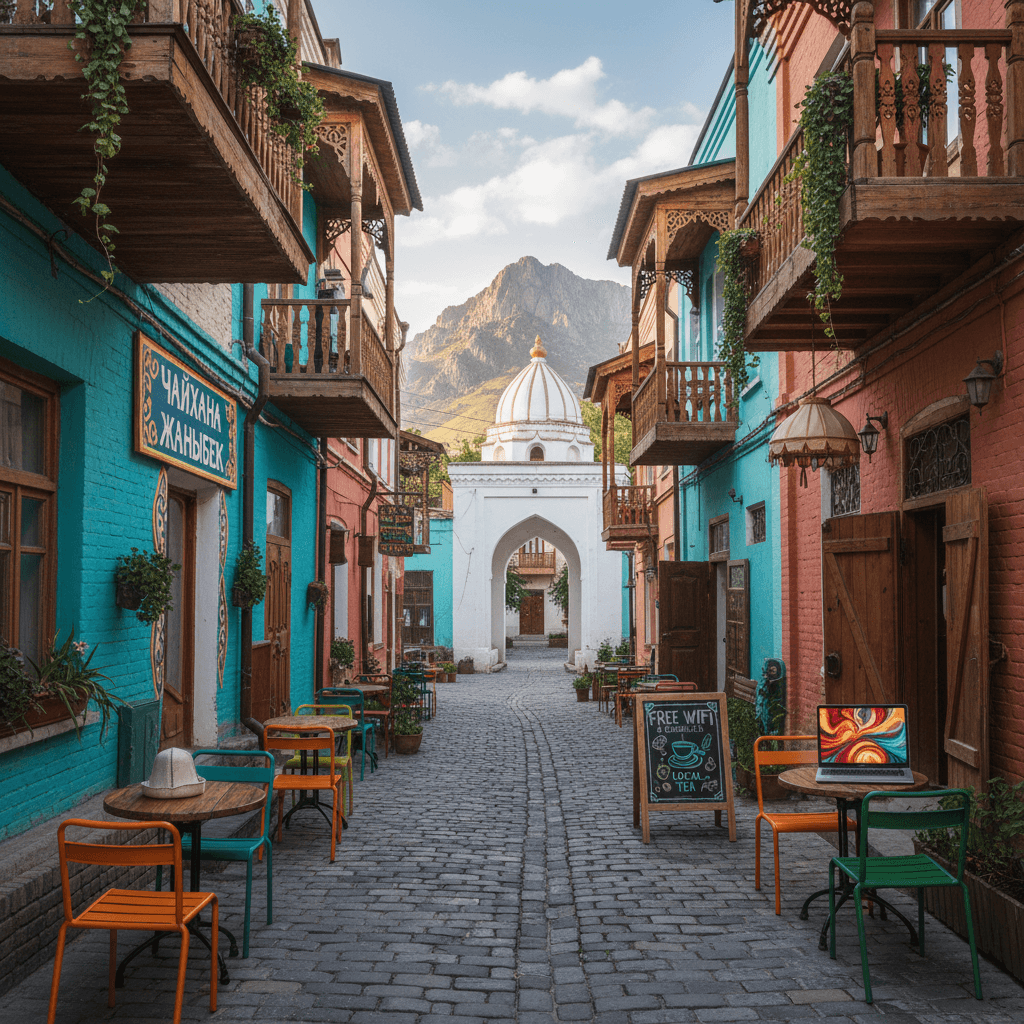
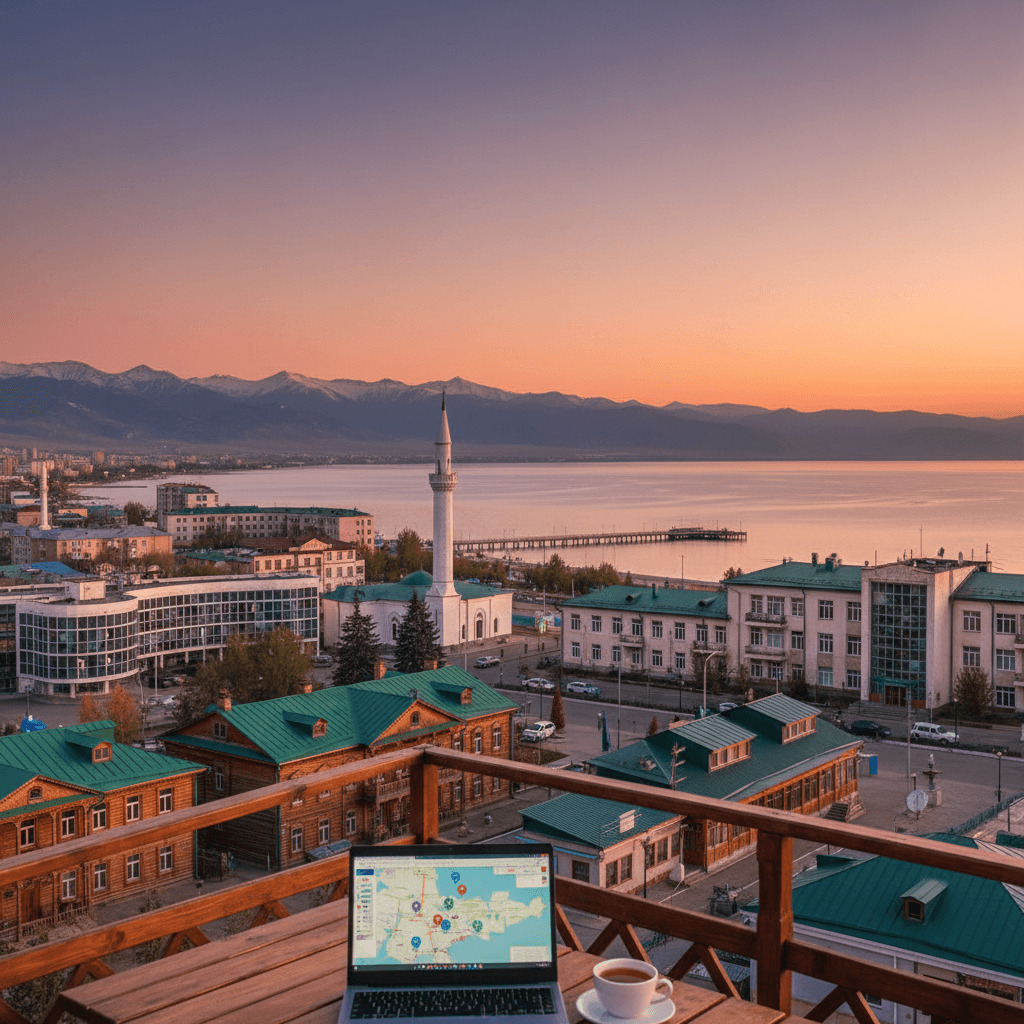
Cholpon-Ata is a bit of a localized paradox. It doesn't have the rugged, quiet solitude of the Kyrgyz interior, but it trades that for a unique brand of Central Asian resort energy. Imagine a sun-drenched lakeside town where the dramatic peaks of the Tian Shan mountains frame every street corner, and the air smells like a mix of salt water and mountain pine. It feels like a place that has spent decades perfecting the art of the summer holiday, blending Soviet-era nostalgia with a new, ambitious wave of international development.
For nomads, the appeal lies in the contrast. You can spend your morning answering emails from a balcony overlooking the turquoise expanse of Issyk-Kul Lake, and your afternoon watching Kok Boru players wrestle on horseback at the Hippodrome. It’s less "undiscovered village" and more "cultural hub." While the summer months bring a surge of Kyrgyz and Kazakh vacationers that can make the beaches feel crowded, the energy is infectious. If you prefer a slower pace, the shoulder seasons offer a serene, almost cinematic quiet where the lake becomes yours alone.
The upcoming 2026 World Nomad Games in September 2026 is the big magnet here. The town is gearing up for a global influx, and the vibe is shifting toward a more cosmopolitan, nomad-friendly atmosphere. You’ll find a hospitality that feels genuinely personal; it’s common for locals to treat you like a long-lost guest rather than just another tourist.
Cost of Living
Kyrgyzstan remains one of the most affordable regions for remote workers, though Cholpon-Ata’s prices fluctuate significantly based on the season and proximity to the water. Most nomads find they can live quite comfortably on a mid-range budget without watching every som.
- Budget (Solo Nomad): €600 to €900 per month. This covers a basic room or guesthouse further from the shore and a diet mostly consisting of street food and local markets.
- Mid-Range: €900 to €1,500 per month. This is the sweet spot. You can snag a decent 1-bedroom apartment or a long-stay rate at a resort, eat out frequently, and afford weekend trips to the canyons.
- Comfortable: €1,500+ per month. This gets you into the higher-end resorts with better WiFi, upscale dining every night, and private transport for exploring the northern shore.
For daily expenses, expect to pay €2 to €5 for a quick meal like Laghman or Samsa at a local cafe. A dinner at a mid-range restaurant usually lands between €5 and €10. Rent is the biggest variable; a simple studio might go for €200, while a premium resort room during the World Nomad Games could easily climb to €500 or more per month.
Where to Post Up
Cholpon-Ata is compact enough that you can walk most places, but the town is effectively split into two zones depending on what you need for your workday.
- The Lakefront: This is the heart of the action. It’s where you’ll find the private beaches, the most active nightlife, and the majority of the restaurants. It’s the best spot if you want to be social, though the summer crowds can be a distraction.
- Town Center (Near Rukh Ordo): Moving slightly inland toward the Rukh Ordo Cultural Center and the Sports Complex gives you a more "local" feel. It’s quieter, more walkable for daily errands, and puts you close to the major event venues for the 2026 Games.
The Digital Infrastructure
Don't expect dedicated coworking spaces with ergonomic chairs and free-flowing kombucha just yet. The remote work scene here is still cafe and hotel-based. Most nomads rely on their hotel WiFi or high-speed 4G/5G data. You can pick up a local SIM card from O!, Beeline, or MegaCom for about €5 to €10 per month, which usually includes a generous data plan.
The internet is generally reliable in town and along the main roads, but it drops off quickly once you head into the mountains or toward the more remote canyons. If you have a deadline, stay near the lakefront resorts where the infrastructure is more robust. Power cuts do happen occasionally, so keeping a beefy power bank in your bag is a smart move.
Getting Around & Staying Safe
The town is highly walkable, especially if you stay near the center. For longer trips, local taxis are the standard, usually costing €1 to €3 for rides within the town limits. If you're coming from Bishkek, the 5-hour journey by minibus or shared taxi is the most common route, costing roughly €10 to €20.
Safety is rarely a concern in the developed resort areas. The biggest risk you’ll face is likely the unpredictable driving on the highway from the capital. Kyrgyz hospitality is the real deal, but it helps to have Google Translate downloaded for offline use, as English isn't widely spoken once you step away from the hotel reception desks. Carry cash for most transactions, as while ATMs are available in town, many local shops and guesthouses won't accept cards.
The Price of Paradise on Issyk-Kul
Living in Cholpon-Ata feels like a balancing act between a sleepy mountain village and a high-energy summer resort. Because it's the primary hub for the 2026 World Nomad Games, prices fluctuate based on the season and the event calendar. Still, by international standards, your Euro or Dollar goes incredibly far here. You can live quite comfortably for a fraction of what you'd spend in Europe or North America.
Most digital nomads find that a monthly budget of €900 to €1500 covers a mid-range lifestyle. This includes a decent apartment, plenty of meals out, and enough left over for weekend trips to the nearby mountains. If you're on a tighter budget, you can scrape by on €600 to €900 by sticking to guesthouses and eating at local stands. On the flip side, if you want the full resort experience with lakefront views and upscale dining, plan to spend €1500 or more.
Monthly Budget Breakdown
- Housing: Expect to pay between €200 and €500 for a one-bedroom apartment or a long-term hotel suite. Prices spike in July and August, then drop significantly in the shoulder seasons.
- Food and Dining: Local street food like samsas or shawarma costs around €2 to €5. A dinner at a mid-range restaurant usually lands between €5 and €10, while high-end resort dining can reach €20.
- Connectivity: A local SIM card from providers like O!, MegaCom, or Beeline is a steal at €5 to €10 per month for a generous data plan.
- Transportation: Getting around town is cheap. Local taxis or minibuses usually cost €1 to €3 per ride.
Where to Set Up Base
Cholpon-Ata is compact, but your choice of neighborhood changes your daily experience. Most travelers gravitate toward the Lakefront Resort Area. It's the heart of the action, especially during the summer months. You'll have immediate access to beaches, nightclubs, and the Hippodrome for the Nomad Games. It’s convenient, but it can get noisy and crowded when the tourist season peaks.
If you prefer a slightly more "local" feel, look near the Town Center and Sports Complex. This area is closer to the Rukh Ordo Cultural Center and feels more like a lived-in town than a vacation strip. It's highly walkable and puts you within reach of the main markets and pharmacies. It’s a solid choice for solo nomads who want to be near the action without the constant beach-party vibe.
Connectivity and Remote Work
Don't expect to find sleek, glass-walled coworking spaces here just yet. Instead, nomads rely on hotel lobbies and cafes. Most cafes along the main strip are used to people lingering over a laptop, provided you keep the coffee orders coming. The internet is generally reliable in town, but it can get spotty if you head into the mountains for a day trip. Always have a power bank on hand, as occasional power cuts can happen in this part of the world.
Practical Spending Tips
- Carry cash. While some hotels and upscale restaurants take Visa or Mastercard, the local markets and smaller cafes are strictly cash-only.
- Download Google Translate for offline use. English isn't widely spoken, and you'll need Russian or Kyrgyz to negotiate taxi fares or buy groceries.
- Rent a car in Bishkek if you plan to explore. Local transport is fine for the town itself, but having your own wheels is the only way to reach spots like Song-Kul Lake or the Kyrchyn valley comfortably.
- Stock up on basics in Bishkek before heading out. While Cholpon-Ata has pharmacies and small shops, the selection is much better in the capital.
For Digital Nomads: The Lakefront Resort Zone
If you're coming to Cholpon-Ata to work with a view, you'll want to stay as close to the shoreline as possible. This stretch of the northern Issyk-Kul coast is where the action happens. It's the most developed part of town, packed with private beaches, seasonal cafes, and the kind of infrastructure that makes remote work feasible. While there aren't dedicated coworking spaces yet, nomads usually set up shop in high-end resort lobbies or lake-view cafes like those near the Rukh Ordo Cultural Center.
Living here means you're steps away from the water and the nightlife that picks up during the summer months. It's more urban than the rest of Kyrgyzstan, but that comes with better 4G coverage from providers like MegaCom or O!. Expect to pay between €300 and €500 for a decent room in a resort or a private apartment during the peak season. Just keep in mind that July and August get loud; if you need silence for deep work, look for a spot a few blocks back from the main beach road.
For Solo Travelers: The Central Strip
Solo travelers usually gravitate toward the area surrounding the Sports Complex and the main highway running through town. It's the most walkable part of the city and makes it easy to hop on a minibus to explore nearby spots like the Petroglyphs or the Hippodrome. This is the social heart of the town where you'll find the best concentration of street food and budget-friendly guesthouses.
The vibe here is social and convenient. You can grab a meal for €2 to €5 at local diners and meet other travelers planning trips to Karakol or Song-Kul Lake. Safety is solid, and the compact nature of the center means you won't need to worry about navigating complex transport late at night. Budget around €600 to €900 per month for a simple, solo lifestyle here.
For Expats and Long-Termers: Near the Hippodrome
For those planning to stay through the September 2026 World Nomad Games, the eastern side of town near the Hippodrome is the place to be. This area feels a bit more residential and provides front-row access to the massive cultural events, Kok Boru matches, and wrestling tournaments that define the region's identity. It's a bit quieter than the central resort strip but offers a more authentic look at local life.
Expats often prefer this area because it's easier to find long-term rentals that aren't purely geared toward weekend tourists. You'll likely want to rent a car from Bishkek (about a 5 hour drive away) to make the most of this location, as it gives you the freedom to drive out to Kyrchyn for day trips. Mid-range living costs here typically hover between €900 and €1500 per month, covering a comfortable apartment and frequent dining out.
For Families: Rukh Ordo and Surroundings
Families generally find the area around Rukh Ordo to be the best fit. It's a bit more manicured and offers easy access to both the cultural park and the safer, shallower parts of the beach. The streets here are wider and feel a bit more relaxed than the chaotic center of the resort zone. It's also close to the town's pharmacies and larger grocery stores, which is a practical plus.
Staying here allows for a "comfortable" tier lifestyle, often exceeding €1500 a month if you're opting for a full suite at a reputable resort. These spots often have better Wi-Fi stability and backup power, which is helpful since occasional power cuts can happen in the region. Most families find that having a home base here makes it easy to walk to dinner at mid-range restaurants where a meal for the whole group rarely tops €40.
- Local SIM cards: €5 to €10 per month for heavy data.
- Mid-range dinner: €5 to €10 per person.
- Taxi within town: €1 to €3 per ride.
- Bus from Bishkek: Approximately €10.
Connectivity on the Lake
Working from the shores of Issyk-Kul is a bit of a trade-off. You get the crisp mountain air and turquoise views, but you won't find the high-tech hubs of Bishkek. Most nomads here rely on a mix of hotel WiFi and a robust 4G backup. While the town is developed, the infrastructure is built for tourism rather than tech-heavy remote work. If you're doing basic admin or standard video calls, you'll be fine. If you're uploading 4K video all day, you might feel the lag.
The signal is strongest along the main road and the lakefront resorts. Once you head toward the mountains or the outskirts, the bars on your phone will drop fast. Power cuts happen occasionally, especially during the peak summer rush when the grid is under pressure from all the resort air conditioning. It's smart to keep a high-capacity power bank charged and ready.
The Coworking Situation
There aren't any dedicated, stand-alone coworking spaces in Cholpon-Ata yet. You won't find a WeWork or a quiet "nomad hub" with ergonomic chairs. Instead, the working culture happens in cafes and resort lobbies. If you need a professional setup, your best bet is to book a stay at one of the larger resorts like the Kapriz Issyk-Kul (near Cholpon-Ata) or Karven Four Seasons (nearby in Sary-Oy) [7][8]. These spots usually have reliable business centers or quiet lounges where you can set up for a few hours without being bothered.
For a more casual vibe, nomads often head to the cafes near the Rukh Ordo Cultural Center. Many of these spots have decent WiFi and are used to people lingering over coffee. Just be aware that during the September 2026 World Nomad Games, every seat in town will be at a premium. If you're visiting during the games, stick to your hotel's network early in the morning before the crowds wake up.
Mobile Data and SIM Cards
Mobile data is surprisingly cheap and generally more reliable than public WiFi. You should pick up a local SIM card as soon as you arrive, or better yet, grab one in Bishkek before making the five-hour trek to the lake. The three main providers are O!, MegaCom, and Beeline. Most travelers find O! has the best balance of price and coverage in the Issyk-Kul region.
- Cost: Expect to pay between €5 and €10 for a monthly plan with a generous data allowance.
- Where to buy: Look for the small branded kiosks in the town center or shops near the Sports Complex. You'll need your passport to register the card.
- Top-up: You can add credit at the bright orange "Pay24" terminals found in almost every grocery store.
Practical Tech Tips
Since English isn't widely spoken, download the offline Russian and Kyrgyz packs on Google Translate. It's a lifesaver for reading menus or explaining to a waiter that you need the WiFi password. For getting around, Yandex Go is the standard for ride-hailing in Kyrgyzstan, though its availability in Cholpon-Ata can be hit-or-miss compared to the capital. Usually, you'll end up calling a local taxi or walking, as the town center is quite compact.
Most sockets are the standard European Type C or F (two round pins) and run on 220V. If you're coming from the US or UK, you'll definitely need an adapter. Since you'll likely be working from cafes or hotel lobbies, a small travel power strip is a great investment; outlets aren't always conveniently placed next to the best tables.
Digital Nomad Logistics
- Reliable WiFi: Best found at high-end resorts like Kapriz or Karven.
- Mobile 4G: O! is the preferred network for the lake region.
- Data Prices: Roughly €5 to €10 per month for a heavy data user.
- Power: Standard 220V with European plugs; bring a power bank for occasional outages.
Staying Safe and Sound
Cholpon Ata is generally a relaxed beach town where the biggest threat to your peace of mind is usually a sunburn or a loud jet ski. Kyrgyz hospitality is legendary, and locals are typically helpful toward visitors. You can walk the lakefront or the central areas near the Rukh Ordo Cultural Center at night without much worry, though it's smart to stick to lit paths and avoid the unlit back alleys of the residential blocks after dark.
The real danger here isn't crime; it's the road. If you're coming from Bishkek, the three to five hour drive is notorious for aggressive overtaking and unpredictable drivers. If you're renting a car, stay alert and avoid driving this route at night. Within the town, keep an eye out for uneven pavement and open drainage ditches, especially if you've had a few drinks at one of the summer nightclubs.
- Emergency Services: Dial 101 for fire, 102 for police, and 103 for an ambulance.
- Utility Reliability: Power cuts happen occasionally, especially during peak summer demand. Most nomads keep a high capacity power bank charged to avoid losing work mid-sentence.
- Water Safety: While the lake is pristine for swimming, stick to bottled or filtered water for drinking to avoid a ruined week of stomach issues.
Healthcare and Medical Access
Medical facilities in Cholpon Ata are basic. You'll find plenty of pharmacies, known as Apteka, along the main road that stock standard over the counter meds, bandages, and basic antibiotics. Many pharmacists speak limited English, so having a translation app ready on your phone is a lifesaver when you're trying to describe a specific ailment.
For anything more serious than a minor infection or a scrape, you'll likely need to head elsewhere. There is a local hospital for emergencies, but expats and long term nomads usually prefer the private clinics in Bishkek for specialized care or diagnostic tests. If you're planning to stay for the 2026 World Nomad Games, expect the local clinics to be stretched thin; having robust travel insurance that covers medical evacuation is a non negotiable safety net here.
Practical Checklist
- Insurance: Ensure your policy covers high altitude activities if you plan on trekking into the mountains surrounding the lake.
- Medication: Bring a 90 day supply of any specific prescriptions, as exact brand matches can be hard to find in Kyrgyzstan.
- Sun Protection: The sun at this altitude is deceptive. Even when the breeze off Issyk Kul feels cool, you'll burn fast. High SPF sunscreen is expensive locally, so pack your own.
Most travelers find that common sense goes a long way. Respect the local customs, keep an eye on your belongings in crowded spots like the Hippodrome during major events, and you'll find Cholpon Ata to be a welcoming, low stress base for your nomadic stint.
Getting Around Cholpon-Ata
Cholpon-Ata is a compact resort town that stretches along the northern shore of Issyk-Kul. While it feels more like a developed holiday strip than the rugged interior of Kyrgyzstan, its layout is straightforward. Most of your daily life will revolve around the main road that runs parallel to the lake, connecting the beaches, the town center, and the major event venues.
Walking and Local Transit
If you're staying near the lakefront or the town center, you'll find Cholpon-Ata surprisingly walkable. Most restaurants, small grocery shops, and beach access points are within a 15 to 20 minute stroll of each other. The terrain is generally flat, though you'll want sturdy shoes if you venture toward the petroglyphs or the outskirts where the pavement disappears.
For longer hops across town, look for the local marshrutkas (minibuses). These are the backbone of Kyrgyz transit. They don't have a strict schedule but run frequently during daylight hours. A ride usually costs between €1 and €3. Just flag one down on the main road; they are a great way to get to the Rukh Ordo Cultural Center or the Hippodrome without breaking a sweat.
Taxis and Ride-Hailing
Don't expect to use Uber or Bolt here. While ride-hailing apps are gaining ground in Bishkek, they haven't quite taken over the Issyk-Kul region yet. Instead, you'll rely on local taxis. You can find them clustered near the bus station, the Sports Complex, and major resort entrances.
- Local hops: Short trips within town usually cost €2 to €5. Always agree on the price before you get in.
- Long distance: A private taxi from Bishkek to Cholpon-Ata typically runs between €20 and €40, depending on your negotiating skills and the type of vehicle.
- Shared taxis: This is the local way to travel between cities. You head to the stand, wait for the car to fill up with four passengers, and split the cost. It’s faster than a bus and costs around €10 to €15 per seat for the trip from the capital.
Arriving from Bishkek
Most nomads arrive via Manas International Airport in Bishkek. From there, you have a few choices for the 4 to 5 hour journey to the lake. The drive is scenic but the roads can be unpredictable. Local drivers often treat speed limits as suggestions, so keep that in mind if you're sensitive to aggressive driving.
The large public buses from Bishkek’s Western Bus Station are the most budget-friendly option, though they take a bit longer. If you value your sanity and want to stop for photos of the mountains, hiring a private driver for the day is the way to go. It’s a common move for expats who want to avoid the cramped quarters of a minibus.
Wheels for Exploration
If you plan on staying for more than a week, renting a car is highly recommended. You won't find many rental agencies in Cholpon-Ata itself, so it’s best to pick one up in Bishkek. Having your own 4WD opens up the region, allowing you to hit the Kyrchyn Jailoo for the September 2026 World Nomad Games or take day trips to Karakol, which is about 2.5-3 hours away.
- Car Rental: Expect to pay €30 to €60 per day for a decent SUV.
- Road Conditions: The main highway to Cholpon-Ata is well-maintained and paved. However, if you turn off toward the mountains or smaller villages, expect dirt tracks and potholes.
- Parking: Most resorts and guesthouses offer free parking, and finding a spot in town is rarely an issue outside of the peak July and August crowds.
Connectivity on the Move
While you're out and about, don't rely on finding open Wi-Fi. Most nomads pick up a local SIM card immediately. Beeline, MegaCom, and O! are the primary providers. You can get a solid data plan for €5 to €10 a month. Coverage is excellent in town and along the main roads, but it will drop off the moment you head into the nearby canyons or higher mountain passes. Download an offline map and a translation app before you leave your hotel; they are life-savers when communicating with taxi drivers who likely won't speak English.
Getting by with Kyrgyz and Russian
In Cholpon Ata, you'll mostly hear a mix of Kyrgyz and Russian. Kyrgyz is the state language and a point of immense pride, especially during high energy events like the 2026 World Nomad Games. However, Russian remains the lingua franca for business, tourism, and daily interactions between different ethnic groups. If you've spent time in other post Soviet regions, you'll find the linguistic landscape familiar.
English proficiency is generally low. While staff at high end lakefront resorts or the Rukh Ordo Cultural Center might speak enough to help you check in, don't expect the average taxi driver or market vendor to be fluent. Most nomads find that a few basic phrases go a long way in opening doors and earning a smile from the locals.
The Digital Safety Net
Since you won't find many English menus or signs once you step away from the main tourist strips, your phone is your best friend. Travelers consistently recommend downloading Google Translate with the Russian and Kyrgyz offline packs. The camera feature is a lifesaver for deciphering menus at local cafes near the Sports Complex.
For getting around, the language barrier can make negotiating taxi prices at the bus station a headache. Many expats suggest using Yandex Go or 2GIS. Even if ride hailing is limited in the off season, these apps help you show a driver exactly where you're going on a map, bypassing the need for a complex conversation in Russian.
Staying Connected
You'll want a local SIM card immediately to keep those translation apps running. You can pick one up in the town center for about €5 to €10. The three main providers are O!, Beeline, and MegaCom. Most nomads lean toward O! for their generous data packages, which usually include unlimited social media or YouTube.
While the 4G signal is surprisingly strong along the northern shore of Issyk-Kul and near the Hippodrome, it drops off quickly if you head into the mountains for a day trip. If you're planning to work remotely from a lakeside cafe, always have a backup plan. Power cuts happen occasionally, so keeping a charged power bank is a standard move for anyone staying more than a few days.
Key Phrases for Your Pocket
Even if you struggle with the pronunciation, attempting these words shows respect for the local culture. In a place that prides itself on nomad hospitality, a little effort goes a long way.
- Salamatsyzby: Hello (Formal Kyrgyz)
- Rakhmat: Thank you (Kyrgyz)
- Spasibo: Thank you (Russian)
- Kancha turat?: How much does it cost? (Kyrgyz)
- Ooba / Jok: Yes / No (Kyrgyz)
- Ya ne ponimayu: I don't understand (Russian)
If you're visiting during the September 2026 games, expect the town to feel much more international. You'll likely encounter volunteers who speak better English than the year round residents, but for daily life, sticking to the translation apps and a few Kyrgyz pleasantries is the way to go.
When to Go
Timing your stay in Cholpon Ata depends entirely on whether you want a high energy resort atmosphere or a quiet mountain retreat. The town operates on a seasonal clock. During the peak summer months of July and August, the lakeside transforms into a lively hub for Kyrgyz and Kazakh vacationers. You'll find the beaches full and the nightclubs along the shore active until the early hours.
September is arguably the sweet spot for digital nomads. The intense summer heat mellows into crisp, clear days, and the water remains warm enough for a swim. This is also the prime window for the 2026 World Nomad Games (late August to early September). If you're planning to be here in early September 2026, expect the town to be at its most atmospheric. The Hippodrome and local sports complexes will be packed with crowds watching Kok Boru and wrestling. It’s the best time to see the region's cultural heritage without the pure "beach party" vibe of July.
By October, the town starts to hibernate. Many lakeside restaurants and seasonal resorts shutter their doors for the winter. While the mountain scenery is stunning when the first snow hits, the lack of infrastructure and the potential for power cuts make winter stays a challenge for anyone needing to stay productive. Stick to the window between June and late September to get the most out of the local amenities.
The Climate Factor
Issyk Kul translates to "warm lake," and while it never freezes, don't let that fool you into thinking it’s tropical. Cholpon Ata sits at an elevation of about 1,600 meters. Even in the height of summer, the mountain air keeps things comfortable. Daytime temperatures are perfect for shorts and t-shirts, but as soon as the sun dips behind the Tian Shan peaks, the temperature drops significantly. Travelers often say a light jacket or a decent hoodie is a mandatory item for evening dinners by the water.
Rain isn't a massive deal breaker here, as the climate is relatively dry. Most of your days will be defined by deep blue skies and high UV levels. If you're heading up into the nearby valleys like Kyrchyn for day trips, the weather becomes even more unpredictable. Pack layers and sturdy shoes for exploring the local terrain.
Seasonal Budgeting
Your cost of living will fluctuate based on the calendar. During the World Nomad Games or the July peak, prices for short term rentals and hotels can double. Outside of these windows, Kyrgyzstan remains incredibly affordable. Here is what to expect for your monthly burn:
- Budget Nomad: €600 to €900. This covers a basic room or a simple guesthouse, plenty of street food like shashlik or samsa for €2 to €5, and local transport.
- Mid-range: €900 to €1,500. You'll land a comfortable one bedroom apartment or a decent hotel room, mix in some resort dining at €10 per meal, and have a budget for weekend trips to Karakol.
- Comfortable: €1,500+. This gets you into the higher end lakefront resorts with better WiFi, upscale meals at €20, and private drivers for regional exploration.
Most expats recommend carrying plenty of cash in Som, as while ATMs exist in the town center, they can be finicky with international cards during high traffic events. If you're coming for the 2026 Games, book your accommodation at least six months in advance; the town's capacity gets stretched to the limit when the global nomad community descends on the Hippodrome.
Connectivity and Digital Setup
Staying connected in Cholpon-Ata is straightforward as long as you stick to the town center and lakefront. For a reliable connection, grab a SIM card from O!, MegaCom, or Beeline as soon as you arrive. A monthly data plan usually runs between €5 and €10. While 4G is consistent in the resort areas, it drops off quickly once you head into the mountains or toward the Kyrchyn Valley.
Most nomads rely on hotel WiFi or cafes for work since dedicated coworking spaces haven't hit the town yet. If you're planning to be here during the September 2026 World Nomad Games, expect the networks to be under heavy load. Carry a beefy power bank; small power cuts aren't uncommon, and you'll want your phone charged for offline translation apps like Google Translate, which is a lifesaver given that English isn't widely spoken outside the main tourist hubs.
Cost of Living Tiers
Your budget will fluctuate wildly depending on whether you're staying in a basic guesthouse or a high-end lakefront resort. Prices generally look like this for a solo nomad:
- Budget Nomad (€600 to €900 per month): Staying in simple rooms or shared guesthouses, eating mostly at street food stalls where meals cost €2 to €5, and using local minibuses.
- Mid-range Nomad (€900 to €1,500 per month): Living in a private 1BR apartment or a standard hotel, mixing local dining with mid-range restaurants at €5 to €10 per meal.
- Comfortable Nomad (€1,500+ per month): Staying at top-tier resorts, frequenting upscale dining where meals hit €15 to €20, and relying on private taxis or car rentals.
Navigation and Transport
The town is compact and highly walkable, especially the strip between the Rukh Ordo Cultural Center and the Hippodrome. For longer trips or getting here from Bishkek, you'll likely use a marshrutka (minibus) for a few Euros or a shared taxi, which costs about €10 to €20 for the five-hour journey.
If you want the freedom to explore spots like Karakol or Song-Kul Lake, it's best to rent a car in Bishkek before heading out. Local ride-hailing apps are hit-or-miss here, so most travelers negotiate with local taxi drivers for rides around town, usually costing between €1 and €3.
Health and Safety
Cholpon-Ata is generally safe, with a relaxed resort atmosphere. The biggest risk is actually the drive from Bishkek; the roads are decent but local driving can be aggressive and unpredictable. Stick to the well-lit resort areas at night, and you'll find the local hospitality is genuine and welcoming.
Medical facilities in town are basic. There are plenty of pharmacies for minor issues, but for anything serious, you'll need to head back to Bishkek. Always carry cash, specifically Kyrgyz Som, as while Visa and Mastercard work at ATMs in town, many smaller shops and guesthouses won't accept cards.
Local Customs and Social Life
The social scene revolves around the lake in the summer and the major sports venues during event seasons. To meet people, head to the Sports Complex or the Hippodrome, especially during the 2026 Games. This is when the town transforms into a global hub for nomads. Respect local traditions regarding hospitality; if you're invited for tea or a meal, it's a significant gesture. Wear comfortable, sturdy shoes for the dusty venue grounds and bring a light jacket for the evenings, as the mountain air cools down quickly once the sun sets over Issyk-Kul.
Need visa and immigration info for Kyrgyzstan?
🇰🇬 View Kyrgyzstan Country GuideOff the Radar
Pioneer territory
Monthly Budget Estimates
More cities in Kyrgyzstan
Bishkek
🇰🇬 Kyrgyzstan
Jalal-Abad
🇰🇬 Kyrgyzstan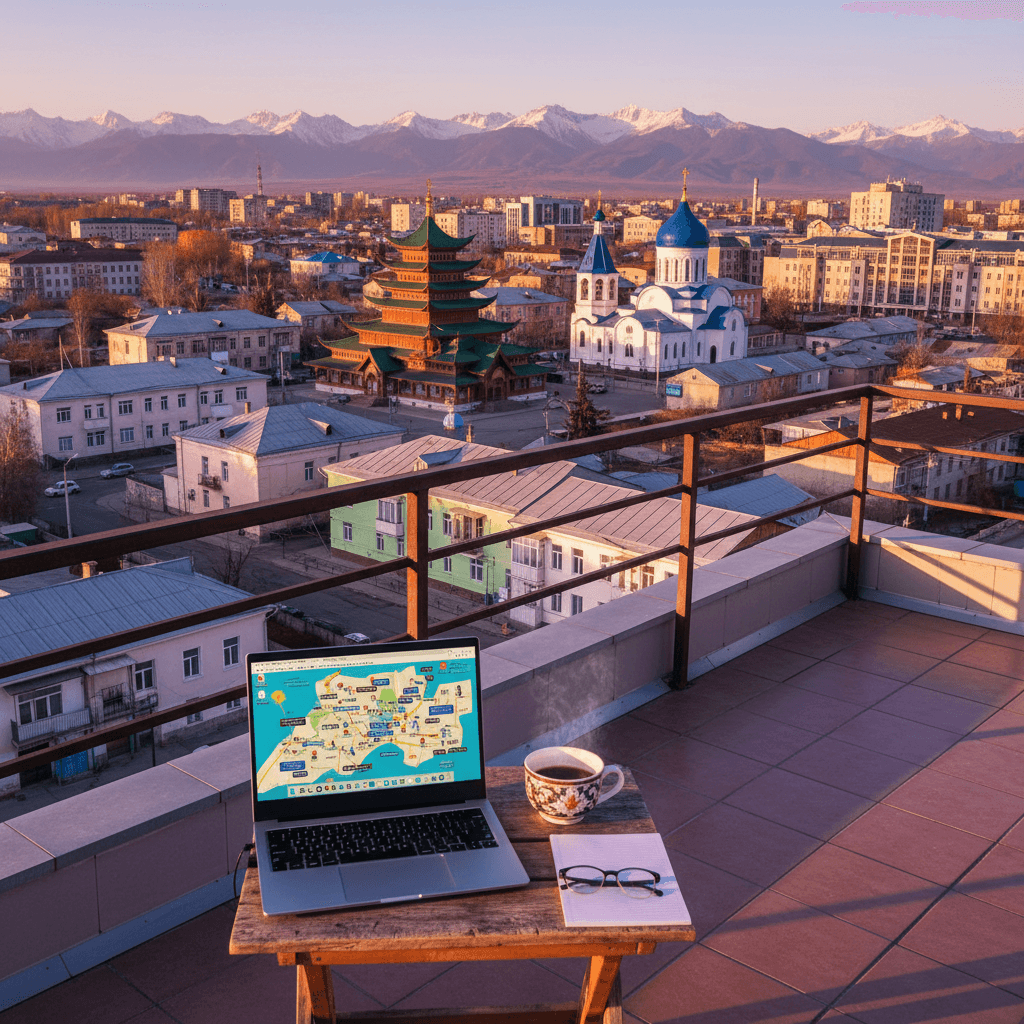
Karakol
🇰🇬 Kyrgyzstan