Choibalsan
🇲🇳 Mongolia
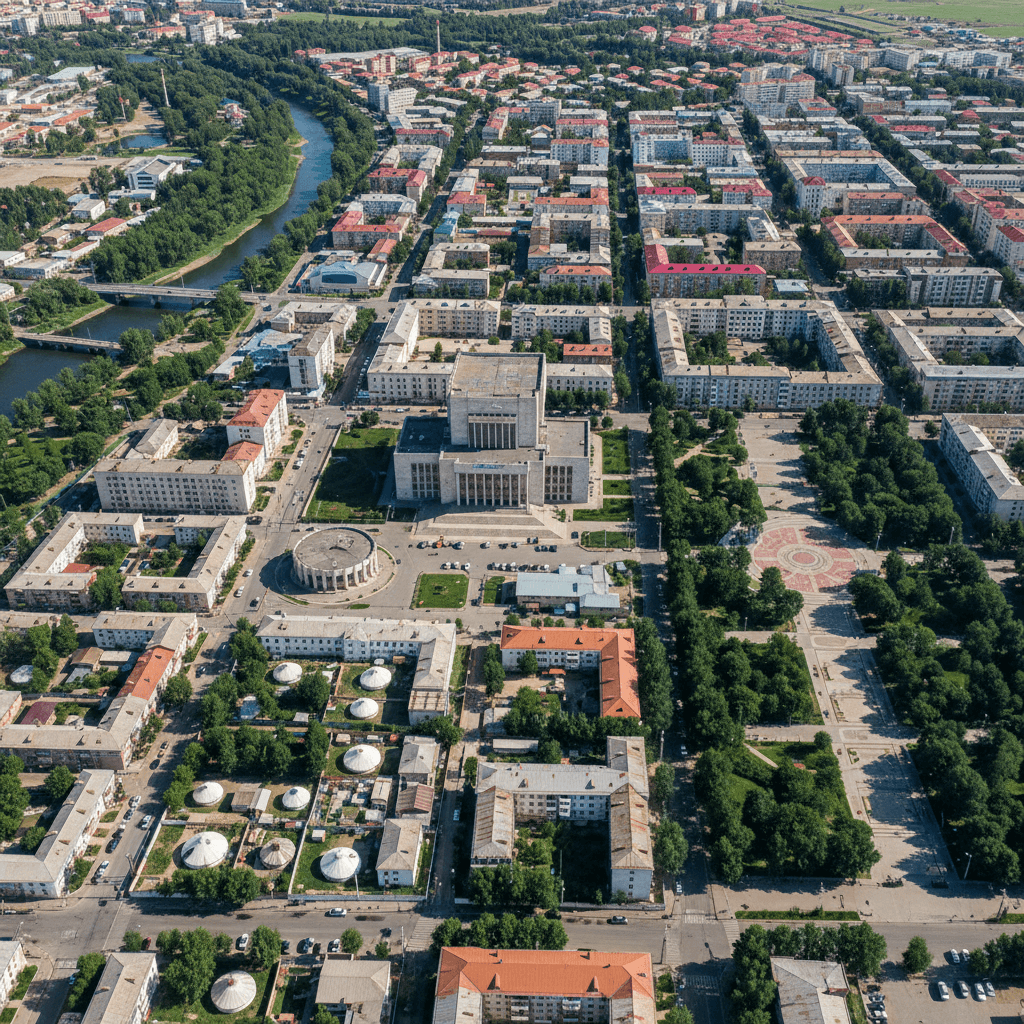
Choibalsan isn't your typical digital nomad stopover. It is the fourth largest city in Mongolia, but it feels more like a sprawling, industrial outpost frozen in a transition between its Soviet past and a quiet, windy future. Located in the far east on the banks of the Kherlen River, it lacks the frantic energy of Ulaanbaatar. Instead, you get wide, dusty boulevards, crumbling socialist era monuments, and a sense of isolation that is either meditative or a bit haunting, depending on your mood.
The Eastern Frontier
The vibe here is heavy on history and light on luxury. You aren't coming here for a high end cafe scene or a community of tech founders. You come here to see a side of Mongolia that most travelers skip. It is a city of heroes and scars, named after the revolutionary leader Khorloogiin Choibalsan. You will notice the massive, blocky apartment complexes and the distinct lack of skyscrapers. The silence is one of its most striking features; compared to the constant honking of the capital, Choibalsan is eerily still.
Nomads who make it this far east usually do so because they want to experience the "real" steppe without the tourist crowds. The emotional experience is one of raw solitude. There is a certain grit to the place that commands respect. You will find yourself spending afternoons walking through the Victory Park or staring at the G.K. Zhukov Museum, feeling the weight of the 1939 Battle of Khalkhin Gol. It is a place that makes you feel small, tucked away in a corner of the world that most people couldn't find on a map.
Life on the Steppe
The pace of life is slow, bordering on stagnant. People are reserved but generally hospitable once the ice breaks. You will see locals wearing a mix of traditional deels and modern western clothing, moving between concrete Soviet flats and the ger districts that ring the city. The weather is a major player in the local mood. The wind here is relentless, often whipping up dust storms in the spring or dropping temperatures to -30°C in the winter. It is a rugged environment that requires a thick skin and a reliable jacket.
- The Connectivity Reality: Don't expect dedicated coworking spaces. You will be working from your guesthouse or a handful of local eateries. Unitel and Mobicom offer 4G coverage that is surprisingly stable within the city limits, but it drops off the second you head toward the border.
- The Social Scene: Socializing happens over salty milk tea or in the few local bars near the city center. It is an authentic, unpolished experience where your "nomad" status will be a source of genuine curiosity for the residents.
- Access: Most travelers arrive via a long, bumpy bus ride from Ulaanbaatar. There are occasional flights to Choibalsan Airport (COQ), but they are prone to cancellations due to weather.
The Nomad Perspective
Expats who have spent time here often describe it as a test of self sufficiency. You won't find avocado toast or high speed fiber optics. You will find buuz (meat dumplings) that cost about 1,500 MNT each and a deep sense of peace. It is the kind of place where you can actually hear yourself think. Most nomads find that a stay of two weeks is plenty to soak in the atmosphere before the isolation starts to feel a bit too heavy. It is a destination for the observer, the writer, or the traveler who finds beauty in the stark, functional reality of a border town.
The Local Price Point
Living in Choibalsan is a significant step down in price compared to Ulaanbaatar. While the capital has seen costs rise with the influx of international chains and luxury developments, Choibalsan remains firmly rooted in provincial reality. You are looking at a budget that feels incredibly generous even on a modest remote income. Most nomads find they can live comfortably here for a fraction of what they would spend in Southeast Asian hubs, though you trade away some of the western amenities you might be used to.
The local currency is the Mongolian Tugrik (MNT). While you can use cards at larger supermarkets like the Nomin branch near the city center, you will want to keep a stack of cash for smaller shops and the local markets. It is the kind of place where $800 to $1,000 USD a month covers a high end lifestyle, including a decent apartment, daily meals out, and regular weekend trips into the surrounding steppe.
Housing and Utilities
The rental market isn't geared toward foreigners, so you won't find many listings on English language sites. Most expats coordinate through local Facebook groups or by asking around at the larger hotels like the East Palace. The city is divided into several "baghs" or districts, with the central areas near the Kherlen River being the most sought after for their proximity to shops and paved roads.
- One Bedroom Apartment (City Center): Expect to pay between 600,000 and 900,000 MNT ($175 to $265 USD) per month. These are usually in older Soviet style blocks, but many have been renovated with modern plumbing and kitchens.
- Utilities: Heating is centralized and usually included in the rent or very cheap. Electricity and water rarely top $40 USD a month, even in the dead of winter.
- Internet: A decent home fiber connection from Unitel or Mobinet costs roughly 50,000 MNT ($15 USD) per month. Speeds are surprisingly stable for such a remote outpost.
Food and Dining
Eating out is the default for many residents. You will find a heavy emphasis on meat and flour, which are the staples of the eastern plains. A meal at a local "Guanz" (canteen) is incredibly cheap, while the few "fancy" spots in town still won't break the bank. If you prefer to cook, the central market is your best bet for fresh meat and seasonal vegetables, though variety gets slim during the winter months.
- Local Meal: A large plate of buuz (steamed dumplings) or tsuivan (fried noodles with mutton) costs about 8,000 to 12,000 MNT ($2.30 to $3.50 USD).
- Dinner for Two: A full meal at a place like the To Van restaurant with drinks will run you about 45,000 MNT ($13 USD).
- Coffee: A decent latte at a modern cafe is around 7,000 MNT ($2 USD).
- Groceries: A weekly shop for one person averages 100,000 MNT ($29 USD) if you stick to local produce and dairy.
Transportation and Extras
Choibalsan is small enough that you can walk to most places within the central core, but the harsh weather often makes that a bad idea. Taxis are the primary way to get around. There isn't a dedicated app like Uber here; you just wave down a car or call a local dispatch number. The fare is usually calculated by the kilometer and is very predictable.
- Taxi Ride: Most trips within the city limits cost between 3,000 and 5,000 MNT ($0.85 to $1.45 USD).
- Gym Membership: A monthly pass to a local fitness center is around 80,000 MNT ($23 USD).
- Beer: A local pint of Sengur or Niislel at a bar is roughly 5,000 MNT ($1.45 USD).
The real "hidden" cost in Choibalsan is travel. While daily life is cheap, renting a 4x4 vehicle and a driver to explore the Dornod Aimag steppe or the Victory Museum area can cost $100 USD or more per day. Most travelers recommend grouping up with others to split these costs, as the vast distances outside the city require specialized transport and plenty of fuel.
Choibalsan isn't your typical digital nomad hub with a dozen coworking spaces and specialty coffee shops. It is a rugged, industrial, and Soviet influenced city in the far east of Mongolia. Most of the layout follows a linear pattern along the Kherlen River, and because it is the fourth largest city in the country, it feels more like a collection of spread out districts than a dense urban center.
When you're looking for a place to stay, you'll notice the city is roughly divided into the Western, Central, and Eastern sectors. The Central area is where the infrastructure is most reliable, while the outskirts lean more toward traditional ger districts. Most foreigners gravitate toward the brick apartments near the main square, where the heating is consistent during the brutal winters.
For Digital Nomads
If you're working remotely, you want to be in the Central Sector, specifically near Independence Square. This is the heart of the city where you'll find the best chance at a stable fiber optic connection. You'll be within walking distance of the East Regional Diagnostic and Treatment Center and the few modern cafes that exist here.
- Rent: $250 to $400 per month for a decent apartment.
- Internet: Most nomads rely on Unitel or Mobicom 4G routers since dedicated coworking spaces don't really exist yet.
- Vibe: Functional and convenient. You're near the Choibalsan Statue and the main government buildings.
For Expats
Expats, many of whom are here for mining or NGO work, often prefer the Kherlen River Waterfront area. It offers a bit of a breather from the dusty city streets. There are newer apartment blocks here that offer slightly better insulation and more modern plumbing than the older Soviet era blocks in the city center. It's a quieter pocket that feels less like a transit hub and more like a residential neighborhood.
- Rent: $350 to $500 for a renovated two bedroom unit.
- Food: Close to Victory Park, which is a popular spot for evening walks and contains a few of the better rated local eateries serving buuz and khuushuur.
- Atmosphere: More relaxed and scenic, with easier access to the river for summer strolls.
For Families
The Microdistrict areas, particularly those near the School Number 1 or the Dornod University campus, are the best bet for families. These neighborhoods are built around communal courtyards where kids actually play outside. You'll find small grocery kiosks on every corner, making it easy to grab supplies without a long trek across town. It's a very communal way of living where neighbors generally look out for one another.
- Rent: $300 for a standard family sized flat.
- Amenities: Proximity to the city's main educational institutions and playgrounds.
- Safety: High, as these are established residential zones with lots of "eyes on the street" from local grandmothers.
For Solo Travelers
If you're just passing through or staying for a month to explore the Eastern Steppe, stick to the Railway Station District. It's on the western end of the city and is definitely more "no frills." This area is perfect if you plan on taking the train back toward Ulaanbaatar or heading out on expeditions to the Menengiin Tal plains. It's gritty but authentic, and you'll find the cheapest guesthouses here.
- Rent: $15 to $25 per night for short term stays.
- Transport: You're right at the hub for long distance buses and the train line.
- Food: Plenty of cheap canteens serving 5,000 to 8,000 MNT meals for a quick bite before a trip.
Most travelers find that while the city looks sprawling on a map, life really revolves around the Central Sector. If you value your sanity and your upload speeds, don't stray too far from the main paved roads. The further you go into the ger districts on the periphery, the more you'll deal with unpaved roads and limited water access, which can be a tough transition for those used to city comforts.
Connectivity and Speed
Working from Mongolia's fourth largest city requires a shift in expectations compared to the high speed fiber loops of Ulaanbaatar. You aren't going to find lightning fast gigabit connections here, but the infrastructure is surprisingly stable for a remote provincial center. Most digital nomads find that the local 4G networks are the most reliable way to stay online. Unitel and Mobicom are the two primary providers with the best coverage in the city center. You can pick up a local SIM card for about $5 to $10, which usually includes a generous data package of 20GB to 50GB.
If you are staying at one of the main hotels like the Kherlen Hotel or East Palace, you will have access to complimentary Wi-Fi. It is generally sufficient for emails, Slack, and basic browsing, but video calls can be hit or miss during peak evening hours. Download speeds typically hover around 5 to 10 Mbps, while upload speeds often struggle to stay above 2 Mbps. Having a local hotspot as a backup is a smart move if you have a deadline looming.
Coworking and Work Friendly Cafes
Dedicated coworking spaces with ergonomic chairs and networking events don't really exist in Choibalsan yet. This is a frontier for nomads, so your "office" will likely be a hotel lobby, a library, or a local eatery. The Dornod Library is a quiet, central spot where you can get some deep work done, though you will need to bring your own power strip as outlets are sparse. It is a local favorite for students, so it stays relatively peaceful during the day.
For a more casual vibe, nomads often head to small local bakeries near the central square. These spots are used to people lingering over a meal, and while they might not have dedicated high speed lines, the atmosphere is comfortable. Just keep in mind that power outages, though infrequent, can happen in the eastern provinces. Always keep your laptop and power banks fully charged before starting a long work session.
Data Costs and Connectivity Tips
- Prepaid SIM Card: 15,000 MNT to 35,000 MNT ($4 to $10) depending on the data plan.
- Average Mobile Speed: 8 to 15 Mbps on 4G LTE in the city center.
- Best Providers: Unitel has the strongest reputation for data stability in the Dornod region.
- Power Plugs: Type C and E (European standard), 220V.
If you need to handle large file transfers or high definition video streaming, try to schedule that work for early morning hours, typically before 9:00 AM. The network congestion is significantly lower then. Most expats in the region suggest using a VPN not just for security, but sometimes to help with routing issues that can occur on local Mongolian servers. It makes for a much smoother experience when accessing international tools like Google Workspace or Trello.
While the digital infrastructure is modest, the cost of staying connected is incredibly low. You can run a heavy data setup for an entire month for less than the price of a single lunch in London or New York. It is a trade off that works well for those who value solitude and low overhead over ultra high speed luxury.
Staying Safe in the East
Choibalsan doesn't feel like a big city, and its safety profile reflects that. Most people find it significantly more relaxed than Ulaanbaatar. You won't deal with the same level of aggressive pickpocketing or the frantic energy of the capital. That said, it is an industrial and transit hub, so you need to keep your wits about you after dark.
The biggest safety concern here isn't crime, it's the stray dogs and the occasional drunk encounter. When the sun goes down, especially around the Kherlen River banks or the darker corners of the Victory Square area, stray dogs can become territorial. It's better to take a local taxi than walk long distances at night. If you’re out late, you might run into some rowdy locals near the bars. Usually, a polite nod and moving on is enough to avoid any friction.
- Emergency Numbers: Dial 102 for police, 103 for medical emergencies, and 101 for fire.
- Solo Travel: It is generally safe for solo travelers, but learning a few Mongolian phrases goes a long way in de-escalating misunderstandings.
- Winter Hazards: From November to March, the real danger is the cold. Temperatures regularly drop below -30°C. Frostbite is a genuine risk if you aren't layered properly.
Healthcare and Medical Services
Healthcare in Choibalsan is functional but basic. The Dornod Provincial General Hospital is the main facility in town. It can handle routine issues, basic stitches, or common infections. However, the staff rarely speaks English, and the equipment is several generations behind what you would find in Europe or the US.
For anything serious, specialized, or requiring surgery, you will want to get to Ulaanbaatar or even fly to Seoul or Bangkok. Most expats keep a solid first aid kit stocked with antibiotics, painkillers, and stomach meds because the local pharmacies, while plentiful, often carry Russian or Mongolian brands that can be hard to identify.
- Pharmacies: Look for the Emyn San signs. There are several along the main road near the central market.
- Medical Insurance: Ensure your policy covers emergency medical evacuation. A medevac flight from eastern Mongolia to a high quality hospital can cost upwards of $20,000 out of pocket.
- Water Safety: Do not drink the tap water. Stick to bottled water or use a high quality filtration system. Most nomads buy the large 5 gallon jugs for their apartments.
Practical Health Tips
Air quality in the winter can be a problem. Like many Mongolian cities, the reliance on coal heating means a thick layer of smog often settles over the residential districts when the wind dies down. If you have asthma or respiratory issues, bringing a high quality N95 mask for the winter months is a smart move.
The local diet is very heavy on mutton and dairy. If your stomach isn't used to high fat content, take it slow during your first week. Travelers often find that keeping some probiotics on hand helps with the transition to the local fare. If you need a specific prescription medication, bring a full supply with you. Finding niche western drugs in Dornod province is nearly impossible.
Safety and Health Costs
- Doctor Consultation: 15,000 to 30,000 MNT at a local clinic.
- Private Hospital Visit (UB): 150,000+ MNT for international standard care.
- Short Taxi Trip: 4,000 to 6,000 MNT to avoid walking home late.
- Pack of Antibiotics: 10,000 to 25,000 MNT depending on the brand.
The Layout of the East
Choibalsan is the fourth largest city in Mongolia, but don't let that title fool you into thinking it's a sprawling metropolis. It is a linear city stretched along the Kherlen River, and its layout is a relic of Soviet urban planning. Most of the action happens along the main east-west axis, which makes it nearly impossible to get lost. You can walk most of the central district in about 20 to 30 minutes, but you will want wheels for anything further out.
The city is divided into several "baghs" or districts. Most nomads stick to the central area near the Independence Palace or the neighborhoods around the Polytechnic College. If you are staying in the outskirts or near the industrial zones, you will definitely be relying on the local transit ecosystem rather than your own two feet.
The Taxi Economy
The most common way to get around is the unofficial taxi system. Like in Ulaanbaatar, almost any car can become a taxi if you stick your hand out with your palm facing down. It is a shared system, so don't be surprised if the driver stops to pick up other passengers along the way. The standard rate within the city limits is usually around 1,000 to 1,500 MNT per person, depending on the distance.
For more formal arrangements, there are local taxi services you can call. While there is no Grab or Uber here, you can ask your hotel or a local friend to call a "duudlagiin taxi" for a more reliable pickup. These usually charge a flat starting fee of about 3,000 MNT. If you are heading out to the airport, which is about 15 kilometers north of the center, expect to pay around 15,000 to 20,000 MNT.
Public Buses and Walking
Choibalsan has a modest public bus network that connects the central districts to the outlying "ger" areas. The buses are old, often crowded, and the routes aren't posted in English. A ride will only cost you about 500 MNT, but unless you have a local guide or a very good sense of direction, they can be tricky to use. Most expats find that the low cost of taxis makes the bus system more of a novelty than a necessity.
Walking is your best bet during the warmer months from May to September. The sidewalks in the center are decent, though they can get patchy as you move toward the residential blocks. Just keep an eye out for loose paving stones and the occasional open utility manhole. During the winter, when temperatures regularly drop below -25°C, walking more than five minutes is an endurance sport, and you will want to jump in a car for even the shortest trips.
Getting Out of Town
If you are planning to explore the vast eastern steppes or the Dornod Mongol Strictly Protected Area, you have a few specific options:
- Russian Vans (Purgons): These are the workhorses of the steppe. You can find them at the local "zakh" or market. They leave when they are full and are incredibly rugged, though not exactly comfortable for long hauls.
- Private 4x4 Hire: For digital nomads needing to reach remote spots, hiring a Land Cruiser with a driver is the gold standard. This usually costs between $80 and $120 per day, plus fuel.
- Domestic Flights: Domestic flights from Ulaanbaatar to Choibalsan Airport (COQ) are available but schedules vary; check MIAT or Hunnu Air. The flight saves you a grueling 10 to 12 hour drive on the paved but potholed eastern road.
Practical Transit Tips
- Connectivity: Download an offline map of the city on Google Maps. While 4G coverage from Unitel and Mobicom is solid in town, it drops off the second you hit the city limits.
- Cash is King: Taxis and buses do not take cards. Always keep a stack of 500 and 1,000 MNT notes in your pocket for quick exits.
- Language: Most taxi drivers won't speak English. It helps to have your destination written in Cyrillic or a photo of the landmark on your phone to show them.
The Linguistic Landscape
In Choibalsan, you are firmly off the beaten path of the typical Ulaanbaatar expat bubble. While the capital feels increasingly international, this eastern hub remains deeply rooted in the Khalkha Mongolian dialect. You will find that Russian influence is still palpable here, a lingering legacy of the city's history as a major Soviet military outpost. Many older residents speak Russian fluently, which can be a lifesaver if you have any background in Slavic languages.
English is not widely spoken on the streets, in local markets like the Kherlen Market, or by taxi drivers. However, the younger generation and staff at larger establishments like the East Palace Hotel generally have a functional grasp of English. Most nomads find that while the language barrier is real, the locals are incredibly patient. You will do a lot of miming and pointing, but you will almost always get what you need.
Practical Tools and Apps
Since you cannot rely on finding English speakers at every corner, your smartphone is your best friend. Download Google Translate with the Mongolian offline pack before you arrive. The app handles Cyrillic script surprisingly well, and the camera translation feature is a godsend for deciphering menus at local eateries or labels at the grocery store.
- SayHi: This is a favorite for many travelers in the region. It allows for voice to voice translation that feels a bit more natural during a conversation.
- What3Words: Addresses in Choibalsan can be vague. Local businesses often use this app to pinpoint their exact entrance.
- Messenger: Almost every business and individual in Mongolia uses Facebook Messenger for communication. If you need to book a room or ask a question, forget email; just find their Facebook page.
Connectivity and Data
Staying connected is the only way to bridge the communication gap. You should pick up a local SIM card immediately. Unitel and Mobicom are the two heavy hitters in the eastern provinces. You can find their kiosks near the city center, often in the larger department stores. A prepaid data plan with 10GB to 20GB of data usually costs between 15,000 and 25,000 MNT, which is a bargain for the speeds you get.
The 4G coverage within Choibalsan is surprisingly robust. You will have no trouble running translation apps or maps while walking around the city. However, be aware that as soon as you head out into the steppe toward Dornod wilderness areas, the signal will drop off almost instantly. If you are planning a trip to the Menengiin Tal plains, let people know your itinerary beforehand since you will be in a total dead zone.
Navigating Social Etiquette
Mongolians are direct but polite. Learning a few basic phrases goes a long way in opening doors and softening the "foreigner" barrier. Even a simple "Sain baina uu" (Hello) or "Bayarlalaa" (Thank you) changes the tone of an interaction immediately. Expats recommend carrying a business card or a piece of paper with your hotel name written in Cyrillic. It saves a lot of headache when you are trying to get home after a long day of exploring.
In the workplace or formal settings, the communication style is hierarchical. If you are dealing with local officials or business owners, wait for the eldest person to lead the conversation. It is also common for people to ask personal questions about your age, marital status, or salary quite early in a conversation. Don't take it as an intrusion; it is just the local way of establishing where you fit in the social fabric.
Key Phrases for the Nomad
- Sain baina uu: Hello (Formal)
- Zaa: Okay / Yes / Understood (You will hear this constantly; it is the ultimate filler word)
- Ene yamar unetei ve?: How much is this?
- Bi Angliar yaridag: I speak English
- Bi oilgohgui baina: I don't understand
The Seasonal Reality
Choibalsan sits deep in the eastern steppes, and the weather here is as extreme as the landscape. You are looking at a classic continental climate, which means the gap between summer and winter is massive. If you arrive in January, you will face temperatures that regularly drop to -25°C or lower. The wind across the plains makes it feel significantly colder, and the city can feel quite isolated during these months.
Most travelers and nomads aim for the window between late May and early September. This is when the steppe turns green and the city actually wakes up. July is arguably the peak month, with daytime highs averaging around 25°C. It is perfect for working from a cafe or heading out to the Kerulen River, but keep in mind that this is also when the most rain falls. It usually comes in short, heavy bursts rather than long drizzles, so it rarely ruins a whole day of exploration.
Best Time for Digital Nomads
For those planning to stay a month or more, June and August are the sweet spots. You get the long Mongolian days, sometimes with 16 hours of daylight, which is great for your mental health if you are pulling long hours on a laptop. The shoulder seasons of May and September are manageable but unpredictable. You might get a beautiful 15°C afternoon followed by a sudden dust storm or a dusting of snow.
If you want to see the region at its most culturally active, time your visit for July 11th to 13th. This is when the Naadam Festival happens. While the biggest celebration is in Ulaanbaatar, the local festivities in Choibalsan are much more intimate and easier to photograph. You will see wrestling, horse racing, and archery without the massive tourist crowds found in the capital.
What to Pack and When
Even in the height of summer, the temperature can plummet once the sun goes down. Expats in the region always suggest the three layer rule. Even in August, you will want a windproof shell for the evenings. If you are brave enough to visit in the "Deep Winter" months of December through February, you need specialized gear. We are talking heavy down parkas, thermal base layers, and boots rated for -30°C.
- June to August: Light clothes, a sturdy windbreaker, and high SPF sunscreen. The sun at this altitude is much stronger than it feels.
- September to October: Medium weight jackets and boots. The steppe starts turning gold, which is beautiful, but the first frosts usually hit by mid September.
- November to March: Heavy duty winter gear. Most nomads avoid this period unless they have a very specific reason to be in eastern Mongolia.
- April to May: This is the windiest time of year. Dust storms are common, so a good scarf or buff to cover your face is a practical necessity.
Air Quality and Connectivity Concerns
One thing to consider if you are visiting in the colder months is the air quality. Like many Mongolian cities, Choibalsan relies on coal for heating. From November through March, the air can get quite heavy with smoke, especially in the evenings. If you have respiratory issues, stick to the summer months when the air is crisp and clear.
From a productivity standpoint, the summer months also see fewer power fluctuations. While the grid is generally stable, the extreme cold of January can occasionally lead to local outages. If you are here to work, the period from June to September offers the most reliable environment for both your hardware and your sanity.
Connectivity and Power
Internet in Choibalsan is surprisingly stable for being so far off the beaten path, but you shouldn't expect the lightning speeds of the capital. Most nomads rely on Unitel or Mobicom for mobile data. A local SIM card with a 15GB data package usually costs around 25,000 MNT. If you are staying at one of the larger hotels like the Kherlen Hotel, the Wi-Fi is decent enough for video calls, though it might dip during peak evening hours.
Power outages happen occasionally, especially during the harsh winter months when the grid is under pressure. It is smart to keep your laptop charged and maybe carry a high capacity power bank. The standard voltage is 220V using the European style two pin plugs. If you are coming from North America, you will definitely need a solid adapter and a voltage converter for sensitive gear.
Money and Budgeting
Cash is still king in eastern Mongolia. While you can use a card at larger supermarkets like the Nomin branch in the city center, smaller shops and kiosks are cash only. There are several Khan Bank and Golomt Bank ATMs near the main square that accept international Visa and Mastercard. Always carry a stash of tugrik if you plan on heading out to the nearby countryside.
Your daily budget will be significantly lower than in Ulaanbaatar. A hearty lunch at a local canteen (guanz) costs about 8,000 to 12,000 MNT. For a more "upscale" dinner at a spot like the Toonot Restaurant, expect to pay around 25,000 MNT per person. Most expats find that $800 to $1,000 USD a month covers a very comfortable lifestyle here, including a private apartment and frequent dining out.
Getting Around
Choibalsan is fairly compact, so you can walk to most places in the central district if the weather is clear. For longer trips, local taxis are the way to go. There is no official ride hailing app like Uber that works reliably here, so you will mostly be flagging down cars on the street. A standard ride across town shouldn't cost more than 3,000 to 5,000 MNT.
- Walking: Best for the central area around the WWII memorial and government buildings.
- Unmarked Taxis: Just hold your hand out low to the ground. Confirm the price before you sit down.
- Buses: There are microbuses that run specific routes, but they are difficult to use if you don't speak Mongolian or know the landmarks.
Language and Etiquette
English proficiency is quite low in Choibalsan compared to the capital. You will find a few younger people or hotel staff who speak it, but learning basic Mongolian phrases is a lifesaver. Downloading an offline Russian dictionary can also help, as many older residents are familiar with Russian. Locals are generally reserved but very hospitable once you break the ice.
When entering a home or a traditional ger, never step on the threshold. It is considered bad luck. If someone offers you tea or food, accept it with your right hand, or both hands, to show respect. Even if you only take a tiny sip, the gesture is what matters most to your hosts.
Health and Safety
Choibalsan is generally safe, even at night, though it is wise to stay in well lit areas. The biggest safety concern isn't crime, it's the climate and the stray dogs. Winter temperatures can plummet to -30°C, so high quality thermal gear is non negotiable. If you are out walking, keep an eye out for packs of dogs near the outskirts of the city; they are territorial and best avoided.
The local hospital can handle basic issues, but for anything serious, you will likely need to be evacuated to Ulaanbaatar or even Seoul. Make sure your travel insurance specifically covers medical evacuation from remote areas. Also, stick to bottled or filtered water, as the tap water has a high mineral content that can be tough on your stomach if you aren't used to it.
Need visa and immigration info for Mongolia?
🇲🇳 View Mongolia Country GuideWild Card
Expect the unexpected