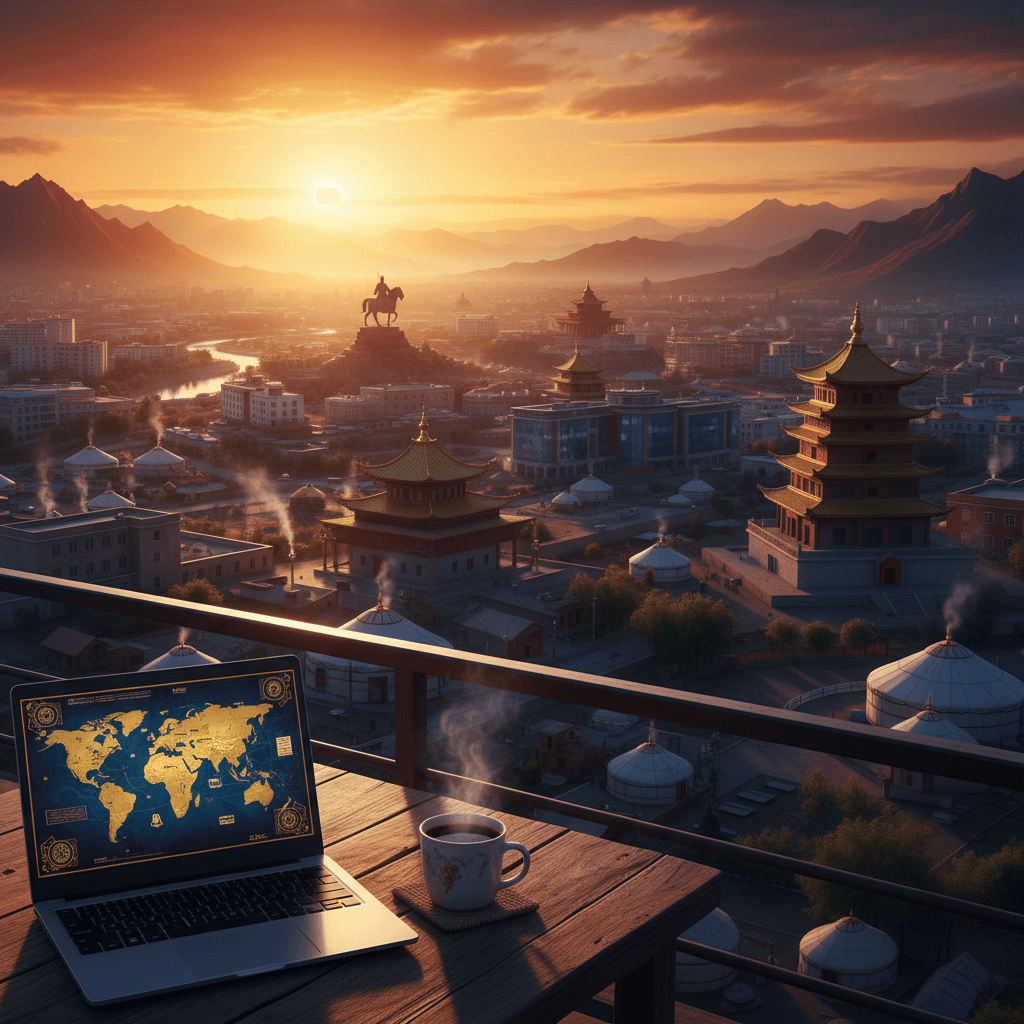
Chinggis City
🇲🇳 Mongolia
First, let's clear up the name. Locals and long-term expats still largely refer to this place as Ondorkhaan, but it was officially renamed Chinggis City in 2013 to honor the birthplace of the Great Khan. Located about 290 kilometers east of Ulaanbaatar [1], it serves as the capital of Khentii Province. It isn't your typical nomad hub like Chiang Mai or Lisbon. It is a frontier town, a place where the paved roads start to feel like a luxury and the vast Mongolian steppe begins to swallow the horizon.
The Frontier Energy
The vibe here is quiet, rugged, and deeply authentic. You won't find a dedicated coworking space with ergonomic chairs and fiber-optic internet. Instead, you'll find a community that moves to the rhythm of the seasons and the livestock trade. It feels like a place on the verge of something bigger, caught between its nomadic roots and a desire to be a gateway for history buffs tracing the life of Temujin. Most travelers use it as a 24 to 48 hour pitstop before heading deeper into the Khentii wilderness, but for a nomad who wants total isolation, it has a certain magnetic pull.
The emotional experience of being here is one of profound scale. You'll walk out of a small grocery store with a loaf of bread and look up to see a sky that feels twice as large as the one back home. It can be lonely if you aren't prepared for the language barrier, as English is rare outside of government offices or the occasional school. However, the hospitality is intense. If you stick around for more than a few days, the locals will notice, and you'll likely find yourself invited for milk tea or airag (fermented mare's milk) before the week is out.
Living Standards and Layout
The city is split between traditional ger districts, where white felt tents are enclosed by wooden fences, and Soviet-style apartment blocks. Most nomads who linger here opt for the few modern hotels or guesthouses near the city center. Prices are incredibly low compared to Ulaanbaatar. A solid meal at a local canteen will run you about 12,000 to 18,000 MNT ($3.50 to $5.50 USD), and a room in a decent guesthouse usually hovers around 60,000 MNT ($17 USD) per night.
- The Pace: Very slow. Business happens in the morning, and the town gets quiet by dusk.
- Connectivity: 4G coverage via Unitel or MobiCom is surprisingly reliable in the city center, though it drops to zero the moment you drive ten minutes out of town.
- The Look: A mix of colorful rooftops, dusty streets, and the winding Kherlen River which provides the town's primary scenic backdrop.
Why Nomads Choose It
You don't come to Chinggis City for the networking. You come here to disappear or to write that book you've been putting off. It offers a "digital detox lite" experience where you have enough internet to check emails, but none of the distractions of a modern metropolis. Expats in Mongolia often describe it as the last stop of "civilization" before entering the sacred and protected lands of the north. It's a place where you'll see a man in a traditional deel riding a motorcycle next to a Toyota Prius, perfectly capturing the country's transition into the modern age.
The air is crisp, the winters are brutal, and the summers are fleeting and beautiful. If you can handle the dust and the limited culinary variety, usually a heavy rotation of mutton, flour, and potatoes, you'll find a sense of peace that is impossible to replicate in the crowded streets of the capital. It's raw, it's honest, and it's quintessentially Mongolian.
The Local Economy
Living in Chinggis City, formerly known as Ondorkhaan, offers a significant price break compared to the capital. While Ulaanbaatar can get pricey for premium comfort, this provincial hub in Khentii stays grounded. You won't find the same density of high end luxury here, but your dollars or euros stretch remarkably far. Most digital nomads find they can live a comfortable, middle class lifestyle here for about $800 to $1,100 per month, all in.
The local currency is the Mongolian Tugrik (MNT). While some hotels might quote prices in USD, you'll be doing almost all your daily business in MNT. It's a cash heavy environment once you step away from the main supermarkets, so keeping a stack of 20,000 MNT notes is a smart move. Mobile banking via apps like Khan Bank or QPay is becoming the standard for locals, even at small stalls.
Housing and Utilities
Rental stock in the city center consists mostly of older Soviet style apartments and a few newer developments. You won't find many formal listings on international sites, so most expats work through local Facebook groups or word of mouth. A modern, furnished one bedroom apartment near the central square typically runs between 700,000 and 950,000 MNT per month. That is roughly $210 to $280.
Utilities are generally cheap, though heating is the big variable. Since the city relies on a central steam heating system, your radiators will be scorching from October through April. You can expect to pay around $40 to $60 a month for a package including electricity, water, and trash. High speed fiber internet is surprisingly reliable for a steppe town, costing about 50,000 MNT ($15) for a solid monthly plan.
Food and Dining
If you stick to the local diet of mutton, flour, and root vegetables, your grocery bill will be negligible. Meat is affordable and high quality, often sourced directly from nearby herders. A kilogram of beef or mutton usually costs around 15,000 to 18,000 MNT ($4.50 to $5.50). Imported goods like avocados, good cheese, or specific almond milks are rare and will double your bill if you can find them at the Nomin Supermarket.
- Casual lunch at a local canteen (guanz): 8,000 to 12,000 MNT ($2.50 to $3.50)
- Dinner for two at a nice restaurant: 45,000 to 70,000 MNT ($13 to $20)
- Large latte at a modern cafe: 7,000 to 9,000 MNT ($2.00 to $2.70)
- Domestic beer (0.5L): 5,000 MNT ($1.50)
Transportation and Logistics
Chinggis City is compact enough that you can walk almost anywhere within the central grid in 20 minutes. When it's too cold or you're carrying groceries, "gypsy cabs" are the way to go. You just stand by the road and stick your hand out. The unofficial flat rate for a short ride across town is usually 2,000 to 3,000 MNT ($0.60 to $0.90). Just make sure you have small change ready.
For trips back to Ulaanbaatar, the public bus is the most economical choice. A seat on a large, heated coach costs about 35,000 MNT ($10) for the 330 kilometer journey. If you prefer a private chauffeured car, expect to pay closer to 250,000 MNT ($75) for the vehicle. Most nomads find that a monthly transport budget of $50 covers all their local needs and at least one trip out of town.
Daily Essentials Summary
- Gym membership: 80,000 to 120,000 MNT ($24 to $35) per month
- SIM card with 50GB data: 30,000 MNT ($9) per month
- Cinema ticket: 12,000 MNT ($3.50)
- Loaf of fresh bread: 2,500 MNT ($0.75)
For Digital Nomads
Most nomads aim for the central areas of Chinggis City. This is the heartbeat of the city where the infrastructure is most reliable. You are within walking distance of local cafes like Ledo Coffee Shop or Chingis zoog, which serve as convenient spots for remote workers in town. Staying here means you won't have to battle the traffic gridlock that can define the outer areas.
- Rent: expect to pay $600 to $900 for a modern one-bedroom apartment.
- Vibe: high energy, walkable, and the most reliable fiber optic internet in the country.
For Expats and Long-Term Residents
If you are planning to stay for a few months or more, the city offers higher-end grocery stores that stock imported comforts you can't find elsewhere.
- Rent: luxury units range from $1,200 to $2,500 depending on the view.
- Vibe: quiet and affluent.
- Dining: plenty of international options, including high-quality Italian and Japanese spots.
For Families
The city provides a community feel with several schools located within a short drive of the residential areas. It feels less like a concrete jungle and more like a community, offering a pace that is slightly removed from the chaotic city center.
- Rent: $700 to $1,100 for a spacious three-bedroom apartment.
- Vibe: active and family-oriented.
For Solo Travelers
If you want to be where the action is, the area around the central market is perfect. It is the most "metropolitan" feeling part of the city, packed with local establishments and street food stalls. It is easy to meet people here, and you are never more than a short walk from convenience stores for quick meals.
- Rent: modest studios can be found for $400 to $550.
- Vibe: social, gritty in a charming way, and very central.
- Transport: you can catch almost any bus line from the main stops right outside your door.
Connectivity and Speed
While Chinggis City, formerly known as Onderkhaan, is the capital of the Khentii province, it doesn't have the high tech infrastructure of Ulaanbaatar. You can expect decent 4G coverage throughout the town center, but speeds vary significantly once you step inside thick walled Soviet era buildings. Most travelers find that a local SIM card is more reliable than hotel Wi-Fi.
Unitel and Mobicom are the two main providers here. You can pick up a SIM card at their shops near the main square for about $5 to $10, which usually includes a generous data package of 20GB to 50GB. Download speeds typically hover around 10 to 15 Mbps, which is plenty for emails and Slack, but you might struggle with high definition video calls during peak evening hours.
Coworking Spaces and Work Culture
You won't find any formal, dedicated coworking spaces in Chinggis City like the ones in the capital. The digital nomad scene here is tiny, so you'll be working alongside locals in public spaces or from your guesthouse. The concept of "working from a cafe" is understood but not nearly as common as it is in Ulaanbaatar.
Most expats recommend setting up a dedicated hotspot using your phone rather than relying on public networks. Power outages are rare but can happen during summer storms, so keeping a charged power bank is a smart move if you have a tight deadline.
Best Cafes for Remote Work
Since dedicated offices are non existent, these are the best spots to park your laptop for a few hours. Just remember to order something every hour or two to stay in the staff's good graces.
- Ledo Coffee: This is a confirmed local spot where you can find a comfortable environment for remote work. It offers a more modern cafe atmosphere suitable for focusing on tasks.
- Khentii Central Library: If you need absolute silence, the public library is a solid option. It lacks the "cool" factor of a cafe, but it's free and usually has a few desks near power outlets.
- Ezent Guren Hotel: This hotel is a reliable option for those needing a professional environment. They generally have quiet areas where you can work comfortably, especially if you are staying as a guest or visiting their dining facilities.
Digital Nomad Essentials
- Average Mobile Data Cost: $7 for a monthly 30GB plan.
- Typical Latency: 60 to 100ms when connecting to Asian servers.
- Power Plugs: Type C and Type E (European standard).
- Pocket Wi-Fi: Renting a portable device from Ulaanbaatar before heading east is highly recommended for backup.
If your work requires heavy lifting, like uploading large video files or managing live streams, you might find the local infrastructure frustrating. Most travelers suggest finishing your heavy data tasks in Ulaanbaatar before heading out to Khentii. For standard administrative work and writing, the local 4G is more than enough to get the job done while enjoying the slower pace of life in the east.
Staying Safe on the Steppe
Chinggis City, formerly known as Onderkhaan, is generally much quieter and safer than the capital, but it requires a different kind of awareness. You won't deal with the aggressive pickpocketing found in Ulaanbaatar markets, but the isolation of Khentii province brings its own set of rules. Most nomads find the local community welcoming, though it is best to avoid walking alone late at night near the outskirts where street lighting is sparse.
Alcohol related incidents can occur near local bars or during festivals like Naadam. If you see a group that seems rowdy, just give them a wide berth. Expats recommend keeping a low profile and avoiding flashy displays of technology when you are out in public squares. Petty theft is rare, but don't leave your laptop or bag unattended in a cafe while you use the restroom.
The biggest safety risk here is actually the environment. If you plan to head out into the surrounding countryside, never go alone without a local guide. The weather in eastern Mongolia changes in minutes, and it is easy to lose your bearings in the vast, open terrain. Winter temperatures regularly drop below -30°C, making high quality thermal gear a literal life saver rather than just a comfort choice.
Healthcare and Medical Services
Medical facilities in Chinggis City are basic. The Khentii Province General Hospital can handle minor injuries, stitches, or common infections, but they lack the advanced diagnostic equipment found in private international clinics. For anything serious, you will almost certainly need to be evacuated to Ulaanbaatar, which is about a 4 to 5 hour drive away on paved roads.
Most travelers carry a robust first aid kit. Stock up on basics like antibiotics, high strength painkillers, and rehydration salts before you leave the capital. English speaking doctors are rare in Khentii, so having a translation app or a local friend to help describe symptoms is vital. If you have a chronic condition, bring a full supply of your medication because local pharmacies often stock Russian or Chinese equivalents that might not match your specific brand.
- Emergency Number: Dial 103 for an ambulance, though response times vary.
- Pharmacy Hours: Most close by 8:00 PM, so don't wait until late at night to find medicine.
- Water Safety: Do not drink the tap water. Stick to bottled water which costs about 1,500 MNT for a 1.5 liter bottle.
Insurance Requirements
Standard travel insurance is a must, but you need to check the fine print for "repatriation" and "emergency evacuation" clauses. If you need an emergency flight out of eastern Mongolia, the costs can easily exceed $10,000. Many digital nomads use providers like SafetyWing or World Nomads, but ensure your policy covers off road travel if you plan on visiting the Khan Khentii Strictly Protected Area.
If you are staying long term on a residency permit, you might be required to contribute to the national social insurance scheme. However, most expats still maintain private international coverage to ensure they can access the SOS Medica or Intermed clinics back in Ulaanbaatar for specialized care. A typical consultation at a private clinic in the capital will run you about $40 to $80 out of pocket.
Getting Around the City
If you want to navigate the streets of Chinggis City, formerly known as Ondorkhaan, you will likely rely on street hailing or local apps if available. While digital services are expanding, this regional hub still relies heavily on the traditional method of standing by the road with your hand out. Private cars often act as unofficial taxis, which is the most common way to get a ride without playing a guessing game on the curb. Most rides within the central districts will set you back between 5,000 and 10,000 MNT.
While the city is much smaller and less congested than Ulaanbaatar, the "street hailing" culture is the primary mode of transport here. For those who don't speak fluent Mongolian, it can be helpful to have your destination written down or pinned on a map to show the driver. This eliminates the language barrier and ensures a more transparent experience regarding the route.
Walking the Central Core
Chinggis City is surprisingly walkable if you stay near the main administrative buildings and the central square. Most of the guesthouses, small supermarkets, and government offices are clustered within a 20 minute walking radius. The pavement quality can be hit or miss, so leave the fancy shoes at home. During the summer months, walking is the preferred mode for expats who want to avoid the dust of the unpaved side streets.
Be aware that the city layout is undergoing changes as it leans into its identity as the gateway to eastern Mongolia. You might find that some Google Maps pins are slightly off. Locals usually navigate by landmarks rather than street numbers. If you're looking for a specific cafe, ask for the nearest large bank or school; people will point you in the right direction much faster than a GPS will.
Public Buses and Regional Vans
The local bus system is cheap, costing about 500 MNT per ride, but it's rarely used by short term digital nomads. The routes aren't digitized in a way that's easy to follow, and the stops aren't always clearly marked. If you're feeling adventurous, look for the small buses circling the main thoroughfares. You pay the conductor in cash as you board.
For getting out of town toward the birthplace of Chinggis Khan or back to the capital, you'll head to the local bus station. This is where the "purgons" (Russian vans) and shared sedans congregate. A seat in a shared car to Ulaanbaatar usually costs around 35,000 to 50,000 MNT, though you should verify the current fare with local sources upon arrival. It's a long, bumpy ride that takes about 5 to 6 hours depending on the weather and the driver's lead foot. Most travelers recommend booking the large coach buses for a more comfortable, albeit slower, journey.
Logistics and Costs
- Short Distance Taxi Ride: 5,000 MNT
- Shared Car to Ulaanbaatar: 35,000 - 50,000 MNT
- Local Bus Fare: 500 MNT
- Airport Transfer: 30,000 MNT
Winter changes everything here. From November to March, walking becomes a feat of endurance rather than a pleasant stroll. Temperatures regularly drop below -20 degrees Celsius, making car transport a necessity. During this time, wait times for taxis increase significantly, so plan your departures at least 15 minutes earlier than you think you need to. Drivers are generally hardy, but the icy roads can turn a quick cross town trip into a slow crawl.
The Linguistic Landscape
In Chinggis City, formerly known as Ondorkhaan, you are stepping into a territory where English is still catching up to the local enthusiasm for hospitality. While the capital city of Ulaanbaatar has a growing population of fluent English speakers, here in the Khentii province, Mongolian is the undisputed king. You will find that younger people or those working in the few upscale hotels might have a basic grasp of English, but for daily life, you are going to be relying on translation apps and a lot of creative gesturing.
The Cyrillic alphabet is what you will see on every storefront, menu, and street sign. If you have spent time in Eastern Europe or Russia, you will recognize the characters, though the sounds they represent are distinctly Mongolic. It is a good idea to spend a few hours learning the alphabet before you arrive. Being able to sound out "Pekari" for bakery or "Restoran" for restaurant makes life significantly easier when your phone battery dies.
Essential Tech and Apps
Since you cannot rely on finding an English speaker at the local market or the bus station, your smartphone is your lifeline. Most nomads here use a combination of tools to get by without too much friction.
- Google Translate: Download the Mongolian language pack for offline use. The camera feature is a lifesaver for translating menus at local eateries like the ones near the Chinggis Khan Square.
- SayHi: Many expats prefer this for voice to voice translation. It handles the guttural nuances of Mongolian slightly better than other apps when you are trying to explain a specific dietary restriction.
- What3Words: Traditional addresses in Mongolia can be chaotic or nonexistent. Locals and delivery drivers often use this app to find specific entrances or locations in newer developments.
Communication Etiquette
Mongolians are generally direct but incredibly polite to guests. When you are struggling with the language, a smile and a slight nod go a long way. If you are invited into a home or a ger on the outskirts of the city, there are a few non verbal cues to remember. Always receive items with your right hand, or both hands if the object is heavy or important. Touching someone’s hat or head is a major faux pas, as the head is considered the seat of the spirit.
If you find yourself in a conversation where the language barrier feels like a wall, try mentioning Chinggis Khan or local wrestling. The pride for their history is immense, and showing even a surface level knowledge of Mongolian culture usually opens doors and softens any initial awkwardness.
Connectivity and Data
Staying connected is surprisingly easy and affordable. You won't find high speed fiber in every corner of the city, but the mobile data is reliable enough for most remote work tasks. Unitel and Mobicom are the two main providers you will see. Most travelers recommend picking up a SIM card at the airport or one of the main branches in the city center.
- Prepaid Data: You can get a 10GB to 20GB data plan for roughly $5 to $10 USD.
- Coverage: Expect solid 4G within the city limits, but it will drop to 3G or disappear entirely once you head into the deeper parts of the Khentii steppe.
- Public Wi-Fi: It is hit or miss. Larger cafes and hotels will have it, but the speeds are often shared among many users. If you have a deadline, stick to your own hotspot.
Key Phrases to Know
Even if your pronunciation is terrible, locals appreciate the effort. Start with these basics to break the ice:
- Sain baina uu: Hello (formal and most common).
- Bayarlala: Thank you.
- Zugeer, zugeer: It is okay or no problem.
- Bi Angliar yaridag: I speak English.
- Ene yamar unetei ve?: How much is this?
Most nomads find that after a week or two, they develop a rhythm. You will start recognizing the Cyrillic for "Bank" and "Apteka" (pharmacy) and realize that communication is more about patience than perfect grammar.
The Seasonal Reality
Chinggis City, formerly known as Onderkhaan, sits in the eastern steppe where the weather plays by its own rules. You have to respect the Mongolian climate; it is extreme, fickle, and capable of swinging 20 degrees in a single afternoon. Most nomads plan their stay between June and August. This is when the plains turn a deep green, the air is sweet with wild sage, and the temperatures hover comfortably between 20°C and 25°C (68°F to 77°F).
If you arrive in July, you'll catch the local Naadam festivities. It is a smaller, more intimate version of the massive celebration in Ulaanbaatar. You can get closer to the wrestling and horse racing without the crushing crowds of the capital. Just keep in mind that July is also the wettest month. Rain here usually comes in short, violent bursts that turn the dirt roads into a muddy mess, so bring sturdy boots even if the forecast looks clear.
The Shoulder Seasons
May and September are the wild cards. May brings the dust. High winds whip across the Khentii province, and the "yellow dust" from the Gobi can occasionally cloud the sky. It is a tough time for anyone with respiratory issues. However, if you can handle the grit, you'll see the land waking up from a long sleep, and accommodation prices are often 20% to 30% lower than in mid-summer.
September is many long-term travelers' favorite month. The heat fades, the flies die off, and the steppe turns a brilliant gold. The nights start to get crisp, often dropping to 5°C (41°F), so you'll need to make sure your guesthouse or apartment has the heating turned on. Most central heating in Mongolian cities doesn't kick in until September 15th, which can make for some chilly mornings if there is an early cold snap.
Surviving the Deep Freeze
Unless you are here for a specific cultural project or enjoy extreme isolation, avoid the winter months from November to March. Chinggis City is one of the coldest inhabited places you'll ever visit. Temperatures regularly bottom out at -30°C (-22°F) or lower. The air gets heavy, and because many homes still rely on coal for warmth, the air quality can take a massive hit.
If you do find yourself here in winter, your gear needs to be professional grade. Most nomads find that standard "winter" jackets from Western brands don't cut it. You'll want locally made camel wool socks and heavy-duty boots. The upside is the sky; it stays a piercing, brilliant blue for weeks on end, even when the ground is frozen solid.
Packing Essentials by Month
- June to August: Lightweight linen, a high-SPF sunscreen (the sun is brutal at this altitude), a windproof shell, and a high-quality power bank for when summer storms knock out the local grid.
- September and October: Thermal base layers, a down "puffer" jacket, and lip balm to fight the intense dryness.
- December to February: Professional arctic gear, heavy wool layers, and a filtered mask for the days when the coal smoke settles low over the city.
The dry air is the one thing that catches everyone off guard. Regardless of the season, you'll find yourself drinking twice as much water as usual. Expats living in the Khentii region recommend buying a humidifier for your workspace if you plan on staying more than a week; your skin and throat will thank you for it.
Getting Around
You'll quickly realize that Undurkhaan, recently renamed Chinggis City, isn't a place where you'll find a subway or a fleet of Ubers. Most people get around on foot since the central area is compact. If you need to cover more ground, local taxis are the way to go. You won't find a dedicated app here like you would in Ulaanbaatar; instead, you just stand by the road and hold out your arm with your hand pointing toward the ground. Private cars often act as unofficial taxis. A ride across town usually costs between 2,000 and 4,000 MNT.
For trips back to the capital, the paved road is a blessing. Shared minivans and buses depart from the main station. A seat in a public bus to Ulaanbaatar typically costs around 35,000 MNT and takes about 5 to 6 hours. If you're feeling adventurous and want to head further east to Choibalsan, expect the frequency of transport to drop and the dust levels to rise.
Connectivity and Power
Internet reliability is the biggest hurdle for remote work here. While 4G coverage from Unitel and Mobicom is surprisingly decent in the city center, it drops off fast once you hit the steppe. Most nomads recommend buying a local SIM card immediately. A 10GB data package costs roughly 15,000 MNT. Don't rely on hotel Wi-Fi for heavy video calls; it's often patchy and shared among too many guests.
Mongolia uses Type C and Type E plug sockets, the standard European two-pin variety. The voltage is 220V. Power outages aren't common in the city, but they do happen during heavy summer storms or winter spikes in demand. Carrying a high capacity power bank is a smart move if you're planning to work from a cafe or a guesthouse.
Money and Budgeting
The local currency is the Mongolian Tugrik (MNT). While Ulaanbaatar is becoming increasingly cashless, Chinggis City still leans heavily on physical bills, especially at the local markets (the "zakh"). You'll find a few Khan Bank and Golomt Bank ATMs near the main square that accept international Visa and Mastercard, but they occasionally run out of cash on weekends. Always keep a stash of small bills on you.
- Daily Budget (Budget): $25 to $35 for a guesthouse bed and local canteen meals.
- Daily Budget (Mid-range): $60 to $80 for a decent hotel room, a mix of cafes, and occasional private transport.
- Coffee: 5,000 to 8,000 MNT for a latte in a modern cafe.
- Beer: 4,000 to 6,000 MNT for a local brew like Sengur or Niislel.
Health and Safety
Chinggis City is generally very safe, even at night. The biggest physical threats are usually stray dogs or the extreme weather rather than crime. If you're out after dark, stay in well lit areas. The air quality in winter is much better than Ulaanbaatar because there is less heavy industry and fewer ger districts, but it still gets incredibly cold. Temperatures can plummet to -30°C in January, so high quality thermal gear is mandatory.
The local hospital can handle basic issues, but for anything serious, you'll want to be in Ulaanbaatar. Most expats recommend carrying a basic first aid kit with rehydration salts and charcoal tablets, as the change in diet and water can be tough on the stomach initially. Stick to bottled or filtered water; the tap water is fine for brushing teeth but shouldn't be your primary source of hydration.
Language and Etiquette
English isn't widely spoken here. You'll find some younger people who know the basics, but learning a few Mongolian phrases goes a long way. Use "Sain baina uu" for hello and "Bayarlalaa" for thank you. If you're invited into a home or a ger, remember to never step on the threshold of the door. It's considered bad luck. Always accept food or drink with your right hand, and try at least a small sip or bite of whatever is offered to show respect.
Need visa and immigration info for Mongolia?
🇲🇳 View Mongolia Country GuideHidden Gem
Worth the effort