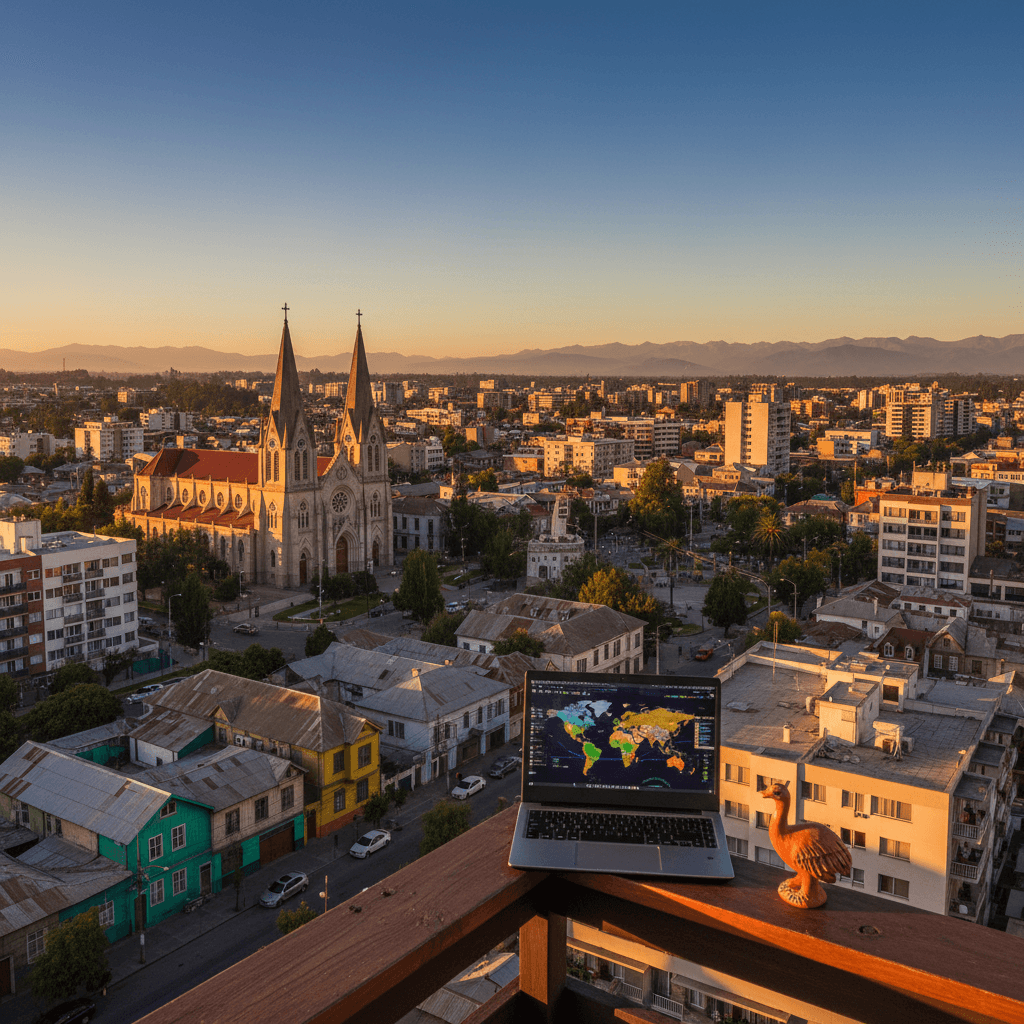
Chillán
🇨🇱 Chile
The Chillán Balance: Low-Key Living with High-Speed Tech
Chillán isn't the place you go to find a sprawling expat scene or a 24/7 party culture. Instead, it offers a slice of authentic Chile that most nomads overlook. Located in the heart of the Ñuble Region, this city feels like a large country town that grew up just enough to offer modern comforts without losing its agricultural soul. It is the kind of place where you can spend your morning hitting 318 Mbps download speeds on your laptop and your afternoon soaking in volcanic hot springs at the base of the Andes.
The vibe here is noticeably slower than Santiago. You'll trade the frantic energy of the capital for wide streets, local markets, and a community that still values a long lunch. It is a city of contrast; it’s the birthplace of legendary poet Gabriela Mistral and a gateway to some of the best skiing in South America at Termas de Chillán. For the nomad who wants to live comfortably on about $1,710 a month while staying connected to nature, it’s a compelling alternative to the more expensive coastal hubs.
Where to Plant Your Flag
While Chillán doesn't have the distinct "nomad districts" you might find in Valparaíso, the city breaks down into a few clear options depending on your priorities:
- Centro (Downtown): This is the functional heart of the city. It’s walkable, packed with local cafes, and provides easy access to the central markets. Most solo travelers land here for the convenience. Rent for a central apartment typically runs between $450 and $600.
- Villa Alegre: If you prefer a quieter, more residential atmosphere, this is the spot. It feels more like a neighborhood, with green spaces and a family-friendly vibe. It’s about 10 to 15 minutes from the center, so you’ll likely use buses or apps like Uber more often.
- Calle 18 de Septiembre: This is the commercial artery of the city. You’ll find the best concentration of shops and eateries here. It’s convenient, though the traffic noise can be a trade-off.
- The Outskirts: Nature lovers often look toward the road leading to the mountains. It’s peaceful and offers incredible views, but you’ll definitely need a car or a reliable transport plan to get into town for supplies.
The Digital Infrastructure
Don't let the rural surroundings fool you. The internet in Chillán is surprisingly elite. With average speeds often exceeding 300 Mbps, it’s actually more reliable for video calls and heavy uploads than many European hubs. While dedicated coworking spaces are still a growing concept, Digitalnomad.cl is the local player to watch, offering memberships around $30,000 CLP (roughly $30 USD) per month that often include workshops and networking events.
For mobile data, you can grab a prepaid SIM from Entel or WOM at almost any pharmacy or kiosk for $2.50 to $10. Most nomads find that the local cafe culture is welcoming to those with a laptop, provided you’re ordering coffee and empanadas. Just keep in mind that English proficiency is quite low here. You'll want to have Google Translate downloaded for offline use and brush up on basic Spanish phrases like "¿Cuánto cuesta?" to navigate daily life.
Life on the Ground
Cost of living is one of Chillán’s biggest draws. You can grab a street empanada for $3 or enjoy a full Chilean asado (barbecue) at a mid-range restaurant for about $12 to $15. Because the region is an agricultural powerhouse, fresh produce at the local markets is incredibly cheap and high quality.
Safety is generally a non-issue compared to larger Latin American metros. Petty theft and pickpocketing exist in the crowded Centro areas, but violent crime is rare. Most residents feel comfortable walking the main streets during the day, though travelers usually stick to ride-hailing apps like Uber or Cabify after dark. If you're coming from abroad, you’ll likely fly into Concepción and take a 1.5-hour drive, or catch a 5-hour bus from Santiago for about $20.
The best time to be here depends on your hobby. If you want the dry, warm 26°C days, aim for November through March. If you’re here for the world-class snow and the cozy volcanic thermal baths, June through August is your window. Just bring a heavy jacket; the Andean winters don't play around.
The Price of an Authentic Chilean Base
Living in Chillán feels like a well kept secret compared to the price tags of Santiago or Valparaíso. You can comfortably sustain a high quality lifestyle here for about $1,710 per month. Because this is the heart of Chile's agricultural region, your grocery budget goes much further here than in the capital, especially if you shop for fresh produce at the local Ferias. Most nomads find they can live quite well on a mid range budget of $1,200 to $1,700 without feeling like they're pinching pennies.
Monthly Budget Breakdown
- Housing: A modern studio or one bedroom apartment in the city center typically runs between $450 and $600. If you look toward the outskirts or older builds, you can find spots as low as $300, while high end builds with amenities might push past $650.
- Food and Dining: You can grab street empanadas or a quick merienda for $3 to $5. A mid range dinner at a local parrilla usually costs between $10 and $15, while an upscale meal with wine will rarely exceed $25.
- Transportation: Local buses are incredibly cheap at around $0.50 per ride. For quicker trips, Uber and Cabify are available for about $3 to $5 per cross town journey.
- Connectivity: High speed home internet plans cost roughly $25 to $35, and a local SIM card with a solid data package from providers like Entel or WOM is only about $10.
Where to Plant Your Flag
Centro is the go to for most solo nomads. It puts you within walking distance of the main markets and the best cafes. It's affordable, with rents hovering around $400 to $550, though it can get a bit noisy during the day. Just keep an eye on your belongings in crowded areas as petty theft can happen occasionally.
If you prefer a quieter, more residential vibe, Villa Alegre is the favorite for expats and families. It's greener and sits near several parks, offering a peaceful escape just 15 minutes from the city center. For those who want to be in the thick of the action, Calle 18 de Septiembre is the main commercial strip. It's packed with shops and eateries, making it very convenient, though you'll deal with more traffic noise.
Internet and Productive Spaces
The internet speeds in Chillán are a pleasant surprise for many, often averaging 318 Mbps. This is significantly faster than the national median, making it a reliable hub for video calls and heavy uploads. While dedicated coworking spaces are still emerging, Digitalnomad.cl offers a membership for about $30,000 CLP (roughly $30 USD) that provides access to a growing community and digital workshops.
The cafe culture is the backbone of the local remote work scene. You'll find plenty of spots in the center where the WiFi is free and the coffee is strong. For mobile data, travelers recommend Entel for the best coverage if you plan on heading into the nearby Andes or visiting the Termas de Chillán. You can pick up a prepaid SIM at almost any pharmacy or kiosk for under $10.
Practical Survival Tips
English proficiency is quite low here, so you'll want to brush up on your Spanish basics. Most locals are patient, but having Google Translate downloaded for offline use is a lifesaver in smaller shops. For banking, many nomads use Wise or Revolut to avoid high exchange fees, though you'll want to carry some cash for the smaller markets and local buses.
Safety is generally a non issue compared to larger South American hubs. Chillán has a lower crime rate than Santiago, though it's still smart to avoid walking alone in unfamiliar outskirts late at night. For healthcare, Hospital Herminda Martín provides reliable services, and local pharmacies like Farmacias Ahumada are found on almost every major corner in the downtown area.
For Solo Travelers and Nomads: El Centro
If you want to be where the action is, El Centro is your best bet. It's the functional heart of the city, dominated by the Plaza de Armas and the famous Mercado Municipal. Living here puts you within walking distance of the best cafes and the few spots where you might find a reliable 318 Mbps connection. It feels like an authentic Chilean hub rather than a tourist trap.
- Rent: Expect to pay between $400 and $550 for a central apartment.
- Vibe: Fast paced during the day, quiet at night. It's perfect for those who don't want to deal with the logistics of local buses.
- Practicality: You'll have easy access to supermarkets like Lider and the main transport terminals for weekend trips to the mountains. Just keep an eye on your phone in crowded market areas, as petty theft can happen.
For Expats and Long-Termers: Villa Alegre
Most expats who settle in Chillán for more than a few months gravitate toward Villa Alegre. It's a more polished, residential neighborhood that trades the grit of the city center for green spaces and quiet streets. It's the kind of place where neighbors actually know each other, which helps if you're trying to practice your Spanish outside of a classroom setting.
- Rent: Prices sit in the $450 to $600 range for a comfortable house or modern flat.
- Vibe: Relaxed and safe. It feels worlds away from the downtown noise even though it's only a 10 to 15 minute commute.
- Pros: Better air quality and less traffic. It's a great spot if you're working from home and need a quiet environment for Zoom calls.
For Social Seekers: Calle 18 de Septiembre
Technically part of the extended downtown area, the strip along 18 de Septiembre is the closest thing Chillán has to a "nomad row." It's packed with commercial energy, small eateries, and shops. If you're looking to meet people, you'll likely find them in the cafes here. Digitalnomad.cl often coordinates events in the region, and this area is usually the meeting point for local workshops.
- Food: This is the place for a $10 lunch special or a quick $3 empanada between deep work sessions.
- Vibe: Busy and convenient. You've got everything you need within a three block radius.
- Connectivity: Mobile signals from Entel and WOM are strongest here, making it a safe choice if you rely on a 5G hotspot.
For Nature Lovers: The Outskirts and Las Trancas
If you're in Chillán specifically for the Andes, you might skip the city entirely and head toward the mountains. While not a traditional neighborhood, the area near the Termas de Chillán is a magnet for seasonal nomads during the winter ski season. It's a different lifestyle altogether, focused on crisp air and thermal pools rather than city conveniences.
- Rent: Higher seasonal rates, often $600+ for decent cabins.
- Transport: You'll definitely need a car or a regular budget for the local buses that run up the mountain.
- The Trade-off: You get world class skiing and hiking at your doorstep, but you'll sacrifice the high speed fiber optic lines found in the city center. It's better for a "work-cation" than a permanent base.
For Families: Northern Residential Zones
Families usually look toward the newer developments on the northern edge of the city. These areas offer more modern builds with better insulation, which is a big deal during the cold, rainy months between May and September. You're closer to private schools and larger parks, providing a much higher standard of living for a monthly budget of around $1,710.
- Rent: $600 to $800 for larger, family sized homes.
- Vibe: Suburban and secure. It's very car dependent, so factor in the cost of ride hailing apps like Uber or Cabify to get around.
- Healthcare: These neighborhoods offer the quickest access to private clinics and the Hospital Herminda Martín.
Connectivity in the Cloud (and the Andes)
If you are coming to Chillán expecting the spotty connection of a rural farm town, you are in for a surprise. Chile consistently punches above its weight in global internet rankings, and Chillán is no exception. With average download speeds exceeding 300 Mbps, the city outperforms many major North American hubs. Whether you are running heavy video calls or uploading massive files, the infrastructure here is rock solid.
Most modern apartments in the Centro or near Calle 18 de Septiembre come equipped with fiber optic lines. Local providers like Entel and Movistar dominate the market. If your Airbnb host hasn't mentioned the speed, just ask them for a screenshot of a test; usually, a standard home plan costs between $25 and $35 per month and provides more bandwidth than a solo nomad could ever realistically use.
Coworking and Community
The coworking scene in Chillán is still in its early stages compared to the saturated market in Santiago. You won't find a WeWork on every corner here. Instead, the community gravitates toward local initiatives and a growing cafe culture. Many local entrepreneurs focus heavily on digital skills and workshops, which is a great way to meet people even if you are working remotely for a company back home.
For those who prefer a "laptop and latte" setup, the Centro district is your best bet. While English isn't widely spoken, the staff in central cafes are used to students and professionals lingering over a coffee. Just keep an eye on your gear in busier areas, as petty theft can happen in high traffic spots. If you need a break from your apartment, look for spots near the local libraries or the main plazas where public Wi-Fi is often available, though it won't match your home fiber speeds.
Mobile Data and SIM Cards
Don't rely solely on Wi-Fi. Chile’s 4G and 5G coverage is excellent, even as you head toward the outskirts or toward the Termas de Chillán. You can pick up a prepaid SIM card at almost any pharmacy like Farmacias Ahumada or small kiosks for $2.50 to $10. Expats generally recommend the following providers:
- Entel: Best overall coverage, especially if you plan on heading into the mountains for weekend ski trips.
- WOM: Often has the cheapest data packages and is popular with the younger, tech savvy crowd.
- Movistar & Claro: Reliable backups with competitive prepaid "bolsas" (data bundles).
Digital Nomad Practicalities
While the tech is fast, the bureaucracy moves at a traditional Chilean pace. If you are planning a long term stay for the 2025 or 2026 season, note that Chile does not have a specific Digital Nomad Visa; consider tourist extensions (90+90 days) or a Rentista visa for passive income earners. Once you have your residency sorted, you can apply for a RUT (national ID), which makes everything from signing a gym contract to getting a local bank account significantly easier.
For daily finances, most nomads find that Wise or Revolut works perfectly for card payments at cafes and supermarkets. However, keep some cash on hand for the traditional markets in the Centro. If you need an ATM, stick to BancoEstado or other major banks to avoid high third party fees. You'll find that $1,710 a month goes a long way here, especially when you aren't paying the premium prices of the capital city.
Staying Safe in Chillán
Chillán is generally much quieter and safer than the chaotic streets of Santiago. You'll find a relaxed pace here where people still take their afternoon siestas and the local police, known as Carabineros, maintain a visible presence. Most nomads feel comfortable walking the central streets during the day, though it's smart to keep your phone tucked away in the Centro district to avoid opportunistic petty theft.
When the sun goes down, stick to well lit areas like Calle 18 de Septiembre. While there aren't specific "no-go" zones, the outskirts can get lonely and dark at night, so it's better to call a ride if you're heading back to a residential villa after a late dinner. Locals recommend keeping a low profile and not flashing expensive tech in the public markets, which are the only places where crowds get thick enough for pickpockets to operate effectively.
If you do run into trouble, keep these numbers programmed into your phone:
- 133 for the Police (Carabineros)
- 132 for the Fire Department (Bomberos)
- 131 for an Ambulance
Healthcare Infrastructure
Chile has one of the best healthcare systems in South America, and Chillán is well equipped to handle everything from a stubborn flu to a skiing injury from the nearby slopes. The city is home to Hospital Herminda Martín, a major public facility that handles emergencies. However, most expats and nomads prefer private clinics for faster service and more modern amenities.
For routine issues or specialist visits, look for "Clínicas" rather than "Hospitales." You'll find that private care is efficient, though you should expect to pay upfront if you don't have local insurance. Most doctors in the private sector speak some English, but it's helpful to have a translation app ready just in case. For minor ailments, the city is packed with pharmacies like Farmacias Ahumada or Cruz Verde, which are easily spotted by their bright neon signs in the city center.
Insurance and Practicalities
Don't rely on the local public system for anything but a dire emergency. It's highly recommended to carry international nomad insurance that covers medical evacuations, especially if you plan on spending your weekends trekking through Ñuble National Park or skiing at the Termas de Chillán. A typical visit to a private doctor might cost between $40 and $70 out of pocket, while prescription meds are generally more affordable than in the US or Europe.
Tap water in Chillán is technically safe to drink, though the high mineral content can be tough on sensitive stomachs. Most long term residents stick to filtered water or buy large 5 liter jugs from the supermarket for a couple of dollars. If you're heading into the mountains, remember that the sun is incredibly strong at high altitudes; locals never leave home without high SPF sunscreen, even on overcast days.
Emergency Summary
- Primary Hospital: Hospital Herminda Martín (Public)
- Pharmacy Chains: Cruz Verde, Salcobrand, Farmacias Ahumada
- Emergency Apps: SOS AFAL for local alerts
- Safety Tip: Use Uber or Cabify for late night trips rather than hailing a cab on the street.
Getting Around the City
Chillán is a city of two speeds. In the Centro, you'll find a grid system that's incredibly easy to navigate on foot. Most nomads choose to live near the central markets or the commercial strip on Calle 18 de Septiembre, where the majority of cafes and services are packed into a walkable radius. If you're staying in these central pockets, your daily commute will mostly consist of a short stroll.
When you need to cover more ground or head to residential spots like Villa Alegre, the local bus system (micros) is your best friend. These are frequent, efficient, and cost between $0.50 and $1 per ride. It's a no frills experience, but it's the most authentic way to see the city. Keep some small change on you, as cash is still king for bus fares here.
Ride-Hailing and Taxis
While Santiago is dominated by apps, Chillán is a bit more traditional. Uber and Cabify do operate here, but wait times can be longer than you might be used to, especially outside of peak hours. Expect to pay around $3 to $5 for a typical cross-town trip. Many locals still rely on colectivos, which are shared taxis that run fixed routes. They look like regular cars but have signs on the roof indicating their destination. They're slightly faster than the bus and very affordable, though they can be confusing for newcomers until you learn the routes.
Reaching the Mountains
One of the main draws of living here is the proximity to the Termas de Chillán. Since the ski resort and hot springs are about an hour away, you'll need dedicated transport. During the high season from June to August, private shuttles and tour operators run daily from the city center. If you're heading up for a weekend of snowboarding or hiking, a bus ticket will usually set you back about $10 to $15. For those planning frequent trips to the Andes, renting a car is the only way to go, though most nomads find the occasional shuttle sufficient.
Regional Connections
Chillán doesn't have its own major commercial airport, so getting here requires a little planning. Most travelers fly into Concepción, which is about a 1.5 hour drive away. From there, you can grab a transfer or a bus. Alternatively, many nomads take the long distance bus from Santiago. The 5 hour journey costs roughly $20 and is surprisingly comfortable if you book a "Semi-Cama" or "Salón Cama" seat with Pullman Bus or Turbus. The train service from Santiago is also a scenic, reliable option that drops you right near the city center.
Biking and Micromobility
The flat terrain in the city center makes cycling a viable option, though dedicated bike lanes are still a work in progress. You'll see locals on bikes everywhere, particularly near the university areas. If you're staying for more than a month, expats often recommend picking up a second hand bike through Facebook Marketplace to save on daily transport costs.
Summary of Costs
- Public Bus: $0.50 to $1 per ride
- Ride-hailing (Uber/Cabify): $3 to $5 per trip
- Monthly Transport Budget: $50 for frequent users
- Long Distance Bus (to Santiago): $20
- Airport Transfer (from Concepción): $30 to $50
The Local Dialect and Chilean Spanish
Expect a bit of a linguistic hurdle when you arrive. In Chillán, Spanish is the undisputed king. While the city is modernizing, English proficiency remains low once you step away from the front desks of high end hotels or the ski resorts at Termas de Chillán. Most locals speak "Chileno," a dialect famous for its speed, dropped "s" sounds, and unique slang known as chilenismos.
You'll hear the word "bacán" for something cool and "fome" for something boring. If someone calls you "po," don't overthink it; it's just a filler word tacked onto the end of almost every sentence. Because Chillán is an agricultural hub rather than a tourist trap, you won't find many English menus in the local parrillas. Learning the basics isn't just a courtesy here; it's a survival tool for daily life.
Essential Phrases for Daily Life
To get by at the markets in the Centro or when chatting with a neighbor in Villa Alegre, keep these phrases in your back pocket:
- ¿Cachai?: You understand? (You’ll hear this constantly).
- ¿A cuánto está...?: How much is this? (Vital for the local fruit stalls).
- La cuenta, por favor: The bill, please.
- ¿Habla inglés?: Do you speak English? (The answer will often be "un poquito" or "no").
Digital Tools and Connectivity
Since English isn't widely spoken, your phone will be your best friend. Most nomads recommend downloading the Spanish pack on Google Translate for offline use. It's particularly helpful for the camera feature, which can translate printed menus or signs in real time. For texting local friends or business owners, WhatsApp is the universal standard in Chile. Don't bother calling; just send a voice note or a text.
Communication isn't just about the spoken word, it's about staying online. Chillán punches well above its weight with internet speeds, often hitting 318 Mbps. To stay connected on the move, grab a prepaid SIM card from Entel or WOM. You can find these for about $5 to $10 at most pharmacies like Farmacias Ahumada or small kiosks in the city center. They usually offer generous 5G data packages that make using translation apps seamless while you're out exploring.
Social Etiquette and Networking
People in Chillán are generally warm but traditional. When meeting someone, a single kiss on the right cheek is the standard greeting between women or between men and women. Men usually stick to a firm handshake. Punctuality is a bit more relaxed here than in Northern Europe or the US, so don't be surprised if a social meetup starts 15 to 20 minutes late.
If you're looking for an English speaking community, it's fairly small. Your best bet is to head to Digitalnomad.cl events or workshops. They offer memberships for around $30 USD per month and are a great bridge for expats trying to find their footing. You can also check Facebook groups like "Arriendo Chillán" or Santiago based expat groups, as many people there have connections in the Ñuble Region. Most nomads find that showing even a little effort to speak Spanish opens doors and results in much friendlier service at the local cafes.
The Seasonal Rhythm
Chillán operates on a clear, two-act seasonal schedule. Because it sits in the shadow of the Andes, the weather here is more dramatic than in coastal Valparaíso. You'll experience a Mediterranean climate that swings from sun-drenched, dusty summers to crisp, snowy winters that turn the nearby peaks into a playground.
Most nomads find the sweet spot between November and March. During these months, the sky is a constant, brilliant blue and temperatures hover comfortably between 20°C and 28°C. It's the ideal time to explore the local markets in the Centro or take weekend trips into the Ñuble Region without worrying about rain gear. The air is dry, the days are long, and the local parks like those near Villa Alegre are at their greenest.
Winter and the Alpine Draw
If you're here for the snow, June through August is your window. While the city itself stays chilly with averages around 8°C to 10°C, the Termas de Chillán resort transforms into one of the premier ski destinations in South America. Be prepared for the wet season, though; rainfall is highest during these months, and the damp cold can feel biting if your apartment doesn't have solid heating.
Travelers often say the "shoulder" months of October and April are underrated. You'll avoid the peak summer heat and the winter slush, though you should keep an umbrella handy for the occasional spring shower. If you're planning to work from a cafe on Calle 18 de Septiembre, these quieter months offer a more authentic look at local life without the tourist crowds heading toward the mountains.
Best Times for Your Budget and Lifestyle
- Peak Season (December to February): Best for hiking and outdoor festivals. Expect slightly higher prices for short-term rentals and more foot traffic in the central markets.
- Ski Season (July to August): The city serves as a basecamp. Accommodations near the mountain outskirts will be at a premium, and transport to the slopes gets busy.
- The Quiet Window (April to May): Great for those who want to hunker down and focus on work. The 318 Mbps internet speeds remain stable, and you'll have your pick of local empanada spots without the wait.
Monthly Climate Quick Guide
- January to March: Highs of 26-28°C. Dry, sunny, and perfect for exploring the birthplace of Gabriela Mistral.
- April to May: Cooling down to 15-18°C. Increasing rain, beautiful autumn colors in the valley.
- June to August: Coldest months, 5-12°C. Heavy rain in the city and heavy snow in the mountains.
- September to December: Warming up. Spring blossoms and the start of the trekking season in Ñuble National Park.
Expats recommend packing layers regardless of when you visit. Even in the heat of January, the Andean breeze can make the evenings surprisingly cool. If you're arriving in winter, prioritize finding an apartment with "climatización" or a reliable heater, as older builds in the Centro can get drafty when the southern winds pick up.
Getting Settled and Staying Connected
Chillán is a bit of a sleeper hit in the nomad world. While it doesn't have the frantic energy of Santiago, it makes up for it with a surprisingly robust infrastructure. You can expect a comfortable lifestyle for around $1,710 per month, though savvy travelers often get by on much less if they lean into the local markets and public transit.
The internet is the real headline here. Despite its rural, agricultural reputation, Chillán offers blazing speeds averaging 318 Mbps. It's some of the best connectivity in the country. While you won't find a WeWork on every corner, Digitalnomad.cl is the local go to for community and workshops, with memberships starting around $30 USD per month. For daily work, the cafe culture in the city center is welcoming, provided you've got a decent data backup.
Pick up a prepaid SIM card at any pharmacy or kiosk for $2.50 to $10. Entel and Movistar generally offer the most reliable 5G coverage in the Ñuble Region. If you're staying long term, look into getting a RUT ID after your visa is sorted; it'll make everything from banking at BancoEstado to signing up for home fiber much easier.
Recommended Neighborhoods
- Centro (Downtown): This is the hub for most solo nomads. You're within walking distance of the central markets and most cafes. A studio or one bedroom here typically runs between $450 and $600. It can get a bit noisy, and you'll want to keep an eye on your bag in crowded areas, but the convenience is hard to beat.
- Villa Alegre: Expats and those staying for a few months often prefer this area. It's quieter, greener, and feels more residential. It's about a 15 minute trip from the center, making it a great middle ground for focus and family life.
- Calle 18 de Septiembre: This is the city's commercial artery. If you want to be steps away from eateries and shops, look for apartments along this strip. Prices are comparable to Centro, though traffic can be a nuisance.
- The Outskirts: If you're here for the mountains, you might consider staying closer to the Termas de Chillán. It's luxury territory with easy ski access, but you'll definitely need a car and a bigger budget.
Navigation and Logistics
Moving around the city is affordable. Local buses are efficient and cost less than $1 per ride. While Uber and Cabify operate here, they aren't as omnipresent as they are in the capital, so don't rely on them for late night airport runs. For longer trips, Pullman Bus is the standard for reaching Santiago, which is about a 5 hour ride for roughly $20.
Chile is generally safe, and Chillán is even more relaxed than Santiago. Standard precautions apply: don't flash expensive tech in the Centro and avoid wandering into unfamiliar outskirts after dark. If you have a medical emergency, Hospital Herminda Martín is the primary facility in town. Dial 131 for an ambulance or 133 for the police.
Climate and Timing
The best time to visit depends entirely on your hobbies. For warm, dry weather and outdoor hiking, aim for November to March, when temperatures hover around 26°C. If you're a skier, June to August is your window, though be prepared for cold, rainy days in the city with highs of only 10°C.
Language and Social Life
English proficiency is quite low here. You'll need at least basic Spanish to navigate the local ferias (markets) or talk to your landlord. Most nomads find that the community is small but welcoming. Socializing usually revolves around low key bars or weekend trips to the hot springs. Use Facebook groups or InterNations to find other expats, though you'll likely find yourself befriending locals at the asados (barbecues) that define the region's social scene.
Cost Breakdown
- Studio Apartment: $450 to $600 per month in central areas.
- Local Meal: $3 to $5 for empanadas or street food; $12 for a mid range restaurant.
- Coworking: $30 per month for basic memberships or community access.
- Transport: $0.50 per bus ride; $50 for a monthly pass.
Need visa and immigration info for Chile?
🇨🇱 View Chile Country GuideHidden Gem
Worth the effort