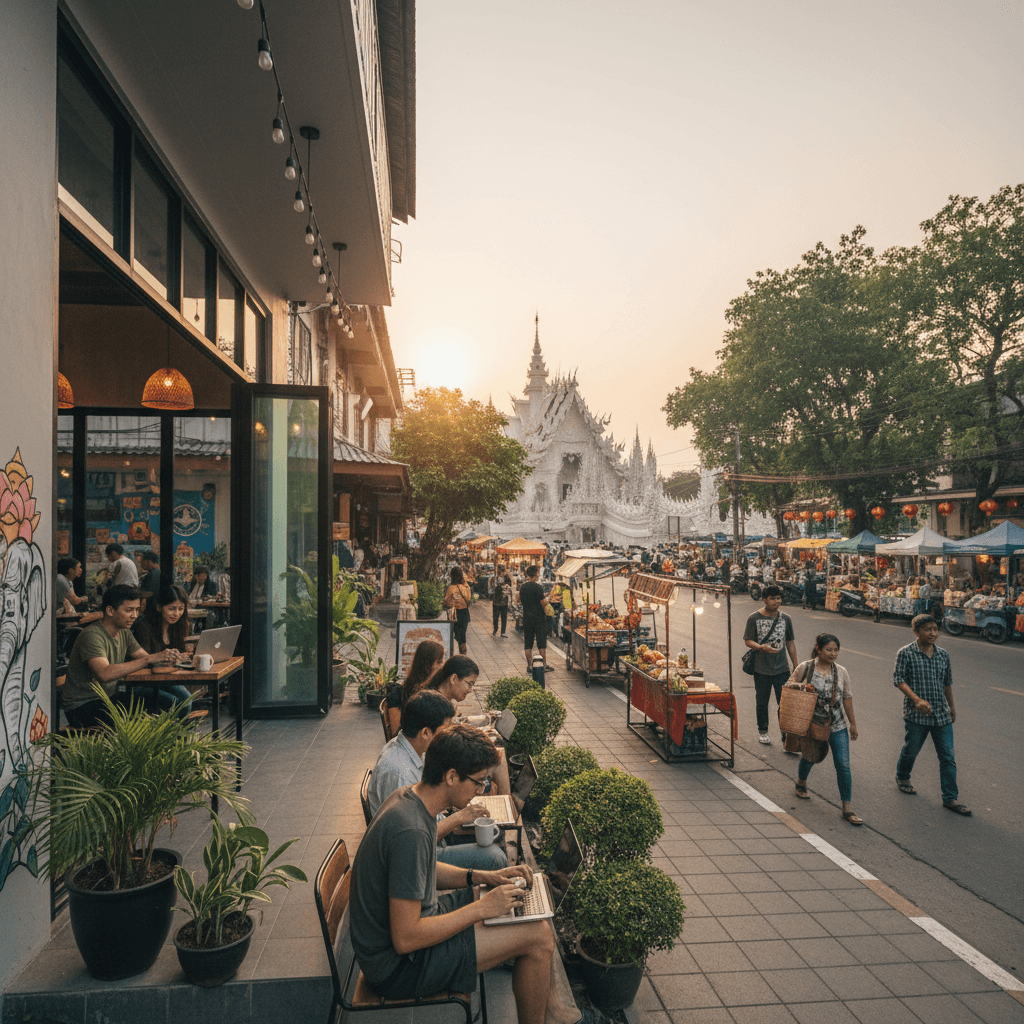
Chiang Rai
🇹🇭 Thailand
The Vibe: Northern Calm and Creative Space
If Chiang Mai is the busy older sibling, Chiang Rai is the artistic, introverted younger brother who’s perfectly happy sipping a pour-over coffee by the river. It offers a slower, more intentional pace of life that appeals to nomads who’ve outgrown the frantic energy of bigger hubs. You’ll find a unique blend of Lanna heritage, hill tribe influences, and a modern art scene that feels more authentic and less commercialized than other parts of Thailand.
The emotional experience here is one of quiet productivity. Many nomads find that the lack of overwhelming nightlife options actually helps their focus. Instead of late-night clubbing, your social life will likely revolve around sunset markets, live acoustic music, and community dinners. It’s a place where you can breathe, surrounded by tea plantations and misty mountains, while still having access to high-speed fiber internet and modern comforts.
Cost of Living
Chiang Rai is remarkably easy on the wallet, even by Thai standards. You can live a high-quality life here for significantly less than in Bangkok or the southern islands. On average, a single person can live comfortably on about $900-1,000 USD (30,000-33,000 THB) per month, including rent and dining out.
- Housing: A modern studio or one-bedroom apartment in the city center typically runs around 8,000-12,000 THB ($240-360). If you look toward the outskirts, you can find even better value for larger spaces.
- Food: Street food remains the gold standard for value, with a meal at the Night Bazaar costing about $2 (67 THB). A mid-range dinner for two at a nice spot like Sa Bun Nga Khantoke will cost around $16 (540 THB).
- Utilities & Data: Expect to pay roughly $15 (500 THB) for high-speed home internet and $10, $30 for an unlimited mobile data plan through AIS or TrueMove.
Where to Set Up Base
Choosing a neighborhood depends on how much "city" you actually want in your daily life. Experienced expats recommend looking at these three distinct areas:
- Central Chiang Rai (Clock Tower): This is the heart of the action. It's the most walkable area, putting you steps away from the best cafes, the Saturday Walking Street, and the main transport hubs. It’s perfect for solo travelers who want to be near the energy, though it can get a bit noisier at night.
- Huay Pla Kang: Located in the hills just outside the center, this area offers a more rural, "green" lifestyle. It’s popular with families and long-term expats who enjoy the Akha tribe influences and cooler mountain air, though you’ll definitely need a scooter to get around.
- Ban Mai: Situated across the Kok River, this is a developing area that nomads are increasingly gravitating toward. It’s home to several new restaurants and shops, offering a balanced mix of local life and modern amenities without the central tourist crowds.
Internet, Coworking, and Productivity
Don't let the sleepy atmosphere fool you; the infrastructure is solid. Fiber optic internet is the standard, with speeds frequently hitting 50-300+ Mbps. While the coworking scene is smaller than in Chiang Mai, the quality is high and the spaces are rarely overcrowded.
One Workspace in the Santitham area is the go-to for serious deep work, offering day passes for about 300 THB and monthly memberships for 3,500 THB. For a more relaxed "laptop and latte" vibe, The Story 106 is a favorite where a drink purchase gets you reliable WiFi. If you’re looking for a community feel, The Social Club in the Old Town offers a coliving and coworking environment that makes it easy to meet other remote workers.
Getting Around and Staying Safe
The city center is quite walkable, but to see the best of the region, you’ll want wheels. Grab and Bolt are the most reliable ride-hailing apps for quick trips or airport transfers, which usually cost between 150, 200 THB. For more freedom, monthly scooter rentals through local rental shops like those at Bus Station 1 cost around 3,000 THB.
Safety is one of Chiang Rai’s biggest draws, with a very high safety index and low crime rates. Use common sense at the Night Bazaar regarding petty theft, but generally, you’ll feel very secure walking around. For healthcare, Bangkok Hospital Chiang Rai is a modern private facility that handles most international insurance and has English-speaking staff.
When to Go
The weather will largely dictate your daily routine. The cool, dry season from November to February is peak time, with temperatures hovering between 20°C and 28°C. It’s perfect for exploring the tea hills or working from outdoor cafes. Travelers often suggest avoiding the peak of the rainy season in July and August, as heavy downpours can disrupt travel plans and outdoor activities.
The Cost of Living in Chiang Rai
If you're looking for a base that balances affordability with a high quality of life, Chiang Rai is one of the most practical choices in Southeast Asia. Monthly costs for a single person average around $900-1,000 USD (30,000-33,000 THB), which covers rent, food, and local transport. It’s significantly more budget-friendly than Bangkok or even neighboring Chiang Mai, making it a favorite for those who want their budget to stretch further without sacrificing comfort.
Most nomads find that a budget of 15,000, 20,000 THB per month is plenty for a simple, local lifestyle. If you prefer a mid-range experience with more frequent cafe visits and a modern apartment, expect to spend 25,000, 35,000 THB. For those seeking a "no-compromise" lifestyle with upscale dining and luxury housing, 40,000 THB and up provides a very comfortable standard of living.
Housing and Neighborhoods
Rent is likely where you'll see the biggest savings. A studio or one-bedroom apartment in the city center typically costs around 7,600 THB ($227). If you don't mind a short scooter ride, prices in the outskirts drop even further, often averaging 8,100 THB for larger spaces. Expats often recommend searching via Facebook groups or Lazudi rather than standard booking sites to find the best long-term rates.
- Central Chiang Rai (Clock Tower area): This is the go-to for solo travelers and short-term nomads. It's highly walkable and puts you right next to the Night Bazaar and the best cafe clusters, though it can get a bit noisier at night.
- Huay Pla Kang: Located in the hilly northern outskirts, this area is popular with families and long-term expats. It offers a cooler, greener environment with Akha tribe influences, though you'll definitely need your own wheels to get around.
- Ban Mai: Situated just across the Kok River, this is an emerging spot for nomads. It's seeing a wave of new shops and restaurants, offering a quieter alternative to the city center while remaining close to the action.
- Bandeu: A quiet, suburban neighborhood that is perfect for families who want a residential feel while staying within a short drive of the city's amenities.
Eating and Socializing
Food is both a highlight and a major cost-saver here. You can grab street food for as little as 67 THB ($2) at the Saturday Walking Street. Local favorites like khao soi and sai ua are everywhere. For a mid-range sit-down dinner for two, you're looking at roughly 540 THB ($16), while a traditional Lanna set at Sa Bun Nga Khantoke costs about 500 THB.
The social scene is more relaxed than in larger Thai cities. You won't find a massive clubbing circuit, but there are plenty of live music bars and markets that stay active until midnight. Many nomads connect through local Facebook expat groups or by hanging out at The Social Club in the Old Town to meet like-minded remote workers.
Internet and Productive Spaces
Reliable connectivity is a standard here, with fiber speeds ranging from 50 to 300+ Mbps. Monthly home internet bills usually fall between 500 and 1,500 THB. For mobile data, experienced travelers recommend picking up a 4G/5G SIM from AIS or TrueMove, with unlimited tourist plans ranging from 300 to 1,000 THB.
- One Workspace: Located in Santitham, this is a dedicated spot for deep work. A day pass is roughly 300 THB, while monthly memberships go for about 3,500 THB.
- The Story 106: A popular cafe where the "spend-for-WiFi" model is the norm. It's a great spot for casual laptop work in a central location.
- The Social Club: This coliving and coworking space offers a more community-focused vibe and is generally more affordable for those staying long-term.
Getting Around and Practicalities
The city center is walkable, but you'll want a scooter for exploring the tea plantations or temples. Monthly scooter rentals cost around 3,000 THB through services like CityGlide. For quick trips, Grab and Bolt are the most reliable apps; an airport transfer usually costs between 150 and 200 THB. Local songthaews (red trucks) run fixed routes for 20, 60 THB.
Healthcare is high-quality and accessible. Bangkok Hospital Chiang Rai is the primary choice for private, modern care, while Mae Fah Luang University Medical Center is another reputable option. Pharmacies are everywhere, and for any emergencies, you can dial 1155 for the Tourist Police or 1669 for medical assistance.
For Nomads and Solo Travelers: Central Chiang Rai
If you want to be in the heart of the action, the area surrounding the Clock Tower is the place to be. It’s the city’s primary transport hub, making it easy to hop on a songthaew for 20-60 THB or catch a Grab to the airport for around 150-200 THB.
Many nomads find this neighborhood ideal because of its walkability and high density of "work-friendly" spots. You can grab a desk at One Workspace in Santitham for a day pass of 300 THB, or join the community at The Social Club in the Old Town for a more social, coliving vibe.
While it can get a bit noisier and more crowded during the evening markets, travelers often note that the convenience is unbeatable. You’re steps away from the Night Bazaar and Saturday Walking Street, where you can find khao soi for as little as 2 USD (67 THB).
For Expats and Long-Termers: Ban Mai
Located just across the Kok River, Ban Mai is quickly becoming the go-to choice for digital nomads and expats looking for a modern lifestyle. It feels a bit fresher than the old center, with a steady stream of new shops and restaurants opening up.
Experienced expats recommend this area because it offers a quieter atmosphere without sacrificing access to city amenities. You’ll find better deals on modern housing here, with 1-bedroom apartments averaging around 242 USD (8,100 THB) per month.
The neighborhood is still developing, so it lacks the historical density of the Clock Tower area, but it provides a great balance of local life and nomad-centric infrastructure. It’s a smart pick if you plan on staying for a few months and want a "neighborhood" feel.
For Nature Lovers and Peace Seekers: Huay Pla Kang
If you prefer waking up to mountain views rather than city streets, head toward Huay Pla Kang. This hilly, green district is influenced by Akha tribe culture and offers a much slower pace of life. It’s perfect for those who don't mind a short commute in exchange for fresh air and natural beauty.
Travelers often note that the roads here can be hilly and a bit more challenging, so you’ll likely want to rent a scooter. Monthly rentals through services like CityGlide usually run around 3,000 THB. It’s a retreat-like environment where you can truly disconnect, though you'll still be within reach of the city's fiber internet speeds, which often hit 300+ Mbps.
Keep in mind that English is more limited in these outskirts. Learning basic Thai phrases like Sawasdee (hello) and Khop khun (thanks) will go a long way when interacting with your neighbors.
For Families: Bandeu
Bandeu is a quiet, suburban choice that many families find appealing. It offers a safe, residential environment that remains close enough to the city center for school runs or grocery trips but sits far enough away to avoid the nightly tourist foot traffic.
While there are fewer "trendy" cafes or coworking spaces in this specific pocket, the cost of living remains very manageable. A comfortable family lifestyle here can be maintained on a budget of 40,000+ THB per month, which includes a larger home and frequent dining out at mid-range spots like Sa Bun Nga Khantoke.
Healthcare is also easily accessible from this side of town. Bangkok Hospital Chiang Rai is the top private choice for modern care, and Mae Fah Luang University Medical Center provides reliable services for routine needs.
Connectivity and Speed
You'll find that Chiang Rai punches well above its weight when it comes to digital infrastructure. While it feels more like a large town than a metropolis, the fiber optic network is robust, with average speeds ranging from 50 to 300+ Mbps in most central areas. Most guesthouses and rentals include high-speed internet in the price, but if you're setting up your own line, expect to pay between 500 and 1,500 THB per month.
For mobile data, experienced expats recommend sticking with AIS or TrueMove. Both providers offer excellent 4G and 5G coverage throughout the city and even into the surrounding hills. You can pick up a tourist SIM at the airport, but many nomads prefer visiting a local shop for unlimited monthly plans that typically cost between 300 and 1,000 THB.
Dedicated Coworking Spaces
The coworking scene here is smaller than in neighboring Chiang Mai, but it's growing steadily. There are several professional environments offering ergonomic seating and reliable backup power. You can typically grab a day pass for around 300 THB, while monthly memberships sit at approximately 3,500 THB.
If you prefer a more community-focused vibe, there are several spots in the Old Town that are favorites for those who want to blend living and working. These locations often function as coliving and coworking hybrids, offering a relaxed atmosphere where it's easy to meet other remote workers. They are often cited as the best places to find your footing when you first arrive in the city.
The Cafe Culture
Many nomads in Chiang Rai skip the formal offices entirely and opt for the "spend-for-WiFi" model. The city's cafe culture is deeply tied to local coffee plantations, meaning the quality of your brew is usually as high as the internet speed. There are several popular choices among travelers, including heritage-style buildings where buying a drink grants you access to a stable network and plenty of power outlets.
Working from cafes is widely accepted here, provided you aren't camping out for six hours on a single espresso. Travelers often note that the area near the Clock Tower has the highest density of work-friendly spots, though you'll find quieter, more scenic options if you venture across the Kok River into Ban Mai.
Practical Remote Work Tips
- Power Stability: While the grid is generally reliable, heavy storms during the rainy season from May to October can cause occasional flickers. Always keep your laptop charged and have a mobile hotspot ready as a backup.
- Noise Levels: If you're sensitive to noise, avoid working outdoors near the Clock Tower or main thoroughfares during peak traffic. The side streets in the Bandeu or Ban Mai neighborhoods offer much more tranquility.
- Community: Since there are fewer established nomad meetups compared to larger cities, most people use Facebook expat groups to organize informal co-working sessions or weekend coffee meetups.
- Connectivity Apps: Download Grab or Bolt for quick transport between coworking spots; a ride across town usually costs between 60 and 150 THB, making it easy to hop between different work environments.
Overall, Chiang Rai is a practical choice for remote work. It doesn't have the endless "laptop cafes" of Bangkok, but the lack of distractions and the lower cost of living, averaging around $900-1,000 USD per month, make it an ideal spot for those who want to buckle down and get things done in a quieter environment.
Stay Safe and Sound in the North
Chiang Rai is widely regarded by the nomad community as one of the safest hubs in Southeast Asia. With a Safety Index of 87.6 and an incredibly low Crime Index of 12.4, it offers a level of peace that's hard to find in larger metros. You'll likely feel comfortable walking through most neighborhoods at night, though seasoned expats suggest sticking to well-lit areas near the Clock Tower or the Night Bazaar after dark.
While violent crime is rare, travelers often note that petty theft or minor scams can occur in crowded tourist spots. Keep an eye on your belongings at the Saturday Walking Street and double-check change at market stalls. Most residents follow the "mai pen rai" philosophy, a relaxed, "don't worry about it" attitude, which makes for a low-stress environment where locals are generally helpful and honest.
Healthcare and Medical Facilities
If you need medical attention, you aren't limited to basic clinics. For high-end, international-standard care, many nomads recommend Bangkok Hospital Chiang Rai. It's a private facility with modern equipment and English-speaking staff. You can reach them at +66 52-051-800 for appointments or urgent inquiries. It’s the go-to choice for those with international health insurance who want efficient service.
For more routine issues or affordable consultations, Mae Fah Luang University Medical Center is another reliable option frequently used by the expat community. Pharmacies are also tucked into almost every street corner in the city center. Most pharmacists speak enough English to help with minor ailments and can provide many medications over the counter that would require a prescription back home.
Emergency Contacts and Apps
It's smart to keep a few essential numbers saved in your phone before you head out into the hills. For general emergencies, dial 191 to reach the police. If you find yourself in a situation specifically involving travel or tourism disputes, the Tourist Police can be reached at 1155; they are specifically trained to assist foreigners and usually have better English proficiency.
For a medical emergency requiring an ambulance, the national number is 1669. Experienced travelers also recommend having the Grab or Bolt apps downloaded. Not only are they great for getting around, but they provide a digital trail of your journey and allow you to share your live location with friends, adding an extra layer of security when traveling alone at night.
Environmental Considerations
Safety in Chiang Rai isn't just about crime; it's also about the elements. During the peak of the rainy season from July to August, the region can see 200-300mm of rainfall. This can lead to slippery roads, especially if you're renting a scooter to explore Huay Pla Kang or the tea plantations. Many long-term residents suggest switching from two wheels to four during heavy downpours to avoid accidents on hilly terrain.
Lastly, don't forget the sun. The "cool" season from November to February is beautiful, with temperatures between 20-28°C, but the UV index remains high. Stay hydrated and use high-SPF sunscreen, as the mountain air can be deceivingly temperate while you're actually getting a sunburn. Most nomads find that a bit of common sense goes a long way here, allowing them to enjoy the slower pace of life without worry.
Getting Around Chiang Rai
Navigating Chiang Rai is a breath of fresh air compared to the chaotic traffic of Bangkok. The city center is compact and surprisingly walkable, especially if you're staying near the Clock Tower or the Night Bazaar. Most nomads find that a mix of walking and ride-hailing apps covers about 90% of their daily needs.
Ride-Hailing and Taxis
For most travelers, Grab and Bolt are the go-to options for getting across town. These apps take the guesswork out of pricing and language barriers. A typical trip within the city limits usually costs between 60 and 100 THB.
When you arrive at Mae Fah Luang International Airport, a Grab or private taxi into the center takes about 10 to 15 minutes. You can expect to pay roughly 150 to 200 THB for this transfer. Experienced expats recommend having both apps downloaded, as Bolt often offers slightly lower rates, while Grab has better driver availability during rainstorms.
Songthaews and Tuk-Tuks
If you want to travel like a local, look for the songthaews. These are red shared pickup trucks with benches in the back. They follow fixed routes, and you can simply hop on and off for a flat fee of 20 to 60 THB depending on the distance.
Tuk-tuks are also available, though they're more common around tourist hubs like the Bus Station 1. Always negotiate the price before you get in. While they're fun for a quick photo op, most long-term residents find them less practical and more expensive than ride-hailing apps for daily commuting.
Scooter and Bike Rentals
For those living in quieter neighborhoods like Huay Pla Kang or across the river in Ban Mai, renting your own wheels is almost the most practical way to get around. The roads here are generally in good condition and much quieter than those in Chiang Mai, making it a great place for less experienced riders to get comfortable.
Monthly scooter rentals are very affordable, typically costing around 3,000 THB per month. Various local shops near the Clock Tower are popular because they offer convenient access and maintenance. If you prefer human power, many guesthouses rent bicycles for around 50 to 100 THB per day, which is perfect for exploring the cafes along the Kok River.
Public Buses for Day Trips
If you're planning to visit the White Temple (Wat Rong Khun) or the Blue Temple, you don't need a private tour. Frequent public buses depart from Bus Station 1 in the center of town. A one-way ticket to the White Temple costs about 20 to 25 THB, making it the most budget-friendly way to see the sights.
For longer trips to the Golden Triangle or Mae Salong, the green buses are reliable and air-conditioned. Most nomads suggest booking these at least a day in advance during the peak November to February season to ensure you get a seat.
Navigating on Foot
The city's "Old Town" area is very pedestrian-friendly. You'll find that many of the best coworking spots, like Connect Cafe, and popular cafes are clustered within a 15-minute walk of each other. Just keep an eye on the weather; during the rainy season from May to October, those short walks can quickly turn into a swim, so always keep a poncho in your bag.
Language & Communication
While Chiang Rai is becoming a favorite for those seeking a slower pace, it remains more traditional than its neighbor, Chiang Mai. You'll find that Central Thai is the primary language used for business and government, though locals frequently speak Northern Thai (Lanna) or various hill tribe dialects like Akha among themselves. English proficiency is generally limited once you step away from the main tourist hubs, so a little effort goes a long way here.
In the Clock Tower area and popular nomad haunts like Chivit Thamma Da Coffee House or Connect Cafe, staff usually speak enough English to handle orders and basic requests. However, many nomads find that navigating local markets or coordinating with landlords in neighborhoods like Ban Mai requires a translation app. Experienced expats recommend keeping Google Translate downloaded for offline use, especially the camera feature for reading menus at authentic street stalls.
Communication isn't just about words; it's about the "Mai Pen Rai" attitude. This translates roughly to "don't worry about it" or "it's okay," reflecting the relaxed local temperament. Travelers often note that a smile and a patient "wai" (the traditional greeting with palms together) are more effective than perfect grammar. If you're staying long-term, learning the basics can save you money, as being able to ask "Tao rai?" (How much?) helps when shopping at the Saturday Walking Street.
Key Phrases for Your Stay
- Sawasdee khrap/ka: Hello (khrap for men, ka for women).
- Khop khun khrap/ka: Thank you.
- Chai / Mai chai: Yes / No.
- Tao rai?: How much? (Useful for markets and Songthaew rides).
- Mai phet: Not spicy (A lifesaver when ordering Khao Soi).
- Chuay duay: Help!
Staying Connected
Reliable internet is the backbone of the nomad experience in Chiang Rai, and thankfully, the infrastructure is excellent. Most modern apartments in the city center offer fiber connections with speeds ranging from 50 to 300+ Mbps. You can expect to pay around 500 to 1,500 THB per month for a dedicated home line, though many travelers find the free WiFi in cafes sufficient for daily tasks.
For mobile data, AIS and TrueMove are the top choices for coverage, even when you're exploring the hills around Huay Pla Kang. You can pick up a 5G tourist SIM at the airport, but for better rates, visit a provider store in the city. Unlimited monthly plans typically range between 300 and 1,000 THB. If your phone supports it, eSIMs via Simology are a popular way for nomads to get connected the moment they land.
Digital nomads often congregate at local coffee shops in the Old Town for a mix of community and connectivity. It's a great spot to meet others who have navigated the local bureaucracy or found the best long-term rentals. While the community is smaller than in larger cities, it’s tight-knit, and you'll often find the most current tips shared in local Facebook expat groups rather than on major travel forums.
The Three Seasons of Chiang Rai
Chiang Rai’s climate is defined by three distinct phases that dictate the flow of life for remote workers and travelers. Because it sits further north and at a higher elevation than Bangkok, the temperature swings are more pronounced, offering some of the most pleasant weather in Southeast Asia, if you time your arrival correctly.
The Cool Season (November to February) is widely considered the peak window for visiting. During these months, you’ll enjoy daytime highs between 20°C and 28°C, with crisp, clear blue skies that are perfect for afternoon cafe hopping. Experienced expats recommend packing a light jacket or hoodie, as evening temperatures can drop significantly, sometimes reaching 10°C to 15°C in the city and even lower in the surrounding hills.
The Hot Season (March to May) sees temperatures climb toward 30°C to 35°C. While the heat is dry, this period coincides with the regional "burning season," where agricultural haze can impact air quality. Many nomads choose this time to retreat into air-conditioned coworking spaces like Connect Cafe or head south, though those who stay enjoy lower accommodation rates and fewer crowds at the major temples.
The Rainy Season (June to October) transforms the landscape into a deep, lush green. While rainfall peaks in July and August with 200-300mm of precipitation and up to 28 rainy days per month, it rarely rains all day. You’ll usually encounter intense afternoon downpours followed by clear spells, making it a manageable time for work-focused travelers who enjoy the cozy atmosphere of a rainy afternoon in a local tea house.
Best Time for Digital Nomads
If you’re looking for the sweet spot between productivity and lifestyle, aim for November through January. This is when the air is freshest and the coffee plantations in the hills are at their most beautiful. It’s the ideal time to explore neighborhoods like Huay Pla Kang on a scooter without breaking a sweat.
For those on a tighter budget, the shoulder months of June and September offer a great balance. Travelers often note that while you’ll need an umbrella, the prices for monthly rentals in areas like Ban Mai or Central Chiang Rai are often more negotiable. You’ll also find that popular spots like the White Temple are far less crowded during these rainy months.
What to Pack and Prepare For
- The "Thai Winter": Don't underestimate the chill in December. If you’re staying in a traditional Thai apartment, they often lack heating, so a warm fleece is a lifesaver for early morning deep-work sessions.
- Air Quality Prep: If you plan to be in town during March or April, many nomads recommend using apps like IQAir to monitor smoke levels and ensuring your accommodation has a high-quality air purifier.
- Rainy Season Gear: A sturdy poncho is better than an umbrella if you’re getting around by scooter. You can pick these up for about 50-100 THB at any 7-Eleven.
- Festival Timing: Try to be in town for Loy Krathong (usually November), when the weather is perfect and the city is illuminated by lanterns and river floats.
Ultimately, Chiang Rai offers a slower, more deliberate pace of life than its neighbors. Whether you’re sipping locally grown coffee in the cool November breeze or watching a monsoon storm roll over the Kok River from a cafe deck, the climate here rewards those who learn to work with the rhythm of the seasons.
Getting Connected and Productive
Staying online in Chiang Rai is easy. Most digital nomads recommend grabbing an AIS or TrueMove SIM card immediately upon arrival at the airport, or setting up an eSIM via Simology before you land. You can expect reliable 4G and 5G coverage throughout the city center for about 300 to 1,000 THB depending on your data needs.
For a dedicated workspace, Connect Cafe is the go-to spot for focus, offering day passes for around 300 THB and monthly memberships for 3,500 THB. If you prefer a more social environment, the local guesthouses in the Old Town provides a coliving vibe that makes it easy to meet others. Many travelers also find that the local cafe scene is work-friendly; places like The Story 106 are popular for an afternoon of laptop time as long as you're purchasing drinks.
Cost of Living and Accommodation
Your money goes much further here than in Thailand's larger hubs. A single person can live comfortably on roughly $626 USD (21,000 THB) per month. If you're on a tight budget, it's possible to get by on 15,000 to 20,000 THB, while 40,000 THB allows for a very high-end lifestyle.
Finding a place to stay is usually done through Facebook groups or sites like Lazudi. Here is a breakdown of the main areas to consider:
- Central Chiang Rai: Best for those who want to be near the Clock Tower. It's walkable and close to the night markets, though it can get a bit noisy with foot traffic.
- Huay Pla Kang: A favorite for expats who want a greener, hillier setting. It has a distinct Akha tribe influence but requires a scooter to get into town.
- Ban Mai: Located across the Kok River, this neighborhood is seeing a wave of new shops and restaurants, making it popular with long-termers.
- Bandeu: A quiet, suburban choice that's great for families who want to stay close to the city amenities without the center's pace.
Navigation and Transport
The city center is quite walkable, but you'll want wheels for anything further out. Grab and Bolt are the primary ride-hailing apps and are very affordable; a trip from the airport usually costs between 150 and 200 THB. For daily commutes, look for Songthaews (red shared trucks) which run fixed routes for 20 to 60 THB.
Experienced expats often suggest renting a scooter for the most freedom. Monthly rentals through services like CityGlide typically cost around 3,000 THB. Just be mindful of the hilly terrain if you head toward the tea plantations or the Golden Triangle.
Health and Safety
Chiang Rai is exceptionally safe, even by Southeast Asian standards. While violent crime is rare, travelers should still keep an eye on belongings at the Saturday Walking Street or the Night Bazaar to avoid petty theft. For medical needs, Bangkok Hospital Chiang Rai is the top private facility with modern equipment and English-speaking staff.
In case of an emergency, keep these numbers handy: 191 for police, 1155 for the tourist police, and 1669 for medical emergencies. Pharmacies are easy to find and well-stocked for minor ailments.
Timing Your Stay
The weather dictates the rhythm of the city. Most nomads prefer the cool, dry window from November to February, when temperatures sit between 20°C and 28°C. The heat picks up significantly from March to May, often reaching 35°C. The rainy season runs from May to October, peaking in August. While the rain brings lush green landscapes, it can occasionally disrupt travel plans with heavy afternoon downpours.
Local Etiquette
The local culture is influenced by a mix of Thai, hill tribe, and Chinese traditions. You'll find the mai pen rai (no worries) attitude is prevalent here. Always remember to remove your shoes before entering a home or certain small shops, and use the wai greeting (pressing palms together) when meeting locals. While English is common in cafes and hotels, learning basic Thai phrases like Sawasdee (hello) and Khop khun (thank you) goes a long way in building rapport.
Need visa and immigration info for Thailand?
🇹🇭 View Thailand Country GuideHidden Gem
Worth the effort