Chanthaburi
🇹🇭 Thailand
The Vibe: Authentic Thailand Without the Crowds
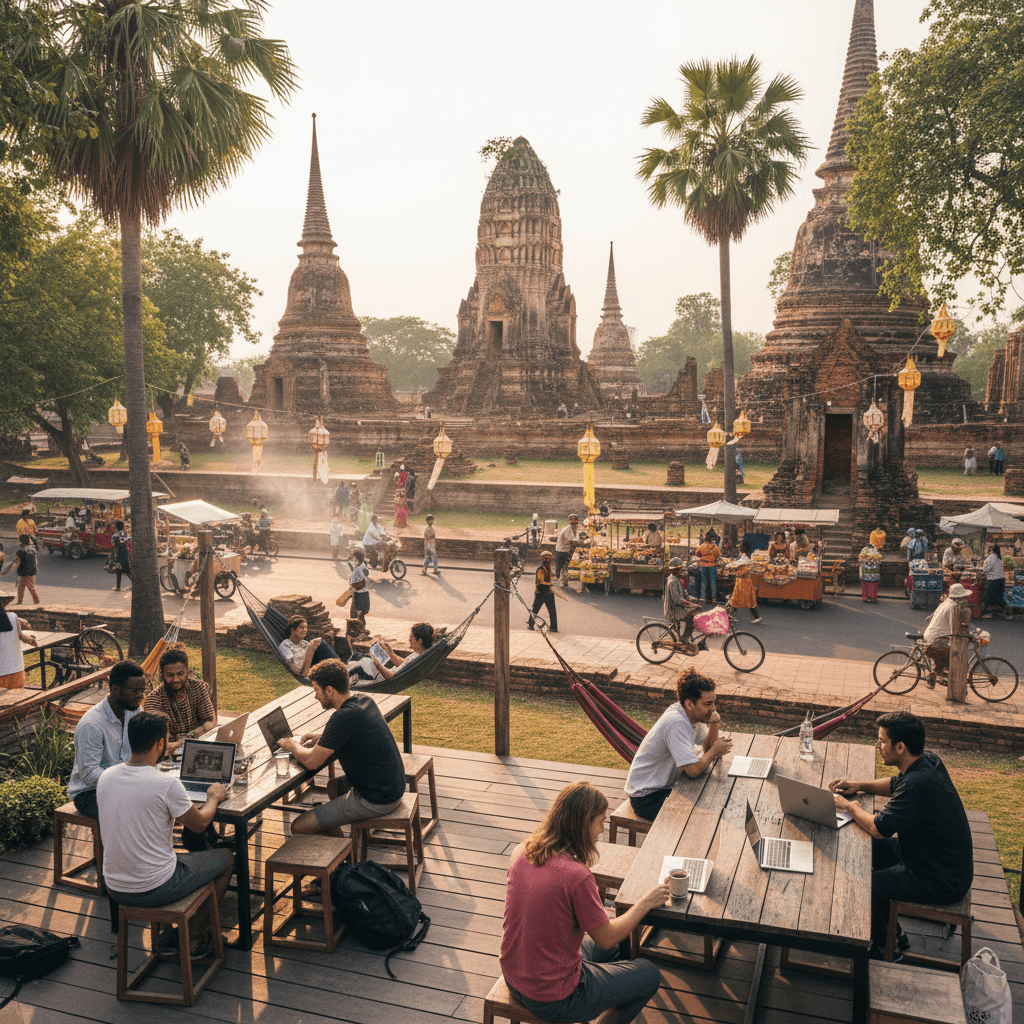
Chanthaburi, often called the "City of the Moon," offers a refreshing change of pace for travelers tired of the neon lights of Pattaya or the digital nomad bubble of Chiang Mai. It feels like a real Thai city that just happens to be beautiful. You won't find streets lined with western bars here; instead, you’ll find a community built on the gem trade and fruit farming.
The emotional experience of living here is one of quiet discovery. Many nomads find the atmosphere incredibly grounding. It’s the kind of place where the locals are genuinely curious about you, and the slow pace of life encourages you to actually log off at 5:00 PM. While it lacks a massive expat scene, experienced travelers note that this is exactly why they stay, it’s one of the few places left where you can truly experience the city's daily rhythms without the tourist filters.
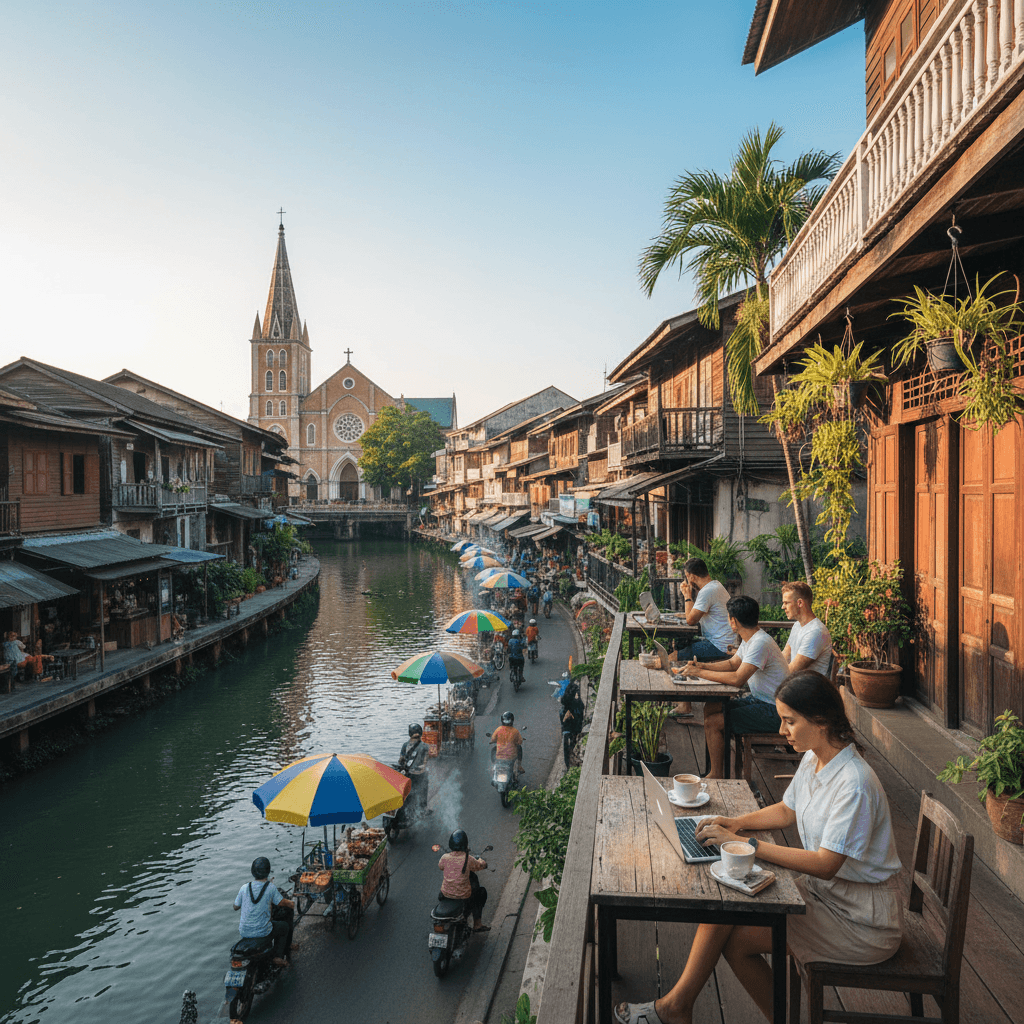
The city is a fascinating mix of heritages. You'll see Vietnamese-style churches, Chinese shophouses, and French colonial architecture along the river. It feels more like a commercial and cultural hub than a tourist stop, giving it an industrious yet relaxed energy that is unique to Eastern Thailand.
The Cost of Living: Exceptional Value
One of the biggest draws for long-term stays is the affordability. Your money goes significantly further here than in Bangkok or the southern islands. A single person can live comfortably on about $827 per month including rent, while those on a tighter budget can get by on roughly $400 to $450.
- Housing: A modern studio or 1-bedroom apartment in the city center typically runs between $120 and $220 per month. If you prefer the charm of the Riverside area, boutique guesthouses cost between 1,600 and 4,000 THB ($45, $115) per night for shorter stays.
- Food: You can eat incredibly well on a budget. Street food meals usually cost 40, 100 THB ($1, $3), while a nice dinner at a mid-range restaurant averages 100, 300 THB ($3, $9).
- Utilities & Tech: Expect to pay around $13, $55 for electricity and roughly $7, $17 for a high-speed mobile data plan.
The Neighborhoods
Chanthaboon Riverside (Old Town) is the heart of the city's charm. It’s a 1km stretch of historic wooden houses, galleries, and cafés. Travelers often note that this is the best place to stay if you want walkability and atmosphere. It’s quiet in the evenings, making it perfect for those who prioritize sleep and morning walks over nightlife.
The City Center around the Gem Street (Si Chan Road) is where the action happens. This is the commercial engine of the city, especially during the weekend gem markets. It’s less "pretty" than the riverside but puts you right next to the best markets, gyms, and transport links.
If you need a break from the urban environment, Chao Lao Beach is the go-to coastal spot about 30 minutes away. It’s popular with Thai families and offers great seafood, though expats recommend visiting on weekdays to avoid the Saturday crowds. For a quieter coastal vibe, Laem Sing offers 9km of shoreline and great cycling paths.
The Work-From-Anywhere Reality
Chanthaburi doesn't have dedicated coworking spaces yet, so your "office" will likely be your apartment or a local café. The good news is the internet is reliable, with fast fixed broadband speeds consistent with Thailand's national average of around 237 Mbps. Most nomads flock to Rock S’Presso, a modern spot with great AC and high-end coffee, which has become the de-facto hub for laptop workers.
While the infrastructure is there, the social nomad scene is small. You won't find weekly networking meetups here. Instead, you'll make friends with the café owners and the other regulars. It’s a city for the "self-contained" nomad who values deep work and authentic immersion over a constant party scene.
Getting Around & Staying Safe
The city is extremely safe, with crime rates far lower than the major tourist hubs. You can walk around the Riverside or the night markets at any hour with peace of mind. For daily transport, Songthaews (shared taxis) are the standard, costing about 20, 40 THB per ride.
Most expats eventually rent a scooter for about 150, 300 THB per day to explore the national parks and beaches. While the Grab app works here, cars can be sparse, so having your own wheels is a game-changer. If you're heading back to Bangkok, the 3.5-hour minibus ride from the main station is easy and costs under $10.
Value for Money in the City of the Moon
Living in Chanthaburi offers a level of affordability that's becoming increasingly rare in Thailand's more famous hubs. While it doesn't have the endless coworking spaces of Chiang Mai, many nomads find the trade-off worth it for the exceptionally low overhead.
A single person can live comfortably here for around $827 per month including rent, while those on a tighter "backpacker" budget can scrape by on as little as $402. For couples, a mid-range lifestyle typically sits around $1,247 per month.
Accommodation & Rent
Housing is where you'll see the most significant savings compared to Bangkok or the islands. Most expats recommend searching for local apartments upon arrival, as online listings are often limited or priced for short-term tourists.
- Studio or 1-bedroom in the city center: Expect to pay between $120 and $220 per month. These are usually basic but clean and functional.
- 1-bedroom outside the center: Prices range from $120 to $450, often getting you a larger space or a small house if you're willing to commute.
- Boutique Guesthouses: In the atmospheric Chanthaboon Riverside area, rooms go for 1,600 to 4,000 THB ($45, $115) per night.
- Budget Hostels: Spots like Poonpun Poshtel offer beds or basic rooms for 300 to 1,200 THB ($8, $35).
Eating and Drinking
The food scene is a major draw, blending local fruit-growing traditions with Vietnamese and Chinese influences. Because it's not a heavy tourist zone, you'll rarely find "tourist prices" at the local markets.
- Street Food: A tournament plate of noodles or rice at the night market will cost you 40 to 100 THB ($1, $3).
- Mid-range Restaurants: A sit-down dinner with drinks usually falls between 100 and 300 THB ($3, $9).
- Upscale Dining: Even at the nicer riverside spots, you'll struggle to spend more than 300 to 800 THB ($9, $23) for a high-end meal.
Utilities and Connectivity
Digital nomads often note that while infrastructure is simpler here, the essentials are reliable and cheap. Thailand consistently ranks among the world leaders for fixed broadband speeds, and Chanthaburi benefits from this robust national infrastructure, making it more than sufficient for video calls and heavy uploads.
- Electricity: Depending on your air conditioning usage, expect to pay $13 to $55 per month.
- Mobile Data: Unlimited 5G plans from providers like AIS or True Move are a steal at $7 to $17 per month.
- Laundry: Professional cleaning or self-service machines typically cost $11 to $52 over the course of a month.
Transportation Costs
Getting around is straightforward if you're comfortable on two wheels. Experienced expats recommend renting a scooter for the most freedom, especially for trips out to Chao Lao Beach.
- Scooter Rentals: Daily rates are usually 150 to 300 THB ($4, $9), with significant discounts for monthly rentals.
- Songthaews: These shared blue trucks are the local backbone, charging 20 to 40 THB ($0.60, $1.20) for trips within the city.
- Ride-Hailing: The Grab app works here, though it's less saturated than in Bangkok, so wait times can be longer.
- Monthly Transport Budget: Most locals and long-stayers spend between $25 and $155 depending on how often they head to the coast.
The Bottom Line
Chanthaburi is a "slow life" destination. You won't find the high-energy nightlife or massive shopping malls of the capital, but you'll find a high quality of life for a fraction of the cost. It’s a place where $1,600 a month provides a very relaxed lifestyle that would feel like luxury in many Western cities.
For History Buffs & Cultural Nomads: Chanthaboon Riverside
If you're looking for the soul of the city, this is it. The Riverside area is a one-kilometer stretch of wooden shophouses and Sino-Portuguese architecture that feels like stepping back a century. It's the most walkable part of town and the primary reason many travelers fall in love with Chanthaburi.
Digital nomads often gravitate here during the day to work from restored heritage cafés. You'll find a relaxed pace where locals still live in the upper floors of their businesses. Experienced expats recommend this area for short-term stays because of its proximity to the Cathedral of the Immaculate Conception and the evening food markets across the bridge.
- Pros: High walkability, incredibly photogenic, and home to the best boutique guesthouses.
- Cons: It gets very quiet after 8:00 PM, and parking a scooter can be a challenge in the narrow alleys.
- Budget: Boutique rooms range from 1,600 to 4,000 THB ($45, $115) per night.
For Long-Term Expats & Business Travelers: City Center (Gem District)
The area surrounding Si Chan Road and Trok Kachang is the commercial engine of the city. This is the world's hub for gemstone trading, and on weekends, the streets fill with dealers from around the globe. It's less about "vacation vibes" and more about convenience and local life.
Expats who settle here long-term appreciate being near the major banks, pharmacies, and the C-Chan market. If you need reliable amenities and want to be within a 5-minute walk of everything, this is your best bet. Nomads often head to Rock S'Presso in this district, as it's one of the few spots with high-end coffee and a modern workspace feel.
- Pros: Best access to services, fast internet in modern buildings, and close to the main transport hubs.
- Cons: Can be noisy due to traffic and lacks the greenery found in other districts.
- Budget: Modern studio apartments typically cost between $120 and $220 per month.
For Remote Workers & Solo Travelers: Near Somdej Phra Chao Taksin Maharat Park
Many solo travelers prefer the neighborhood surrounding the large central park. It offers a perfect middle ground between the historic riverside and the modern commercial center. The park itself is the social heart of the city in the evenings, filled with locals jogging and taking part in group aerobics.
This area is home to several "poshtels" like Poonpun Poshtel, which offer a social atmosphere that's otherwise hard to find in Chanthaburi. It’s a great base if you want to stay active, as you're never more than a few minutes from a green space or a cheap bowl of Sen Chan Pad Poo (crab noodles).
- Pros: Excellent for fitness-focused travelers, social guesthouses, and plenty of cheap street food.
- Cons: You'll likely need a scooter to reach the more atmospheric riverside spots.
- Budget: Modern hostels and budget hotels cost 300 to 1,200 THB ($8, $35) per night.
For Families & Slow Travelers: Chao Lao & Laem Sing Beaches
If you don't mind a 30-minute commute into the city, the coastal areas offer a much more relaxed lifestyle. Chao Lao Beach is the more developed of the two, favored by families for its shallow waters and abundance of seafood restaurants. Laem Sing is quieter, featuring old French colonial ruins and a more "village" feel.
Travelers often note that while these aren't "white sand" paradise beaches, they offer an authentic Thai seaside experience without the crowds of Pattaya. Expats living here usually rent small houses or stay in long-term resorts. You'll definitely need your own transport, either a rented scooter for 150, 300 THB per day or a car, to make this lifestyle work.
- Pros: Fresh sea air, incredible seafood, and a very safe, family-friendly environment.
- Cons: Limited Western grocery options and 5G signals can be spotty in certain pockets.
- Budget: Beachfront resorts and houses range from $450 to $1,200 per month depending on the level of luxury.
Internet Speeds & Connectivity
While it isn't a tech hub like Bangkok, Chanthaburi holds its own with surprisingly robust infrastructure. You can expect robust fixed broadband speeds, aligning with Thailand's national median of around 237 Mbps, which is more than enough for video calls and heavy uploads. Experienced nomads often note that while the city feels rural, the fiber optic backbone is modern and reliable.
For mobile connectivity, 5G coverage is consistent throughout the city center and the Riverside area. You'll find mobile plans through providers like AIS, Dtac, or True Move for as little as $7 to $17 per month. Travelers recommend picking up a SIM card at any 7-Eleven or official provider shop; unlimited data packages typically start around $10.
Coworking Spaces
If you're looking for a dedicated coworking office with ergonomic chairs and networking events, you'll likely be disappointed. Chanthaburi currently lacks formal coworking spaces. Most remote workers here embrace a "cafe hopping" lifestyle or set up a dedicated home office in their rental.
For those who need a professional environment, the nearest established hubs are a few hours away in Pattaya or Rayong. However, many expats find that the lack of a formal scene is actually a plus, as it keeps the atmosphere relaxed and free from the "digital nomad bubble" found in more tourist-heavy provinces.
Best Cafes for Remote Work
The local cafe culture is where most people end up working. Most shop owners are welcoming to laptop users as long as you keep the coffee and snacks flowing. Rock S'Presso is the top pick for many; it offers a sleek, modern environment, high-end espresso, and reliable air conditioning that makes long afternoon sessions comfortable.
In the Chanthaboon Riverside district, you'll find several smaller, atmospheric spots with river views. While these are great for light admin work or emails, some travelers note that the power outlets can be sparse in these historic buildings. It's always a good idea to bring a fully charged power bank if you're heading into the Old Town to work.
Practical Tips for Digital Nomads
- Check your accommodation: Before booking a long-term stay, ask for a speed test. Most modern guesthouses and condos provide dedicated routers, but older wooden houses in the Riverside area might rely on shared Wi-Fi.
- Power Outages: During the heavy rainy season, brief power flickers can occur. It’s a good idea to keep your laptop battery charged and have a mobile hotspot ready as a backup.
- Peak Hours: Cafes can get busy with local students and families on weekends. Many nomads recommend hitting the cafes early on weekdays to snag the best seats near power outlets.
- Data Backup: Since you'll be relying on public or cafe Wi-Fi, using a VPN is highly recommended by the local expat community to keep your data secure.
Overall, Chanthaburi suits the "slow nomad", someone who values a quiet environment and low costs over a high-energy networking scene. If you can work independently without a community manager or a ping-pong table in your office, you'll find the city's digital infrastructure more than adequate.
Personal Safety & Local Atmosphere
Chanthaburi is widely considered one of the safest cities in Thailand for international visitors. Because it isn't a major tourist hub, you won't find the aggressive touts or common scams prevalent in Phuket or Pattaya. Crime rates are low, and violent crime against foreigners is almost unheard of in the region.
Experienced expats recommend exercising the same basic common sense you'd use anywhere else. Keep an eye on your belongings in crowded markets like the Gem Market, and ensure your motorbike is locked when parked. Travelers often note that the local community is exceptionally welcoming, often going out of their way to help those who look lost or confused.
The biggest safety concern for most nomads isn't crime, but road safety. If you're renting a scooter to reach Laem Sing Beach, be aware that Thai traffic can be unpredictable. Always wear a helmet, not just for safety, but to avoid fines of 500, 1,000 THB from local police checkpoints. If you aren't comfortable on two wheels, sticking to Grab or the local Songthaews is a much safer bet.
Healthcare Infrastructure
For a smaller provincial capital, Chanthaburi offers surprisingly robust medical facilities. The Prapokklao Hospital is the major public facility in the city center. While it's affordable and capable, it can be crowded with long wait times. Many expats prefer Bangkok Hospital Chanthaburi, a private facility that offers a higher standard of comfort and more English-speaking staff.
Private consultations at a specialist clinic usually cost between 500 and 1,200 THB, excluding medication. For minor ailments, you'll find pharmacies (ya-kaai-ya) on almost every street corner in the city center. Most pharmacists speak enough English to help with basic needs, and many medications that require a prescription in the West are available over-the-counter here at very low prices.
Nomads staying long-term should keep in mind that for highly specialized surgeries or complex treatments, most people head to Bangkok, which is about a 3.5 to 4-hour drive away. You'll want to have a solid travel insurance policy that covers medical evacuation just in case.
Emergency Contacts & Quick Reference
It's a good idea to keep these numbers saved in your phone, as English isn't as widely spoken here as it is in the capital. Many travelers recommend downloading the 'Tourist Police i-lert-u' app, which allows you to contact authorities and share your GPS location instantly.
- Tourist Police: 1155 (This is your best bet for English-speaking assistance)
- General Emergency: 191
- Ambulance and Rescue: 1669
- Bangkok Hospital Chanthaburi: 039-319-899
Environmental Health & Water
Like the rest of Thailand, tap water is not potable in Chanthaburi. You should always drink bottled or filtered water. Most long-term rentals provide large 18-liter jugs for about 20, 30 THB, or you can use the ubiquitous water refill machines found on the streets for 1 THB per liter.
Air quality is generally much better here than in Northern Thailand or Bangkok, as the city benefits from coastal breezes. However, during the "burning season" (typically January to March), you may notice a slight dip in air quality. Travelers with respiratory sensitivities usually find Chanthaburi a breath of fresh air compared to the heavy smog of larger urban centers.
Navigating the City
Chanthaburi isn't a city of subways or skytrains, but its manageable size makes it easy to navigate once you understand the local rhythm. Most travelers find that the city center and the Chanthaboon Riverside are best explored on foot, while longer trips to the coast require a bit more planning.
Songthaews (shared red pickup trucks) are the backbone of local transit. You'll see them cruising the main roads; simply wave one down and tell the driver your destination. A standard ride within the city limits typically costs between 20 and 40 THB ($0.60, $1.20). Expats recommend keeping small change handy, as drivers don't always have change for larger bills.
Motorbikes and Bicycles
For those staying more than a few days, renting a scooter is the most liberating way to see the province. You can find rental shops near the city center or tucked away in the Chanthaboon Riverside district. Expect to pay between 150 and 300 THB ($4, $9) per day depending on the bike's condition and your negotiation skills.
If you're heading toward Laem Sing Beach, you'll notice dedicated bike lanes along the scenic coastal roads. Many nomads who prefer a slower pace find that a sturdy bicycle is enough for the flat terrain around the old town. Just remember that Thai traffic can be unpredictable, so wearing a helmet is a essential for safety-conscious travelers.
Ride-Hailing and Taxis
While Grab operates in Chanthaburi, don't expect the instant 2-minute pickups you'd get in Bangkok. Availability can be spotty, especially during off-peak hours or heavy rain. It's a reliable backup for getting to the bus station with luggage, but experienced travelers don't rely on it for every trip.
Traditional taxis exist but aren't as common as in tourist hubs. If you need a private car for a day trip to the Namtok Phlio National Park or the gem mines, it's often better to ask your guesthouse host to arrange a driver they trust. This usually costs more but saves the headache of negotiating multiple fares.
Walking the Old Town
The Chanthaboon Riverside area is a pedestrian’s dream. The 1km stretch of historic shophouses is narrow and atmospheric, making it much more enjoyable to walk than to drive. Most of the local cafés and galleries are clustered here, so you can easily spend an entire afternoon hopping between spots on foot.
Regional Connections
Getting in and out of Chanthaburi usually involves a trip to the main bus station. Minibuses and large coaches connect the city to Bangkok’s Ekkamai station. The trip takes about 3.5 to 4 hours and costs between 150 and 250 THB ($4, $7). There are also frequent connections to Pattaya, Rayong, and Trat for those heading toward the islands.
If you're arriving from Suvarnabhumi Airport, keep in mind it's a 248km journey. While there are no direct flights into Chanthaburi, the bus system is efficient enough that most nomads don't find the lack of an airport to be a major hurdle. Just be prepared for a long afternoon of travel if you're coming straight from an international flight.
The Language Landscape
In Chanthaburi, you'll find a much more authentic linguistic environment than in the heavy tourist hubs of Phuket or Bangkok. Because the city isn't built around international tourism, English proficiency is generally low among the general public. While hotel staff and younger residents often speak basic English, you'll frequently rely on gestures, smiles, and translation apps when navigating local markets or smaller street stalls.
Experienced expats recommend learning at least basic Thai phrases for daily interactions. Knowing how to say "hello" (sawatdee khrap/ka) and "how much?" (tao rai?) goes a long way in building rapport with locals. Many nomads find that residents are incredibly patient and appreciative when you make an effort to speak their language, often resulting in better service and warmer smiles.
Communication Tools & Apps
Since English isn't a given, Google Translate is an practical app to have for your phone. The camera feature is particularly useful for translating menus at local restaurants in the Chanthaboon Riverside area, which may not always have English translations. Travelers often note that voice-to-text translation helps significantly when negotiating prices for scooter rentals or explaining specific directions to Songthaew drivers.
For digital communication, Line is the undisputed king of messaging apps in Thailand. If you're staying for more than a few weeks, you'll likely find that landlords, café owners, and new local friends will ask for your Line ID rather than your phone number or WhatsApp. It's the standard way to book services or ask a guesthouse owner a quick question.
Staying Connected
Staying online is remarkably affordable and easy. Most nomads pick up a local SIM card immediately upon arrival. The big three providers, AIS, Dtac, and True Move, all offer excellent coverage throughout the city. You can expect to pay between $7 and $17 per month for a reliable data plan. Experienced travelers suggest AIS for the most consistent 5G coverage if you plan on exploring the more remote areas of Laem Sing Beach or nearby national parks.
You can purchase these SIM cards at any 7-Eleven or mobile shop in the city center. If you're coming directly from Bangkok, it's often easiest to grab your SIM at Suvarnabhumi Airport, though you'll pay a slight premium for "tourist" packages. For the best value, wait until you get into Chanthaburi and visit a dedicated provider shop to get a monthly unlimited data plan, which can start as low as $10.
Navigating Social Nuances
Communication in Chanthaburi isn't just about the words you use; it's about the "Thai way." Travelers often note the importance of Jai Yen (cool heart), which means staying calm and polite even if there's a misunderstanding. Raising your voice or showing frustration is considered a "loss of face" and will usually make communication more difficult.
In the Gem Street area, business is often conducted through a mix of Thai and specialized trade terminology. If you're there for the gem trade, you'll find a higher concentration of English and even some French speakers due to the international nature of the business. However, for everyday life, a friendly "Khop khun khrap/ka" (thank you) remains your most valuable communication tool.
Best Time to Visit
Timing your trip to Chanthaburi is all about balancing the heat with the harvest. For most travelers, the cool season from November to February is the sweet spot. You'll find clear skies and daytime temperatures averaging 26°C to 30°C (79°F to 86°F), making it the most comfortable time for walking the 1km stretch of the Chanthaboon Riverside.
Experienced expats often suggest the hot season (March to May) for foodies. While temperatures frequently climb above 35°C (95°F), this is peak fruit season. You'll find the local markets overflowing with durian, mangosteen, and rambutan, culminating in the famous World Durian Festival in May.
The monsoon season runs from June to October. Chanthaburi is one of the wettest provinces in Thailand due to its proximity to the Cardamom Mountains. Travelers often note that while the rain brings lush greenery to nearby Namtok Phlio National Park, it can make scooter travel to Chao Lao Beach unpredictable and humid.
Monthly Weather Breakdown
- November, February: The peak season. Expect dry weather and cooler evenings. It's the best time for cycling the coastal roads or exploring the Gem Market without breaking a sweat.
- March, May: Intense heat and high humidity. This is the "Fruit Season." If you can handle the temperature, you'll be rewarded with the best produce in Thailand.
- June, October: Heavy rainfall. Many nomads find this a good time for focused indoor work, though some smaller beach resorts near Laem Sing may scale back operations.
What to Pack
Since Chanthaburi is a commercial hub rather than a tourist resort, locals tend to dress modestly. Many nomads find that lightweight linen or cotton clothing works best to stay cool while remaining respectful. If you're visiting during the cool season, a light hoodie is useful for air-conditioned buses or the occasional 20°C (68°F) evening.
If you plan on working from cafés like Rock S’Presso, keep in mind they keep the air conditioning quite high. Travelers recommend always carrying a sturdy umbrella or a high-quality poncho if you visit between June and October, as downpours are sudden and heavy.
Seasonal Events to Watch For
The city changes character depending on the calendar. Experienced travelers recommend checking the dates for the Chanthaburi Gem and Jewelry Fair (usually December), which brings an international crowd of traders to the Si Chan Road area. During this time, accommodation prices in the city center can spike, and boutique guesthouses along the river often book out weeks in advance.
To see the city's heritage firsthand, visitors often plan trips around the Lunar New Year. Given the city's significant Vietnamese and Chinese heritage, the celebrations here are more traditional and intimate than the massive parties in Bangkok or Phuket. You'll see the Cathedral of the Immaculate Conception and the surrounding Old Town beautifully decorated.
A Note on the Burning Season
While Northern Thailand struggles with severe air quality issues from January to March, Chanthaburi generally fares better. Expats living in the area note that while there is some agricultural burning, the coastal breezes usually keep the air quality much fresher than in Chiang Mai, making it a reliable "escape" destination for remote workers during the early months of the year.
Getting Around Town
Chanthaburi is a city that rewards slow exploration, but you'll need a mix of transport to see it all. In the Chanthaboon Riverside district, your own two feet are the best tool; the 1km pedestrian stretch is perfectly sized for wandering between cafes and shrines.
For longer hops across town, look for Songthaews (shared pickup trucks). These typically cost between 20, 40 THB ($0.60, $1.20) for a ride within the city limits. If you're heading out to Chao Lao Beach or Laem Sing, expect to negotiate a higher private rate or wait for a scheduled departure.
While Grab operates in the city, experienced expats note that wait times can be longer than in Bangkok. Many long-termers prefer renting a scooter for about 150, 300 THB ($4, $9) per day to reach the coastal bike lanes and national parks at their own pace.
Connectivity & Remote Work
Digital nomads shouldn't expect a dedicated coworking scene here. Instead, the "laptop office" culture centers around high-quality cafes. Rock S'Presso is the local favorite for its reliable air conditioning and professional espresso setup. Travelers often find that the 279 Mbps average internet speed in town is more than enough for video calls and heavy uploads.
For mobile data, you can grab a SIM card at any 7-Eleven or local mobile shop. Major providers like AIS, Dtac, and True Move offer 5G coverage throughout the city. Most nomads recommend an unlimited data plan, which usually runs between $7 and $17 per month.
Health & Safety
This is a remarkably safe city where petty crime is rare. You'll mostly just need to watch your footing on uneven sidewalks and stay hydrated in the humidity. For medical needs, there are several local hospitals and clinics that handle routine issues and minor emergencies efficiently.
Pharmacies are located on almost every major street, and many pharmacists speak enough English to help with basic ailments. If you require specialized care, keep in mind that the high-end international hospitals are about 3, 4 hours away in Bangkok or Pattaya, so having reliable travel insurance is a smart move for any expat.
Money & Budgeting
Your money goes significantly further here than in Thailand's more famous hubs. A single person can live comfortably on about $827 per month including rent. If you're on a tight budget, it's possible to get by on as little as $402 per month by sticking to street food and basic fans-only housing.
- Street food meal: 40, 100 THB ($1, $3)
- Mid-range dinner for two: 300, 600 THB ($9, $18)
- Monthly electricity: $13, $55 (depending on AC usage)
- Studio apartment in center: $120, $220 per month
Cash is still king in the local markets and smaller shops. While you'll find plenty of ATMs near Si Chan Road and the malls, it’s wise to carry smaller bills for Songthaew drivers and street vendors who might not have change for a 1,000 THB note.
Arrival & Logistics
Most travelers arrive via Suvarnabhumi Airport in Bangkok. From there, it's a 3 to 4-hour drive. You can catch a minibus from Ekkamai Bus Station for roughly 150, 250 THB ($4, $7). These run frequently throughout the day, though they can be cramped if you have a lot of luggage. For a more comfortable trip, private transfers are available but will significantly increase your transit costs.
Need visa and immigration info for Thailand?
🇹🇭 View Thailand Country GuideHidden Gem
Worth the effort
Monthly Budget Estimates
More cities in Thailand
Pattaya
🇹🇭 Thailand
Phuket City
🇹🇭 Thailand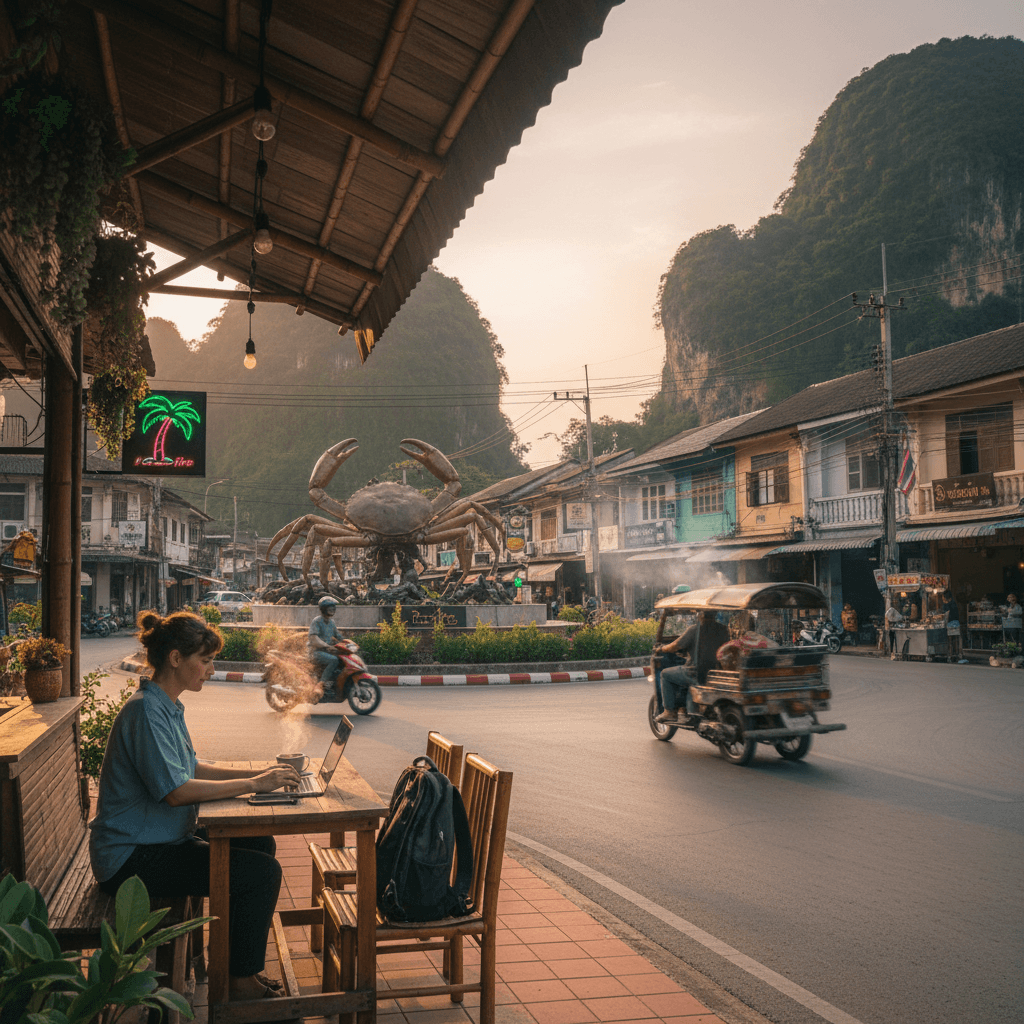
Krabi Town
🇹🇭 Thailand