Champasak
🇱🇦 Laos
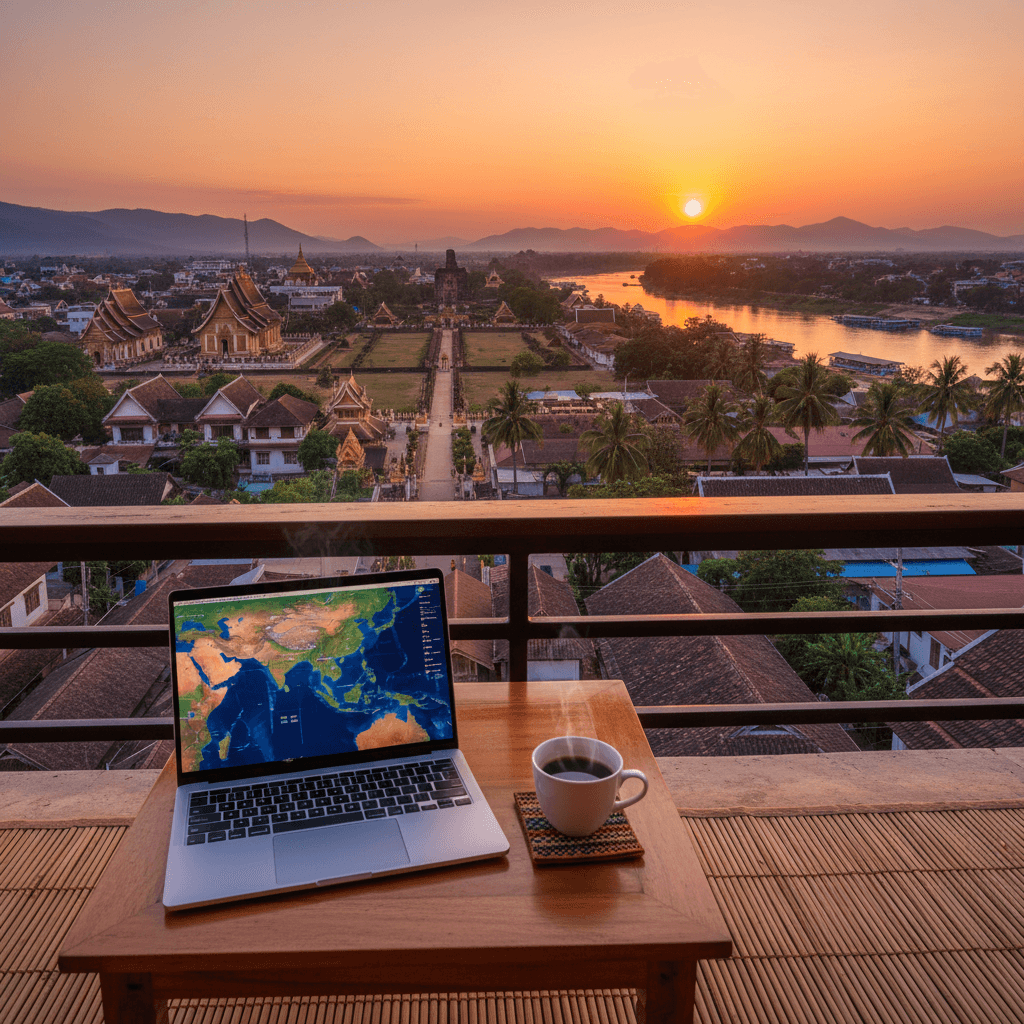
The Pulse of the Riverside
Champasak doesn't just move slowly; it feels like it's exhaling. While the rest of Southeast Asia races toward modernization, this riverside town remains anchored by the Mekong and the ancient stones of Wat Phou. It’s the kind of place where you’ll find yourself measuring time by the height of the river rather than the notifications on your phone.
Most nomads come here for a "digital detox" without actually going off the grid. It’s quiet, culturally thick, and lacks the neon-soaked distractions of Vientiane or Luang Prabang. You’re trading high-speed fiber and coworking hubs for dusty roads, water buffalo sightings, and the rhythmic sound of longtail boats. It’s a trade-off that appeals to a specific type of traveler: those who prioritize tranquility and low costs over infrastructure.
What It Costs to Live Here
Your wallet goes a long way here, though the lack of high-end luxury means you’ll likely live a modest, comfortable lifestyle by default. Most single nomads find they can live well on $800 to $1,200 per month, depending on how often they head into nearby Pakse for supplies.
- Budget Tier: $800 per month. This covers a basic guesthouse, street food, and scooter transit.
- Mid-Range: $1,200 per month. Includes a riverside 1BR, cafe meals, and frequent social outings.
- Comfortable: $1,800 per month. This buys a premium villa, private transport, and high-end dining.
Rent for a studio or 1BR in popular riverside areas like Ban Muang Noi typically runs between 3 million and 6 million LAK ($150 to $300). Street food, like a bowl of noodle soup or sticky rice with papaya salad, usually costs 20,000 to 50,000 LAK ($1 to $2.50). If you want a sit-down meal at a mid-range spot like Nakorn Cafe, expect to pay 75,000 to 150,000 LAK ($3.75 to $7.50).
Choosing Your Neighborhood
Champasak is small, but your choice of location determines how much "town" you actually experience.
Ban Muang Noi (Riverside Core)
- The Vibe: The heart of the nomad scene. Walkable, scenic, and right by the water.
- Pros: Easy access to cafes, guesthouses, and the Wat Phou temple complex.
- Cons: Internet can be spotty and there are fewer modern amenities.
Champasak Town Center
- The Vibe: Local and immersive. You’ll be surrounded by markets and traditional temples.
- Pros: Very safe and great for families who want to be near local life.
- Cons: The roads get incredibly dusty and there is almost zero nightlife.
Internet and the Workday
Don't expect a Silicon Valley setup. There are no dedicated coworking spaces in Champasak. Instead, the nomad community gravitates toward "hybrid" cafes. Nakorn Cafe is the go-to for many, offering free WiFi if you’re buying coffee. 4G speeds are decent enough for basic tasks, usually hovering between 10 and 20 Mbps via providers like Unitel or Lao Telecom.
Power backups are rare, so a fully charged laptop and a power bank are non-negotiable. You can pick up a 15GB data SIM for about 200,000 LAK ($10) in Pakse or at the airport. Most expats recommend having a backup SIM from a different provider just in case one tower goes down.
Moving Around and Staying Safe
The town core is walkable, but you'll want wheels for anything else. Scooter rentals from shops like Lao Go Car & Motorbike cost about 100,000 LAK ($5) per day. For longer trips or getting to Pakse, use the LOCA app for taxis or hop on a songthaew (shared truck) for 10,000 to 30,000 LAK.
Safety is rarely an issue, though common sense applies. The biggest unique risk here is Unexploded Ordnance (UXO). Always stay on marked paths when exploring rural areas. For healthcare, basic needs are met at the Champasak Provincial Hospital in Pakse, but anything serious usually requires a trip across the border to Thailand.
The Social Scene
Socializing here is low-key. Nightlife consists of quiet riverside beers rather than clubs. To meet others, join the Laos Expats & Digital Nomads Facebook group or simply strike up a conversation at the Sihom night market. Locals are exceptionally friendly; a simple "Sabaidee" (hello) and a "nop" (the traditional prayer-like greeting) go a long way in building rapport.
The Lowdown on Local Costs
Living in Champasak is a lesson in extreme affordability. If you're coming from a major Western hub or even a nomad hotspot like Bali, your bank account will finally get to breathe. A single nomad can get by on anywhere from $380 to $1,065 monthly excluding rent, depending on how many riverside cocktails and excursions to the waterfalls they indulge in. Families of four usually find their sweet spot between $1,000 and $1,600, which covers a comfortable, culturally immersive lifestyle that's hard to replicate elsewhere.
The local currency, the Kip (LAK), fluctuates, so many expats keep a stash of USD or use apps like LOCA and GrabPay for larger transactions. Most daily life, however, is a cash-in-hand affair. You'll find yourself spending 20,000 to 50,000 LAK ($1 to $2.50) for a solid street food meal like papaya salad and sticky rice. If you want a sit-down dinner at a mid-range spot like Nakorn Cafe, expect to pay between 75,000 and 150,000 LAK ($3.75 to $7.50).
- Budget Tier: $800 per month covers the basics in a modest guesthouse with plenty of street food.
- Mid-Range: $1,200 per month allows for a private riverside bungalow and frequent cafe visits.
- Comfortable: $1,800 per month gets you a larger home, a rented scooter, and weekend trips to the 4,000 Islands.
Where to Hang Your Hat
The vibe of your stay depends heavily on which pocket of the district you choose. Most nomads gravitate toward the water, while families often look a bit further out for space and quiet.
Ban Muang Noi (The Riverside Core)
- Rent: 3 to 6 million LAK ($150 to $300) for a studio or one-bedroom.
- The Vibe: This is the heart of the nomad scene. It's walkable, sits right on the Mekong, and puts you close to Wat Phou.
- Trade-off: The views are world-class, but the WiFi can be temperamental when the rain hits.
Champasak Town Center
- Rent: 2 to 5 million LAK ($100 to $250) for local-style housing.
- The Vibe: Deep cultural immersion with markets and temples at your doorstep. It's safe and very community-oriented.
- Trade-off: It gets dusty during the dry season, and the nightlife is virtually non-existent after 10 PM.
The Digital Setup
Don't expect high-tech hubs here. There are no dedicated coworking spaces in Champasak, so you'll be working from your guesthouse or local cafes. Nakorn Cafe is a favorite for its reliable-ish WiFi and relaxed atmosphere. Most nomads pick up a SIM card from Unitel or Lao Telecom for about $1 and load it with a 15GB data pack for 200,000 LAK ($10). 4G speeds usually hover around 10 to 20 Mbps, which is plenty for emails and Slack but might struggle with heavy 4K video uploads.
Getting Around and Staying Safe
The most common way to move is by songthaew, those shared pickup trucks that cost about 10,000 to 20,000 LAK ($0.50 to $1) per ride. For more freedom, rent a scooter from Lao Go Car & Motorbike for about 100,000 LAK ($5) a day. Just keep your eyes on the road; the rural paths are beautiful but can be rough.
Safety is rarely an issue, as the local community is incredibly welcoming. The main things to watch for are unexploded ordnance (UXO) if you're wandering off-path in rural areas and the occasional pickpocket at the Sihom night market. For healthcare, the Champasak Provincial Hospital in nearby Pakse handles emergencies, but for anything major, expats usually cross the border into Thailand where the facilities are more advanced.
For Nomads: Ban Muang Noi (Riverside Core)
If you're coming to Champasak to work, you'll want to plant yourself in Ban Muang Noi. This is the heart of the riverside district where most of the nomad-friendly infrastructure sits. It's incredibly walkable, meaning you can bounce between your guesthouse and a handful of cafes without needing a scooter for every coffee run.
- The Vibe: Peaceful, scenic, and slow. You’ll spend your mornings looking at the Mekong and your afternoons trying to find a stable connection.
- Internet & Work: There are no dedicated coworking spaces here. Most nomads post up at Nakorn Cafe, which is the local gold standard for free WiFi and decent caffeine. Expect 4G speeds around 10 to 20 Mbps on a good day.
- Rent: A studio or one bedroom apartment in this riverside stretch typically runs between 3 million and 6 million LAK ($150 to $300) monthly.
- Pros: Unbeatable views and easy access to the Wat Phou temple complex.
- Cons: Power backups are rare and the internet can be spotty during heavy rains.
For Solo Travelers: Champasak Town Center
Solo travelers usually gravitate toward the town center for the sake of convenience and safety. It’s the most culturally dense part of the area, filled with local markets and temples. You won't find a wild party scene here, but you'll find plenty of other travelers at the small riverside bars or the local morning market near the town's main intersection.
- The Vibe: Authentic and immersive. It feels like a real Lao village rather than a tourist bubble.
- Daily Costs: Street food like papaya salad or sticky rice will only set you back about 20,000 LAK ($1). A mid range meal at a local restaurant costs between 75,000 and 150,000 LAK ($3.75 to $7.50).
- Getting Around: Songthaews are everywhere here. A short ride usually costs between 10,000 and 30,000 LAK ($0.50 to $1.50).
- Safety: It’s very safe, though it's smart to watch your pockets when visiting the busier market stalls in the early morning.
For Families: The Northern Outskirts
Families looking for more space and a quieter lifestyle often head toward the outskirts, specifically the areas stretching north toward the Pakse border. This is where you can find larger plots of land and house rentals for much lower prices than the riverside core. A family of four can live a very comfortable life here on a budget of $1,000 to $1,600 a month.
- The Vibe: Suburban and rural. You’ll have more privacy but less immediate access to cafes and shops.
- Logistics: You will absolutely need your own wheels. Scooter rentals from Lao Go Car & Motorbike cost about 100,000 LAK ($5) per day, but long term residents usually buy their own or use the LOCA app for car hires.
- Healthcare: Being closer to the Pakse border is a plus. The Champasak Provincial Hospital in Pakse is the best bet for emergencies, though most expats cross into Thailand for major medical procedures.
- Important Note: Stay on well worn paths when exploring the rural outskirts. UXO risks still exist in uncleared, off path areas.
For Expats: Long Term Riverside Living
Established expats tend to blend the best of Ban Muang Noi with the quieter residential pockets just behind the main road. They rely heavily on the Laos Expats & Digital Nomads Facebook group to find housing, as many of the best deals aren't listed on sites like RentLaos.com but are found through word of mouth.
- The Vibe: A tight knit community of people who value tranquility over amenities.
- Connectivity: Most long termers set up a Unitel or Lao Telecom SIM immediately. A 15GB data pack for 10 days costs roughly 200,000 LAK ($10) and is often more reliable than guesthouse WiFi.
- Social Life: Socializing happens at guesthouse dinners or small meetups in cafes. It's a "bring your own fun" kind of town.
- Budgeting: A comfortable lifestyle for a single expat, including a nice rental and frequent dining out, averages around $1,800 a month.
The Reality of Remote Work in Champasak
If your job requires high stakes video conferencing or massive file uploads, Champasak will test your patience. This isn't a high tech hub; it's a place where you trade bandwidth for Mekong sunsets. Most nomads find the 4G network surprisingly usable for daily tasks, but the fixed line infrastructure remains inconsistent.
You'll get the best results by staying mobile. 4G speeds via Unitel or Lao Telecom generally hover between 10 and 20 Mbps in the town center. It's enough for emails, Slack, and the occasional Zoom call, provided you have a good signal. Fiber is starting to creep into some guesthouses, but it's far from the standard. If the power goes out, which happens during heavy storms, your home router goes with it, so a local SIM is your lifeline.
Coworking and Cafe Culture
Don't go looking for a dedicated coworking space with ergonomic chairs and networking events. They don't exist here yet. Instead, the nomad community relies on "hybrid" work spots. You'll be working alongside travelers or locals, usually with a view of the river.
- Nakorn Cafe: This is the go to spot for many. The WiFi is free and relatively reliable for the area. It has a relaxed vibe where you can sit for a few hours over a coffee without feeling pressured to leave.
- Riverside Guesthouses: Many nomads choose to work from their own balconies in Ban Muang Noi. The views are better than any office, though you'll want to check the signal strength before committing to a long term stay.
- Local Eateries: Smaller cafes in the town center are fine for quick tasks, but they rarely have power backups. Always keep your laptop charged.
Most cafes won't charge you a "desk fee," but it's common courtesy to buy a coffee or a meal every few hours. Expect to spend 20,000 to 50,000 LAK (about $1 to $2.50) for a decent drink and a seat for the afternoon.
Connectivity Costs and Setup
Setting up your mobile data is cheap and should be your first priority. You can pick up a SIM card in Pakse or at one of the small shops in Champasak for 10,000 to 20,000 LAK (around $1). Expats recommend Unitel for the most consistent coverage in rural areas.
- Starter SIM: 10,000 to 20,000 LAK
- 15GB Data Plan (10 days): Approximately 200,000 LAK ($10)
- Monthly Data: Expect to pay around $20 to $30 if you're a heavy user tethering your laptop.
Digital Nomad Survival Tips
The lack of infrastructure means you have to be self reliant. Experienced nomads in Laos always carry a power bank and often maintain two SIM cards from different providers. If Unitel goes down, Lao Telecom might still be up.
For payments, cash is still king. While the LOCA app is great for calling rides and some digital payments are emerging, you'll need LAK or USD for your daily coffee and rent. There are limited BCEL ATMs in town, so it's a good idea to withdraw larger amounts of cash when you are in Pakse to avoid being stranded without funds during a network outage.
The social side of work is low key. You won't find organized meetups every night. Most professional networking happens organically at the riverside bars or through the Laos Expats & Digital Nomads Facebook group. It's a small, tight knit community where people are happy to share tips on which cafe has the fastest ping that week.
Keeping Your Peace of Mind
Champasak is one of those rare places where your biggest safety concern is more likely to be a wandering water buffalo than a mugger. The vibe here is exceptionally laid back, and violent crime against foreigners is almost unheard of. It's the kind of town where you can walk home after a few Beerlaos at a riverside bar without looking over your shoulder. That said, common sense still applies. Small scale theft or pickpocketing can happen at crowded night markets, especially those closer to the Pakse transit hub after 10 PM, so keep your phone and wallet secured.
The most unique safety hazard in this region is a legacy of the past. While the main town and the Wat Phou temple complex are perfectly safe, you need to be cautious in the rural outskirts. Unexploded ordnance (UXO) from historical conflicts still litters some off-path areas in the province. Most nomads and expats stick to well-trodden trails and marked roads. If you’re exploring the hills or remote farmland, never wander into uncleared brush or touch metal objects you find in the dirt.
Road safety is another factor to watch. If you're renting a scooter for 100,000 LAK a day, remember that roads can be dusty, unlit at night, and occasionally shared with livestock. Local drivers are generally slow, but the infrastructure isn't great. Always wear a helmet, even if the locals don't, and try to get your riding done before the sun goes down.
Healthcare and Medical Realities
Medical facilities in Champasak town are extremely basic. For anything beyond a scrape or a mild stomach bug, you'll likely head to the nearby provincial capital. The Champasak Provincial Hospital in Pakse is the primary facility for the region. It has seen recent improvements, including a new ICU and upgraded surgical suites funded by international aid, making it much more reliable for emergencies than it was a few years ago.
For routine issues, pharmacies are your best friend. They are widespread and pharmacists often dispense medications that would require a prescription elsewhere. Expats living here long-term usually keep a kit of basics but rely on these local shops for minor infections or allergies. If you have a chronic condition, it's smart to stock up on your specific medications in Vientiane or Bangkok before heading south, as specialized drugs can be hard to source locally.
In the event of a serious medical emergency, most expats and digital nomads follow one rule: get to Thailand. The border is close, and the hospitals in Ubon Ratchathani offer a much higher standard of care, including advanced diagnostics and English speaking specialists. Ensure your travel insurance covers medical evacuation to Thailand, as a private ambulance or specialized transport across the border can get expensive quickly.
Emergency Contacts and Essentials
- Ambulance and Police: Dial 1195 for emergencies.
- Local Clinics: Best for minor ailments; found in the town center.
- Major Hospitals: Champasak Provincial Hospital (located in Pakse, roughly 30 to 45 kilometers away).
- Medical Evacuation: Crossing the border to Thailand is the standard move for serious trauma or surgery.
Health and safety here are mostly about prevention. Drink bottled water, wear your helmet, and keep an eye on your belongings in the markets. If you handle those basics, you'll find Champasak to be one of the most stress free environments in Southeast Asia.
The Pace of the Mekong
Champasak isn't a place where you'll find a frantic rush for Ubers or a complex subway system. Life here moves at the speed of the river, and your transportation choices reflect that. Most nomads find that the town core is perfectly walkable, but you'll want some wheels the moment you decide to explore the UNESCO ruins or head toward the Pakse border.
Local Transport: Songthaews and Taxis
The backbone of local transit is the songthaew, those converted pickup trucks with benches in the back. They're cheap, breezy, and a great way to rub shoulders with locals heading to the market. Short hops around town usually cost between 10,000 and 30,000 LAK ($0.50 to $1.50). Just wave one down and tell the driver your destination; it's a shared experience, so expect a few stops along the way.
If you prefer a private ride or need to get to the airport in Pakse, the LOCA app is your best friend. It's the Lao version of Uber or Grab and works reliably for booking cars. A trip from Champasak to Pakse Airport typically runs between 200,000 and 500,000 LAK ($10 to $25) depending on the vehicle and your haggling skills, taking about 1 to 2 hours.
Two-Wheeled Freedom
For daily independence, expats recommend renting a scooter. It's the most practical way to handle the dusty roads and reach Wat Phou without relying on a schedule. Lao Go Car & Motorbike is a reliable local spot for rentals. Expect to pay around 100,000 LAK ($5) per day for a decent bike. If you're staying long term, you can often negotiate a monthly rate that drops the daily cost significantly.
- Bicycles: Best for the Ban Muang Noi riverside area. Most guesthouses rent them for a few dollars a day.
- Scooters: Necessary for exploring the outskirts or visiting the Khone Phapheng Falls.
- Tuk-tuks: Plentiful near the town center for quick trips when you're carrying groceries or gear.
Navigation and Safety
While the main roads are straightforward, Google Maps can be hit or miss in the more rural patches. Travelers often say that downloading the offline Lao language pack for Google Translate is just as important as a map, especially when giving directions to songthaew drivers. Stick to established paths when exploring the outskirts; the region still deals with UXO (unexploded ordnance) risks in remote, off-road forest areas.
Night riding requires a bit of caution. The roads aren't well lit, and stray livestock or potholes can appear out of nowhere. If you're heading back from a riverside bar after dark, a slow pace is your best insurance policy. Most nomads find the dusty air during the dry season a bit much, so keep a face mask or scarf handy for those longer scooter rides.
Getting Around: Quick Cost Guide
- Songthaew ride: 10,000 to 30,000 LAK
- Daily scooter rental: 100,000 LAK
- Airport transfer (Pakse): 200,000+ LAK
- Bicycle rental: 20,000 to 40,000 LAK
Walking remains the preferred method for anyone staying in the Ban Muang Noi core. You can hit the best cafes like Nakorn and the local markets without ever needing a motor. It’s the best way to soak in the quiet atmosphere that brought you to Champasak in the first place.
The Linguistic Landscape
Lao is the heart of communication in Champasak. While it shares some linguistic DNA with Thai, the local dialect has its own rhythm and charm. You'll find that English proficiency varies wildly; it's relatively common among staff at riverside guesthouses and cafes like Nakorn Cafe, but once you step into the local markets or head toward the outskirts near the Pakse border, your English will likely be met with polite smiles and confusion.
Most expats find that learning the basics isn't just a courtesy, it's a survival skill. The local community is incredibly welcoming, and making an effort with the language opens doors that stay closed to those who only stick to English. Because the town is so close to Thailand, many locals understand Thai through exposure to media, but they'll always appreciate you sticking to Lao phrases first.
Essential Phrases for Daily Life
You don't need to be fluent to get by, but having these phrases in your back pocket makes daily interactions much smoother. Prices and directions are usually the first things you'll need to master.
- Sabaidee: Hello (The universal greeting, usually accompanied by a nop or slight bow).
- Khob chai: Thank you.
- Baw pet: Not spicy (A lifesaver when ordering papaya salad at the night market).
- Awk baan: Room (Useful when scouting for long term rentals).
- Tao dai?: How much?
- Baw pen nyang: No problem or you're welcome.
Digital Tools and Translation
Don't rely on a constant 4G connection for live translation. While Unitel and Lao Telecom provide decent coverage in the town center, the signals can drop as soon as you head toward the ruins of Wat Phou or rural areas. Most nomads recommend downloading the offline Lao language pack on Google Translate before you arrive. It’s surprisingly accurate for basic text and signs.
For getting around, the LOCA app is your best friend. It functions like a local version of Uber or Grab and helps bypass the language barrier when trying to explain a specific destination to a driver. It also gives you a transparent price, which is helpful since songthaew drivers might quote higher rates to travelers who don't speak the language.
Social Etiquette and Non-Verbal Cues
Communication in Champasak is about more than just words. The "nop" (placing your palms together in a prayer like gesture) is the standard way to greet people and show respect, especially to elders or monks. It’s a quiet, conservative town, so your body language should reflect that. Public displays of affection are generally frowned upon, and raising your voice is seen as a major loss of face.
Expats often mention that the "slow-paced" vibe of the town extends to how people talk. There’s no rush to get to the point. If you’re negotiating a monthly rent for a studio in Ban Muang Noi, expect a bit of small talk first. It's all part of the local rhythm. Also, remember to keep your head lower than those of higher status or elders when passing by, and never touch anyone on the head, as it's considered the most sacred part of the body.
Connecting with the Community
Since there are no dedicated coworking spaces, the social scene for nomads happens in the "digital nomad" and "expat" Facebook groups centered around Laos. These are the best places to find out about local meetups or to ask for help with tricky translations. If you're looking for a physical spot to meet people, the riverside cafes are the unofficial hubs. You’ll often find other remote workers nursing a coffee for 20,000 LAK while trying to catch the strongest WiFi signal of the day.
The Sweet Spot: November to February
If you're planning your stint in Champasak, aim for the window between November and February. This is the dry season, and it's easily the most comfortable time to be here. Daytime temperatures hover between 23°C and 29°C (73°F to 84°F), which is perfect for scouting out the ruins of Wat Phou or taking a slow bike ride along the Mekong without melting.
The air is crisp, the humidity is manageable, and the river views are at their peak. Most expats and digital nomads find this the best time to get work done in riverside cafes like Nakorn Cafe. You won't have to worry about sudden power outages from storms or getting bogged down in the mud while exploring the outskirts of town.
The Heat: March to May
Things start to bake once March hits. This is the "hot dry" season, and temperatures regularly climb above 35°C (95°F). If you aren't a fan of intense heat, this might be the time to head north or find a guesthouse with very reliable air conditioning. The landscape gets a bit dusty, and the slow-paced vibe of the town slows down even further as everyone hides from the midday sun.
One upside to being here in mid-April is the Lao New Year (Pi Mai). It's a massive water festival that turns the dusty streets into a giant celebration. It's a great way to cool off, though you should expect zero productivity during that week. Just keep your laptop in a waterproof bag if you're heading out for coffee.
The Monsoon: June to October
The rains arrive in late May and stick around through October. Southern Laos gets hit pretty hard, with August and September usually being the wettest months. You can expect heavy, tropical downpours that turn the rural roads around Champasak into a bit of a mess. Flooding isn't uncommon near the riverbanks, and the humidity stays pinned at a high level.
For nomads, the rainy season brings a few specific challenges:
- Inconsistent Internet: Heavy storms can occasionally knock out the 4G signal or cause flickers in the local power grid.
- Transport Hurdles: Getting a songthaew or riding a scooter becomes a lot more adventurous when the roads are slick and muddy.
- Mosquitoes: The wetter it is, the more active they are, especially near the riverside guesthouses.
When to Visit Based on Your Priorities
- For the best weather: Stick to December and January. It’s peak season, but "peak" in Champasak is still quieter than a slow day in Luang Prabang.
- For the lowest prices: Look at the shoulder months of May or October. You'll dodge the worst of the rain but can often negotiate better long term rates on riverside bungalows.
- For photography: The tail end of the rainy season in October is stunning. The rice paddies are neon green, the dust has settled, and the waterfalls like Khone Phapheng are at their most powerful.
Most long term residents suggest arriving in late October. You'll beat the holiday crowds, catch the end of the lush greenery, and be perfectly positioned to enjoy the four months of flawless weather that follow.
The Cost of Slow Living
Champasak is one of the few places left where your budget stretches further than the Mekong. Most single nomads find they can live quite well on $800 to $1,200 a month, while families often report a comfortable lifestyle for $1,600. It is a cash-heavy economy, so keep plenty of Lao Kip (LAK) on hand. While the local currency fluctuates, you will generally find that your daily expenses remain remarkably low.
- Low-End Budget: $800 per month; covers basic guesthouses and plenty of street food.
- Mid-Range Budget: $1,200 per month; allows for a private riverside bungalow and frequent cafe visits.
- Comfortable Living: $1,800 per month; includes a larger home, scooter rentals, and upscale dining.
Rent is the biggest variable. In riverside hubs like Ban Muang Noi, a studio or one-bedroom spot typically costs between 3 million and 6 million LAK ($150 to $300). If you head toward the outskirts, prices drop significantly, though you will definitely need your own wheels to get around. For food, a bowl of noodles or a plate of papaya salad at the market runs about 20,000 to 50,000 LAK ($1 to $2.50), while a nicer dinner at a spot like Nakorn Cafe might hit 150,000 LAK ($7.50).
Where to Plant Your Flag
Ban Muang Noi is the go-to for the nomad crowd. It is the riverside core, meaning you are within walking distance of the best cafes and have front-row seats to the Mekong. It is peaceful and easy, though the WiFi can be temperamental when a storm rolls in.
Champasak Town Center feels a bit more traditional. It is great for families who want to be near the local markets and temples. It is safe and walkable, but the roads get dusty during the dry season and the nightlife is non-existent. For those seeking even more isolation or cheaper land, the areas near the Pakse border are an option. Just be careful when wandering off-path in rural areas due to unexploded ordnance (UXO) risks from past conflicts.
Staying Connected
Infrastructure is the trade-off for the tranquility here. You won't find dedicated coworking spaces with ergonomic chairs and free-flow kombucha. Instead, nomads congregate at Nakorn Cafe or similar riverside guesthouses. Most spots won't charge a fee to work as long as you are buying coffee or lunch.
Internet speeds usually hover between 10 and 20 Mbps on a 4G connection. Fiber is slowly creeping in but remains unreliable. Your best bet is to grab a SIM card from Unitel or Lao Telecom in Pakse or at the airport. A 15GB data pack for 10 days costs roughly 200,000 LAK ($10). Power backups are rare, so keep your laptop charged and have a backup battery for your phone.
Getting Around and Staying Safe
The town core is small enough to walk, but a scooter is your ticket to freedom. You can rent one from Lao Go Car & Motorbike for about 100,000 LAK ($5) a day. For longer trips or getting to the airport in Pakse, use LOCA, the local version of Uber, or hail a songthaew (shared truck) for 10,000 to 20,000 LAK per ride.
Safety is rarely an issue, as the community is tight-knit and welcoming. Petty theft is uncommon, though it is wise to watch your pockets at the night markets. For health concerns, Champasak Provincial Hospital in nearby Pakse can handle basic emergencies. For anything serious, most expats cross the border into Thailand for higher-standard care. Always carry cash, as ATMs like BCEL are few and far between once you leave the main strips.
Cultural Nuances
Life moves slowly here, and people appreciate it when you do the same. Learning a few phrases like Sabaidee (hello) and Khob chai (thank you) goes a long way. Remember to remove your shoes before entering homes or temples, and avoid public displays of affection. If you are looking to meet people, strike up a conversation at the riverside bars around sunset or visit the local cafes in the town center.
Need visa and immigration info for Laos?
🇱🇦 View Laos Country GuideWild Card
Expect the unexpected