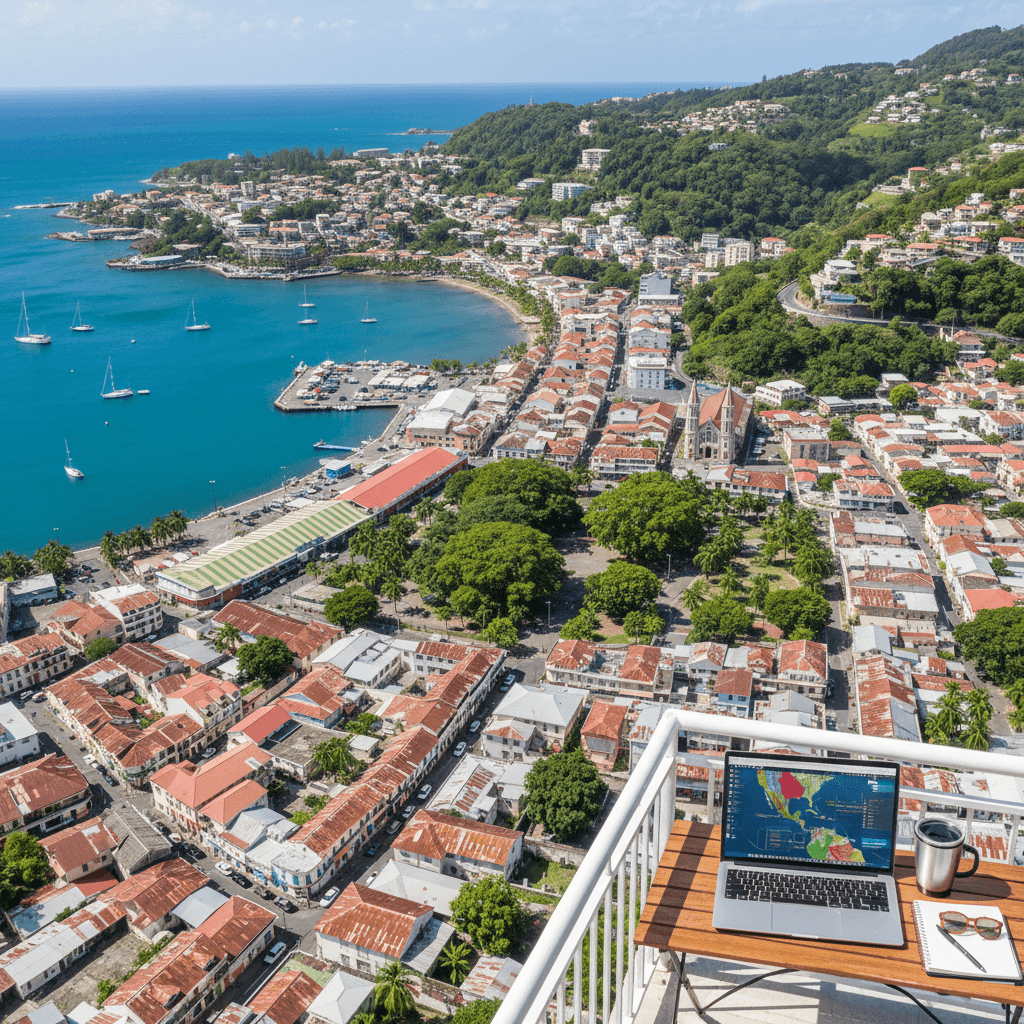
Castries
🇱🇨 Saint Lucia
Castries isn't trying to impress you. That's honestly what makes it work. While other Caribbean capitals lean hard into the resort polish, this place just exists, loud minibuses rattling past colonial storefronts, the smell of saltfish and ripe mango drifting out of the central market, locals moving at a pace that'll frustrate you the first week and quietly rewire you by the third.
The city sits on the northwest coast of Saint Lucia, small enough to feel personal but layered enough to keep you curious. It's a blend of African, French and British influences that shows up everywhere, in the food, the architecture, the Kwéyòl phrases you'll start picking up without trying. Most nomads don't expect to stay long, then find themselves extending their visa.
The vibe is genuinely Caribbean in a way that's getting harder to find. Not curated. Not Instagrammed into submission. You'll hear dominoes slapping on plastic tables outside rum shops, catch the diesel exhaust of a passing bus mixing with frangipani from someone's yard, feel the afternoon heat that sits heavy on your shoulders until the trade winds kick in around 3pm and everything softens.
It's not perfect, frankly. Infrastructure can be inconsistent, power flickers during heavy rain and the gap between "tourist Saint Lucia" and everyday Castries life is real. High-end coworking options are thin on the ground, the roads get chaotic around the market and the city center turns sketchy after dark near the bus station.
What it does offer, though, is a cost of living that's genuinely manageable, a growing expat and nomad scene concentrated in nearby Rodney Bay and access to some of the most dramatic natural scenery in the Caribbean within an hour's drive. The Pitons, Soufrière, Marigot Bay, all day-trip distance.
The people are warm without being performative about it, there's a directness to interactions here that feels refreshing after places that treat you like a walking wallet. Castries rewards patience, it won't hand you anything, but if you slow down and pay attention, it turns out to be one of the more genuinely livable spots in the region.
Castries won't drain your savings the way Southeast Asia might, but it's not dirt cheap either. Most nomads land somewhere between $1,500 and $2,500 a month, depending on how much they like air conditioning and cold Piton beer. That range covers rent, food and getting around, it doesn't leave much room for splurging on weekend trips to Soufrière.
Rent is, honestly, the biggest variable. A studio in Castries Central runs around $400 to $700 a month, which is decent value for a capital city, though you'll want to be home before things get too quiet near the bus station at night. Rodney Bay costs more, $735 to $1,100 for a one-bedroom, but you're paying for a calmer atmosphere, walkable cafes and a neighborhood where expats actually congregate. Most long-term nomads end up in Rodney Bay, turns out the slightly higher rent is worth not feeling isolated.
Monthly Budget Breakdown
- Rent (1BR), budget: $400,$700 (Castries Central)
- Rent (1BR), mid-range: $800,$1,100 (Rodney Bay)
- Meals: $300 budget / $500 mid / $800 comfortable
- Transport: $50 budget / $100 mid / $200 comfortable
- Coworking: $0 (cafes with WiFi) to $150/month at Orbtronics in Gros Islet
Food costs stay manageable if you eat like a local. Street food runs about $5 a plate, conch fritters and rotis from the market smell incredible and taste even better, mid-range spots like Jammer's will run $10 to $20 per meal. Coal Pot is the splurge option for Creole done properly, budget $30 or more per person.
Transport is weirdly affordable. Public minibuses cost next to nothing, the Allez app handles ride-hailing across cars, bikes and even boats and a monthly SIM from Digicel starts at around 15 XCD. Coworking at Orbtronics runs $15 a day or $150 a month, that's your best option if cafes aren't cutting it for focus work.
One thing to factor in: groceries skew pricier than you'd expect because so much is imported. Cook local produce when you can, shop the Castries Market, your wallet will notice the difference.
Castries doesn't have a dozen distinct neighborhoods to parse through. It has a handful and honestly, which one you pick will shape your entire experience here.
For Solo Travelers and Budget Nomads: Castries Central
Rent starts around $500 for a one-bedroom, which is, frankly, hard to beat anywhere in the Caribbean. The market smells like saltfish and overripe mango in the heat of the afternoon, minibuses honk constantly near the bus station and it's loud in a way that some people love and others can't stand after a week.
The tradeoff is real. After dark, the area around the central market and bus terminal gets sketchy, petty theft is common and most nomads who stay here learn quickly not to walk those blocks alone at night. Stick to well-lit streets, keep your laptop bag low-key and you'll be fine.
- Rent (1BR): $500,$700/month
- Best for: Budget travelers, urban access, market proximity
- Watch out for: Evening safety near the market and bus station
For Expats and Remote Workers: Rodney Bay
This is where most nomads end up, turns out, once they spend a few days in central Castries and realize they want a quieter base. Rodney Bay has a marina, actual cafes with reliable WiFi, a beach walkable from most apartments and a cosmopolitan feel that makes it easy to meet other remote workers.
Rents run $735 to $1,100 for a one-bedroom, it's a noticeable jump from central Castries but most expats say it's worth it. The expat community is active here, Facebook groups move fast and you won't struggle to find people to share a meal at Jammer's or drinks at Antillia Brewing.
- Rent (1BR): $735,$1,100/month
- Best for: Nomads, expats, anyone who wants a social scene
- Watch out for: Higher costs, tourist pricing at some restaurants
For Families and Lifestyle Seekers: Gros Islet and Cap Estate
More space, ocean views and modern amenities, but you're paying for all of it. Not walkable. You'll need a car or the Allez app for everything and the isolation gets old if you're used to being able to walk somewhere for coffee. Families with kids tend to appreciate the quieter streets and larger apartments, it's a different pace entirely from the rest of Castries.
- Rent (1BR+): $1,100+/month
- Best for: Families, long-term expats, lifestyle-first priorities
- Watch out for: Car dependency, higher overall costs
Connectivity in Castries is, honestly, better than most people expect from a small Caribbean island. Average fixed broadband speeds around 80 Mbps, which is plenty for video calls, uploads and most remote work without much frustration. That said, it's not bulletproof; occasional outages happen and you'll feel them.
The coworking scene is thin. There's really one dedicated spot worth mentioning: Orbtronics Innovation Hub in Gros Islet, which runs $15 a day or $150 a month and draws a mix of local entrepreneurs and visiting nomads who've figured out that working from a beach bar sounds better than it actually is after day three. Most nomads end up splitting time between Orbtronics and cafes in Rodney Bay, where free WiFi comes with your order and nobody rushes you out.
For mobile data, grab a SIM from Digicel or Flow. Both have shops in Castries Central and at the airport, starter SIMs run around 25-30 XCD (roughly $9-11 USD) and data bundles are cheap enough that you'll want one as a backup regardless of where you're working. Digicel tends to get the nod from expats for coverage outside the capital, Flow is competitive in town, pick based on where you'll spend most of your time.
A few practical realities:
- Orbtronics Innovation Hub: $15/day or $150/month; located in Gros Islet; best dedicated coworking option in the area
- Cafe working: Free WiFi widely available in Rodney Bay spots; no formal day pass system, just buy something
- Digicel SIM: ~25 XCD starter, data bundles available; good island-wide coverage
- Flow SIM: Comparable pricing; solid in Castries Central and tourist zones
- Backup power: Carry a power bank; short outages aren't frequent, but they do happen
Rodney Bay is, turns out, the de facto nomad base for a reason. The cafes are decent, the WiFi holds up and you're close enough to actual amenities that a dead connection doesn't strand you. Castries Central is cheaper but the infrastructure feels less consistent, frankly and that matters when you're on a deadline.
Castries sits at a moderate safety level for tourists, which honestly means it's fine during the day and requires some common sense after dark. Petty theft and pickpocketing around the central market and bus station are the main concerns, not violent crime, so keep your phone in your pocket and don't flash expensive gear when you're wandering those areas at night. Stick to the waterfront and tourist-facing streets after sunset, you'll have no issues.
Rodney Bay is noticeably calmer. Most nomads who've spent time in both areas say the extra rent there buys you more than just a nicer apartment, it buys you the mental ease of not thinking twice about a late-night walk back from dinner.
Emergency numbers are straightforward:
- Police: 999
- Ambulance/Fire: 911
- Tapion Private Hospital (Castries): +1 758 459 2000
Tapion Private Hospital is your best bet for anything serious. It handles emergencies competently and expats generally trust it for urgent care, though for complex procedures, most people fly to Barbados or Martinique rather than push their luck locally. That's just the reality of small-island healthcare.
Pharmacies are, turns out, genuinely easy to find throughout Castries and Rodney Bay. For minor illnesses, cuts or a bad stomach from street food, you can walk into most pharmacies and get solid advice without an appointment, the pharmacists here are used to fielding questions from travelers.
Travel insurance isn't optional. It's not even a debate worth having. Medical evacuation from Saint Lucia to a major facility can cost tens of thousands of dollars and no amount of budget savings in cheaper rent will cover that gap. Get a policy that includes medical evacuation before you land.
The tap water in Castries is technically treated, but most long-term nomads and expats drink bottled or filtered water out of habit and weirdly, it's cheap enough that there's no real reason not to. Bottled water is everywhere and most guesthouses and apartments have filtered options available.
Overall, Castries doesn't demand paranoia, just awareness. Treat it like any mid-size city where tourism and local life overlap and you'll be fine.
Getting around Castries is, honestly, easier than it looks on a map. The city's compact enough that central areas are walkable, though "walkable" comes with an asterisk: the hills are real, the midday heat clings to you and the sidewalks disappear without warning.
Public minibuses are the backbone of local transport. They're cheap, crowded and loud, packed with reggae or soca depending on the driver's mood and they'll get you almost anywhere on the island for a dollar or two. Don't expect a schedule. You flag them down, squeeze in and tap the roof or call out when you want to stop.
For something more flexible, the Allez app is what most nomads use. It covers cars, bikes and even boats, so you can book a taxi to the airport or arrange a water transfer to Marigot Bay without hunting down a driver. Airport taxis run $100 or more if you don't book through an app, which is a jarring welcome after a long flight.
Scooter and bike rentals are available and they're genuinely useful for day trips, but the roads outside central Castries get narrow and winding fast. Rodney Bay is more forgiving for this, it's flatter and the tourist infrastructure means better road markings. Cap Estate and Gros Islet, turns out, reward you with ocean views but punish you with steep climbs.
A few things to keep in mind:
- Minibuses: $1-2 per ride; no fixed schedule, just flag and go
- Allez app: covers cars, bikes, buses and boat transfers
- Airport taxi: $100+ without an app booking
- Scooter/bike rental: good for day trips, less ideal for steep inland roads
- Monthly transport budget: $50 on the low end, $200 if you're relying on taxis regularly
Walking works fine in Castries Central and Rodney Bay during the day. After dark, skip the area around the bus station and central market, it's not worth the hassle. Stick to lit streets and you'll be fine.
English is the official language and proficiency is high across Castries. You won't struggle to communicate anywhere, not in shops, not at government offices, not with your landlord. That part's easy.
What catches most newcomers off guard is Kwéyòl, the French-based Creole that locals switch into constantly, especially among themselves. It's not taught in schools the way English is, but it's alive everywhere, in the market stalls, on the minibuses, drifting out of open doorways. You'll hear it layered under English conversations, woven in mid-sentence without warning and honestly, it can make you feel like an outsider even when everyone's technically speaking a language you know.
Don't stress about learning it fluently. Most locals appreciate any attempt, even a stumbled "Bonjou" (hello) or "Mèsi" (thank you) lands well, it signals respect and people respond warmly to that. Google Translate handles Kwéyòl decently for reading, less so for real-time conversation, so don't rely on it as a lifeline.
The communication style here is, turns out, more indirect than many nomads expect. Directness isn't always valued the same way it's in North America or Northern Europe. Asking a question bluntly can read as rude, a little small talk first goes a long way. Expats who've been here a while recommend slowing down, matching the pace of whoever you're talking to rather than rushing to the point.
Phone communication is straightforward. Digicel and Flow both sell SIM cards at the airport and in-store, starter packs run around 25-30 XCD (roughly $9-11 USD) and data bundles are cheap and stack easily. WhatsApp is, weirdly, the dominant communication platform for everything here: landlords, coworking contacts, local Facebook groups, nomad meetups. If someone says they'll "send you a message," they mean WhatsApp. Get it set up before you land.
- Official language: English, spoken fluently island-wide
- Local language: Kwéyòl (French Creole), common in everyday conversation
- Useful phrases: "Bonjou" (hello), "Mèsi" (thank you), "Oui" (yes)
- Translation help: Google Translate covers Kwéyòl for text, not great for audio
- Primary messaging app: WhatsApp, non-negotiable
- SIM cards: Digicel or Flow, from 25-30 XCD at the airport or in Castries Central
Castries sits in the tropics, so the temperature barely moves. Year-round, you're looking at 27 to 31°C, that sticky, salt-air warmth that clings to your skin the moment you step outside. What actually changes is the rain.
The dry season runs December through May and January to April is, honestly, the sweet spot. Skies stay clear most days, the trade winds keep things bearable and you're not constantly watching the horizon for squalls. Most nomads time their arrival for this window and it shows in the prices.
The wet season kicks in around June and drags through November. September and October are the worst of it, averaging nearly 7 inches of rain a month. Not a gentle drizzle either. It's sudden, loud, hammering-on-rooftops rain that stops almost as fast as it starts, then the sun comes back out like nothing happened. You can work around it, though it does get old after a few weeks of planning your errands around afternoon downpours.
A few things worth knowing before you book:
- Hurricane risk: Saint Lucia sits at the southern edge of the hurricane belt, so direct hits are rare, but June through November still carries that background risk. Travel insurance isn't optional during this period.
- Crowds and costs: December through April brings the bulk of tourists, which means higher rents in Rodney Bay, busier restaurants and more competition for short-term apartments. Book early or budget for it.
- Shoulder season value: May and November are, turns out, genuinely underrated. Rain is lighter than peak wet season, crowds thin out and landlords are more willing to negotiate on monthly rates.
- Humidity: Even in the dry season, humidity sits high. If you run hot, that's something to factor in, especially if you're working from a place without reliable AC.
The wet season isn't a dealbreaker, it's more of a lifestyle adjustment. Expats who've stayed through it say you just shift your schedule: mornings for errands and outdoor work, afternoons for coworking spaces when the rain rolls in. The island doesn't shut down. It just gets quieter.
For the best combination of weather, availability and cost, January through March is the clear call.
Saint Lucia uses the Eastern Caribbean Dollar (XCD), though USD is widely accepted in tourist areas. ATMs are around, cards work at most restaurants and hotels and services like Wise make transferring money in pretty painless. Don't rely on cash alone, though, a few smaller vendors and minibus drivers won't take cards at all.
For a SIM, grab a Digicel or Flow starter pack for around 15 XCD at the airport or any high street store. Both offer decent data bundles, Digicel tends to have slightly better coverage outside Castries, which matters if you're day-tripping to Soufrière or hiking the Pitons.
The Saint Lucia Live It visa is, honestly, one of the more straightforward digital nomad visas in the Caribbean, giving you up to a year of legal remote work status. You'll need to show proof of income and health insurance, so have your documents organized before applying.
Finding an apartment is mostly done through Facebook groups and FinalRentals.lc, turns out the best deals rarely make it onto international listing sites. Rodney Bay goes fast and runs $735 to $1,100 a month for a one-bedroom, central Castries is cheaper around $500, though you'll want to be home before dark near the market area.
Getting around is cheap but not always comfortable. Minibuses are the local way, they're crowded and the routes aren't always obvious to newcomers, so the Allez app is genuinely useful for ride-hailing cars, bikes and even boats. Taxis from the airport run $100 or more, so book through Allez or negotiate upfront.
A few customs worth knowing:
- Tipping: 10 to 15 percent is standard at restaurants, skip it if service charge is already on the bill
- Greetings: A smile and "Bonjou" goes a long way, locals notice when you make the effort
- Kwéyòl: English is official and widely spoken, but picking up a few Creole phrases earns real goodwill
- Festivals: Carnival and the Jazz Festival bring crowds and price spikes, book accommodation weeks ahead
The rainy season runs June through November, September and October are weirdly relentless with around 6.9 inches of rain some months. Short downpours are normal year-round, carry a light jacket regardless of the forecast.
For emergencies: Tapion Private Hospital handles urgent care at +1 758 459 2000, dial 999 for police and 911 for ambulance or fire.
Need visa and immigration info for Saint Lucia?
🇱🇨 View Saint Lucia Country GuideHidden Gem
Worth the effort