Casablanca
🇲🇦 Morocco
The Business Heart with a Salt-Air Breeze
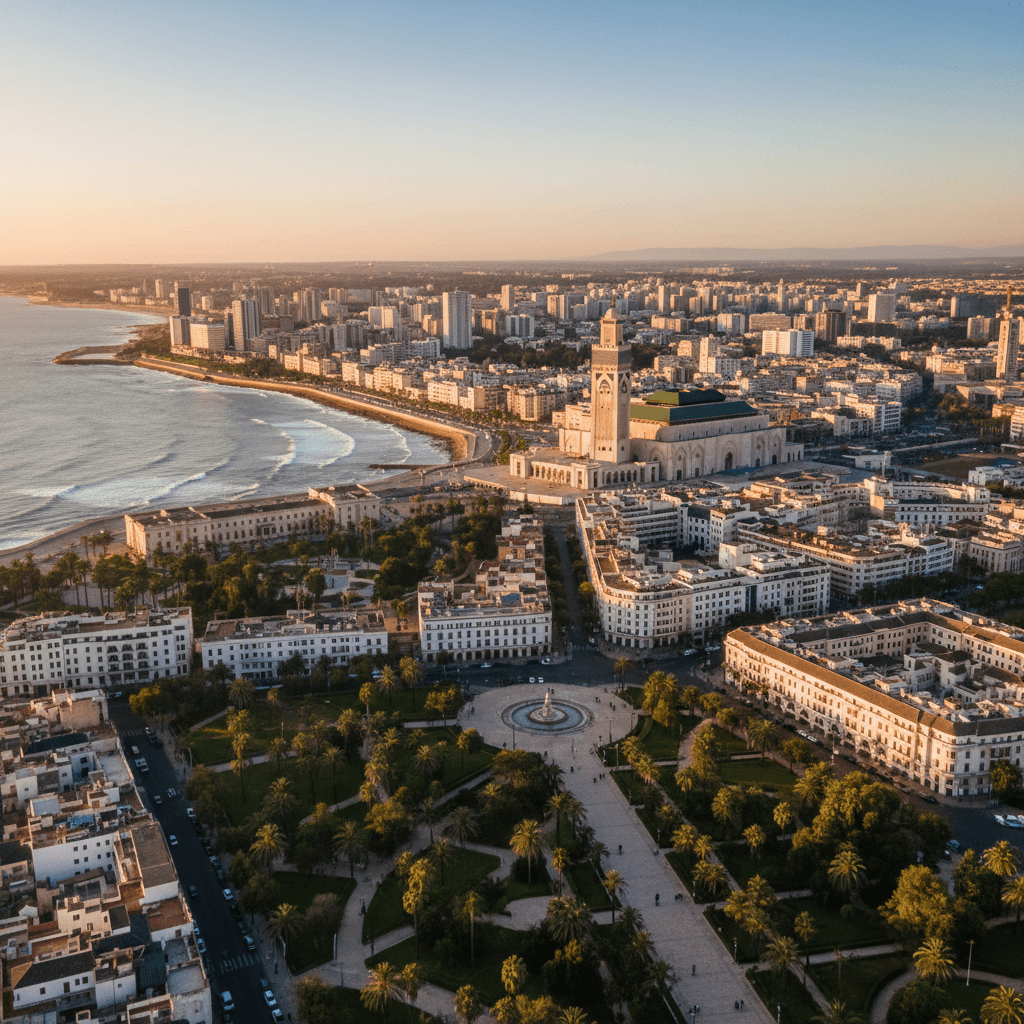
Casablanca doesn't try to charm you with the fairytale aesthetics of Marrakech or the ancient mystery of Fes. It's a gritty, high energy metropolis that feels more like Marseille or Los Angeles than a typical North African outpost. This is Morocco's economic engine, where the suits outnumber the djellabas and the pace of life moves at a clip that might surprise you. It's the kind of place where you can spend your morning on a 100 Mbps fiber line in a sleek Gauthier cafe and your afternoon watching the Atlantic waves crash against the Corniche.
The vibe is unapologetically urban. You'll find a striking mix of Art Deco architecture, French colonial history, and hyper modern skyscrapers. The Hassan II Mosque dominates the skyline, a massive feat of engineering with a retractable roof and a laser that points toward Mecca. Living here means embracing the chaos of a city of four million people, but the payoff is a level of infrastructure and professional networking you won't find elsewhere in the country.
The Nomad Lifestyle and Cost
Most nomads find that Casablanca offers a comfortable, mid range lifestyle that's significantly cheaper than Southern Europe. While inflation has stabilized around 0.8%, you still get a lot of mileage out of your dollars or euros. A budget tier lifestyle costs roughly 8,000 to 12,000 MAD ($800 to $1,200 USD) a month, which covers a basic studio and plenty of street food. If you want a comfortable setup in a prime area like Ain Diab with frequent fine dining, expect to spend 25,000 MAD ($2,500 USD) or more.
- Rent: A modern 1BR in Racine or Gauthier typically runs between 3,000 and 6,000 MAD ($300 to $600 USD).
- Coworking: Monthly memberships at major hubs like Regus cost from around 500 MAD.
- Food: You can grab a street tagine for 20 to 50 MAD ($2 to $5 USD) or a high end meal at Rick's Cafe for 300+ MAD.
- Transport: Petits taxis are the way to go, usually costing 10 to 30 MAD ($1 to $3 USD) per trip.
Where to Plant Your Flag
Choosing the right neighborhood is the difference between loving and hating this city. Most expats and digital nomads cluster in the center or along the coast to avoid the more congested, industrial outskirts.
Racine and Gauthier
- The Vibe: The city's cosmopolitan core. It's walkable, packed with trendy boutiques, and has the highest concentration of reliable WiFi cafes.
- Pros: Best for networking, modern apartments, and a European feel.
- Cons: Heavy traffic and the highest rents in the city center.
Anfa and Ain Diab
- The Vibe: Upscale coastal living. This is where you'll find the beach clubs, international schools, and the famous Corniche waterfront.
- Pros: Fresh air, very safe, and great for morning runs by the ocean.
- Cons: It feels less "traditionally Moroccan" and requires a taxi or app like Careem to get to the business district.
Old Medina
- The Vibe: Intense, crowded, and historic.
- Pros: Incredibly cheap food and total cultural immersion.
- Cons: Poor walkability for work, spotty internet, and can feel sketchy for solo travelers after dark.
Connectivity and Logistics
Internet is rarely an issue here. Fiber is standard in most modern apartments in Racine and Anfa, with speeds hitting 50 to 100 Mbps. 5G is rolling out across the main business districts, and grabbing a local SIM from Orange or Inwi is easy; 50 to 100 MAD will get you enough data to last a month. For getting around, skip the overcrowded buses. Use the Yassir or Careem apps for reliable rides, or hail a red Petit Taxi. Just make sure they turn the meter on, or be prepared to negotiate a flat rate before you close the door.
The emotional experience of Casablanca is one of constant movement. It's loud, it's fast, and it can be exhausting. But when you're sitting on a terrace in Gauthier with a mint tea, watching the sunset over the Atlantic, you'll realize you're in one of the few places in Africa where the future and the past are colliding in real time.
Casablanca hits differently than the rest of Morocco. While tourists flock to the clay-colored alleys of Marrakech or the blue streets of Chefchaouen, Casa is where the country gets to work. It is a high-energy, business-first metropolis where the cost of living remains surprisingly manageable compared to major European hubs. With inflation stabilizing around 0.8%, your budget stretches further here, especially if you move away from the tourist traps and into the neighborhoods where local professionals live.
The Monthly Breakdown
Most digital nomads find they can live comfortably on $1,500 to $2,000 USD (roughly 15,000 to 20,000 MAD) a month. This mid-range budget covers a modern one-bedroom apartment in a trendy district, regular meals out, and a dedicated desk at a coworking space. If you are on a tighter budget, you can scrape by on $800 to $1,200 USD by opting for a basic studio and sticking to the city's incredible street food scene.
- Housing: Expect to pay between 3,000 and 6,000 MAD for a decent apartment. In upscale areas like Anfa or Ain Diab, prices for premium spots with ocean views can climb past 7,000 MAD.
- Food and Drink: A quick tagine or kebab from a street vendor costs 20 to 50 MAD. Mid-range dinners in Gauthier usually run 100 to 200 MAD, while a splurge at Rick's Cafe will set you back 300 MAD or more.
- Workspace: A monthly membership at New Work Lab or The Spot typically costs between 500 and 1,000 MAD.
- Connectivity: A local SIM from Orange or Inwi with 50GB of data costs about 50 to 100 MAD.
Neighborhood Price Points
Where you plant your flag dictates your daily spend. Expats and nomads gravitate toward the central business districts for the reliable fiber optic internet and walkable cafe culture.
Racine and Gauthier
- The Vibe: The heartbeat of modern Casa. It is packed with art galleries, boutiques, and the city's best coffee shops.
- Typical Rent: 4,000 to 5,500 MAD for a one-bedroom.
- Pros: High walkability, reliable utilities, and the best networking opportunities.
- Cons: Heavy traffic and higher-than-average grocery prices.
Anfa and Ain Diab
- The Vibe: Coastal luxury. This is where you go for the Corniche, high-end gyms, and international vibes.
- Typical Rent: 5,000 to 7,500 MAD.
- Pros: Fresh sea air, very safe, and close to modern shopping malls.
- Cons: It feels less "Moroccan" and requires a taxi or app-based ride to get to the city center.
The Medina
- The Vibe: Traditional, chaotic, and loud. Great for a afternoon visit, but difficult for long-term work.
- Typical Rent: Under 3,000 MAD, though quality varies wildly.
- Pros: The cheapest food in the city and total cultural immersion.
- Cons: Spotty internet, poor walkability for laptop users, and safety concerns after dark.
Getting Around for Cheap
Public transport is notoriously overcrowded, so most nomads rely on the iconic red "petits taxis." These are metered, but always make sure the driver turns it on. A standard hop across town costs 10 to 30 MAD, though a small surcharge applies after 8pm. For a more seamless experience, use apps like Yassir or Careem. These usually cost 20 to 50 MAD per trip but save you the hassle of negotiating. If you are coming from the airport, the train to Casa Voyageurs is a steal at 40 MAD, whereas a private taxi will cost about 250 to 300 MAD.
To find long-term rentals without the "foreigner tax," travelers recommend browsing Avito.ma or Mubawab.ma. These sites are the local standard for real estate. While there is no specific digital nomad visa yet, the 90-day tourist entry is standard for most westerners. If you plan to stay longer, you will need to coordinate with the local police for a residency permit or do a quick "border run" to a nearby European city.
The Nomad Hub: Racine and Gauthier
If you want to be where the action is, Racine and Gauthier are the undisputed champions for the remote work crowd. These connected neighborhoods feel more like a chic Parisian district than a North African medina. You'll find the highest concentration of third-wave coffee shops and reliable fiber optic internet here, making it easy to clock in for a full workday without hunting for a signal.
- Rent: Expect to pay between 4,000 and 5,500 MAD for a modern one bedroom apartment.
- Vibe: Urban, walkable, and packed with expat networking opportunities.
- Work: Most nomads head to New Work Lab or The Spot for a professional desk and networking events.
Living here means you can walk to your morning espresso, hit a yoga studio at lunch, and meet friends for a drink at a trendy bar in the evening. The downside is the traffic noise and slightly higher price point, but for most, the convenience of having everything at your doorstep is worth the extra dirhams.
The Upscale Expat: Anfa and Ain Diab
For those who prefer a sea breeze over city smog, the coastal stretch of Anfa and Ain Diab is the go-to. This area is the playground of Casablanca's elite and long-term expats who want space and security. It is home to the Corniche, a long waterfront boardwalk perfect for morning runs or evening strolls past the Hassan II Mosque.
- Rent: Prices jump here, typically ranging from 5,000 to 7,000 MAD for a quality flat.
- Vibe: Relaxed, affluent, and breezy.
- Amenities: Easy access to the Morocco Mall and high end beach clubs.
The lifestyle here is noticeably slower. While you'll still find 5G coverage and modern amenities, the vibe is less about the hustle and more about quality of life. Many expats recommend using the Avito.ma platform to find listings in this area, as the best spots move fast.
Families and Long-Term Settlers: Palmier and Maarif
Families often gravitate toward Palmier or the residential pockets of Maarif. These areas offer a middle ground between the high prices of Anfa and the cramped quarters of the city center. You're close to international schools and healthcare facilities like the Clinique Internationale, which is a major factor for those staying more than a few months.
- Cost of Living: Mid-range meals at local spots run about 100 to 200 MAD, and grocery stores are plentiful.
- Transport: While walkable in some parts, you'll likely use Careem or Yassir apps to get the kids around safely.
- Community: Stronger sense of neighborhood with local markets and parks.
Maarif is also a shopping powerhouse. If you need to kit out a home office or buy tech gear, the Twin Center area has everything from international brands to local electronics shops. It's busy, but it feels lived-in and authentic.
Solo Travelers and Culture Seekers: The Old Medina
Living in the Old Medina isn't for everyone, especially if you have a 9-to-5 job that requires video calls. However, for solo travelers on a budget or those here for a short stint, the cultural immersion is unbeatable. You'll find the cheapest street food in the city here, with tagines and kebabs costing as little as 20 to 50 MAD.
- Rent: Budget rooms or traditional riads can be found for under 3,000 MAD.
- Pros: Incredible history, cheap markets, and a five minute walk to the port.
- Cons: Poor walkability for work, unreliable internet in thick stone buildings, and safety concerns after dark.
Most travelers suggest staying here for a few days to soak up the atmosphere before moving to Racine or Anfa for a more stable work environment. If you do stay here, stick to the main thoroughfares at night and keep your phone tucked away in crowded market areas to avoid pickpockets.
Practical Logistics for All Areas
No matter where you land, getting around is fairly consistent. Use the petits taxis for short hops, which usually cost between 10 and 30 MAD. Just make sure they turn on the meter or agree on the price beforehand. For longer stays, picking up a local SIM from Orange or Inwi at the airport or a local kiosk is the first order of business. A 50 MAD top-up will usually net you around 20GB to 50GB of data, which is plenty for a backup hotspot while you get your apartment fiber sorted.
Getting Connected
Casablanca isn't your typical laid back Moroccan coastal town; it is a high speed business hub where the internet infrastructure actually keeps up with the pace. Most nomads find the fiber optic coverage in neighborhoods like Racine and Gauthier surprisingly reliable, with speeds often hitting between 50 and 100 Mbps. If you are staying in the business districts, you might even find gigabit connections or active 5G signals, though 5G is still rolling out and can be a bit spotty depending on which block you are on.
For your phone, don't rely on international roaming. You can grab a local SIM card at Mohammed V International Airport or any branded boutique in the city. Orange, Inwi, and Maroc Telecom are the big players. Most expats recommend Orange for the best balance of data speeds and 5G compatibility. You can expect to pay around 50 to 100 MAD for a monthly package that gives you 20GB to 50GB of data, which is plenty for tethering if your apartment WiFi flutters.
Top Coworking Spaces
While the cafe culture is great for light admin work, the city's professional coworking spaces are where you'll find the best networking opportunities. These spots are filled with local entrepreneurs and international consultants rather than just tourists. Casablanca offers several modern hubs equipped with high-speed internet and dedicated meeting rooms, providing a quiet atmosphere for deep work and professional client calls.
Remote Work from Cafes
If you prefer the hum of a coffee shop, stick to the Gauthier and Anfa districts. These areas are packed with modern cafes that are accustomed to people sitting with laptops for a few hours. Unlike the old Medina, these neighborhoods have reliable power outlets and stable WiFi. Travelers often say that the vibe in these districts feels more like Paris or Madrid than North Africa, making it easy to slip into a productive routine.
Keep in mind that while many cafes offer WiFi, it is always smart to have your local SIM card ready. Peak hours in popular spots can occasionally slow down public networks. If you're planning a long session, a quick purchase of a 10 MAD coffee or a 20 MAD pastry is the standard etiquette to keep your seat.
Practical Tech Tips
- Power Plugs: Morocco uses Type C and E plugs (the standard European two pin). Bring a surge protector if you are working from older buildings in the city center.
- Apps to Download: Make sure you have Yassir or Careem for getting between work sessions. For quick apartment hunts or checking local prices for gear, Avito.ma is the local version of Craigslist and very useful.
- Connectivity Backup: If your fiber goes down, 4G coverage is strong citywide. A prepaid Inwi or Orange hotspot is a cheap insurance policy for important meetings.
The Urban Reality
Casablanca is a high energy metropolis that feels more like a Mediterranean business hub than the dusty desert outposts often depicted in travel brochures. While it doesn't have the same tourist polish as Marrakech, it's generally safe for nomads who understand the rhythm of a major city. Most expats stick to modern districts like Anfa, Racine, and Gauthier, where the streets are well lit and the police presence is visible. Violent crime is rare, but like any city of nearly four million people, you have to keep your wits about you.
Petty theft is the most common headache. Pickpockets operate in crowded areas, particularly around the Old Medina and on public buses. Local nomads recommend keeping your phone tucked away while walking near traffic, as "phone snatching" by passing scooters can happen. If you're exploring the narrow alleys of the medina, do it during the day. Once the shops close and the crowds thin out, those areas become much harder to navigate and less secure for solo travelers.
Street Smarts and Scams
You'll likely encounter "faux guides" near the Hassan II Mosque or the train stations. They aren't dangerous, but they can be persistent. A firm "Non, merci" and continued walking usually does the trick. When taking a petit taxi, always insist on the meter (the compteur). If they refuse, just hop out and wait for the next one; they're everywhere. At night, expect a 50% surcharge on the meter price, which is standard and legal after 8:00 PM.
- Emergency Numbers: Dial 19 for the police and 15 for an ambulance or fire services.
- Solo Travel: Women often find that dressing slightly more conservatively (covering shoulders and knees) reduces unwanted attention, though Casablanca is much more liberal than rural Morocco.
- Apps: Use Yassir or Careem for rides if you want to avoid haggling over prices or safety concerns in older taxis.
Healthcare Standards
One of the perks of being in Morocco's economic heart is the access to high quality medical care. Casablanca is the country's healthcare hub, and the private clinics here are excellent. Most doctors in the upscale neighborhoods speak fluent French and at least functional English. If you have a minor ailment, pharmacies are your first line of defense. Look for the glowing green crosses; pharmacists in Morocco are highly trained and can prescribe many medications over the counter that would require a doctor's visit in the US or UK.
Top Medical Facilities
- Clinique Internationale de Casablanca: Located near the Anfa district, this is the go-to for many expats. It's modern, equipped for emergencies, and familiar with international insurance providers.
- Hopital Cheikh Khalifa: A massive, state of the art facility that handles specialized treatments and major emergencies.
- Pharmacie de Minuit: There are several 24 hour pharmacies across the city; it's a good idea to pin the one closest to your apartment on Google Maps as soon as you arrive.
Expect to pay out of pocket for most visits and then claim it back through your insurance. A standard consultation with a specialist usually runs between 300 and 500 MAD (about $30 to $50 USD). While the private sector is efficient, public hospitals can be overcrowded and underfunded, so most nomads find that maintaining a solid international health insurance policy is the best way to ensure peace of mind.
The Taxi Hierarchy
Moving through Casablanca is a lesson in urban logistics. Most nomads rely heavily on petits taxis, the small red cars you will see everywhere. They are strictly for city limits and operate on a meter, though you should always make sure the driver turns it on before pulling away. Expect to pay between 10 and 30 MAD for most hops within the central neighborhoods. If you are traveling after 8:00 PM, a 50% surcharge kicks in automatically, so do not be surprised when the price jumps.
For a more seamless experience, download Yassir or Careem. These ride-hailing apps are the local answer to Uber. They take the guesswork out of pricing and navigation, usually costing between 20 and 50 MAD for short trips. It is a favorite for expats who want to avoid the "foreigner tax" sometimes attempted by street hail drivers.
Public Transit and the Tramway
The city's tram system is modern, clean, and surprisingly efficient, connecting the business districts to the coast. It is a lifesaver during rush hour when the streets turn into a parking lot. A single journey is about 8 MAD, but you can get a rechargeable card if you are staying for a month or more. While there are public buses, they are often overcrowded and difficult to predict; most professionals avoid them in favor of the tram or taxis.
- Tramway: Best for reaching the Hassan II Mosque or the Corniche without traffic.
- Grand Taxis: These are larger, white Mercedes vehicles. They run fixed routes like shared shuttles and are great for getting to the outskirts, but they won't leave until every seat is filled.
- Walking: Stick to Anfa, Gauthier, or the Corniche if you want to get your steps in. These areas have decent sidewalks and a more relaxed pace.
Airport Connections
Mohammed V International Airport (CMN) is about 30 kilometers from the center. You have two solid options for getting into town. The train is the most reliable choice, running from the airport to Casa Voyageurs station for about 40 MAD. It is quick, avoids the notorious Casablanca traffic, and puts you right near the tram lines.
If you have heavy luggage, a taxi from the airport is the way to go. This will set you back between 200 and 300 MAD. Always agree on the price before you get in, as airport drivers rarely use the meter for long hauls. The drive usually takes about 20 to 30 minutes, but that can easily double during the afternoon peak.
Micromobility and Regional Travel
If you prefer two wheels, look for Bolt or local rental shops along the waterfront. You can snag a scooter or bike for around 50 MAD a day. It is a fantastic way to cruise the Ain Diab area, though I wouldn't recommend brave souls attempt to cycle through the chaotic intersections of the city center.
One of the best perks of living in Casablanca is the high speed rail link, the Al Boraq. You can reach Rabat in just 30 minutes for about 50 MAD or head up to Tangier in roughly two hours. It makes weekend scouting trips incredibly easy. For these regional trains, booking a day or two in advance on the ONCF website or app is smart, especially for Friday or Sunday travel when locals head home for the weekend.
The Linguistic Landscape
In Casablanca, language is a layered experience. While you can get by with English in high end hotels or tech hubs like New Work Lab, it isn't the primary way the city communicates. You'll hear a constant mix of Darija (Moroccan Arabic) and French echoing through the streets of Gauthier and Racine. French remains the language of business and higher education, so most professionals and service staff in expat heavy areas are entirely fluent in it.
English proficiency is growing among the younger generation and the digital nomad community, but it's still relatively low once you step outside the bubble of international cafes and coworking spaces. Most nomads find that learning a few basic phrases in Darija goes a long way in building rapport with taxi drivers or shopkeepers in the Medina. It shows respect for the local culture and often helps when you're haggling for prices.
Key Phrases for Your Kit
- Shukran: Thank you.
- Bsh hal?: How much? (Vital for those 10 to 30 MAD taxi rides).
- Smiti...: My name is...
- Shnu smiytek?: What is your name?
- La bas?: How are you? / Everything good?
- Iyeh / La: Yes / No.
Digital Communication and Tools
Reliable communication starts with a local SIM card. Don't rely on international roaming; it's sluggish and overpriced. You can grab a card from Orange, Inwi, or Maroc Telecom right at CMN Airport or at any small shop in the city center. A starter pack usually costs around 50 MAD, and you can load 20GB to 50GB of data for roughly another 50 to 100 MAD. 5G is rolling out in the business districts, but 4G is strong and consistent citywide.
For getting around and ordering food, apps are your best friend. Yassir and Careem are the go to choices for ride hailing, which bypasses the need for complex verbal negotiations with drivers. For translation, download the Google Translate offline pack for French and Arabic. The "Camera" feature is particularly useful for reading menus at local spots that haven't printed an English version yet.
Social Etiquette and Business Culture
Casablanca is more professional and fast paced than Marrakech, and the way people communicate reflects that. In neighborhoods like Anfa, business meetings often start with polite small talk and tea, but they get to the point much faster than in the south. When meeting locals, a firm handshake is standard. If you're invited into a home, it's polite to use your right hand for eating and greetings.
Nomads often connect through InterNations or Facebook groups focused on the Racine and Gauthier areas. Since the social scene revolves around the Corniche waterfront and trendy cafes, you'll find that many expats and locals are open to striking up a conversation in French or English. If you're struggling with the language barrier, sticking to the modern hubs like The Spot ensures you're surrounded by people who speak the "international language" of tech and remote work.
Climate Snapshot
Casablanca enjoys a mild Mediterranean climate that stays relatively temperate compared to the scorching interior of Marrakech. Because it sits right on the Atlantic, the ocean breeze helps regulate the heat. You'll find summers are warm but rarely unbearable, while winters stay cool and damp without ever getting truly freezing.
The rainy season typically runs from November to March. December and January are the wettest months, seeing around 100mm of rain. If you're planning to work from a cafe in Gauthier during this time, bring a waterproof jacket; the city's drainage can sometimes struggle with heavy downpours.
When to Visit
Most nomads find the sweet spots are April through June and September through October. During these shoulder seasons, temperatures hover comfortably between 20°C and 28°C (68°F to 82°F). It is dry, sunny, and perfect for walking between meetings in Racine or grabbing a coffee on the Corniche waterfront.
- Spring (April to June): This is arguably the prime window. The air is crisp, the greenery is lush, and you'll beat the heavy humidity that arrives later in the year.
- Summer (July to August): Expect highs between 25°C and 35°C (77°F to 95°F). While not as hot as the desert regions, the humidity can make it feel sticky. Expats usually head to the beaches in Ain Diab to catch the breeze.
- Autumn (September to October): A second peak season. The ocean is still warm enough for a dip, and the city's professional energy picks up again after the summer lull.
- Winter (December to February): Temperatures drop to 12°C to 20°C (54°F to 68°F). It is cloudy and gray quite often. Since many older Moroccan apartments lack central heating, you might find yourself surprisingly chilly indoors.
Seasonal Practicalities
If you arrive in the peak of summer, prioritize finding an apartment in Anfa or Ain Diab with reliable air conditioning. While the breeze helps, the urban heat island effect in the city center is real. Conversely, if you're visiting in January, check with your Airbnb host or landlord about space heaters; they are a lifesaver when the Atlantic dampness sets in.
Keep in mind that the local pace shifts significantly during Ramadan. While the exact dates change every year based on the lunar calendar, the city slows down during the day and explodes with life after sunset. Many cafes and coworking spaces like New Work Lab may adjust their hours, so plan your deep work blocks accordingly.
What to Pack
Casablanca is the most westernized city in Morocco, but modest dress is still the norm, especially when visiting landmarks like the Hassan II Mosque. Light linens and cottons are your best friends from May to September. For the winter months, a medium weight jacket and a good umbrella are mandatory. Travelers often suggest layers because a sunny 20°C afternoon can quickly turn into a brisk 12°C evening once the sun dips below the horizon.
Cost of Living
Casablanca is more affordable than most European hubs, especially with inflation stabilizing around 0.8%. You can live well here on a range of budgets, though the city's status as a business center means prices in premium districts like Anfa or Ain Diab can climb quickly.
- The Budget Tier (8,000 to 12,000 MAD / $800 to $1,200 USD): This covers a basic studio, plenty of street food like tagines or kebabs for 20 to 50 MAD, and getting around via petits taxis.
- The Mid Range Tier (15,000 to 20,000 MAD / $1,500 to $2,000 USD): This is the sweet spot for most nomads. It includes a modern one bedroom in Racine, a monthly coworking membership, and regular meals at mid range restaurants where a dinner costs between 100 and 200 MAD.
- The Comfortable Tier (25,000+ MAD / $2,500+ USD): For those who want upscale living in Ain Diab, frequent fine dining at spots like Rick's Cafe, and private transport.
Best Neighborhoods for Nomads
Most expats and remote workers gravitate toward a few specific areas that offer reliable utilities and a westernized lifestyle. Avoid the deep Medina for long term stays; while the markets are great for a weekend visit, the walkability for work and nighttime safety aren't ideal.
Racine and Gauthier are the top picks for anyone needing to be near the action. These areas are packed with cafes, expat networks, and modern apartments. Expect to pay between 4,000 and 5,500 MAD for a decent one bedroom. It is busy, but you'll have the best internet reliability here.
Anfa and Ain Diab offer a more relaxed, coastal vibe near the Corniche. It is pricier, with rents ranging from 5,000 to 7,000 MAD, but you get better air quality and proximity to international schools and high end gyms. Many nomads find Anfa's professional energy a welcome change from the more tourist heavy atmosphere of Marrakech.
Internet and Productive Spaces
Fiber optic internet is standard in modern apartments, usually hitting speeds between 50 and 100 Mbps. 5G is rolling out across the business districts, so your mobile hotspot will serve as a solid backup. For a dedicated desk, New Work Lab is the go to hub. It costs about 500 to 1,000 MAD per month and is great for networking. The Spot is another professional alternative if you need a quiet environment for calls.
For mobile data, grab a SIM card from Orange or Inwi at the airport or a local shop. You can get 20 to 50GB of data for roughly 50 to 100 MAD. Most cafes in Gauthier are laptop friendly, provided you're buying coffee and staying respectful of the lunch rush.
Getting Around
Don't bother with the local buses; they're often overcrowded and confusing. Use petits taxis for short hops around town. They should cost between 10 and 30 MAD, but remember there is a surcharge after 8pm. For a more seamless experience, download Yassir or Careem. These ride hailing apps are reliable and usually cost 20 to 50 MAD for trips across the city center.
If you're coming from the airport (CMN), the train to Casa Voyageurs is the most efficient move at 40 MAD. A taxi will set you back 200 to 300 MAD and takes about 20 minutes depending on the notorious Casablanca traffic.
Safety and Healthcare
Casablanca is generally safe, especially in the modern districts. Petty theft like pickpocketing happens in crowded markets, so keep your phone tucked away. If you need medical care, expats recommend the Clinique Internationale in Anfa for its modern facilities. Pharmacies are everywhere and very affordable for basic needs. In an emergency, dial 19 for the police or 15 for an ambulance.
Cultural Etiquette
While Casablanca is more liberal than rural Morocco, modesty is still respected. Dress a bit more formally for business meetings and cover up when visiting religious sites like the Hassan II Mosque. Tipping is standard at around 10%, and haggling is expected in the markets but not in modern retail stores. Most locals speak Darija or French; learning a few phrases like Shukran (thank you) goes a long way, though English is becoming more common in tech and business circles.
Need visa and immigration info for Morocco?
🇲🇦 View Morocco Country GuideHidden Gem
Worth the effort
Monthly Budget Estimates
More cities in Morocco
Imsouane
🇲🇦 Morocco
Ouarzazate
🇲🇦 Morocco
Essaouira
🇲🇦 Morocco