Cape Town
🇿🇦 South Africa
The Mother City Experience
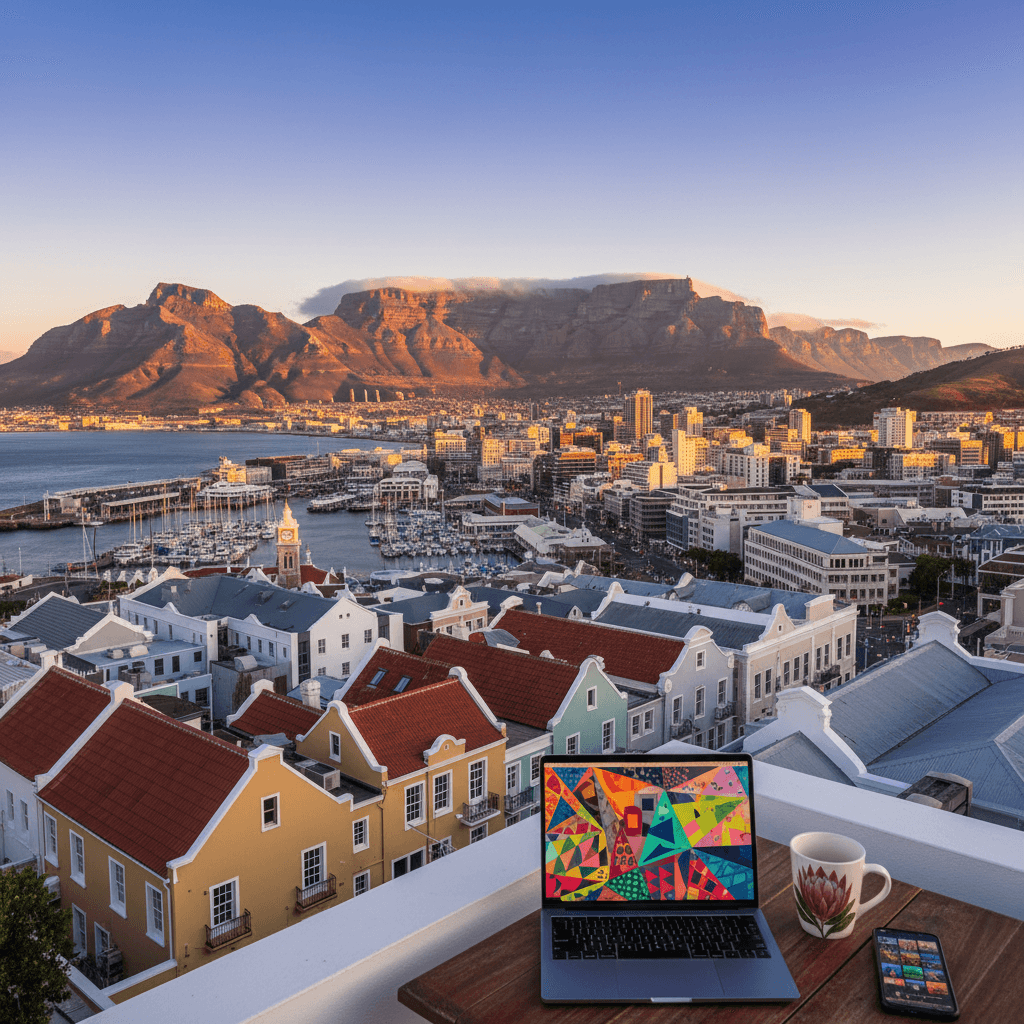
Cape Town hits differently than most nomad hubs. It is a place where you can finish a Zoom call at 5:00 PM and be standing on top of Lion's Head for a sunset hike by 6:00 PM. The city feels like a collision of dramatic natural edges and a sophisticated, creative urban core. Most nomads find the "Mother City" addictive because it doesn't force you to choose between a high-octane career and an outdoor lifestyle; it weaves them together through a world class coffee culture and a community that values the "braai" (BBQ) as much as the boardroom.
The energy here is relaxed but entrepreneurial. You'll hear a mix of English, Afrikaans, and Xhosa in the streets, often accompanied by the smell of salt air and roasting beans. While the natural beauty is the initial draw, the local nomad scene keeps people around. Whether it is a sunrise swim at Clifton 4th or a Friday afternoon gin tasting in the CBD, the social calendar fills up fast. It is a city that rewards the adventurous, though it requires a bit of street smarts and a flexible attitude toward infrastructure.
The Realities of Daily Life
Living here means embracing a few local quirks. The most famous is load shedding, which are scheduled power outages used to manage the national grid. Expats recommend downloading the EskomSePush app immediately to track these schedules. Most professional coworking spaces and high end apartments have "back up power" (inverters or generators), so your work day usually stays on track. Just make sure to charge your laptop and power banks when the lights are on.
Safety is a common conversation topic. Most nomads feel perfectly secure in neighborhoods like Sea Point or Gardens during the day, but you'll need to be vigilant. Avoid walking alone at night on Long Street or Kloof Street where pickpocketing is common, and stick to Uber or Bolt after dark. If you stay aware of your surroundings and keep your phone tucked away in public, you'll find the city manageable and welcoming.
Cost of Living Breakdown
Your budget in Cape Town goes surprisingly far compared to Europe or North America, especially when it comes to dining and wine. Here is what to expect for monthly expenses:
- Budget Tier: R15,000 to R25,000 ($850 to $1,400 USD). This covers a modest studio in Woodstock, MyCiTi bus fare, and plenty of street food like R60 bunny chow.
- Mid-Range: R25,000 to R40,000 ($1,400 to $2,250 USD). This is the sweet spot for most nomads, allowing for a 1BR apartment in Green Point, a R3,000 monthly coworking membership, and regular dinners out.
- Comfortable: R40,000+ ($2,250+ USD). This buys you a luxury spot in Camps Bay, frequent Ubers, and high end dining where a meal might cost R400 or more.
Where to Plant Your Roots
Choosing the right neighborhood defines your Cape Town experience. Each pocket has a distinct personality and varying price points.
Sea Point and Green Point
- Best for: Ocean lovers and first-time nomads.
- Rent: R12,000 to R20,000 for a 1BR.
- The Vibe: Incredibly walkable with a famous promenade for morning runs. It is packed with cafes that have backup power and a high density of other remote workers.
Gardens and Tamboerskloof
- Best for: Creative types and those who want a local, leafy feel.
- Rent: R15,000 to R25,000 for a 1BR.
- The Vibe: Nestled right under Table Mountain. It is quieter than the beachfront but steps away from the trendy eateries on Kloof Street like Our Local.
CBD and Woodstock
- Best for: Budget-conscious entrepreneurs and urbanites.
- Rent: R10,000 to R18,000 for a studio.
- The Vibe: Grittier and more industrial. Woodstock is home to The Old Biscuit Mill and startup hubs like Ideas Cartel, though you'll need to be more cautious with safety here at night.
Connectivity and Workspace
Internet speeds are generally excellent, with fiber being the standard in most modern rentals. You can expect 50Mbps to 500Mbps in dedicated workspaces. For those who need a community, Workshop 17 has several locations (V&A Waterfront is a favorite) with day passes around R250. WeWork in the CBD is another reliable choice for high speed uncapped WiFi and networking events. For a more casual "laptop cafe" day, head to Burnt Clubhouse or The Power and the Glory, but always check if they have backup power for those load shedding windows.
Getting Around
Cape Town is not a city where you need a car every day, but you'll want one for weekend trips to Stellenbosch or Cape Point. For daily commutes, Uber is the gold standard; it is affordable, safe, and reliable. The MyCiTi bus system is a great budget alternative for getting between the CBD and the Atlantic Seaboard, with rides costing between R20 and R50. If you are staying in Sea Point, you'll likely find yourself walking or using Bird scooters for short hops along the coast.
The Price of Paradise: Budgeting for the Mother City
Cape Town is one of those rare places where your dollar, euro, or pound stretches surprisingly far without sacrificing a high end lifestyle. You can spend your mornings surfing at Muizenberg and your afternoons working from a world class cafe, all while keeping your monthly burn rate significantly lower than in Lisbon or Mexico City. Most digital nomads find they can live extremely well here on a mid range budget of $1,400 to $2,250 (R25,000 to R40,000) per month.
If you are on a tighter budget, you can scrape by on $850 to $1,400 (R15,000 to R25,000). This usually means staying in a more modest studio in Woodstock or the CBD, sticking to the MyCiTi bus, and eating at local spots like Eastern Food Bazaar where a massive plate of curry costs about R80 ($4.50). On the flip side, $2,250+ (R40,000+) puts you in a luxury apartment in Sea Point with daily Ubers and dinners at trendy spots on Kloof Street.
Breaking Down the Monthly Rent
Rent will be your biggest expense, and prices vary wildly depending on how close you are to the Atlantic Seaboard. Many expats recommend looking for "load shedding friendly" buildings that have solar power or backup generators, as power outages are a regular part of life here.
- Sea Point and Green Point: The nomad favorites. Expect to pay R12,000 to R20,000 ($680 to $1,130) for a solid one bedroom apartment near the Promenade.
- Gardens and Tamboerskloof: Leafy, quiet, and full of creative energy. Prices range from R15,000 to R25,000 ($850 to $1,400) for spots with Table Mountain views.
- CBD and Woodstock: Grittier and more industrial but great for networking. You can find studios for R10,000 to R18,000 ($560 to $1,000).
- Camps Bay: Stunning but pricey. You are looking at R30,000+ ($1,700+) for anything decent, and it can feel a bit isolated from the nomad community.
Eating, Drinking, and Socializing
The food scene is a major draw. You can grab a quick street food snack like a bunny chow for R60 ($3.50) or a wood fired pizza for R150 ($8.50). A flat white at a laptop friendly cafe like Our Local usually costs around R35 ($2). If you are heading out for a nice dinner with drinks, budget about R400 ($23) per person.
Grocery shopping is affordable if you stick to local brands at Checkers or Woolworths. A weekly shop for one person typically runs between R800 and R1,200 ($45 to $68). Most travelers find that eating out a few times a week doesn't break the bank, which is lucky because the restaurant culture here is addictive.
The Cost of Staying Connected
Reliable internet is non negotiable for remote work. While fiber is common in most apartments, you will want a solid mobile backup. Grab a prepaid SIM from Vodacom or MTN at the airport. You can get 20GB of data for about R200 ($11). For a dedicated workspace, Cape Town has some of the best coworking hubs in the Southern Hemisphere:
- Workshop 17: Multiple locations including the V&A Waterfront. A day pass costs around R250, while monthly hot desk plans start from R2,960 (excl. VAT).
- Ideas Cartel: Great startup vibe in Woodstock or the CBD. Day passes start at R200 ($11).
- WeWork: Standard international quality in the CBD or Sea Point for roughly R3,500 ($200) a month.
Pro tip: Download the EskomSePush app immediately. It tracks the load shedding schedule so you know exactly when the power will cut out and can plan your gym sessions or deep work blocks accordingly.
Transport and Getting Around
You don't necessarily need a car if you stay in the City Bowl or Sea Point. Uber and Bolt are the primary ways nomads get around at night; a ten minute trip usually costs between R100 and R200 ($6 to $11). During the day, the MyCiTi bus is safe and reliable, costing about R20 to R50 ($1 to $3) per ride. If you want to explore the Cape Peninsula or the Winelands in Stellenbosch, renting a car for the weekend is your best bet, but watch out for the aggressive traffic during rush hour.
Finding your feet in the Mother City starts with picking a base that fits your daily flow. Cape Town is a patchwork of distinct neighborhoods, each with its own microclimate and rhythm. Whether you want to wake up to the sound of the Atlantic or the smell of roasting coffee in a gritty industrial loft, there is a corner of the city that works for you.
For Nomads and Social Butterflies: Sea Point and Green Point
Most remote workers head straight for the Atlantic Seaboard, and for good reason. Sea Point and Green Point are the most walkable parts of the city, centered around the famous Promenade where locals jog at sunset. You are close to the ocean, the internet is generally excellent, and the social scene is always on. It is the best spot for those who want to find a community quickly.
- The Vibe: High energy, health-conscious, and very international. You will see people working on laptops in almost every cafe.
- Monthly Rent: Expect to pay between R12,000 and R20,000 ($680 to $1,130) for a solid one bedroom apartment.
- Work Spots: Workshop 17 at the V&A Waterfront is a short Uber away, and WeWork has a major presence here. For coffee, Burnt Clubhouse is a local favorite with backup power for those pesky load shedding hours.
- Pros: Very safe during the day, great beach access, and plenty of "load shedding proof" cafes.
- Cons: It gets crowded with tourists in the summer and rent is higher than inland.
For Creative Types and Quiet Seekers: Gardens and Tamboerskloof
If you prefer leafy streets and a more established, local feel, head toward the base of Table Mountain. Gardens and Tamboerskloof offer a creative atmosphere with incredible views of the peaks. It is central enough to get anywhere in ten minutes but quiet enough to actually get deep work done without the distraction of the beach.
- The Vibe: Aesthetic, green, and trendy. Think Victorian houses turned into boutique offices and indie bookstores.
- Monthly Rent: A bit pricier for the space, ranging from R15,000 to R25,000 ($850 to $1,400).
- Work Spots: Our Local on Kloof Street is an iconic nursery turned cafe that nomads love. The Power and the Glory is the go to spot for a post work beer.
- Pros: Excellent fiber internet, very quiet at night, and walking distance to the best restaurants on Kloof Street.
- Cons: Parking is a nightmare and you are farther from the water.
For Budget Expats and Entrepreneurs: CBD and Woodstock
The Central Business District (CBD) and nearby Woodstock are the city's engine rooms. This is where the startup energy lives. Woodstock is more industrial, filled with street art and converted warehouses, while the CBD is all about high rise living and being in the center of the action. It is the most affordable way to live near the city center.
- The Vibe: Gritty, entrepreneurial, and fast paced.
- Monthly Rent: More budget friendly, usually R10,000 to R18,000 ($560 to $1,000) for a modern studio.
- Work Spots: Ideas Cartel in Woodstock is a major hub for the startup crowd, with day passes around R200 ($11).
- Pros: Most affordable housing in the city center and the best access to public transport like the MyCiTi bus.
- Cons: You need to be street smart. Pickpocketing is common on Long Street at night, and it can feel a bit empty on Sundays.
For Families and Luxury Travelers: Camps Bay and the Waterfront
If your budget allows for it or you are traveling with a crew, the "Platinum Mile" is where the post card views are. Camps Bay is famous for its white sand beaches and palm lined strip, while the V&A Waterfront is a secure, high end precinct with everything you need in one place.
- The Vibe: Upscale, relaxed, and very scenic. It feels like a permanent vacation.
- Monthly Rent: High end. You will likely pay R40,000+ ($2,250+) for a comfortable family home or luxury apartment.
- Work Spots: Café Caprice is great for a laptop session with a view, though it gets loud. Workshop 17 has a flagship location right in the Watershed at the Waterfront.
- Pros: Extremely safe, world class dining, and the best sunsets in Africa.
- Cons: Very expensive and can feel disconnected from the "real" Cape Town culture.
Regardless of where you land, make sure to download the EskomSePush app immediately. It is the only way to track the power outage schedule, which will dictate when you need to be in a coworking space versus working from your balcony.
The Reality of Remote Work in the Mother City
Cape Town is a bit of a dream for remote workers, provided you understand the local quirks. The internet is generally excellent, with fiber speeds hitting anywhere from 50Mbps to 500Mbps in most modern apartments and cafes. However, the city has a unique challenge called load shedding, which are scheduled power outages used to manage the national grid. Most professional coworking spaces and high end rentals have back up power or solar, but you'll definitely want to download the EskomSePush app to track the schedule and plan your deep work sessions.
Mobile data is a reliable safety net. You can grab a prepaid SIM from Vodacom or MTN at the airport for about R200 ($11), which gets you roughly 20GB of data. If your phone supports it, an eSIM via Airalo or Holafly is a quick way to stay connected the moment you land, though local SIMs usually offer better value for long term stays.
Top Coworking Spaces
The coworking scene is sophisticated and social. You aren't just paying for a desk; you're paying for a battery backup that keeps the lights on when the rest of the neighborhood goes dark. Most nomads gravitate toward these spots:
- Workshop 17: This is the gold standard in Cape Town. They have stunning locations at the V&A Waterfront and in Kloof Street. A day pass costs around R250 ($14), while monthly memberships run about R4,500 ($250). They offer high speed uncapped fiber, meeting rooms, and even showers if you're coming straight from a morning hike.
- WeWork: Located in the CBD and Sea Point, these spaces provide the familiar global standard with great community events and networking opportunities. Prices are similar to Workshop 17.
- Ideas Cartel: This spot in Woodstock has a distinct startup energy and a more boutique feel. Day passes start at R200 ($11), making it a great budget friendly option for those who want a professional environment without the corporate gloss.
Laptop Friendly Cafes
If you prefer the hum of a coffee shop over a quiet office, Cape Town has one of the best cafe cultures in the world. Many spots are used to "laptop squatters" as long as you keep the flat whites coming. Just be sure to check if they have a generator or an inverter before you settle in for a long meeting.
- Our Local (Kloof Street): A plant filled sanctuary that feels like working in a greenhouse. It's popular with the creative crowd and has a great communal table.
- Burnt Clubhouse: A favorite for those staying in the Sea Point area. It’s modern, has great food, and the WiFi is consistently snappy.
- The Power and the Glory: A Tamboerskloof staple. It's a cafe by day and a bar by night, perfect for that transition from spreadsheets to sundowners.
- Café Caprice: If you want to work with a view of the Atlantic in Camps Bay, this is the place. It can get loud and touristy, but for a Friday afternoon session, the vibe is hard to beat.
Practical Setup Tips
Most expats recommend staying in Sea Point or Green Point if you're new to the city. These areas are walkable and packed with cafes that have invested in back up power. If you're looking for something more local and quiet, Gardens and Tamboerskloof offer great fiber connectivity and a more residential feel.
Expect to pay between R2,000 and R5,500 (excl. VAT) for a monthly coworking membership, depending on the plan and location. If you're working from home, always ask your Airbnb host or landlord specifically about their "load shedding provisions." A small uninterruptible power supply (UPS) for the router is a game changer and costs about R1,000 ($55) at local tech shops if your rental doesn't provide one. It'll keep your internet running for hours even when the power is out.
Stay Smart, Stay Safe
Cape Town has a reputation for being tricky when it comes to safety, but for most nomads, it’s about situational awareness rather than constant fear. The city is divided into pockets where life feels perfectly normal and areas that are strictly off-limits. If you stick to the Atlantic Seaboard (Sea Point and Green Point) or the City Bowl (Gardens and Tamboerskloof) during the day, you'll likely feel right at home.
The golden rule here is simple: don't walk alone at night. Even on popular stretches like Long Street or Kloof Street, petty crime and pickpocketing are common after dark. Most expats and travelers rely on Uber for almost every trip after the sun goes down, even if the destination is only a few blocks away. It’s cheap, reliable, and keeps you off the pavement where you might be an easy target.
When you're out and about, keep your phone tucked away. Don't leave your laptop or bag unattended at a cafe table while you grab a refill. If you're driving, never leave valuables visible on the seats; "smash and grabs" can happen at traffic lights in certain areas. Also, steer clear of townships like Khayelitsha unless you are on a specific, reputable guided tour. Most nomads find that as long as they stay vigilant and follow these local norms, they don't run into any serious trouble.
World Class Private Healthcare
One of the biggest surprises for newcomers is the quality of private healthcare in Cape Town. It’s genuinely world class and often better than what you’ll find in parts of Europe or North America. If you have an emergency or need a specialist, the Netcare Christiaan Barnard Memorial Hospital in the CBD is the gold standard. It’s a high tech facility that handles everything from routine checkups to complex surgeries.
For everyday needs, pharmacies are everywhere. Look for a Dis-Chem or Clicks; these are large chains where you can find over the counter meds, professional advice, and even basic clinic services like flu shots or blood pressure checks. Prescription medication is generally affordable, though you should bring a copy of your script from home to make things easier with the local pharmacist.
- Emergency Numbers: Dial 10111 for police or 10177 for an ambulance. From a mobile, 112 is the universal emergency line.
- Travel Insurance: This is a non negotiable. While private care is excellent, it’s expensive if you're paying out of pocket. Ensure your policy covers private hospital admissions.
- Water Safety: The tap water in Cape Town is safe to drink and actually tastes quite good. You don't need to waste money on bottled water.
The Load Shedding Factor
You can't talk about safety or logistics in South Africa without mentioning load shedding. These are scheduled power outages used to manage the national grid. While it’s not a health risk, it can be a safety issue if street lights go out or your home security system dies.
Download the EskomSePush app immediately. It gives you real time updates on when the power will be cut in your specific neighborhood. Most high end apartments and coworking spaces like Workshop17 have backup generators or solar setups, but it’s always smart to keep your devices and a portable power bank charged. If you're out walking and the power goes out, it’s a good cue to head home or call an Uber.
Navigating the Mother City
Cape Town is surprisingly easy to navigate once you understand the layout of the mountain. Most nomads cluster in the City Bowl or along the Atlantic Seaboard, where the infrastructure is most reliable. While you might be tempted to walk everywhere because of the views, the city is quite spread out; you'll need a mix of apps and local transport to get the most out of your stay.
Ride-Hailing: The Nomad Gold Standard
For most expats and remote workers, Uber and Bolt are the primary ways to get around. They’re affordable, safe, and available nearly 24/7. An average trip within the city center or from Sea Point to the CBD usually costs between R100 and R200 ($6 to $11). It’s the safest way to travel after dark, even if you're only going a few blocks.
- Uber: Generally considered the most reliable and has the highest vehicle standards.
- Bolt: Often slightly cheaper than Uber, though cars can be a bit more "lived-in."
- Airport Transfers: Expect to pay R400 to R500 for a 20 to 30 minute ride from Cape Town International to the city center.
The MyCiTi Bus System
If you're staying in Sea Point, Green Point, or the CBD, the MyCiTi bus is a fantastic, modern option. It operates on dedicated lanes, so it bypasses the worst of the morning traffic. You’ll need to buy a myconnect card at a station or select retailers, as drivers don't accept cash. Rides typically cost between R20 and R50 ($1 to $3) depending on the distance and time of day.
Most nomads find the MyCiTi perfect for the beach run or getting to Workshop 17 at the V&A Waterfront. Just keep an eye on the schedules during the weekends, as the frequency drops significantly.
Micromobility and Walking
Cape Town is a tale of two cities when it comes to walking. The Sea Point Promenade is a dream for pedestrians and joggers, stretching for kilometers along the ocean. In the CBD and Gardens, walking during the day is common and generally safe, but you should stay alert for petty crime like phone snatching. Avoid walking alone at night on Long Street or Kloof Street, even if the distance seems short.
- Bird and Lime: You'll find electric scooters for rent along the Sea Point beachfront. They cost about R50 per hour and are a fun way to get between cafes.
- Cycling: While the promenade is great for a casual ride, the rest of the city isn't particularly bike-friendly due to steep hills and aggressive traffic.
Car Rentals and Day Trips
If you plan on exploring the Stellenbosch winelands or driving down to Cape Point, renting a car is your best bet. Local traffic can be brutal during peak morning and afternoon hours, so plan your departures accordingly. You can find rentals starting around R400 per day for a basic manual car. Always park in designated areas with a "car guard" (locals who watch your car for a small tip of R5 to R10) and never leave valuables in sight.
Practical Transit Tips
Before you head out, download EskomSePush. This app is vital for tracking load shedding (scheduled power outages), which can occasionally affect traffic lights and MyCiTi station operations. Most nomads also recommend keeping a small amount of cash for tipping car guards or in case an app-based payment fails. For longer stays, a monthly transport budget of R800 ($45) usually covers a mix of bus rides and occasional Ubers.
The Linguistic Landscape
Cape Town is a fascinating melting pot where you'll hear a mix of eleven official languages, but for the average remote worker, communication is remarkably easy. English is the primary language for business, government, and the tech scene. You'll find that almost everyone you encounter in professional spaces, cafes, and shops speaks English fluently. It makes the transition into the local nomad community feel seamless from day one.
While English gets you through your workday, the city's soul is tied to Afrikaans and isiXhosa. You'll hear Afrikaans frequently in the northern suburbs and Gardens, while isiXhosa is the heartbeat of the Eastern Cape and many local townships. Most nomads find that learning a few phrases in these languages isn't just a courtesy; it's a great way to break the ice and show respect for the local culture.
Useful Local Phrases
- Sawubona: A warm Zulu greeting meaning hello, often used and understood across many groups.
- Enkosi: Thank you in isiXhosa. You'll use this one constantly at coffee shops like Burnt Clubhouse.
- Hoe gaan dit?: Afrikaans for "How is it going?" It's a classic conversation starter.
- Lekker: You'll hear this everywhere. It means great, delicious, or cool. If your flat in Sea Point is nice, it's "lekker."
- Just now: This is a South African quirk. It doesn't mean immediately; it means sometime in the near future, ranging from five minutes to two hours.
Staying Connected
Reliable internet is the lifeblood of the Cape Town nomad experience. While the city deals with load shedding (scheduled power outages), most high end coworking spaces and cafes are well prepared. You absolutely need to download the Eskom app or use apps like EskomSePush (check current availability) for load shedding schedules. It provides real time schedules for power cuts so you can plan your Zoom calls around them. Most nomads stick to neighborhoods like Sea Point or Gardens because the fiber infrastructure there is excellent, often reaching speeds between 50Mbps and 500Mbps.
For mobile data, don't rely solely on your home country's roaming plan. It's too expensive and often throttles. Instead, grab a local SIM card at the airport as soon as you land. Vodacom and MTN are the two giants with the best coverage. You can get a starter pack for around R100 and add data bundles, such as 20GB for R200. If your phone supports it, eSIMs via Holafly or Airalo are great backups, but a local physical SIM is usually more stable for hotspotting during a blackout.
Coworking and Cafe Culture
The city's work from anywhere scene is world class. If you need a dedicated desk with guaranteed power and high speed uncapped internet, Workshop 17 is the gold standard with locations at the V&A Waterfront and Kloof Street. Expect to pay around R250 for a day pass or R4,500 for a monthly membership. WeWork in the CBD is another popular hub where the community events make it easy to meet fellow expats.
If you prefer a more relaxed vibe, the cafe culture is thriving. The Power and the Glory in Tamboerskloof and Our Local on Kloof Street are favorites for their laptop friendly policies and strong coffee. Just remember to check if they have backup power; many spots now display "Inverter On" signs to let you know the WiFi stays up even when the grid goes down. Travelers often say that as long as you have a fully charged power bank and a good data plan, the communication hurdles in Cape Town are practically non existent.
The Seasonal Rhythm of the Mother City
Cape Town operates on a Mediterranean cycle that dictates the city's entire social calendar. If you are coming for the classic "sun and surf" lifestyle, aim for the peak summer months between December and February. Temperatures usually hover between 22°C and 28°C (72°F to 82°F), though the infamous South Easter wind can occasionally whip through the city streets. This is when the city is at its most electric, but expect higher rent prices and crowded beaches in spots like Camps Bay.
Most seasoned nomads prefer the shoulder seasons of October to November or March to April. During these windows, the weather is warm and dry, the wind dies down, and the tourist crowds thin out. It is the perfect time for sunrise hikes up Lion's Head or afternoon laptop sessions at Café Caprice without fighting for a table. You will also find better availability for mid term rentals in Sea Point and Gardens during these months.
Navigating the Winter Chill
The winter season runs from June to August, and it is a different beast entirely. Temperatures drop to between 8°C and 18°C (46°F to 64°F), and the city sees frequent, heavy rainfall. While the landscape turns a brilliant green, the wind and rain can make outdoor activities difficult. If you are planning a stay during this time, prioritize an apartment with good heating or a fireplace; many older Cape Town buildings aren't well insulated for the cold.
The upside of a winter visit is the cost. Rental prices often drop significantly, and the local coffee culture becomes your best friend. Nomads often congregate at cozy spots like The Power and the Glory or Our Local on Kloof Street to escape the rain. It is also the best time for whale watching along the coast, provided you don't mind a bit of grey sky.
Practical Planning for the Elements
Regardless of when you visit, the sun in South Africa is exceptionally strong. Even on overcast days in the shoulder season, you will want high SPF protection. If you are hiking Table Mountain, always pack a windbreaker; the temperature at the summit can be 10 degrees cooler than at the base.
- Peak Season (Dec to Feb): Best for beaches and nightlife. Expect 25°C+ days and high demand for coworking desks at Workshop 17.
- Shoulder Season (Oct to Nov, Mar to Apr): Best for hiking and outdoor work. Mild weather and lower prices.
- Low Season (Jun to Aug): Best for budget travelers and surfers. Expect rain and 15°C averages.
The Load Shedding Factor
Weather affects more than just your weekend plans in Cape Town; it can impact the power grid. While not strictly a weather phenomenon, "load shedding" (scheduled power outages) is a reality of life here. Expats recommend downloading the EskomSePush app immediately upon arrival to track the schedule. When planning your workday, look for cafes with backup power or book a desk at a professional hub like WeWork or Ideas Cartel, which have industrial generators to keep the fiber internet running during outages.
If you are booking an Airbnb for a month or more, ask the host specifically if they have an inverter or solar setup. Having a small UPS (Uninterruptible Power Supply) for your router is a game changer for staying online when the lights go out. Most nomads find that with a little planning and the right app, these outages are a minor inconvenience rather than a dealbreaker.
The Mother City Vibe
Cape Town is a rare hybrid. One minute you're answering emails in a high tech CBD office, and twenty minutes later, you're hiking up Lion's Head for a sunset view. Most nomads find the lifestyle here addictive because of that balance. The internet is surprisingly fast, the coffee culture is world class, and there's a deep sense of community among remote workers. However, you have to be realistic about the infrastructure. Power outages, known locally as load shedding, are a part of life. You'll need to plan your day around the EskomSePush app and choose apartments or cafes with backup power.
Cost of Living Breakdown
Your budget depends heavily on your neighborhood choice and how often you eat out. Expect to spend between R25,000 and R40,000 ($1,400 to $2,250 USD) for a comfortable mid range lifestyle that includes a nice apartment and coworking access.
- Housing: A studio or 1BR in popular spots like Sea Point or Green Point runs between R12,000 and R20,000 ($680 to $1,130). If you look in Woodstock or the CBD, you can find deals closer to R10,000 ($560).
- Food: Local street food like a bunny chow costs about R60 ($3.50). A nice dinner at a mid range spot will set you back R150 to R250 ($8 to $14), while high end dining starts around R400 ($23).
- Transport: Uber is the gold standard for safety and convenience, usually costing R100 to R200 ($6 to $11) for cross city trips. The MyCiTi bus is a solid, cheaper alternative at R20 to R50 per ride.
Where to Set Up Base
Sea Point and Green Point: These are the nomad favorites. You're right by the ocean, the promenade is great for morning runs, and the area is very walkable. It's safe, social, and packed with cafes that have backup generators.
Gardens and Tamboerskloof: This is the creative heart of the city. It’s leafier and quieter than the coast but still central. Expats recommend this area if you want a more "local" neighborhood feel with strong fiber internet and easy access to the mountain.
CBD and Woodstock: Best for those on a tighter budget or looking for an industrial, startup energy. It's home to many coworking hubs, though you need to be more vigilant about safety at night.
Connectivity and Coworking
Fiber is standard in most modern apartments, often reaching speeds of 50 to 500Mbps. For reliable work sessions during load shedding, Workshop 17 is a top choice with several locations and day passes for R250. WeWork and Ideas Cartel are also popular for their networking events and high speed uncapped WiFi.
When you want to work from a cafe, head to Burnt Clubhouse or The Power and the Glory on Kloof Street. For a beach view while you type, Café Caprice in Camps Bay is a winner. For mobile data, grab a Vodacom or MTN SIM at the airport; 20GB of data usually costs around R200.
Staying Safe and Healthy
Safety is the most common concern for newcomers. While areas like Sea Point and the Waterfront feel very safe during the day, don't walk alone at night, especially around Long Street or Kloof Street where pickpocketing is common. Travelers often say that staying aware of your surroundings is enough to avoid trouble in the main nomad hubs. If you need medical care, the private hospitals like Netcare Christiaan Barnard are excellent. Ensure you have travel insurance, as private care is expensive without it.
Navigating the City
Uber and Bolt are the most reliable ways to get around, especially after dark. During the day, the MyCiTi bus system is efficient for getting from the CBD to the beaches. If you're staying in Sea Point, look for Bird or Lime scooter rentals for quick trips along the coast. For weekend trips to the Stellenbosch wine lands or Cape Point, renting a car is your best bet, but be prepared for heavy traffic during rush hour.
Practical Essentials
- Visas: Check current South African visa options for remote workers, such as the Remote Work Visa if available.
- Money: Use Wise or Revolut to avoid high bank fees. ATMs are everywhere, and cards are accepted almost everywhere, including small cafes.
- Weather: Visit between October and April for the best weather. Winters (June to August) are surprisingly wet and windy.
- Etiquette: Tipping 10 to 15% is standard. Don't miss a Friday night "braai" (BBQ), which is the cornerstone of South African social life.
Need visa and immigration info for South Africa?
🇿🇦 View South Africa Country GuideEasy Landing
Settle in, no stress
Monthly Budget Estimates
More cities in South Africa

Knysna
🇿🇦 South Africa
Stellenbosch
🇿🇦 South Africa
Durban
🇿🇦 South Africa