Canmore
🇨🇦 Canada
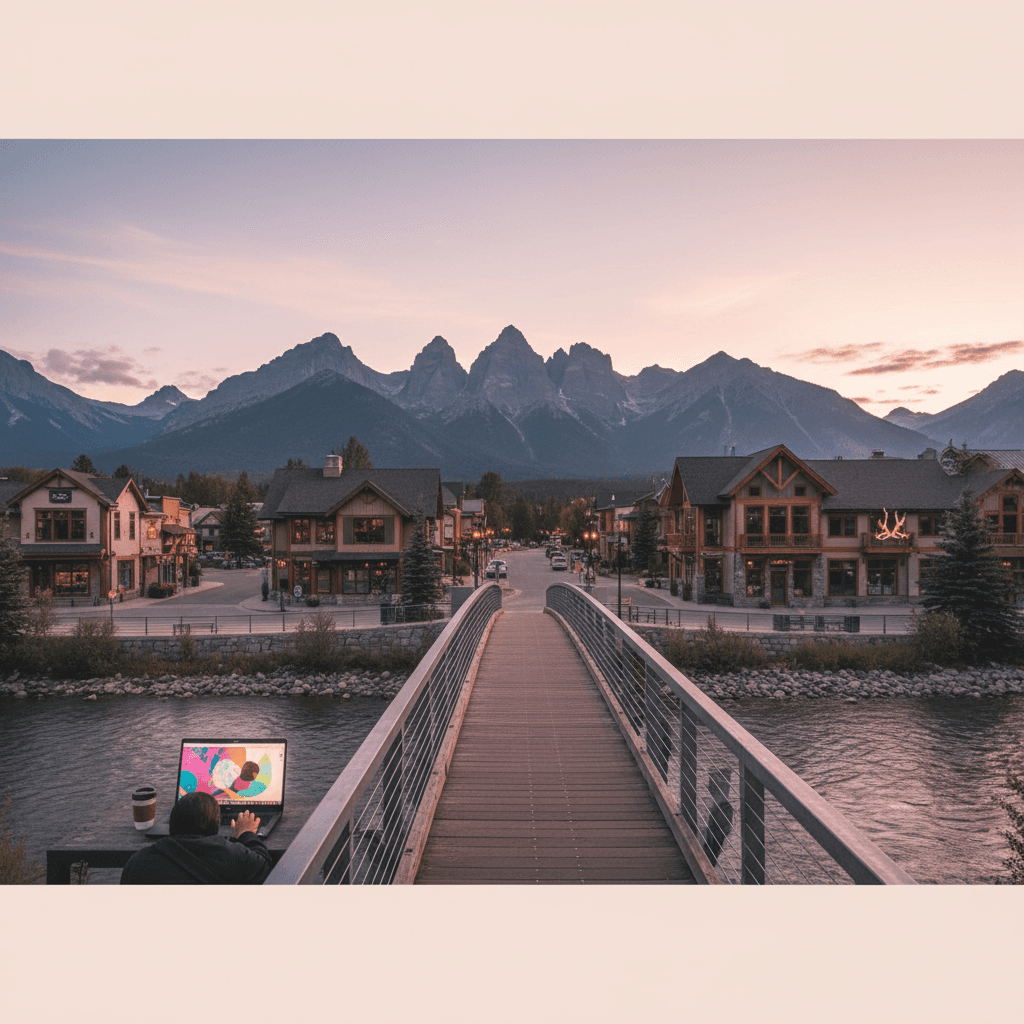
Canmore feels like a mountain town that never fully switched into resort mode. People get up for hikes, bike rides, ski days or a quiet coffee, then head back to laptops with muddy boots by the door. It’s relaxed, but not lazy and the whole place has a slower pulse that suits remote work surprisingly well.
The big draw is obvious: big views, clean air, strong WiFi and a community that actually seems to live here, not just pass through. The downside is just as obvious, it’s expensive and winter can be a grind if you’re not built for dark mornings, icy sidewalks and that dry cold that bites your cheeks on the walk to town.
Most nomads who stay longer seem to split into two camps, the trail-first crowd and the work-in-the-cafes crowd. Honestly, both work. The town’s small enough that you’ll recognize faces fast and weirdly, that’s part of the appeal, it feels social without turning into a scene.
What to expect
- Rent: A 1BR usually runs around C$2,150 to C$2,389 in town and studios often land near C$1,900 to C$2,200.
- Food: Cheap meals are about C$25, mid-range dinner for two can hit C$100 and the bills climb quickly if you like a nice wine list.
- Coworking: CanMore Together starts around C$111 a week, while local options like CoWork CanMore and e=mc2 Centre give you solid backup when your Airbnb WiFi gets flaky.
- Transport: Roam Transit is cheap and useful, taxis exist and there’s no Uber or Lyft to save you at 11 pm.
Three Sisters is the glossy pick, with views, trails and higher prices. Cougar Creek and Lions Park feel more practical for longer stays and Canyon Ridge has that sunny, residential calm that some expats love, though stock can be thin and you may end up competing for leases.
Safety is straightforward and that’s part of why people relax here. You can walk downtown at night without much drama, though the usual mountain-town rules still apply, keep an eye on your gear, watch the ice and don’t assume the weather cares about your plans. The air smells like pine, grilling meat and cold pavement after rain, which sounds romantic until you’re hauling groceries uphill in February.
Canmore isn’t cheap. A one-bedroom in the center runs about C$2,150 a month and even outside downtown you’re still looking at roughly C$2,275, so most nomads either share a place, stay short-term or swallow the hit and call it the mountain tax. Studio rents usually land somewhere around C$1,900 to C$2,200 and the 2025 average for a 1BR pushed to about C$2,389, which, honestly, stings if you’re coming from a smaller Canadian town.
Food adds up fast too, especially if you keep eating out after hikes and brewery stops. A cheap meal is around C$25, a mid-range dinner for two is closer to C$100 and the smell of fries, burger grease and woodsmoke around downtown will tempt you into spending more than you planned.
Typical monthly budget
- Budget: C$3,000 to C$4,000, usually shared housing, simple meals and very little nightlife.
- Mid-range: C$4,500 to C$6,000, that’s a one-bedroom, regular café lunches and a normal social life.
- Comfortable: C$7,000+, for a nicer apartment, more restaurant dinners and less price-checking.
Transport is manageable, but the car dependency can creep up on you. Roam Transit is cheap, with local rides around C$2 and monthly passes near C$345, though many people just walk downtown because it’s compact, loud with bike bells and bus brakes and easier than hunting for parking near popular spots.
Coworking isn’t expensive by big-city standards, but it isn’t bargain-bin either. Canmore Together starts around C$111 a week, CoWork CanMore has day passes and e=mc2 gives you WiFi, printing and a kitchen, so the setup works if you need a real desk and can’t focus with mountain tourists clattering past your café table.
Where people tend to live
- Three Sisters: Scenic and popular, but pricier.
- Cougar Creek: Better value, walkable and good for solo renters.
- Avens/Canyon Close: Quieter and often easier on the budget.
- Lions Park: Close to downtown, handy if you want cafés and river access.
If you want the least painful setup, go for shared housing in Cougar Creek or Avens and keep your work routine tight. The internet’s solid, usually 60 Mbps or better and SIMs from Rogers, Telus or Bell start around C$45 a month, so the real budget battle here is housing, not connectivity.
Canmore doesn’t really have bad neighborhoods, just different tradeoffs. It’s safe, quiet and very outdoorsy, but the rent is savage and winter can feel long and dry, with that cold mountain air biting your cheeks the second you step outside.
Nomads
For remote workers, Three Sisters is the nicest bet, honestly. You get big views, trail access, newer builds and enough peace to hear your keyboard click while the spruce trees creak outside, though you’ll pay for it.
- Three Sisters: Scenic, polished and pricey, with strong resale value and easy trail access.
- Canyon Ridge: Quieter and sunnier, with bus access and decent rental flexibility, if you can find a unit.
- Cougar Creek: Better value, near shops and dog parks, but it’s less central and you’ll feel that in daily errands.
If you want a more practical setup, Cougar Creek usually wins on value, turns out. You’re close enough to run out for groceries, grab a coffee or catch a Roam bus without making the whole day about logistics and that matters when you’re working full time.
Expats
Expats usually like Cougar Creek and Canyon Ridge because they feel lived in, not staged for visitors. The streets are calmer, the parking is less annoying and you’re not paying downtown-adjacent prices just to hear delivery trucks backing up at 7 a.m.
- Cougar Creek: Good for everyday life, with schools, services and a walkable feel.
- Canyon Ridge: Best for quiet mornings, mountain views and easy bus access.
- Avens/Canyon Close: More affordable by local standards, with parks and a lower-key feel, though it sits out on the eastern edge.
Avens and Canyon Close can make sense if you’re watching rent, which, surprisingly, is where a lot of people get squeezed in Canmore. The tradeoff is distance, so you’ll spend more time on foot or on the bus if you work downtown.
Families
Three Sisters is the obvious family pick if the budget can stretch. It’s got the newer housing, trail access and enough room for bikes, boots and all the muddy gear that piles up by the door after a weekend outside.
- Three Sisters: Best overall for families, with space, views and a stronger community feel.
- Cougar Creek: Handy for schools and errands and less flashy, which some families prefer.
Families should skip anything that looks cheap but feels isolated. In Canmore, a lower rent can mean a tougher commute, fewer sidewalks and more winter hassle when the sidewalks are icy and the wind cuts across open ground.
Solo Travelers
Lions Park is the one I’d point solo travelers toward, frankly. It’s close to downtown, the river, cafes, pubs and the kind of walkable streets where you can wander after dinner and hear music drifting out of a brewery door.
- Lions Park: Best for solo stays, near nightlife, dining and the town core.
- Cougar Creek: Good if you want quiet nights and a more residential feel.
If you’re staying short term, Lions Park makes life easier and you’ll spend less on taxis because you can walk almost everywhere. The homes are older, though, so don’t expect glossy finishes and check heating before you commit, because Canmore nights get cold fast.
Canmore’s internet is, honestly, better than most mountain towns. You can get reliable high-speed WiFi in town and many apartments, cafes and cowork spaces will handle video calls without the usual dropouts or weird lag that makes everyone freeze mid-sentence. Still, winter storms can chew through your patience and if you’re in an older rental, the router setup can be annoyingly mediocre.
The cheap part isn’t cheap. A decent internet plan runs around C$60-$90 a month and mobile data from Rogers, Telus or Bell usually starts around C$45 for small bundles, then climbs fast once you want enough data for hotspot use, maps and the occasional long call. Most nomads bring a backup SIM anyway, because one dead connection during a client deadline feels much bigger in a small mountain town.
Coworking spots worth using
- CoWork CanMore: 717 10 St, open 24/7, good if you want a proper desk and don’t mind paying for it.
- CanMore Together: Day, weekly and floating memberships, with pricing around C$111 for a week and C$490 for unlimited access.
- e=mc2 Centre: Practical and low-key, with WiFi, a kitchen and printing, which, surprisingly, matters more than fancy interiors.
The coworking scene is small but useful and frankly that’s the point, you’re not here for a glossy startup vibe with ping-pong tables and bad coffee. You’re here to work, then get out into the cold air or the trails before the light goes. Cafes will usually let you stay a while, though some tables get crowded by lunch and the noise of steaming milk, chair scrapes and laptop fans gets old fast.
Best places by working style
- Three Sisters: Best if you want views and newer builds, though it’s pricier.
- Cougar Creek: Good value, walkable and close to shops, schools and dog parks.
- Lions Park: Handy for downtown life, river walks and quick coffee runs.
If you’re staying a month or more, pick housing with a real desk and test the WiFi before you commit, because a pretty condo with bad upload speeds gets old in about two days. Coworking pass prices sit above what you’d pay in many Canadian towns, but the tradeoff is clean space, good coffee nearby and no pressure to pretend your kitchen table is a professional office.
Canmore feels very safe and that’s the honest baseline. You can walk downtown at night, hear the creek rushing under the bridges, smell woodsmoke in winter and not feel jumpy the way you might in a bigger mountain town. Still, keep the usual travel sense, lock your bike, don’t leave gear in your car and remember that trailheads can get quiet fast after sunset.
There aren’t any specific neighborhoods locals flag as no-go zones, which, surprisingly, is rare for a town with this much visitor traffic. Most issues are minor, like petty theft, bike mix-ups or the occasional drunk, so the real risk is usually carelessness, not crime. Frankly, if you’re out late, just stick to lit streets near downtown, Lions Park and the main commercial strips.
Healthcare
- Hospital: Canmore General Hospital handles emergency care, urgent issues and basic treatment, so you won’t be stranded for a simple injury or sudden illness.
- Pharmacies: They’re spread around town and picking up cold meds, prescriptions or hiking blister supplies is easy enough.
- Emergency: Call 911 for police, fire or medical emergencies, that’s the standard move here.
- Specialist care: For anything more complicated, you’ll likely be sent to Banff or Calgary, because local options run thin once you move past routine care.
For nomads, the practical side is simple. Bring your health card if you’re covered in Canada, keep travel insurance sorted if you’re not and don’t assume a small mountain town has big-city wait times or clinic availability, because it doesn’t. Winter also makes a mess of ankles and wrists, icy sidewalks are slick and a bad fall on a trail can turn into a long, expensive day.
If you’re staying longer, save a few basics in your phone now, the nearest pharmacy, your insurance line and a taxi number. That sounds boring, but when it’s minus ten and your throat hurts, boring turns out to be exactly what you want.
Quick local read: Canmore’s safe, calm and easy to settle into, but the mountain environment can bite harder than the town itself. The real headaches are cold, slips and distance, not street crime.
Getting around Canmore is easy if you don't mind slowing down a bit. The town's compact, walkable core means most errands happen on foot and honestly, that's the best way to hear the place, ski jackets rustling, tires humming on wet pavement, the river running just out of sight.
Downtown: stay here if you want the simplest daily life. Trails, cafes, groceries and coworking are close enough that you won't need a car for much, though winter sidewalks can turn slick and annoying fast.
Roam Transit: this is the move for Banff and local hops and it's cheap, with free local routes and low fares into Banff, usually around C$6 single ride or C$15 day pass. The buses are fine, not fancy, but they beat parking stress and snowy driving, which, surprisingly, becomes a real quality-of-life issue once the roads get packed.
- Walking: Best for downtown, the river paths and quick coffee runs.
- Roam Transit: Good for Banff, local routes and car-free days.
- Taxi: Useful late at night, with fares starting around C$7.50.
- Bike: Great in summer and e-bikes make the hills less rude.
Three Sisters and Canyon Ridge: both work well if you want trails at your doorstep, though you'll pay for the views. Cougar Creek is more practical for day-to-day living, with shops, schools and dog parks and it's less glamorous, frankly, but that can be a relief when you're just trying to get groceries in a snowstorm.
Bike rentals are everywhere in season, with places like Kananaskis Outfitters, Rebound Cycle and Gear Up offering regular bikes and e-bikes for roughly C$30 to C$50 a day. That sounds steep until you remember that parking can be a headache and the air smells better on two wheels.
No Uber: that's the annoying part. Canmore doesn't really do ride-hailing, so locals lean on taxis, walking or their own wheels and if you're flying in, plan on a shuttle or bus from Calgary airport, about an hour away when traffic behaves.
- Bike rentals: C$30 to C$50 per day, e-bikes cost more.
- Airport transfer: Shuttle or bus from Calgary, roughly one hour.
- Monthly bus pass: Around C$345 if you're riding often.
If you're here for more than a week, get a transit plan early. Winter changes everything and when the cold bites your face and slush sprays off passing cars, you'll be glad you picked a place near downtown or a reliable bus stop.
English runs the show in Canmore, so you won’t struggle to get coffee, rent or a bike fixed without switching languages. French shows up now and then, because this is Canada, but day to day you’ll hear mountain people talking fast over espresso, trail runners swapping weather warnings and locals tossing in the occasional “eh?” without thinking about it.
The good news, honestly, is that communication here is easy if your English is decent and your patience is intact. The slightly annoying part is that Canmore runs on a polite-but-quick style, so people expect you to be clear, direct and not weird about it, especially when you’re booking a shuttle, asking about Roam Transit or chasing a landlord about internet setup.
What to expect
- Primary language: English, with high fluency across most services.
- Secondary language: French appears in official Canadian settings, but you won’t need it for daily life.
- Local habits: “Sorry” gets used constantly, sometimes when nobody’s actually at fault.
- Useful phrase: “Eh?” pops up as a tag question, usually at the end of a sentence.
Phone plans are straightforward, though pricey and the big carriers, Rogers, Telus and Bell, all sell data bundles that’ll do the job for remote work if you’re not trying to stream 4K from a cabin. Internet in town is generally solid and that matters here because a lot of people are working from kitchens that smell like coffee, wet hiking boots and the faint pine dust that gets tracked in after a trail day.
Communication tools
- SIM cards: Expect roughly C$55 to C$75 for 100GB or more.
- Internet: Home connections around 60Mbps+ are common enough for normal remote work.
- Apps: Google Translate helps with the rare language snag, especially in a pinch.
- Writing stuff down: Addresses, unit numbers and bus times save headaches, weirdly often.
For face-to-face work, speak plainly and don’t overcomplicate things, because Canmore people usually appreciate efficiency more than small talk. Coworking spaces like CoWork CanMore and CanMore Together are where conversations start naturally and you’ll hear the low hum of laptops, clinking mugs and the occasional frustrated sigh when someone’s trying to book a summer rental and the reply is, frankly, another dead end.
If you’re new in town, keep your messages short, polite and specific, then follow up if needed. That style works better here than big explanations and it’ll save you time, especially when dealing with housing, transit or anything that involves a mountain-weather deadline.
Canmore has a proper mountain climate, so the timing of your trip matters more than it does in a lot of places. Summer is the easy win, fall is prettier than people expect and winter is cold enough to make even a short walk feel like a chore. Not cheap, though.
Best months: June through August for hiking, biking, patio dinners and long daylight hours. Days often sit around 20 to 30°C, the trails dry out and the air smells like pine, sunscreen and dust kicked up by a thousand boots. July gets the warmest weather, but it also brings more visitors and higher prices, so book early if you want a decent place.
Best shoulder season: September and early October. The larches turn gold, the crowds thin out and the mornings get that crisp bite that makes coffee taste better, honestly. It’s the smartest time if you want mountain views without the shoulder-to-shoulder trail traffic, though evenings cool off fast and you’ll want a real jacket.
Winter: November through March. Snow piles up, sidewalks get slick and the whole town feels quieter, which some nomads love and plenty of others hate after the first week. Average winter temperatures hover around -10 to 0°C and January can bring about 34 cm of snow, so expect slush, icy parking lots and that dry cold that gets into your hands in seconds.
If you’re planning a longer stay, think about your work style too. Summer is better for people who want to split the day between laptops and trails, while winter suits folks who don’t mind being indoors with a heater humming and a view of the Rockies through the window.
Season-by-season feel
- Summer: Best for hiking, biking, patio life and day trips to Banff.
- Fall: Best light, fewer people, cooler nights and those gold larches.
- Winter: Cheapest time to find some rentals, but the weather is the tradeoff.
- Spring: Muddy, slushy and a bit awkward, so don’t expect peak trail conditions.
My take, skip the dead of winter unless you actually want snow sports and long stretches inside. If you want the version of Canmore that sells itself, go in late summer or early fall, when the town feels alive without tipping into chaos and the mountains look almost unreal at sunset. You’ll hear creek water, bike tires on gravel and the occasional train horn drifting through town and it all just works.
Canmore feels calm on purpose. People hike before work, bike after meetings, then disappear into a pub with wet boots and a red face from the cold air. It’s gorgeous, but it isn’t cheap and winter can be a grind when the sidewalks are icy and the wind cuts through your coat.
Money first. A one-bedroom runs roughly C$2,150 in the center and a bit more outside it and shared places are still expensive by Alberta standards, so most nomads either split housing or commit to a smaller place and eat out less. Meals at casual spots land around C$25, mid-range dinners for two can hit C$100 and coworking starts around C$111 a week, which, surprisingly, adds up fast if you’re staying a while.
- Budget month: C$3,000 to C$4,000, usually shared housing, simple meals and bus rides.
- Mid-range month: C$4,500 to C$6,000, with your own 1BR and regular café lunches.
- Comfortable month: C$7,000+, with a nicer apartment, more dining out and less money stress.
Three Sisters is the polished pick, with big views and easy trail access, though the rent stings. Cougar Creek gets recommended for value and walkability, Canyon Ridge has that quieter sunny feel and Lions Park works well if you want to be near downtown without living in the middle of the noise.
The internet setup is solid and that matters because dead WiFi gets old fast. Rogers, Telus and Bell all work here, café WiFi is usually fine for lighter days and coworking spots like CoWork CanMore, CanMore Together and e=mc2 Centre give you proper desks, printers and kitchen access instead of balancing a laptop beside a latte.
- Best coworking bet: CanMore Together for flexibility, especially if you need a few focused days.
- Best fallback: Cafes in town, though a loud grinder and lunch rush can wreck a call.
- Best local transit: Roam buses, free on some local routes and cheap to Banff.
- Best for day-to-day: Walk downtown, bike when the roads are clear and skip rideshare apps because they’re basically nonexistent.
Safety is generally good, so you can relax a bit, though you still need to lock your bike and watch trail conditions after dark. The nearest hospital is Canmore General Hospital, pharmacies are easy to find and 911 is the emergency number. For errands, most people use Cozycozy, Kijiji or Facebook Marketplace for apartments and RBC or TD apps for banking, because the town runs on ordinary Canadian systems and a lot of polite waiting.
One last thing, the social rules are simple. Be friendly, say sorry when you bump into someone, pack out your trash and don’t treat the trails like a backyard dump. That stuff matters here.
Need visa and immigration info for Canada?
🇨🇦 View Canada Country GuideEasy Landing
Settle in, no stress
Monthly Budget Estimates
More cities in Canada

Vancouver
🇨🇦 Canada
Kitchener-Waterloo
🇨🇦 Canada
Toronto
🇨🇦 Canada