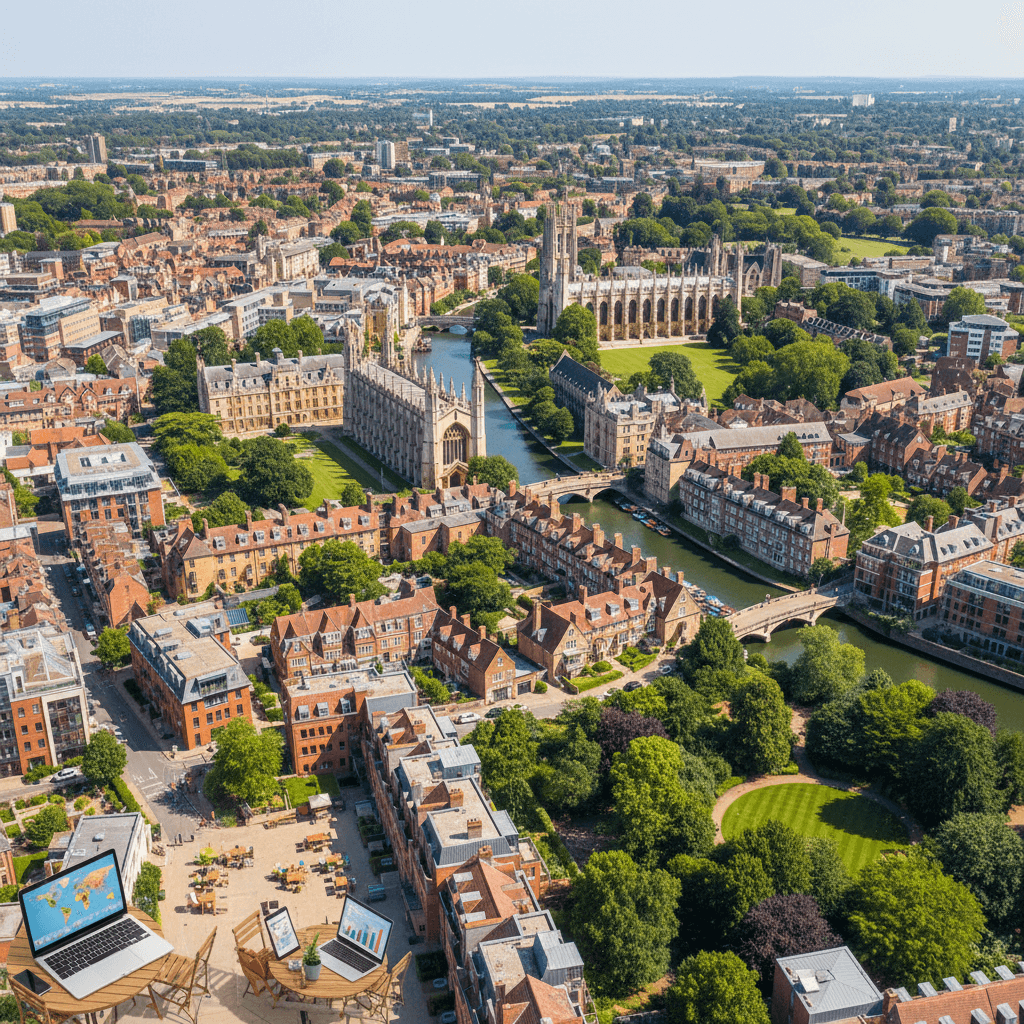
Cambridge
🇬🇧 United Kingdom
The Academic Village Vibe
Cambridge isn't your typical tech hub or sprawling metropolis. It feels more like a highly intellectual village that accidentally became a world class city. While London is only 45 minutes away by train, the pace here is noticeably slower. You'll swap the underground for a bicycle and skyscrapers for gothic spires. The energy is driven by the 125,000 residents, many of whom are students or researchers, creating a unique atmosphere where people discuss philosophy over a pint at The Eagle or code the next big AI startup in a sunlit park.
Nomads usually fall in love with the walkable scale and the greenery. You can cross the entire city center in 20 minutes on foot. The River Cam acts as the city's liquid spine, where punting (boating with a long pole) is the local pastime. It’s a place that rewards curiosity; you might find yourself wandering through a free museum one afternoon and joining a public lecture the next. The downside? It can feel a bit quiet if you’re used to 24/7 nightlife, and the housing market is one of the tightest in the UK.
Cost of Living Breakdown
Living here is cheaper than London but pricier than Northern England. The student population helps keep everyday costs like street food and pub deals manageable, but rent will be your biggest hurdle. Most nomads budget between £2,500 and £3,500 for a mid range lifestyle.
- Budget Tier: £1,500 to £2,000 per month. This usually involves a room in a shared house (around £800), eating at the Market Square stalls, and using a bicycle as your primary transport.
- Mid Range Tier: £2,500 to £3,500 per month. This covers a private one bedroom apartment (£1,400), regular coworking memberships, and dining out a few times a week.
- Comfortable Tier: £4,000+ per month. For those wanting a central apartment near King’s Parade (£1,800+), high end dining at places like Midsummer House, and frequent travel around the UK.
Where to Set Up Base
Choosing a neighborhood depends on whether you want historic charm or local convenience. The city is flat and bike friendly, so you're never truly isolated.
City Centre (Market Square)
- The Vibe: Historic, busy, and iconic. You’re steps away from the colleges and the best coffee shops.
- Nomad Factor: Great for short stays to soak up the atmosphere, though it gets noisy with tourists.
- Rent: Expect £1,500+ for a small studio.
Arbury & Romsey Town
- The Vibe: Diverse and residential with a strong community feel. Mill Road in Romsey is famous for its independent shops and international food.
- Nomad Factor: This is where the "real" Cambridge lives. It’s more affordable and has the best cafes for working.
- Rent: One bedroom flats often go for around £1,000 to £1,200.
Newnham & Grantchester
- The Vibe: Leafy, affluent, and peaceful. It feels like the English countryside but is just a short bike ride to the center.
- Nomad Factor: Best for those who prioritize quiet mornings and riverside walks.
- Rent: High demand keeps prices around £1,600+ for quality apartments.
Connectivity and Productivity
The internet is rarely an issue here. Most home setups and cafes offer speeds between 50Mbps and 500Mbps. If you need a dedicated desk, WeWork in the center is a popular choice at roughly £250 a month. For those seeking a more local feel, several independent coworking spaces and innovation centers are scattered around the city, offering flexible hot-desking options and community events.
If you prefer the "laptop and a latte" lifestyle, Espresso Library is a nomad favorite. It’s a cycling themed cafe with plenty of space, fast WiFi, and £3 flat whites. For mobile data, grab a SIM from EE or Vodafone at the station or a local Tesco; £10 to £20 usually gets you plenty of data for the month.
Practical Realities
Cambridge is exceptionally safe, even late at night. The biggest danger you'll face is likely a rogue cyclist on a narrow sidewalk. For healthcare, the Addenbrooke’s hospital is world class. If you're visiting from abroad, having SafetyWing or similar insurance is smart, though Boots pharmacies are everywhere for minor issues.
Weather wise, aim for May through September. The days are long, the parks are full, and the rain is manageable. Winters (December to February) can be gray and damp, with temperatures hovering around 4°C to 8°C. No matter when you come, bring a waterproof jacket and prepare to embrace the "Cambridge Shuffle" (dodging tourists while looking up at the architecture).
Cambridge is a unique beast. It feels like a high energy startup hub wrapped in the architecture of a medieval village. For digital nomads, it offers a distinct advantage over London: you get world class intellectual energy and reliable infrastructure without the soul crushing commute or the £2,500 price tag for a tiny studio. It is a town built for walking and thinking, where the local "rush hour" consists of hundreds of students on vintage bicycles rather than gridlocked traffic.
The Monthly Budget
Living here isn't exactly cheap, but it is manageable if you play your cards right. The city operates on a tiered system driven by its student population. If you eat where the undergrads eat, you'll save a fortune. If you try to live like a tenured professor, your bank account will feel it.
- Budget Nomad (£1,500 to £2,000): This assumes you're using a site like SpareRoom to find a high quality house share for around £800. You'll stick to £5 to £8 market stalls for lunch, use the free university libraries for work, and walk everywhere.
- Mid-range (£2,500 to £3,500): The sweet spot for most. You can snag a private one bedroom apartment for roughly £1,400, maintain a dedicated desk at a coworking space like WeWork for £250, and enjoy dinner at places like The Eagle for £15 to £25.
- Comfortable (£4,000+): This gets you a premium, central flat near Market Square for £1,800+, regular fine dining at spots like Midsummer House, and the freedom to take frequent £20 train trips into London.
Where to Plant Your Laptop
The neighborhood you choose defines your experience. Most nomads gravitate toward the City Centre near King's Parade to be in the thick of the history, though you'll pay a premium for the privilege. If you want a more authentic, "local" vibe, look at Romsey Town or Arbury. These areas are diverse, full of independent coffee shops, and offer 1BR apartments closer to £1,000.
For those who prefer a quieter, more scenic setup, Newnham is the expat favorite. It’s leafy, right by the river, and perfect if you plan on punting after work. It’s a bit further from the pubs, but the bike ride into the center is less than ten minutes.
Work and Connectivity
Internet is rarely an issue here. Most rentals come with 100 to 500Mbps fiber as standard. If you need a professional environment, WeWork is a top pick for networking, offering day passes for around £20.
If you prefer the "cafe office" lifestyle, Espresso Library is the local gold standard. It’s got great WiFi, plenty of power outlets, and a £3 coffee that buys you a few hours of productivity. For mobile data, grab an EE or Vodafone SIM at the Tesco near the station. £10 to £20 usually gets you more data than you'll ever use.
Getting Around and Staying Safe
Don't bother with a car. Cambridge is famously flat and less than two miles across. Rent a bike from Lime or Nextbike for about £1 to unlock and £0.20 per minute. If it's raining, the Stagecoach buses are reliable with a £2 flat fare for most single trips.
Safety is a non issue for the most part. It’s one of the safest cities in the UK, though you should keep your bike locked with a heavy duty U lock, as bike theft is the local pastime. For healthcare, Addenbrooke’s is a world class hospital. Most nomads use SafetyWing for insurance, but you can access pharmacies like Boots for minor issues or the NHS for emergencies via the 999 number.
Expert Tips
- Banking: Skip the traditional banks. Use Wise or Revolut for your daily spending to avoid exchange fees. You can even set up a Starling account as a temporary resident.
- Cheap Eats: The Market Square stalls (open daily 10am to 4pm) are the best kept secret for affordable global food. You can get a massive plate of Thai or falafel for under £8.
- Social Life: Cambridge can feel a bit "academic" and insular. Join the Meetup.com groups or local Facebook communities for digital nomads to find people outside the university bubble.
For Solo Nomads: City Centre (Market Square & King’s Parade)
If you want to be in the thick of things, the City Centre is your best bet. This is where the academic energy of the university colleges meets the daily rhythm of the market stalls. You can grab a £6 falafel wrap from the market square and walk two minutes to sit by the River Cam. It is incredibly walkable, so you won't need to worry about bus schedules or Uber fares.
Living here puts you within a five minute walk of WeWork, where a day pass usually runs around £20 to £25. For a more casual vibe, nomads often post up at Espresso Library. The coffee is about £3 and the WiFi is fast enough for video calls. The trade-off for this convenience is the noise and the price tag. Expect to pay between £1,500 and £1,800 for a studio or one bedroom apartment.
For Long-Term Expats: Romsey Town & Arbury
Expats who are staying for six months or longer usually head toward Romsey Town, specifically the area around Mill Road. It has a distinct, diverse character that feels less like a university campus and more like a real neighborhood. You will find international grocery stores, independent bookshops, and some of the best brunch spots in the city. Rent is significantly more manageable here, with one bedroom flats often starting around £1,000 to £1,200.
Arbury is another solid choice if you prioritize budget over historic aesthetics. It is a bit further out, but since Cambridge is flat, a quick 10 minute bike ride gets you anywhere you need to be. Many expats recommend using Rightmove or SpareRoom to find local listings, as the turnover can be fast. It is a quieter life, but you still have easy access to the Cambridgeshire Guided Busway for quick trips to the train station.
For Families: Newnham & Grantchester
If you are traveling with kids or just prefer a slower, greener pace, Newnham is the top pick. It feels like a village tucked inside the city. You are surrounded by meadows and have easy access to the river for afternoon punting sessions. It is peaceful, safe, and has a very high concentration of green space. The local primary schools are well regarded, which draws in many visiting academic families.
Nearby Grantchester is famous for its tea rooms and riverside walks. It is a bit more expensive and feels more exclusive, but the quality of life is hard to beat. You can walk or cycle into the center in about 15 minutes, giving you the best of both worlds. Just keep in mind that nightlife is virtually non-existent here; your evening entertainment will mostly consist of a quiet pint at a local pub like The Eagle or a stroll through the meadows.
Budget Breakdown by Neighborhood
- City Centre: High cost of living. Monthly rent for a central 1BR is £1,500+. Best for those who want to skip transport costs and be near coworking hubs.
- Romsey Town: Moderate cost. Rent for a 1BR sits around £1,100. Great for foodies and those who want a local, community feel.
- Arbury: Budget friendly. You can find rooms or small flats starting at £900. Ideal for nomads who prioritize savings and don't mind a short bike commute.
- Newnham: Premium cost. Large apartments or houses often exceed £2,000. Best for families who need space and quiet.
Most travelers find that Lime or Nextbike rentals are the easiest way to test out these neighborhoods before committing to a monthly lease. Since the city is less than two miles across, you can scout all three areas in a single afternoon on two wheels.
Connectivity and Speed
You won't have to worry about dropping off a Zoom call in Cambridge. The city is a major tech hub, often called Silicon Fen, so the infrastructure is rock solid. Standard fiber broadband in most apartments and Airbnbs ranges between 100Mbps and 500Mbps. Even the independent cafes usually clock in at 50Mbps or higher, which is plenty for heavy lifting.
For mobile data, skip the pricey roaming and grab a local SIM as soon as you arrive. You can pick up an EE or Vodafone card at the Tesco in the city center or right at the train station. Most nomads opt for Giffgaff or EE, where £10 to £20 gets you a massive chunk of data, often 20GB to unlimited. If you're staying a while, setting up a Wise or Revolut account makes paying for these local subs much easier than using an overseas card.
Top Coworking Spaces
While the university libraries are mostly off limits to the public, the city has a growing crop of dedicated spaces designed for remote workers. These spots are great for networking, especially if you want to meet people in the local biotech or software scenes.
- WeWork: Located right in the heart of the city, this is the go to for reliability. A hot desk usually runs around £250 per month. It's predictable, has great phone booths, and the coffee is actually decent.
- Huckletree: This is the spot if you want a bit more personality. They host frequent networking events and the vibe is very "startup founder." Day passes are roughly £20, making it a good choice if you only need an office a few times a week.
- The Office Group: If you find yourself commuting to London frequently, this is a solid choice as they have locations near the Cambridge station and all over the capital.
The Cafe Office Culture
Cambridge is a student town, which means working from a cafe is practically a local sport. You won't feel awkward pulling out a laptop as long as you keep the coffee flowing. Most nomads flock to the areas near Market Square or the university buildings where the WiFi is fast and the atmosphere is studious.
Hot Numbers is a nomad favorite with multiple Cambridge locations. It's a specialty coffee roastery with plenty of space, fast WiFi, and excellent brunch options. It's a local favorite that's got great WiFi, plenty of power outlets, and excellent specialty coffee that buys you a few hours of productivity. For a more traditional vibe, the cafes around King's Parade offer great views of the colleges, though they can get a bit loud during the peak tourist season in the summer.
Logistics for Digital Nomads
If you're planning to stay for a month or more, skip the hotels. Travelers often recommend using Blueground for furnished, nomad friendly apartments, or checking SpareRoom if you're on a tighter budget and don't mind a shared house in Romsey Town or Arbury. For a solo nomad, a central studio will likely cost between £1,200 and £1,800, while a room in a shared house drops that to around £800.
The city is incredibly flat and compact, so you don't need a car. Rent a bike via Lime or Nextbike for about £1 plus £0.20 per minute, or just walk. Everything in the center is less than two miles across, making it easy to hop between your apartment, a coworking space, and a pub for a post work pint without ever needing a bus.
A Safe Haven for Nomads
Cambridge is famously one of the safest cities in the UK. The crime rate is significantly lower than the national average, largely because the city revolves around a studious, academic population. You can comfortably walk home from a pub in the City Centre at midnight without much worry, though it's always smart to stick to well lit paths like King's Parade or the main thoroughfares in Romsey Town.
The biggest "crime" you're likely to encounter is bicycle theft. It's a rite of passage here. If you buy a bike to get around, invest in a heavy duty D-lock and never leave it overnight in high traffic areas like the Market Square or near the train station. Beyond that, the city feels like a quiet village that happens to have world class infrastructure.
World Class Healthcare
If you get sick, you're in good hands. Cambridge is home to Addenbrooke’s Hospital, a world renown teaching hospital and part of the NHS. It's a massive complex on the south side of the city that handles everything from minor injuries to specialized care. For everyday issues, you'll find a Boots pharmacy on almost every major corner, including 24 hour options for late night prescriptions.
While the NHS is excellent, it can be slow for non-emergencies. Most nomads we talk to recommend having private insurance like SafetyWing or World Nomads. This allows you to skip the queues and use private clinics if you need a quick GP appointment or a specialist consultation without the weeks of waiting.
Emergency Contacts & Apps
The UK makes it easy to get help without overthinking it. You should have these three numbers and apps ready on your phone from day one:
- 999: The universal emergency number for police, ambulance, or fire services. Use this only if it's a life threatening situation or a crime in progress.
- 111: The non-emergency medical line. If you've got a weird rash or a nagging cough and aren't sure if you need a doctor, call this. They'll tell you whether to go to a pharmacy or an Urgent Care center.
- NHS App: This is the easiest way to find local walk-in centers and pharmacies near your current location.
Staying Healthy on the Road
The local lifestyle actually makes staying healthy pretty easy. The city is incredibly flat, so most expats find themselves hitting their 10,000 steps just by walking between cafes and parks. If you want to join the locals, rent a bike via Lime or Nextbike for about £1 plus £0.20 per minute. It's the standard way to get around, and the dedicated bike lanes mean you won't be fighting for your life against city buses.
For your mental health, take advantage of the green spaces. A walk through Parker’s Piece or a jog along the River Cam toward Grantchester is the local cure for "Zoom fatigue." The air is clean, the pace is slow, and the intellectual energy of the city usually keeps people feeling more inspired than stressed.
Visitor Access and Costs
If you're in the UK on a Standard Visitor visa, you aren't generally entitled to free NHS treatment, though A&E (Emergency Room) visits for life threatening issues are usually covered regardless of status. For anything else, you'll be billed as an overseas visitor. A standard GP consultation can cost anywhere from £50 to £150 at a private clinic, which is why that travel insurance policy is non-negotiable for anyone staying more than a week or two.
The Two-Wheel Lifestyle
In Cambridge, the bicycle is king. The city is famously flat and compact, measuring barely two miles across. Most nomads find that once they arrive, they rarely need anything other than a sturdy pair of shoes or a set of handlebars to get around. It is a place designed for human scale rather than cars, making the commute from a Romsey Town apartment to a central coworking space both quick and scenic.
If you aren't ready to buy a second hand bike from a local shop, app based rentals are the way to go. Lime and Nextbike have fleets scattered throughout the city. You can expect to pay around £1 to unlock and roughly £0.20 per minute. For those staying longer, monthly rentals are often more cost effective than pay as you go schemes.
Public Transit and Buses
When the British weather turns or you're carrying groceries back to Newnham, the bus network is reliable and easy to use. Stagecoach operates most routes, with a standard single fare capped at £2. If you are planning multiple trips in a day, a Dayrider pass for £4.50 is your best bet. You can tap on and off with a contactless card or phone, so there is no need to fumble for exact change.
The Cambridgeshire Guided Busway is a local highlight. It uses dedicated tracks to bypass traffic, connecting the city center to the North Railway Station and surrounding villages. It is remarkably efficient for those living slightly further out in search of lower rent.
Trains and Regional Travel
Cambridge is a fantastic base for exploring the rest of the UK. The main train station is a bit of a walk from the historic center, about 20 minutes, but it is well connected. Frequent trains run to London King's Cross or Liverpool Street, taking about 45 to 50 minutes. A return ticket usually costs around £20 if you book in advance or travel off peak.
- London: 45-50 minutes, ~£20 return.
- Ely: 20 minutes, perfect for a quick afternoon trip to see the cathedral.
- Stansted Airport: 35-40 minutes, ~£20. This is the most convenient hub for European hops.
Ride-Hailing and Taxis
While you won't need them for daily life, Uber and Bolt both operate in the city. A short cross town trip usually lands between £5 and £10. They are particularly useful late at night when bus frequencies drop. Local taxi firms like Panther Taxis also have their own apps and are often more reliable during peak graduation weeks or rainy spells when Uber prices surge.
Getting to Cambridge
Most international nomads arrive via London Stansted, which is less than an hour away by train. If you are flying into Heathrow, the National Express coach is the most straightforward option. It takes about 2 hours and costs roughly £30. While Luton Airport is geographically close, the public transport links are slightly more clunky, often requiring a bus to Stevensage followed by a train, so check the schedules before booking budget flights there.
Practical Transport Tips
- Download the Stagecoach Bus app to track live arrivals and buy mobile tickets.
- Stick to the designated cycle lanes; Cambridge drivers are used to bikes, but the medieval streets can get narrow and hectic near Market Square.
- Use Trainline to book rail tickets in advance to save up to 50% on regional travel.
- If you plan to use the trains often, buy a 16-25 or 26-30 Railcard for £30; it pays for itself after just a couple of trips to London.
The Linguistic Landscape
You won't have any trouble getting your point across in Cambridge. English is the primary language, spoken with 100% proficiency across the city. Because it is a global academic hub, you'll hear a massive variety of accents, from the classic "Received Pronunciation" of the university halls to the more relaxed local East Anglian tones. Most nomads find the local communication style polite, direct, and punctuated by a fair amount of "Britishisms" that you'll pick up within your first week.
Expats recommend getting used to a few specific terms to blend in. "Cheers" is the universal Swiss Army knife of words here; use it for thank you, goodbye, or even as a polite acknowledgement. If someone asks if you're "up for a pint," they're inviting you to the pub, which is the heart of social life in neighborhoods like Romsey Town or the City Centre. You won't need Google Translate for anything other than perhaps deciphering some of the more archaic Latin inscriptions on the college gates.
Digital Connectivity and SIMs
Staying connected is seamless, and the city is blanketed in high speed fiber. Most home WiFi setups in central apartments hit between 100Mbps and 500Mbps, while cafes like Espresso Library offer reliable 50Mbps+ connections that are perfectly fine for Zoom calls. If you're working from a laptop, you'll see plenty of students and remote workers doing the same, making it a very "laptop-friendly" environment.
For your mobile data, don't rely on international roaming, as it's far cheaper to grab a local SIM. Travelers often say the best coverage comes from EE or Vodafone. You can pick these up at the Tesco near the train station or at various shops in the Grand Arcade. Expect to pay around £10 to £20 per month for a solid data plan. If you want a contract-free option that nomads love, Giffgaff is a great shout; you can order a SIM to your Airbnb or temporary housing and manage everything via their app.
Communication Apps and Logistics
While English is the standard, certain apps make navigating the city and its social circles much easier. Most of the local "nomad" communication happens in digital pockets rather than on the street. Expats and remote workers heavily use Meetup.com to find co-working buddies or weekend walking groups. For housing and local advice, Facebook groups like "Digital Nomads UK" are active and helpful for avoiding the isolation that can sometimes hit in a new city.
- WhatsApp: This is the default for almost all social and business communication. If you meet someone at a networking event at Huckletree, they'll likely ask for your WhatsApp rather than your email.
- Citymapper or Google Maps: Use these for bus schedules, though Cambridge is small enough that you'll mostly be walking or biking.
- Uber and Bolt: These are the go-to apps for quick rides home after the pubs close, with short trips usually costing between £5 and £10.
- NHS App: If you're staying long-term, this is useful for managing health records, though you'll still use 999 for emergencies.
Social Etiquette and Nuance
Communication in Cambridge is heavily influenced by the "queue culture." Whether you're waiting for a bus or a coffee at the Market Square stalls, always look for the end of the line. Skipping ahead is considered a major social faux pas. In restaurants, a 10% tip is standard if a service charge hasn't already been added to your bill. Most nomads find that a little "please" and "thank you" goes a long way in this town; it's a polite society where manners are noticed and appreciated.
The Seasonal Rhythm
Cambridge operates on a distinct rhythm dictated by the university terms and the erratic British sky. While it’s rarely extreme, the weather can shift from a crisp morning to a drizzle filled afternoon in minutes. Most nomads find the city at its most charming when the sun hits the limestone colleges, but you should prepare for a fair amount of grey days if you’re staying long term.
The best time to visit is undoubtedly between May and September. During these months, temperatures hover between a comfortable 15°C and 22°C, making it the prime window for punting on the River Cam or working from a park bench. July and August see the lowest rainfall, though they also bring the heaviest tourist crowds. If you want the academic atmosphere without the freezing toes, late May or June is the sweet spot when the student energy is high before the summer break.
Winter Survival
From December through February, Cambridge can feel a bit bleak. Expect highs of only 7°C and lows that frequently dip toward 2°C. It’s a damp, windy kind of cold that gets into your bones, and with over 150 rainy days a year, you'll spend most of your time tucked away in cafes like Espresso Library. Local expats recommend investing in a solid waterproof jacket and a sturdy bike lock, as the rain won't stop the locals from cycling through the puddles.
The shoulder seasons of March to April and October to November are unpredictable. You might get a week of glorious spring blooms or a stubborn autumn chill. However, these months are significantly cheaper for short term rentals and offer a quieter, more authentic look at the city once the summer language school students have departed.
Climate by the Numbers
- Warmest Months: July and August (Avg high 22°C). Ideal for outdoor meetups and riverside drinks.
- Coldest Months: January and February (Avg high 7°C). Expect grey skies and wet pavements.
- Rainiest Period: October through March. Keep an umbrella or a "mac" handy at all times.
- Peak Daylight: June offers nearly 17 hours of light, giving you plenty of time for post work exploration.
When to Book Your Stay
If you’re looking for a balance of decent weather and budget friendly housing, aim for September. The weather is usually still mild, but the frantic summer tourism has died down. Travelers often say that the city feels most "Cambridge" when the autumn leaves start to turn and the new student intake arrives, bringing a fresh wave of intellectual energy to the local pubs.
For those who prioritize sunshine and outdoor living, June is your best bet. You’ll pay a premium for central apartments in areas like Market Square, but the ability to bike to Grantchester for a pint in a sunny beer garden makes the extra cost feel justified. Just remember that the UK doesn't really do air conditioning; if you're visiting during a rare 30°C+ heatwave in July, seek out the thick stone walls of a historic library or a basement coworking space like Huckletree to stay cool.
Cost of Living
Cambridge isn't exactly a budget destination compared to the north of England, but it's significantly more manageable than London. Most nomads find that a monthly budget between £2,500 and £3,500 allows for a comfortable mid-range lifestyle with a private apartment and plenty of social outings.
Budget Tier: £1,500 to £2,000
- Housing: Around £800 for a room in a shared house in Arbury or Romsey Town.
- Food: £300 by sticking to Market Square stalls and cooking at home.
- Extras: £250 for a basic coworking desk and occasional pub trips.
Mid-Range Tier: £2,500 to £3,500
- Housing: £1,400 for a modern 1BR apartment slightly outside the historic core.
- Food: £400 including several mid-range dinners at spots like The Eagle.
- Extras: £350 for a premium coworking membership and weekend day trips.
Where to Set Up Base
The city is compact enough that you can cross it on a bike in 15 minutes, but your choice of neighborhood dictates your daily vibe. The City Centre near Market Square is the heart of the action. It's incredibly lively and puts you steps away from the colleges, but you'll pay a premium, with studios often starting at £1,500.
Expats and families often gravitate toward Newnham or Grantchester. These areas are greener and offer a classic riverside atmosphere, though they can feel a bit quiet if you're looking for nightlife. For a more local, diverse feel, try Romsey Town or Arbury. Rents here are more forgiving, often around £1,000 for a one-bedroom, and the independent cafes on Mill Road give it a distinct character away from the tourist crowds.
Internet and Productive Spaces
Connectivity is rarely an issue here. Home broadband typically hits 100 to 500Mbps, and most cafes offer reliable free WiFi. If you need a dedicated office environment, WeWork in the centre is the standard choice at roughly £250 a month. For something with more of a community feel, Huckletree offers day passes for £20 and hosts regular networking events.
If you prefer the cafe crawl, Espresso Library is a nomad favorite. It's spacious, serves great coffee for about £3, and the staff won't mind if you stay for a few hours with your laptop. For your phone, grab a SIM from EE or Giffgaff at the station or a local Tesco. £10 to £20 usually gets you a generous data package that works across the UK.
Getting Around
Don't bother with a car. Cambridge is one of the most bike-friendly cities in Europe. You can rent a bike for £10 a day, or use the Lime or Nextbike apps for quick trips at £1 per unlock and £0.20 per minute. The terrain is famously flat, so it's easy going even if you aren't an athlete.
When it rains, Stagecoach buses are the way to go. A single trip is £2, and a day pass is £4.50. For longer journeys, the train to London takes only 45 minutes and costs around £20 if you book outside peak hours. If you're flying in, Stansted is the most convenient airport, just a 40 minute train ride away.
Health and Safety
Cambridge is exceptionally safe, even late at night. There aren't any "no-go" zones, though it's always smart to stay on well-lit paths when walking through the larger parks after dark. If you need medical help, Addenbrooke’s Hospital is a world-class facility. For minor issues, Boots pharmacies are everywhere. While the NHS is available, most nomads recommend having SafetyWing or similar private insurance to avoid long wait times for non-emergencies.
The Social Scene
Social life revolves around the pubs. The Eagle is a historic must-visit where Watson and Crick announced they'd discovered the secret of life. For food, the Market Square is your best friend for lunch, offering global street food for £5 to £8. To meet people, check Meetup.com for remote worker groups or join the local "Digital Nomads UK" communities on Facebook. It's a student town, so there's always an event, lecture, or pub quiz happening if you look for it.
Need visa and immigration info for United Kingdom?
🇬🇧 View United Kingdom Country GuideEasy Landing
Settle in, no stress