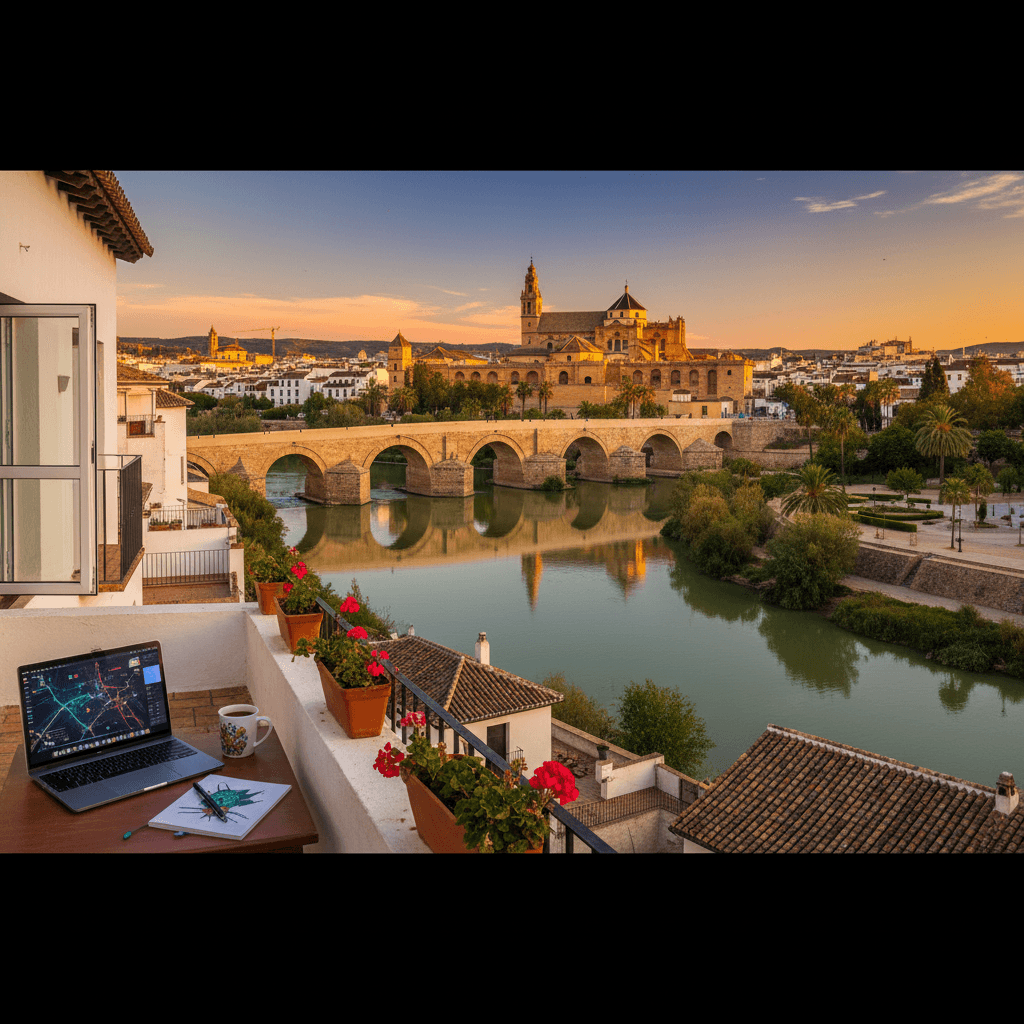
Córdoba
🇪🇸 Spain
The Andalusian Soul
Córdoba isn't the place you go to hustle at 150 percent. It's the place you go when you want your workday to be punctuated by the scent of orange blossoms and the sound of distant Spanish guitar. While Madrid and Barcelona feel like global hubs, Córdoba feels like a secret you've finally been let in on. It boasts more UNESCO World Heritage Sites than any other city on the planet, yet it maintains a sleepy, unpretentious rhythm that's rare for a provincial capital.
The magic here is in the layers. You might spend your morning answering emails in a cafe built over Roman ruins, take your lunch break wandering through the Mezquita's forest of arches, and finish your day with €2 tapas in the Jewish Quarter. Nomads often find that the city's scale is its greatest asset; it's large enough to have every modern amenity but small enough that the bartenders in San Andres will know your order by the third day.
The Nomad Reality
Living here is surprisingly affordable, especially compared to the coastal hubs. You can live a comfortable life on €2,000 to €2,800 a month, which buys you a high-quality lifestyle including frequent meals out and a central apartment. Most expats find that while the infrastructure isn't as polished as Valencia's, the sheer ease of life makes up for it. The main trade off is the summer heat. During July and August, temperatures routinely hit 40°C, and the city goes into a deep hibernation. If you aren't a fan of scorching afternoons, aim for a stay between March and May.
Connectivity is reliable, though you won't find a coworking space on every corner. Most nomads gravitate toward ILCOWORKING for a professional setup with 24/7 access, typically costing between €150 and €300 a month depending on your needs. For more casual days, the cafe culture in the Old Town is welcoming, provided you've got a local SIM from Orange or Vodafone for about €20 a month to tether when the shop's WiFi gets sluggish.
Where to Plant Your Flag
- Juderia (The Jewish Quarter): This is the postcard version of Spain. It's incredibly walkable and puts you steps away from the Mezquita. Expect to pay €600 or more for a small apartment. It's touristy, but the charm of the flower-filled patios is hard to beat.
- San Andres-San Pablo: This is the local heartbeat. It's where the best tapas bars are, and the rent is friendlier, often ranging from €400 to €600. It can get noisy on weekends, but if you want to actually meet people and practice your Spanish, this is the spot.
- Old Town/City Center: A solid middle ground for those who want to be near the shops and main bus lines. It's convenient for families who need proximity to pharmacies and larger grocery stores.
The Social Rhythm
Socializing in Córdoba revolves around the "paseo" and the plate. You'll quickly learn to love salmorejo, a thick, garlicky tomato soup that's a local obsession, and flamenquín, a fried pork roll that's the ultimate comfort food. People here eat late; don't expect to see a restaurant get busy before 9:00 PM.
While the nomad community is smaller than in Seville, the Digital Nomad Visa is bringing in a fresh wave of remote workers. You'll find most of them hanging out at tapas spots in San Andres or organizing weekend trips via Facebook groups. Since English isn't as widely spoken here as in the bigger cities, learning basic phrases like "¿Cuánto cuesta?" will go a long way in building rapport with the locals. It's a city that rewards those who slow down and make an effort to integrate.
The Price of an Andalusian Lifestyle
Córdoba remains one of the most accessible cities in Spain for those earning in dollars or euros. While prices across the country have ticked upward, this southern city provides a high quality of life for a fraction of the cost you would find in Madrid or Barcelona. You can live quite well here on €2,000 to €2,800 a month, which covers a comfortable apartment, frequent dining out, and weekend trips to neighboring Seville or Granada.
Budget-conscious nomads can manage on €1,200 to €1,800 by opting for shared housing and sticking to the local tapas scene. If you are looking for a more upscale experience with a central apartment in the historic district and regular fine dining, plan for a budget of €3,000 or more.
Housing and Neighborhoods
Rent is your biggest variable and depends heavily on how close you want to be to the Mezquita. Most expats look for apartments on Idealista or Fotocasa, though booking a short-term stay through Airbnb while you scout neighborhoods in person is the smarter move.
- Juderia: This is the historic heart. It is beautiful and walkable but can feel like a tourist park during peak season. Expect to pay €600 to €700 for a one bedroom apartment.
- San Andres-San Pablo: This is the sweet spot for many nomads. It is social, packed with tapas bars, and slightly more affordable with rents ranging from €400 to €600. It can get noisy on weekends, so check the window insulation before signing a lease.
- Old Town: A solid middle ground for families or those who want to be near the action without living directly on top of a souvenir shop.
Dining and Groceries
The food culture here is centered around small plates and social drinking. You can grab a quick meal or a few tapas for €5 to €10. A mid-range dinner for two with wine usually lands between €15 and €25 per person. Local favorites like salmorejo and flamenquín are staples that won't break the bank.
Groceries are affordable if you shop at local markets or chains like Mercadona. You will find that fresh produce, olive oil, and local wine are significantly cheaper than in North America or Northern Europe. A monthly grocery bill for a solo traveler typically hovers around €250 to €350.
Connectivity and Workspaces
While Córdoba lacks the massive coworking hubs found in larger cities, the infrastructure is solid. Fiber optic internet with speeds between 300Mbps and 1000Mbps is standard in most modern apartments. Many nomads prefer working from cafes in San Andres, though dedicated spaces like ILCOWORKING are available for €150 to €300 a month if you need 24/7 access and a professional desk.
For mobile data, pick up a SIM card from Orange or Vodafone at a local kiosk. You can get 50GB or more for €10 to €20 a month. Just bring your passport to the store to get set up.
Transportation and Logistics
The city center is highly walkable, so you likely won't need a car. Public buses are reliable at €1.40 per ride, or you can grab a monthly pass for €30 to €40. For quick trips, use the BiciCOR app to rent bikes or scooters for roughly €1 to unlock and €0.10 per minute.
If you are arriving from abroad, you will likely fly into Seville. A taxi or private transfer from the airport to Córdoba costs between €20 and €50 depending on the time of day and how well you negotiate.
Health and Paperwork
Expect to pay for private health insurance if you are applying for the Digital Nomad Visa, which requires proof of at least €2,500 in monthly income. Once you have your NIE (tax ID), you can open a local bank account, though many nomads stick with fintech options like Revolut or N26 to avoid high exchange fees at traditional Spanish banks.
For Solo Travelers: La Judería
If you want to wake up in the heart of Córdoba's history, La Judería is where you'll spend your time. It is the old Jewish quarter, a maze of whitewashed alleys and flower-filled patios that sit right next to the Mezquita. Most solo nomads choose this spot because it's impossible to feel lonely when you're surrounded by centuries of Roman and Moorish architecture. Everything you need is within a ten minute walk, making it the most convenient base for a short to medium stay.
- Rent: Expect to pay €600 to €850 per month for a decent apartment.
- Vibe: High energy, historic, and very walkable.
- Where to stay: Tandem El Patio is a favorite for its traditional courtyard style and reliable WiFi.
The downside is the "tourist buzz." During the day, the main arteries get crowded with tour groups. You'll pay a premium for groceries and coffee here compared to other districts, but the trade-off is being able to see the city's most iconic sites before the crowds arrive at 9:00 AM.
For Expats and Long-Term Nomads: San Andrés and San Pablo
This is the neighborhood where you actually learn how to live like a local. It sits just east of the main tourist center and serves as the city's social hub. Expats move here for the tapas culture; there are dozens of small, family-run shops serving €3 glasses of wine and €5 to €10 plates of salmorejo. It feels lived-in and authentic, though it can get a bit noisy on weekend nights when the bars are full.
- Rent: More affordable at €450 to €650 for a one-bedroom flat.
- Vibe: Social, loud, and packed with local flavor.
- Coworking: While local spaces are still catching up, many nomads head to ILCOWORKING for a professional setup starting around €150 a month.
Living here means you're close to the Plaza de la Corredera, the only square of its kind in Andalusia. It's a great spot to set up your laptop for an hour, provided you've got a good data plan. For a place with a pool to survive the 40°C summer heat, check out Casa San Mateo.
For Families: The City Center and Old Town
Families usually find the narrow, cobblestone streets of the Judería a bit too cramped for strollers. The wider City Center (Centro) offers a better balance. You'll have easier access to modern amenities like El Corte Inglés, larger pharmacies, and the main bus lines. It's cleaner and more organized than the winding alleys of the historic quarters, but you're still only a fifteen minute walk from the river and the parks.
- Rent: Prices vary, but family-sized apartments usually run €800 to €1,200.
- Vibe: Convenient, busy, and practical.
- Transport: Excellent access to the BiciCOR bike-sharing app, which costs about €1 to unlock.
The city center feels safer for those with kids because it's well-lit and less "maze-like." You're also closer to the Reina Sofía University Hospital if you ever need healthcare, which is top-tier in this part of Spain. Most families prefer the quiet outskirts just beyond the center for more space and lower noise levels at night.
Practical Living Costs
Regardless of the neighborhood you pick, your budget will go further here than in Madrid or Barcelona. A solo nomad can live comfortably on €2,000 to €2,800 a month, covering a private apartment and frequent dinners out. If you're on a budget, sticking to shared housing and €1.40 bus rides can bring your monthly spend down to roughly €1,500. Just remember that many businesses still observe the siesta, so plan your errands and grocery runs before 2:00 PM or after 5:00 PM.
Connectivity and Speed
Spain is a global leader in fiber optic infrastructure, and Córdoba is no exception. You can expect reliable, high speed internet in almost any apartment or rental within the city limits. Most residential fiber connections range from 300Mbps to 1000Mbps, which is more than enough for video calls and heavy data transfers. If you're staying in the historic Judería, the thick stone walls of older buildings can sometimes interfere with WiFi signals, so it's a good idea to check if your host has mesh routers or signal boosters.
Mobile data is your best backup. You can pick up a local SIM from providers like Orange or Vodafone for about €10 to €20 per month. These plans often come with massive data allowances, sometimes reaching 50GB or even unlimited during promotional periods. You'll need your passport to register the SIM at a physical store, which you can find easily around the city center or at the nearby Seville airport if you're flying in there first.
Coworking Spaces
The coworking scene in Córdoba is smaller and more intimate than the massive hubs in Madrid or Barcelona. It's a city that favors a slower pace, but there are dedicated professional environments if you need to escape the house. ILCOWORKING is a popular choice for those who need a structured environment, offering flexible desks and 24/7 access for monthly rates between €150 and €300.
Other smaller, local hubs occasionally pop up in the city center, catering to the growing number of people arriving on the Digital Nomad Visa. These spaces are excellent for networking with the local expat community. Most nomads recommend visiting a space for a day before committing to a monthly membership, as the "vibe" can vary from quiet, library-like offices to more social, collaborative environments.
The Cafe Office Culture
If you prefer the hum of a coffee machine to a silent office, Córdoba's cafe culture is welcoming. In neighborhoods like San Andrés-San Pablo, you'll find plenty of tapas bars and cafes where locals linger over coffee for hours. While "laptop culture" isn't as aggressive here as it is in Northern Europe, many spots won't mind you working for an hour or two if you're ordering regularly.
- The Judería: Great for atmosphere, but can be crowded with tourists and the WiFi in smaller cafes can be spotty.
- San Andrés-San Pablo: This is the sweet spot for nomads. It's less touristy, more affordable, and the local cafes are generally more relaxed about people staying to work.
- Old Town: You'll find more modern cafes here with better power outlet availability.
Practical Tips for Working Remotely
The biggest challenge for remote workers in Córdoba isn't the internet; it's the schedule. The siesta is still a reality here. Between 2:00 PM and 5:00 PM, many smaller shops and even some cafes will close their doors. If you have a meeting during these hours, make sure you're settled in a coworking space or your apartment.
Noise can also be a factor. The narrow streets of the Old Town act like echo chambers. If you have an important presentation, avoid sitting near an open window during the morning delivery hours or the late evening rush when the tapas bars come alive. Most nomads find that investing in a good pair of noise-canceling headphones is the best way to handle the lively Andalusian street life while staying productive.
For those planning a long term stay, remember that the Digital Nomad Visa requires proof of income around €2,500 per month. Having your paperwork and a local bank account through Revolut or N26 makes managing your local expenses and coworking memberships much smoother.
Safety in the City of Patios
Córdoba is remarkably safe for a city of its size, maintaining a relaxed, small town feel despite its global fame. Most nomads feel comfortable walking the streets at any hour, though common sense still applies. Violent crime is rare, but you should keep a sharp eye on your belongings in high traffic areas like the Judería and near the Mezquita. Pickpockets occasionally target distracted tourists in these crowded spots, especially during the peak patio festival season in May.
The narrow, winding alleys of the Old Town can feel like a labyrinth at night. While they aren't dangerous, it’s easy to lose your bearings after a few glasses of Montilla Moriles wine. Expats generally recommend sticking to well lit main thoroughfares if you're alone after midnight. There aren't any specific "no go" zones to worry about, but the outskirts can feel a bit desolate compared to the lively energy of San Andrés or the City Center.
Navigating the Healthcare System
Spain's healthcare is world class, and Córdoba is no exception. If you're here on the Digital Nomad Visa, you'll likely be required to maintain private health insurance for your first year. This gives you access to shorter wait times and English speaking doctors. For any immediate emergencies, dial 112. Most operators can handle basic English, but having a translation app ready is a smart move.
The city's crown jewel for medical care is the Reina Sofía University Hospital. It’s a massive, highly respected public facility known for specialized treatments. For routine issues, you'll find farmacias (pharmacies) on almost every street corner, marked by glowing green crosses. They can provide over the counter advice and basic medications for common ailments like the "Andalusian heatstroke" that hits newcomers in July and August.
Healthcare Logistics for Nomads
- Pharmacies: Look for the Farmacia de Guardia sign on any pharmacy door to find the nearest 24 hour location.
- Private Clinics: Many expats use facilities like Quirónsalud Córdoba for faster specialist appointments.
- Cost: Out of pocket visits for minor issues at private clinics usually run between €60 and €100.
- Insurance: Ensure your policy meets the €30,000 minimum coverage required by Spanish immigration if you're applying for residency.
Practical Wellbeing Tips
The biggest "health risk" in Córdoba isn't crime or illness, it’s the sun. With summer temperatures regularly soaring to 40°C, locals take the siesta seriously for a reason. Do not try to run errands or sightsee at 3:00 PM in the summer. You'll find the streets empty and the risk of dehydration high. Carry water, wear sunscreen, and time your outdoor activities for the early morning or late evening like the Cordobeses do.
Tap water in Córdoba is perfectly safe to drink and tastes better than the water in many coastal Spanish cities. You can save money and reduce plastic waste by refilling a reusable bottle at your apartment or at the various historic stone fountains dotted around the Old Town. If you have specific prescriptions, bring the generic name of the drug, as brand names often differ in Spain. Most pharmacists are incredibly helpful and can often find a local equivalent with just the chemical name.
The Walkability Factor
Córdoba is a city built for feet, not engines. If you're staying in the Judería or the Old Town, you'll rarely need anything other than a sturdy pair of sneakers. The streets are narrow, winding, and often paved with cobblestones that date back centuries. Most nomads find that they can reach the Mezquita, their favorite tapas bar in San Andres, and a local grocery store all within a fifteen minute stroll.
The compact nature of the center is a major draw, but it does mean that cars are often restricted or simply unable to fit through the tightest alleys. If you’re hauling luggage or groceries, stick to the main thoroughfares where the pavement is a bit more forgiving.
Public Buses and Regional Rail
When your legs need a break, the local bus network is surprisingly efficient. A single ride costs €1.40, which you can pay directly on board. If you plan on staying for a month or more, expats recommend picking up a monthly pass for roughly €30 to €40. It’s a lifesaver during the scorching July and August afternoons when walking even three blocks feels like a marathon.
For adventures beyond the city limits, the train station is your gateway to the rest of Andalusia. High speed trains connect you to Seville or Granada in under two hours. It’s common for nomads to base themselves in Córdoba for the lower rent and take weekend trips to the larger hubs. Prices vary, but booking a few days in advance usually nets you the best deals.
Two Wheels and Ride Hailing
Biking is a great way to see the city, especially along the river. The local bike sharing app, BiciCOR, is the go to choice for quick trips. It costs €1 to unlock a bike and then €0.10 per minute. There are several docking stations scattered around the perimeter of the historic center, though riding inside the Judería can be tricky due to the crowds.
If you prefer a car, both Uber and Bolt operate in the city. They’re reliable for late night returns from a flamenco bar or when you’re heading to the train station with heavy bags. A typical cross town trip will set you back between €7 and €15 depending on the time of day.
Getting Here from the Airport
Córdoba has its own airport, but it’s quite small and doesn't handle many commercial flights. Most travelers fly into Seville or Malaga and then take a bus or train into the city. A taxi or private transfer from Seville Airport usually costs between €20 and €50 and takes about 90 minutes. If you're on a budget, the bus from Seville is a fraction of that price and runs frequently throughout the day.
Quick Transport Cheat Sheet
- Single Bus Fare: €1.40
- Monthly Bus Pass: €30 to €40
- BiciCOR Unlock: €1
- Train to Seville: €15 to €30 (varies by speed)
- Taxi across town: €10 average
The pace of life here is slow, and the transport reflects that. Don't be surprised if the bus is a few minutes late or if you find yourself lingering on a walk because you spotted a new patio. In Córdoba, the commute is often the best part of the day.
The Language Landscape
In Córdoba, Spanish isn't just the official language; it's the heartbeat of daily life. While you'll find a decent level of English in the tourist heavy Juderia district or at major landmarks like the Mezquita, the city's soul lies in its local neighborhoods where Spanish is the only currency. Most nomads find that while they can get by with "Spanglish" and frantic gesturing for a few days, a basic grasp of the local tongue is what actually unlocks the city.
The local Andalusian accent can be a bit of a curveball even if you've studied Spanish before. Locals tend to drop the "s" at the end of words and speak with a melodic, rapid fire pace. Don't let it intimidate you. Cordobeses are generally patient and appreciate any effort to speak their language, even if you're just stumbling through a coffee order at a tapas bar in San Andres.
Communication Tools and Connectivity
You won't survive long without a solid data plan for real time translations and maps. Expats recommend heading straight to a local shop to grab a prepaid SIM rather than relying on international roaming. Orange and Vodafone are the most reliable bets here. You can usually snag a plan with 50GB or more for roughly €10 to €20 a month. Just remember to bring your passport, as it's a legal requirement for registration.
For day to day interactions, keep these digital tools on your home screen:
- Google Translate: Download the Spanish pack for offline use. The camera feature is a lifesaver for deciphering handwritten menus in traditional taverns.
- WhatsApp: This is the primary way everyone communicates in Spain. From booking a table to chatting with your landlord, if you aren't on WhatsApp, you don't exist.
- DeepL: Many nomads prefer this over Google for more natural, nuanced translations when sending formal emails or texts.
Essential Phrases for Your First Week
Beyond the standard "Hola," there are a few phrases that will make your life significantly easier in the local markets and cafes. Expect to hear "Buenas" as a catch-all greeting at almost any time of day. It's the relaxed, local way to say hello without worrying if it's technically morning or afternoon yet.
- "¿Cuánto cuesta?" (How much does it cost?): Use this at the local markets when the prices aren't clearly marked.
- "La cuenta, por favor" (The check, please): Vital for when you've finished your salmorejo and are ready to move on.
- "¿Dónde está...?" (Where is...?): For when you inevitably get lost in the winding, narrow streets of the Old Town.
- "Un café solo" (Black coffee) or "Café con leche" (Coffee with milk): The fuel of the Spanish workday.
Social Integration and Learning
If you're staying for more than a month, consider joining a language exchange, often called an "intercambio." These are usually hosted at bars in the evening where you spend half the time speaking English and the other half Spanish. It's the most effective way to meet locals and other nomads simultaneously. Check Facebook groups or Meetup.com for Córdoba specific gatherings, as the nomad scene is growing quickly thanks to the new Digital Nomad Visa.
Expect a slower pace of communication when it comes to business. The "siesta" culture is real; many shops and offices close between 2:00 PM and 5:00 PM. If you send an email during these hours, don't expect a reply until later in the evening or the following morning. Embracing this rhythm rather than fighting it is the key to a stress free stay in Andalusia.
The Sweet Spot: Shoulder Season
If you want to see Córdoba at its absolute best, aim for the window between March and May. This is when the city truly wakes up. The air is crisp but warming, with temperatures hovering between 20°C and 25°C. It is the season of the famous Patios Festival, where the entire city smells like orange blossoms and jasmine. Just keep in mind that rain peaks around November, so spring showers are a possibility, but they rarely ruin a workday.
Fall is your second best bet. From September to October, the brutal summer heat breaks, leaving you with pleasant 24°C to 28°C days. It is perfect for working from a terrace in San Andres-San Pablo without your laptop overheating. Most nomads find this the ideal time to arrive because the tourist crowds of the spring have thinned out, making it easier to snag a long-term rental in the Judería.
Survival Mode: The July and August Heat
Be warned: Córdoba is often the hottest city in Spain. During July and August, temperatures regularly spike between 35°C and 40°C. The city adopts a ghost-town vibe in the afternoons as everyone retreats for a long siesta. If you are here during these months, air conditioning is not a luxury; it is a requirement for survival.
Expats recommend shifting your schedule during the summer. Wake up early to get your deep work done, then hide away from 2:00 PM to 7:00 PM. The city doesn't really come back to life until the sun goes down, with dinners often starting well after 9:00 PM. If the heat gets too much, use the BiciCOR app to grab a bike and head to cooler spots, or hop on a train for a weekend escape to the coast.
Mild Winters and Digital Nomad Life
Winter in Córdoba is surprisingly manageable. From December to February, you can expect temperatures between 10°C and 18°C. You will need a jacket for the evenings, but the days are often sunny enough to work outside at a cafe. It is much quieter than the peak season, which is great if you prefer a slower pace and lower prices on short-term stays.
Quick Climate Snapshot
- Best for Patios and Festivals: May (expect 22°C to 25°C).
- Best for Budget Travelers: January and February (mild but quiet).
- Months to Avoid: July and August (intense 40°C heat).
- Rainy Period: October through May, peaking in November.
Whenever you choose to visit, remember that the Andalusian lifestyle is built around the weather. Whether you are seeking out the shade of a Moorish patio in the summer or basking in the winter sun near the Mezquita, you will find that the city dictates a relaxed, healthy rhythm that is hard to find in faster-paced Spanish hubs.
Survival Basics
Living in Córdoba means embracing the slow rhythm of the south. You'll quickly learn that everything stops for the siesta in the afternoon, and dinner before 9:00 PM is a lonely affair. Most nomads find that while English works in the tourist heavy Judería, you'll want a translation app and some basic Spanish phrases for the tapas bars in San Andrés. A simple "buenas tardes" goes a long way when entering a shop.
For connectivity, don't rely on finding a SIM at a tiny local kiosk. Head to a branded Orange or Vodafone store with your passport. You can usually grab a prepaid plan with 50GB or more for between €10 and €20. If you're planning a long term stay, look into the Digital Nomad Visa, which requires proof of income around €2,500 per month.
Cost of Living
Córdoba remains one of the most affordable heritage cities in Andalusia. While prices fluctuate, your monthly budget will likely fall into one of these tiers:
- Budget Nomad: €1,200 to €1,800. This covers a room in a shared apartment, plenty of €2 beers, and home cooked meals.
- Mid Range: €2,000 to €2,800. You'll have your own one bedroom apartment, eat out at nice bistros a few times a week, and travel on weekends.
- Comfortable: €3,000+. This gets you a premium spot in the city center and frequent dinners at upscale spots.
Where to Set Up Your Desk
The neighborhood you choose defines your experience. Expats recommend these three areas based on your lifestyle:
Judería (The Old Jewish Quarter)
- Rent: €600 to €800+ for a small apartment.
- Vibe: Very touristy but incredibly beautiful. You're steps from the Mezquita.
- Cons: It gets crowded and noisy during the day.
San Andrés & San Pablo
- Rent: €450 to €650.
- Vibe: This is where the local life happens. It's packed with tapas bars and has a much more authentic, social energy.
- Cons: The streets are narrow and can get cluttered or loud late at night.
City Center
- Rent: €550 to €750.
- Vibe: A balance of modern amenities and historic sights. Great for families who need to be near shops and bus lines.
Internet and Productive Spaces
Spain has some of the fastest fiber in Europe, and Córdoba is no exception. Most apartments offer speeds between 300Mbps and 1Gbps. Dedicated coworking spaces are still catching up to the nomad influx, but ILCOWORKING is the go to spot for most professionals. Expect to pay €150 to €300 per month for a flexible desk with 24/7 access.
If you prefer the "laptop cafe" life, the tapas shops in San Andrés are welcoming, though they might expect you to pack up when the lunch rush starts at 2:00 PM. For banking, most nomads skip the traditional Spanish banks and use Revolut or N26 to avoid high conversion fees.
Getting Around
You won't need a car here. The city center is almost entirely walkable. For longer distances, the local bus system is reliable at €1.40 per ride, or you can grab a monthly pass for about €35. For quick trips, download the BiciCOR app to rent electric bikes for €1 plus a small per minute fee. If you're heading to Seville or Granada for the weekend, the train station is well connected and takes about an hour or two depending on the line.
Staying Safe and Healthy
The city is generally very safe, even at night. The only real concern is petty pickpocketing in the high traffic areas around the Mezquita. If you need medical help, the Reina Sofía University Hospital is top tier. Always keep the emergency number 112 saved in your phone. Most pharmacies are open late, and you'll find at least one 24 hour "farmacia de guardia" in every district.
Weather Warnings
The biggest challenge for nomads isn't the internet or the language, it's the heat. July and August are scorching, often hitting 40°C. Most locals disappear during these months. If you can, plan your stay for March through May or September through October when the weather is a perfect 20 to 28°C.
Need visa and immigration info for Spain?
🇪🇸 View Spain Country GuideEasy Landing
Settle in, no stress