Búzios
🇧🇷 Brazil
The Bardot Legacy Meets Modern Remote Work
Búzios is what happens when a sleepy Brazilian fishing village gets a shot of French adrenaline. Ever since Brigitte Bardot escaped the Rio paparazzi here in 1964, this peninsula has balanced a strange, beautiful duality. It is undeniably upscale, often called the St. Tropez of Brazil, yet it keeps its feet firmly in the sand. For nomads, it offers a lifestyle that feels more curated than the raw energy of Rio and more intimate than the tech-heavy vibe of Florianópolis.
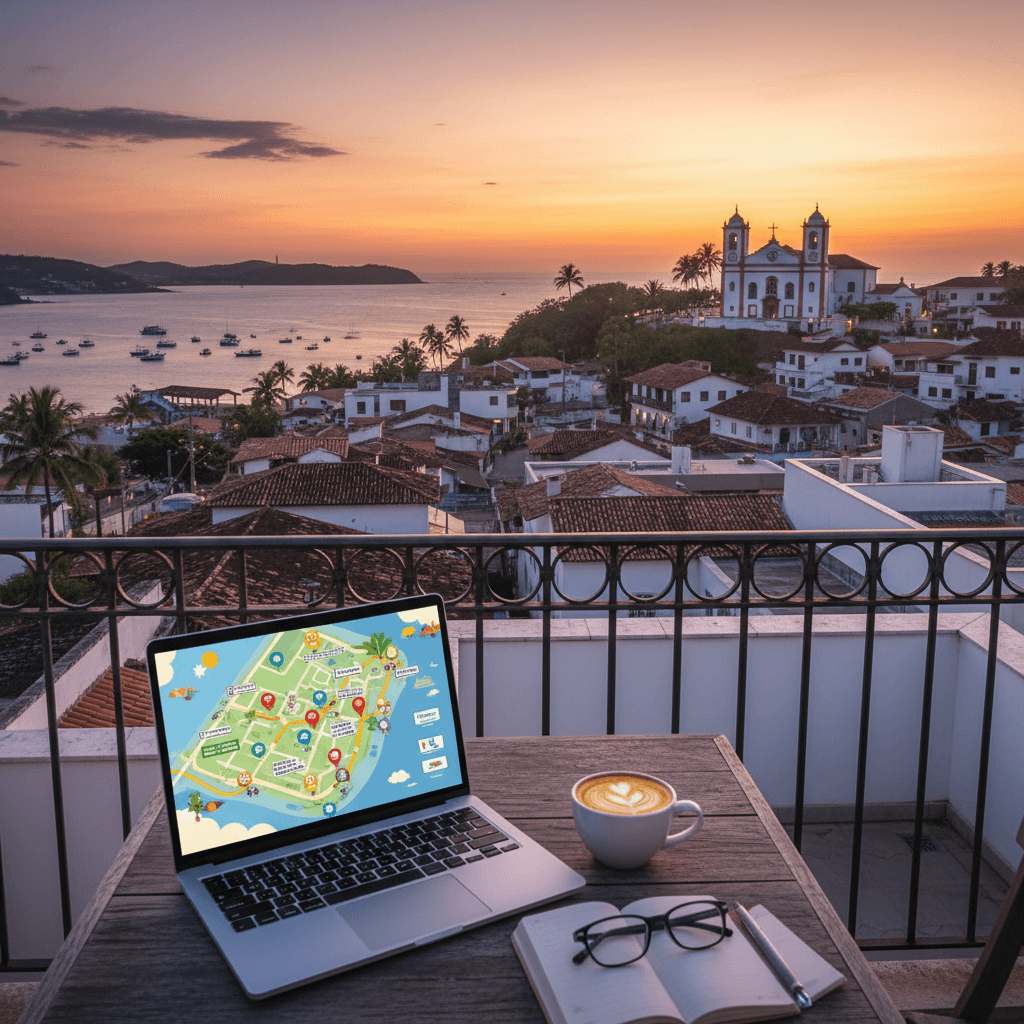
The peninsula is shaped like a jagged lightning bolt, creating over 20 distinct beaches within a tiny radius. This geography defines the daily rhythm. You might spend your morning on a Zoom call from a sun-drenched cafe on Rua das Pedras, then take a ten-minute walk to Praia do Canto for a quick dip before your afternoon deep-work session. It is a place where the "commute" usually involves flip-flops and a view of the Atlantic.
The Daily Vibe
Living here feels like being part of an exclusive club that forgot to check memberships at the door. While the weekends bring the "Carioca" elite from Rio in their SUVs, the weekday vibe is surprisingly tranquil. You'll find a tight-knit community of Argentine expats, European gallery owners, and a growing number of remote workers who value peace over the chaos of a major metropolis.
- The Morning: Most locals start slow. You'll see people grabbing a pão de queijo and a strong cafezinho while watching the colorful "traineiras" (fishing boats) bob in the harbor.
- The Afternoon: This is when the breeze picks up. The town is highly walkable, especially around the Armação district, making it easy to bounce between your apartment and the seaside boardwalk.
- The Evening: As the sun dips, the Orla Bardot boardwalk lights up. It's less about wild raves and more about sophisticated live music, craft cocktails, and high-end seafood.
What Sets Búzios Apart
Unlike many nomad hubs that feel like "anywhere-office" bubbles, Búzios has a stubborn local character. The architecture is strictly regulated; you won't see high-rise glass towers here. Everything is low-slung, terracotta-tiled, and draped in bougainvillea. It feels human-scale. While it lacks the massive coworking campuses of Medellin or Lisbon, the internet is surprisingly punchy, with fiber optic now standard in most central villas and cafes.
Expats often mention the sense of safety as a primary draw. While you should always keep your wits about you in Brazil, Búzios lacks the edge of the bigger cities. You can walk home from a late dinner on Rua das Pedras without the constant shoulder-checking common in Rio. It’s a place where you can actually exhale.
Cost of Living Tiers
Búzios isn't the cheapest spot in Brazil, but your dollars or euros go a long way compared to Mediterranean equivalents. Most nomads find they can live a high-quality life for a fraction of what they'd pay in Europe.
- The Budget Nomad: Expect to spend R$4,000 to R$6,000 per month. This usually means a shared house or a small studio further from the water, eating at "por quilo" restaurants, and sticking to the local buses.
- The Mid-Range Professional: At R$6,000 to R$10,000 per month, you’re looking at a nice one-bedroom near Praia dos Ossos, frequent dinners out, and plenty of weekend boat trips.
- The Luxury Expat: For R$10,000+, you can secure a villa with a pool and ocean views, dining at the top-tier spots like Místico or 74 Restaurant.
The emotional payoff of Búzios is the light. There is a specific, golden quality to the late afternoon sun here that makes even a stressful workday feel like a win. It’s a place for the nomad who wants to trade the "hustle" for a bit of salt-crusted sophistication.
The Price of Paradise
Búzios sits in a unique sweet spot for the 2025-2026 season. It carries the "St. Tropez of Brazil" reputation, which suggests a heavy price tag, but the reality is more nuanced. While it's certainly more expensive than rural Brazil, most nomads find it significantly more affordable than major North American or European coastal hubs. You're paying for the lifestyle here; the ability to walk from a morning Zoom call to a world-class beach in five minutes.
The local economy runs on a dual-track system. There's the high-end tourist track found along Rua das Pedras, and the local track where expats and long-termers live. If you shop at the local markets and avoid the white-tablecloth seafood spots every night, your money goes a long way. Most digital nomads should budget between R$6,000 and R$10,000 per month for a comfortable, mid-range lifestyle that includes a private apartment and frequent dining out.
Monthly Budget Tiers
- The Budget Nomad (R$4,000 to R$6,000): This lifestyle involves staying in shared coliving setups or modest studios further from the water. You'll be eating at "Prato Feito" (fixed-price lunch) spots and using the local vans (vans) instead of Ubers.
- The Mid-Range Professional (R$6,000 to R$10,000): This is the sweet spot. You can secure a nice one-bedroom apartment in Armação, eat out at solid mid-tier restaurants a few times a week, and keep the air conditioning running without stressing over the electric bill.
- The Luxury Expat (R$10,000+): At this level, you're looking at upscale villas near Ferradura or Geribá, fine dining on the Orla Bardot, and private boat charters on the weekends.
Housing and Utilities
Rent is your biggest variable. Short-term Airbnb stays during the peak summer months (December through March) can be triple the price of a long-term lease. If you're staying for six months or more, expats recommend joining local Facebook groups or "Classificados" pages to find direct rentals, which can save you 30% to 50% compared to booking platforms.
- One-Bedroom Apartment (Central): R$3,500 to R$5,500 per month.
- One-Bedroom Apartment (Outside Center): R$2,500 to R$3,500 per month.
- Utilities (Electric, Water, Trash): R$400 to R$700, depending heavily on AC usage.
- High-Speed Fiber Internet: R$100 to R$150 per month.
Food and Dining
Dining in Búzios is a highlight. You can find a "quilo" restaurant (pay-by-weight) where a massive, healthy lunch costs R$30 to R$45, or you can spend R$200 on a high-end moqueca for two. Grocery shopping at supermarkets like Extra or Princess is affordable, especially if you stick to local produce like avocados, mangoes, and fresh fish.
- Cheap Meal (Prato Feito/Quilo): R$30 to R$50.
- Dinner for two (Mid-range restaurant): R$150 to R$250.
- Domestic Beer (0.5L): R$10 to R$15.
- Cappuccino in a nomad-friendly cafe: R$12 to R$18.
- Monthly Grocery Bill: R$1,200 to R$1,800.
Transportation and Connectivity
Búzios is very walkable if you live in Armação or Centro. For longer trips to beaches like Geribá, the local "vans" are a staple of Búzios life, costing only a few Reais per trip. Uber is available and reliable, though prices surge during holiday weekends. For your phone, a prepaid SIM from Claro or Vivo with a beefy data package will run you about R$50 to R$70 a month.
Most nomads use Wise or Nubank to manage their Reais. It's the most efficient way to pay for everything from your rent to a coconut on the beach, as almost every street vendor accepts Pix or cards. Avoid traditional bank ATMs when possible to dodge high transaction fees.
For Digital Nomads: Armação and Centro
If your priority is a short walk from a laptop-friendly cafe to a sunset caipirinha, focus your search on the central peninsula. This area, encompassing Armação and the streets surrounding Rua das Pedras, is the heartbeat of Búzios. It is where you will find the most reliable fiber optic internet and a high density of international neighbors.
Most nomads gravitate toward the cafes along the Orla Bardot boardwalk for afternoon work sessions. While there isn't a massive "tech hub" coworking scene like you will find in Florianópolis, the local establishments are used to remote workers. You can expect to pay between R$6,000 and R$10,000 for a mid-range one-bedroom apartment in this central zone, depending on the season.
- The Draw: Speed. Everything you need is reachable on foot, and the social scene is built-in.
- The Trade-off: Noise. Between the live music on Rua das Pedras and the weekend crowds, it is rarely quiet.
- Top Spot: Find a rental near Praia dos Ossos for a slightly more historic, "village" feel that remains walkable to the center.
For Long-Term Expats: Ferradura and Geribá
Expats looking to settle in for six months or more often head slightly south of the center. Ferradura is famous for its horseshoe-shaped bay and upscale villas. It feels more like a residential community than a tourist trap. It is a prime choice if you want a house with a garden rather than a cramped apartment near the shops.
Geribá is the alternative for those who prefer a surf-centric lifestyle. It has a younger, more athletic energy and a wide, sandy beach. Long-term rentals here can be more affordable than the boutique hotels of Armação, with comfortable houses often starting around R$8,000 per month on long-term contracts. You will likely want to use apps like 99 or Uber to get into the center from here, as it is a bit of a trek on foot.
- The Draw: Space and tranquility. These areas offer a true "quality of life" upgrade with less foot traffic.
- The Trade-off: You will likely need a car or a scooter for grocery runs and social outings.
- Top Spot: The hills overlooking Ferradura offer incredible views and a steady sea breeze that cuts down on air conditioning costs.
For Solo Travelers: Praia dos Ossos
If you are traveling alone and want to meet people without staying in a loud party hostel, Praia dos Ossos is the sweet spot. It is tucked at the end of the Orla Bardot and serves as a bridge between the busy downtown and the quieter northern beaches. It is charming, filled with older architecture, and has a very high safety rating even for those walking alone at night.
Budget-conscious solo travelers can find shared living spaces or small studios for R$4,000 to R$5,000 a month. The neighborhood has a local, "neighborhood" feel where the baristas and fishermen will recognize you after three days. It is also the main hub for the aquataxis, which are the most fun way to explore different beaches for a few Reais.
For Families: João Fernandes
Families usually find their rhythm in João Fernandes. The water here is calmer and clearer than at the surf beaches, making it much safer for kids to swim. The neighborhood is built on a slope, so many of the family-sized rentals come with pools and panoramic views of the Atlantic.
While this area is more expensive and tourist-heavy, the infrastructure is excellent. You are close to pharmacies and small markets, and the restaurants in this area are generally more accommodating to children. Just be prepared for the hills; pushing a stroller here is a serious workout.
- Rent for 3BR House: R$12,000+ per month.
- Atmosphere: Calm, scenic, and heavily influenced by international visitors, particularly from Argentina.
- Safety: Very high, with many gated communities and well-lit streets.
Connectivity and Speed
Búzios has come a long way from its fishing village roots. You'll find fiber optic internet as the standard in most modern villas and pousadas around Armação and Praia do Canto. Speeds typically range between 100 Mbps and 300 Mbps, which is more than enough for seamless Zoom calls or uploading large files while the ocean breeze kicks in.
The peninsula is well served by Brazil's major providers. If you're setting up a home base, look for Claro or Vivo connections. Most nomads find that even the smaller boutique hotels have upgraded their routers to handle the influx of remote workers, though it's always smart to ask for a speed test screenshot before committing to a month long stay.
Coworking Spaces
While Búzios doesn't have the massive "tech hub" warehouses you'll see in Florianópolis, it offers more intimate, curated spaces that fit the town's chic aesthetic. Most of the action happens near the center where the infrastructure is most reliable.
- Búzios Coworking: Located near the entrance of the city, this is the most professional setup in town. They offer ergonomic chairs, private booths for calls, and a steady backup power supply. Day passes typically start around R$80+.
- Pousada Work-Friendly Hubs: Several high end pousadas in the Ferradura area have started offering day passes to non guests. These are perfect if you want to work poolside with a guaranteed 200 Mbps connection and a decent espresso machine nearby.
Cafe Culture and Remote Work Spots
If you prefer a more casual environment, the cafe scene in Búzios is top tier. The trick is finding spots with enough outlets and a staff that doesn't mind you lingering for a few hours. Rua das Pedras and Orla Bardot are your best bets for a morning work session with a view.
- Maria Maria Café: An iconic spot on the water. The back deck is quiet in the mornings, the WiFi is surprisingly punchy, and their coffee is some of the best in the state.
- Golden Bread: Located in the Porto da Barra complex, this is a local favorite. It's spacious, airy, and has plenty of tables. Plus, you're right next to the best sunset spot in town for your post work happy hour.
- Cafe at Gran Cine Bardot: Tucked away in a charming courtyard, this spot offers a quieter atmosphere away from the main tourist drag. It's a reliable "plan B" when the waterfront cafes get too breezy or loud.
Mobile Data and Backups
Never rely solely on cafe WiFi. Brazil's 4G and 5G coverage in Búzios is excellent, especially in the central areas. Expats recommend keeping a local SIM card as a hotspot backup for those rare moments when a summer storm might cause a flicker in the local grid.
- SIM Cards: Pick up a Vivo or Claro "Pré-Pago" SIM. You can get these at small pharmacies or newsstands, but you'll need your passport and a bit of patience to register it.
- Data Costs: For about R$50 to R$70, you can get a monthly package with 10GB to 20GB of data. Many plans include "unlimited" usage for WhatsApp, which is how everyone in Búzios communicates.
- eSIM Options: If you want to skip the physical card, Airalo works well here, though it's more expensive than a local plan. It's a solid choice for your first 48 hours while you get settled.
Practical Advice for Nomads
Power surges can happen during heavy tropical rains in the summer months. If your work is mission critical, many nomads suggest staying in Armação or Manguinhos, as these areas tend to be the first to get service restored. Always carry a universal adapter; while Brazil uses the Type N outlet, you'll still find older Type C sockets in some of the more historic buildings.
Staying Safe in the Peninsula
Búzios is widely considered one of the safest coastal escapes in the state of Rio de Janeiro. While the capital city often makes headlines for security concerns, this peninsula feels like a different world. The community is tight-knit, and the atmosphere is significantly more relaxed. Most nomads find they can walk through the central areas like Armação and Rua das Pedras late at night without the high-alert status required in larger Brazilian metros.
That said, don't let the vacation vibes make you careless. Petty theft can happen, especially during the high season from December to March when the town swells with tourists. Expats recommend keeping a low profile with expensive tech. If you're working from a beachfront cafe at Praia do Canto, don't leave your MacBook unattended while you grab a coffee. Use common sense: keep your phone tucked away when walking and don't flash large amounts of cash.
If you're heading out for a night of caipirinhas, stick to the main illuminated thoroughfares. The Orla Bardot boardwalk is generally safe and well-traveled, but it's always smarter to call an Uber or a 99 if you're staying further out in residential pockets like Ferradura. If you run into any trouble, the emergency number for the police is 190.
Healthcare and Medical Services
For day-to-day health needs, you'll find plenty of farmácias (pharmacies) scattered throughout the center and along the Estrada da Usina. These are well-stocked with international brands and basic medications. Many pharmacists can help with minor ailments, and you'll often find one open late or on a 24-hour rotation.
Búzios has a municipal hospital, the Hospital Municipal Rodolpho Perissé, which handles emergencies and basic care. However, for specialized treatment or high-end private facilities, most expats and long-term travelers head to Cabo Frio. It's about a 30-minute drive away and offers more robust medical infrastructure. For anything critical or complex, a trip back to Rio de Janeiro (about 3 hours away) is usually the best bet for top-tier private hospitals.
Before you arrive, make sure your health insurance is solid. Most nomads use SafetyWing or Genki, but check that your policy covers private clinics in Brazil. Private care is excellent and relatively affordable if you're paying out of pocket, but costs can climb quickly for serious incidents. For an ambulance, dial 192.
Practical Health Tips
- Water: Don't drink the tap water. Stick to filtered or bottled water, which is cheap and available everywhere. Most long-term rentals come with a 20-liter galão water dispenser.
- Sun Protection: The sun here is intense. Even on cloudy days, the tropical UV index is no joke. Buy your sunscreen at local pharmacies, though it's often pricier than in the US or Europe.
- Mosquitoes: Like much of coastal Brazil, Búzios has mosquitoes. While malaria isn't a concern here, outbreaks of Dengue or Zika can occur during the rainy summer months. Use repellent, especially at dusk.
- Health Apps: Download Conecte SUS if you need to track vaccinations or access public health records, though most nomads rely on private providers for faster service.
Emergency Contacts at a Glance
- Police: 190
- Ambulance (SAMU): 192
- Fire Department: 193
- Tourist Police: Look for the DEAT (Delegacia de Atendimento ao Turista) in Rio if you need to file reports for insurance purposes regarding stolen items.
Getting Around the Peninsula
Búzios is surprisingly compact for a world class destination. If you're staying in the central neighborhoods like Armação or near the Orla Bardot, your own two feet are your best asset. The cobblestone streets of Rua das Pedras are strictly for pedestrians, making it easy to hop between cafes and shops without worrying about traffic. Walking is the default for most nomads living in the center, but once you want to explore the more secluded beaches like Geribá or Ferradura, you'll need a different strategy.
Ride-Hailing and Taxis
For longer trips across the peninsula, Uber is the most reliable and cost effective choice. It's widely used by locals and expats alike, though wait times can spike during the peak summer months of December and January. If Uber is slow, the 99 app is a solid Brazilian alternative that often has more drivers available in the state of Rio.
- Uber/99: Expect to pay between R$15 and R$30 for most trips within the city limits.
- Yellow Taxis: These are everywhere, especially near the main plazas. They use meters, but it's always smart to confirm the estimate before you pull away. They're generally 20% to 30% pricier than apps.
Public Transport and Vans
Búzios doesn't have a traditional metro or a massive bus network, but it does have a very efficient "Van" system. These white passenger vans run up and down the main road, Estrada de Búzios, connecting the downtown hub to outlying neighborhoods and beach entrances. You'll see the destination clearly marked on the windshield. Just wave one down from the side of the road and pay the driver in cash as you board. It's the most authentic way to get around and costs roughly R$5 to R$7 per ride.
Scooters and Buggies
If you're staying for a few months, renting a scooter is a game changer. The peninsula's hilly terrain can be a workout on a standard bicycle, so having some horsepower helps. You'll also see plenty of colorful beach buggies for rent. While they're a bit of a tourist cliché, they're actually quite practical for reaching the rougher trailheads near the Ferradura cliffs. Expect scooter rentals to start around R$100 to R$150 per day, with significant discounts if you negotiate a monthly rate with local shops.
Arriving and Departing
Getting to Búzios usually involves a trek from Rio de Janeiro. Most nomads fly into Galeão (GIG) or Santos Dumont (SDU) and take a bus or private transfer. The drive takes about 2.5 to 3 hours depending on the notorious Rio traffic.
- Viação 1001: This is the primary bus line. Coaches are comfortable, have AC, and depart frequently from the Novo Rio bus station. A one way ticket is usually around R$60 to R$90.
- Private Transfers: If you're traveling with gear or a group, a private car costs roughly R$500 to R$800.
- Cabo Frio Airport (CFB): This is the closest airport, just a 20 to 30 minute drive away. While it has fewer flights than Rio, it's a massive time saver if you can snag a connection from Belo Horizonte or São Paulo.
A quick pro tip for the digital nomad crowd: if you're planning to work from a cafe on Rua das Pedras in the morning and hit Geribá for a surf session in the afternoon, give yourself a 20 minute buffer for travel. Even though the distance is short, the narrow roads can bottle up quickly during the high season.
Portuguese is King
While Búzios feels like a cosmopolitan seaside escape, Portuguese is very much the primary language of daily life. You'll find that most locals speak it exclusively, and while the town has a sophisticated international flair, don't expect the level of English you might find in Lisbon or London. That said, the hospitality industry here is top tier; staff at upscale boutiques on Rua das Pedras and high end pousadas in Armação usually have a solid grasp of English or Spanish.
Most nomads find that a "Portuñol" hybrid works well if they already speak Spanish, as the languages share deep roots. However, if you're coming in with zero Portuguese, the first few weeks can be a bit of a hurdle. Locals are incredibly patient and friendly, often using expressive hand gestures to bridge the gap, but learning the basics will fundamentally change your experience from a tourist to a temporary local.
The Expat and Nomad Bubble
Because Búzios became famous as a playground for the international jet set, there is a significant expat community, particularly from Argentina and Europe. This means Spanish is widely understood and spoken, often more so than English. If you’re hanging out at beach clubs or the more popular cafes in the center, you’ll hear a mix of languages, and you can usually get by just fine.
For those planning to stay longer than a month, expats recommend joining local Facebook groups or checking InterNations for the wider Rio de Janeiro region. While nomad specific meetups aren't as formalized as they are in Florianópolis, the social scene around Orla Bardot is very welcoming. You'll often find fellow remote workers at sunny cafe spots along the waterfront where English is the common denominator among travelers.
Practical Communication Tools
Technology does the heavy lifting here. You should have Google Translate downloaded with the Portuguese offline pack for those moments when you're deep in a local market or negotiating a boat trip. The "Conversation" feature is a lifesaver for more complex interactions like explaining a specific dietary requirement or a technical issue with your apartment.
- WhatsApp: This is non negotiable in Brazil. Everyone from your landlord to the local delivery guy uses it. If a business has a phone number, they expect a WhatsApp message, not a call.
- DeepL: Many expats prefer this over Google for written emails or formal messages to landlords, as the translations often sound more natural and less robotic.
- Language Apps: Spending 15 to 20 minutes a day on Pimsleur or Duolingo before you arrive will help you navigate the "R" and "S" sounds unique to the Rio de Janeiro state accent (the Carioca accent), which can be quite slushy and distinct.
Essential Phrases for the Peninsula
You don't need to be fluent to show respect for the local culture. Using a few key phrases goes a long way in getting better service and warmer smiles. Here are the ones you'll use daily:
- Tudo bem?: This is the universal "How's it going?" or "Is everything good?" You'll hear it and say it dozens of times a day.
- Bom dia / Boa tarde / Boa noite: Good morning, afternoon, and evening. Brazilians are polite; always greet people when entering a shop or cafe.
- A conta, por favor: "The bill, please." Essential for those long lunches on the beach.
- Quanto custa?: "How much does it cost?" Useful for the craft markets and street food stalls.
- Obrigado (m) / Obrigada (f): Thank you. Make sure you use the version that matches your own gender.
Digital Connectivity
Communication isn't just about speaking; it's about staying online. To keep your apps running, grab a local SIM card as soon as possible. Claro and Vivo are the most reliable providers in the area. You can pick up a prepaid SIM at most pharmacies or small electronics shops in the center for about R$15 to R$30, and data plans are incredibly cheap, often around R$50 per month for a generous amount of gigabytes. Just keep in mind you may need your passport and a local CPF number to register the SIM, though many shops are used to helping travelers bypass the bureaucracy.
Sun, Salt, and the Sweet Spot
Búzios is blessed with a microclimate that makes it one of the driest spots in the state of Rio de Janeiro. While the rest of the coast might be getting soaked, the peninsula often stays under blue skies. You can expect temperatures to hover between 20°C and 30°C throughout the year, making it a reliable choice for anyone looking to escape the northern winter.
The seasons here don't just dictate the temperature; they dictate the entire rhythm of the town. Because Búzios is a favorite weekend getaway for wealthy Cariocas (Rio locals), the population can swell from a sleepy village to a packed resort overnight. Choosing your window is the difference between a productive work week and being stuck in a sea of umbrellas.
The Golden Window: April to November
Most nomads and long-term expats agree that the sweet spot falls between April and November. This is the dry season, characterized by mild temperatures and crisp, clear days. You'll avoid the stifling humidity of mid-summer, and the air is fresh enough for a midday hike around the Ferradura cliffs without melting.
- April and May: These are arguably the best months. The summer crowds have vanished, prices for monthly rentals start to dip, and the water remains warm enough for a swim after you close your laptop.
- June to August: This is the "winter," though you'll still see plenty of sunshine. Temperatures rarely drop below 18°C at night. It is the quietest time for the town, perfect if you need deep focus, but some beach bars might have limited hours.
- September to November: Spring brings a bit more wind, which is great news if you're into kitesurfing or sailing. The social scene starts picking up again, but it hasn't reached the frantic pace of December.
The High Season Heat: December to March
Summer in Búzios is a different beast entirely. From late December through Carnival in February, the town is electric, expensive, and loud. This is the rainy season, though tropical showers usually come in short, intense bursts in the late afternoon rather than lasting all day.
If you choose to stay during this window, be prepared for humidity levels that hit 80% and temperatures that frequently climb above 30°C. For a nomad, this is the most challenging time to find affordable accommodation. Prices for short-term stays can triple, and the central areas like Rua das Pedras become difficult to navigate. If you love nightlife and don't mind the chaos, you'll thrive here in January; if you prefer a quiet cafe for a Zoom call, you might find the noise levels frustrating.
The Crowd Factor
When planning your arrival, keep an eye on the Brazilian holiday calendar. Búzios is the go-to destination for long weekends. Even in the "off-season," a holiday like Corpus Christi or Independence Day (September 7th) will see a massive influx of visitors from Rio. Travelers often recommend booking your accommodation well in advance if your stay overlaps with these dates, as the best spots in Armação fill up fast.
Seasonal Checklist for Nomads
- Best for Budget: May to August. You can often negotiate better rates on Airbnb or through local Facebook groups for stays longer than 30 days.
- Best for Weather: May and September. Low rain risk and comfortable 24°C days.
- Best for Socializing: December to March. The beach clubs are at their peak and the town never sleeps.
- What to Pack: A light jacket for winter evenings (June-August) and high-quality sunblock, as the Búzios sun is deceptively strong even on breezy days.
Connectivity and Tech Setup
Staying connected in Búzios is surprisingly straightforward for a beach town. Most nomads find that fiber optic internet is the standard in modern rentals and pousadas. While dedicated coworking spaces are still popping up, the cafe culture on Rua das Pedras serves as a de facto office for many. You'll see plenty of laptops at Maria Maria Café, where the WiFi is stable enough for video calls and the coffee is excellent.
For a backup, grab a local SIM card immediately. Vivo and Claro have the best coverage in the peninsula. You can pick these up at small shops called "bancas" or pharmacies in the center. A prepaid plan with 10GB to 20GB of data usually runs around R$50 to R$70 per month. Just bring your passport, though some shops might ask for a CPF (Brazilian tax ID); if you don't have one, stick to the larger official carrier stores in nearby shopping galleries.
Money and Budgeting
Búzios isn't the cheapest spot in Brazil, but it's manageable if you avoid the high-end tourist traps. Most travelers and expats use Wise or Revolut for daily spending, as card payments are accepted everywhere from upscale boutiques to beach kiosks selling coconuts. It's still smart to carry a little cash for small tips or the occasional street food vendor.
- Budget Range: R$4,000 to R$6,000 per month for a modest setup, utilizing shared housing and local "PF" (Prato Feito) lunch specials.
- Mid-Range: R$6,000 to R$10,000 per month for a private one-bedroom apartment and frequent dinners out.
- High-End: R$10,000 plus for luxury villas in Ferradura and fine dining.
Getting Around
If you stay in Armação or near Rua das Pedras, your feet are your best asset. The center is highly walkable and safe to stroll at night. For reaching further beaches like Geribá or Ferradura, Uber and the 99 app are the most reliable options. A typical ride across town rarely exceeds R$15 to R$25.
For a more scenic route, look for the "Acua-taxis" (water taxis) at the Pier do Centro or Praia dos Ossos. They charge a flat rate per person, usually between R$10 and R$30 depending on the distance, and they're the fastest way to hop between beaches without dealing with hilly roads.
Health and Safety
Expats generally consider Búzios one of the safest spots in the state of Rio. You can walk with your phone out in most central areas, though basic common sense still applies at night on deserted beaches. For healthcare, there are plenty of well-stocked pharmacies in the center for minor issues. If you need a hospital, most residents head to Cabo Frio, about 20 to 30 minutes away, where the facilities are more robust.
- Police: Dial 190
- Ambulance: Dial 192
- Fire Department: Dial 193
Language and Local Etiquette
While Búzios is cosmopolitan, Portuguese is still king. In high-end hotels and restaurants, you'll find English and Spanish speakers, but learning basic phrases will change your experience with the locals. Use "Bom dia" (Good morning) and "Obrigado" (Thank you) liberally. The vibe is relaxed; people dress casually, and the "beach to bar" transition is seamless.
Need visa and immigration info for Brazil?
🇧🇷 View Brazil Country GuideEasy Landing
Settle in, no stress