Butare
🇷🇼 Rwanda
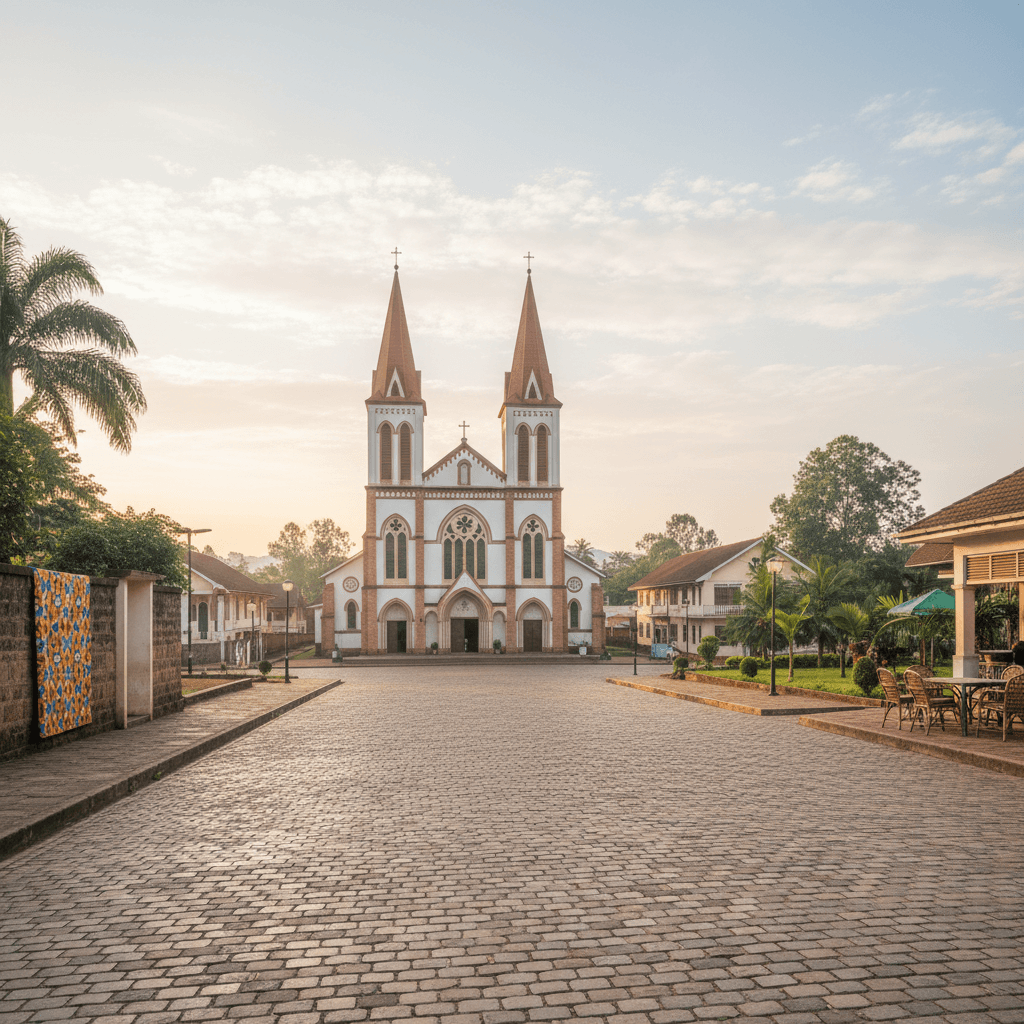
Butare, officially Huye, feels like Rwanda on a slower clock. It’s cleaner and calmer than Kigali, more academic than social and the whole town seems to hum around the university, the museum and the steady shuffle of students in blue uniforms. Quiet roads, low traffic, red dust after rain and the occasional burst of moto horns shape the daily rhythm.
This isn’t a place for nonstop nightlife or a big expat scene. Not even close. What you get instead is a compact city with strong safety, low prices and a lived-in local feel, plus enough cafes and services to stay comfortable if you don’t need a polished nomad bubble.
Most digital nomads come here for focus, cheaper rent and a break from Kigali’s pace, though the tradeoff is obvious, internet can be patchy, coworking options are thin and social life takes more effort because you’re not plugged into a huge foreign crowd. Honestly, that’s part of the appeal if you like working in a place that still feels mostly local.
Where people usually base themselves
- City Center: Best for walkability, errands and museum access, but it can feel noisy and a bit cramped.
- University Area: Quieter, more focused and good for cafe work near Nehemiah’s Best Coffee and student traffic.
- Outside Center: Cheaper by a lot, sometimes 30 to 40 percent less, though you’ll need transport for most things.
Prices are one of Butare’s biggest wins. A basic meal can run about 2,500 RWF, coffee is around 2,500 RWF and a one bedroom place outside the center can drop to roughly 200,000 RWF, which, surprisingly, makes long stays fairly manageable if you’re not chasing imported comforts.
The work setup is decent, not amazing. Nehemiah’s Best Coffee gets the most attention, Coeur Cafe is calmer and most people end up relying on MTN or Airtel data because home WiFi, honestly, can be uneven. You’ll hear rain on tin roofs, a little generator noise, then the click of keyboards when the connection holds.
Safety is solid in town, though dark streets still feel empty enough to be annoying and it’s smart to keep valuables out of sight. Healthcare is basic, transport is cheap and moto taxis are everywhere, so day-to-day life stays simple even if the city doesn’t give you many frills.
Butare or Huye if you’re being formal, is one of those places where your money just stretches, then stretches again. A decent month here can feel almost weirdly cheap compared with Kigali, though imported items, proper internet and any kind of Western-style comfort still push the bill up fast.
Housing is the big variable. A one-bedroom in the city center runs about $208, while the same place outside the center drops closer to $139. Bigger apartments are still manageable, with three-bedrooms around $312 downtown and $236 farther out and honestly that gap is why a lot of long-term expats skip the center and deal with the extra moto rides.
What daily life costs:
- Cheap meal: about $3.65, usually simple plates, rice, beans, grilled meat, the kind of lunch that comes out hot and fast.
- Meal for two: around $20.83 for a three-course sit-down dinner.
- Cappuccino: roughly $1.74, if the machine’s behaving.
- Local beer: about $0.86, which is frankly one of the nicer surprises.
- Monthly groceries: roughly $108, though imported snacks and cheese can blow that up fast.
Transport stays cheap, but the rhythm can be annoying. A local ride is around $0.28, a monthly pass sits near $9.72 and taxis start at about $2.08, so most people mix walking, motos and the occasional cab when the rain’s hammering down on the tin roofs and the streets smell like dust and exhaust.
Connectivity and utilities aren’t bad, just uneven. Home internet around 60 Mbps costs about $21, basic utilities land near $36.81 and a mobile plan with 10GB or more usually runs $9 to $20 depending on the bundle, network and how much data you burn on video calls. The network can dip at busy times, honestly, so people who work online often keep a phone hotspot as backup.
Typical Monthly Budget
- Budget, excluding rent: about $308
- Budget, including rent: about $473
- Mid-range, excluding rent: roughly $600 to $800
- Comfortable, excluding rent: $1,000 plus
If you want the cheapest life, stay a little outside the center and keep your meals local. If you want convenience, walkability and easier coffee-shop working, the city center and the university area make the most sense, even if the rent stings a bit more.
Butare or Huye if you want to be precise, is small enough that you can learn its rhythm fast. The streets feel calmer than Kigali, with motorcycle engines buzzing past university gates, vendors calling out prices and the smell of frying dough and diesel hanging in the air, so your choice of neighborhood mostly comes down to work style and how much quiet you want.
Nomads
If you need cafés, decent WiFi and a bit of student energy, stay near the university or in the center. Nehemiah's Best Coffee sits close to the action and Coeur Cafe is another solid work spot, though the internet can be patchy when everyone shows up at once.
- Best fit: University area, city center
- Why: Easy walk to cafés, museums, shops and the main services you’ll actually use
- Tradeoff: More noise, more foot traffic and higher rents than the outer neighborhoods
- Rent: Around $208 for a 1-bedroom in the center, less outside it
Honestly, this is the part of town most digital nomads stick to because it keeps life simple, even if the café scene isn’t fancy. You’ll hear students chatting, see boda riders weaving through traffic and get to places without burning money on taxis.
Expats
Expats who plan to stay a while usually prefer the quieter residential zones just beyond downtown. They’re cheaper and weirdly, you often get more space for your money, plus fewer late-night interruptions from street noise or passing motos.
- Best fit: Residential neighborhoods outside the center
- Why: Lower rent, bigger apartments and a slower pace
- Tradeoff: You’ll need transport for groceries, coffee and dinner
- Rent: Often 30 to 40 percent less than central Butare
These areas make sense if you’re working remotely, have a long contract or just don’t want to hear honking outside your window all day. The downside is simple, you can feel a little cut off if you don’t have a bike, moto budget or a driver on call.
Families
Families usually do best in the outer residential areas, where apartments are roomier and the streets feel less hectic. Schools and daily errands are still close by by local standards, but you won’t be stepping out into the center’s constant movement every time you need milk or phone credit.
- Best fit: Quieter residential streets near the center or just outside it
- Why: More space, lower rents and a less crowded feel
- Tradeoff: Limited family-focused amenities and no real suburban convenience culture
Solo travelers
If you’re alone and want to feel plugged in, stay downtown. You’ll be close to the museum, guesthouses, casual restaurants and the small social world that revolves around the university, which makes meeting people less awkward than it sounds.
- Best fit: City center
- Why: Walkable, easy to orient yourself and safer-feeling after dark than isolated edges of town
- Tradeoff: A little less quiet and not much nightlife
Skip the idea that Butare has a polished expat district, it doesn’t. Pick the center if you want convenience, the university area if you want focus and the outer neighborhoods if you want space, lower rent and fewer interruptions, though you’ll pay for that calm with longer trips for almost everything.
Butare’s internet is decent, not fancy. Home broadband usually lands around 30 to 60 Mbps, which is fine for Zoom calls, writing and streaming, though you’ll feel the drag if you’re uploading big files or trying to work through a power wobble on a rainy afternoon. Mobile data, honestly, is often the safer bet.
The coworking scene is thin and that’s the real story. There aren’t proper desks-and-day-pass spaces like Kigali has, so most nomads settle into cafés, private apartments with solid WiFi or a hotel lobby if they can handle the background noise of spoons, chairs and low conversation. The city’s pace is slower, but the internet can still get weirdly patchy at peak hours.
Best Places to Work
- Nehemiah’s Best Coffee: On University Road next to Credo Hotel, it’s the closest thing Butare has to a coworking hub, with free WiFi, espresso drinks, indoor and outdoor seating and a steady mix of students, lecturers and remote workers.
- Coeur Cafe: Quieter and more relaxed, good for focused laptop time if you don’t need perfect silence and the WiFi usually behaves better than you’d expect from a small city café.
- Private apartment setup: A lot of long-stayers just rent a place with reliable internet and work from there, because café WiFi can slow down during lunch rush and nobody wants to redo a file upload three times.
For mobile, MTN Rwanda, Airtel Rwanda and Tigo Rwanda are the main options and you can buy a SIM in the city center with instant activation. Data bundles run roughly 6,000 to 25,000 RWF for 10GB plus plans, so the bill stays manageable if you’re not burning through video all day. Coverage is generally better than fixed-line reliability, which says a lot.
What Works Best
- Best for calls: Mobile hotspot from MTN or Airtel, especially if your apartment WiFi drops during storms.
- Best for writing days: Nehemiah’s Best Coffee, though you’ll want headphones because the room gets lively.
- Best long-term setup: Rent first, test the internet, then renew if the speeds actually hold.
If you need near-guaranteed uptime, Butare can be annoying. Power cuts happen, café speeds dip and there’s no big expat coworking safety net to fall back on, so travelers who live online should arrive with a backup SIM, a power bank and a little patience, because that saves more stress than any fancy desk ever will.
Butare feels calm on the surface and mostly it's, but don’t mistake that for sleepy. The center is orderly, the streets are cleaner than most East African towns and you’ll hear the usual mix of moto engines, student chatter and rain ticking hard on corrugated roofs after dark. Crime is low, honestly, but you still want the usual common sense, especially if you’re walking home late.
Rwanda is widely seen as one of Africa’s safest countries and Butare fits that reputation pretty well. Still, the U.S. State Department flags border areas near the DRC, so don’t get casual about trips west toward Rusizi or Rubavu, especially if you’re crossing into sketchy rural stretches. In town, the bigger risk is petty stuff, not violent crime and even that’s limited if you keep cash tucked away and don’t flash your phone around.
- Best practice: Avoid walking alone after dark, especially on quieter residential roads.
- Local etiquette: Keep car doors locked and don’t leave bags visible.
- Practical note: Plastic bags are banned, so bring reusable ones.
- House rules: Don’t step on grass in public areas and don’t eat while walking down the street.
Healthcare in Butare is fine for everyday problems, then a bit thin once things get serious. You’ll find pharmacies in the center, basic clinics and enough providers for fevers, stomach bugs, cuts and prescription refills, but anything complicated usually gets sent to Kigali, which, surprisingly, is still the better backup plan even if it’s a long ride.
For nomads, that means you should carry your own small medical kit, plus any prescription meds you rely on, because pharmacy stock can be patchy and the selection changes. Toilet paper, sanitizer and oral rehydration salts sound boring, I know, but they save you when a bad meal hits and the nearest clinic closes early.
- Routine care: Local clinics can handle minor issues.
- Pharmacies: Easy to find in the city center.
- Serious cases: Plan on Kigali for better treatment.
- Emergency help: Call police at 117 or ask your host to arrange transport fast.
If you’re staying for more than a week, pick accommodation with reliable water and a host who can help if you get sick. The humid heat, dust and occasional power wobble can leave you feeling rough and frankly, you don’t want to be hunting for medicine while the evening smells of grilled meat, diesel and wet earth drift through the neighborhood.
Butare is small enough that you can get around without much drama and that’s half the appeal. The city center is walkable, the roads are generally manageable and most rides are short, cheap and a little chaotic in the usual Rwandan way, with moto engines buzzing, horns tapping and dust or rain depending on the hour.
Motos are the default move for short trips. A local ride usually runs about $0.28, so they’re perfect when you don’t feel like hiking uphill in the heat, though the helmets can be scratched up and the bargaining starts the second you wave one down.
Taxis are around too, but they’re not always sitting on every corner. For in-town trips, expect roughly $2 to $5 and agree on the fare before you get in, because a casual “we’ll see” can get weirdly expensive fast.
- Walkability: Strong in the center, especially around shops, cafes, the university and the museum.
- Motos: Cheapest and fastest for most day-to-day trips, though they’re noisy and a bit exposed in the rain.
- Taxis: Better for evenings, luggage or when you just don’t want road dust on your shoes.
If you’re staying near downtown Butare or the university area, you can do a lot on foot and that saves money fast. The downside is simple, traffic can be uneven, sidewalks don’t always cooperate and after dark the empty streets feel quiet in a slightly too-quiet way.
Ride-hailing apps aren’t a big part of daily life here, so don’t plan on opening Bolt or Uber and expecting results. Most people just flag a moto, call a taxi they already know or ask their hotel to sort a driver, which, surprisingly, works better than trying to be clever.
For longer trips, especially to Kigali International Airport, budget time instead of hoping the road will be kind. The drive takes about three hours and private transfers usually run around $50 to $80, depending on the car and how much haggling you’re willing to do.
- Airport transfer: About 3 hours to Kigali, so don’t leave it to chance.
- Private car: Roughly $50 to $80 and honestly, that’s the least stressful option with bags.
- Local transport: Cheap, but schedules can be loose and the whole thing moves on its own time.
Bikes and scooters aren’t really a built-in rental scene here, so don’t expect casual station-based rentals. If you do bring your own, roads can be rough in spots and the red dust gets everywhere, on your clothes, your phone, even your teeth if the wind kicks up.
Butare, which locals still call Huye, feels easier than Kigali in one very specific way, people actually talk to you. Kinyarwanda gets you far, French still hangs around in university circles and English is common enough in hotels, cafes and government offices, though plenty of daily life still runs in Kinyarwanda, honestly, so a few phrases go a long way. The city sounds softer than Kigali too, with motorcycle engines, student chatter and the odd burst of laughter drifting out of the University of Rwanda area.
You can get by in English at Nehemiah's Best Coffee, Coeur Cafe and most central hotels, but don't expect every shopkeeper to switch languages for you. Quick greetings matter here and they're not just polite, they're the grease that keeps errands moving, especially when you're asking for directions, negotiating a moto fare or trying to explain a phone bundle at an MTN shop.
Language basics that help
- Kinyarwanda: The main language in daily life, so learn greetings and simple numbers first.
- French: Still useful with older residents, academics and some service staff.
- English: Fine in hotels, cafes and university spaces, but don't assume fluency everywhere.
For communication on the ground, WhatsApp is the real workhorse and honestly most local contacts prefer it to calls because it's cheap, clear and easier to answer between classes or errands. MTN and Airtel both work in town, though mobile data can be patchy inside some concrete buildings, so if you're planning long work sessions, test your SIM before you commit to a place for the month.
Printed English menus are hit or miss. Signage is clearer near the city center and university area, then gets more informal in residential neighborhoods, where you might have to ask twice or three times, before someone points you the right way.
Practical communication tips
- Use WhatsApp: Most locals reply there faster than by phone call.
- Keep phrases handy: Greetings, numbers and basic directions save time.
- Confirm prices in advance: For motos, taxis and guesthouse bookings, say the number out loud first.
- Don't rely on translation apps alone: They're useful, though they stumble on accents and local shorthand.
Rwandans tend to be direct but polite, which, surprisingly, makes life easier once you stop over-explaining. If someone says a place is closed, believe them, if a reply sounds vague, ask again with a date or landmark, because "near the roundabout" can mean very different things to different people. The street-level reality is simple, clear language gets you better service, faster.
One last thing, speak softly and don't talk over people. That matters here. It sounds basic, but in Butare, a calm greeting, a patient pause and a few Kinyarwanda words will get you further than loud confidence ever will.
Butare’s weather is pretty mild by Rwandan standards and that’s one of the reasons people stick around. The city sits up in the hills, so mornings can feel cool enough for a light jacket, then the sun comes out hard and the afternoon warmth settles in, with red dust, diesel fumes and the smell of wet earth after rain. Nights are cooler too. Not cold, just comfortable.
The year breaks into two rainy seasons and two drier stretches. The long rains usually hit from March to May and the short rains come back around October to December, so expect slick roads, muddy shoes and those sudden downpours that drum on tin roofs for an hour, then vanish. June to September is the driest stretch and honestly that’s when most travelers are happiest here.
Best time to visit: June to September for the driest weather, clearest roads and the easiest time for day trips around Huye and the Southern Province.
- March to May: Wet, green and a bit annoying if you’re moving around a lot, because motos splash through puddles and unpaved roads turn messy fast.
- June to September: Best all-around window, with cooler mornings, sunnier afternoons and fewer interruptions from rain.
- October to December: Short rains return, not a dealbreaker, but pack a rain shell and don’t trust a clear sky for long.
- January to February: Often dry and warm, which works well for slower trips and shorter stays.
If you’re working remotely, the dry season is easier because power cuts and weather-related slowdowns feel less disruptive and you’re not stuck waiting out storms before crossing town. The humidity isn’t brutal here, but it can cling to you in the rainy months, especially if you’re walking uphill near the university or sitting in a cafe with the fan barely moving. Wear layers. You’ll use them.
For packing, bring a light sweater, a proper rain jacket and shoes that dry fast, because clay mud gets everywhere and it stains fast. If you want the city at its most walkable and least frustrating, aim for June through September, then October and November only if you don’t mind getting caught in a downpour now and then, which, surprisingly, some people do.
Butare, which locals still call Huye, is easy to live in if you like a slower rhythm and don’t need Kigali-level convenience. The center is compact, the air can feel dusty in the dry months and mornings often start with motos buzzing past university students and the smell of fresh mandazi from roadside stalls. It’s safe, but the city isn’t polished in a glossy way and that’s part of the trade-off.
Money goes far here. A simple lunch runs about 2,500 RWF, coffee is usually around 2,500 RWF and a local bus ride costs roughly 398 RWF, so day-to-day spending stays low unless you’re paying for imported groceries or private transport. Rent is where the biggest spread shows up, honestly, with central one-bedrooms around 300,000 RWF and cheaper places outside town closer to 200,000 RWF.
Where to stay
- City center: Best for walking to shops, the museum, restaurants and the university area, though you’ll hear more traffic, generator hum and late-night moto horns.
- University area: Quieter and good for work, with places like Nehemiah’s Best Coffee nearby, plus a steady stream of students and professors.
- Outside the center: Cheaper and calmer, but you’ll need motos or taxis for almost everything, which gets old fast.
Internet is decent, not amazing. Home broadband often lands around 30 to 60 Mbps and mobile data from MTN, Airtel or Tigo is usually the safer backup when WiFi gets patchy, which, surprisingly, happens more often in cafés than you’d expect. Nehemiah’s Best Coffee and Coeur Cafe are the main work-friendly spots, but neither feels like a true coworking space, so bring headphones and patience.
Getting around is simple enough. Motos and minibuses are cheap and everywhere, regular taxis are available for short hops and a ride across town usually shouldn’t cost much more than 3,000 to 5,000 RWF if you negotiate well. The streets are walkable in the center, though rain turns some routes slick and red mud gets on your shoes fast.
For safety, use the same common sense you’d use anywhere, don’t flash cash, avoid walking alone after dark and keep an eye on your bag in crowded spots. Medical care covers routine stuff, but serious issues usually mean a trip back to Kigali. That’s the reality. For a calm base with decent costs, Butare works, but if you need nightlife, fast services or a big expat network, it’ll feel a bit thin.
Frequently asked questions
Is Butare a good city for digital nomads?
How much does rent cost in Butare?
How fast is the internet in Butare?
Where can I work remotely in Butare?
How expensive is daily life in Butare?
Is Butare safe for solo travelers?
Need visa and immigration info for Rwanda?
🇷🇼 View Rwanda Country GuideHidden Gem
Worth the effort