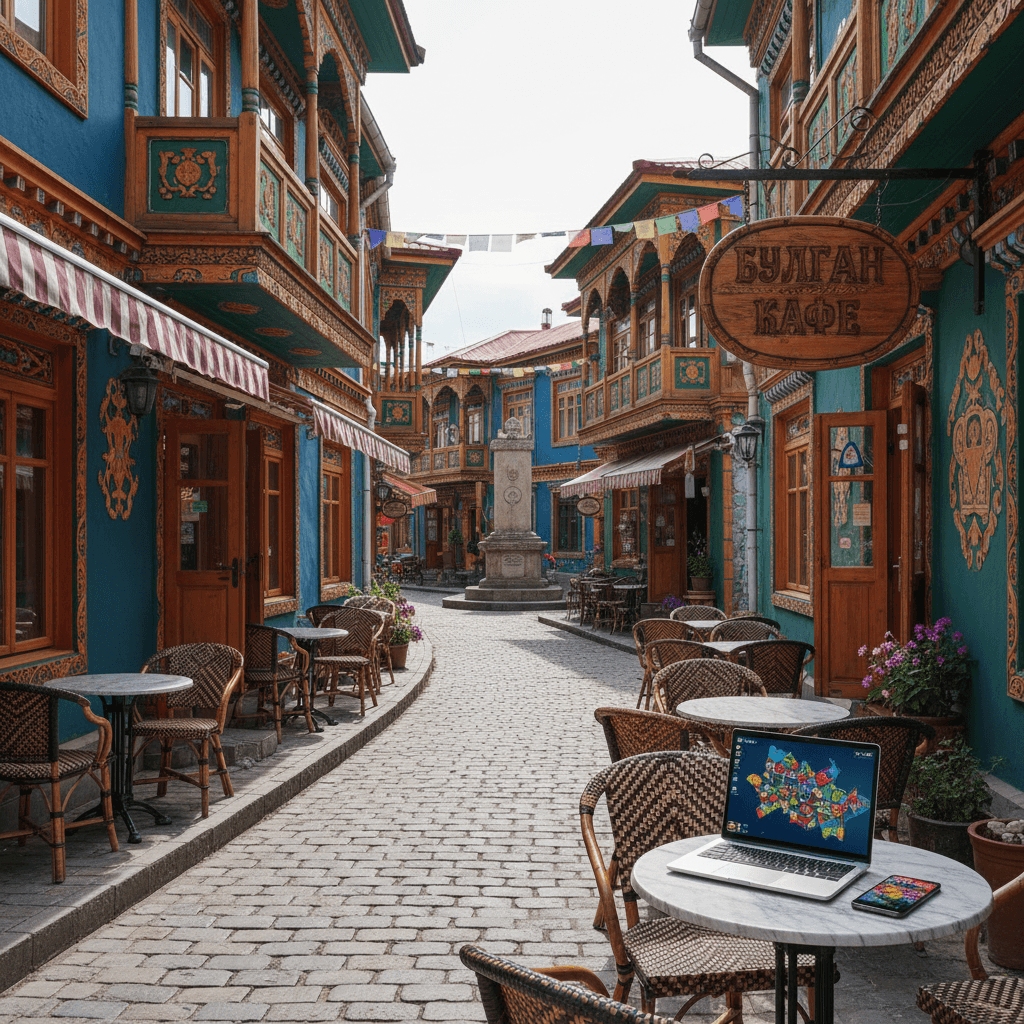
Bulgan
🇲🇳 Mongolia
The Authentic Steppe Experience
Bulgan isn't your typical digital nomad hub. It's a quiet, dusty provincial capital in north-central Mongolia where the rhythm of life is dictated by the seasons and the needs of livestock rather than Zoom schedules. With a population of approximately 12,000, it feels more like a large, interconnected village than an urban center. You won't find glass high-rises or artisanal coffee shops here; instead, you get low-slung buildings, wide-open horizons, and the constant presence of horse culture.
The vibe is raw and deeply communal. Most travelers find that the "city" serves primarily as a gateway to the surrounding wilderness. It's a place for introspection and cultural immersion rather than high-octane networking. You'll likely spend your mornings watching herders bring horses to the market and your evenings staring at a starscape that puts most dark-sky preserves to shame. It's the kind of destination that rewards those who can handle a bit of isolation and a lot of silence.
What Nomads Love and Hate
- The Draw: The sheer authenticity of the Mongolian heartland. You're living among people whose traditions have remained largely unchanged for centuries. The proximity to the Orkhon Valley and ancient Buddhist cave shrines makes it a dream for history buffs and photographers.
- The Friction: Infrastructure is the biggest hurdle. Internet speeds rarely top 5 Mbps, and power cuts aren't unheard of. The winters are brutal, with temperatures regularly dropping to -20°C or -30°C in January, which effectively shuts down most outdoor activity for anyone not born to the climate.
- The Social Scene: It's virtually non-existent in the Western sense. There are no coworking spaces or nomad meetups. Your social life will revolve around your guesthouse, local teahouses, or befriending families during festivals like Naadam in July.
The Cost of Living
Living in Bulgan is significantly cheaper than Ulaanbaatar, often by 30% to 50%. Since there's no luxury market, your spending is naturally capped by the local lifestyle. Most expats and long-term visitors find they can live comfortably on $735 to $1,175 per month, though budget travelers can easily get by on $440 if they stick to local guesthouses and street food.
- Housing: A basic studio in the center runs around 400,000 to 600,000 MNT. If you want something more modern near the government district, expect to pay up to 1,000,000 MNT.
- Food: Local staples like buuz (steamed dumplings) cost between 2,000 and 5,000 MNT. A hearty meal of khorkhog (traditional lamb barbecue) at a market stall will set you back about 15,000 MNT.
- Transport: Local buses are incredibly cheap at 500 to 1,000 MNT per ride. If you're heading back to Ulaanbaatar, a taxi seat usually costs around 200,000 MNT for the four-hour journey.
The Digital Reality
To survive here as a remote worker, you need a backup for everything. Most nomads recommend picking up a Mobicom or Unitel SIM card immediately upon arrival in Mongolia. Data is affordable, usually around 10,000 to 20,000 MNT for 10GB, but signal strength inside Bulgan's concrete buildings can be temperamental. Using the UBCab app is helpful for getting around, but you'll need to be comfortable with the Cyrillic alphabet or have Google Translate ready for offline use.
Ultimately, Bulgan is a "disconnect to reconnect" destination. It’s perfect for a two-week stint to clear your head or finish a creative project, but most professionals find they need to head back to the capital for reliable high-speed tasks. It’s a place where the "vibe" isn't something you find in a cafe, but something you feel while standing in the middle of a silent, sun-drenched steppe.
The Price of Steppe Life
Living in Bulgan is a lesson in radical affordability, provided you're willing to trade modern luxuries for a front row seat to nomadic tradition. Your dollars go significantly further here than in Ulaanbaatar, often stretching 30% to 50% more. It is a cash heavy environment where your biggest expenses aren't going to be high end cocktails or gym memberships, but rather high quality wool gear and the occasional private driver to reach the Orkhon Valley.
Most solo nomads find they can live comfortably on 2,500,000 to 4,000,000 MNT ($735 to $1,175) per month. This mid range budget covers a decent one bedroom apartment near the central market, plenty of hearty local meals, and enough leftover for weekend excursions into the wilderness. If you are on a shoestring, you can easily get by on 1,500,000 MNT ($440), though this usually means living in a basic studio or a suburban ger and sticking to a diet of mutton dumplings.
Monthly Budget Breakdowns
- Budget Tier: 1,500,000 to 2,500,000 MNT ($440 to $735)
- Housing: 400,000 to 600,000 MNT for a central studio.
- Food: 10,000 MNT for street food like Buuz; 20,000 MNT for local diners.
- Transport: 50,000 MNT for local buses and occasional town taxis.
- Mid-Range Tier: 2,500,000 to 4,000,000 MNT ($735 to $1,175)
- Housing: 700,000 to 1,000,000 MNT for a spacious one bedroom near the market.
- Food: 30,000 MNT for sit down meals like Khorkhog (traditional lamb BBQ).
- Transport: 100,000 MNT for frequent private rides.
- Comfortable Tier: 4,000,000+ MNT ($1,175+)
- Housing: 1,200,000+ MNT for the best available guesthouses or premium ger camps.
- Extras: This budget allows for imported snacks brought in from Ulaanbaatar and private archaeological tours.
Everyday Expenses
Groceries are cheap if you stick to local staples like flour, potatoes, and meat. A single Buuz (steamed dumpling) usually costs between 2,000 and 5,000 MNT. If you're looking for a more substantial meal, a plate of Tsuivan (fried noodles) at a market stall will set you back about 12,000 MNT. Imported goods are rare and pricey, so travelers often recommend stocking up on coffee or specific toiletries before leaving the capital.
Getting around town is nearly free since the center is walkable, but local buses only cost about 500 to 1,000 MNT per ride. For longer trips to the aimag outskirts or nearby sum centers, expect to pay 5,000 to 10,000 MNT for a seat in a shared minibus. If you need a private taxi to the airport in Ulaanbaatar, be prepared to shell out around 200,000 MNT for the four hour journey.
Digital Essentials
Since there are no dedicated coworking spaces, your "office" costs are essentially the price of a SIM card and a teapot. Expats recommend picking up a Unitel or Mobicom SIM card for about 10,000 to 20,000 MNT, which usually gets you 10GB of data. While the 5 Mbps speeds won't win any awards, it is enough for basic emails. If you plan on working from a local teahouse, just remember that a steady connection is never guaranteed, and it's wise to have a backup satellite device if your job depends on being online.
Banking is straightforward but limited. Khan Bank has ATMs in town that reliably take international cards, but you should always keep a stash of MNT on hand. Most smaller vendors and market stalls don't use card readers, though some younger locals might accept transfers via local apps if you have a Mongolian bank account.
Bulgan isn't your typical digital nomad hub with distinct districts and trendy suburbs. It's a compact provincial center where the lifestyle is dictated by the rhythms of the steppe rather than urban planning. Most of the town is walkable, and you'll find that the "neighborhoods" are really just functional zones centered around the main market and the local government buildings. If you're coming here, you're likely choosing between being close to the action or embracing the silence of the outskirts.
Best for Nomads and Solo Travelers: Central Market Area
This is the heart of Bulgan and the only place where you'll find a semblance of a "social scene." It's the most practical spot for anyone flying solo because everything you need is within a ten minute walk. You'll be close to the local teahouses serving 2,000 MNT buuz and the small shops where you can top up your Unitel or Mobicom SIM cards. The vibe is dusty and functional, but it's where the most reliable guesthouses are located.
- Rent: Around 500,000 MNT for a basic studio or room.
- Connectivity: This is your best bet for 4G signals, though speeds rarely top 5 Mbps.
- Pros: Quick access to food, transport, and the few cafes available.
- Cons: Can be noisy during the day; lodging is very basic.
Best for Expats and Long-term Residents: Aimag Government District
If you're planning to stay for more than a few weeks, head slightly away from the market toward the administrative buildings. This area feels more like a traditional neighborhood. It's quieter, cleaner, and closer to the post office and the aimag hospital. Expats who find themselves here for work usually prefer this zone because it offers a bit more privacy and a slower pace than the central trading area.
- Rent: Expect to pay 700,000 to 1,000,000 MNT for a decent 1BR apartment.
- Pros: Safer feel at night, less foot traffic, and closer to essential services.
- Cons: Very limited rental inventory; you'll likely need to hunt on Facebook groups or ask locals directly.
Best for Adventure Travelers: The Ger Outskirts
For those who don't care about Zoom calls and want the "real" Mongolia, the ger districts on the edge of town are where the magic happens. You won't find running water or high speed internet here, but you'll be living exactly like the locals. Travelers often book these through homestay networks to experience the horse culture that Bulgan is famous for. It's a raw, beautiful way to live if you're prepared to haul your own water and use an outhouse.
- Cost: Roughly 200,000 MNT per month for a spot in a traditional ger.
- Pros: Total cultural immersion and incredible views of the surrounding hills.
- Cons: No modern utilities; zero chance of reliable remote work.
Best for Families: Southern Residential Zone
While Bulgan doesn't have a dedicated "family district," the southern side of the town center is where you'll find more permanent housing and a bit more space. It's far enough from the market to avoid the chaos but close enough to the central park areas where kids can run around. Most families living here are locals, but the few foreign families who pass through find this area the most manageable for a sense of routine.
- Food: Close to small grocery stalls where you can get staples like mutton, flour, and potatoes.
- Pros: Low traffic and a community driven atmosphere.
- Cons: You'll definitely need the UBCab app or a local contact to get around if you don't enjoy long walks in the wind.
Regardless of where you land, remember that Bulgan's infrastructure is a work in progress. Most nomads recommend using Bulgan as a base for exploring the Orkhon Valley or attending the Naadam festivals in July, rather than trying to sustain a 40 hour work week. If you need to get back to "civilization," the approximately 340km trip to Ulaanbaatar takes about 4 to 5 hours by car and costs around 200,000 MNT for a private taxi.
Connectivity Realities
If your job requires high-bandwidth video calls or uploading massive files, Bulgan will test your patience. The nationwide average hovers around 5 Mbps, and in this provincial center, you can expect even lower speeds and occasional dropouts. Most travelers find that the local infrastructure is built for basic communication rather than heavy remote workloads. You won't find a dedicated coworking space with ergonomic chairs or networking events here; your office will likely be a guesthouse table or a corner in a local teahouse.
The cafe culture for working is still in its infancy. You might find a spot near the central market to flip open a laptop, but don't expect "digital nomad vibes" or reliable power outlets. Most nomads who pass through Bulgan treat it as a "deep work" retreat where they focus on offline tasks, or they simply accept that their productivity will take a hit in exchange for the incredible steppe views.
Mobile Data and SIM Cards
Since Wi-Fi is hit-or-miss, your phone is your lifeline. The major players are Mobicom and Unitel, both of which have shops in the center of town. You'll need your passport to register a SIM. Expect to pay between 10,000 and 20,000 MNT for a 10GB data package. Unitel often gets the nod from travelers for better coverage in rural areas, though Mobicom is generally solid within the town limits.
For those who want to hit the ground running, Gohub offers eSIM options you can set up before you arrive. Just keep in mind that once you leave the town center and head toward the ger camps or the Orkhon Valley, signals drop off fast. If you're planning an extended stay in the wilderness, some high-end nomads have started bringing portable satellite kits, but for most, a local SIM and a bit of flexibility are the standard tools of the trade.
Digital Nomad Setup Essentials
- UBCab App: Even in a small town, this is the go-to for arranging rides if you need to move gear. Use it with Google Translate since the interface relies on Cyrillic.
- Khan Bank: This is the most reliable place for ATMs. Most local transactions are cash-heavy, so keep a stash of MNT for your data reloads and cafe tabs.
- Power Banks: Frequent travelers recommend a high-capacity power bank. Electricity in rural Mongolia can be temperamental, especially during the stormy summer months.
- VPN: While the Mongolian internet is generally open, a VPN helps maintain stable connections to home servers and adds a layer of security on public guesthouse networks.
Practical Logistics for Remote Work
Because there are no formal offices, your choice of accommodation is your most important "business" decision. The guesthouses near the Aimag Government District tend to be slightly quieter and may have more stable power than the more transient spots near the market. If you are staying in a traditional ger, you are effectively off the grid unless you have a strong 4G signal and a solar charger.
Expats in Mongolia often suggest using Ulaanbaatar as a "connectivity hub" where you can smash out your heavy tasks for a week before heading to Bulgan for a period of lighter, asynchronous work. If you must be online for a specific meeting, the Khan Bank area usually has the most consistent mobile signal in town. Always have a backup plan, like a pre-downloaded map and offline documents, because the "vast but connected" promise of Mongolia often leans more toward the vast than the connected when you're 300km from the capital.
Keeping Safe in the Steppe
Bulgan is a low-stress environment where the biggest threats aren't people, but the elements and the animals. Crime rates are remarkably low, and the local community is tight-knit and welcoming to outsiders. You can walk through the central market area during the day without a second thought, and even at night, the town feels sleepy rather than sketchy.
The real safety concerns start once you leave the town limits. If you're heading out to explore the caves or the Orkhon Valley, keep in mind that livestock often wander onto the roads, and wildlife can be unpredictable. Travelers often say that getting stranded in a remote area without a guide is their biggest fear, so always let your guesthouse know where you're going. Stick to the UBCab app for getting around if you're unsure of your location, and keep an offline map on your phone since cell service vanishes the moment you hit the outskirts.
- Police: Dial 102 for emergencies.
- Wildlife: Keep a respectful distance from herds and guard dogs near ger camps.
- Night Travel: Avoid driving between aimags after dark due to unlit roads and stray animals.
Healthcare Basics
Medical facilities in Bulgan are functional but basic. The local aimag hospital can handle minor injuries, infections, or basic diagnostic needs. Most pharmacies are located near the central market and the administrative district, stocking standard over the counter meds and some antibiotics. However, if you have a specific prescription, you should bring a full supply from home or Ulaanbaatar.
For anything serious, you'll need to head to the capital. Ulaanbaatar is about a 4 to 5 hour drive away, and it's where you'll find international-standard clinics. Expats recommend having high-quality travel insurance that includes medical evacuation, just in case a situation requires a specialized flight. If you're feeling under the weather, dial 103 for an ambulance, but don't expect the operators to speak English.
Health Precautions for Nomads
The air quality in Bulgan is generally decent, hovering around 70 AQI, which is a massive relief compared to the winter smog in Ulaanbaatar. However, the dust can be a nuisance during the dry season. If you have sensitive lungs, a light buff or mask can help when the winds pick up across the plateau.
Water safety is another factor to watch. While locals drink from various sources, travelers usually stick to bottled or filtered water to avoid stomach upsets. If you're staying in a more traditional ger camp on the outskirts, be prepared for pit latrines and limited running water. It's a raw way to live, but it's part of the trade-off for that authentic nomadic experience.
- Ambulance: Dial 103 for medical emergencies.
- Hydration: Stick to bottled water, which costs about 2,000 MNT for a large bottle at market stalls.
- Winter Prep: Temperatures can drop to -30°C in January; frostbite is a genuine risk if you aren't wearing professional-grade layers.
Making Your Way Around Bulgan
Bulgan isn't the kind of place where you'll find a subway map or a fleet of electric scooters. It's a compact, functional provincial center where the rhythmic pace of nomadic life dictates how people move. For the most part, your own two feet will be your primary mode of transport within the town limits. The center is small enough that you can walk from the central market to the government district in about 15 to 20 minutes, though you'll want sturdy boots to handle the dusty, unpaved side streets.
Local Transit and Taxis
While there isn't a formal city bus system like you'd find in Ulaanbaatar, local minibuses and microbuses act as the connective tissue between Bulgan and nearby sum centers (smaller village clusters). These are cheap, usually costing between 5,000 and 10,000 MNT, but they don't run on a strict clock. They generally leave when they're full, so patience is a requirement rather than a virtue here.
For more direct trips, the UBCab app is your best friend. Even in this rural outpost, the app allows you to pin your location. Since most drivers won't speak English and the street signs are in Cyrillic, using the app's interface saves you from a lot of miming and confusion. If you're hailing a car the old-fashioned way, expect to pay around 50,000 to 100,000 MNT for a day's worth of various short hops and rides, depending on how much ground you're covering.
Connecting to the Capital
Most travelers arrive via Ulaanbaatar, which sits approximately 340km to the southeast. It’s a long haul, usually taking about 4 to 5 hours depending on the state of the road and the weather. You have a few choices for this trek:
- Public Bus: The most economical way to reach the capital, costing roughly 30,000 to 40,000 MNT.
- Private Taxi: A much faster and more comfortable option, though it'll run you about 200,000 MNT for the vehicle.
- Shared Jeeps: Often found near the markets, these are a middle-ground price point and a great way to meet locals, though they can be cramped.
Navigation Tips for Nomads
Digital nomads who've spent time here recommend downloading Google Translate with the offline Cyrillic pack before you arrive. You won't find much English signage once you leave the main government buildings. If you're planning to head out to the Orkhon Valley or nearby caves, don't try to go it alone. The steppe is vast and deceptive; hiring a local driver for a day trip usually costs around 100,000 MNT and is the only reliable way to ensure you actually find the petroglyphs and Buddhist shrines hidden in the landscape.
Keep in mind that while the town is safe, livestock often has the right of way. It’s not uncommon to have your taxi wait for a herd of sheep or horses to cross the main drag. Also, avoid driving yourself at night. The lack of street lighting combined with wandering animals and occasional deep potholes makes after-dark navigation a risky move for anyone who doesn't know these roads by heart.
Transport Costs at a Glance
- Local minibus ride: 500 to 1,000 MNT
- UBCab short trip: 3,000 to 7,000 MNT
- Bus to Ulaanbaatar: 35,000 MNT
- Private driver for a day: 100,000+ MNT
The Language Barrier
In Bulgan, the linguistic reality is straightforward: Mongolian is the only game in town. While you might find a handful of English speakers in Ulaanbaatar, that proficiency drops off almost entirely once you reach the provincial center. Most residents speak Khalkha Mongolian, and everything from shop signs to menus is written in the Cyrillic script. If you don't read Cyrillic, even basic tasks like identifying a grocery store or reading a bus destination can feel like a puzzle.
Expats who spend time here find that learning the alphabet is the highest return on investment you can make. It only takes a few hours to memorize the characters, and it instantly makes the city more navigable. Beyond the script, the local dialect is melodic but challenging for Western ears. Don't expect "survival English" to get you very far in the central market; you'll be relying heavily on gestures, smiles, and translation apps.
Digital Communication and Apps
Since English is rare, Google Translate is your most important tool. Travelers recommend downloading the Mongolian language pack for offline use, as data can be spotty when you're moving between buildings. The camera translation feature is a lifesaver for reading labels on imported Russian goods or local dairy products. For getting around, most nomads use the UBCab app. Even though it's designed for the capital, it's the standard for pinning locations and communicating with drivers through pre-set messages that translate into Mongolian.
For social messaging, Facebook Messenger is surprisingly dominant. Most local businesses, from small guesthouses to teahouses near the Aimag Government District, don't have websites. They run everything through Facebook pages. If you need to check if a place is open or book a room in a ger camp, sending a DM is often more effective than calling.
Connectivity and SIM Cards
Don't rely on your home roaming plan here. It'll be expensive and sluggish. As soon as you land at Chinggis Khaan International Airport or reach a shop in Bulgan, pick up a local SIM. Mobicom and Unitel are the two main providers with the best coverage in the north central region. A 10GB data package usually costs between 10,000 and 20,000 MNT.
- Mobicom: Generally cited as having the widest reach in rural areas.
- Unitel: Often has better promotional data packages for short term users.
- Gohub: A solid eSIM option if you want to be connected the second you cross the border, though it's slightly pricier than local plastic SIMs.
Be aware that "4G" in Bulgan doesn't feel like 4G in London or Singapore. Speeds often hover around 5 Mbps, and indoor penetration is weak in some of the older concrete buildings near the market. If you're planning on taking Zoom calls, do it from a central location and have a backup hotspot ready.
Essential Phrases for Nomads
Locals are famously hospitable but can be shy if they think they can't understand you. Breaking the ice with a few Mongolian words changes the vibe of an interaction immediately. Here are the basics that nomads and travelers find most useful:
- Sain baina uu? (Pronounced: Sa-in bee-noo): Hello. Use this for everyone, from shopkeepers to herders.
- Bayarlalaa (Pronounced: Buy-ar-la-la): Thank you.
- Khot khöl? (Pronounced: Hoat hull): How much? Essential for the market.
- Zugeer, zugeer (Pronounced: Zoo-gare): It's okay or no problem. Useful when someone offers you more tea than you can drink.
- Bi Angliar yaridag (Pronounced: Bee Ang-lee-ar yar-dag): I speak English. Usually followed by a confused but friendly look.
Social Etiquette and Non-Verbal Cues
Communication in Bulgan isn't just about words; it's about respect. If you're invited into a ger on the outskirts, there are unspoken rules. Never walk between the two main support columns, and always accept food or drink with your right hand, supported by the left at the elbow. If you accidentally kick someone's foot, immediately shake their hand. It's a silent apology that prevents "bad blood" and is a quirk of Mongolian culture that travelers find charming once they understand it.
Survival of the Sharpest: Seasons in the Steppe
Living in Bulgan means embracing the dramatic shifts of a continental climate. You aren't just checking the app for rain; you're monitoring whether the mercury will drop enough to freeze your morning coffee before you finish it. The weather here dictates the entire rhythm of life, from when the herds move to when the local markets actually stock fresh produce.
The Golden Window: June to August
If you want the version of Mongolia you've seen in documentaries, this is it. Summer is the only time most nomads consider visiting Bulgan for work or play. The steppes turn a brilliant green, and the air stays crisp rather than biting. It's the peak season for a reason.
- July Temperatures: Expect highs around 25°C (77°F) and lows near 12°C (54°F). It's perfect for outdoor laptop sessions, provided you have a glare shield and a battery pack.
- The Naadam Factor: July brings the Naadam festival. It's the best time for cultural immersion but the hardest time to find a quiet place to sit. Prices for gers and local guesthouses can spike during the festivities.
- The Rain Catch: July is also the wettest month. Don't expect week-long monsoons, but sudden, heavy downpours are common. They turn the unpaved roads around the Central Market into a muddy mess, so bring sturdy boots.
The Shoulder Seasons: May and September
These months are for the hardy. May is unpredictable; you might get a sun-drenched afternoon followed by a dusting of snow. September is arguably the most beautiful time for photographers, as the light hits the autumn grass at a low angle, but the evenings get cold fast. Travelers often find these months best for avoiding the July crowds, though you'll need to pack layers for temperatures that swing between 15°C and -5°C.
The Deep Freeze: October to April
Unless you're here for a specific cultural study or you're testing high-end winter gear, Bulgan in winter is brutal. By January, temperatures regularly plummet to -30°C (-22°F). The air quality in town can dip as locals burn coal for warmth, with the AQI hovering around 70 or higher on still days. Most nomads head back to Ulaanbaatar or fly south during this window.
- Infrastructure Stress: Pipes freeze, and the already spotty internet can become even more temperamental during heavy snow.
- Isolation: Transport to and from Ulaanbaatar becomes much slower and more hazardous on icy roads. The 336km trek that usually takes 4-5 hours can easily double.
Packing and Preparation
Expats who stay year-round suggest a "buy it there" approach for heavy gear. Local wool products are better suited for the Bulgan chill than most western synthetic brands. For the summer, focus on high-SPF sunblock and insect repellent. The sun at this altitude is intense, and the mosquitoes near the Orkhon Valley don't care about your "digital nomad" status. If you're planning to work, a rugged power bank is a requirement, not a luxury, as summer storms can occasionally knock out the local grid for an hour or two.
Connectivity and Tech Prep
Success in Bulgan depends entirely on your offline setup. Most nomads find that while the 4G signal exists, it's fickle. You'll want to grab a physical SIM from Mobicom or Unitel before leaving Ulaanbaatar, though local shops in the provincial center carry them too. Expect to pay about 10,000 to 20,000 MNT for a 10GB data package.
There aren't any dedicated coworking spaces here. Your best bet for a "desk" is a local teahouse near the central market or your guesthouse common area. Speeds often hover around 5 Mbps, which is fine for emails but risky for high stakes video calls. Expats recommend carrying a satellite device if you're planning to venture into the nearby steppes for more than a day.
Money and Banking
Cash is still king in north-central Mongolia. While you can use cards in Ulaanbaatar, Bulgan is a different world. Khan Bank has a few ATMs in the center of town, but they occasionally run out of bills or reject international cards during festivals. It's smart to carry a mix of USD and MNT.
- Daily Budget: Aim for 50,000 to 80,000 MNT for a comfortable day of local meals and transport.
- Apps: Download UBCab for getting around, though you'll need to use the pin drop feature since many street names aren't in English.
- Wise/Revolut: These work for ATM withdrawals, but don't count on tapping your phone at the local market stalls.
Language and Local Customs
English proficiency is low in Bulgan. You'll be using a lot of hand gestures and translation apps. Download the Mongolian Cyrillic pack for Google Translate so you can use it offline. Learning a few basics like Sain baina uu (Hello) and Bayarlalaa (Thank you) goes a long way with the locals.
Cultural etiquette is a big deal here. If you're invited into a ger, always step over the threshold, never on it. Travelers often say that bringing small gifts like high quality tea or sweets is the best way to thank a host family. If someone offers you a blue silk scarf called a hadaak, accept it with both hands as a sign of respect.
Health and Safety
Bulgan is generally very safe, but the environment is the biggest risk. The sun is intense and the weather shifts fast. Healthcare is limited to the local aimag hospital, which handles basic emergencies. For anything serious, you're looking at a 4 to 5 hour drive back to the capital. Make sure your travel insurance covers medical evacuation.
- Emergency Numbers: Dial 103 for an ambulance or 102 for police.
- Water: Stick to bottled or filtered water; the local supply can be harsh on unaccustomed stomachs.
- Wildlife: Give livestock and semi-wild horses plenty of space, especially when driving on rural roads at night.
Seasonal Timing
Timing your visit is everything. Most travelers aim for July to catch the Naadam festivals and the greenest landscapes. If you're here in January, you'll face brutal temperatures as low as -30°C. The "shoulder" months of May and September offer a good balance of lower prices and manageable weather, though the dust storms in spring can be a nuisance for your electronics.
Need visa and immigration info for Mongolia?
🇲🇳 View Mongolia Country GuideOff the Radar
Pioneer territory