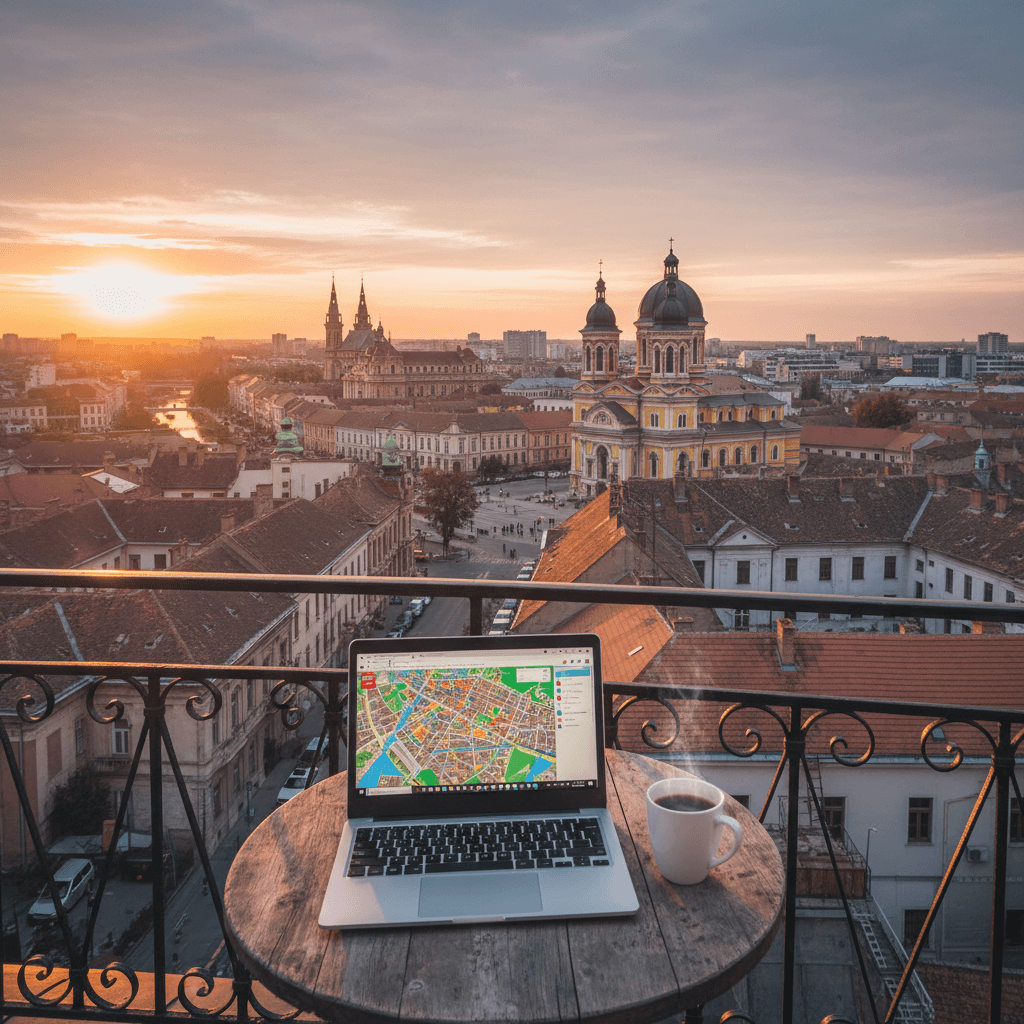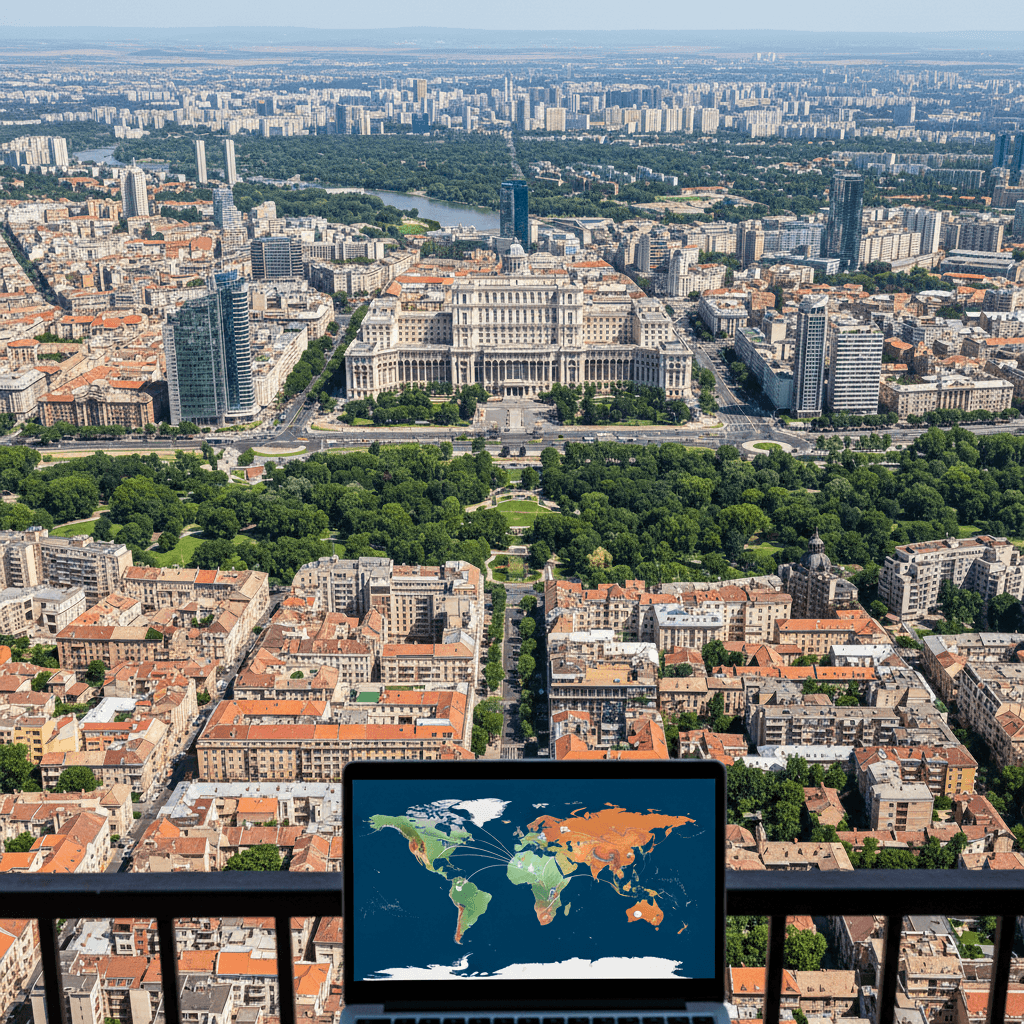
Bucharest
🇷🇴 Romania
Bucharest doesn't try to impress you. It's too busy being itself, a city of peeling Belle Époque facades next to Soviet-era concrete blocks, of rooftop bars filling up at midnight, of espresso served without apology in cafés where half the tables have laptops open and nobody bats an eye. Most nomads who come for a month end up staying three.
The city has a specific texture to it. Walking through Floreasca on a weekday morning, you get the smell of fresh covrigi from a street cart, diesel from a passing bus and then, weirdly, jasmine from someone's courtyard garden. The streets are loud in a chaotic, unplanned way, horns and trams and construction, but the cafés are calm. That contrast is, honestly, one of Bucharest's defining qualities.
What makes it work for long stays is the combination of serious infrastructure and low overhead. Romania's internet speeds rank among Europe's fastest, fiber is standard in most modern apartments and the coworking scene, turns out, is genuinely good, with spaces like Coworkperativa drawing a real mix of local founders and foreign nomads. A comfortable life here costs a fraction of what it would in Lisbon or Berlin, without the trade-offs you'd expect at that price point.
The neighborhood you land in shapes your whole experience. Piața Română and Floreasca are where most nomads gravitate, central, walkable, full of cafés that understand what a stable WiFi connection means to someone with a deadline. Herăstrău is greener and quieter, popular with expat families who want park access and good schools nearby. Budget travelers tend to end up in Drumul Taberei or Berceni, which are fine, just further from everything.
There are real frustrations. The bureaucracy is genuinely maddening if you need anything official done. Summer heat turns the city center into a concrete oven and weekends in Centru can get loud enough to make sleep difficult. Pickpocketing happens in crowded tourist areas, it's not rampant, but you shouldn't be careless either.
Still, Bucharest rewards people who stay long enough to figure it out. The city doesn't hand you its best parts immediately, you find them, a courtyard bar in Floreasca, a Romanian grandmother's restaurant in Dorobanți with no English menu, a Sunday market at Herăstrău. That's the version of Bucharest people actually miss when they leave.
Bucharest is, honestly, one of the cheapest capitals in Europe right now. A comfortable solo lifestyle runs around $1,500 to $2,200 a month all-in and a tight budget can work at $900 to $1,200 if you're willing to live further from the center and cook most of your meals. That's real money left over.
Rent is where most people make or break their budget. The northern neighborhoods like Herăstrău and Aviatorilor are genuinely expensive, €1,500 to €2,500 for a one-bedroom and they don't apologize for it. Most nomads and younger expats land in Piața Română, Floreasca or Tineretului, where a decent one-bedroom runs €500 to €900 and you're still close to coworking spaces and decent coffee.
- Drumul Taberei / Pantelimon: €380 to €500, budget-friendly, local feel, farther from everything you'll want to be near
- Tineretului / Timpuri Noi: €500 to €700, solid value, good metro access, quieter than the center
- Piața Română / Universitate: €600 to €900, central, loud on weekends, worth it for walkability
- Floreasca / Dorobanți: €800 to €1,200, professional crowd, good restaurants, popular with expats
- Herăstrău / Aviatorilor: €1,500 and up, family territory, premium everything
Food is cheap, sometimes surprisingly so. A sit-down lunch at a mid-range Romanian place runs €6 to €10, shawarma from a street stall is €2 to €3 and a week of groceries from Kaufland or Mega Image stays around €25 to €35 if you're not buying imported everything. Dining out frequently won't wreck you here, it's one of Bucharest's genuine advantages.
Transport costs almost nothing. A single metro trip is 5 lei, roughly €1 and a monthly pass is about €16. Most people use Bolt for late nights because it's cheap and reliable, a cross-city ride rarely breaks €4.
Coworking runs €80 to €300 a month depending on the space. Commons Unirii and Coworkperativa are the go-to spots for most nomads, and day passes are available at spaces like theAtelier. Internet at home is, turns out, genuinely fast, fiber packages with 300 to 1,000 Mbps are standard in modern apartments and don't cost much either, usually €8 to €15 a month bundled in or added cheaply.
Bucharest's neighborhoods are, honestly, more distinct from each other than most cities this size. The difference between Floreasca and Ferentari isn't just aesthetic, it's a completely different city experience. Knowing where to land before you arrive saves a lot of frustration.
For Digital Nomads & Solo Travelers
Piața Română and Universitate are where most nomads end up first and for good reason. You're within a 10-minute walk of coworking spaces, cafés with reliable fiber connections, museums and enough bars to cause problems on a Tuesday night. Rents run €600 to €900 for a one-bedroom, which is reasonable for this level of central access.
The tradeoff is noise. Weekends get loud, the kind of bass-through-the-walls loud that makes sleep before 2am optimistic, so request upper floors or side streets when you're booking.
Floreasca is the quieter upgrade. It's got a growing cluster of coworking spots, good restaurants and Floreasca Lake nearby for a morning run, rents are a bit higher at €800 to €1,200, but the professional atmosphere makes it easier to stay focused.
For Expats & Long-Term Residents
Dorobanți is where expats who've been here a while tend to settle. Tree-lined streets, embassies nearby, genuinely good restaurants within walking distance. It's calm without feeling disconnected, rents land around €1,000 to €1,500 for a one-bedroom.
Herăstrău is the prestige pick. King Michael I Park is right there, modern apartment blocks are everywhere and it's close to international schools in Pipera. It's also expensive. Expect €3,000 or more for a three-bedroom and it's less walkable than you'd want.
For Families
Aviatorilor hits the sweet spot for families who want green space, security and metro access without paying Herăstrău prices. Rents run €1,200 to €1,800. It's residential and quiet, which turns out to matter a lot once you have kids in tow.
For Budget Travelers
Drumul Taberei and Berceni are the honest budget options. You're looking at €400 to €500 for a two-bedroom, both connect to the metro and they're perfectly livable. They're just not interesting. Skip them if you're here for the city's energy, choose them if the savings matter more.
Avoid District 5 entirely. Rahova and Ferentari have real safety issues, pickpocketing, car break-ins and worse and no amount of cheap rent makes that math work.
Romania has, honestly, some of the fastest internet in Europe. Fiber is standard in modern apartments, with packages running 300 to 1,000 Mbps and mobile coverage across the city center is solid enough that most nomads never think twice about connectivity. Keep a phone hotspot ready anyway; router resets happen and losing an hour to a dead connection gets old fast.
For SIM cards, Vodafone, Orange and Telekom all offer prepaid plans that won't drain your budget. Pick one up at any carrier store or airport kiosk when you land, it takes about ten minutes and costs almost nothing.
The coworking scene, turns out, is one of Bucharest's genuine strengths. Spaces are affordable, well-equipped and not overcrowded the way you'd find in Lisbon or Berlin. Day passes run roughly 50 to 70 lei, monthly memberships land anywhere between €80 and €300 depending on what you need.
Top Coworking Spaces
- Coworkperativa: Central location on Aurel Vlaicu, flexible "Free Desk" setup, fast internet, tends to attract a younger, creative crowd.
Working from Cafés
Bucharest's café culture is genuinely laptop-friendly, most modern spots have outlets and won't rush you out after one coffee. Ted's Coffee Co, Beans and Dots, Saint Roastery and Dianei 4 all have stable WiFi and enough ambient noise to feel alive without being distracting. The smell of fresh espresso and the low hum of conversation make them easy places to settle into for a few hours.
Skip the tourist-area cafés near Piața Unirii on weekends, they get loud and the WiFi buckles under the crowd. The Floreasca and Dorobanți neighborhoods have quieter options that locals actually use, which is where you want to be anyway.
Bucharest is, honestly, a pretty safe city for most travelers and expats. Violent crime against foreigners is rare, the city center feels relaxed even late at night and most people's worst experience is a pickpocket near Piața Unirii or on a crowded metro car during rush hour. Stay aware in tourist-heavy zones, keep your bag in front of you underground and you'll be fine.
The areas to genuinely avoid are Ferentari and Rahova in District 5. These aren't just rough around the edges, they have real crime problems and there's no good reason for a visitor to be there. Stick to that rule and the rest of the city opens up without much stress.
Traffic is the more realistic daily hazard. Bucharest drivers are aggressive, crosswalks are suggestions and the air near major roads carries a gritty exhaust smell that clings to your clothes in summer. Don't assume a green pedestrian light means cars will stop, look both ways regardless.
Healthcare
Public hospitals exist, they're functional, they're also underfunded and the experience can be frustrating even for locals. For anything beyond a minor issue, expats and long-term nomads go private without hesitation. Private clinics are genuinely good here, well-equipped and staffed by doctors who often trained abroad.
The most recommended options among the expat community:
- Regina Maria: The biggest private network in Romania, multiple Bucharest locations, English-speaking staff, walk-in and appointment options
- Medicover: Strong for general practice and specialist referrals, popular with expats on corporate plans
- Medlife: Reliable, slightly more affordable than the other two, good for routine care
A GP consultation at a private clinic runs roughly 150 to 250 RON (around €30 to €50), which is turns out cheaper than most EU countries even without insurance. Specialist visits cost a bit more. Pharmacies are everywhere and pharmacists will often recommend treatments directly, it's a genuinely useful first stop for minor issues.
Travel insurance is non-negotiable if you're visiting short-term. For stays longer than a few months, most expats pick up a local private health plan through Regina Maria or Medicover. Monthly premiums start around €30 to €50 for basic coverage. Cheap. Worth it.
Bucharest's public transport is, honestly, better than most people expect. The metro is fast, clean and covers the neighborhoods you'll actually care about; the bus and tram network fills in the gaps. That said, the two systems run on separate payment cards, which is annoying and nobody warns you about it before you've already wasted 20 minutes at a kiosk.
The metro is your main tool. Five lines connect the center to outer districts and a single trip costs 5 lei (around €1). A monthly pass runs about 80 lei (€16), which is absurdly cheap by European standards, get one within your first week. Trains run from 5am to midnight, they're frequent during rush hour and the carriages don't smell like a nightclub the morning after.
Buses and trams require an STB card, separate from the metro's Activ card. Turns out most newcomers don't realize this until they're standing at a bus door looking confused. Load both cards at any metro station kiosk or STB booth, carry them both and you're set.
For getting around the center, Bolt and Uber are everywhere and genuinely cheap. A 15-minute ride across town rarely exceeds €4, locals use them constantly and surge pricing is mild compared to Western cities. Taxis still exist but some drivers quote tourist prices; stick to the apps.
Cycling is possible but not comfortable. The traffic is loud, the drivers are aggressive and the bike infrastructure is patchy at best. Expats who cycle here tend to stick to Herăstrău Park or the riverside paths, not the main roads.
- Metro single trip: 5 lei (€1)
- Monthly metro pass: 80 lei (€16)
- Bolt/Uber short ride: €2 to €4
- Airport to center (Bolt): €12 to €18 depending on traffic
Henri Coandă Airport is about 17km north of the city. The express train, the Henri Coandă Express, takes roughly 20 minutes to Gara de Nord and costs around 7 lei. It's the smartest option, the road into Bucharest during peak hours is genuinely brutal and Bolt fares can double.
Walking works well in the center. Piața Română to Unirii takes about 25 minutes on foot, past cafés and bookshops and it's worth doing at least once.
Romanian is the official language and it's a Romance language, so if you speak Spanish, Italian or French, you'll catch words here and there. Don't expect that to carry you far, though. Romanian grammar is its own beast and locals will smile politely while you butcher a phrase.
The good news: English is, honestly, widely spoken in central Bucharest, especially among anyone under 40. Most café staff, coworking receptionists, Bolt drivers and restaurant servers in neighborhoods like Floreasca or Piața Română will switch to English without hesitation. You won't feel stranded.
Older residents and people in outer districts like Drumul Taberei or Berceni are less likely to speak English, it's not a dealbreaker but it does slow things down. A translation app on your phone handles most situations, Google Translate's camera mode is genuinely useful for menus and utility bills.
French is a surprisingly solid backup. Bucharest has historical ties to France, turns out and a generation of older educated Romanians learned French before English became dominant. Try it before defaulting to loud, slow English.
A few words go a long way socially:
- Bună ziua: Good day (formal greeting)
- Mulțumesc: Thank you
- Vă rog: Please
- Scuze: Excuse me / Sorry
- Cât costă?: How much does it cost?
- Nu înțeleg: I don't understand
Locals genuinely appreciate the effort, even a mangled "mulțumesc" lands better than nothing. That said, don't overestimate your progress, Romanian pronunciation is tricky and the ș and ț sounds don't exist in English.
For longer stays, expats recommend picking up a few hundred words of Romanian basics, not for survival but for landlord conversations, pharmacy visits and the odd government office where English disappears completely. Bureaucracy here is maddening at the best of times, walking in without any Romanian slows everything down further.
SIM cards from Orange, Vodafone or Telekom come with staff who speak enough English to set you up without drama. Most contracts and receipts are in Romanian only, photograph them and translate later.
Bucharest has four genuinely distinct seasons and which one you land in shapes the whole experience. Spring and early autumn are, honestly, the sweet spots. Summers get brutally hot, winters can be grey and biting, but that middle ground? That's when the city actually feels good to be in.
Spring (March to May)
This is the best time to visit, full stop. Temperatures sit between 12°C and 22°C, the chestnut trees along Calea Victoriei bloom and the café terraces fill up fast. It's warm enough to walk everywhere without sweating through your shirt, cool enough to actually enjoy it. Most long-term nomads time their arrivals for April.
Summer (June to August)
Hot. Genuinely uncomfortable hot, with July and August regularly hitting 35°C or above and a dry, gritty wind that makes the heat feel worse than the thermometer suggests. The city doesn't, turns out, slow down much despite the heat; locals just shift their days earlier and later. Air conditioning is standard in apartments and coworking spaces, so if you're mostly working indoors, you'll manage fine. Just don't plan long afternoons outside.
Autumn (September to November)
September is arguably better than spring. The heat breaks, the light turns golden over Herăstrău Park and restaurant terraces stay open well into October. Temperatures drop sharply in November, the skies go flat and the city starts feeling a bit closed-in. Come before the clocks change if you can.
Winter (December to February)
Cold, often overcast and occasionally snowy. Temperatures hover around 0°C to 5°C through January and February, sometimes dropping well below freezing. It's not miserable, it's just quiet and dark by 5pm, which some people actually like for deep work. Christmas markets around Piața Constituției are genuinely worth it, the mulled wine smells like cardamom and cheap brandy and crowds are thin compared to Prague or Vienna.
Quick Reference
- Best overall: April, May, September, October
- Avoid if heat-sensitive: July and August
- Budget travel window: November to March (lower accommodation rates)
- Peak tourist season: June to August (still manageable, not overwhelming)
Shoulder season pricing is real here, apartments and hotels both drop noticeably outside summer, so if your schedule is flexible, arriving in late September saves money without sacrificing weather.
Romania has some of Europe's fastest internet and Bucharest gets the best of it. Fiber connections in modern apartments run 300 to 1,000 Mbps, mobile coverage is solid across the city center and most cafés understand that laptops aren't going anywhere. Keep a phone hotspot ready anyway, because router resets happen and losing an hour of work to a landlord who doesn't answer calls is, honestly, a Bucharest rite of passage.
For coworking, Commons Unirii is where most nomads land first: five floors in a historic building near Unirii Square, 24/7 access and decent coffee included. theAtelier runs a flexible desk system at 50 lei per day, no commitment needed. Coworkperativa on Aurel Vlaicu is the scrappier, more social option, it attracts freelancers and locals more than corporate types, which makes it genuinely fun to work from.
Cafés worth knowing: Ted's Coffee Co, Beans&Dots and Saint Roastery all have stable WiFi and enough outlets that you won't spend twenty minutes hunting for a plug. Dianei 4 is quieter, turns out, than its reputation suggests.
On transport, the metro is cheap and fast, single trips cost about 5 lei, a monthly pass runs 80 lei. The catch is that metro and bus cards are separate systems, so you'll need two cards if you mix both. Bolt and Uber work well and aren't expensive by Western standards, most city-center rides stay under 25 lei.
For SIM cards, grab Vodafone or Orange from any airport kiosk or mall. Both offer solid data plans, don't overthink it.
A few safety notes. The center is genuinely fine at night, pickpocketing happens mostly in crowded tourist spots like Piața Unirii and on packed trams, so keep your phone in a front pocket and don't flash expensive gear on the metro. Skip District 5 entirely, specifically Rahova and Ferentari, there's no reason to be there as a visitor.
- Metro pass: 80 lei per month (~€16)
- Coworking day pass: 50 to 150 lei (~€10 to €30)
- SIM card: Vodafone or Orange, available at the airport
- Best café WiFi: Ted's Coffee Co, Beans&Dots, Saint Roastery
- Avoid: District 5 (Rahova, Ferentari)
Cash is still useful here. Plenty of smaller restaurants and markets don't take cards, frankly more than you'd expect from a capital city, so keep a few hundred lei on hand.
Need visa and immigration info for Romania?
🇷🇴 View Romania Country GuideNomad Haven
Your home away from home
Monthly Budget Estimates
More cities in Romania
Constanta
🇷🇴 Romania
Iași
🇷🇴 Romania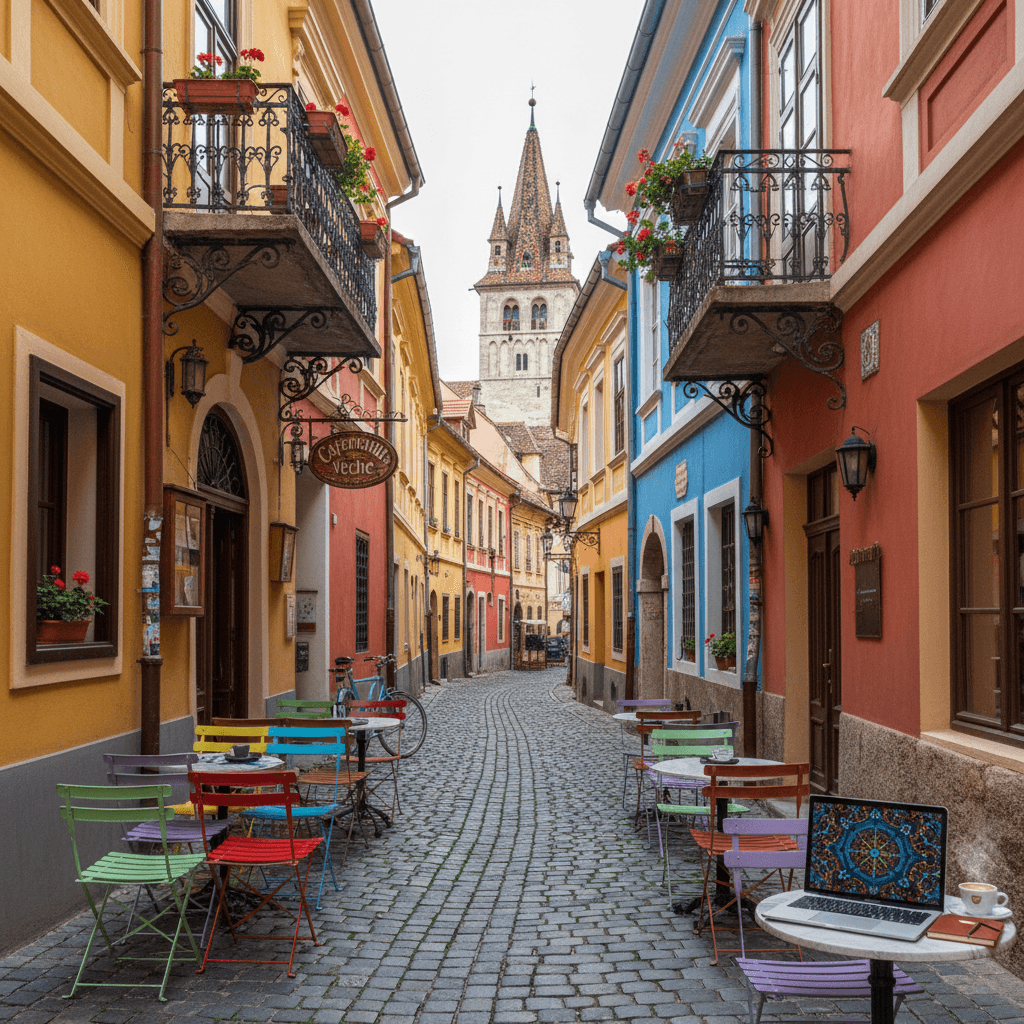
Cluj-Napoca
🇷🇴 Romania