Bruges
🇧🇪 Belgium
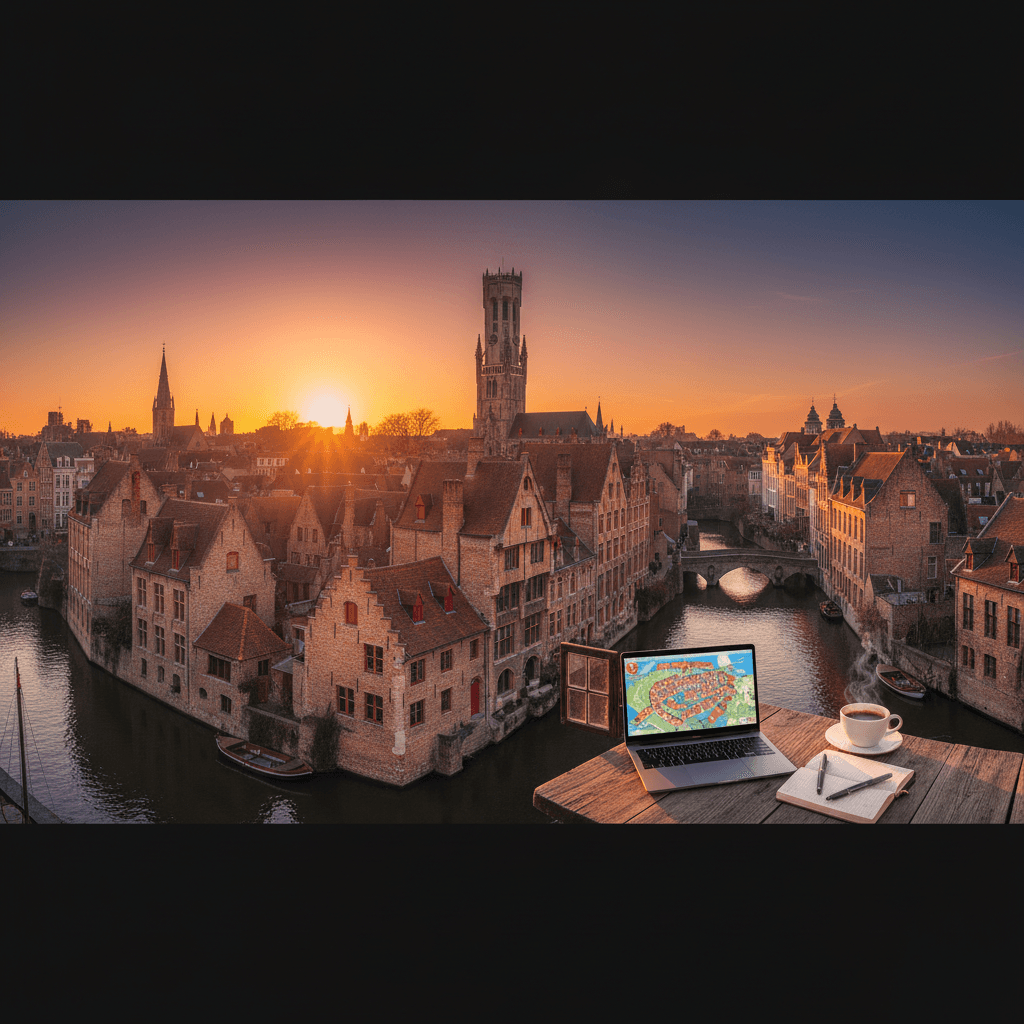
Bruges feels like a city that never quite woke up and that’s the appeal. The center is all canals, cobbles, church bells and horse hooves, with tourists clustering around the Markt while side streets go oddly quiet, then suddenly smell like waffles, rain and damp stone.
For digital nomads, it’s a mixed bag, honestly. The internet is decent at around 41 Mbps on average, English is widely spoken and the city is very walkable and safe, but the monthly cost can get ugly fast, coworking is limited and making local friends takes patience, then more patience.
What it feels like
- Atmosphere: Medieval, polished, a little too pretty in the center
- Noise: Church bells, bike bells, tour groups and the occasional tram hiss
- Weather: Cold, damp and grey for long stretches, which, surprisingly, shapes the whole mood
Most nomads either love the slow rhythm or get restless within a week. The tourist center is charming but crowded, so if you stay longer, head toward Sint-Gillis or 't Zand, where rent drops a bit and life feels more local, less like you’re living inside a postcard.
Where to base yourself
- Historic Center: Best access to sights, priciest rents, loudest streets
- Sint-Gillis: Better for everyday life, less central, more affordable
- 't Zand / West-Brugge: Handy for the station and cheaper flats, though traffic is busier
Expect to pay around €625 to €1,300 for a studio or one-bedroom in the center and a comfortable solo nomad budget can hit €5,000 or more once you add food, coworking and transport. Meals are still manageable if you keep it simple, about €19 to €23 at an inexpensive restaurant, though a decent dinner out can sting after a few days of waffles, fries and coffee.
Coworking isn’t Bruges’ strong suit. Regus and Workin.space are the main bets, hot desks usually run €105 to €300 a month and a lot of people just work from cafes like That's Toast or De Makers Republiek, where the WiFi is fine, the chairs are hit or miss and the espresso smell hangs in the air all morning.
Practical vibe check
- Safety: Very good overall, though pickpockets do work the tourist core
- Getting around: Walk first, bike second, use De Lijn when you have to
- Social life: Calm bars, small meetups, not much late-night chaos
If you want big-city energy, Bruges will frustrate you. If you want a place where you can cross town on foot, hear rain tapping on canal water and still get online without a fight, it’s a solid base, just don’t expect it to be cheap or socially easy.
Bruges looks gentle from a distance, but your wallet feels the bite fast. A solo nomad can scrape by on about €1,300 a month if they keep rent low and cook often, though most people land much closer to €3,000 or more once they add coworking, eating out and a half-decent apartment near the center.
Rent is the main sting. A studio or 1BR in the historic center usually runs €625 to €1,300 and a decent one-bedroom averages around €1,124, while places near ’t Zand can start around €500 and feel a bit less polished, a bit more practical and frankly less postcard-perfect.
Typical monthly spend
- Budget: about €1,300, with a basic studio, groceries and very little nightlife
- Mid-range: about €3,940, with €1,000 rent, €600 food and around €200 for coworking
- Comfortable: about €5,669, with a nicer apartment, more restaurant meals and easier work setups
Food prices are manageable only if you keep your expectations in check. Fast food sits around €11 to €13, a cheap restaurant meal usually lands near €19 to €23 and upscale dinners climb quickly, especially in the tourist core where the waffles smell great and the bill arrives even faster.
Coworking, weirdly, isn’t cheap for a city this small. Hot desks at places like Regus or Workin.space usually run about €105 to €300 a month, so lots of nomads end up working from cafés such as That’s Toast, The Olive Tree or De Makers Republiek, where the coffee is decent and the chair situation is hit or miss.
Area snapshots
- Historic Center: best for walkability, worst for crowds, noise and rent
- Sint-Anna: quieter and more residential, good if you want calm evenings
- Sint-Gillis: better value, more local life, less tourist pressure
- ’t Zand / West-Brugge: cheaper and handy for the station, though traffic is busier
Transport won’t wreck you, but it adds up. The center is easy on foot, bikes are common and buses have an €8.50 daily cap, so most days feel cheap until you start taking taxis or commuting out of town in the rain, which has a way of soaking through your coat and your mood.
Bottom line, Bruges is pricey for Belgium and the fairy-tale setting comes with a premium. If you want the prettiest streets and don’t mind paying for them, stay central, if you want to save money and hear fewer tour groups outside your window, go for Sint-Gillis or the station side.
Nomads
If you want Bruges with the least friction, start near the Historic Center or just outside it in ‘t Zand. The center puts you on cobblestones, beside canals, cafés and the big tourist drag, so you can walk everywhere, but it’s pricey and the carriage wheels, beer glasses and tour groups get old fast.
Sint-Gillis is the better long-stay bet, honestly. It feels more local, rents are usually softer and you still get to the center without much pain, though you’ll hear more traffic and less postcard-perfect silence.
- Historic Center: best for first-timers, highest rents, loudest at peak hours
- Sint-Gillis: more affordable, good for daily life, less central
- ‘t Zand: handy for the station, cheaper studios, busier streets
Expats
For longer stays, Sint-Anna is the calm choice. It’s residential, slower and a little more breathable after a day in the tourist crush, with quiet streets, brick facades and that damp North Sea air that seems to stick to your coat.
Sint-Anna works if you want routines, not posturing. You’ll still need to head into town for nightlife or bigger social plans, but that’s the tradeoff and frankly it’s a fair one if you care more about sleep than bar noise.
- Sint-Anna: quiet, family-friendly, best for steady routines
- Sint-Gillis: local feel, easier for mixed expat life, less central
- Historic Center: convenient, but noisy and expensive
Families
Families usually settle best in Sint-Anna, where the streets are calmer and the pace makes more sense for kids, strollers and grocery runs. The center looks magical, sure, but the constant foot traffic and day-tripper noise can wear you down by lunch.
Bruges is safe, walkable and easy to manage without a car, which helps a lot, but winter here can feel cold and damp in your bones, with rain tapping at the windows for days. That part gets tedious.
- Sint-Anna: quiet streets, more space, easiest for families
- Sint-Gillis: local, livable, good for longer stays
- Outside the core: better value, less tourist noise
Solo Travelers
Solo travelers should look at the Historic Center first, then maybe nearby ‘t Zand if the prices make you flinch. The center gives you easy dinners, canals at sunset and a constant flow of people, which feels lively in a safe way, though it can also feel a bit packaged.
If you want fewer tourists and a more lived-in feel, go to Sint-Gillis. You’ll be farther from the obvious sights, but it’s easier to find a normal rhythm and you’re less likely to spend your evenings behind a camera lens and a crowd of day-trippers.
- Historic Center: best base for short stays and easy walking
- ‘t Zand: cheaper, still central, practical for trains
- Sint-Gillis: quieter, more local, better for longer solo stays
Bruges is easy on paper and a bit annoying in practice. The center is walkable, English is widely spoken and most cafés will give you decent WiFi, but the city is pricey, tourist-heavy and the dedicated coworking scene is thin. Internet speeds usually land around 30 to 60 Mbps, which is fine for calls and uploads, though you may get the occasional café shuffle when a table fills up.
Good internet, limited desks. That’s the short version. If you need a proper work base, Bruges leans on a handful of spaces like Regus and Workin.space, where hot desks run roughly €105 to €300 a month and private offices start around €209, so most nomads end up mixing cafés, hotel lobbies and occasional coworking days.
Best areas for working
- Historic Center: Closest to the action, but it’s crowded, noisy and the rent stings. Good if you want to roll out of bed and walk to coffee.
- Sint-Gillis: Better for longer stays, more local, less polished and usually easier on the budget.
- ’t Zand / West-Brugge: Practical if you want cheaper housing near the station, honestly a smart pick for commuters and slower mornings.
For café work, people keep mentioning That’s Toast, The Olive Tree and De Makers Republiek. They’re not silent libraries and you’ll hear cups clinking, espresso hissing and chairs scraping across tile floors, but they’re workable if you’re polite, buy lunch and don’t camp out forever.
Mobile data is solid. Proximus and Orange are the safest bets, with Base also common and eSIM options like Ubigi or eSIM4Travel are handy if you want 5G without hunting for a shop. That said, Bruges isn’t a place where you need to stress about connectivity every day, which, surprisingly, is part of the appeal.
Typical monthly costs
- Studio or 1BR rent: About €625 to €1,300 in the center, with cheaper places near ’t Zand starting around €500.
- Lunch or casual meal: About €11 to €23, depending on how fancy you get.
- Coworking: Roughly €105 to €300 for a hot desk, more if you want a private room.
For nomads, Bruges isn’t cheap. Budget around €1,300 if you’re keeping rent low and life simple or more like €3,000 to €4,000 once you add comfort, food and a decent workspace, because this city loves charming you while quietly draining your wallet.
If you’re staying a while, get a local SIM, test your internet before signing anything and don’t expect a massive coworking community to appear overnight, it won’t. The work setup here is calm, a little old-fashioned and perfectly fine if you’re happy writing, coding or hopping between cafés, but it’s not the place for endless networking noise.
Safety
Bruges feels very safe, even late in the center and that calm, church-bell quiet is one reason solo travelers settle in fast. Pickpockets still work the tourist zones, though, especially around the Markt and the busiest canal streets, so keep your phone zipped away and don’t drift off after a beer.
Women and LGBTQ+ travelers generally report an easy time here, which, surprisingly, isn’t true of every European tourist town. The rougher corner people mention most is around Clémenceau late at night, so skip the empty shortcuts, take a normal street home and you’ll usually be fine.
Healthcare
Healthcare is solid, not flashy. AZ Sint Lucas is the hospital most expats trust, pharmacies are easy to find and pharmacists usually speak enough English to help without drama, though recent budget pressure may make some services feel a bit tighter than you’d expect in a city this polished.
If you need urgent help, call 112, that’s the EU-wide emergency number. For everyday stuff, local doctors and pharmacies handle the basics well and the cold, damp weather means a lot of nomads end up buying decongestants, cough syrup and blister plasters more often than they planned.
Practical health and safety tips
- Emergency: Dial 112 for police, fire or medical help.
- Best hospital: AZ Sint Lucas, the one locals usually recommend.
- Pharmacies: Widely available, with good basic stock and English-friendly staff.
- Night caution: Avoid isolated streets near Clémenceau after dark.
What travelers actually feel
The city is quiet enough that you hear tram wheels, bicycle bells and rain ticking on cobblestones, not sirens or chaos and that really changes how safe a place feels. Still, Bruges gets touristy, crowded and a little sleepy all at once, so common sense matters more than bravado.
Most nomads say Bruges is easy to relax in, just don’t confuse that with careless. Keep your bag close in packed squares, use normal caution on late walks and you’ll probably spend more time worrying about the weather than about crime.
Bruges is made for walking and honestly, you’ll feel that the first time you cross a canal bridge and hear bike bells, church bells and water slapping against stone. The historic center is compact, flat enough for easy wandering and full of cobbles that look lovely until your wheels hit them. Bring comfortable shoes, because your ankles will complain.
Most nomads stick to the center, Sint-Gillis or 't Zand, then branch out once they figure out where the crowds thicken. The Grote Markt area puts you closest to cafés, restaurants and the postcard streets, but it’s pricier and noisier, while Sint-Gillis feels more local and a bit calmer, which, surprisingly, makes day-to-day life easier. If you’re staying longer, skip the tourist crush near the Markt and look a little farther out.
- Historic Center: Best for being able to walk everywhere, but rents are the highest and summer foot traffic can be relentless.
- Sint-Gillis: Better for a quieter, more lived-in feel, with easier chances of seeing actual residents instead of tour groups.
- 't Zand / West-Brugge: Good for budget-minded stays near the station and you can still walk into the center in a few minutes.
Bikes are common, scooters show up everywhere and a lot of locals move fast enough to make tourists look frozen in place. If you’re renting a bike or a Vespa, watch the cobblestones after rain, because they get slick in that annoying, glossy way that makes a simple turn feel risky.
Public transport is straightforward, though you probably won’t need it much inside the old town. De Lijn buses cover the basics, there’s an easy daily cap around €8.50 and the app saves you from fumbling with tickets at a stop while the wind cuts through your coat. No Uber here, so use Taxi.eu if you need a cab. That’s the standard workaround.
- Walking: Best option inside the center, fast, cheap and usually the least annoying choice.
- Bikes and scooters: Handy for longer hops, though cobbles and rain make them less graceful than they sound.
- Buses: Useful for station runs and outer neighborhoods, especially when the weather turns cold and damp.
- Train arrivals: Brugge station is close enough to the center that you can usually walk after arriving from Brussels or Ostend.
If you’re landing with luggage, take the train or a taxi instead of wrestling a suitcase over wet stones, because that gets old fast. The city is safe, but it isn’t frictionless and Bruges makes you work a little for the charm, especially when the rain’s coming sideways and the streets smell like waffles, fryer oil and wet brick.
Bruges is easy to get by in, even if you don’t speak Dutch. Most people in hotels, cafes and shops switch to English without drama and that makes daily life smoother than in a lot of smaller Belgian towns. Still, Dutch or Flemish in local speech, is the default on signs, forms and casual chatter and French shows up as a second language in some service settings.
The vibe matters here. You’ll hear bicycle bells on narrow streets, rain tapping on canal water and plenty of soft, quick Flemish at the bakery or bus stop. It’s polite, a little reserved and sometimes awkwardly formal, so a simple “hello” before you ask for anything goes a long way.
What to say
- Alstublieft: please or here you go.
- Dank u: thank you and people do use it a lot.
- Excuseer: excuse me, handy in crowded streets.
- Kunt u mij helpen? can you help me?
Those phrases aren’t just tourist-window dressing, they soften interactions in a city that can feel a bit closed-off if you push too hard. Honestly, locals respond better when you keep it brief, polite and slightly patient, especially in smaller cafes or neighborhood shops where the pace is slower than in Brussels or Antwerp.
For digital nomads, communication is rarely a work problem. Internet is, honestly, decent across the center, cafes like That’s Toast and The Olive Tree are used to laptop people and mobile coverage from Proximus or Orange is solid enough for calls and hotspot days. Coworking space staff usually speak good English too, though the dedicated spaces are limited and the city can feel oddly quiet after lunch.
The real friction is social, not practical. Bruges can be friendly on the surface, then weirdly hard to crack if you’re trying to make local friends, so expat groups, language exchanges and meetup nights are where conversations actually happen. If you stick to English only, you’ll get by, but you’ll miss the slower, more local side of the city and that’s the part worth a bit of effort.
Quick communication tips
- English: widely understood in tourism and service jobs.
- Dutch: the main language on signs and paperwork.
- French: useful, though less common than Dutch.
- Best move: greet first, then ask your question.
Bruges has a temperate maritime climate, so expect damp air, gray skies and rain that seems to hang around the canals for hours. Winters feel colder than the thermometer suggests because of the humidity and the cobblestones get slick fast. Not cozy.
The best stretch is June through August, when daytime temperatures usually sit around 18 to 20°C and the city feels easier to live in, even if you’re still dodging day-trippers near the Markt and hearing those constant coach brakes and bicycle bells. July is the sweet spot, honestly, but it’s also the busiest, so book early if you want a central place without paying stupid money.
Best Time by Traveler Type
- For a short city break: May, June or September, when the weather’s milder and the crowds back off a little.
- For long stays: Late spring or early autumn, because you’ll get better walking weather and less of that tourist crush.
- For budget travelers: Winter can be cheaper, though the cold rain, wet wind and short days wear you down fast.
January and February are the rough months, with temperatures often around 2 to 5°C and a cold, damp bite that creeps through your coat, then into your hands. The streets can feel almost metallic in the morning and the smell of wet stone, fries and tram exhaust mixes together in a way that’s oddly memorable. If you work remotely, that weather makes cafe-hopping more appealing than sitting in a drafty apartment.
Monthly Feel
- January: Cold, gray and damp, with rain days piling up.
- July: Mild and pleasant, but busier and pricier.
- November to December: Wettest stretch, with enough drizzle to ruin a nice pair of shoes.
For nomads, spring and early autumn make the most sense because you can actually enjoy the walkable center, pop into cafes like That's Toast and still get outside without feeling slapped by weather. Summer works, but the crowds can make the historic core feel tight and noisy and winter is for people who don’t mind dark afternoons and cold tile floors. Bruges looks prettier in bad weather than most cities do in good weather, though that doesn’t make it fun.
Bruges is easy to live in and a little annoying too. The center is tiny, walkable and safe, but the tourist crowds can make simple things, like buying milk or crossing Markt, feel strangely theatrical. Rain hangs in the air, the canals smell faintly damp and in winter the cold gets right into your shoes.
Money Stuff
- Budget month: about €1,300 if you keep rent low, cook often and skip coworking memberships.
- Mid-range: roughly €3,000 to €4,000, which gets you a decent apartment, a few meals out and some shared workspace time.
- Comfortable: €5,000-plus and honestly, that’s where Bruges starts feeling less like a compromise and more like a choice.
Studio and one-bedroom rents in the center usually run from €625 to €1,300, with the pricier places clustered around the Historic Center and quieter deals turning up near 't Zand or Sint-Gillis. A basic meal out is usually €19 to €23, fast food lands around €11 to €13 and coworking hot desks can hit €105 to €300 a month, which, surprisingly, isn’t outrageous if you need a desk and decent heating.
Where To Stay
- Historic Center: best if you want everything on foot, but it’s noisy, crowded and the priciest option.
- Sint-Gillis: a better pick for longer stays, more local life and slightly saner rents.
- 't Zand/West-Brugge: practical for budget nomads, close to the station, a bit busier with traffic.
If you’re staying more than a few weeks, skip the postcard streets unless you love hearing rolling suitcases at 8 a.m. The outskirts are calmer, cheaper and less full of day-trippers stopping dead in the middle of the pavement for photos.
Connectivity
WiFi is generally solid, with speeds around 30 to 60 Mbps and mobile coverage from Proximus or Orange is strong enough for work calls and hotspot backups. Dedicated coworking is limited, so people rotate between Regus, Workin.space, That's Toast, The Olive Tree and De Makers Republiek, because the scene, turns out, is more café-based than office-based.
Getting Set Up
- SIMs: Proximus, Orange and Base are the usual choices, plus eSIMs like Ubigi if you want to arrive already connected.
- Banking: cards are widely accepted and Revolut or N26 make day-to-day spending simpler.
- Transport: the De Lijn app helps with buses and trams and there’s an €8.50 daily cap.
Tap water’s fine, tipping isn’t expected and polite greetings go a long way in shops and cafés. For day trips, trains to Ghent, Brussels and Ostend are easy from Brugge station, so you can leave the canals behind for a day and come back before the evening quiet settles in.
Frequently asked questions
Is Bruges a good city for digital nomads?
How much does it cost to live in Bruges as a digital nomad?
What are the best neighborhoods for digital nomads in Bruges?
How good is the internet in Bruges for remote work?
Where can I work from in Bruges if I do not want a coworking space?
How safe is Bruges for solo travelers and women?
What should I do in a medical emergency in Bruges?
Need visa and immigration info for Belgium?
🇧🇪 View Belgium Country GuideHidden Gem
Worth the effort