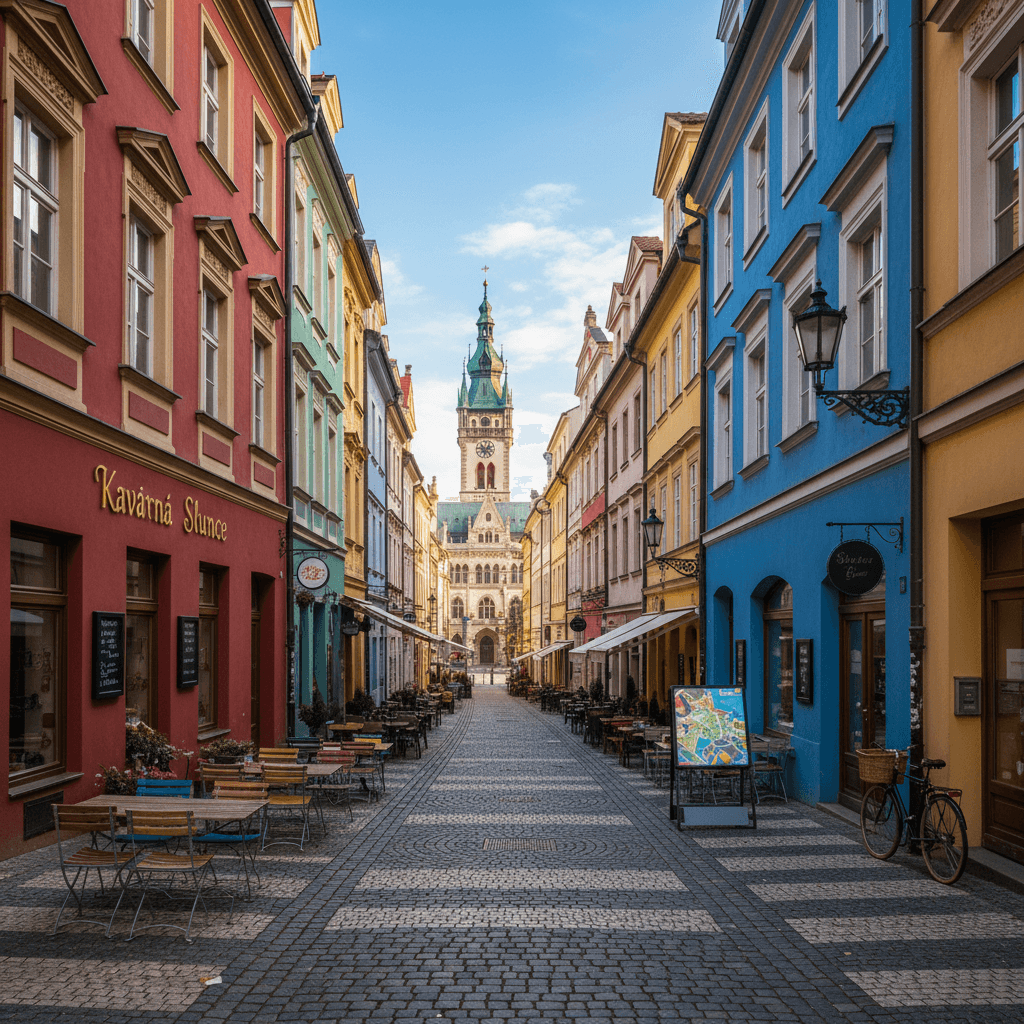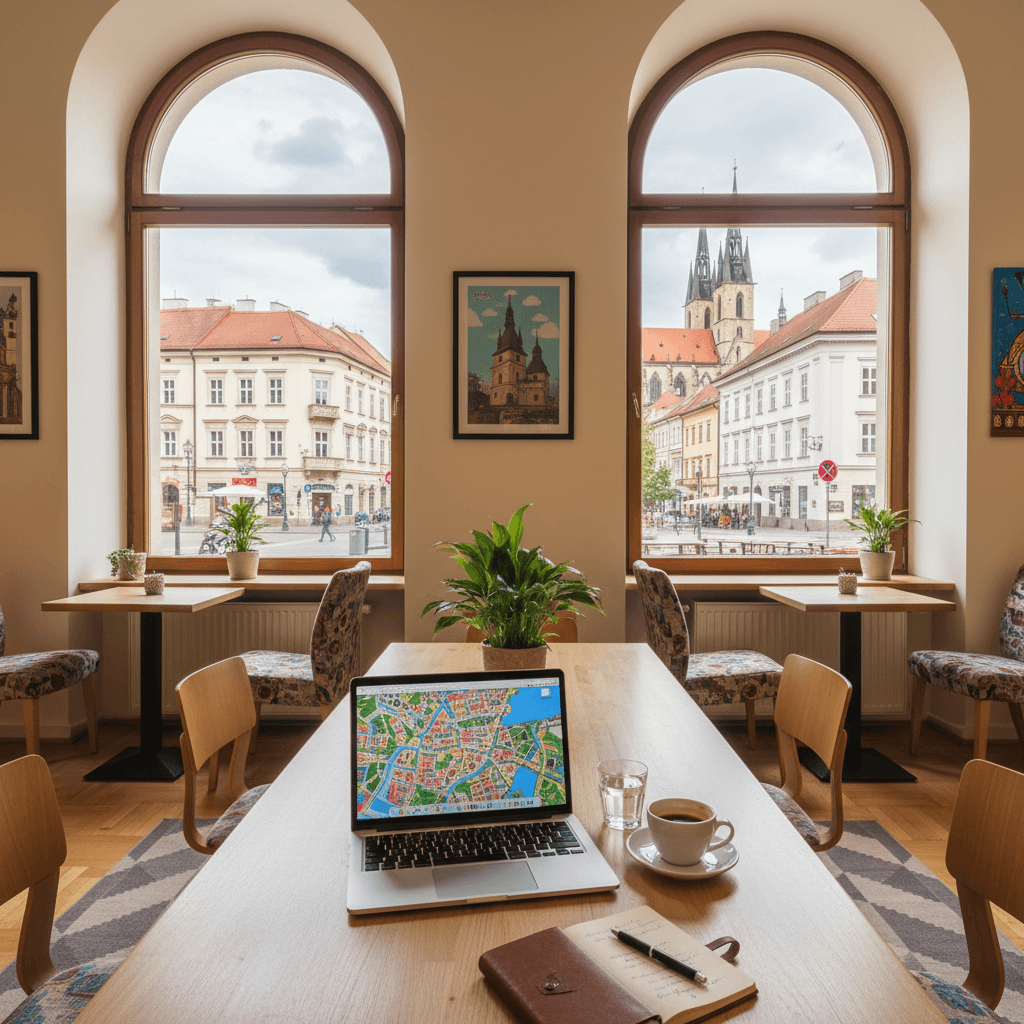
Brno
🇨🇿 Czech Republic
The Little Brother with a Big Personality
If Prague is the glamorous, slightly overwhelmed older sister, Brno is the cool younger brother who stayed home to start a tech company and a craft brewery. It is the Czech Republic's second city, but it doesn't suffer from a second-place complex. Instead, it feels like a city built for living rather than for postcards. You won't find the crushing crowds of the Charles Bridge here. What you will find is a compact, walkable center where the student population keeps the energy high and the prices low.
The vibe is distinctly academic and innovative. With over 60,000 students calling the city home, there is a constant pulse of intellectual curiosity. It is the kind of place where you can spend your morning working in a high-tech hub and your afternoon drinking Moravian wine on the steps of a 13th-century cathedral. It feels intimate, safe, and surprisingly edgy for a city of its size.
The Nomad Experience
Living here feels like being part of a well-kept secret. Most nomads find that the city center, or Brno-střed, is the heart of everything. It is small enough that you'll start recognizing the baristas at SKØG Urban Hub within a week. The pace of life is slower than in major European capitals, but the infrastructure is just as sharp. You get world-class public transit and some of the fastest internet in Central Europe without the frantic "hustle culture" of London or Berlin.
The emotional payoff of Brno is its authenticity. Locals are genuinely proud of their city, from the bizarre "astronomical clock" in Freedom Square to the functionalist architecture of Villa Tugendhat. Expats often remark that it takes a little longer to break the ice with Czechs here, but once you do, you're in for life. It is a city of "stammtisch" culture, where people have their regular spots and their regular groups, yet the massive influx of international IT professionals has made it increasingly easy to get by with English.
Working and Staying
For those looking to plant roots, the Czech Digital Nomad Visa is a game-changer for IT and marketing professionals. If you're from a qualifying country like the USA, UK, or Canada, you can secure a path to stay long-term. You'll need to show a monthly salary of at least 65,012 CZK, which goes a long way in a city where a local beer still costs less than a fancy latte in New York.
When it's time to get through your inbox, the coworking scene is punchy and professional. Impact Hub Brno is the heavy hitter for networking, while COWO BRNO offers a more boutique, focused atmosphere. If you prefer the hum of a cafe, the city is famous for its "Third Wave" coffee scene. Places like Cafe Mitte and Podnik aren't just for tourists; they are legitimate workspaces where you'll see plenty of laptops open and espresso flowing.
What Sets Brno Apart
- The Wine Culture: Unlike Prague, which is firmly beer country, Brno is the gateway to the Moravian wine region. You'll find wine bars on every corner serving local Rieslings and Frankovka.
- The Underground: The city is literally layered. From the medieval ossuary under St. James Church to the 10-Z nuclear bunker, there is a sense of history hiding just beneath the pavement.
- The Size: It is the "15-minute city" perfected. Most nomads find they rarely need to leave the central district for anything other than a weekend hike.
Brno doesn't try too hard to impress you, and that is exactly why it does. It is a city that rewards the slow traveler, the person who wants to actually belong to a neighborhood rather than just pass through it. It is affordable, highly connected, and just weird enough to stay interesting for a long-term stay.
The Brno Budget Breakdown
Brno is the sweet spot for anyone who finds Prague too expensive and Olomouc too quiet. You're looking at a lifestyle that feels distinctly European and high quality, but without the capital city price tag. Most nomads find they can live comfortably here for about $1,300 to $1,800 a month, depending on how much they prioritize a central apartment versus local beer.
The local currency is the Czech Koruna (CZK). While many places in the center accept cards, you'll want some cash for the smaller pubs or the vegetable markets at Zelny trh. It is a cash-friendly city, but far from cash-dependent.
Housing and Rent
Rent will be your biggest outgoing, but it's still a steal compared to Western Europe. If you want to be in the heart of the action near Namesti Svobody, expect to pay a premium for the convenience. Many expats recommend looking toward Veveři or Královo Pole for a better balance of space and price.
- Studio in City Center: 16,000 to 22,000 CZK ($680 to $940)
- One-bedroom in Residential Areas: 13,000 to 17,000 CZK ($550 to $725)
- Utilities (Electricity, Heating, Water): 4,500 to 6,000 CZK ($190 to $255)
Food and Drink
Dining out is where Brno really shines. The city has a massive student population, which keeps prices competitive and the vibe casual. You can grab a hearty "polední menu" (lunch special) at most restaurants for a fraction of the dinner price.
- Lunch Special at a local pub: 150 to 200 CZK ($6.50 to $8.50)
- Dinner for two with drinks: 800 to 1,200 CZK ($34 to $51)
- A pint of local Pilsner: 50 to 65 CZK ($2.15 to $2.80)
- Cappuccino at a specialty cafe like SKØG: 70 to 90 CZK ($3.00 to $3.85)
Workspace and Connectivity
Internet is fast and reliable across the city. Most nomads skip the home office setup and bounce between the high-end coworking spaces or the many laptop-friendly cafes. If you need a dedicated desk, the rates are very reasonable compared to Berlin or Vienna.
- Impact Hub Brno Monthly Hot Desk: 3,000 to 4,500 CZK ($128 to $192)
- Day Pass at Cowo Brno: 350 to 500 CZK ($15 to $21)
- Home Fiber Internet (100+ Mbps): 500 to 700 CZK ($21 to $30)
Transport and Lifestyle
You probably won't need a car here. The tram system (salina) is legendary and runs like clockwork. Most of the city is walkable, but the monthly pass is so cheap it's worth having for rainy days or trips to the Brno Reservoir.
- Monthly Public Transport Pass: 550 CZK ($23)
- Gym Membership: 800 to 1,300 CZK ($34 to $55)
- Cinema Ticket: 200 to 250 CZK ($8.50 to $10.70)
Keep in mind that if you are applying for the Digital Nomad Visa, the government wants to see you're earning well above the local average. You'll need to prove a monthly income of at least 65,012 CZK. While you can live on much less, this requirement ensures you're contributing significantly to the local economy while you're enjoying those $2 beers.
The Social Nomad: Brno-Střed (City Center)
If you want to be five minutes away from every major bar and coworking space, the city center is your home base. It is the heart of the action, centered around Náměstí Svobody and Zelný trh. You'll find most of the digital nomad community working out of Impact Hub or grabbing a flat white at SKØG Urban Hub during the day.
- Vibe: High energy, walkable, and packed with history.
- Monthly Rent: Expect to pay between 18,000 CZK and 24,000 CZK for a modern studio.
- Best for: People who hate commuting and love being near the nightlife on Jakubské náměstí.
The downside is the noise. Street performers and tram bells are constant companions here. If you value a silent workspace, you might find the center a bit too chaotic during the summer months when the festivals are in full swing.
The Long-Term Expat: Veveří
Veveří is often called the "student quarter," but it has matured into the most popular spot for international professionals. It sits just north of the center and strikes a perfect balance between local life and expat convenience. The streets are lined with grand 19th-century apartment buildings that have high ceilings and plenty of character.
- Vibe: Intellectual, leafy, and slightly more refined than the center.
- Monthly Rent: A spacious one-bedroom usually goes for 16,000 CZK to 21,000 CZK.
- Best for: Expats who want a local neighborhood feel without sacrificing proximity to great cafes like Cafe Mitte.
Living here means you are close to Lužánky Park, the city's oldest and best green space. It is where everyone goes for a jog or a beer on the grass after work. It feels like a real neighborhood rather than a tourist zone.
Families and Quiet Seekers: Královo Pole
Known to locals simply as "Krápole," this district is further north but perfectly connected by the number 1 and 6 trams. It is a massive residential area that feels like a self-contained town. You will find more supermarkets, schools, and quiet residential squares here than anywhere else in the city.
- Vibe: Peaceful, residential, and very safe.
- Monthly Rent: Larger two-bedroom apartments can be found for 20,000 CZK to 25,000 CZK.
- Best for: Families or remote workers who need a dedicated home office and a quiet environment.
The area is also home to several IT hubs and tech parks, so it is a common choice for those working for the big international firms based in Brno. It lacks the "cool" factor of Veveří, but your money goes much further here in terms of square footage.
The Solo Traveler on a Budget: Štýřice
Located south of the main train station, Štýřice is an up-and-coming area that offers some of the best value in Brno. It is home to the Spielberk Office Centre, which means there are plenty of lunch spots and modern amenities nearby. It isn't as "pretty" as the historic districts, but it is incredibly practical.
- Vibe: Industrial-modern and functional.
- Monthly Rent: You can often find studios for 14,000 CZK to 17,000 CZK.
- Best for: Solo travelers who want to keep costs low while staying within a 10-minute tram ride of the center.
You are also close to the Brno Riviera, a massive outdoor swimming complex that is a lifesaver during the humid July heat. While parts of the walk toward the center can feel a bit gritty, the area is safe and rapidly gentrifying with new cafes popping up every few months.
Connectivity and Work Culture
Brno is often called the Silicon Valley of Central Europe, and the internet speeds reflect that reputation. You won't struggle to find a stable connection here. Most apartments and cafes offer fiber optic speeds that easily handle heavy video calls or large uploads. If you're out and about, the city center is blanketed in reliable 4G and 5G coverage, so tethering in a park is always a viable backup plan.
The local work culture is a bit more laid back than Prague. People take their coffee breaks seriously, and you'll see plenty of laptops open in cafes throughout the day. While the city feels academic and tech focused, it doesn't have that frantic, rushed energy of a major capital. It's a place where you can actually get deep work done without the constant distractions of a tourist heavy city.
Top Coworking Spaces
The coworking scene is concentrated around the city center, making it easy to hop between your desk and a local bistro. These spots are the best hubs for meeting other foreigners and local entrepreneurs.
- Impact Hub Brno: This is the heavy hitter in town. It's a massive, airy space with a huge community. They host frequent networking events and the coffee is actually good. It's the best choice if you want a professional environment and a chance to meet the local startup crowd.
- COWO BRNO: Located right in the heart of the city near the main square, this spot is perfect for those who want a smaller, more intimate vibe. It feels less like a corporate office and more like a shared studio.
- Brain Farm Brno: A great alternative if you prefer a modern, sleek aesthetic. It's popular with developers and creative freelancers who need a quiet, focused atmosphere.
Laptop Friendly Cafes
If you prefer the hum of a milk steamer to a dedicated desk, Brno has some of the best cafe culture in the country. Many spots are welcoming to remote workers as long as you keep the orders coming.
- SKØG Urban Hub: This is the unofficial headquarters for Brno nomads. It's a minimalist, Nordic inspired space that transitions from a coffee house to a bar in the evening. The wifi is fast, and the vegetarian food is excellent.
- Cafe Mitte: Tucked away in a historic building, this place is cozy and quiet. It's better for focused writing sessions than loud Zoom calls.
- Podnik Cafe Bar: A trendy spot with plenty of power outlets and a very high ceiling that keeps it from feeling cramped even when it's busy.
- Cafe Podnebi: Located right under the Shpilberk Castle, this cafe has a beautiful garden for summer work sessions. It's a favorite for those who want a bit of nature while they type.
Digital Nomad Visa Basics
For those looking to stay longer than a standard 90 day tourist stint, the Czech Republic has introduced a specific pathway for remote workers. This is particularly useful for IT professionals or marketing specialists who want to settle in Brno legally.
- Income Requirement: You need to show a monthly gross salary of at least 65,012 CZK.
- Eligible Countries: This program is open to citizens of the USA, UK, Canada, Australia, New Zealand, Japan, South Korea, Singapore, Taiwan, Brazil, Mexico, and Israel.
- Employment Status: You must either work for a company with more than 50 employees or hold a Czech trade license as a freelancer with a valid service contract.
- Family Perks: The visa allows you to bring your immediate family along, which isn't always a given with nomad visas in other European countries.
Most expats recommend getting your paperwork started well in advance. The bureaucracy can be slow, but having a local trade license, known as a Zivnostensky list, is a common route for freelancers and can lead to a very favorable tax situation if you plan to stay for a year or more.
A Safe Haven for Nomads
Brno is consistently ranked as one of the safest cities in the world, often beating out major European capitals for its low crime rates and general sense of security. You can walk through the city center or the Lisen district at 2:00 AM without a second thought. The vibe here is much calmer than Prague; you won't find the same aggressive tourist scams or pickpocketing rings that plague the Charles Bridge area.
Most nomads find that the biggest "danger" in Brno is accidentally stepping in front of a tram. The local police are generally professional, though they aren't known for their English skills. If you ever need help, younger locals are usually happy to translate. For any urgent police matters, dial 158, or use 112 for the general European emergency line which usually has English speakers on standby.
Navigating the Healthcare System
The Czech healthcare system is high quality and surprisingly affordable. As a digital nomad, your experience will depend on whether you are here on a Zivnostensky list (trade license) or a standard tourist visa. If you have the trade license, you'll likely pay into the public health insurance system, which gives you access to almost any doctor for a very small monthly fee.
For those on a shorter stay, private insurance is a must. Most expats recommend VZP or PVZP for local coverage. If you need a doctor who speaks fluent English, your best bet is to head to a private clinic. SurGal Clinic on Drobneho is a favorite among the international community for its modern facilities and English speaking staff. For emergency dental work, the Urazova nemocnice on Ponavka provides 24 hour care, though be prepared for a bit of a wait during weekends.
Pharmacies and Everyday Health
Pharmacies, or lekarna, are everywhere in Brno. You can spot them by the green cross. If you need medicine in the middle of the night, the pharmacy at Koblizna 7 in the city center is open 24/7. Many basic medications that are over the counter in the US or UK might require a prescription here, so it's smart to bring a small supply of your specific brands.
The tap water in Brno is perfectly safe to drink and actually tastes quite good. You'll see locals filling up bottles at public fountains in the summer. If you have allergies, keep in mind that the surrounding South Moravian countryside is heavy on pollen during the spring, so pack your antihistamines if you plan on hiking through the vineyards.
Key Emergency Contacts
- General Emergency: 112
- Ambulance: 155
- State Police: 158
- Municipal Police: 156
- 24/7 Pharmacy: Lekarna Koblizna (Koblizna 7)
- Main Hospital: Fakultni nemocnice u sv. Anny (Pekarska 53)
Expats often mention that the medical staff can seem a bit blunt or "cold" compared to Western bedside manners. Don't take it personally; it's just the local culture. The care itself is top tier, and you'll often find that even private consultations are significantly cheaper than what you'd pay in the States or Western Europe, with a standard GP visit often costing around 500 to 800 CZK.
The Public Transit Powerhouse
Brno is a city designed for people who hate driving. The public transport system, operated by DPMB, is legendary for its efficiency and coverage. You'll mostly rely on the 12 tram lines, which locals call salinas. These red and white trams are the heartbeat of the city, running every few minutes during the day and even maintaining a reliable network of night buses once the sun goes down.
Most nomads find the DPMB Info app or IDOS indispensable for timing their trips. You don't need to hunt for paper tickets anymore; just tap your contactless bank card on the yellow validators inside the tram when you board. A 15 minute ride costs 20 CZK, while a 60 minute ticket is 25 CZK. If you are staying for a month, it is much smarter to grab a monthly pass for 550 CZK at the main station or via the BrnoID website.
Walking the Historic Core
The city center is compact and largely pedestrianized, making it a dream for those who prefer to get their steps in. You can walk from the main train station (Hlavni nadrazi) to the Vegetable Market (Zelny trh) in less than five minutes. The streets are paved with cobblestones, so leave the flimsy heels at home. Most of the popular coworking spots like Impact Hub and COWO BRNO are within a 15 minute walk of the central plazas.
Walking is also the best way to soak in the local vibe. You'll pass by the "crooked" portal of the Old Town Hall and the giant black astronomical clock in Freedom Square. It is a slow paced city where nobody seems to be in a frantic rush, which makes wandering the narrow side streets a genuine pleasure rather than a chore.
Two Wheels and Shared Rides
Brno has embraced bike sharing in a big way. Rekola (the pink bikes) and Nextbike are everywhere. The city isn't perfectly flat; you'll definitely feel the burn in your quads if you head up toward Spilberk Castle. However, for quick hops between the center and neighborhoods like Veveri or Stranice, a bike is often faster than the tram. Many locals use the Litačka app or similar integrations to unlock these.
When the trams stop their frequent daytime service or you are carrying heavy groceries, ride hailing is the way to go. Bolt and Uber both operate extensively here. A typical ten minute ride across town will usually set you back between 120 and 180 CZK. It is generally cheaper and more transparent than flagging down a traditional taxi on the street.
Regional Connections
One of the best things about Brno is how easily you can leave it. The city sits at a central European crossroads. The main train station is a hub for RegioJet and Ceske drahy, with high speed connections to Vienna, Prague, and Bratislava all taking under 2.5 hours. For budget conscious travelers, FlixBus runs frequent routes from the Grand Hotel bus station. You can often find a one way ticket to Vienna for as little as 250 CZK if you book a few days in advance.
- Tap-to-pay tram fare: 20 to 25 CZK
- Monthly transit pass: 550 CZK
- Average Bolt ride: 150 CZK
- Bike share: Often free for the first 15 minutes via local sponsors
The English Factor
You'll find that Brno is a bit of a linguistic split. Because it's a major university hub, the younger generation and the tech crowd speak excellent English. If you're hanging out at Impact Hub or grabbing a flat white at SKØG Urban Hub, you won't have any trouble being understood. Most menus in the city center are bilingual, and the service staff in trendy spots like Podnik Cafe Bar are used to international guests.
However, the vibe changes once you step into a local government office or a smaller neighborhood shop in areas like Zabovresky. Older residents usually speak Czech and perhaps some German or Russian. Don't expect the post office clerk or the tram driver to be fluent in English. They'll appreciate it if you lead with a few words of Czech before switching to pantomime or Google Translate.
Navigating the Local Tongue
Czech is notoriously difficult for English speakers. It's a Slavic language with a complex grammar system and some sounds that feel impossible to replicate at first. While you don't need to be fluent to survive, nomads who stay longer than a month usually find that learning the basics opens a lot of doors. Locals are genuinely impressed when an expat makes an effort because they know how hard their language is.
If you're looking to dive deeper, Brno Expat Centre is a fantastic resource. They offer advice on finding tutors and often host events where you can practice. For a more casual environment, keep an eye on Facebook groups like Brno English Speakers or Living in Brno to find language exchange meetups in local pubs.
Key Phrases to Know
- Dobrý den (DOH-bree den): Good day. Use this every time you enter a shop or cafe. It's the standard polite greeting.
- Ahoj (Ah-hoy): Hi or Bye. This is informal and used among friends or younger people.
- Děkuji (DYE-koo-yi): Thank you. Often shortened to "Díky" in casual settings.
- Prosím (PRO-seem): Please. This also means "You're welcome" and "I beg your pardon." It's the Swiss Army knife of Czech words.
- Mluvíte anglicky? (Mloo-vee-teh AN-glit-skee?): Do you speak English?
- Pivo, prosím (PI-vo PRO-seem): A beer, please. Perhaps the most important sentence you'll learn.
Digital Communication and Apps
Data is cheap and reliable here, so you'll never be truly lost. Most nomads rely on Google Translate for real-time sign translation, but the DeepL app is much more accurate for translating emails or official documents into Czech. For getting around, IDOS or Mapy.cz are the local favorites for transit schedules and offline maps. They're often more precise than Google Maps for local tram routes.
When it comes to texting, WhatsApp is the standard for social groups and organizing meetups. If you're dealing with local businesses or landlords, they might prefer a phone call, but most are becoming more comfortable with email or messaging apps. Just remember that Czechs tend to be direct in their communication style. Don't mistake a short, functional response for rudeness; it's just the local way of being efficient.
The Sweet Spot: May to September
Brno really comes alive when the sun starts sticking around. Most nomads agree that May, June, and September are the absolute goldilocks months. You get daytime temperatures hovering around 20°C to 24°C (68°F to 75°F), which is perfect for working from the outdoor tables at Cafe Podnebi or grabbing a beer at Zelny Trh without breaking a sweat.
July and August are the hottest months, often climbing into the high 20s or low 30s Celsius (85°F+). While it's rarely unbearable, keep in mind that many older apartment buildings in the center and even some smaller cafes don't have air conditioning. If you're a heat hater, check that your Airbnb or rental has AC before booking for mid summer. This is also when the city feels a bit quieter as the massive student population heads home for break, though the festival calendar stays packed.
The Winter Chill and "Svarek" Season
If you arrive between November and March, pack a heavy coat. Brno winters are grey, biting, and damp. Temperatures frequently dip below freezing, especially in January and February, where averages sit around -2°C to 2°C (28°F to 35°F). Snow happens, but it usually turns to slush in the city center pretty quickly.
The saving grace is December. The Christmas markets in Brno are often cited by expats as being better than Prague's because they feel local and less like a tourist trap. The smell of Svarek (mulled wine) fills the air, and the city center gets a cozy, communal vibe that makes the 4:00 PM sunsets much easier to handle. Just don't expect much sun; the winter sky in Moravia can stay overcast for weeks at a time.
Rain and Packing Essentials
Rain is fairly evenly distributed throughout the year, so there isn't a specific "monsoon" season to avoid. However, June and July often see heavy afternoon thunderstorms that roll in fast and clear out just as quickly. You'll want a light waterproof shell if you're visiting during the summer.
- Spring (April to May): Unpredictable. You might see 18°C one day and 5°C the next. Layers are your best friend here.
- Autumn (October to November): Crisp and beautiful in the nearby Moravian wine hills, but the fog starts rolling in late October.
- Peak Season: June through August sees the most tourists, though "crowded" in Brno is nothing compared to the shoulder season in Prague.
When to Time Your Move
If you're looking for the best social experience, aim to land in late September. This is when the university students return, the wine harvest festivals (Vinobrani) are in full swing, and the weather is still mild enough for outdoor meetups. The energy in the city during the autumn "Burcak" season (tasting young, fermenting wine) is something most nomads find unique to this region.
For those on a budget, February and March often see slightly lower prices for short term rentals, but you'll be spending most of your time inside coworking spaces like Impact Hub or Brain Farm to stay warm. Most seasoned travelers suggest avoiding the dead of winter unless you specifically enjoy the moody, dark academia aesthetic that Brno does so well.
Connectivity and Data
You won't have to hunt for a signal here. Brno is a tech hub, so fiber internet is standard in most apartments. If you're looking for a local SIM card, head to a Vodafone or O2 shop in the Vaňkovka mall near the main station. A prepaid plan with 10GB to 15GB of data usually costs around 400 CZK to 600 CZK. Most nomads find that T-Mobile has the best coverage if you plan on taking trains into the Moravian countryside.
Money and Banking
The Czech Republic still uses the Koruna (CZK), not the Euro. While you can tap your card almost everywhere, from high-end bistros to small pubs, it's smart to keep a few 200 CZK notes for smaller bakeries or older bars. For cash withdrawals, look for Air Bank or Fio Banka ATMs. They are local favorites because they don't usually tack on the predatory fees you'll see at the blue and yellow Euronet machines scattered around the city center.
The Digital Nomad Visa (Zivno)
If you want to stay longer than 90 days, the Czech Republic has one of the best setups in Europe for freelancers. It's often called the Zivnostenský list or "Zivno." It's a trade license that allows you to work for clients worldwide while living in Brno. You'll need to show a minimum monthly income of at least 65,012 CZK and have a clean criminal record. Most expats hire an agency to handle the paperwork because the Ministry of the Interior rarely speaks English, and the process involves a fair amount of red tape.
Navigating the Language
Brno is a university city, so you'll get by easily with English in the center and at tech-focused coworking spaces like Impact Hub or COWO. However, learning a few basics goes a long way with the locals. Czechs appreciate the effort, even if you stumble.
- Dobrý den: Good day (formal greeting)
- Ahoj: Hi/Bye (informal)
- Díky: Thanks
- Pivo, prosím: A beer, please
Finding a Place to Live
Don't rely solely on Airbnb if you're staying for more than a month. Prices there are inflated for tourists. Local nomads recommend checking Bezrealitky, a website where owners list apartments without going through an agent. This saves you from paying a commission fee, which is usually one month's rent. Expect to pay between 15,000 CZK and 22,000 CZK for a modern studio in neighborhoods like Veveří or Královo Pole.
Health and Safety
Brno is incredibly safe, even late at night. The biggest "danger" is usually just tripping on the uneven cobblestones in the Old Town. If you need a pharmacy, look for the green cross sign that says Lékárna. The pharmacy at the main train station is open 24/7 for emergencies. For non-EU citizens, make sure your health insurance meets the specific requirements for your visa, as the police often check this during your residency appointment.
Apps to Download
Before you arrive, grab these to make your life easier:
- DPMBinfo: The official public transport app for buying tram tickets.
- Bolt or Uber: Both work well here for quick rides across town.
- Wolt: The go-to app for food delivery from local favorites like SKØG or Mitte.
- Mapy.cz: Much better than Google Maps for hiking trails and finding specific house numbers.
Need visa and immigration info for Czech Republic?
🇨🇿 View Czech Republic Country GuideEasy Landing
Settle in, no stress
Monthly Budget Estimates
More cities in Czech Republic
České Budějovice
🇨🇿 Czech Republic
Pilsen
🇨🇿 Czech Republic
Ostrava
🇨🇿 Czech Republic