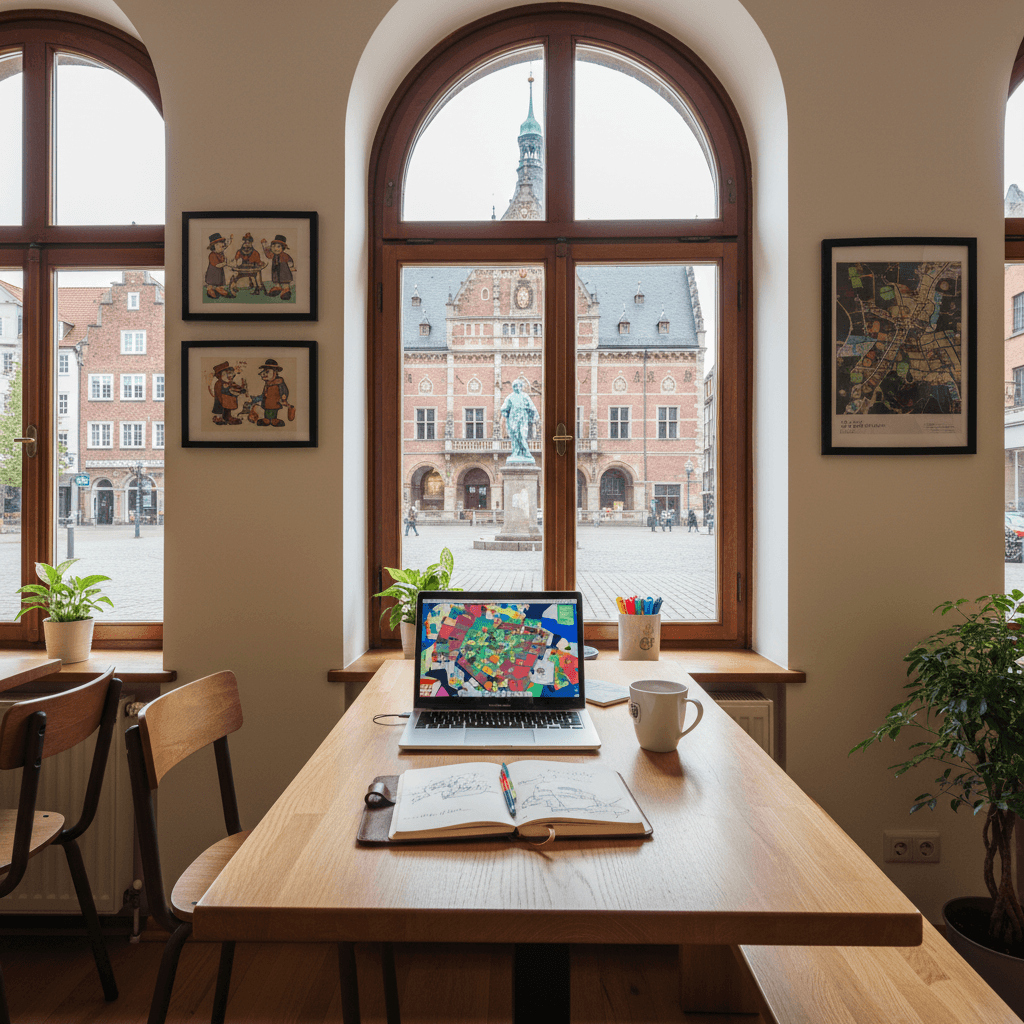
Bremen
🇩🇪 Germany
The Hanseatic Slow-Burn
If Berlin is a relentless techno club at 4:00 AM, Bremen is the sophisticated, slightly eccentric after-party where everyone actually knows each other's names. It doesn't scream for your attention with neon lights or massive startup campuses. Instead, it wins you over with a maritime soul and a pace of life that feels remarkably human. For nomads who find Hamburg too corporate or Berlin too chaotic, Bremen offers a middle ground of cobblestone charm and reliable German efficiency.
The city's personality is split between its posh Hanseatic history and a gritty, alternative edge. You'll feel it most when walking from the UNESCO-listed Town Hall toward the Weser River. One moment you're surrounded by medieval architecture that looks like a film set, and the next you're grabbing a cheap craft beer on the Schlachte Embankment. It's a place where tradition doesn't feel stuffy; it just feels like home.
The Nomad Experience
Most remote workers land here and immediately notice the 100 Mbps+ internet speeds. It’s fast, reliable, and covers almost every corner of the city center. While it doesn't have the massive international "bubble" of larger hubs, the community that does exist is tight-knit. You'll find yourself bumping into the same faces at local coffee spots along the river or in the coworking spaces near the main station.
The cost of living is one of Bremen’s biggest draws. You can maintain a high quality of life for around $3,000 a month, which is a steal compared to Munich or Western European capitals. It’s a city built for bikes and walking, meaning you’ll rarely need to touch a car. Most nomads find the 7.4/10 nomad score accurate; it’s a high-functioning city that rewards those who prefer culture over constant partying.
Where to Anchor Yourself
Choosing a neighborhood determines your daily rhythm. Most solo travelers and short-term nomads gravitate toward the historic center because everything is within a ten-minute stroll.
The Schnoor Quarter
- Best for: Solo nomads and history buffs who want a fairy-tale aesthetic.
- The Vibe: Narrow 15th-century alleys, artisan shops, and hidden cafes.
- Rent: Expect to pay €1,000+ for a small, character-filled studio.
- Pros: Incredibly scenic and walkable; you're living in a postcard.
- Cons: It gets crowded with tourists on weekends and can feel a bit like a museum.
Market Square & Weser Promenade
- Best for: Expats and social butterflies who want to be near the action.
- The Vibe: Lively, open, and very "city-center" with constant foot traffic.
- Rent: Prices range from €900 to €1,200 for a modern one-bedroom.
- Pros: Immediate access to the best restaurants and the riverfront.
- Cons: It’s the loudest part of town, especially during summer festivals.
The Outskirts
- Best for: Families or long-termers looking for space and quiet.
- The Vibe: Residential, green, and very local.
- Rent: Much more affordable at €600 to €900 per month.
- Pros: More square footage for your money and a peaceful atmosphere.
- Cons: You’ll rely on the tram system to find any "vibe" or social events.
Practical Realities
The weather is classic Northern Germany. You’ll get mild, glorious summers where the sun stays up late, but you have to be prepared for grey, drizzly winters. Locals don't let it stop them; they just put on a better jacket and keep cycling. If you're coming from outside the EU, look into the Opportunity Card or the Freelance Visa, as Germany is becoming increasingly open to remote talent.
Socially, the city opens up if you put in the effort. While English is widely spoken in professional circles and cafes, learning a few German phrases like "Guten Tag" or "Danke" goes a long way. Join the local InterNations or Facebook expat groups early on. Bremen isn't a city that will chase you down to be your friend, but once you're in, you're part of the family.
The Bottom Line
Bremen is a breath of fresh air for your wallet, especially if you're used to the eye watering prices of Munich or the rapidly Gentrifying neighborhoods of Berlin. It sits comfortably in that "Goldilocks" zone of Northern German cities: developed enough to have everything you need, but under the radar enough that you aren't competing with ten thousand other expats for a decent studio. Expect to budget around $3,000 a month for a lifestyle that feels genuinely comfortable, though scrappy nomads can definitely make it work on $2,000 if they're willing to cook at home and live slightly further from the Schnoor.
Housing and Neighborhoods
Rent will be your biggest variable. The market isn't as cutthroat as Hamburg, but you'll still want to have your documents ready. Most nomads aim for the central areas to stay close to the action, though the outskirts offer much better value for families or those who need a dedicated home office setup.
- Schnoor Quarter (Old Town): This is the postcard version of Bremen. It's incredibly walkable and packed with character, but you'll pay a premium for the charm. A central 1BR here usually starts around €1,000 and goes up quickly. It can get noisy with weekend tourists, so keep that in mind if you're a light sleeper.
- Market Square & Weser Promenade: Ideal for expats who want to be in the thick of it. You're looking at €900 to €1,200 for a decent apartment. It’s lively and scenic, though the crowds can feel a bit much during peak festival seasons.
- The Outskirts: If you don't mind a short tram ride, the residential areas further out are much kinder to your bank account. You can often find larger spaces for €600 to €900. It's quieter and greener, making it the go to choice for long term expats and families.
Daily Expenses and Lifestyle
Groceries and dining are where Bremen really shines. You can grab a quick street food lunch like a bratwurst or falafel for €5 to €8. If you're sitting down at a mid range spot in the Old Town, expect to pay between €15 and €25 for a solid meal and a drink. For the high rollers, upscale dining starts around €40 per person.
Getting around is remarkably cheap compared to North America or the UK. The public transport system is tight, and a monthly pass will set you back about €50 to €80. However, most locals just bike. The city is flat and the cycling infrastructure is top tier, so buying a cheap second hand bike is a pro move that pays for itself in weeks.
Work and Connectivity
Bremen doesn't have a massive, dedicated "nomad hub" yet, but the infrastructure is there. You'll get ultra fast internet, often averaging 90 Mbps, which is plenty for heavy video calls or uploading large files. Coworking spaces are popping up across the city, with prices similar to Hamburg's Betahaus at roughly €200 a month for a hot desk. If you prefer the cafe route, the spots along the Weser River are generally welcoming to laptop workers as long as you keep the coffee flowing.
Cost Summary
- Budget Tier: €1,500 to €2,000. This means a room in a shared flat (WG), plenty of home cooking, and relying on your bike or a basic transit pass.
- Mid Range Tier: €2,000 to €3,000. This covers your own 1BR apartment, eating out a few times a week, a coworking membership, and the occasional weekend trip to nearby Hanseatic towns.
- Comfort Tier: €3,000+. This gets you a prime apartment in the Schnoor, regular upscale dining, and zero stress about your monthly overhead.
For banking, most expats lean toward N26 or Revolut once they've registered their address. It's much faster than trying to navigate the legacy German banks. For your SIM card, head to a Telekom or Vodafone shop. Just remember you'll need to show your registration papers or a passport to get set up.
Digital Nomads: The Historic Core
If you're coming to Bremen for the work-from-anywhere lifestyle, you'll likely want to plant your laptop in the Schnoor Quarter. It's the oldest part of the city, where 15th-century houses are squeezed so tightly together you can almost touch both sides of the street at once. Nomads gravitate here for the sheer atmosphere and the density of cafes with reliable 100 Mbps+ Wi-Fi.
Living in Schnoor means you're steps away from the best espresso in the city, but it comes with a "tourist tax" on your rent. Expect to pay €1,000 to €1,200 for a furnished studio. While it's incredibly walkable, the narrow cobblestone streets get loud on Saturday afternoons when the day-trippers arrive. For a quieter workspace, many locals head to coworking hubs like Mindspace or smaller independent spots near the center, which usually run about €200 a month for a hot desk.
- Rent: €1,000+ for a central 1BR
- Vibe: Medieval charm meets laptop culture
- Pros: High walkability, great coffee shops, ultra-fast internet
- Cons: High foot traffic, premium rental prices
Expats: Life Along the Weser
Expats looking for a balance between career and social life usually settle near the Market Square or along the Weser Promenade (the Schlachte). This area serves as the city's living room. It’s where you’ll find the UNESCO-listed Town Hall and the famous Roland statue, but more importantly, it's where the international community meets for after-work drinks by the river.
The rental market here is competitive but slightly more varied than the Schnoor. You can find modern apartments for €900 to €1,200. The social scene is the big draw; the promenade is lined with beer gardens and eateries where English is widely spoken. It’s the easiest place to network if you're new to the city, though the constant activity means it's rarely quiet before midnight.
- Rent: €900 to €1,200
- Vibe: Energetic, riverside, and social
- Pros: Close to major transport hubs, best nightlife access
- Cons: Can feel "busy" compared to the rest of the city
Families: The Quiet Outskirts
For those moving with a spouse or kids, the city center’s cramped quarters aren't ideal. Expats with families generally look toward the outskirts or residential pockets well-connected by the S-Bahn and tram lines. These neighborhoods offer the space and greenery that the medieval center lacks.
Rents drop significantly once you move away from the tourist landmarks. A larger family apartment can be found for €600 to €900, leaving more room in the budget for weekend trips. You'll trade the immediate "vibe" of the city for quiet parks and better access to local schools. The commute is rarely a dealbreaker because Bremen’s public transport is remarkably efficient, usually getting you back to the Market Square in 20 to 30 minutes.
- Rent: €600 to €900
- Vibe: Suburban, green, and peaceful
- Pros: More square footage, lower cost of living, family-friendly
- Cons: Requires a commute for social events, less English spoken
Solo Travelers: The Heart of the Action
If you're only in town for a few weeks, staying right in the Old Town is the move. It allows you to maximize your time without worrying about tram schedules. You're within walking distance of the Town Musicians statue and the eccentric Böttcherstraße. Solo travelers often prefer the hostels and boutique hotels here because they make meeting people effortless.
Eating out in this area is easy on a solo budget if you stick to street food like bratwurst or savory snacks for €5 to €8. For a proper sit-down meal, you’ll spend closer to €20. Most solo travelers find that the safety of the city center is a massive plus; it’s well-lit and active enough that walking home alone at night is rarely a concern.
- Daily Budget: €60 to €100 (excluding accommodation)
- Vibe: Sightseeing-centric and safe
- Pros: No transport costs, easy to navigate, safe for solo night walks
- Cons: Can feel a bit like a "museum" after the shops close
Connectivity and Speed
Bremen might have a medieval heart, but its digital infrastructure is thoroughly modern. You can expect ultra-fast average speeds of 100 Mbps+ across the city, making it a reliable alternative to the overcrowded bandwidth in Berlin. Whether you are hopping on a video call from a cafe in the Schnoor Quarter or syncing large files from your apartment, the connection rarely drops.
For mobile data, most nomads recommend grabbing a SIM card from Telekom or Vodafone. You can find their shops easily in the City Center or near the main train station. If you are staying longer than three months, you will need to register your address at the local Bürgeramt before signing up for a long term contract, but prepaid options work perfectly for shorter stays.
Top Coworking Spaces
The coworking scene in Bremen is professional and unpretentious. While it lacks the sheer volume of spaces found in Hamburg, the quality is high and the community is welcoming. Prices generally hover around €200 per month for a hot desk, which is a steal compared to Munich or London.
- WeserWork: Located right near the river, this spot is a favorite for its bright, airy atmosphere and proximity to the promenade for a post-work stroll.
- Coworking Bremen: A solid, no-nonsense choice in the city center that offers flexible daily passes if you aren't ready to commit to a full month.
- Design Offices: If you need a more corporate, high-end environment for client meetings, this is the place to go. It is sleek, modern, and very well-equipped.
Laptop-Friendly Cafes
If you prefer the hum of a coffee shop over a quiet office, Bremen's cafe culture is surprisingly accommodating. The Viertel district is your best bet for finding spots where you won't be glared at for opening a laptop. It has a younger, more alternative vibe that feels similar to parts of Kreuzberg.
Expats often frequent the cafes along the Weser Promenade during the week. While these spots get crowded with tourists on weekends, they are peaceful on Tuesday mornings. Just keep an eye out for "laptop-free" signs, as some of the more traditional bakeries in the Schnoor Quarter prefer to keep their tables for diners.
Practical Infrastructure
Public Wi-Fi is surprisingly decent in Bremen. You will find reliable connections at Bremen Airport (BRE) and the main train station, as well as on many of the newer trams. Most nomads find that they don't even need a backup hotspot because the citywide coverage is so consistent.
- Daily Desk Rate: Expect to pay €15 to €25 for a day pass at most local hubs.
- Coffee Price: A standard cappuccino will set you back about €3.50 to €4.50.
- Best Working Hours: Cafes are generally quietest between 9:00 AM and 11:30 AM, before the lunch rush kicks in.
One thing travelers often mention is the lack of a massive, English-speaking nomad "bubble." This means you'll actually get to meet locals and long-term expats rather than just other travelers. If you hit a technical snag, there are plenty of electronics stores near Market Square to grab a replacement charger or adapter.
Safety in the City
Bremen is a remarkably safe place to base yourself. While major German hubs like Berlin or Hamburg have a more frantic, gritty energy, this Hanseatic city feels much more composed. You won't find many "no-go" zones here, though like any urban center, the area immediately surrounding the Hauptbahnhof (central station) can get a bit sketchy late at night with loiterers and typical big-city noise. Most nomads feel perfectly comfortable walking through the Schnoor or along the Weser River after dark.
Pickpocketing is rare but possible in crowded tourist spots like the Market Square. Keep your bag zipped when you're admiring the Town Musicians statue or browsing the Christmas markets. If you're getting around on two wheels, invest in a high-quality U-lock. Bike theft is easily the most common "crime" you'll encounter here, a side effect of being such a cycle-friendly city.
In an emergency, dial 112 for fire or medical help and 110 for the police. These numbers work from any phone, even without a local SIM card, and the dispatchers usually speak excellent English.
The Healthcare System
Germany's healthcare is world-class, and Bremen is no exception. You'll find a dense network of specialized clinics and pharmacies (Apotheken) throughout the city center. If you're here on a Freiberufler (freelance) visa or the Opportunity Card, you're required to have health insurance that meets strict German standards. Most expats choose between statutory public insurance or private providers like Feather or Ottonova, which cater specifically to the international community and offer English-language support.
For a standard doctor's visit, look for a Hausarzt (General Practitioner). Many nomads recommend using the Doctolib app to book appointments; it allows you to filter for English-speaking doctors so you don't have to struggle with medical German. Most offices are open from 8:00 AM to 6:00 PM, but they often close early on Wednesday afternoons.
Pharmacies and After-Hours Care
If you need medicine, look for the big red "A" sign. Pharmacies in Bremen aren't like drugstores in the US or UK; they don't sell groceries or snacks, just health products. They generally close by 6:30 PM or 7:00 PM. If you have a midnight emergency, every pharmacy window displays a list of the Notdienst (emergency service) pharmacy that stays open 24 hours on a rotating schedule.
- Emergency Number: 112 (Ambulance/Fire)
- Police Number: 110
- Non-Emergency Medical: 116 117 (For when you need a doctor but it's not a life-threatening emergency)
- Average GP Visit: €50 to €100 if paying out of pocket
Insurance Requirements for Nomads
If you're staying longer than a few weeks, ensure your insurance meets German residency requirements. The local Bürgeramt (registration office) is strict about coverage. Nomads typically opt for:
- Statutory Insurance (GKV): Best if you have a family or plan to stay long-term, though it's pricier for high earners.
- Private Insurance (PKV): Often cheaper for young, healthy nomads, but premiums can rise as you age.
- Expat-Specific Plans: Valid for visa applications and usually cost between €70 and €150 per month depending on your age and coverage level.
Overall, the peace of mind in Bremen is a huge draw. You're living in a city where the infrastructure actually works, the streets are clean, and help is never more than a few blocks away.
The Logistics of Getting Around
Bremen is a dream for anyone who hates being stuck in traffic. The city is remarkably compact, and the infrastructure favors people over cars. You'll find that the center is almost entirely walkable, especially around the historic core. Most nomads find they rarely need a car unless they're planning a weekend trip to the North Sea coast.
Public Transit: Trams and Buses
The BSAG (Bremer Straßenbahn AG) runs a tight ship. The tram network is the backbone of the city, supplemented by a comprehensive bus system. It's efficient, clean, and surprisingly punctual. If you're staying for a month or more, skip the single tickets and look into a monthly pass, which usually starts around €40-€83 depending on zones and type.
- The App: Download the VBN FahrPlaner app immediately. It handles route planning and mobile ticketing across the entire region.
- Night Owls: On weekends, the "NachtEule" (Night Owl) buses and trams keep the city connected long after the bars in the Viertel have peaked.
- Airport Links: Getting from Bremen Airport (BRE) to the city center is a breeze. The Tram Line 6 drops you at the main station in about 20 minutes for the price of a standard ticket.
The Biking Capital
Locals joke that children in Bremen learn to cycle before they can walk. The city is flat as a pancake and crisscrossed with dedicated bike lanes. Expats recommend picking up a used bike if you're staying for more than a few weeks. Check eBay Kleinanzeigen or local flea markets for a cheap set of wheels. If you prefer a subscription model, Swapfiets is ubiquitous here; for a flat monthly fee, you get a reliable bike and free repairs.
Ride-Hailing and Taxis
While Uber and Bolt operate in the city, they aren't as dominant as they are in London or Berlin. Taxis are reliable but pricey. Most travelers use ride-hailing apps primarily for late-night returns or when hauling heavy groceries. For short hops, electric scooters from providers like Tier or Voi are scattered everywhere. Just stay off the sidewalks; the local police are known to hand out fines to scooting tourists who ignore the bike lane rules.
Regional Travel
Bremen's Hauptbahnhof (Main Station) is a major hub for Northern Germany. You can reach Hamburg in about 55 to 70 minutes via the Metronom or ICE trains. If you're planning to explore the surrounding Lower Saxony region, the Niedersachsen-Ticket is a steal. It allows up to five people to travel on regional trains for a single flat rate, making it the go-to choice for group day trips to places like Oldenburg or Bremerhaven.
Navigation Stats
- Tram/Bus Monthly Pass: €40 to €83
- Airport to Center: €3.00 (approximate single fare)
- Bike Rental: €12 to €15 per day
- VBN Ticket App: Best for real-time updates and digital payments
While you can easily get by with English in Bremen's tourist centers, the city has a distinct local character that rewards those who make an effort with the native tongue. You'll find that English proficiency is high among university students and professionals in the tech and maritime sectors, but the vibe changes once you step into a neighborhood bakery or a traditional Schnoor craft shop. Most nomads find that while they can survive without German, they can't truly "belong" without at least the basics.
The Language Barrier
In the Market Square and major coworking hubs, English is the unofficial second language. You won't have trouble ordering a coffee or asking for directions to the train station. However, the German bureaucracy is a different beast altogether. Within 14 days of arrival, visit the Bürgeramt for your residence registration (Anmeldung), but don't expect the forms or the officials to speak English. Expats often recommend bringing a German speaking friend or hiring a local fixer for these appointments to avoid paperwork headaches.
Northern Germans have a reputation for being direct and somewhat reserved. Don't mistake this for rudeness; it's just the local communication style. They value punctuality and clear, concise information. In Bremen, a simple "Moin" (a local greeting used at any time of day) goes a lot further than a long winded "Guten Tag." It shows you've picked up on the Hanseatic spirit.
Digital Tools and Translation
Since you'll likely be dealing with German menus, rental contracts, and mail, having the right apps on your phone is a necessity. Travelers often rely on these essentials:
- Google Translate: The camera feature is a lifesaver for translating grocery labels or official letters from your landlord.
- DeepL: This is a German developed AI translator that many nomads prefer over Google for its more natural, nuanced phrasing, especially for professional emails.
- Duolingo or Babbel: Good for daily practice, though a local class is better for social networking.
Learning the Local Lingo
If you're planning to stay for a few months, enrolling in a course is one of the fastest ways to build a social circle. Bremen has several options depending on your budget and intensity requirements:
- Volkshochschule (VHS) Bremen: The public adult education center. It's the most affordable option, with courses often costing between €150 and €300 per module.
- Goethe-Institut: The gold standard for German learning. It's more expensive but highly structured and recognized globally.
- Sprachcafé: Keep an eye on Facebook groups or InterNations for language exchange meetups. These usually happen in bars around the Viertel district and are free to attend, minus the cost of your beer.
Key Phrases for Your First Week
You'll feel much more comfortable if you keep these few phrases in your back pocket:
- Moin: The universal hello. Use it everywhere from the gym to the grocery store.
- Danke: Thanks. (Add "Vielen Dank" for a more formal thank you).
- Die Rechnung, bitte: The bill, please.
- Sprechen Sie Englisch?: Do you speak English? (Always ask this in German first; it's considered polite).
- Tschüss: Bye. It's informal and used by everyone.
Communication in Bremen isn't just about the words; it's about the pace. People here take their time to listen. Whether you're chatting with a barista on the Weser Promenade or discussing a project in a coworking space, keep your communication honest and straightforward. You'll find that once you break the initial ice, the locals are incredibly helpful and loyal friends.
The Seasonal Vibe
Bremen is a northern city through and through, meaning the weather has a mind of its own. You'll get plenty of that moody maritime atmosphere that makes the Schnoor Quarter look like a film set, but it also means you should pack a high quality raincoat. The city doesn't really have a dry season; rain is a year-round companion, so nomads usually plan their deep work days around the drizzle.
The best time to plant your flag here is between May and September. During these months, the city sheds its grey coat and everyone moves outside to the Weser River promenade. Temperatures hover comfortably between 15°C and 25°C, which is perfect for working from a cafe terrace without your laptop overheating or your fingers freezing.
Winter: The Cozy Grind
From November through March, Bremen gets pretty quiet. It’s not bitterly cold like Montreal or Minneapolis, but the damp chill stays in your bones. Typical highs sit around 3°C to 5°C. Sunlight is a rare commodity during these months, and the days feel short. If you're a fan of "hygge" or the German equivalent "Gemütlichkeit," this is your time. The local coworking spots and cafes along the Schlachte become warm sanctuaries for getting through big projects.
The silver lining to a Bremen winter is the Christmas Market. Expats often say the market in the Market Square is one of the most atmospheric in Germany. It turns a dark December into a month-long social event, which helps beat the winter blues that sometimes hit long-term travelers in the north.
Shoulder Seasons and Planning
Spring and autumn are unpredictable but beautiful. April is famous for "doing what it wants," swinging from sunshine to hail in twenty minutes. However, late September and October can be stunning when the parks turn gold. Prices for short-term rentals also tend to dip slightly outside the peak summer months, making it easier to snag a spot near the Viertel district without the summer premium.
- Best for Socializing: June to August. The riverside is packed, and the "Breminale" festival brings live music and a massive crowd to the meadows.
- Best for Budget: January and February. You'll find the most flexibility with mid-range accommodation prices.
- Best for Atmosphere: December. The maritime-themed "Schlachte-Zauber" market is a must-see for anyone staying through the winter.
What to Pack
Forget the umbrella; the North Sea winds will just turn it inside out. Locals rely on "Ostfriesennerz" or modern waterproof shells. Layers are your best friend here. Even on a warm July day, the breeze off the Weser can be sharp once the sun goes down. If you're visiting in the winter, high-quality waterproof boots are more important than a heavy parka, as you'll be doing a lot of walking on wet cobblestones in the historic center.
Climate Breakdown
- Summer (June-August): Highs of 23°C. Long days, moderate rain, best for outdoor lifestyle.
- Autumn (September-November): Highs dropping from 18°C to 8°C. Increasing wind and frequent drizzle.
- Winter (December-February): Highs of 3°C. Grey skies, damp cold, but very festive.
- Spring (March-May): Highs rising to 14°C. Unpredictable weather but flowers blooming in the Bürgerpark.
Connectivity and Tech Setup
Bremen is a dream for remote work because the infrastructure stays out of your way. You can expect ultra-fast internet speeds averaging around 100 Mbps+, and it is reliable enough that you won't be hunting for a signal in the middle of a Zoom call. Most nomads find that getting a local SIM is the first order of business. Telekom and Vodafone are the heavy hitters here. You can pick up a prepaid card easily, but if you are staying long term, you will need to register your address. Within 14 days of arrival, register your address at the local Bürgeramt to unlock better contract deals.
For coworking, the scene is smaller than Hamburg but plenty professional. You will find spaces that mirror the vibe of betahaus or Mindspace, with monthly hot desks usually running around €200. If you prefer the cafe route, the Schnoor Quarter and the spots along the Weser River are perfect. Just look for the students and freelancers huddled over laptops; they usually know which spots have the best outlets and won't kick you out after one espresso.
Money and Housing
Your bank account will breathe a sigh of relief here compared to Munich or Berlin. A mid range lifestyle usually costs between €2,000 and €3,000 per month. If you are on a tighter budget, you can scrape by on €1,500 if you opt for a shared flat, known locally as a WG. Use apps like WG-Gesucht or Immowelt to find a room, but be ready to move fast because the good spots disappear in days.
- Schnoor Quarter: This is the postcard version of Bremen. It is great for solo travelers who want to be steps away from the best cafes. Expect to pay €1,000 or more for a one bedroom apartment.
- Market Square/Weser Promenade: Very central and lively. It is perfect for expats who want to be in the thick of the action. Rents hover between €900 and €1,200.
- The Outskirts: If you have a family or just want some peace, look further out. You can find decent flats for €600 to €900, and the public transport is so good you won't feel isolated.
Getting Around the City
Bremen is incredibly walkable, especially around the historic center. For everything else, the public transport system is top tier. A monthly pass costs between €50 and €80 and covers the S-Bahn, U-Bahn, and buses. If you want to fit in like a local, get a bike. The city is flat and the cycle lanes are everywhere. You can use apps like Uber or Bolt for late night rides, but most people just hop on a tram or a rental scooter.
When you land at Bremen Airport (BRE), don't bother with a pricey taxi. The tram or bus will get you to the city center in about 20 to 30 minutes for a few Euros. For weekend trips, the regional trains are efficient and can whisk you away to other Hanseatic towns or the North Sea coast in no time.
Visas and Red Tape
If you are an EU or EEA citizen, you are golden; just register your address if you stay more than three months. For everyone else, Germany doesn't have a specific "digital nomad visa," but the Freiberufler (Freelance) visa is the standard workaround. There is also the Opportunity Card which grants an initial stay of 1 year, extendable under certain conditions. Germans value punctuality and directness, so when you have an appointment at the immigration office, show up five minutes early with every single document printed and organized.
Daily Life and Socializing
English proficiency is quite high, especially among younger people and in the tech community, but learning basic phrases like Guten Tag and Danke goes a long way. For meeting people, join local Facebook groups or check InterNations. The nomad community is growing, and you'll often find folks gathering at the Market Square for drinks after work. The weather can be a bit moody with rain throughout the year, so pack a solid raincoat. The best time to be here is May through September when the sun actually stays out and the riverbanks come alive.
Need visa and immigration info for Germany?
🇩🇪 View Germany Country GuideEasy Landing
Settle in, no stress