Brasília
🇧🇷 Brazil
The Utopian Experiment
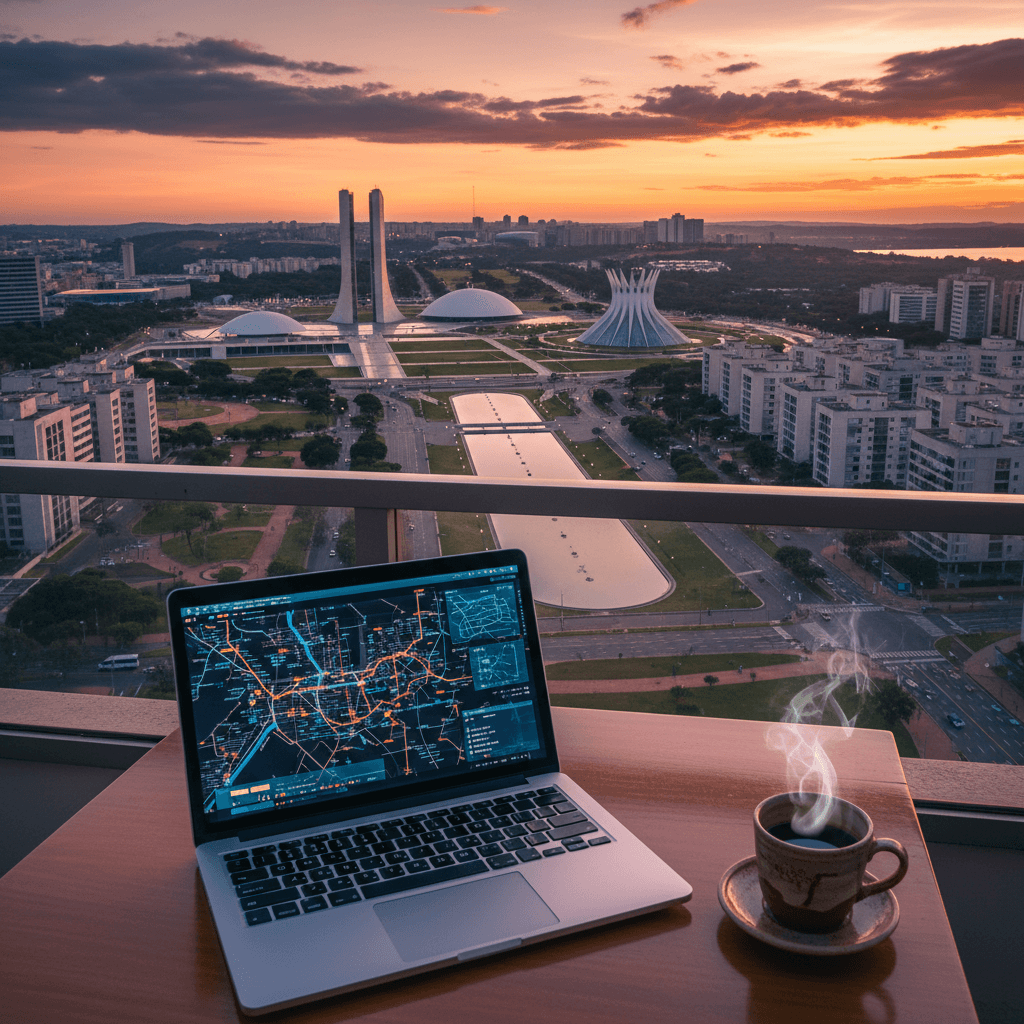
Brasília isn't your typical Brazilian destination. Forget the chaotic charm of Rio or the frantic energy of São Paulo; this is a city built from scratch in the 1960s to be a modernist masterpiece. It feels like stepping into a retro-futurist film set, where wide open spaces and Oscar Niemeyer's curved white concrete buildings define the horizon. Living here feels orderly, bureaucratic, and surprisingly quiet, which is exactly why some nomads love it and others find it a bit sterile.
The city is laid out in the shape of a giant airplane, and the "vibe" changes depending on which wing you land in. Most nomads find the lifestyle here conducive to deep work. There's a certain stillness in the air that helps you focus, though the lack of a traditional street culture means you won't be stumbling upon cozy alleyway bars or walkable historic districts. It's a professional town, home to diplomats and government workers, providing a level of stability and safety that's rare in other major Brazilian hubs.
The Reality of Life on the Grid
The biggest culture shock for newcomers is the car-centric design. Brasília was built for the automobile, not the pedestrian. You'll spend a lot of time in Ubers or on the metro, as the "superblocks" (quadras) are sprawling and separated by massive highways. While the city is packed with green spaces and feels incredibly airy, travelers often complain about the lack of a "soul" or a central heartbeat. If you need the constant buzz of a beach or a 24/7 nightlife scene to feel alive, Brasília might feel a bit lonely after a week.
However, the climate is a major draw. At an altitude of 1,100 meters, it stays relatively temperate. The dry season from May to September is spectacular, with mild temperatures between 20 and 28°C. Just be prepared for the "dusty" season when the humidity drops and the landscape turns a golden brown. When the rains hit from October to April, they come down hard, often accompanied by dramatic lightning storms over the Cerrado plateau.
Cost of Living Breakdown
Your budget will go further here than in São Paulo, but it's certainly not the cheapest corner of Brazil. Most mid-range nomads find they need about US$1,100 to US$1,200 per month to live comfortably, while budget travelers can scrape by on US$600 if they stick to shared housing and street food.
- Budget Lifestyle: US$600 per month. Includes a room in a shared apartment, commuting by bus, and eating at local lanchonetes.
- Mid-range Lifestyle: US$1,100 to US$1,200 per month. Covers a private 1BR in Asa Norte, regular Uber trips, and a mix of home cooking and dining out.
- Comfortable Lifestyle: US$1,800+ per month. Includes a high-end apartment in Lago Sul, frequent upscale meals, and perhaps a car rental for weekend trips.
Where to Plant Your Flag
Choosing the right neighborhood is everything in a city this spread out. Most nomads gravitate toward the "Wings" because they offer the best balance of residential life and amenities.
Asa Norte
- Best For: Nomads and solo travelers.
- Rent: US$300 to US$500 for a 1BR.
- Pros: Younger vibe, plenty of cafes, and more affordable than the south wing.
- Cons: Still very car-dependent; summers can get quite hot.
Asa Sul
- Best For: Long-term expats and those who want more greenery.
- Rent: US$500 to US$700 for a 1BR.
- Pros: More established, walkable superblocks with great markets.
- Cons: Can feel a bit crowded and hectic on the weekends.
Lago Sul
- Best For: Families or nomads with a higher budget who want luxury.
- Rent: US$800 to US$1,200+.
- Pros: Stunning lake views, high-end dining, and very safe.
- Cons: Isolated from the city center; you absolutely need a car here.
The Digital Infrastructure
Internet reliability is one of Brasília's strongest suits. Fiber connections from providers like Vivo and Claro are standard in central areas, typically reaching speeds of 50 to 200 Mbps. If you prefer working out of a cafe, head to Asa Norte. Spots like Padaria Brasil offer free WiFi and a solid US$2 coffee to keep you fueled. For a more professional setup, WeWork in Asa Norte is the go-to for many, costing between US$150 and US$250 a month. If you're looking for something more local and affordable, Cria Coworking in Asa Sul offers drop-in rates around US$100 a month.
Socially, the scene is low-key. You won't find the massive street parties of Rio, but there's a tight-knit community if you know where to look. Join the "Brasília Digital Nomads" Facebook group or check out the jazz bars in Asa Norte like Confraria das Artes. It takes a little more effort to break the ice here, but the locals are generally welcoming once you step outside the bureaucratic bubble.
Brasília is a bit of a paradox for the remote worker. It's an orderly, high altitude capital where the cost of living sits comfortably between the price tags of smaller beach towns and the heavy hitting expenses of São Paulo. You can live well here for about US$1,100 a month, though that number is creeping up toward US$1,200 as inflation and currency shifts take hold. It's a city designed for cars and government work, which means your budget will largely depend on how much you rely on Ubers and which "Wing" you choose to call home.
The Monthly Breakdown
Most nomads find that a mid-range budget of US$1,100 provides a solid lifestyle without much sacrifice. If you're on a tighter budget of US$600, you'll likely be looking at shared housing and sticking to the metro and local buses. For those wanting a comfortable lifestyle at US$1,800 or more, you can afford a lakeside apartment in Lago Sul and regular dinners at higher end spots.
- Housing: A studio or one bedroom apartment in the nomad favorite Asa Norte typically runs between US$400 and US$700. If you want the luxury of Lago Sul, expect to pay US$800 to US$1,200.
- Food: Grabbing a pão de queijo or street meat will cost you US$2 to US$5. A standard meal at a mid-range restaurant is around US$10 to US$20, while a high end dinner at places like Mango's can easily hit US$50.
- Transport: Since the city isn't very walkable, budget about US$150 to US$200 for Ubers and occasional metro trips. A typical ride across the central sectors costs between US$5 and $10.
- Work: A hot desk at WeWork Brasília or Cria Coworking will set you back US$100 to $200 per month.
Where to Set Up Shop
The city's unique "Superquadra" layout means your neighborhood choice dictates your entire experience. Expats recommend sticking to the central wings for the best balance of amenities and safety.
Asa Norte is the go-to for solo travelers and digital nomads. It's got a younger, more academic vibe with plenty of cafes like Padaria Brasil where you can work for the price of a US$2 coffee. Rents here are manageable, usually staying under US$600 for a decent one bedroom.
Asa Sul is the greener, slightly more established sibling to the north. It's famous for its walkable superblocks and local markets. Prices are similar to Asa Norte, but it feels a bit more residential and quiet on the weekends.
Lago Sul and Lago Norte are where you'll find the upscale crowd. These areas offer stunning lake views and top tier safety, but they're isolated. You'll need a car or a healthy Uber budget to live here, and rents rarely drop below US$800.
Staying Connected
Internet reliability is one of Brasília's strongest suits. Fiber connections from Vivo or Claro are standard in the central wings, offering speeds between 50 and 200 Mbps. For mobile data, travelers often use Airalo for an easy eSIM setup, but picking up a local prepaid SIM from Claro is cheaper, costing about US$10 for 20GB.
When you need a professional environment, WeWork in Asa Norte is the most popular choice for networking. If you prefer a more executive atmosphere, Regus in Lago Norte is a solid alternative, though it's further from the action. Many locals save on office costs by hopping between cafes, as the "working from coffee shops" culture is well established in the residential sectors.
Healthcare and Safety
While Brasília is generally safer than Rio, it's still a major capital. Most nomads use Uber after dark rather than walking, even for short distances. Private healthcare is excellent; Hospital Santa Lúcia in Asa Sul is the preferred choice for expats because of its high standards and English speaking staff. Make sure you have an international health plan, as private consultations can add up quickly if paid out of pocket.
Practical Spending Tips
- Banking: Use Wise or Nubank to avoid excessive conversion fees. ATMs are everywhere, but stick to those inside malls or banks for better security.
- Groceries: Shop at Pão de Açúcar for imported goods or local markets in the superblocks for fresh produce to keep your food costs under US$300 a month.
The Nomad Favorites: Asa Norte and Asa Sul
If you want to be where the action is, look no further than the "Wings" of the city. Brasília is shaped like an airplane, and the Asa Norte (North Wing) and Asa Sul (South Wing) are where most remote workers land. These neighborhoods are organized into "superblocks" or quadras, featuring a unique mix of residential buildings and commercial strips.
Asa Norte is the go-to for solo nomads and younger travelers. It feels a bit more modern and has a livelier cafe culture. You'll find spots like Padaria Brasil where the coffee is $2 and the WiFi is reliable. Rent for a decent one bedroom here typically runs between $400 and $600 per month. It's also home to WeWork Brasília, which costs about $150 to $250 monthly for those who need a professional setup.
Asa Sul is the greener, slightly more established sibling. It's famous for its walkable superblocks and local markets. Nomads often choose this area because it feels less "sterile" than the rest of the city. You'll find Cria Coworking here, offering drop-in rates around $100. While it's more walkable than other areas, you'll still rely on the Metro or Uber for most trips. Expect to pay about $500 for a mid-range apartment.
- Rent: $400 to $700 for a 1BR
- Vibe: Professional, orderly, and surprisingly green
- Transport: Best access to the Green and Orange Metro lines
The Expat Choice: Lago Sul
Expats looking for a higher standard of living and a bit of distance from the bureaucratic center usually head to Lago Sul. This is the wealthiest part of the city, perched right on the edge of Lake Paranoá. It's safe, quiet, and feels more like a suburban retreat than a capital city. You'll find high-end dining like Mango's, where a dinner might set you back $40 or $50.
The downside is the price and the isolation. You absolutely need a car here; walking isn't an option. Rents start around $800 and can easily climb to $1,200 for luxury units. It's the place to be if you value views and security over being close to the nightlife or coworking hubs.
- Rent: $800 to $1,200+
- Vibe: Exclusive, quiet, and car-dependent
- Best for: Long-term expats with a higher budget
Families and Nature Lovers: Lago Norte
For families or nomads who prefer nature trails over concrete monuments, Lago Norte is the best fit. It's similar to Lago Sul but tends to feel a bit more relaxed and residential. There's a strong focus on outdoor life, with plenty of spots for paddleboarding or cycling along the lake. Regus has an office here for about $200 a month if you need a quiet executive environment.
The neighborhood is safe and features some of the best international schools in the region. However, it's quite far from the central Eixo Monumental, so factor in $10 to $15 Uber rides every time you want to head into town for a meeting or a change of scenery.
- Rent: $700 to $1,000
- Vibe: Family-friendly and outdoorsy
- Safety: Very high, with many gated communities
Solo and Short-Term Travelers: Setor Hoteleiro Norte
If you're only in town for a few weeks to scout the city or handle paperwork, the Setor Hoteleiro Norte (North Hotel Sector) is the most practical choice. Everything is designed for convenience. You're right next to the major malls, the airport is a $15 Uber ride away, and most of the city's nightlife is within a short radius. It can feel a bit "touristy" and noisy, but it's the easiest place to find short-term rentals and English-speaking staff.
- Rent: $600 to $900 (often inclusive of utilities)
- Vibe: High-energy and transient
- Safety: Moderate; stick to Ubers after dark in this area
If you are coming from the frantic energy of São Paulo or the chaotic beauty of Rio, Brasília will feel like a different planet. The city was built from scratch in the 1960s with a layout that looks like an airplane from above. While its modernist curves are stunning, the scale is massive. You aren't going to stumble upon a cozy workspace by accident here. You have to plan your "sectors," but once you do, you'll find a stable, professional environment that is perfect for deep work phases.
Connectivity and Speeds
Reliable internet is the standard in the central "Wings" (Asa Norte and Asa Sul). Most apartments and dedicated workspaces use fiber optics from providers like Vivo or Claro, consistently delivering speeds between 50 and 200 Mbps. You won't have issues with Zoom calls or uploading large files, which is a relief compared to some of Brazil's more remote beach towns. For mobile data, grab a prepaid SIM card at the airport or a shopping mall for about $10, which usually nets you 20GB of data. If you prefer the digital route, Airalo works well here, though it is slightly pricier than local chips.
Top Coworking Spaces
The coworking scene reflects the city's character: it is organized, corporate, and very efficient. You won't find many "barefoot" nomad hubs, but you will find high-end facilities with excellent ergonomics.
- WeWork (Asa Norte): This is the gold standard for nomads in the city. Located in the Corporate Financial Center, it costs between $150 and $250 per month. It is the best place to meet other internationals and English speakers.
- Regus (Lago Norte): If you are staying in the upscale lakeside areas, this is your best bet. It leans heavily toward the executive crowd and costs roughly $200 per month. The views nearby are a nice perk for your lunch break.
The Cafe Culture Gap
Brasília was designed for cars, not for wandering into neighborhood cafes. However, the "superquadras" in Asa Norte have started to develop a legitimate laptop culture. Nomads frequently recommend Padaria Brasil. It is a classic spot where you can grab a $2 coffee and a pão de queijo and camp out with your laptop for an hour or two using their free WiFi. Just keep in mind that many local bakeries don't have power outlets at every table, so come with a full battery.
Practical Realities for Remote Workers
The biggest hurdle to working here isn't the WiFi; it's the logistics. Because the city is so spread out, you'll likely spend $5 to $10 on an Uber every time you want to switch from your apartment to a workspace. Most digital nomads find that living in Asa Norte is the best move because it balances affordability with proximity to the best cafes and the WeWork hub. If you need a break from the screen, the city's parks and lakeside trails are great, but you'll almost always need a ride-hailing app to get there. It is a trade-off: you lose the "walkable city" charm, but you gain a quiet, distraction-free environment where you can actually get things done.
Navigating the Capital Safely
Brasília is often described by the nomad community as a bubble of order compared to the high energy chaos of Rio. Generally, it's one of the safest major cities in Brazil, but that doesn't mean you should leave your street smarts at the airport. The city's unique layout, divided into specific sectors, means that some areas feel like ghost towns after business hours, which can increase the risk of petty crime.
Most travelers and expats feel perfectly comfortable in Asa Norte and Asa Sul during the day. However, pickpocketing and phone snatches occur in the Centro area and around the Eixo Monumental, especially near tourist landmarks. Local advice is simple: don't walk around with your phone out while checking Google Maps. If you need to navigate, step into a cafe or a shop first.
- Nighttime Safety: Avoid walking between the superblocks (quadras) late at night. Even if your destination is only ten minutes away, the lack of foot traffic makes you a target. Most nomads rely on Uber or the 99 app for door to door transport after dark.
- Areas to Avoid: It is best to stay clear of peripheral regions like Ceilândia and Samambaia, particularly at night, as these areas see much higher rates of violent crime than the central pilot plan.
- Emergency Numbers: Save 190 for the police and 192 for an ambulance (SAMU) in your phone before you arrive.
Healthcare and Medical Services
If you get sick, you're in good hands. Brasília serves as a regional medical hub with high quality facilities. While Brazil offers a free public healthcare system known as SUS, it's often crowded with long wait times. For anything from a stubborn sinus infection to an emergency, nomads almost exclusively use private hospitals.
Hospital Santa Lúcia in Asa Sul is the top recommendation for expats. It’s a modern facility where you’re more likely to find English speaking doctors and staff. Another reliable option is Hospital DF Star, though it sits at a higher price point. Expect to pay between $100 and $200 for a private consultation if you don't have local insurance.
For minor issues, pharmacies like Drogaria São Paulo or Drogasil are on nearly every corner in the commercial sectors of the wings. Many stay open 24/7 and can provide basic medical advice or over the counter meds. If you're applying for the Digital Nomad Visa, remember that proof of a private international health plan with coverage in Brazil is a mandatory requirement.
Practical Wellness Tips
The biggest health challenge for newcomers isn't usually tropical disease, it's the dry season from May to September. Humidity levels can drop to desert like conditions, often falling below 15%. This causes nosebleeds, dry skin, and respiratory irritation for many nomads. Locals swear by keeping a humidifier in their apartment and carrying a water bottle at all times.
Tap water in Brasília is technically treated, but most residents and long term nomads prefer filtered water. Most apartments in Asa Norte come with a built in filter (filtro de barro or a kitchen tap attachment), but if yours doesn't, buying 5 liter jugs at the supermarket is a cheap and easy fix.
The Car is King
If you're coming from the walkable streets of Europe or the dense neighborhoods of New York, Brasília’s layout will be a shock. This city was designed in the 1960s with a utopian, car-centric vision. Everything is spread out along massive axes, and while the "superblocks" (quadras) in Asa Norte and Asa Sul are green and pleasant, getting between them usually requires wheels. Most nomads find that while you can walk to a local pharmacy or bakery within your own quadra, trying to walk to a meeting three sectors away is a recipe for heatstroke.
Ride-Hailing and Apps
Uber is the undisputed lifeline for digital nomads here. It’s reliable, safe, and surprisingly affordable. A typical 10 to 15 minute trip across the central "Pilot Plan" usually costs between US$5 and US$10. You can also use 99, a local competitor that sometimes offers better rates during peak hours. If you're heading from Brasília International (BSB) to the hotel sector or Asa Norte, expect to pay around US$15 to US$25 for a 30 minute ride. It’s almost always better to call a car than to wander around looking for a bus stop after dark.
The Metro and Bus System
Brasília has a clean, efficient Metro system, though its reach is somewhat limited for tourists. It runs in a Y-shape, connecting the central Rodoviária (the main bus hub) to Asa Sul and then branching out into residential suburbs like Águas Claras. It costs about US$1 per trip. It’s great if you’re staying in Asa Sul, but Asa Norte currently lacks metro stations, so you'll be relying on the bus or Uber there. The buses are frequent and cover the entire city for a monthly pass of roughly US$50, but the routes can be confusing for newcomers. Stick to the "Zebrinha" buses, the small silver and red ones that circulate through the main commercial and residential strips.
Two-Wheeled Alternatives
When the weather is dry between May and September, cycling is a fantastic way to see the monumental architecture. The city is flat, and there are extensive bike paths along Paranoá Lake and through the Eixo Monumental. You can use bike-sharing apps like Tembici, which typically cost US$1 to unlock plus a small per-minute fee. It’s a favorite weekend activity for expats living in Lago Sul, though it's more for recreation than a primary way to commute to a coworking space.
Practical Navigation Tips
- The Address System: Don't look for street names. Brasília uses a coordinate system of sectors and numbers (e.g., CLN 210, Block C). It sounds like a math equation, but once you realize the city is shaped like an airplane, it clicks.
- Pedestrian Crossings: Drivers in Brasília are famous for actually stopping at "faixas de pedestre" (crosswalks) if you wave your hand, a rarity in the rest of Brazil.
- Night Safety: While the city is generally safer than Rio, avoid walking long distances between sectors at night. The wide, empty spaces between buildings can feel isolated and are hotspots for petty crime.
- Car Rentals: If you're staying for more than a month and living in Lago Sul or Lago Norte, a rental car is a smart move. Expect to pay around US$300 per month for a basic manual vehicle.
Most travelers agree that while the lack of a traditional "downtown" makes the city feel sterile at first, the ease of jumping in an Uber and arriving at a lakeside restaurant in 15 minutes makes up for the lack of walkability. Just make sure your phone is charged and your data plan is active; you don't want to be stranded without an app in the middle of a four lane highway.
The Language Gap
Expect a significant language barrier once you step outside the airport or high end hotels. While Brasília is a global hub for diplomacy and government, English proficiency remains surprisingly low among the general population. Most locals speak only Portuguese, and you'll find that even in the trendy cafes of Asa Norte, menus and signage are rarely bilingual.
Nomads who've spent time here say that while you can survive with hand gestures and a smile, your quality of life improves drastically with just a few weeks of study. People in Brasília are generally polite and patient with learners, but they won't automatically switch to English to help you out. If you're heading to a local market or taking an Uber, having the basics down is a necessity rather than a luxury.
Essential Survival Phrases
- Olá / Oi: Hello / Hi
- Tudo bem?: How are you? (The universal Brazilian greeting)
- Obrigado (m) / Obrigada (f): Thank you
- Quanto custa?: How much does it cost?
- Você fala inglês?: Do you speak English?
- A conta, por favor: The bill, please
Digital Tools and Translation
Since you'll likely be car dependent and using apps for almost everything, your phone is your best translator. Download the Portuguese offline pack on Google Translate immediately. It's a lifesaver when you're in a basement supermarket in a superquadra where cell signal might be spotty. For real time conversations, the voice translation feature is surprisingly accurate for Brazilian Portuguese.
Most nomads recommend using WhatsApp for everything from booking a haircut to ordering water delivery. It's the primary way Brazilians communicate. This actually helps with the language barrier because you can take your time to translate messages and reply using tools like DeepL, which often handles Portuguese grammar better than other AI translators.
Communication in Business and Social Circles
The vibe in Brasília is more formal than in Rio. In the Eixo Monumental or government districts, people tend to be punctual and dress professionally. However, social communication is still very "Brazilian." Expect warm greetings, which often include a cheek kiss or a lingering handshake. If you're invited to a churrasco (barbecue) at a lakeside villa in Lago Sul, don't be the first person to arrive; showing up 30 to 60 minutes after the stated time is the local norm.
For networking, join the Brasília Digital Nomads Facebook group or look for events at Cria Coworking. While the community is smaller than what you'll find in São Paulo, it's tight knit. You'll find that the expats and "concurseiros" (people studying for public service exams) are usually the ones with the best English skills and are often looking to practice with foreigners.
Connectivity and SIM Cards
Staying connected is easy and relatively cheap. You can grab a physical SIM card from Claro or Vivo at the airport or any major mall like Conjunto Nacional. Expect to pay around US$10-15 for 20GB+ monthly plans. You'll need your passport to register, though some smaller shops might struggle with foreign documents; in those cases, it's often easier to go to an official flagship store.
- Airalo: Best for immediate data upon landing (eSIM).
- Vivo: Often cited as having the most reliable coverage inside concrete buildings.
- Claro: Generally offers the fastest 5G speeds in the central Plano Piloto.
Most cafes and coworking spaces like WeWork offer speeds between 50 and 200 Mbps. Fiber internet is the standard for long term rentals in Asa Sul and Asa Norte, making it a very reliable city for video calls and heavy uploads, provided you have a quiet spot away from the afternoon rain storms.
Brasília doesn't follow the typical tropical rhythm you'll find in Rio or Salvador. Sitting at an altitude of 1,100 meters on the Brazilian highlands, the city experiences a distinct two season cycle that can catch unprepared nomads off guard. You won't find sweltering coastal humidity here; instead, the air is often thin and crisp, especially during the middle of the year.
The Golden Window: May to September
If you have any flexibility in your travel dates, aim for the dry season. From May to September, the sky turns a deep, cloudless blue that locals take immense pride in. Temperatures are mild, typically hovering between 20°C and 28°C (68°F to 82°F), making it the perfect time to explore the Eixo Monumental or bike along the paths of Lake Paranoá. Most nomads find this the most productive time to visit because the weather is predictable and the lack of rain means you won't be stuck inside during your lunch break.
There is one catch to the dry season: the humidity can drop to desert levels, sometimes hitting 10 to 15 percent in August and September. Expats recommend keeping a large bottle of water at your desk and using a humidifier in your apartment to avoid the dry throat and nosebleeds that often plague newcomers. During these months, the sunset over the modernist skyline is spectacular, often turning the horizon a dusty orange and pink.
The Rainy Season: October to April
When the rain arrives in October, it comes in heavy, dramatic bursts. This is the humid summer period, with temperatures peaking around 30°C (86°F). While it's rarely "too hot" compared to the Brazilian north, the moisture makes the heat feel heavier. You can expect daily downpours, often accompanied by impressive lightning storms that roll across the flat plateau.
- January to March: This is the peak of the rainy season. Expect gray skies and frequent disruptions if you're relying on walking or public transit.
- December: Usually the wettest month of the year. If you're staying in Asa Norte or Asa Sul, you'll want to rely heavily on Uber or 99 to avoid getting soaked between the quadras.
- April: A transition month where the rain begins to taper off and the landscape stays lush and green before the brown hues of the dry season take over.
When to Visit for the Best Experience
For the best balance of social life and weather, June and July are top tier. While these are the "winter" months, it rarely gets colder than 13°C (55°F) at night, and the days are sunny and pleasant. This period also coincides with the "Festas Juninas," traditional Brazilian festivals where you can find great street food like canjica and pão de queijo in the residential superblocks.
Avoid late December and January if you're looking for a social scene. Since Brasília is a government town, a huge portion of the population heads to the coast for the holidays. The city can feel eerily quiet, and many of the boutique cafes in Asa Norte might operate on reduced hours. If you want the city to feel "alive," stick to the middle of the year when the political and student calendars are in full swing.
Seasonal Packing List
- Dry Season (May to Sep): A light jacket for the evenings, heavy duty moisturizer, and saline nasal spray for the low humidity.
- Rainy Season (Oct to Apr): A sturdy umbrella and breathable clothing. The rain is warm, but it's intense enough to ruin electronics if you're caught in a flash storm.
- Year Round: High quality sunscreen. The high altitude means the sun is much stronger than it feels, even on cooler days.
Getting Around the Monumental Axis
Brasília was built for cars, not pedestrians. The city's layout is iconic from the air but can be a headache on the ground. You'll find wide avenues and massive distances between buildings, making a US$5 to US$10 Uber ride your best friend. While there is a metro system with Green and Orange lines serving the wings, it doesn't reach every corner of the city. For short bursts of movement, grab a Tembici bike for about US$1 plus a small per-minute fee to cruise the paths along Lake Paranoá.
Budgeting for the Capital
Living here is more affordable than São Paulo but pricier than the coast. Most mid-range nomads find that US$1,100 a month covers a comfortable life, though inflation is pushing that closer to US$1,200 for those who like frequent nights out. Here is how the monthly tiers usually break down:
- Budget (US$600): Shared housing at US$300, local bus passes for US$50, and sticking to US$5 street pastéis or pão de queijo.
- Mid-range (US$1,100): A private apartment in Asa Norte for US$500, a mix of cooking and dining at spots like Fogo de Chão, plus a coworking membership.
- Comfortable (US$1,800+): A luxury lakeside spot in Lago Sul for US$1,000, car rentals, and high-end dinners at Mango's.
Where to Set Up Base
The city is divided into sectors, which feels clinical at first but makes life predictable. Most nomads gravitate toward the "Wings" of the airplane-shaped map.
Asa Norte
- Best for: Solo travelers and digital nomads.
- Rent: US$400 to US$600 for a one-bedroom.
- The Vibe: Younger and more academic with plenty of cafes and easy metro access. It can get hot in the summer, and you'll still want an Uber for grocery runs.
Asa Sul
- Best for: Expats who want more greenery.
- Rent: Similar to Asa Norte.
- The Vibe: Known for its walkable superblocks and traditional markets. It gets busy on weekends, but the residential feel is top-notch.
Lago Sul
- Best for: Families and high-budget travelers.
- Rent: US$800 to US$1,200.
- The Vibe: Quiet, safe, and exclusive. You'll have great lake views but you are isolated from the city center without a car.
Internet and Productive Spaces
Reliability is a strong suit here. Fiber internet from Vivo or Claro is standard in central apartments, usually hitting 50 to 200 Mbps. If you need a professional environment, WeWork in Asa Norte costs roughly US$150 to US$250 a month. For a more local feel, Cria Coworking in Asa Sul offers drop-in rates around US$100. When you just want a laptop-friendly cafe, Padaria Brasil is a staple for a US$2 coffee and decent WiFi.
Health and Safety Realities
Brasília is generally safer than Rio, but don't let your guard down in the Centro or tourist-heavy Eixo Monumental. Avoid walking alone at night, especially in peripheral areas like Ceilândia. For healthcare, private facilities like Hospital Santa Lúcia are excellent and often have English-speaking staff. Make sure you have an international insurance plan, though the local pharmacies like Drogaria São Paulo are open 24/7 for minor needs.
The Nomad Visa and Logistics
Brazil's digital nomad visa is a great option if you can prove a monthly income of US$1,500. It grants a one-year stay and is renewable. For daily finances, Wise and Nubank are the go-to choices for avoiding high bank fees. When you arrive at BSB airport, a 30-minute Uber to the center will cost between US$15 and US$25. Pick up a prepaid SIM card from Claro for about US$10 to get 20GB of data immediately.
Weather and Timing
The climate is defined by its altitude. The dry season from May to September is the sweet spot, with mild temperatures between 20°C and 28°C. Avoid the peak rainy season from December to February unless you enjoy daily tropical downpours and high humidity. If the city starts feeling too sterile, nomads recommend a three-hour bus trip to Chapada dos Veadeiros for world-class hiking and waterfalls.
Need visa and immigration info for Brazil?
🇧🇷 View Brazil Country GuideHidden Gem
Worth the effort