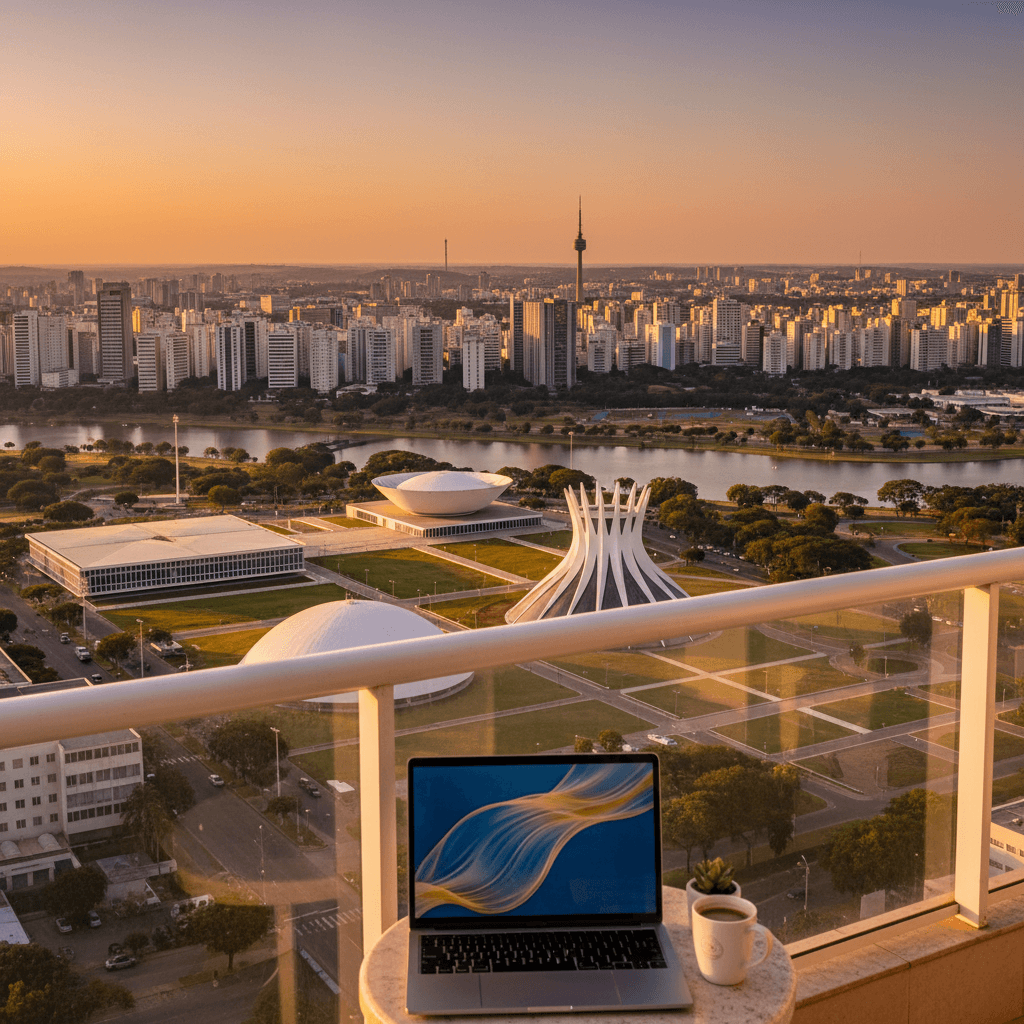
Brasília
🇧🇷 Brazil
Brasília isn't your typical Brazilian postcard. Forget the palm-lined beaches of Rio or the concrete jungle chaos of São Paulo. The capital is a curated, modernist experiment that feels like living inside a 1960s sci-fi film set. Designed in the shape of a massive airplane (the Plano Piloto), the city is orderly, quiet, and surprisingly green. For digital nomads, it offers a distinct trade-off: you lose the spontaneous street-side samba, but you gain a level of predictability and focus that's rare in South America.
The Monumental Vibe
The first thing you'll notice is the scale. Everything is wide, open, and monumental. Oscar Niemeyer’s futuristic white curves define the skyline, from the crown-like Cathedral to the twin towers of Congress. It’s a city of sectors, not streets. Instead of names, you’ll be memorizing codes like CLN 210 or SQS 305. It feels confusing at first, even with GPS, but it quickly becomes a logical, if slightly robotic, way to live.
The social pace is slower and more private. Life here doesn't happen on the sidewalk; it happens in "quadras" (residential blocks) and private clubs. Expats often find the lack of "street buzz" jarring, but they grow to love the backyard BBQ culture and the calm, bureaucratic rhythm that makes deep work easy. It’s a city for the productive nomad who wants to crush a project during the day and enjoy a quiet sunset by Lake Paranoá in the evening.
What It Costs to Live Here
Brasília is surprisingly affordable for a capital, especially if you venture outside the high-demand government zones. Most nomads find they can live well on a mid-range budget of $1,100 a month, while those looking for luxury with all the trimmings rarely spend over $1,800.
- Rent: A modern studio in the central Plano Piloto usually runs between $450 and $720. If you want more for your money, head to Águas Claras, where high-rises with pools go for $320 to $540.
- Dining: You can grab a quick "pastel" or "coxinha" on the street for about $2 to $4. A solid lunch at a mid-range spot in Asa Sul will cost you $7 to $14.
- Transport: Uber is the lifesaver here. Most rides across the central wing cost between $4 and $7. A monthly metro pass is around $30, though it mainly serves the suburbs.
The Neighborhood Breakdown
Where you park your laptop matters because the city is so spread out. Most nomads gravitate toward these three spots:
Plano Piloto (Asa Sul and Asa Norte)
- The Draw: This is the heart of the "airplane" layout. It’s where the iconic architecture and the best cafes are located.
- The Trade-off: It’s the most expensive area and can feel a bit sterile at night. Walking between sectors is nearly impossible; you'll need wheels.
Águas Claras
- The Draw: The go-to for solo nomads. It has a younger, more vertical vibe with plenty of modern apartments and easy metro access to the center.
- The Trade-off: It’s a "new" city feel, lacking the historical weight and greenery of the Plano Piloto.
Park Sul
- The Draw: Popular with families and young professionals who want resort-style living. The condos here often have massive pools, gyms, and social clubs.
- The Trade-off: It feels very suburban. You'll definitely feel the isolation if you don't have a car or a healthy Uber budget.
Productivity and Connection
The internet is surprisingly reliable, with 50 to 200 Mbps being the standard in most urban rentals. For those who need a professional community, the city offers several local coworking hubs. Espaço 365 in the Plano Piloto is a popular choice for its central location and modern facilities, while Impact Hub in Águas Claras provides a great alternative for a more local, nomad-heavy vibe.
Socializing takes effort. You won't find many "nomad meetups" happening spontaneously. Instead, join the InterNations chapter or look for language exchanges in Asa Norte. The nightlife is low-key, centered around "botecos" (neighborhood bars) where people gather for cold beer and snacks rather than wild clubbing. It’s a city that rewards those who are willing to initiate an invitation rather than waiting for the party to find them.
The Bottom Line
Living in Brasília is a bit of a financial paradox. It's the seat of power, so it lacks the dirt-cheap prices you might find in Northeast Brazil, yet it remains significantly more affordable than the high-octane hubs of São Paulo or Rio de Janeiro. For most nomads, a monthly budget of US$1,100 covers a comfortable life with a private apartment and plenty of meals out. If you're willing to share a flat and stick to street food, you can scrape by on US$600, while US$1,800 buys a premium lifestyle in the city's best condos.
Housing and Neighborhoods
Rent is your biggest variable here. The city's unique layout means you're often choosing between the prestige of the center and the value of the suburbs. Most expats find that while the Plano Piloto is iconic, the newer developments offer better amenities for the price.
- Plano Piloto (Asa Sul and Asa Norte): This is the heart of the "airplane" layout. Expect to pay between R$2,500 and R$4,000 (US$450 to US$720) for a decent one-bedroom. It's central, but the car-centric design means you'll spend more on transport.
- Águas Claras: This is the go-to for the digital nomad crowd. It's full of modern high-rises and has its own metro connection. Prices are friendlier, ranging from R$1,800 to R$3,000 (US$320 to US$540) for a studio or one-bedroom.
- Park Sul: If you want a resort vibe with pools and gyms, this area is popular with young professionals. Rents usually sit between R$2,200 and R$3,500 (US$400 to US$630).
Eating and Drinking
Food costs depend heavily on whether you're eating like a local bureaucrat or a tourist. A quick lunch of a pastel or coxinha at a street stall will only set you back R$10 to R$20 (US$1.80 to US$3.60). If you're sitting down at a mid-range spot like Manga in Asa Sul, expect to pay R$40 to R$80 (US$7 to US$14) per person. For a high-end dinner at Quintal do Lago, you're looking at R$100 (US$18) or more.
Connectivity and Workspace
Brasília is a tech-forward city with reliable 5G and fiber internet. Most modern apartments come with speeds between 50 and 200 Mbps. If you prefer a dedicated office environment, the coworking scene is well-established.
- WeWork (Plano Piloto): The gold standard for many, costing R$600 to R$1,200 (US$110 to US$215) per month depending on your desk setup.
- Impact Hub (Águas Claras): A more community-focused vibe that's easier on the wallet, usually R$400 to R$800 (US$70 to US$145).
- Mobile Data: Grab a SIM card from Vivo or Claro. For R$50 to R$100 (US$9 to US$18), you can get a massive data plan, often around 100GB. Just remember you'll need to get a CPF number first at a post office to register the card.
Transport and Utilities
Since the city isn't very walkable, you'll need to budget for wheels. The metro is efficient for getting between Águas Claras and the center for about R$5 a ride. Most nomads rely on Uber or the 99 app, with typical cross-town trips costing R$20 to R$40 (US$3.60 to US$7). A monthly pass for the bus and metro system runs about R$150 to R$250 (US$27 to US$45). Utilities for a standard apartment, including electricity and water, usually add another US$60 to US$100 to your monthly tally.
For Nomads and Solo Travelers: Águas Claras
If you're looking for the best value for your money, Águas Claras is the neighborhood where most digital nomads end up. It feels like a city within a city, packed with modern high-rise apartments that actually fit a remote worker's budget. Unlike the sprawling center, this area has a younger energy and a more concentrated social scene.
The biggest selling point here is the metro. You can hop on the Green or Orange lines and be in the heart of the capital in about 25 to 30 minutes for R$5. It's one of the few places in Brasília where you don't feel completely stranded without a car. You'll find plenty of local coworking hubs like Impact Hub where the monthly desk rate sits between R$400 and R$800.
- Rent: R$1,800 to R$3,000 for a modern studio or one-bedroom.
- Vibe: High-energy, vertical, and practical.
- Best for: People who want a gym in their building and a metro station down the block.
For the Classic Brasília Experience: Plano Piloto (Asa Sul and Asa Norte)
Living in the "Pilot Plan" is the only way to truly soak in the city's iconic architecture. Asa Sul and Asa Norte are the two wings of the city's airplane-shaped layout. Most expats and high-earning nomads choose this area for its proximity to government ministries, embassies, and the best cafes like Coffee Lab or Padaria Brasil. It's orderly, green, and safe, but the address system is notorious for being a headache. You won't find traditional street names here; instead, you'll be memorizing sector codes and quadras.
Asa Norte tends to have a slightly more bohemian feel with low-key bars, while Asa Sul is more established and professional. Just keep in mind that walkability is low. Even if your destination looks close on a map, the massive highways make an Uber almost mandatory. Most rides within the wings will cost you between R$20 and R$40.
- Rent: R$2,500 to R$4,000 for central apartments.
- Coworking: You can find established professional workspaces in the area like Regus or various local business hubs in the commercial sectors.
- Pros: You're right next to the Cathedral and the National Congress.
For Families and Comfort Seekers: Park Sul
If you're moving with a partner or children, Park Sul is the sweet spot. It's a newer development characterized by "condominium clubs" which are massive gated complexes with pools, playgrounds, and 24-hour security. It offers a much higher level of safety and amenities than the older buildings in the center. Expats often recommend this area because it balances modern luxury with a bit more quiet than the bustling Águas Claras.
While it has a suburban feel, it's strategically located near the ParkShopping mall, which is one of the best spots for high-end dining and groceries. You'll likely need to rely on delivery apps or a rental car here, as the area isn't designed for strolling to a corner bakery.
- Rent: R$2,200 to R$3,500 for spacious two-bedroom units.
- Safety: Excellent, thanks to the gated nature of the residential blocks.
- Healthcare: Close to top-tier facilities like Hospital Santa Lúcia.
For Luxury and Long-Term Expats: Park Way
Park Way is where you go if you want a backyard and a private pool. It's dominated by large, sprawling houses rather than apartments. It's the neighborhood of choice for diplomats and families who plan on staying for several years and want to host the backyard barbecues that define Brasília's social life. Since the city lacks a traditional "street party" culture, your social life here will revolve around your home and your neighbors.
It's quiet and isolated, so don't expect to find a coworking space or a trendy cafe within walking distance. You're paying for space and silence. If you need a break from the house, the nearby Feira do Lago Sul is a great weekend spot for street food, where you can grab a meal for R$15 to R$30.
- Rent: Expect to pay R$5,000+ for a full house.
- Atmosphere: Peaceful, green, and very private.
- Cons: Extremely car-dependent; you'll feel isolated without your own wheels.
Connectivity and Speed
Brasília may have a reputation for being a bureaucratic hub, but for a digital nomad, that translates into some of the most reliable infrastructure in Brazil. You aren't going to struggle with spotty connections here. Most modern apartments in Plano Piloto and Águas Claras come equipped with fiber optic lines pushing speeds between 50 and 200 Mbps. If you're staying in one of the newer condo complexes in Park Sul, you'll likely find high speed WiFi is already baked into the building amenities.
Mobile data is equally impressive. Most nomads recommend picking up a SIM card from Vivo or Claro for the best 5G coverage around the city. You can expect to pay between R$50 and R$100 (US$9 to US$18) per month for a massive data bucket, often around 100GB. Just keep in mind that buying a SIM card in Brazil requires a CPF (tax ID). You can get one at a post office or the Receita Federal, and it's a small hurdle that makes life much easier for long term stays.
Top Coworking Spaces
The coworking scene in Brasília is professional and polished. It reflects the city's "suit and tie" energy but offers the amenities you need for deep focus. Because the city is so spread out, your choice of workspace will likely depend on which "sector" you call home.
- Regus Asa Sul: If you need a corporate, quiet environment for client calls, this is a top choice. It's professional and reliable, with monthly rates starting around R$500 (US$90).
- Impact Hub (Águas Claras): For those living in the more affordable high rises outside the center, this is the go to nomad spot. It has a younger, more creative vibe than the downtown offices and costs roughly R$400 to R$800 (US$70 to US$145) per month.
The Cafe Culture
Working from cafes is a bit different here than in São Paulo. Because Brasília is designed around specific sectors, you won't find a coffee shop on every corner. However, the spots that do exist are high quality. Most nomads find that the local "padarias" (bakeries) are surprisingly good for a quick hour of emails, though they can get loud during the lunch rush.
Expats frequently recommend Ernesto Cafés Especiais Asa Sul for its reliable free WiFi and laptop friendly tables. If you're in Asa Norte, you'll find a few more indie cafes tucked into the commercial "quadras" that are happy to let you linger over a pão de queijo and a latte. Just don't expect the high energy "laptop lifestyle" you see in coastal cities; here, the vibe is much more about getting the work done so you can enjoy the sunset by the lake.
Practical Costs at a Glance
- Monthly Coworking Membership: R$500 to R$1,000 (US$90 to US$180)
- Daily Drop in Rate: R$50 to R$90 (US$9 to US$16)
- Unlimited Mobile Data (Monthly): R$70 (US$13)
- Average Cafe Meal + Coffee: R$45 (US$8)
Overall, the "Internet and Coworking" situation in Brasília is one of its strongest selling points. It lacks the distraction of the beach and the chaos of larger metros, making it a top tier choice for nomads who are in a "sprint" phase of their projects and need a stable, high speed environment to stay productive.
Staying Safe in the Federal Capital
Brasília is generally considered one of the safer major cities in Brazil, especially when compared to the high energy chaos of Rio or São Paulo. Because it was built as a planned government hub, the layout is orderly and the police presence is visible in the central areas. Most nomads feel perfectly comfortable walking around Plano Piloto or Águas Claras during the day.
That said, the city's unique design can be a double edged sword. The vast, open spaces and long distances between "sectors" mean that many areas become ghost towns after dark. Expats recommend avoiding walking alone at night in the Setor Comercial or near the central bus station (Rodoviária), as these spots can attract opportunistic crime when the office crowds head home. Stick to Ubers after the sun goes down; they're cheap, reliable, and much safer than trying to navigate the dark pedestrian tunnels.
Personal safety tips for the capital:
- Keep your phone tucked away: While you aren't as likely to face a brazen snatch and grab as you would on Copacabana beach, it's still best to avoid flashing expensive tech while walking between quadras.
- Stick to the core: Avoid wandering into peripheral satellite cities or informal settlements (favelas) on the outskirts unless you're with a local who knows the area well.
- Use ride hailing apps: Uber and 99 are the standard here. They provide a digital paper trail and are far safer than flagging down random cars late at night.
Healthcare and Hospitals
If you have private insurance, the healthcare in Brasília is world class. The city is a regional hub for medical tourism, and many of the top tier hospitals feel more like luxury hotels than clinics. Digital nomads are required to have health insurance to secure their visa, and you'll find that your premium goes a long way here.
For high end care, most expats head to Hospital Santa Lúcia in Plano Piloto or the DF Star in Asa Norte. These facilities are equipped with the latest tech and often have English speaking staff, though having a translation app handy is always a good move for administrative paperwork. For daily needs, pharmacies like Drogasil or Droga Raia are on almost every corner and many stay open 24 hours.
Healthcare quick facts:
- Emergency Numbers: Dial 192 for an ambulance (SAMU) or 190 for the police.
- Private Consultation Costs: A visit to a specialist without insurance usually runs between R$300 and R$600 (US$55 to US$110).
- Public System: While Brazil has a universal system (SUS) that travelers can use for free in emergencies, wait times are long. Stick to private clinics for anything non urgent.
Insurance Requirements
When applying for the Brazil Digital Nomad Visa, you must prove you have health insurance that covers you for the duration of your stay. Make sure your policy specifically mentions coverage within Brazilian territory. Most nomads opt for international providers like SafetyWing or Genki, which are widely accepted by the consulate and local private hospitals. Keep a digital copy of your policy and your CPF number (the Brazilian tax ID) on your phone, as hospitals will ask for both during check in.
The Car is King (But Apps Are Queen)
Brasília was designed for the automobile, not the pedestrian. The city is laid out like a giant airplane, and the distances between the "wings" (Asa Sul and Asa Norte) are much larger than they look on a map. If you try to walk from your apartment to a monument, you'll likely end up stranded on a grassy highway verge with no shade. Most nomads rely heavily on Uber or 99. These apps are incredibly affordable here; a typical cross-town ride usually costs between R$20 and R$40. It's the most efficient way to deal with the city's notorious "sector" address system, which can baffle even the most experienced travelers.
Mastering the Metro
While the bus system is extensive, it can be confusing for newcomers. The Metro is a much better bet for digital nomads, especially those living in Águas Claras. There are two main lines, Green and Orange, which connect the suburbs to the central Rodoviária do Plano Piloto. It's clean, efficient, and costs about R$5 per trip. If you're staying in the center, the metro is less useful for daily errands, but it’s a lifesaver for getting to the more affordable residential hubs without sitting in rush hour traffic.
Expats frequently recommend getting a rechargeable transit card if you plan to stay more than a month. It saves you from hunting for change or waiting in ticket lines during the afternoon heat. Just keep in mind that the metro doesn't cover the entire "airplane" layout, so you'll still need those ride-hailing apps for the final leg of your journey.
Two Wheels and Two Feet
Walkability is a mixed bag. Inside the Superquadras (the residential blocks), you'll find plenty of green space and paved paths that are perfect for a morning stroll to a local bakery like Padaria Brasil. However, once you try to leave your specific sector, the infrastructure disappears. For those who prefer some exercise, bike and scooter rentals through Grin or Yellow are available. Most rentals cost a base fee of R$5 to R$10 plus a per-minute charge. There are some dedicated bike paths, but they don't always connect logically, so stay alert when crossing the wide avenues.
Arrival and Airport Transfers
Getting from Brasília International (BSB) to the city center is straightforward. You have three main options depending on your budget and patience:
- Uber/99: The most popular choice for nomads. It takes about 20 to 30 minutes to reach Plano Piloto and costs roughly R$50 to R$80.
- Executive Bus: A comfortable, air-conditioned airport bus runs regularly to the main hotel sectors for about R$15. It's a solid middle-ground option if you don't have too much luggage.
- Local Buses: Cheaper but much slower and often crowded. Only recommended if you're on a strict budget and have a light backpack.
The Address Headache
You won't find traditional street names like "Main Street" here. Instead, you'll be looking for codes like CLS 203 or SQN 405. Travelers often find this system intimidating at first, but it's actually quite logical once you realize the numbers correspond to their position on the city's axes. Even so, always keep your Google Maps or Waze open. Even locals sometimes get turned around in the repetitive architecture of the sectors. Most delivery drivers and Uber pilots know the grid by heart, so as long as you have the code, you'll get where you're going.
The Language Barrier
In Brasília, Portuguese isn't just the official language; it's the only one you'll hear in most daily interactions. Unlike the tourist zones of Rio, the capital is a government town. This means English proficiency is surprisingly low among the general population, even in the sleek malls of Asa Sul or Asa Norte. You'll find English speakers in high end hotels and international coworking spaces like WeWork, but your Uber driver or the server at Manga likely won't speak a word of it.
Most nomads find that a basic grasp of Portuguese is a survival requirement here. Without it, simple tasks like explaining your destination to a driver or ordering a coxinha at a local snack bar become a game of charades. Expats recommend downloading offline maps and translation apps immediately, as you can't always rely on someone nearby to step in and translate for you.
Decoding the Address System
The most unique communication challenge in Brasília isn't the vocabulary, it's the "Address Language." The city doesn't use traditional street names. Instead, it uses a grid of acronyms and numbers like SHS (Setor de Hotéis Sul) or SQN (Superquadra Norte). Travelers often say they feel like they're living inside a spreadsheet for the first few weeks.
When you're giving directions or inputting an address into Uber or 99, you have to be precise. A single letter difference can put you on the completely opposite side of the "airplane" layout. If you're staying in Águas Claras, things are a bit more conventional, but in the Plano Piloto, you'll need to learn the logic behind the sectors and blocks to communicate where you are.
Practical Tools and Apps
To bridge the gap, several tools are indispensable for the Brasília nomad. WhatsApp is the primary way everyone communicates, from booking a table at Quintal do Lago to chatting with your landlord. If you don't have a Brazilian number, many local businesses might be slow to respond to emails or web forms.
- Google Translate: Use the camera feature for menus and the voice feature for quick questions at the pharmacy.
- Duolingo or Babbel: Spend at least 30 days practicing before you land. Brazilians are incredibly patient and warm, but they'll appreciate the effort.
- WhatsApp: Ensure your account is active. It's the "Swiss Army Knife" of communication for everything from grocery deliveries to networking.
Socializing and Language Exchanges
Since the social scene is often tucked away in private condos and "clubs," finding a way into the conversation can be tough. The best way to practice your Portuguese is through organized meetups. The InterNations Brasília chapter is active, and you'll find language exchange events posted on Meetup.com or in local Facebook expat groups.
Nomads often head to Asa Norte for a more relaxed, student-friendly vibe where people are more likely to strike up a conversation. If you're looking for a more professional environment, established coworking spaces in the Plano Piloto often host events where you can meet bilingual locals and fellow remote workers. While the city's bureaucratic exterior might seem cold, once you break the language barrier, you'll find the locals are eager to help you navigate their unique, monumental home.
The Two Seasons: Heat and Bone-Dry Air
Brasília doesn't do the traditional four seasons. Instead, your life here will be dictated by two distinct phases: the wet and the dry. Because it sits on a high plateau in the Brazilian Highlands, the air is thinner and the weather is far more predictable than the coastal humidity of Rio. It’s a tropical savanna climate, meaning it stays warm year round, but the humidity swings are wild.
The dry season, running from May to September, is when the city looks its most "space age" under a relentless, cloudless blue sky. Expats often struggle with the humidity levels during this time, which can drop to 10 percent, similar to a desert. You'll want to keep a bottle of water on you at all times and maybe invest in a humidifier for your apartment in Águas Claras. The upside? The sunsets over Lake Paranoá are legendary during these months, and the lack of rain makes it the best time for architectural photography.
The wet season arrives in October and lasts through April. You can expect heavy, predictable afternoon downpours that cool the city down. While it rains frequently, it's rarely a gray, gloomy affair for days on end. The rain usually hits hard for an hour and then clears up, leaving the city’s many green spaces looking lush and vibrant. For nomads, this is a great time to focus on deep work at spots like WeWork in Plano Piloto or the Impact Hub.
When to Plan Your Stay
If you have the flexibility, the absolute best time to arrive is between May and July. The scorching heat of the late dry season hasn't hit yet, the landscape is still green from the departing rains, and the air is still breathable. The temperatures usually hover between 18°C (64°F) and 26°C (79°F), which is perfect for exploring the open air monuments without melting.
- Peak Nomad Season (May to July): Clear skies, manageable humidity, and pleasant temperatures. Great for outdoor cafes and walking through the sectors of Asa Sul.
- The "Desert" Phase (August to September): It gets hot, dusty, and incredibly dry. Locals stay indoors, and you'll feel the static electricity everywhere. If you have respiratory issues, this might be a tough month for you.
- The Rainy Stretch (November to January): Frequent thunderstorms. It’s the cheapest time for short term rentals, but you’ll be taking Ubers everywhere to avoid getting soaked.
What to Pack for the Highlands
Packing for Brasília is different from packing for a beach holiday in Floripa. The city has a professional, bureaucratic soul, so the "flip-flops and board shorts" look won't always fly in the trendy bars of Asa Norte or the coworking spaces in the center. Most nomads recommend a "smart casual" wardrobe that handles heat well but looks sharp enough for a business meeting.
- Lightweight Layers: Even when it's 28°C (82°F) during the day, the altitude means temperatures can dip to 13°C (55°F) at night during the dry season. A light jacket or hoodie is a must.
- Hydration and Skin Care: This isn't just a suggestion; it's a survival tactic. High quality moisturizer, lip balm, and a reusable water bottle are your best friends during the dry months.
- Rain Gear: If you're visiting during the wet season, a sturdy umbrella is better than a raincoat, as the humidity can make waterproof jackets feel like a sauna.
Most travelers find that while the climate is consistent, the lack of humidity in the winter is the biggest adjustment. If you can handle the dry air, you'll be rewarded with some of the most beautiful, clear weather in South America, perfect for those weekend trips to the waterfalls in nearby Chapada dos Veadeiros.
Decoding the Address System
The first thing you will notice is that Brasília doesn't have traditional street names. It’s laid out like an airplane, and addresses are a logic puzzle involving sectors, blocks (quadras), and sub-blocks. For example, an address like CLN 205 means Comercio Local Norte, Block 205. It sounds intimidating, but once you realize the city is divided into wings (Asa Sul and Asa Norte), it clicks. Most nomads find that even with a GPS, you might end up on the wrong side of a massive concrete structure, so always give yourself an extra ten minutes for the final "where is the entrance" hunt.
Budgeting for the Capital
While Brasília is the seat of government power, it is surprisingly affordable compared to São Paulo or international hubs. You can live well here for US$1,100 to US$1,800 per month depending on how much you prioritize a luxury condo with a pool.
- Studio/1BR Rent: Expect to pay R$2,500 to R$4,000 (roughly US$450 to US$720) in the central Plano Piloto. If you head to Águas Claras, that drops to R$1,800 to R$3,000.
- Daily Meals: A quick lunch at a "per kilo" restaurant usually runs R$40 to R$60. A fancy dinner at a spot like Quintal do Lago will cost R$100 or more.
- Connectivity: A local SIM card from Claro or Vivo is a must. You can get 100GB of data for about R$50 to R$100 a month, but you will need to take your passport to a physical store and potentially visit a post office first to register for a CPF (tax ID).
Getting Around
Brasília was built for cars, not pedestrians. The distances between the "sectors" are deceptive, and the heat can make a fifteen minute walk feel like a marathon. Most expats rely heavily on Uber or the 99 app, which are cheap and efficient here; a typical cross-town ride costs between R$20 and R$40.
If you live in Águas Claras, the metro is your best friend. It connects directly to the Plano Piloto for R$5 a ride and lets you bypass the notorious rush hour traffic. For those staying in the center, biking is an option in the residential quadras, but the lack of continuous paths makes it more of a weekend hobby than a reliable commute.
Working and Staying Productive
The internet in Brasília is some of the most stable in Brazil. You'll find 5G coverage throughout the central areas and speeds of 200 Mbps are standard in modern apartments. If you need a professional environment to escape the "monumental" solitude of your apartment, the city has several high-end coworking options.
- WeWork (Plano Piloto): The gold standard for networking, costing R$600 to R$1,200 per month.
- Impact Hub (Águas Claras): A more community-focused, affordable vibe at R$400 to R$800 per month.
- Coffee Shops: For a casual afternoon, nomads recommend Padaria Brasil or Coffee Lab. They have reliable WiFi, though they can get loud during the afternoon "cafezinho" rush.
Safety and Health
Generally, Brasília feels much safer than Rio or Salvador. You can walk around the residential sectors of Asa Sul and Asa Norte during the day without much worry. However, the city gets very quiet at night. Stick to well-lit areas and use ride-hailing apps after dark rather than wandering the vast, empty parks.
If you get sick, the private healthcare here is top-tier. Hospitals like Santa Lúcia or DF Star are world-class. Just make sure your nomad insurance is up to date, as private out-of-pocket costs for specialists can add up quickly. For minor issues, look for a Drogasil pharmacy; they are on almost every corner and many stay open 24 hours.
Social Life and Integration
The social scene is more "private dinner party" than "street samba." To meet people, you have to be proactive. Expats recommend joining the InterNations Brasília chapter or looking for language exchange meetups on Facebook. Since the city is full of diplomats and government workers, the crowd is professional and well-traveled, making it easy to find English speakers if your Portuguese is still a work in progress.
Need visa and immigration info for Brazil?
🇧🇷 View Brazil Country GuideHidden Gem
Worth the effort