Brașov
🇷🇴 Romania
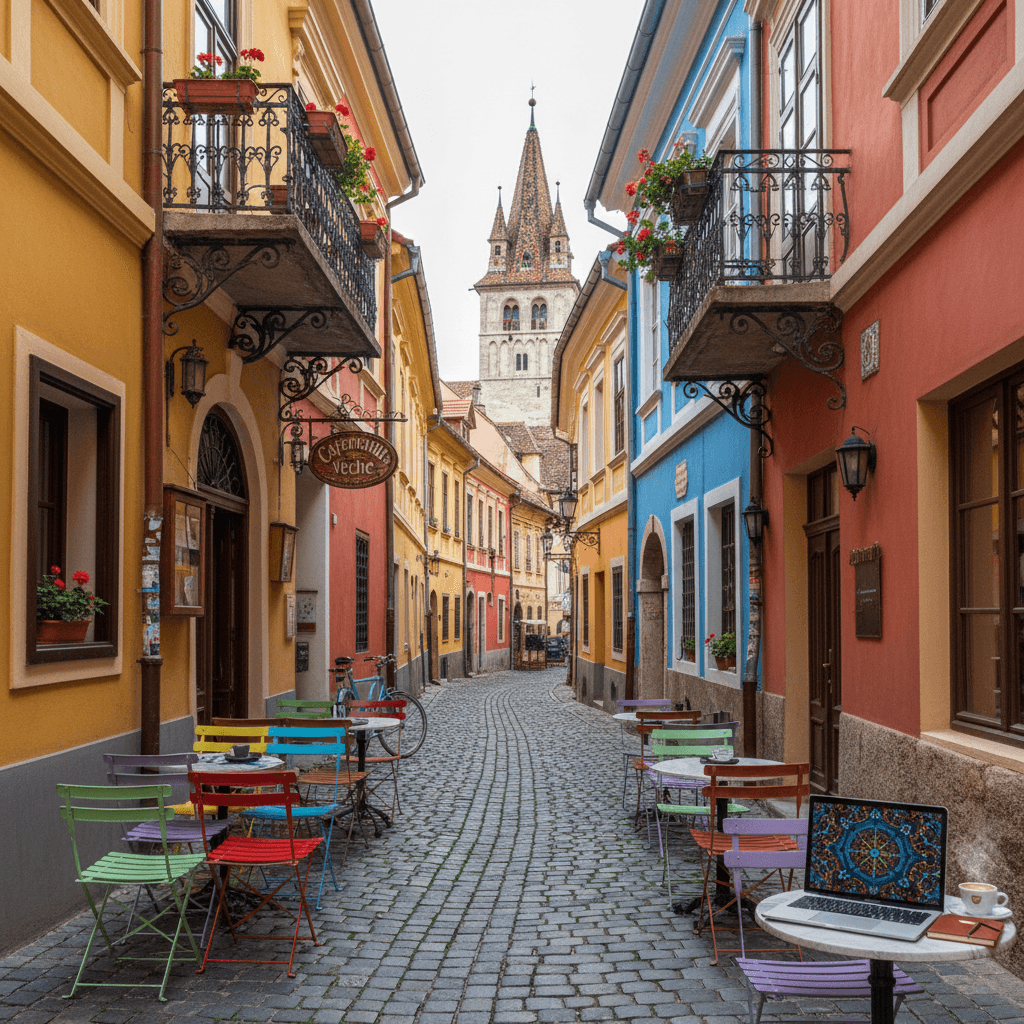
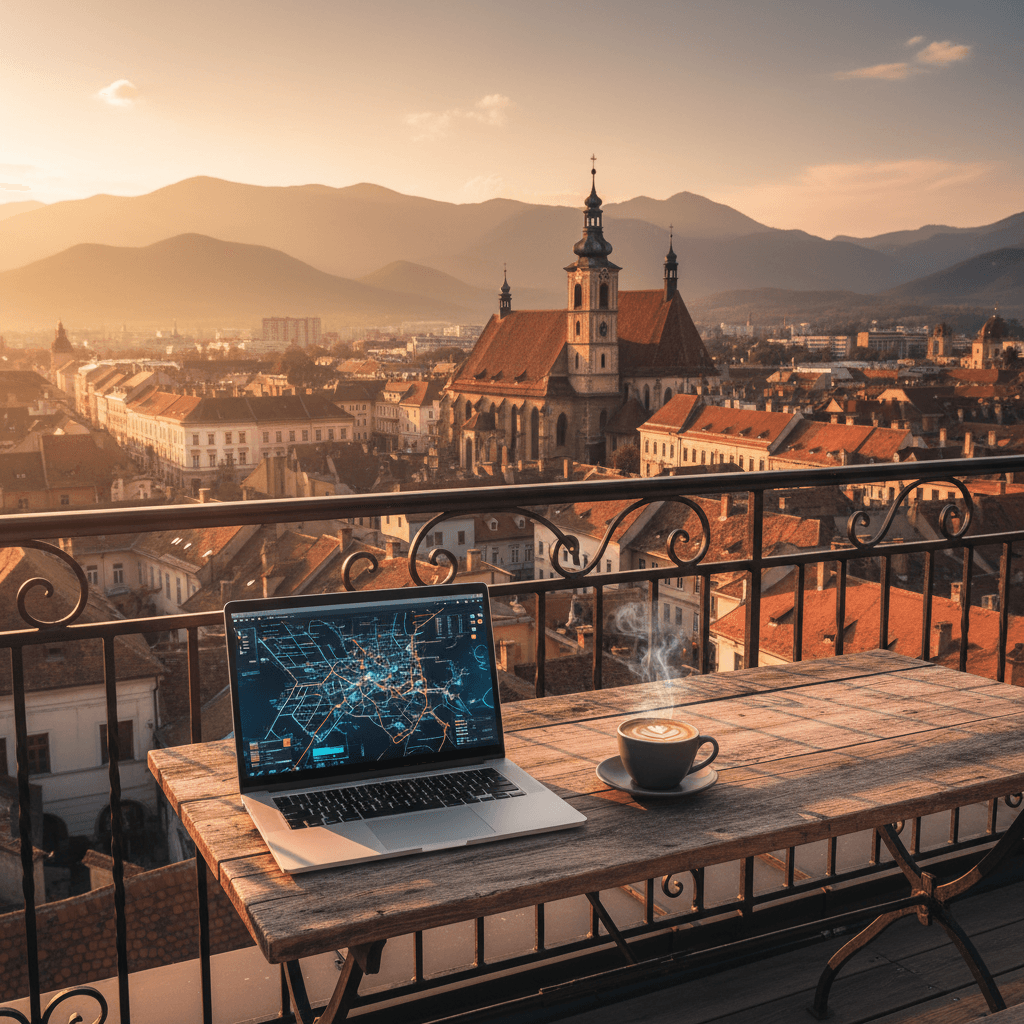
Brașov feels like a medieval town that figured out remote work without losing its spine. The Old Town is all cobblestones, Gothic facades, church bells and the smell of coffee drifting out of narrow streets, then you look up and there’s the mountain ring around everything, which, surprisingly, makes the place feel bigger than it's. It’s calmer than Bucharest, but it doesn’t feel sleepy. Not at all.
For nomads, the appeal is pretty simple, good internet, lower costs and fast access to nature. The average monthly spend for a single person lands around $1,150 with rent and a central 1BR typically ranges from $500-$670, so it’s cheaper than a lot of Western European bases without feeling rough around the edges. Coffee shops in the center are fine for a work session, coworking is there if you want a cleaner setup and the whole city runs on a more human pace than the big capital grind.
The trade-offs are real. The nomad scene is small, nightlife gets repetitive and summer crowds can clog the prettiest parts of the center until the square feels like a tour group funnel. Winter can be brutally cold, honestly and the gray days hit harder when the pavements are damp and the air smells like wet stone and exhaust.
Best areas
- Old Town: Best for solo nomads, walkable, cafe-heavy, close to sights, but pricier and touristy.
- Coresi: Good for expats and longer stays, modern buildings, malls, green space, less charm.
- Răcădău: Quieter and greener, near hikes and forest edges, though you’ll be farther from the center.
Work life is decent here. Internet speeds are excellent, averaging around 300 Mbps, and places like Hub 1317 and Hub One Zero give you proper desks, stable WiFi and a social scene that doesn’t try too hard, which I like. Public transport is cheap, Bolt usually solves the annoying bits and you can be in Poiana Brașov or on a trail fast, so lunch can turn into a hike if you’ve got the energy.
Day to day, Brașov feels safe and practical, with friendly locals, decent healthcare and English that holds up well around younger people and tourist-facing businesses. You’ll still want to keep an eye on your bag in Council Square and don’t wander onto dark trails after sunset because bears are a real thing here, not a cute story. This city suits people who want clean air, mountain views and a quieter base, not nonstop parties or glossy expat noise.
Brașov isn’t cheap in the “budget mountain town” sense, but it’s still reasonable for a place with Old Town cafés, ski access and decent internet. A single nomad usually lands around $1,150 a month with rent and that number can creep fast if you want a central flat, eat out a lot and start taking Bolt rides instead of waiting for buses.
Rent is the big swing factor. A studio or 1BR in the center, especially around Piața Sfatului and the pedestrian core, often runs about $500 to $669, while places outside the center can be a bit easier on the wallet, though you’ll give up some walkability and end up dealing with more buses, colder stairwells and a slightly less lively evening scene. Honestly, that’s the tradeoff here.
Daily spending stays manageable if you keep it local and the prices feel friendly compared with a lot of Western Europe, though restaurant bills add up faster than people expect once you get lazy. Street food or fast food is around $8.65, a mid-range lunch is about $12.90 and dinner for two at a nicer place can hit $57.80, which, surprisingly, doesn’t buy you luxury, just a solid meal and a beer or two.
- Budget: Around $1,000, with shared housing, public transport and more cooking at home.
- Mid-range: Around $1,500, with a central 1BR, cafe work, Bolt rides and regular meals out.
- Comfortable: Around $2,500, with a nicer apartment, coworking, day trips and fewer compromises.
Utilities and internet usually come in around $123 a month and the connection is good enough for remote work, with high-speed fiber widely available and faster plans if you want more headroom. Hub 1317 is a popular name for coworking (prices vary - check current rates with Hub 1317), while Hub One Zero is a calmer option if you’d rather work somewhere with a garden and snacks instead of a corporate vibe.
Food and transport are where Brașov stays pleasant. A bus ticket is only $1.16, monthly passes are cheap and Bolt rides usually sit in the $2 to $6.50 range, so you don’t need a car unless you’re living far out or doing lots of day trips. The real annoyance isn’t cost, it’s winter, when the cold bites through your coat and the sidewalks go slick, then you start paying for convenience a lot more often.
If you pick the right neighborhood, the budget makes sense. Old Town is the easiest for most nomads, Coresi works better if you want modern buildings and malls and Răcădău is the move if you want quiet streets and quick access to trees instead of tourists.
Brașov isn’t one of those cities where every neighborhood feels interchangeable. You’ve got a medieval center that gets loud with day-trippers, a newer northern pocket with malls and cleaner blocks and a greener southern edge where the air smells like pine after rain. Pick wrong and you’ll spend half your day in Bolt rides, which gets old fast.
Nomads
Old Town is the obvious pick and honestly, it earns the hype if you want cafés, short walks and easy access to coworking spots like Hub 1317 or Hub One Zero. Rent’s the sting, with a central 1BR often landing around $550 to $700 and summer crowds can make Piața Sfatului feel packed, noisy and a little touristic.
- Best for: Walkability, cafés, solo work, quick social life
- Watch for: Tourist crushes, higher rents, pickpockets around the square
- Vibe: Stone streets, church bells, espresso steam, late afternoon chatter
If you want quieter mornings, Răcădău is a smarter move. It’s closer to forest trails and mountain air, so you can finish a call and then be on a hike in ten minutes, weirdly easy for a city this compact.
Expats
Coresi is where a lot of expats land when they want new buildings, better parking and less medieval charm, which, surprisingly, some people prefer. It’s around the mall, so you get supermarkets, gyms and chain cafés without fighting for a table in the center, though it feels more practical than pretty.
- Best for: Modern apartments, errands, long stays
- Watch for: Less atmosphere, more traffic on busy retail streets
- Vibe: Glassy blocks, shopping bags, tram-like bus stops, cleaner sidewalks
Răcădău also works well for expats who care more about daily comfort than postcard views. You’re still close enough to get into town, but you’ll hear fewer tour groups and more birds at dawn.
Families
Coresi is the safest bet for families because it’s newer, easier for strollers and less cramped than Old Town. You’ll find green spaces, bigger apartments and simpler school or grocery runs and frankly, that matters more than living next to a Gothic façade.
- Best for: Space, convenience, playgrounds, parking
- Watch for: Fewer old-city walks, more car-dependent routines
- Vibe: Weekend shopping, kids on scooters, fresh paint, low stress
Solo Travelers
Old Town wins for solo travelers because it’s walkable, social and safe enough if you use basic city sense. Stay in the lit streets, keep an eye on your phone in crowded spots and skip the remote paths after dark, because the center’s charm fades fast once you’re alone in a quiet lane.
If you want fewer tourists and more breathing room, Răcădău is the better base. The tradeoff is distance, but the payoff is cleaner air, quieter nights and the sound of leaves instead of scooters and weekend bar noise.
Brașov’s internet is solid, not flashy. Most nomads get by just fine on home connections and cafe WiFi and average download speeds in Brașov are around 300 Mbps, well above the national average of 235 Mbps, which is enough for calls, uploads and a normal workday unless you’re pushing huge files all day.
The practical move is simple, get a local SIM as soon as you land, because mobile data is cheap and you’ll want backup when a cafe gets busy or the WiFi hiccups. Orange, Vodafone, Digi and Telekom all have decent prepaid options and you can usually pick one up in the airport, a mall or a phone shop without much drama, honestly.
Best coworking picks are in the center, so you can work, grab coffee, then walk out into Council Square without wasting time in traffic. Hub 1317 is the old standby, fast WiFi, a proper desk setup and a central location, though the monthly price lands around $178 for a hot desk, which isn’t cheap for Brașov.
Hub One Zero is another good option and it feels a bit softer around the edges, with a garden and snacks that make long workdays less miserable when the weather turns gray and the mountain air gets wet and cold. The scene here is small, turns out, so don’t expect a giant nomad crowd or nonstop networking events, but the people you do meet are usually friendly and not fake about it.
Old Town cafes
- Workability: Good for a few hours, especially if you grab a proper coffee and keep your laptop battery topped up.
- WiFi: Often fast enough for calls, with some cafes showing strong speeds, surprisingly, even in the middle of the pedestrian zone.
- Downside: Tourists, clinking cups, street noise and the smell of pastries and exhaust all mixing together.
Internet setup
- SIM data: Orange Fun plans start around $14 for 25GB.
- Unlimited options: Digi, Vodafone and Telekom can run about $9 to $20 a month.
- Backup strategy: Keep a SIM hotspot ready, because apartment WiFi can be fine one day and annoying the next.
If you work from home, Old Town is the easiest base, but Răcădău is quieter and better if you want forest air and fewer tourists under your window. Coresi is the practical middle ground, newer buildings, shops nearby, less charm, more convenience and that’s the tradeoff.
Brașov feels safer than most Romanian cities of its size and most nomads settle in without much drama. The center is easy, the streets are busy enough to feel watched and the main headaches are petty theft, tourist-season crowds and the occasional bad idea of hiking too late. Still, pickpockets do work Council Square, so keep your phone zipped away and don’t leave a laptop in plain view at a cafe table.
At night, stick to lit streets in Old Town, Coresi and the main routes back from bars. Quiet side roads get dark fast and the mountain air can turn cold in a way that hits your hands and ears the second you step outside. Frankly, the biggest outdoor risk isn’t the city, it’s wandering onto remote trails without checking weather, daylight or bear activity first.
- Center: Safest bet for solo stays, lots of foot traffic and cameras.
- Coresi: Calm, modern and fine for families or longer rentals.
- Răcădău: Pleasant and quiet, though you’ll want transit or a car.
Healthcare is decent for a city this size and private care is where Brașov really feels comfortable. MedLife’s local hub, along with other private clinics and pharmacies, covers the usual stuff well, so a doctor visit for a fever, rash or twisted ankle doesn’t turn into a half-day ordeal. A standard private appointment runs about $43, which isn’t cheap by local standards, but it’s still manageable if you need fast answers.
For emergencies, dial 112. That’s the number to remember, full stop. Pharmacies are everywhere, nurses and doctors in the private system usually speak workable English and weirdly, getting basic medication sorted is often easier here than in bigger, shinier cities where you’d expect more efficiency.
- Pharmacies: Easy to find in every major neighborhood.
- Private clinics: Good for quick consults, scans and prescriptions.
- Emergency care: Use 112, then head to the nearest hospital or clinic.
If you’re trail running, skiing or heading toward Poiana Brașov, be a little smarter than the average weekend hiker. Stay on marked paths, bring a charged phone and don’t treat forested edges like a park stroll, because bears do show up and the consequences of a bad encounter are ugly. The city itself is fine, the mountains demand respect and that distinction matters.
Brașov is easy to live in, then a little annoying once you leave the center. Old Town is properly walkable, with cobbles, church bells, cafe chatter and tourists drifting around Piața Sfatului, while the farther edges get more residential and less charming fast. For most nomads, that tradeoff is fine.
Walk: If you’re staying in Centru Istoric, you’ll probably walk everywhere for daily errands, coffee and dinner and honestly that’s the best way to handle the historic core because parking is messy, the streets are narrow and cars creep through with impatient honking. The downside is winter, when icy sidewalks and wet stone make a simple grocery run feel slippery and cold.
Bus: RATBV buses are the cheap fallback, with single rides around $1.16 and monthly passes about $25.50, so they’re a smart move if you’re living in Răcădău, Coresi or anywhere uphill from the center. Schedules are decent, the vehicles are clean enough and you’ll hear the soft hum of electric buses mixed with old diesel noise depending on the route.
- Best for walkability: Old Town, Piața Sfatului, Strada Republicii
- Best for quieter living: Răcădău, near the forest and trail access
- Best for modern convenience: Coresi, especially if you want malls and newer apartments
Ride-hailing works well here, so most nomads keep Bolt on their phone and use it for late nights, luggage or lazy trips uphill, with rides usually landing around $2 to $6.50. Uber is around too, but Bolt tends to be the first pick, weirdly because locals seem to trust it more and it usually shows up faster.
Airport: Brașov-Ghimbav Airport is only about 9 km out, which makes arrivals painless and you can get into town by bus, taxi or Bolt without much drama. If you’re carrying ski gear or winter luggage, take the car, because standing around in freezing wind with bulky bags gets old fast.
Bikes and scooters exist, but Brașov isn’t flat, so they’re more useful for short hops than serious commuting. Turns out the hills matter here and if you’re heading toward Poiana Brașov or anywhere near the forest edge, a car, shuttle or bus is usually the better call.
Practical move: stay central if you want to skip transport headaches, use the bus for cheap daily life and save Bolt for nights, rain or when the climb home feels rude. That’s the real pattern.
Romanian is the default in Brașov, but you won’t feel stranded if your English is decent. In Old Town, around Transilvania University and in cafés where laptops are open and espresso cups keep clinking, staff usually handle English well, especially with younger locals and anyone used to tourists. Quietly, that makes day-to-day life easier.
Outside the center, though, English drops off fast and that’s where a few Romanian phrases save you from awkward pantomime at the bakery or bus stop. Bună for hello, Mulțumesc for thanks and Vă rog for please go a long way, honestly, because people here tend to be polite back when you make even a small effort.
The good news is that Brașov doesn’t have the hard-edged language stress some bigger cities do. The bad news, weirdly, is that people can still be blunt, so if someone corrects your pronunciation or answers fast, they’re usually being efficient, not rude. Google Translate is handy, but keep it ready before you get into a pharmacy queue or ask for directions in a side street.
- Hello: Bună
- Thanks: Mulțumesc
- Please: Vă rog
- Sorry: Scuze
- Do you speak English? Vorbiți engleză?
Signage in the center is usually manageable, though bus info, local paperwork and landlord messages can still turn into a mess if you rely on English alone. If you’re dealing with rentals, utilities or medical admin, expect some back-and-forth and frankly, a few things still move through WhatsApp voice notes, which can be annoying if your Romanian is basic.
Most nomads get by with a mix of English, gestures and a little Romanian, then pick up more once they settle into a café routine or a coworking space like Hub 1317 or Hub One Zero. That’s the rhythm here, not glamorous, just practical and it works.
If you’re staying a while, learn the phrases for ordering, paying and asking for help. Brașov isn’t linguistically difficult, but it does reward effort and the locals who warm up fastest are the ones who don’t act entitled when the answer comes back in Romanian.
Brașov’s weather has a split personality. Summer is lovely, winter can be a grind.
The sweet spot is July and August, when daytime highs sit around 25°C and the town feels made for long walks through Piața Sfatului, coffee on a terrace, then an easy escape to Poiana Brașov or a Bran day trip. You’ll still get rain and sometimes it comes down hard enough to rattle the café windows, but the air is warm, the evenings are pleasant and the mountain views usually show off.
Spring and early summer are trickier. May through July gets wetter, with around 100mm or more of rain and 15 to 17 rainy days, so carry a light jacket and don't trust a blue sky at breakfast. Honestly, that damp spell can make the cobblestones slick and the forest trails muddy, though the upside is fewer crowds than peak season.
Winter is for people who don’t mind cold feet and dark afternoons. January is the roughest month, with daytime highs around 0°C, freezing rain and a kind of cold that bites through gloves, then lingers on the tram rails and stone streets. December isn’t much kinder at about 4°C, so pack proper boots, layers and something waterproof if you’re staying in town.
Best times by travel style
- For city exploring: May, June, September and early October, when it’s cooler, quieter and you can actually enjoy the Old Town without fighting tour groups.
- For hiking: July and August, because the trails are open, the days are long and the forest air smells like pine after rain.
- For skiing: January through March, especially if you’re heading up to Poiana Brașov and want proper winter conditions.
If you want the cleanest balance, come in September. The summer crowds thin out, the weather stays decent and the city feels calmer, with fewer tour buses, less noise in Council Square and that crisp mountain air that makes a morning walk strangely addictive.
Skip the idea that Brașov is mild all year. It isn’t and the weather can turn on you fast, especially once the mountains start throwing wind and rain back at the center.
Brasov feels easy to live in, but not cheap if you want comfort, especially once you add Old Town rent, a decent meal out and the odd Bolt ride back after dark. A single nomad usually lands around $1,150 a month and that number jumps fast if you want a central one-bedroom, regular coworking and a few proper dinners instead of supermarket pasta.
Money goes further here than in Bucharest, though. Street food sits around $8.65, a mid-range lunch about $12.90 and an upscale dinner for two can hit $57.80, so most long-stayers mix cafe meals with home cooking, which, surprisingly, keeps the place feeling livable instead of expensive.
Where to stay
- Old Town: Best if you want to walk everywhere, hear church bells and sit near cafes, but rent is the highest and summer crowds can be annoying.
- Coresi: Better for newer apartments, malls and a cleaner suburban feel, though you lose the medieval charm fast.
- Răcădău: Quieter, greener and closer to trails, so it suits people who want forest air and less tourist noise.
The internet is solid, honestly, with average speeds around 39 Mbps and plenty of places offering stronger cafe WiFi. Add note: 'Hub 1317 is relocating - verify current location before visiting', Hub One Zero has a more relaxed garden feel and many nomads just work from Old Town cafes because the connection is decent and the espresso smell does half the job.
Getting around is simple. Old Town is walkable, RATBV buses are cheap at about $1.16 a ride and Bolt usually costs $2 to $6.50 for short hops, so you rarely need a car unless you're heading to Poiana Brașov or out to Bran.
- SIM cards: Orange Fun 9 gives 25GB for about $14, while Digi and Telekom often have unlimited plans around $20.
- Banking: Cards work almost everywhere, Revolut is common and ATMs are easy to find, just withdraw a sensible amount in RON so you don't keep paying fees.
- Safety: Brașov feels pretty calm, but pickpockets do work Council Square and unlit trails at night are a bad idea, especially if bears are around.
Customs are straightforward. Tip 7.5 to 10 percent, take your shoes off indoors and be direct, because people here usually prefer plain speech over fake politeness. Winter gets cold enough to sting your face, summers bring tourist crowds and sweaty tram rides and if you want the best local rhythm, come prepared for both.
Need visa and immigration info for Romania?
🇷🇴 View Romania Country GuideHidden Gem
Worth the effort
Monthly Budget Estimates
More cities in Romania
Constanta
🇷🇴 Romania
Iași
🇷🇴 Romania
Bucharest
🇷🇴 Romania