Bonn
🇩🇪 Germany
The Former Capital’s Second Act
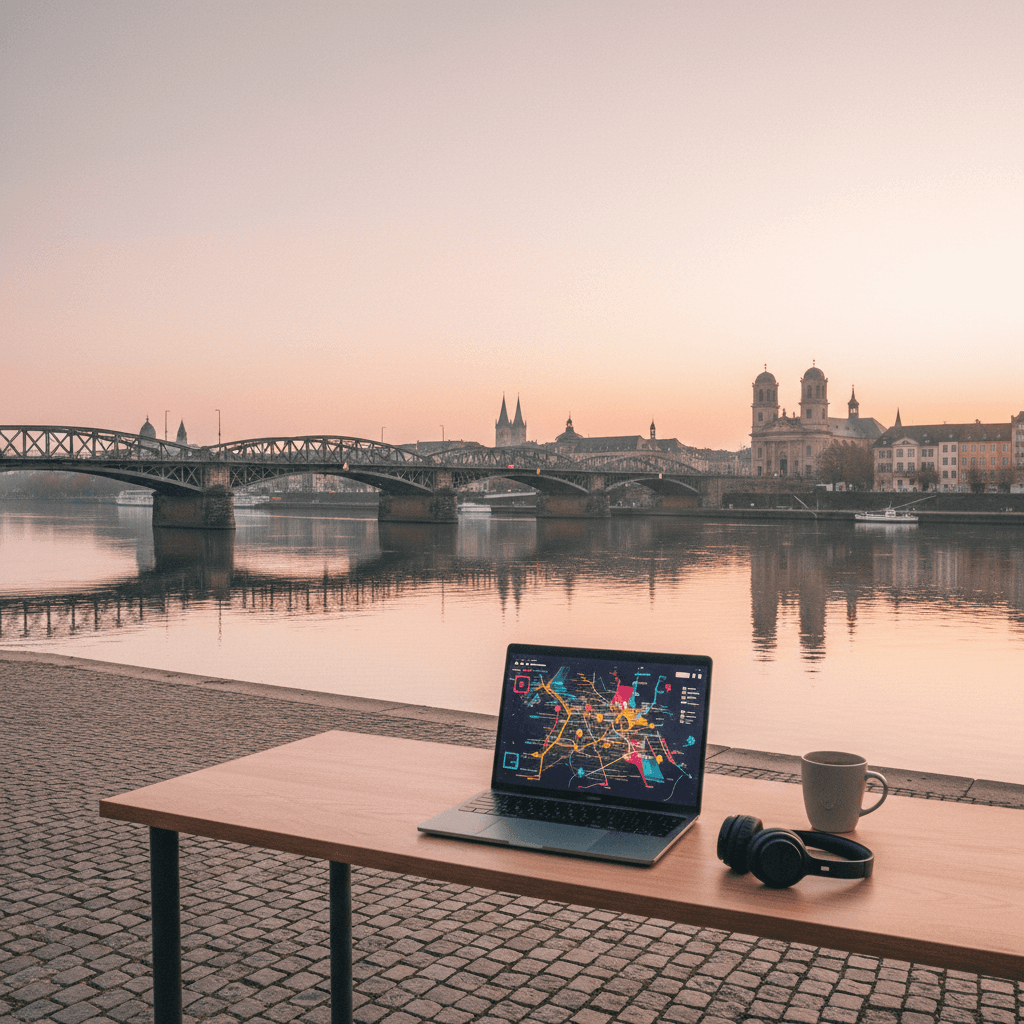
Bonn is the city for the nomad who has outgrown the frantic, gritty energy of Berlin and the high-octane corporate gloss of Munich. It’s a place that feels deeply settled, structured, and surprisingly green. As the former capital of West Germany, the city retains a dignified, international air, but the vibe today is far more relaxed. You’ll find yourself working from a cafe in a cobblestone alley one minute and walking along the banks of the Rhine the next.
Most nomads find that Bonn offers a rare sense of predictability. Everything works. The trains arrive when they say they will, the internet is rock solid with average speeds around 110 Mbps, and the streets feel safe enough for a midnight stroll. It’s a city that rewards focus, making it a favorite for remote workers with heavy project loads who need a quiet base without the distractions of a 24/7 party scene.
The Local Rhythm
Life here moves at a human pace. You’ll notice the "Bonn style" is polite but direct. Locals value their work-life balance, so don't expect many shops to be open late or on Sundays. Instead, the weekends are for the outdoors. Travelers often say the emotional heart of the city is the Hofgarten or the sprawling Poppelsdorf Palace gardens, where you’ll see students and UN staffers alike soaking up the sun.
While it’s quieter than neighboring Cologne, which is just a 30-minute train ride away, Bonn isn't boring. It’s intellectually curious. Between the Beethoven House and the various museums along the Museum Mile, there’s a constant hum of culture. The presence of the United Nations and several major global NGOs gives the city a polyglot feel, so you’ll hear English, French, and Spanish spoken in the supermarkets as often as German.
Cost of Living Breakdown
Bonn sits in a comfortable middle ground for Germany. It’s more affordable than the big southern hubs but carries a slight premium over the east. You should budget between €2,200 and €3,500 per month depending on how much you value a central zip code.
- Budget Nomad: €1,800 to €2,200 per month. This covers a studio in areas like Tannenbusch, plenty of €6 Currywurst or Döner meals, and a €49 Deutschland-Ticket for unlimited local transit.
- Mid-range Living: €2,500 to €3,500 per month. This gets you a nice one-bedroom in the Südstadt, a dedicated desk at a coworking space for roughly €250, and regular dinners out at €20 per person.
- High-end Comfort: €4,000+ per month. Expect a premium apartment in the Altstadt, high-end dining near the Rhine, and private health insurance that meets the strict €10,000 annual funding requirements for German residency.
Where to Plant Your Laptop
Each neighborhood has a distinct personality, so choosing the right one is key to your experience. Expats recommend starting your search early, as the housing market is competitive.
- Altstadt (Old Town): This is the heart of the action. It’s walkable, packed with cafes, and perfect if you want to be steps away from the Rhine. It’s the most "touristy" part of town, but for a solo nomad, the convenience is hard to beat.
- Südstadt: Widely considered one of the most beautiful residential quarters in Germany. It’s famous for its Gründerzeit architecture and leafy streets. It’s quiet, upscale, and home to many international professionals working at the UN.
- Bad Godesberg: A bit further south, this former diplomatic district feels like its own small town. It’s slower and more suburban, but you get more space for your Euro and easy access to the local sprays.
The Digital Infrastructure
You won't have to hunt for a signal here. Fiber optic connections are standard in most modern rentals. For a change of scenery, nomads frequent spots like the cafes around the University or established coworking hubs. If you’re heading out for the day, apps like Nextbike make it easy to grab a rental bike for about €1 to unlock, while the Free Now app is the go-to for hailing rides. For your phone, grab an eSIM from providers like Jetpac to ensure you have an unlimited hotspot for those times you want to work from a park bench in the Rheinaue.
The Price of Stability
Bonn isn't the place you go to live on pennies, but it won't drain your bank account like Munich or London. It occupies a comfortable middle ground. You're paying for a high quality of life, incredibly reliable infrastructure, and a level of safety that's hard to find in larger European hubs. Most nomads find that a monthly budget of €2,500 to €3,500 allows for a very comfortable lifestyle without constantly checking your banking app.
If you're on a tighter budget, you can make it work for around €1,800 to €2,200. This usually means living in a shared flat (WG) or a studio in areas like Tannenbusch, cooking most meals at home, and sticking to the €49 Deutschland-Ticket for all your transport needs. It's a structured city, so prices don't fluctuate wildly; what you see on the menu is exactly what you pay.
Monthly Budget Breakdowns
Budget Nomad
- Total: €1,800 to €2,200
- Housing: €600 to €800 for a room in a shared apartment or a basic studio on the city outskirts.
- Food: €400. Mostly groceries from Aldi or Lidl, with occasional €6 to €10 Döner or Currywurst runs.
- Workspace: €50. Working from laptop-friendly cafes like those in the Altstadt, buying a few coffees a day.
- Transport: €49 for the national monthly rail and bus pass.
Mid-Range Nomad
- Total: €2,500 to €3,500
- Housing: €900 to €1,200 for a private one-bedroom apartment in a nice neighborhood like Südstadt.
- Food: €700. A mix of home cooking and dining out at mid-range spots where a meal costs €15 to €25.
- Workspace: €200 to €300 for a dedicated desk at a local coworking space.
- Extras: €300 for weekend trips to Cologne or the Rhine Valley and a gym membership.
High-End Nomad
- Total: €4,000+
- Housing: €1,500+ for a premium, fully furnished apartment in the center or a quiet villa area in Bad Godesberg.
- Food: €1,200+. Frequent dinners at upscale restaurants near the Beethoven House where meals exceed €40 per person.
- Workspace: €400 for a private office or premium coworking membership.
- Connectivity: €30 for a high-speed eSIM with unlimited data for seamless hotspots.
Daily Expenses and Lifestyle Costs
Groceries are surprisingly affordable if you shop like a local. Expect to pay about €1.50 for a loaf of fresh bread and €2 for a liter of milk. If you're heading out for a drink, a local beer will set you back about €4 to €5, while a glass of Riesling from the nearby vineyards usually costs around €6.
For those looking to stay long-term, remember that Germany has strict requirements for residency. If you're applying for a freelancer visa, you'll need to prove you have at least €10,000 to €12,000 in savings to cover your first year. Health insurance is another non-negotiable expense; expat-friendly plans usually start around €80 to €150 per month depending on your age and coverage needs.
Most travelers recommend using apps like Free Now or Uber for late-night rides, though they are pricier than the tram. A short 10-minute trip will usually cost €15 to €20. To save money, stick to the Nextbike rentals found all over the city; it's only about €1 to unlock and a few cents per minute thereafter.
Choosing where to plant your flag in Bonn depends on whether you want to wake up to the sound of church bells in a cobblestoned alley or prefer the polished, international vibe of the UN district. While it lacks the chaotic energy of Berlin, Bonn makes up for it with high quality of life and neighborhoods that actually let you get work done without a construction crew outside your window.
The Solo Nomad: Altstadt (Old Town)
If you want to be within a five minute walk of your morning espresso and the Rhine riverfront, the Altstadt is your base. It is the most walkable part of the city, packed with narrow streets, cherry blossom trees that go viral every spring, and plenty of laptops-out cafes. Nomads frequent Black Coffee Pharmacy for reliable Wi-Fi and a decent brew.
- Vibe: Social, historic, and slightly touristy during peak seasons.
- Monthly Rent: Expect to pay €800 to €1,100 for a furnished studio or a room in a high end flatshare.
- Best for: People who don't want to rely on the tram and enjoy having bars and bookstores at their doorstep.
The Long Term Expat: Südstadt
Many expats consider Südstadt one of the most beautiful residential quarters in Germany. It is famous for its preserved Wilhelminian style architecture and leafy avenues. Because it sits between the city center and the UN Campus, it attracts a professional crowd that values quiet nights but wants to be close to the action. You'll find plenty of organic grocery stores and small boutiques here.
- Vibe: Upscale, academic, and architecturally stunning.
- Monthly Rent: A 1BR apartment typically runs between €1,000 and €1,300.
- Best for: Professionals working remotely for international organizations or those who want a "local" feel without the grit.
Families and Slow Travelers: Bad Godesberg
Located about 15 to 20 minutes south of the center by tram, Bad Godesberg used to house most of the foreign embassies back when Bonn was the capital. Today, it's a green, spacious district with a distinct international flavor. It feels like its own small town, complete with a castle ruin and expansive parks like the Redoute. It is much quieter than the center, making it ideal if you need a dedicated home office setup and more square footage.
- Vibe: Suburban, diverse, and very relaxed.
- Monthly Rent: You can find larger 2BR apartments for €1,100 to €1,400, offering better value than the city center.
- Best for: Nomads traveling with partners or children who need proximity to international schools and green spaces.
The Budget Conscious: Tannenbusch
For those keeping a strict eye on their overhead, Tannenbusch offers the lowest entry point into the Bonn housing market. It is a more industrial, high rise heavy area compared to the picturesque Südstadt, but it's well connected to the center by the U-Bahn lines 16 and 63. While it doesn't have the "charming European" aesthetic, it's a practical choice if you're just starting your freelance journey and need to keep costs down.
- Vibe: Functional, multicultural, and strictly residential.
- Monthly Rent: Budget studios or rooms can be found for €500 to €750.
- Best for: Solo travelers on a budget who prioritize savings over neighborhood aesthetics.
Most newcomers use WG-Gesucht for finding flatshares or Immowelt for long term rentals. If you're only staying for a month or two, look for "Zwischenmiete" (short term sublets) which are common among the city's large student population. Just remember that Bonn is a compact city; as long as you're near a Stadtbahn station, you can get across town in under 25 minutes.
Connectivity That Just Works
Bonn isn't the place you go to find a gritty, underground tech scene, but it's exactly where you go if you need your Zoom calls to never drop. The city benefits from Germany's massive infrastructure push, with fiber optics becoming the standard across most central districts. You can expect average download speeds around 110 Mbps, which is more than enough for heavy video editing or managing cloud servers.
Most nomads stick to the Altstadt or Südstadt for the best balance of signal strength and scenery. Public Wi-Fi, known as "BonnNet," is available in many public squares, but it's mostly for checking maps. For serious work, you'll want a reliable backup. Expats usually grab a local SIM or an eSIM like Jetpac or Airalo. A 20GB data package typically runs between €20 and €30, and 5G coverage is remarkably consistent throughout the city center.
Top Coworking Spots
The coworking scene here is smaller than in neighboring Cologne, but it's professional and far less crowded. You won't be fighting for a desk or dealing with the "see and be seen" vibe of Berlin hubs.
- Digital Hub Bonn: Located right near the main station, this is the flagship spot for the city's tech crowd. It's got a sleek, corporate-meets-startup feel. A day pass costs €50, while monthly hot desks hover near €250.
- Coworking Bonn: A more intimate, community focused space. It's popular with freelance consultants and writers who want a quiet environment. Expect to pay about €200 to €300 for a monthly membership.
- Design Offices: If you need a high end atmosphere for client meetings, this is the spot. It's pricier but offers top tier ergonomics and professional printing services.
The Cafe Office Culture
Bonn has a specific etiquette when it comes to "laptop lounging." While the city is full of beautiful cafes, not all of them appreciate you camping out for four hours on a single espresso. In the Altstadt, you'll find plenty of students from the university doing the same, so you'll blend in easily.
Local favorites for a few hours of work include Black Coffee Pharmacy. The unwritten rule is to order something every 90 minutes. Don't expect every cafe to have power outlets; many of the older, more traditional spots are designed for socializing, not spreadsheets. If you need to take a call, it's polite to step outside or find a quiet corner. Germans value a quiet atmosphere, and loud "hustle culture" talk is often met with a stern look.
Practical Tech Essentials
If you're planning a long term stay, you'll eventually need to deal with the Anmeldung (residence registration) to get a high speed home internet contract. Providers like Deutsche Telekom (which is headquartered right here in Bonn) or Vodafone offer the best speeds, but they often require a two year commitment. Most nomads bypass this by using month to month providers like O2 or simply sticking to coworking spaces and mobile hotspots.
- Power Outlets: Germany uses Type F plugs. If you're coming from the US or UK, bring a sturdy adapter that can handle a laptop brick.
- Cybersecurity: Using a VPN is highly recommended when jumping between cafe networks, as German privacy laws are strict but public hotspots can still be vulnerable.
- Hardware: If your MacBook dies, there isn't a dedicated Apple Store in Bonn, but GRAVIS in the city center is the authorized service provider and stocks most replacements.
A Safe Haven in the Rhineland
Bonn is one of those rare cities where you can actually let your guard down. While larger German hubs like Berlin or Frankfurt have their gritty corners, Bonn maintains a buttoned up, secure atmosphere that reflects its history as the former federal capital. Most nomads find they can walk through the Altstadt or along the Rhine promenade late at night without looking over their shoulder. It is predictable, well lit, and remarkably calm.
The city doesn't really have "no go" zones. Even areas like Tannenbusch, which locals sometimes label as less desirable due to its industrial feel and cheaper housing, are safe by international standards. The most common annoyance you'll face is the "Berliner Schnauze" style of communication, which can feel blunt or even rude if you aren't used to it. Don't take it personally; it is just the local way of being efficient. If you find yourself in a pinch, dial 112 for fire or medical emergencies and 110 for the police.
Healthcare Standards and Insurance
Germany’s healthcare system is world class, and Bonn is a major beneficiary of that. The city is home to the Bonn University Clinic (Universitätsklinikum Bonn), a massive facility that handles everything from routine checks to specialized surgeries. You won't struggle to find an English speaking doctor here, especially in neighborhoods like Südstadt where many UN employees and expats live.
For nomads and expats, having the right insurance isn't just a suggestion, it's a legal requirement for your visa. You'll need a policy that meets German standards, which usually means a minimum coverage of €30,000. If you are on a freelancer visa, you can opt for private health insurance or join the public system if you meet certain criteria. Most travelers recommend providers like Feather or Ottonova because they handle everything in English and understand the specific needs of remote workers.
Pharmacies and Everyday Care
Look for the big red "A" (for Apotheke) on street corners. German pharmacies are strictly regulated; you won't find ibuprofen or cold medicine in a supermarket aisle. You have to talk to the pharmacist, who is often highly trained and can give medical advice for minor ailments. In Bonn, pharmacies usually close by 6:30 PM or 8:00 PM, but there is always an Apotheken-Notdienst (emergency pharmacy) open 24/7 on a rotating schedule.
Practical Health and Safety Tips
- Tap Water: It is perfectly safe to drink and often higher quality than bottled water. Save your Euros and refill your bottle.
- Bicycle Safety: Bonn is a bike city. Always use the designated lanes and keep your bike locked with a high quality U-lock, as bike theft is the most common "crime" you'll encounter.
- Anmeldung: If you stay longer than three months, you must register your address at the Bürgeramt. This is your gateway to getting a tax ID and opening a local bank account like N26.
- Health Costs: A standard visit to a General Practitioner (Hausarzt) without insurance will run you between €40 and €60 out of pocket.
Expats generally rate Bonn highly for its stability. While it lacks the high energy of nearby Cologne, the trade off is a city that works exactly the way it is supposed to. You can focus on your deadlines during the day and enjoy a quiet walk by the river at night, knowing the infrastructure around you is some of the best in Europe.
The Logistics of Local Life
Bonn is a city built for efficiency, which is a dream for anyone trying to balance a remote workload with a bit of exploration. Unlike the sprawling chaos of Berlin, Bonn is compact and highly navigable. You can get across the city center on foot in about 15 to 20 minutes, but for anything further, you'll rely on the Stadtwerke Bonn (SWB) network of buses and light rail (trams).
Most nomads find that the Deutschlandticket is the undisputed king of transport options. For €63 per month (as of 2026), you get unlimited travel on all local buses, trams, and regional trains across the entire country. It’s perfect if you want to work in a Bonn cafe in the morning and catch a 30-minute train to Cologne for dinner.
Public Transit and Apps
The system runs on the honor principle, meaning there are no turnstiles, but don't let that tempt you into "Schwarzfahren" (riding black). Plainclothes inspectors are common and the fine is usually €60. Stick to the apps to keep things simple.
- SWB EasyHub: The local go-to for checking live tram schedules and buying single tickets.
- DB Navigator: Use this for regional trips or high-speed ICE trains if you're heading to Frankfurt or Munich.
- Free Now: While Uber exists here, Free Now is often more reliable for summoning local taxis or e-scooters.
Two Wheels are Better Than Four
Bonn is incredibly flat, making it a paradise for cyclists. The paths along the Rhine are spectacular for a sunset ride or a morning commute. If you aren't ready to buy a bike, Nextbike is the primary bike-sharing service. You'll see their silver frames parked at nearly every major intersection.
- Nextbike Costs: Usually €1 per 15 minutes or a monthly subscription for around €10 that makes the first 30 minutes of every ride free.
- Tier and Voi: These e-scooters are scattered throughout the Altstadt and Südstadt. Expect to pay €1 to unlock and roughly €0.20 per minute.
Regional Connectivity
One of the biggest perks of living in Bonn is the proximity to Cologne-Bonn Airport (CGN). You don't need an expensive shuttle; the SB60 bus runs directly from the Bonn Central Station (Hauptbahnhof) to the terminal in about 30 minutes for roughly €9. If you prefer the train, the RE6 or RB27 lines will get you there just as quickly.
For those weekend getaways, the Bonn Siegburg station is a major stop for the high-speed rail network. You can be in the heart of Frankfurt in under 40 minutes, making it one of the best-connected mid-sized cities in Europe. Expats frequently mention that while Bonn feels like a quiet town, its infrastructure makes it feel like a global hub.
Practical Walking Tips
The city center is a designated pedestrian zone, so leave the car ideas at the door. Parking is notoriously difficult and expensive in the Altstadt. If you're staying in Bad Godesberg, you'll rely on the Line 16 or 63 trams, which run every 10 minutes and get you to the city center in about 20 minutes. It’s a reliable, clean, and safe commute, even late at night.
Getting by with German and English
You'll find that Bonn is a bit of a linguistic bubble. Because it hosts several United Nations secretariats and headquarters for global giants like Deutsche Telekom and DHL, the city is used to international ears. In the central Altstadt or around the University of Bonn, English is the default for most baristas and servers. Most nomads find they can navigate daily life, from ordering a coffee to asking for directions at the main train station, without knowing more than a few words of German.
That said, don't expect the same English saturation you might find in Berlin. Once you step into a local Bürgeramt (citizens' office) for your Anmeldung (residence registration) or deal with a traditional landlord, the language barrier gets real. Officialdom in Bonn remains strictly German. Expats often recommend bringing a German speaking friend or hiring a local fixer if you're tackling residency paperwork or complex rental contracts. It's not just about the words; it's about making sure you follow the precise bureaucratic etiquette the locals expect.
The "Bonn Bluntness"
Communication here follows the classic German blueprint: it's direct, efficient, and sometimes feels a bit frosty if you're coming from a culture of constant small talk. Travelers often mistake this for unfriendliness, but it's actually a sign of respect for your time. If a shopkeeper gives you a short, one word answer, they aren't being rude; they're just being efficient. Once you break the ice, especially in the more relaxed neighborhoods like Südstadt, you'll find the locals are incredibly helpful and reliable.
Essential Phrases for Your Pocket
While Google Translate is your best friend for deciphering menus at traditional spots like Brauhaus Bönnsch, learning a few phrases goes a long way in building rapport. Locals appreciate the effort, even if they immediately switch to English to help you out. Keep these in your back pocket:
- Guten Tag: The standard hello. Use it when entering any shop or cafe.
- Entschuldigung: Excuse me. Use this to catch a waiter's eye or navigate a crowded tram.
- Die Rechnung, bitte: The bill, please. Remember that in Bonn, servers usually won't bring the bill until you explicitly ask for it.
- Wie viel kostet das?: How much does this cost? Useful for the weekend markets at Marktplatz.
- Tschüss: A casual goodbye you'll hear everywhere.
Digital Communication and Networking
For staying connected, the digital scene is straightforward. Most nomads grab an eSIM from providers like Jetpac or Airalo for immediate data, though for long term stays, a local O2 or Telekom SIM is better for your wallet. If you're looking for work or professional connections, LinkedIn is common, but XING is still surprisingly relevant in the German corporate world. For social meetups, keep an eye on the Expat Exchange Bonn forums or local Facebook groups. Since the community is smaller than Cologne's, these digital hubs are where most of the actual planning for weekend trips or evening drinks happens.
Etiquette Tips
Communication in Bonn isn't just about what you say, but how you act. Punctuality is a form of communication here. If you're meeting someone at a coworking space or a cafe, being 5 minutes late is considered a minor slight. Also, keep your voice down on public transport and in quiet cafes. Loud phone conversations are generally frowned upon in shared spaces, and you'll get the "German stare" if you're disrupting the local peace.
The Seasonal Cycle
Bonn follows the classic Central European rhythm, where the city transforms from a gray, introspective riverside town in winter to a lush, outdoor playground by late spring. Because it sits in the Rhine Valley, the weather is slightly milder than in Munich or Berlin, but it’s also prone to a damp humidity that can make the cold feel more biting and the heat a bit stickier.
Summer (June to August) is when the city truly wakes up. Temperatures usually hover between 20°C and 25°C, though heatwaves hitting 30°C+ are becoming more common. This is the peak season for remote work from the Rheinterrasse or beer gardens like the Alter Zoll, where you can catch a breeze off the water. Just keep in mind that July and August are also the wettest months. Frequent, heavy thunderstorms often roll through in the late afternoon, so keep a lightweight rain shell in your bag.
Winter (December to February) is generally chilly and overcast. Temperatures stay around 0°C to 5°C. Snow is rare and usually turns to slush within hours, but the dampness is persistent. If you’re here in November or January, the lack of sunlight can be a grind. Most nomads find this the best time to hunker down in cozy cafes like Kaffee Kontor or focus on deep work in a coworking space while the city stays quiet.
When to Plan Your Stay
If you have the flexibility, aim for the shoulder seasons. May and September are the sweet spots. In May, the city is famously covered in cherry blossoms, particularly in the Altstadt, and the temperatures are perfect for walking to meetings without breaking a sweat. September offers crisp air and the start of the wine harvest festivals in the nearby Ahr Valley.
- Peak Season (June to August): Best for social nomads and outdoor festivals. Expect higher short-term rental prices and more tourists around the Beethoven House.
- Shoulder Season (May, September, October): The most comfortable weather for exploring. It's easier to find mid-range apartment availability.
- Low Season (November to March): Great for budget-conscious travelers. While the weather is gloomy, the Christmas markets in December provide a massive boost to the local mood.
The Nomad Survival Kit
Packing for Bonn requires a strategy of layers. Even in the height of summer, evenings by the Rhine can get cool quickly. Expats here swear by a high-quality raincoat rather than an umbrella, as the wind along the river tends to flip umbrellas inside out.
- The "Zwiebelprinzip" (Onion Principle): This is the local term for layering. Wear a base layer, a light sweater, and a windproof outer shell.
- Footwear: Bonn is a walkable city with plenty of cobblestones in the Altstadt. Leave the flimsy shoes at home; you’ll want sturdy sneakers or boots with good grip for rainy days.
- All-weather gear: If you plan on using the Nextbike rentals to commute, waterproof trousers are a lifesaver during the drizzly transition months of October and November.
Local Events to Watch
Keep an eye on the calendar for Rhein in Flammen (Rhine in Flames) in May, which features massive fireworks displays and boat parades. It’s a highlight for the international community. Conversely, be aware of Karneval in February. While the biggest parties are in Cologne, Bonn shuts down for several days of costume-clad chaos. If you have deadlines, don't expect to get much done during the "crazy days" of February, as many local businesses and offices simply close their doors.
Staying Connected
Internet speeds in Bonn are some of the most reliable in the country, averaging around 110 Mbps. You'll find fiber optics common in the Altstadt and Südstadt areas. For mobile data, skip the physical SIM cards and grab an eSIM like Jetpac or Airalo before you land. They offer unlimited hotspotting, which is a lifesaver if your apartment's Wi-Fi decides to take a day off.
The cafe culture here is great for deep work, but there's an unwritten rule: don't linger for four hours on a single espresso. Keep your Zoom calls short or take them outside. If you need a dedicated desk, look into local spots like Coworking Bonn near the main station. Monthly memberships usually run between €200 and €400, depending on how much 24/7 access you need.
Getting Around
Bonn is incredibly walkable, but the SWB public transport system is your best friend for longer hauls. A monthly pass costs between €50 and €70. If you're staying for a while, the Deutschland-Ticket for €49 is usually the smartest move, as it covers all local regional transit across Germany.
- Biking: Use the Nextbike app. It costs about €1 to unlock and €0.10 per minute. The paths along the Rhine are perfect for a midday mental break.
- Ride-hailing: Free Now and Uber both operate here, though they're pricier than the tram.
- Airport Transfers: The RE13 train gets you to Cologne-Bonn Airport (CGN) in roughly 30 minutes for about €12.
The Bureaucracy and Banking
If you're planning to stay longer than 90 days on a freelancer visa, you'll need to tackle the Anmeldung (residence registration). It's the golden ticket to everything else, including opening a local bank account. Most nomads stick with N26 or Revolut because the interfaces are in English and the setup is instant.
For the freelancer visa (Freiberufler), the authorities typically want to see at least €10,000 to €12,000 in savings and proof of German-compliant health insurance. Don't let the blunt communication at the city office rattle you. It isn't personal; it's just the local brand of efficiency.
Safety and Health
Bonn is remarkably safe, even late at night. You can walk through the Altstadt or along the river at 2:00 AM without much worry. For healthcare, the Bonn University Clinic is world-class. If you need a pharmacy, look for the red "A" sign (Apotheke). Keep in mind they're closed on Sundays, so stock up on basics like ibuprofen on Saturdays.
Language and Social Life
You can get by with English in most central cafes and shops, but learning basic German phrases like "Wie viel kostet das?" (How much is this?) goes a long way with the locals. To meet people, check out the Expat Exchange Bonn forums or head to Rheinterrasse for a beer. The social scene is quieter than Cologne's, but the UN presence means there's a constant stream of international professionals to connect with on LinkedIn or Meetup.
Budgeting for 2025-2026
Prices have stabilized, but you should still plan for these monthly ranges:
- Budget Nomad (€1,800 to €2,200): You're looking at a studio in Tannenbusch for €600, eating Currywurst for €8, and working mostly from free libraries or cheap cafes.
- Mid-range (€2,500 to €3,500): This covers a nice one-bedroom in Bad Godesberg for €1,100, a coworking membership, and dinners out at €25 a pop.
- Comfortable (€4,000+): A central Altstadt apartment for €1,500, high-end dining near the Beethoven House, and plenty of weekend trips to nearby cities.
Need visa and immigration info for Germany?
🇩🇪 View Germany Country GuideHidden Gem
Worth the effort