Blantyre
🇲🇼 Malawi
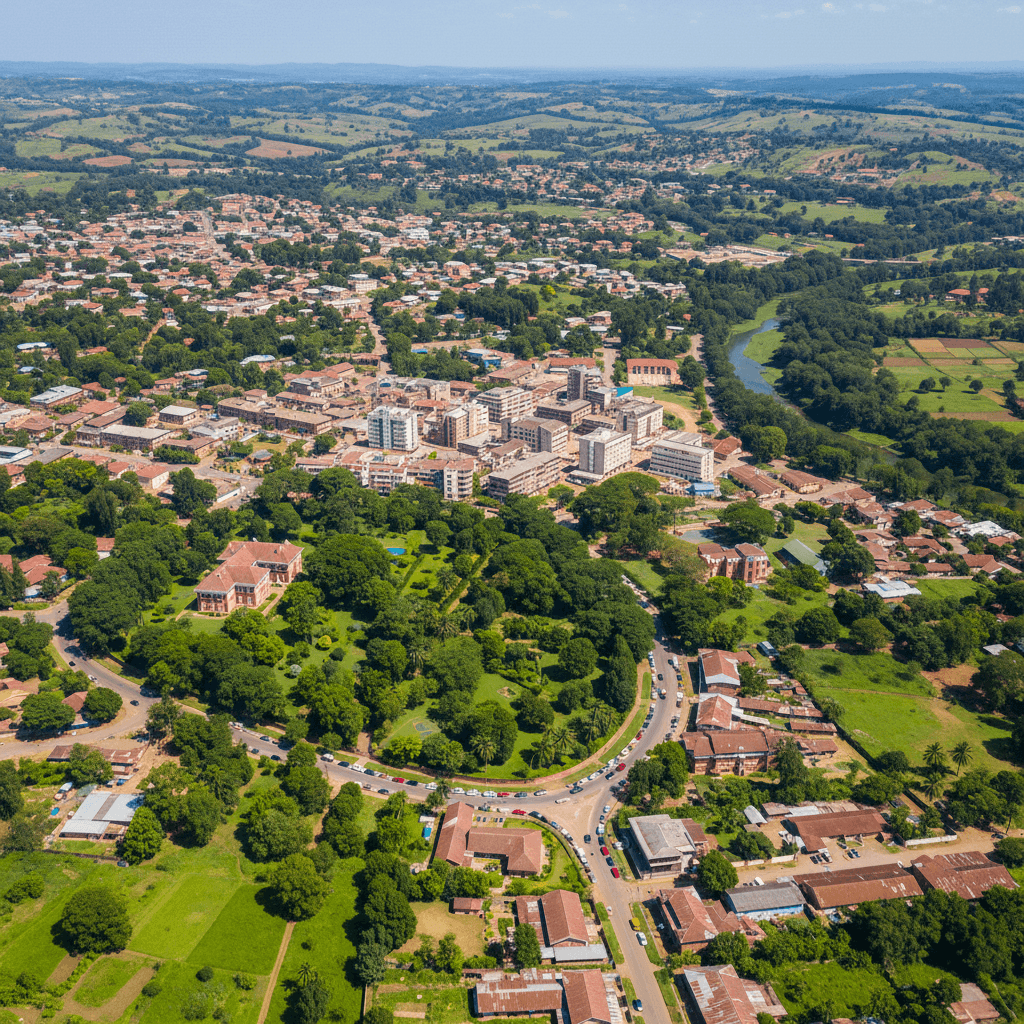
Blantyre doesn't try to impress you. There's no skyline, no rooftop bar scene competing for your Instagram, no hustle to convince you it's a world-class destination. What it has instead is something harder to find: a genuinely slow pace, locals who'll stop to help you without wanting anything in return and a cost of living so low it honestly feels like a mistake.
This is Malawi's commercial capital, which, turns out, isn't saying much by regional standards. It's a mid-sized city of hills and red-dirt roads, colonial-era buildings sitting next to corrugated-iron market stalls, the smell of charcoal smoke and frying oil drifting through the afternoon heat. The temperature sits around a comfortable 25°C for most of the year, cool enough that you won't spend every afternoon sweating through your shirt.
Most nomads land here and feel two things almost simultaneously: relief at how cheap everything is and quiet frustration at the infrastructure. Power cuts happen. WiFi averages 15 to 40 Mbps on a good day and that's not always a good day. If your work depends on a rock-solid connection for video calls and large uploads, Blantyre will test your patience, it won't break you, but budget for a local SIM with Airtel or TNM data as a backup from day one.
The monthly budget picture is genuinely compelling. A solo nomad can live comfortably for $700 to $1,000, covering a decent one-bedroom in Namiwawa, daily meals and transport. Budget harder and $500 covers the basics. Expats who've been here a while recommend Namiwawa for its relative quiet and greenery, City Centre if you want walkable convenience and Sunnyside if you don't mind paying more for space and calm.
What makes Blantyre different from other cheap-city options is the texture of daily life. Minibuses packed with people and noise, markets where you bargain for tomatoes at dawn, a Sunday afternoon that moves at a pace most cities have forgotten. Day trips to Majete Wildlife Reserve or Zomba Plateau are easy and cheap, the city's also a practical base for wider Malawi travel.
It's not for everyone. If you need fast infrastructure and a polished expat scene, keep looking. But if you want low costs, warm people and a place that doesn't feel curated for outsiders, Blantyre's worth serious consideration.
Blantyre is, honestly, one of the cheapest cities you can base yourself in anywhere on the continent. Monthly costs for a solo nomad average around $505 including rent and that's not a stripped-down, suffering-through-it budget. That's a real life with decent meals, transport and occasional splurges.
The tiers break down cleanly. Budget travelers staying in Chilomoni can get by on $400 to $600 a month, renting a studio for around $80 to $150, eating nsima and relish at street stalls for $3 to $5 a plate and hopping minibuses for roughly $15 a month. Mid-range nomads in Namiwawa or the City Centre are looking at $700 to $1,000, which gets you a proper one-bedroom for $150 to $250, sit-down meals at places like Mikos or STEAKEOUT and the occasional taxi when you don't feel like negotiating a combi. Comfortable living, the expat-in-Sunnyside version, starts around $1,500 and up, with spacious houses, dinners out and private transfers.
Rent is where Blantyre really pulls ahead. A City Centre studio or one-bedroom runs about $174 a month, outskirts neighborhoods like Chilomoni drop closer to $81. That said, finding a place isn't frictionless, local agents and Facebook expat groups are turns out more useful than any international platform.
Food costs are low, don't expect fine dining on every corner though. Street food is the move for $3 to $5, mid-range restaurants land between $4 and $12 and upscale spots rarely crack $25 even for two people. Transport adds roughly $99 a month if you're relying on taxis regularly, less if you're comfortable on minibuses.
A few things to budget for that people underestimate:
- Coworking and cafe WiFi: Hotel lounges and spots like Khomo La Coffee charge roughly $6 to $15 per day, there's no real dedicated coworking infrastructure here.
- Mobile data: Airtel and TNM SIM bundles run $5 to $10, worth grabbing as a backup because fixed internet goes down without warning.
- Power outages: Candles, a power bank and frankly a lot of patience. Budget the inconvenience, not just the cost.
The value here is real. It's not glamorous, but your money goes further in Blantyre than almost anywhere else you'd consider.
Namiwawa is, honestly, where most nomads end up and for good reason. It's quieter than the centre, the streets smell like frangipani instead of exhaust and you can get a decent one-bedroom for $150 to $250 a month. Internet is more reliable here than in lower-lying areas, though you should still expect occasional outages.
The city isn't huge, so neighborhood choice matters less than in, say, Nairobi. Still, pick wrong and you'll spend half your day in a minibus.
Digital Nomads
Stay in Namiwawa. It's walkable enough, calm enough to actually focus and mid-range enough that you're not bleeding money or roughing it. Budget around $700 to $1,000 a month for a comfortable setup including rent, food at places like Mikos and the occasional taxi when you don't feel like flagging a combi.
Power cuts are a genuine frustration, not an occasional inconvenience, so ask your landlord directly about backup power before you sign anything.
Expats and Families
Sunnyside and Nyambadwe are the go-to areas. Houses have gardens, streets are quieter and the general vibe is settled rather than transient. Rent climbs above $250 a month here, sometimes well above it, but you get space and a sense of security that the centre can't really match.
It's less "local" than other parts of the city, that's just the trade-off and most long-term expats say it's worth it once kids or work schedules are in the picture.
Solo Travelers and First-Timers
City Centre makes sense for a short stay. Sunbird Mount Soche puts you within walking distance of markets, transport and the kind of street food, think nsima with relish for under $4, that you came here to eat. It's noisy, turns out the honking starts early and it's crowded, but orientation is fast and you won't need taxis for the first few days.
Budget Travelers
Chilomoni is cheap. Genuinely cheap, studios around $80 to $150 a month, street food on every corner, minibus connections into the centre for under a dollar. Infrastructure is basic and you'll want to take taxis after dark rather than walking, but for short stays it's an authentic slice of how most of Blantyre actually lives.
Blantyre's internet situation is, honestly, a mixed bag. Speeds average 15 to 40 Mbps on a decent day, which is fine for calls, email and light uploads, but don't count on it holding steady during load shedding and the power cuts here are real and frequent enough to be genuinely annoying if you're on a deadline.
Dedicated coworking spaces are thin on the ground. There's no WeWork equivalent, no slick open-plan office with cold brew on tap. What you get instead are hotel lounges and cafes that function as de facto workspaces, which works fine once you know where to go.
Khomo La Coffee is the spot most nomads gravitate toward first. Free WiFi with a purchase, decent coffee and a crowd that's used to seeing laptops out. Hotel day passes at places like Sunbird Mount Soche in the City Centre are another option, turns out they're more reliable than most cafes because the generators actually kick in when the grid doesn't.
For mobile data, grab a SIM at Chileka Airport the moment you land. Both Airtel and TNM sell starter cards for around $0.50 to $1 and data bundles run $5 to $10 depending on how much you need. Expats generally lean toward Airtel for coverage, though neither network is going to win awards. Keep a bundle active as a backup because cafe WiFi will let you down at the worst possible moment, it's just how it goes here.
- Khomo La Coffee: Free WiFi with purchase; casual, reliable enough for a few hours of work
- Sunbird Mount Soche (City Centre): Hotel day passes; generator backup makes this the most stable option
- Airtel SIM: $0.50 to $1 at Chileka Airport; data bundles from $5
- TNM SIM: Similar pricing, weaker coverage outside the city center
Run a Speedtest before you settle anywhere for more than a day. Speeds vary wildly by neighborhood and Namiwawa tends to perform better than Chilomoni for remote work, that gap is bigger than you'd expect.
Blantyre is, honestly, pretty safe by regional standards. Petty theft happens, mostly near the bus stations and market edges after dark and a few streets in the City Centre get uncomfortably quiet once the vendors pack up. Most nomads and expats say they feel fine day-to-day, it's the after-hours wandering that gets people into trouble.
The practical rules aren't complicated. Don't walk alone at night, take a taxi or use the Gogo App instead, keep your phone out of sight on crowded minibuses and lock your car doors the moment you get in. That's genuinely it for most situations. Blantyre sees far fewer political protests than Lilongwe, which is a real bonus if you're here during election season.
Healthcare is where Blantyre actually surprises people. Blantyre Adventist Hospital is the go-to for expats and nomads and the quality there's legitimately good, far better than you'd expect from a city this size and this affordable. Doctors speak English, wait times are manageable and the staff are used to treating foreigners. Pharmacies are easy to find throughout the City Centre and Namiwawa, most carry common medications without a prescription, turns out you can sort a lot of minor issues without ever seeing a doctor.
That said, don't arrive without travel insurance. Serious emergencies can require evacuation to South Africa and that bill without coverage is catastrophic. Sort your policy before you land, not after.
For emergencies, dial 999 or 112. Response times vary, so having the Adventist Hospital's direct number saved in your phone is smarter than relying on emergency dispatch alone.
- Best hospital: Blantyre Adventist Hospital, recommended by virtually every expat in the city
- Pharmacies: Widespread across City Centre and Namiwawa; most stock basics without a prescription
- Emergency numbers: 999 or 112
- Night safety: Taxis or Gogo App after dark, skip the solo walks near bus stations
- Insurance: Non-negotiable; medical evacuation to South Africa is the real risk here
Malaria is present year-round, so start prophylactics before you arrive and sleep under a net or in air-conditioned rooms. It's a manageable risk, not a reason to avoid the city, just don't get complacent about it.
Blantyre's not a city you zip around effortlessly. The centre is walkable, sure, but it's hilly, the footpaths are uneven and the midday heat will have you rethinking that "quick walk" to the market pretty fast.
For short hops, minibuses (combis) are the default. They cost around $0.87 a ride and a monthly pass runs roughly $15, which is, honestly, one of the better transport deals you'll find anywhere in Africa. They're packed, loud and smell like exhaust and roasted maize, but they go everywhere and the locals are patient with confused newcomers.
For anything more flexible, download Gogo App before you arrive. It covers cars, motorbikes and tricycles across the city, it's the closest thing Blantyre has to Uber and most nomads use it as their daily driver once they're settled. Fares are cheap, drivers are generally reliable, turns out it's more useful than most people expect for a city this size.
Taxis exist too, though they're unmetered, so agree on a price before you get in. Budget around $20 for a cross-town trip. Private transfers from Chileka Airport (BLZ), which sits about 13km out, run $20 and up through services like Transfeero or Shuttlefare, worth booking ahead rather than negotiating at arrivals.
Bikes and scooters are limited options here. The roads aren't hostile, but the hills and the occasional pothole situation make it less appealing than it sounds and rental infrastructure is basically nonexistent.
A few practical notes on getting around the wider region:
- City Centre: Walkable for errands, noisy and the easiest area to catch a combi heading anywhere.
- Namiwawa to Centre: A short combi or Gogo ride; most nomads in Namiwawa use Gogo daily.
- Majete Wildlife Reserve day trip: You'll need a private hire or organised tour, not something you're doing by combi.
- Night travel: Skip walking after dark near the bus stations. Take Gogo or a taxi, frankly it's not worth the risk.
The transport scene is functional, not impressive. It gets you where you need to go, costs almost nothing by global standards, it just won't be comfortable every time.
English is Malawi's official language, so you won't hit a wall trying to order food, ask directions or sort out a lease. In business districts, hotels and most restaurants around City Centre and Namiwawa, English proficiency is genuinely good, not just functional. That said, step into Chilomoni market or flag down a minibus driver and you're in Chichewa territory.
Chichewa is what you'll hear everywhere, the greetings called across streets, the haggling at stalls, the chatter spilling out of minibuses. Learning even a handful of phrases changes how people treat you, it's honestly the fastest way to go from tourist to someone locals actually want to talk to.
- Muli bwanji? How are you? (standard greeting)
- Ndili bwino, zikomo. I'm fine, thank you.
- Zikomo kwambiri. Thank you very much.
- Ndikufuna... I want... (useful for ordering)
- Mtengo ndi chiyani? What's the price?
- Pepani. Sorry / Excuse me.
Pronunciation is, turns out, more intuitive than it looks. Chichewa is largely phonetic, so what you see is roughly what you say. Most locals will laugh warmly at your attempts, not at you and that laughter is an invitation, not a dismissal.
For translation on the go, Google Translate covers Chichewa well enough for basic exchanges, though it stumbles with regional slang. Download the offline language pack before you arrive because data speeds in Blantyre can be unpredictable and you don't want to be squinting at a spinning wheel mid-conversation.
Communication style here is indirect by default. Malawians are polite to a degree that can feel disorienting if you're used to blunt feedback, a "yes" sometimes means "I heard you" rather than agreement, so double-check anything logistically important. Expats recommend confirming plans twice, not because people are unreliable, but because the communication norms are just different.
WhatsApp runs everything. Landlords, taxi drivers, guesthouse owners, local contacts, they're all on it. Get a local Airtel or TNM SIM within your first day, load a data bundle and you're connected to how the city actually operates.
Blantyre sits at around 1,000 meters elevation, so the heat never gets truly oppressive. You're looking at warm, dry days for most of the year, with temperatures hovering between 17°C and 27°C depending on the season, which is, honestly, one of the better climates on the continent for actually getting work done without sweating through your laptop.
The year splits into two distinct halves. The dry season runs May through October and June to August is the sweet spot: clear skies, cool evenings that drop to around 10°C in Namiwawa and Sunnyside and zero rain to worry about. The air smells clean, the light is sharp and you can sit on a terrace at STEAKEOUT without a cloud in sight.
Then November arrives. The humidity builds, the sky goes grey-white by afternoon and the rains start in earnest. By January, you're getting around 25 rainy days in a single month, rain hammering tin roofs across Chilomoni at 3am, red mud on every road and power cuts that seem to get worse every wet season. Most nomads find the rainy season genuinely difficult to work through, not because of the rain itself but because the infrastructure just doesn't hold up under it.
March and April are a transition, the rains taper off, things dry out slowly and the landscape goes briefly green before the dry season takes over again. Turns out it's also when accommodation is cheapest and crowds are thinnest, so budget travelers willing to deal with occasional downpours can get good deals.
- Best months to visit: June, July, August
- Avoid for remote work: January and February (peak rains, worst power reliability)
- Hottest period: October to November, highs around 29°C
- Coolest nights: June to July, can drop to 10°C, pack a layer
- Average annual rainfall: Concentrated almost entirely November through March
If you're planning a short trip, don't overthink it, just avoid January. For longer stays, the dry season makes everything easier: better roads, steadier electricity and frankly a much more pleasant version of the city to settle into.
Blantyre runs on cash. ATMs are widespread around the City Centre and Namiwawa, but fintech options are thin, so don't count on card payments outside bigger hotels and restaurants. Carry a mix of Malawian Kwacha for daily spending and USD as a backup, it's, honestly, the only reliable safety net when systems go down.
For a SIM, grab an Airtel or TNM card right at Chileka Airport for around $0.50, then load a data bundle for $5 to $10. Both networks cover the city reasonably well, though speeds drop fast once you leave the centre. Top-ups are available at roadside kiosks everywhere, you'll spot them by the bright orange and green branding.
Getting around is cheaper than you'd expect. Minibuses (called combis) run at roughly $0.87 a ride and a monthly pass comes in around $15. For anything after dark or off the main routes, use Gogo App, which connects you to cars, motorbikes and tricycles citywide. Walking works fine in the centre during the day, though the hills catch people off guard.
Finding an apartment takes some digging. Listing platforms are sparse, frankly and the best leads come through Facebook groups and local expat networks like InterNations Blantyre. Most nomads and expats recommend going through a local agent once you're on the ground, turns out word-of-mouth moves faster than any website here.
A few customs worth knowing before you arrive:
- Greetings: Take them seriously. A quick "Muli bwanji?" (Hello, how are you?) goes a long way, skipping pleasantries reads as rude.
- Shoes: Remove them when entering someone's home, it's standard, not optional.
- Tipping: Around 10% at sit-down restaurants is the norm and genuinely appreciated.
- Elders: Show deference, small gestures like letting someone older speak first matter here.
Power cuts are the real frustration. They're not daily, but they're unpredictable enough that a portable battery pack and a local SIM as a hotspot backup aren't optional extras, they're just sensible. Blantyre Adventist Hospital handles medical emergencies well; for anything urgent, dial 999 or 112. Keep those numbers saved before you need them.
Need visa and immigration info for Malawi?
🇲🇼 View Malawi Country GuideEasy Landing
Settle in, no stress