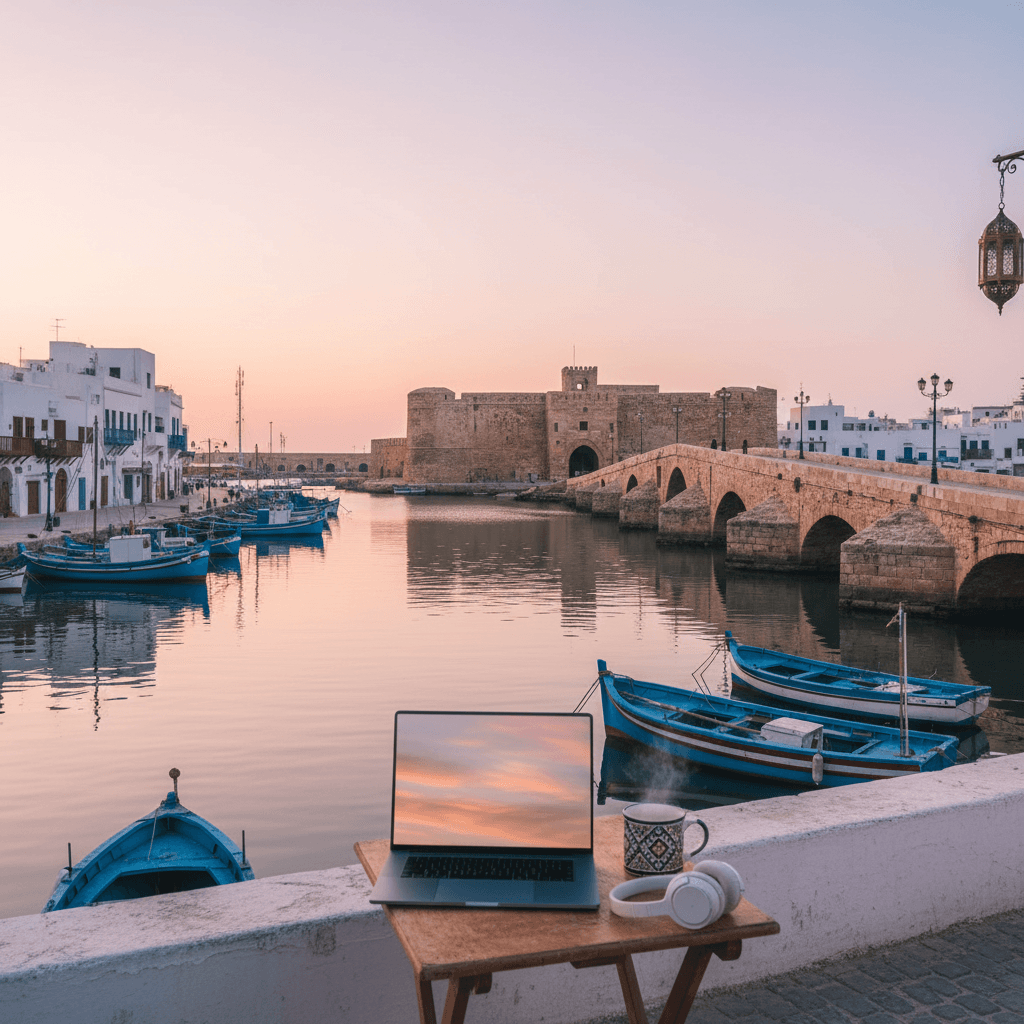
Bizerte
🇹🇳 Tunisia
Bizerte feels slower than Tunis and that’s the point. You get old port grit, fishing boats knocking against the quay, sea spray on the Corniche and medina lanes that smell like fried fish, exhaust and warm bread, all without the tourist glare you’d expect from a prettier coastal town.
It’s a city for people who want their days to feel local, not curated. The pace is calm, family-first and a bit old-school, so don’t expect a slick nomad bubble, because the expat scene is tiny, English is patchy and the infrastructure can be annoyingly basic.
What it feels like
- Best for: Slow travel, low-cost living, focused work, beach walks and people who don’t mind a quieter social life.
- Not great for: Heavy coworking use, constant networking or anyone who wants everything in English.
- Daily vibe: Corniche sunsets, café chatter, prayer calls, traffic honking near the port, then long lulls that feel almost sleepy.
For budget-minded nomads, Bizerte is a strong deal, honestly, with one-person monthly costs around $375 including rent, cheap bus rides and meals that won’t wreck your wallet. A center studio can run about $99, outskirts places can drop to $68 and you’ll still find street food for roughly $3.42 and a decent dinner for two around $18.
The tradeoff is obvious. Internet can be workable in cafés, but it’s inconsistent, power cuts happen and coworking is limited, so most people end up splitting time between coffee shops, home and the occasional day pass space when they need a solid connection.
Where people tend to base themselves
- Medina: Cheap, walkable, full of character, but WiFi’s hit or miss and it gets crowded.
- Corniche: Best sea views, cafés and marina energy, though traffic and noise can be a pain.
- Ras Angela: Quieter and more residential, with beach access, but you’ll be farther from the center.
Most expats and longer-stay visitors end up near the Corniche because it’s practical, weirdly enough, even with the higher rents and occasional traffic mess. You’re close to the water, close to cafés and close enough to the medina that you can still get your groceries, paperwork and daily chaos done without a taxi every time.
If you like places that feel lived-in rather than polished, Bizerte delivers. If you need a big network, constant convenience or smooth English everywhere, it’ll get frustrating fast, but if you can live with a little roughness, the sea view and the slower rhythm make the city stick with you.
Bizerte’s cost of living is low by coastal Mediterranean standards and that’s the main reason nomads stick around. A solo month can land around $375 if you keep rent modest and eat like a local, though the tradeoff is obvious: the city feels calm, practical and a little rough around the edges. Not fancy.
Rent is the big draw. A studio or 1BR in the center runs about $99, while the outskirts drop closer to $68 and utilities usually sit around $10 to $16, which, honestly, makes the monthly bill look almost suspiciously light. Corniche apartments cost more, but you’re paying for sea air, evening walks and fewer of the daily headaches you get in tighter medina streets.
Typical Monthly Budget
- Budget: Around $400, with an outskirts studio, street food and buses.
- Mid-range: Around $600, with a center apartment, cafés and the occasional taxi.
- Comfortable: Around $900, with a seafront place, better dining and coworking days.
Food is cheap, but it’s not polished. Street food starts around $3.42, a mid-range dinner for two is about $18 and a coffee rarely hurts your wallet, which, surprisingly, is one of the nicest parts of living here if you work out of cafés and want to linger awhile.
What Things Actually Cost
- Lunch from a local spot: $3 to $5
- Coworking day pass: TND 59, about $19
- Public bus ticket: $0.17
- Monthly transport: About $7
- Doctor visit: About $19, paid upfront
Transport is cheap, though limited. Buses are basically pocket change, taxis to and from the airport usually run around $3 and ride-hailing apps like Yassir or inDrive can work, but outside the center they’re spotty, so you’ll end up walking more than you planned. The upside is that the Corniche, medina and waterfront are easy enough to cover on foot, with salt air, diesel fumes and horn blasts all mixed together.
The annoying part is infrastructure. Coworking options are thin, WiFi in cafés can wobble and power cuts do happen, so if you need perfect uptime every day, Bizerte can test your patience fast. Still, if you’re after low overhead and don’t mind a slower rhythm, it’s hard to beat the numbers here.
Solo travelers
Start in the Medina if you want old Bizerte, not polished Bizerte. The alleys are narrow, the fish market smells sharp in the heat and everything gets louder when the call to prayer cuts through the scooters and horn blasts. Cheap rooms, cheap snacks, walk everywhere.
It’s the easiest place to keep your days simple, though WiFi can be flaky and after dark some lanes feel a bit too quiet, so stay near the busier edges if you’re out late.
Nomads
For remote work, the Corniche is the practical pick, honestly, because you get sea views, cafes and easier access to the parts of town where taxis actually show up on time. Apartments here tend to run around 1,700 to 2,500 TND per square meter and while that’s still cheap by many standards, you’ll pay for the better location.
The downside is noise, especially along traffic-heavy stretches, plus the internet can be inconsistent enough to make a Zoom call feel like a gamble. Cafes work in a pinch, coworking is scarce and power cuts do happen, so bring a charged laptop and a local SIM from Ooredoo or Orange.
- Corniche: Best for sea views, cafes and day-to-day convenience.
- Old Medina edge: Fine if you want low rent and a short walk to everything.
- Nearby seafront blocks: Better for longer stays, but pricier and noisier.
Expats
Most expats end up in the Corniche too, turns out, because the value is hard to beat and you’re closer to daily necessities without getting stuck in the Medina’s traffic and crowds. It’s still a small scene, though, with basic English outside a few cafes and shops, so French helps a lot and Darija helps even more.
If you want an easy routine, this is the sweet spot, because you can grab coffee, hit the marina, then get home before the evening traffic turns ugly. Don’t expect a big social network on your doorstep.
Families
Ras Angela makes the most sense for families who want quieter streets and beach access without the constant port noise. The area feels more residential, the air is saltier and kids can actually breathe between outings, which is refreshing after the center’s exhaust and scooter smoke.
It’s farther from downtown, so you’ll rely on taxis or a car more often, but the tradeoff is space and calm. If you’re staying longer, that matters.
- Ras Angela: Best for beach time, quieter homes and slower daily rhythms.
- Corniche: Good if you want services nearby and don’t mind traffic.
- Medina edge: Works for short stays, but it’s cramped for kids.
Internet & Coworking
Bizerte’s internet is decent, not dazzling. Mobile data usually feels more reliable than café WiFi and Ooredoo tends to be the safest bet, with faster speeds than the others and fewer dead zones once you’re out of the center, though you’ll still hit the occasional slow patch when the network gets crowded.
Average mobile speed: about 44 Mbps, best provider: Ooredoo at roughly 56 Mbps. Fixed connections are slower, around 13 to 23 Mbps, so if you’re planning video calls, uploads or heavy cloud work, a good SIM card matters more than whatever the landlord promises about the router.
Honestly, the café scene works better than you’d expect, but it’s patchy. You can sit with a tiny coffee for about $0.58, hear cups clinking and scooters buzzing outside and get enough signal for emails, but don’t expect every place on the Corniche to handle a long workday without dropping you mid-call.
Where to Work
- Cafés: Cheap, casual and good for light work, though WiFi can wobble when the room fills up.
- At home: Often the quietest option, especially if you’re near the Medina or a side street off the Corniche, where traffic and honking can get old fast.
The coworking scene is small, which, surprisingly, suits people who want focus more than networking. Don’t come here expecting a polished nomad hub, because Bizerte doesn’t have that energy and the city’s appeal is really the slow pace, sea air and low rent, not startup chatter over espresso.
SIMs and Practical Setup
Pick up an Ooredoo, Orange or Tunisie Telecom SIM at the airport or a local shop, tourist data packs usually land around $10 for 20GB and that’s enough for maps, messaging and a decent amount of remote work if you’re not burning through video every day.
Frankly, power cuts are the bigger annoyance than the internet in some neighborhoods. They don’t hit constantly, but when they do, they’re maddening, so a laptop with a strong battery and a backup hotspot plan will save you a headache, especially during hot afternoons when the fan noise starts up and the tiles feel cold under your feet.
If you’re staying longer, test the connection before signing a lease, ask the landlord which provider the building actually uses and assume the answer might be vague. That’s Bizerte, slow, cheap and a little improvisational, but for focused work with sea views and fewer distractions than Tunis, it does the job.
Bizerte feels calm on the surface, but don’t mistake that for sleepy. The center, the Corniche and the old medina are generally safe in daylight, with more street security than you’d expect for a small port town, though you still don’t want to wander dark side streets near the water at 1 a.m. or poke around the wrong outskirts.
Street smarts matter here. Use the same sense you’d use in any compact coastal city, keep your phone tucked away on quiet streets and skip unlit lanes after dinner. The sea breeze, grill smoke and call to prayer can make the Corniche feel relaxed, but that doesn’t mean petty theft or drunk-night nonsense can’t happen.
How Safe It Feels
- Daytime: Comfortable in the medina, Corniche and main commercial streets.
- Night: Fine in busy areas, less so on empty roads and poorly lit corners.
- Border risk: Not a concern for Bizerte itself, just stay away from any remote travel nonsense.
Most nomads find the city easygoing and predictable, honestly, which is why the biggest frustration isn’t crime so much as basics breaking down, like power cuts, slow admin or the occasional dead WiFi block when you actually need it. That’s the tradeoff here, quiet streets, cheap seafood and a slower rhythm, but you do need backup plans.
Healthcare Basics
- Doctor visit: About TND 60, roughly $19 and they usually want cash upfront.
- Pharmacies: Easy to find, many meds are available without drama.
- Hospitals: Decent in town, better than you might expect for a smaller city.
- Emergency: Call 190 for an ambulance.
Healthcare is usable, not fancy. For anything simple, like a fever, stomach bug or a cut that needs cleaning, you’re fine, but for specialist care or anything complicated, people often head to larger hospitals or Tunis, because that’s where the deeper bench is.
There’s also a naval base with a decompression chamber, which matters if you’re diving around the coast and pharmacies are scattered enough that you won’t be hunting across town for basic antibiotics, bandages or painkillers. Turnout at clinics is usually straightforward, though language can be a headache since English isn’t common outside a few tourist-facing spots.
Practical Health Tips
- Bring meds: Pack prescription drugs, copies of scripts and sunscreen.
- Pay cash: Don’t expect smooth insurance billing at small clinics.
- Watch the heat: Summer humidity can hit hard near the coast.
Heat and dehydration sneak up fast in July and August, especially if you’re walking the Corniche with the salt air in your face and a coffee in hand. Honestly, carry water, wear decent shoes and don’t assume a pharmacy will solve everything, because they’re good for basics, not magic.
Bizerte is easy to move around if you keep your expectations modest. The center, the corniche and the old medina are walkable and most locals still default to taxis, buses or a family car, so you won’t see the scooter swarm you get in bigger coastal cities. Traffic honks, diesel fumes and sea air all mix together near the port, weirdly enough.
For short hops, taxis are the easiest option. A transfer from Bizerte-Sidi Ahmed Airport usually runs about $3 and that’s the standard price most drivers expect, so don’t waste time bargaining over pocket change. Ride-hailing apps like Yassir, inDrive and Bolt work here, though availability gets spotty once you drift away from the center, frankly and that can be annoying if you’re out near the beaches.
Best Ways to Move Around
- Walking: Best in the medina and along the corniche, where you can grab coffee, hear calls to prayer and avoid the traffic mess.
- Taxis: Cheap and practical for evenings, airport runs or when the wind off the water gets too cold.
- Buses: Very cheap at about $0.17 a ride, with monthly passes around $7, though schedules can feel vague.
- Ride-hailing: Yassir, inDrive and Bolt are handy, but don't count on them outside the main area.
If you’re heading to Tunis, SNTRI buses are the public option most travelers use. They’re slow, but the fares are low and the ride is straightforward, which, surprisingly, makes them less stressful than dealing with a string of private taxis. For daily life, most nomads stick to a simple mix of walking, buses and the occasional cab.
Local Tips
- Walk the core: Medina alleys and the waterfront are the most pleasant parts of town.
- Use taxis at night: Unlit streets can feel sketchy, especially once the promenade quiets down.
- Rent a bike or scooter: Local rentals can work for the flat central areas.
- Keep cash handy: Small fares and informal rides are still very much a cash game.
Gas is about $0.85 a liter, so drivers aren’t exactly getting rich either and that shows in the fares. Bizerte isn’t a place where you rush around, the slower pace is part of the appeal, but if you need frequent cross-town movement, the limited transit options can get old fast.
Bizerte’s language scene is simple on paper and a little messy in real life. Arabic, mostly Tunisian Darija, runs the show, French comes in handy everywhere and English is patchy outside hotels and touristy cafes, so don’t expect smooth conversations at the market or taxi stand. Honestly, a smile and a few words go a long way.
You’ll hear Darija in the Medina, French in offices and mid-range cafes and a mix of both around the Corniche, where fishermen shout over engine noise and tea glasses clink on metal trays. Calls to prayer drift across the port, kids switch between languages fast and that slower coastal rhythm makes people less impatient than in Tunis, though bureaucracy still drags its feet.
- Hello: As-salaam alaikum
- Thanks: Shukran
- Slowly: Besh besh
- Now: Tawa
Those phrases matter more than perfect grammar. Say besh besh when things are moving too fast, because in Bizerte, waiting around is normal and rushing people usually backfires, especially in small shops, apartment viewings and taxi negotiations.
English exists, but it’s limited and that catches some newcomers off guard, frankly. In cafes near the waterfront you’ll usually manage with a mix of English, French, gestures and Google Translate offline, while in the Medina or at local eateries you’ll often need French or Darija to get what you want without confusion.
- Best for quick help: Hotels, tourist cafes, some younger service staff
- Best backup language: French, especially for rentals, doctors and bills
- Best app: Google Translate with offline Darija and French packs
For daily life, keep translations ready for addresses, food orders and apartment issues, weirdly, the biggest misunderstandings usually happen with simple stuff like wifi passwords, water cuts or whether a landlord means “today” or “sometime this week.” If you’re here for a few weeks, learn the basics fast, then lean on local patience, it’s there, but it runs out if you keep making everything harder than it needs to be.
Bizerte’s weather is straightforward and honestly, that’s part of the appeal. Summer hits hard, with dry heat, bright glare off the water and salty air that sticks to your skin, while winter stays mild enough that locals still walk the corniche without bundling up like they’re in Europe.
Best months: May through October. That’s when the sea actually feels inviting, the evenings stay warm and you can work in a cafe near the port, hear fishing boats clank against the dock and still head out for a beach swim after your laptop shuts.
Spring is usually the sweet spot for most nomads. Days are warm without being punishing, the medina feels comfortable to wander and you won’t spend the afternoon sweating through a shirt just to get lunch on Avenue Habib Bourguiba, which, surprisingly, makes daily life feel a lot smoother.
Season by season
- May to June: Best balance of heat and comfort, with beach weather before peak summer crowds.
- July to August: Hottest stretch, around 29°C highs, bright sun, busy waterfronts and slower afternoons. Not cheap on energy, either.
- September to October: My pick, sea stays warm, evenings cool off and the city settles back down.
- November to March: Cooler, windier and rainier, fine for work, less fun for beach time.
Winter isn’t brutal, but it can feel gray and damp, especially when rain taps on tin awnings and the wind cuts through the Corniche. January and February are the least pleasant months, because the sea looks moody, the sidewalks feel empty and you’ll probably want a jacket at night.
If you’re staying long term, plan around shoulder seasons. You’ll get easier apartment hunting, less beach noise and lower stress when moving around town, because the summer traffic along the coast can get annoying and the midday sun is no joke, frankly, if you’re trying to run errands on foot.
For work, the climate is fine most of the year, though power cuts and humid spells can make a hot apartment feel worse than the thermometer says. Air conditioning helps, but many places don’t have great insulation, so a shady flat near the Corniche or in the center is the smarter call.
Bizerte runs on a slower clock than Tunis and that’s the first thing you feel, the honking is lighter, the sea air comes in off the corniche and the whole place has a slightly sleepy, local feel that suits long work sessions better than frantic city hopping. English is patchy, power cuts do happen and the nomad scene is tiny, so don’t arrive expecting polished infrastructure.
SIMs first. Buy Ooredoo, Orange or Tunisie Telecom at the airport or in town, 4G is the norm and tourist bundles are usually cheap enough to sort out on day one. If you’re planning to work remotely, get a local SIM before you start hunting for apartments, because cafe WiFi can be fine one hour and crawling the next, weirdly enough.
Money and banking
- Budget: A solo month can land around $375, with rent, food and basic transport all pretty low by coastal standards.
- Cash: Keep small bills handy, many places still prefer cash and card acceptance is spotty outside nicer spots on the Corniche.
- Banking: Expats often open accounts after locking in housing, because local banks usually want an address before they’ll play ball.
- Payments: Wise is the cleaner option for moving money in and out without making your life annoying.
Where to live
- Medina: Cheap, walkable and full of character, but WiFi can be shaky and the alleys get crowded fast.
- Corniche: Best for sea views, cafes and easy evening walks, though traffic noise can be a pain.
- Ras Angela: Quieter and better for families, but you’ll trade convenience for distance.
Finding an apartment is usually a Facebook group job or a local-agent job, not a glossy online listing situation and honestly, some places look much better in photos than they do in person. Check water pressure, test the internet and ask about outages before you hand over rent, because the bureaucracy is slow and the small stuff becomes a daily headache if you ignore it.
Daily life: Dress modestly, especially away from the waterfront and during Ramadan, don’t eat or drink openly in the street unless you want awkward looks. Tipping around 10% is normal in cafes and restaurants and a few Arabic or French phrases go a long way when you’re buying bread, bargaining for a taxi or asking where the bus leaves from.
For day trips, the easy wins are Ichkeul Lake and Dougga if you’re happy to piece things together by bus or taxi. Avoid late-night wandering in unlit areas, keep your phone charged and pack patience, because Bizerte’s charm is real, but it doesn’t do much hand-holding.
Frequently asked questions
Is Bizerte good for digital nomads?
How much does it cost to live in Bizerte as a solo nomad?
How much is rent in Bizerte?
What is the best neighborhood for nomads in Bizerte?
How reliable is the internet in Bizerte?
What mobile SIM should I get in Bizerte?
Is Bizerte safe for solo travelers and remote workers?
Need visa and immigration info for Tunisia?
🇹🇳 View Tunisia Country GuideHidden Gem
Worth the effort