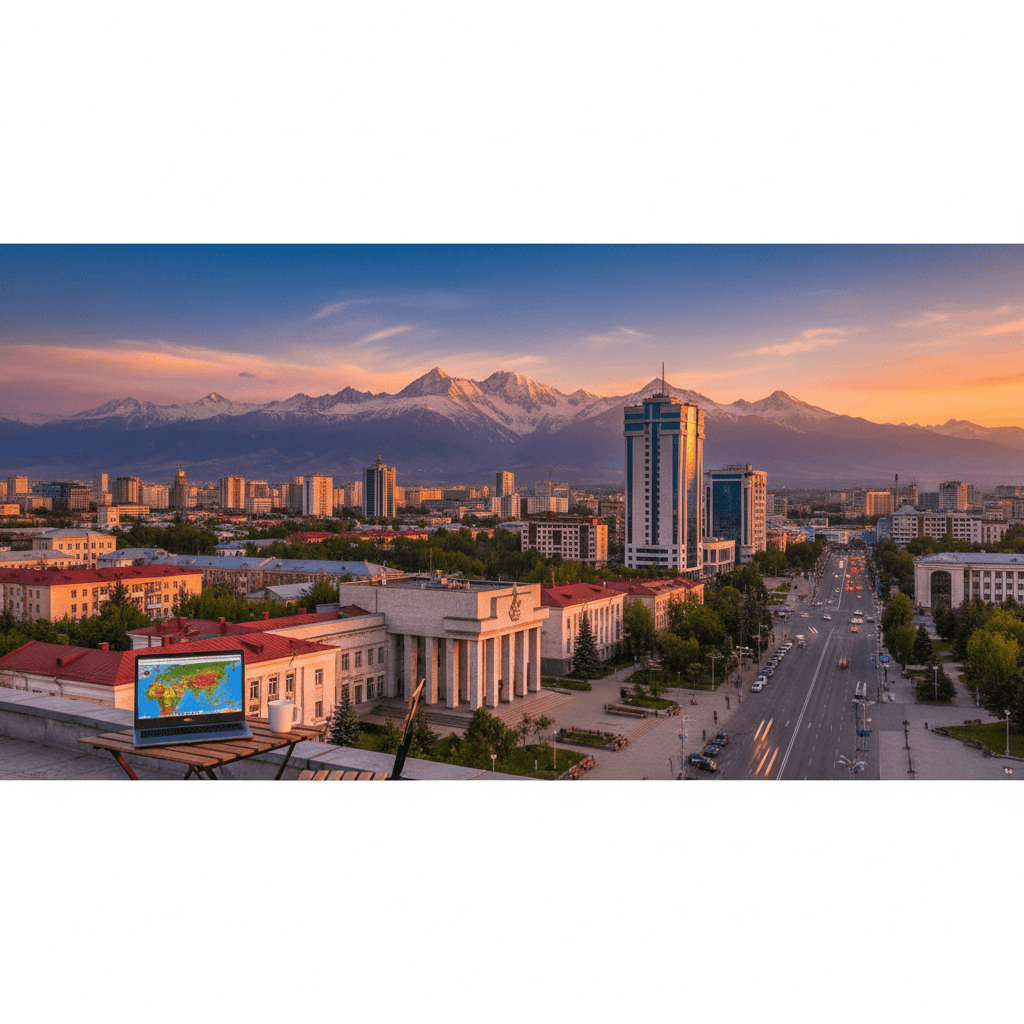
Bishkek
🇰🇬 Kyrgyzstan
The Vibe: Post-Soviet Greenery Meets Mountain Highs
Bishkek doesn't try too hard, and that's exactly why nomads are starting to flock here. It feels like a city caught in a pleasant time warp where brutalist Soviet blocks are softened by massive, leafy parks and a surprisingly chill, youthful energy. You aren't here for a fast-paced metropolitan grind; you're here for the $2 bowls of lagman, the $1.50 Yandex rides, and the fact that you can finish a Zoom call and be at the base of the Tian Shan mountains in forty minutes.
The city has a distinct charm with a gritty, low-key feel. Most travelers find the local pace refreshingly slow. You'll spend your afternoons walking through Oak Park or dodging kids in electric cars at Panfilov Park. While the winter can be cold and gray, summer in Bishkek is a dream of outdoor cafes and beer gardens. It’s a place for deep work and weekend treks, though you’ll need to get used to the chaotic scooters on the sidewalks and the occasional lack of English outside the main nomad hubs.
Cost of Living Breakdown
Your money goes incredibly far here, making it one of the most affordable hubs in the region. Most nomads find they can live a very comfortable life for around $1,200 to $1,500 per month without even trying to budget.
- Budget Tier ($800/month): Living in a shared apartment or further out near Dordoi Bazaar, eating mostly street food like samsas or plov for 200 KGS ($2.30), and using the local trolleybuses.
- Mid-Range Tier ($1,200 - $1,500/month): A private 1BR in the City Center for about $750, eating out at nice cafes daily for 500-1,000 KGS ($6-12), and taking Yandex rides everywhere.
- Comfortable Tier ($2,000+/month): A high-end apartment, a dedicated desk at a coworking space, frequent weekend trips to Issyk-Kul, and dining at the city's upscale fusion restaurants.
Where to Set Up Camp
Bishkek is a city of distinct zones. Most short-term visitors stick to the center, but long-termers might find more value slightly further out.
City Center (Near Ala Too Square)
This is the heart of the action. It's the most walkable part of town and puts you within striking distance of the best coffee shops and malls like Bishkek Park.
- Best For: First-timers and solo nomads.
- Rent: Around $750/month for a modern studio.
- Pros: High density of English speakers, best internet, very safe.
- Cons: Highest rent in the country, can feel a bit noisy.
Oak Park & Panfilov Park Area
This area feels like living inside a forest. It’s quieter and more relaxed than the dead center.
- Best For: Families or those who need nature to stay sane.
- Pros: Massive green spaces, very peaceful, great for morning runs.
- Cons: Fewer nightlife options and slightly older apartment stock.
The Outskirts (Near Dordoi)
Moving toward the edges of the city near the massive bazaars will save you money, but it comes at a cost.
- Best For: Extreme budget travelers.
- Pros: Very cheap rent and local prices.
- Cons: Poor phone coverage, dusty roads, and a long commute to the nomad-friendly cafes.
Connectivity and Coffee Shops
The internet isn't world-class, but it's reliable enough for most remote work. Expect downloads around 11 Mbps. For the best stability, skip the home Wi-Fi and head to the ololo network. Spaces like ololoFreelander or ololoVostok are the gold standard here, offering desks for $50 to $100 a month and a built-in community of local entrepreneurs.
For mobile data, grab a Megacom SIM immediately. You can get 20GB for about $3.60 or 100GB for less than $9. Just remember to bring your passport to the official store to register the card. While English is common in the trendy cafes of the center, learning the Cyrillic alphabet is a massive help for reading menus and bus routes.
Practical Realities
Safety is generally a non-issue. Even solo female travelers report feeling secure, though it's always smarter to use Yandex or Yango for trips after dark rather than walking through unlit outskirts. Kyrgyzstan is still very much a cash-heavy society, so keep a stash of Som on you for the bazaars. If you're staying long-term, look into the Digital nomad status (approved 2025), apply via evisa.e-gov.kg for up to 1 year renewable, which is making the residency process much smoother for remote workers looking to call the Tian Shan mountains home.
The Lowdown on Local Living
Bishkek is arguably the best-kept secret for those who want to stretch their budget without sacrificing a comfortable urban lifestyle. It has that distinct post-Soviet grit mixed with a surprising amount of greenery and a slow, intentional pace. While it is often called the Switzerland of Central Asia due to the Tian Shan peaks looming over the skyline, the prices are anything but Swiss.
You can live here on three distinct tiers depending on your needs. Budget-conscious travelers get by on about $800 a month by staying in shared housing and sticking to bazaar food. A mid-range lifestyle costs roughly $1,200, which covers a private apartment in the center and regular dining out. For $2,000, you are living at the top of the market with a luxury flat, daily upscale meals, and a full-time coworking membership.
Housing and Neighborhoods
Most nomads gravitate toward the City Center near Ala Too Square or Bishkek Park. It is the most walkable part of town and keeps you close to the best cafes. Expect to pay around $750 (approx. £600) for a modern one-bedroom apartment on Airbnb. If you want something quieter and greener, look around Oak Park or Panfilov Park. These areas feel more relaxed and are popular with families, though you will find fewer bars nearby.
For those on a strict budget, the outskirts near Dordoi Bazaar offer much lower rents. However, the trade-off is significant. Connectivity can be spotty, the areas are less developed, and you will rely heavily on taxis to get anywhere interesting. Most people find the convenience of the center worth the extra couple hundred dollars.
- City Center: Best for solo travelers. Walkable with high amenities. Rent: $750/month.
- Oak Park Area: Best for nature lovers. Relaxed and green. Rent: Slightly lower than center.
- Outskirts: Best for long-term budget stays. Cheapest rent but poor infrastructure.
Daily Expenses: Food and Transport
Eating out is where Bishkek really shines. You can grab a quick lunch at Osh Bazaar for under 200 KGS ($2.30). If you prefer a proper sit-down meal at a mid-range restaurant, you are looking at 500 to 1,000 KGS ($6 to $12). Even the high-end spots in the city center rarely break the bank compared to Western standards.
Getting around is equally affordable. Download Yandex or Yango immediately. These apps work just like Uber and a typical ride across town costs between 100 and 300 KGS ($1.15 to $3.50). Public buses and trolleys are pennies, but you will need to recognize a bit of Cyrillic to figure out the routes. Walking is usually the best bet in the center, though watch out for electric scooters on the pavements; they can be a bit chaotic.
Connectivity and Work
Internet speeds in Bishkek are adequate for most remote work, usually hovering around 11 Mbps download and 19 Mbps upload. It is reliable enough in central cafes, but for serious deep work, head to an ololo creative hub. They have several locations like ololoFreelander and ololoVostok. A monthly pass usually runs between $50 and $100.
For mobile data, grab a Megacom SIM card at one of their official stores. You will need your passport to register. The plans are incredibly cheap:
- 20GB: $3.60
- 50GB: $5.80
- 100GB: $8.70
Healthcare and Safety
Bishkek is generally safe, even for solo women. The main rule is to avoid walking alone through unlit areas or parks late at night if you have been drinking. Use a taxi instead. For healthcare, there are several basic hospitals in the center and pharmacies are everywhere. If you have an emergency, dial 103 for an ambulance or just take a Yandex directly to a clinic.
Practical Realities
Cash is still king here. While more cafes are taking cards, you should always keep some som in your pocket for bazaars and small shops. If you are planning a visit, aim for the summer months. From June to August, the weather is a pleasant 20 to 30°C. Winters are brutal, often dropping below -10°C, which can make the city feel quite bleak. If you want to stay long-term, look into the Digital Nomad status (approved 2025), apply via evisa.e-gov.kg for up to 1 year renewable.
The Digital Nomad Hub: City Center
If you want to be where the action is, the City Center around Ala Too Square and Bishkek Park is your best bet. This is the most walkable part of the city, packed with Western style cafes and the highest concentration of English speakers. Most nomads aim for this area because it cuts down on commute times and puts you within striking distance of the best coworking spots.
The lifestyle here is surprisingly convenient. You can spend your mornings working from a cafe and your afternoons walking through the nearby parks. While it is the most expensive part of town, it still feels like a bargain compared to European capitals. You will find plenty of modern apartments that meet international standards, though they get snapped up quickly.
- Monthly Rent: Approximately $750 (£600) for a 1BR via Airbnb.
- Vibe: Fast paced for Bishkek, social, and very accessible.
- Best For: First timers, solo travelers, and those who don't want to rely on taxis.
- Top Perk: Proximity to ololo Creative Hubs and the best grocery selections.
The Family Retreat: Oak Park and Panfilov Park
Families and those who prefer a quieter pace usually gravitate toward the residential pockets bordering Oak Park and Panfilov Park. These areas feel like a forest in the middle of a capital city. There is a lot of green space for kids to run around, and the noise levels drop significantly once you move a few blocks away from the main thoroughfares.
The architecture here is a mix of grand Soviet buildings and newer developments. It is less about nightlife and more about long evening strolls and weekend picnics. You are still close enough to the center to grab a decent coffee, but you won't have bars thumping music outside your window at 2:00 AM.
- Monthly Rent: Often slightly lower than the immediate City Center, ranging from $600 to $700.
- Vibe: Relaxed, green, and safe.
- Best For: Families, slow travelers, and remote workers who prioritize peace over parties.
- Top Perk: Easy access to the city's best statues, fountains, and shade during the hot summer months.
The Budget Long-Stayer: Outskirts and Dordoi
For those on a strict budget or anyone planning to stay for several months, the outskirts offer the lowest prices. Areas near the massive Dordoi Bazaar or the northern reaches of the city are much more affordable, though they lack the polish of the center. You will get a much more "local" experience here, though you'll need to brush up on your Russian or Kyrgyz to get by.
Living out here requires a bit of grit. The pavements can be uneven, and phone coverage is sometimes spotty. However, the savings are substantial. You will likely rely heavily on the Yandex or Yango apps to get into town, which usually costs between 100 and 300 KGS per trip. It is a trade off between convenience and your bank balance.
- Monthly Rent: The cheapest in the city, often well under $500 for a basic flat.
- Vibe: Industrial, authentic, and undeveloped.
- Best For: Budget travelers and long term expats who want to save money for mountain expeditions.
- Top Perk: Direct access to the cheapest markets and street food in the country.
Practical Logistics for All Neighborhoods
Regardless of where you land, you will want to get a Megacom SIM card immediately. You can pick these up at their official offices with your passport. For about $8.70, you can get 100GB of data, which is essential because home Wi-Fi can be hit or miss in older buildings. Most nomads find the internet speeds of 10 to 18 Mbps sufficient for video calls, but the 4G network is often more reliable.
For your workspace, the ololo network is the gold standard in Bishkek. They have several locations like ololoFreelander and ololoVostok, with monthly memberships costing between $50 and $100. It is the best way to meet the local creative community and find out about weekend trips to the Tian Shan mountains or Issyk-Kul lake.
Bishkek isn't going to break any speed records for fiber optics, but it's a surprisingly functional hub for anyone who prefers a slow pace and a low cost of living. The internet infrastructure is reliable enough for video calls and heavy uploads in the city center, though you'll notice a significant drop in quality once you head toward the outskirts or the Dordoi Bazaar area. Most nomads find the average download speeds of 30-50 Mbps and uploads of 40-60 Mbps adequate for standard remote work, provided you have a solid backup plan.
Mobile Data and Connectivity
Your first move should be picking up a local SIM card. Don't rely on roaming; it's expensive and spotty. Expats almost universally recommend MegaCom for the best 4G coverage within the city limits. You'll need to bring your passport to a physical office to register the card, but the process is quick. The data packages are incredibly cheap compared to European or North American standards:
- 40GB for roughly $5 (28 days)
- 80GB for roughly $8 (28 days)
If you run into issues, MegaCom offers support via WhatsApp, which is the primary way most people communicate in Kyrgyzstan. Keep in mind that while 4G is snappy in the center, it becomes non-existent if you head into the mountains for a weekend hike, so download your offline maps beforehand.
Coworking Spaces
The coworking scene in Bishkek is dominated by the ololo network. They've essentially built the digital nomad infrastructure from the ground up here. These spaces are stylish, modern, and serve as the primary social hubs for the city's creative and tech communities. Expect to pay between $50 and $100 per month for a hot desk.
- ololoFreelander: A favorite for those who want a quiet, professional environment.
- ololoErkindik: A centrally located hub popular for its vibrant atmosphere and proximity to the park.
- ololoYurt: A unique spot that sometimes integrates coliving or hostel options, perfect if you want to wake up and start working immediately.
If you're looking for something more corporate, various business centers in the City Center offer day passes, but they lack the community vibe you'll find at the ololo hubs. The High Tech Park also hosts occasional events that are great for networking with local developers and entrepreneurs.
Cafe Culture and Remote Work
If you prefer the "laptop and a latte" lifestyle, Bishkek's cafe scene is surprisingly Westernized and welcoming. Most cafes in the center, particularly around Ala Too Square and Bishkek Park, have decent Wi-Fi and won't mind if you linger for a few hours. The staff are generally relaxed about nomads taking up a table, especially during the quieter morning hours.
Just be aware of the "Cyrillic hurdle." While many younger locals and cafe staff speak some English, menus and Wi-Fi login pages are often in Russian or Kyrgyz. Having Google Translate with the offline Cyrillic pack downloaded will save you a lot of frustration when you're trying to ask for the password.
The Digital Nomad Community
You won't find the massive nomad crowds of Chiang Mai or Medellin here, which is part of the charm. The community is small but tight-knit. Most social organizing happens in Facebook groups like Expats in Kyrgyzstan or Travel in Kyrgyzstan. If you're looking for a more formal gathering, the Digital Nomad Forum held in Issyk-Kul is the premier event for regional remote workers, though it requires a trip out of the city.
For a daily social fix, stick to the bars and cafes near the central parks. It's a youthful city, and the local "techies" are usually happy to swap tips over a drink. The vibe is less about networking and more about genuine connection, fitting for a city that feels like a quiet base for focused productivity.
Safety on the Ground
Bishkek is generally a safe place to live and work, often surprising newcomers with its relaxed atmosphere. While it doesn't have the high-strung energy of larger hubs, you still need to keep your wits about you. Petty crime like pickpocketing happens, particularly in crowded spots like Osh Bazaar or Dordoi. Keep your phone and wallet tucked away in these areas.
Solo travelers, including women, usually report feeling comfortable walking around the city center during the day. After dark, the streets can be poorly lit once you leave the main avenues. Most nomads recommend using Yandex or Yango for trips after midnight rather than walking home alone, especially if you've been out for drinks. These apps provide fixed prices, usually between 100 and 300 KGS, which eliminates the stress of haggling or getting lost in the dark.
The outskirts of the city are less developed and can feel a bit rough around the edges. There aren't specific "no-go" zones, but the lack of infrastructure and street lighting in these neighborhoods makes them less ideal for evening strolls. Stick to the well-trodden paths near Ala Too Square or the parks if you're out late.
Healthcare and Medical Services
If you get sick, the healthcare system in Bishkek is functional but basic. For minor ailments, pharmacies are everywhere. You'll find a high concentration of them near the major markets and shopping centers. Many pharmacists speak limited English, so having a translation app ready with the Cyrillic names of your symptoms or medications is a smart move.
For more serious issues, the city center has several hospitals and private clinics. Expats often prefer private facilities for faster service and a higher likelihood of finding English-speaking staff. In an emergency, you can call 103 for an ambulance, though many locals find it faster to take a Yandex directly to the hospital if they are mobile enough to do so.
- Emergency Number: Dial 103 for medical emergencies.
- Pharmacies: Look for the "Аптека" sign; they are open late in the center.
- Payment: Healthcare is mostly cash-based, so keep some Som on hand for clinic visits.
Environmental and Seasonal Health
The biggest health consideration in Bishkek isn't actually crime or disease; it's the air quality in the winter. From December to February, the city often deals with heavy smog due to coal heating. If you have respiratory issues like asthma, you might want to avoid a winter stay or invest in a high-quality air purifier for your apartment. Summer, by contrast, is beautiful but can get very hot, with temperatures hitting 30°C, so staying hydrated is the main priority.
Tap water is generally considered hit-or-miss. While some locals drink it, most nomads stick to filtered or bottled water to avoid any stomach upsets. It's a small price to pay to keep your trip on track. If you're heading into the Tian Shan mountains for a hike, remember that rescue services are limited. Always tell someone your route and bring a basic first aid kit, as medical help is a long way off once you leave the city limits.
Safety Checklist for Nomads
- Download Yandex Go: It's the safest way to get around at night and costs less than $3.50 for most city trips.
- Register your SIM: Go to a Megacom office with your passport immediately. Having a working data connection is your best safety tool for navigation and translation.
- Watch the Sidewalks: Electric scooters are popular and riders often zip through pedestrian areas at high speeds. Stay alert while walking in Oak Park or on the main boulevards.
- Carry a Passport Copy: Keep your physical passport safe at home and carry a high-quality photo or photocopy while exploring the city.
The Walkable Core
Bishkek is surprisingly compact, especially if you stick to the center. Most nomads find the area around Ala Too Square and Bishkek Park incredibly walkable. The city follows a grid system, and the heavy tree cover makes even the warmest summer days manageable for a stroll. You'll likely spend most of your time on foot between cafes and parks, though you should keep an eye out for electric scooters on the sidewalks; they can be a bit chaotic during rush hour.
Mastering Ride-Hailing
When the distance is too far or you're heading home after dark, skip the street taxis. Expats recommend downloading Yandex Go or Yango immediately. These apps work exactly like Uber, providing a fixed price before you get in. Most trips within the city center cost between 100 and 150 KGS, while a longer cross-town trek rarely exceeds 300 KGS. You'll usually pay in cash, so keep small bills handy. If you are coming from Manas International Airport, a Yandex ride is the standard move and should cost about 300 to 500 KGS.
Buses and Marshrutkas
For the budget-conscious traveler, the public transport system is a steal but comes with a learning curve. Modern buses and trolleys are cheap, but you'll need to recognize a bit of Cyrillic to figure out the routes. Then there are the marshrutkas, the ubiquitous white minibuses that weave through traffic. They are efficient and go everywhere, though they can get incredibly cramped. If you're feeling adventurous, use Google Maps to track the bus numbers, but be prepared for a very local experience.
Regional Travel and Day Trips
Bishkek serves as the primary gateway to the Tian Shan mountains and Issyk-Kul. For these trips, most nomads head to the Western Bus Station. You can find shared taxis or marshrutkas heading to Karakol or Cholpon-Ata. If you are planning a day trip to Ala Archa National Park, it's often easier to negotiate a round-trip rate with a Yandex driver or book through a local operator to avoid getting stranded at the park gates.
Practical Transport Tips
- Learn the Alphabet: Even a basic understanding of Cyrillic makes reading bus signs and street names significantly easier.
- Cash is King: While the apps calculate the fare, most drivers expect cash. Don't expect them to have change for a 1,000 KGS note on a 120 KGS ride.
- Avoid Winter Walks: When temperatures drop to -10°C in January, the sidewalks can become icy and treacherous. Stick to Yandex during the colder months.
- Safety: While the city is generally safe, travelers often suggest taking a taxi instead of walking through unlit outskirts or parks late at night.
Neighborhood Breakdown for Transit
City Center
- Accessibility: High. Everything is reachable on foot.
- Transport Options: Best access to Yandex and main bus lines.
- Rent: £600 for a 1BR.
Oak Park / Panfilov Park
- Accessibility: Moderate. Great for walking, but slightly further from the main shopping hubs.
- Transport Options: Frequent trolleys and quiet streets for cycling.
- Rent: Slightly lower than the absolute center.
Dordoi / Outskirts
- Accessibility: Low. You'll be reliant on marshrutkas or longer taxi rides.
- Transport Options: Primarily minibuses; Yandex wait times can be longer.
- Rent: Most affordable, but expect longer commute times.
The Linguistic Landscape
In Bishkek, you are stepping into a bilingual world where Kyrgyz and Russian live side by side. Kyrgyz is the state language and a source of immense national pride, but Russian remains the lingua franca for business, government, and daily life in the capital. Because of this, almost everything you see, from street signs to supermarket labels, is written in the Cyrillic alphabet. If you cannot read Cyrillic, even simple tasks like finding the right bus or identifying a bottle of sparkling water become a guessing game.
Most digital nomads find that learning the alphabet is the single best investment they can make before landing. It takes about an afternoon to master, and once you have it down, you realize many words are actually cognates. "Ресторан" suddenly looks like "Restaurant," and "Аптека" becomes "Apteka" (Pharmacy). It makes the city feel much smaller and more manageable.
English Proficiency
English levels are generally low, but there is a clear generational and geographic divide. In the City Center, especially at specialty coffee shops or modern coworking hubs like ololo, you will find young professionals and students who speak excellent English. Outside of these bubbles, particularly at Osh Bazaar or when dealing with older taxi drivers, you will mostly rely on translation apps and hand gestures.
Expats recommend downloading the Russian and Kyrgyz packs for Google Translate for offline use. The camera translation feature is a lifesaver for menus that lack pictures. While the city is becoming more Westernized, don't expect the average shopkeeper to speak English; a friendly smile and a few local words go a long way in smoothing over any awkwardness.
Essential Local Phrases
While Russian will get you through most interactions, using a few Kyrgyz words is the fastest way to build rapport with locals. It shows respect for the culture and usually results in a warmer welcome. Here are the basics to keep in your back pocket:
- Salam: Hello (Informal)
- Kandaysiz?: How are you?
- Rahmat: Thank you (You will use this constantly)
- Ooba / Jok: Yes / No
- Kansha?: How much?
Digital Communication and Apps
Since verbal communication can be a hurdle, apps do the heavy lifting for nomads here. For getting around, skip the street hails and use Yandex Go or Yango. They work exactly like Uber, allowing you to set your destination in the app so you don't have to explain directions to a driver who doesn't speak your language. A typical ride across the center costs between 100 and 300 KGS, and you can pay in cash or link a card.
For staying connected, pick up a Megacom SIM card as soon as you arrive. You will need to bring your passport to a physical office to register it. They offer incredibly cheap data packages, such as 40GB for ~$5, 80GB for ~$8 (28 days). Having a local number is also helpful because many local services and delivery apps rely on WhatsApp for confirmation and customer support.
Social Etiquette
Communication in Kyrgyzstan is generally direct but polite. In social settings, locals are famously hospitable. If you are invited to someone's home, it is common to bring a small gift like bread or sweets. In the city, the vibe is relaxed, but a little effort in learning the local naming conventions or basic greetings is always appreciated. Most travelers report that despite the language barrier, people in Bishkek are incredibly patient and helpful when they see you trying to navigate their city.
The Seasonal Rhythm
Bishkek is a city of extremes. Because it's tucked right against the Tian Shan mountains, the weather doesn't do "subtle." You'll find that the city transforms completely between the seasons, affecting everything from your productivity to your ability to actually see the mountains through the winter smog.
Most nomads aim for the window between May and September. This is when the city’s Soviet-era irrigation canals are flowing, the massive parks like Oak Park are lush, and the cafe culture is in full swing. If you're here to hike, this is your only real option for hitting the high-altitude trails without specialized gear.
Summer: Peak Nomad Season (June to August)
Summer in Bishkek is hot but manageable, with temperatures usually hovering between 20°C and 30°C. It’s a dry heat, so you won't feel like you're melting while walking to ololoFreelander for a coworking session. This is the best time for social life; the city stays active late into the night, and the beer gardens are packed.
- Pros: Long days, perfect hiking weather, and the best time to visit Lake Issyk-Kul on weekends.
- Cons: July can occasionally spike above 35°C, and popular mountain trails can get crowded with local tourists.
- Digital Nomad Tip: Ensure your Airbnb in the City Center has air conditioning. While the nights cool down, the concrete apartment blocks hold onto heat during the day.
The Shoulder Seasons: Spring and Fall
April, May, September, and October are the sweet spots for travelers who prefer mild weather. May is particularly beautiful as the city’s millions of trees bloom, though it is the rainiest month. You might catch a few thunderstorms, but they usually clear up quickly.
September and October offer crisp air and stunning fall colors in the Ala-Archa National Park. The temperature stays around a comfortable 15°C to 20°C, which is ideal for long walks through the city center without the summer sweat. Prices for short-term rentals also tend to stabilize during these months.
Winter: The Low Point (December to February)
Unless you are a die-hard skier looking to hit the slopes at Karakol, winter in Bishkek is tough. Temperatures frequently drop below -10°C, and the city often struggles with air quality issues due to coal heating in the outskirts. The "Switzerland of Central Asia" vibe disappears under a layer of gray slush and smog.
- The Cold: Expect biting winds and icy pavements. Walking to the grocery store becomes a chore.
- Indoor Life: The nomad scene retreats into cozy cafes and coworking hubs. It’s a productive time if you want to hunker down and work, but the social energy of the city dips significantly.
- The Upside: It is incredibly cheap. If you're on a tight budget and don't mind the gloom, you can find great deals on central apartments.
The Best Time to Visit
If you have to pick a single month, make it June. The mountain passes are finally open, the city is vibrant and green, and the summer heat hasn't reached its peak yet. You'll get the full Bishkek experience, from the outdoor markets at Osh Bazaar to the high-altitude treks, all with 15 hours of daylight to get your work and exploring done.
Avoid January and February at all costs unless you have a specific reason to be there. The combination of extreme cold and poor air quality makes it the least enjoyable time for anyone used to an active, walkable lifestyle.
Money and Cost of Living
Bishkek is one of the most affordable hubs in Central Asia, making it a dream for those who want their budget to stretch. Most nomads find that a $1,200 monthly budget provides a very comfortable lifestyle, including a central apartment and frequent meals out. If you are on a tighter budget, you can get by on roughly $800 by sticking to shared housing and local canteens.
Rent is your biggest expense. A modern one bedroom apartment in the city center typically goes for around $750 on Airbnb, though long term residents often find better deals through local groups. Food costs are remarkably low. You can grab a quick lunch at Osh Bazaar for under $2.50, while a nice dinner at a mid range restaurant usually lands between $6 and $12.
- Budget Tier ($800): Shared housing, street food, and public buses.
- Mid range Tier ($1,200): Private central apartment, mix of cafes and home cooking, and Yandex rides.
- Comfortable Tier ($2,000): High end apartment, daily coworking, and frequent fine dining.
Where to Set Up Base
The city layout is a grid, which makes it easy to find your way around. Most expats and nomads stick to the City Center near Ala Too Square or Bishkek Park. It is the most walkable part of town and puts you within steps of the best coffee shops and gyms. The downside is the higher rent and slightly louder streets.
For a quieter vibe, look around Oak Park or Panfilov Park. These areas are incredibly green and offer a more relaxed atmosphere that families tend to prefer. If you are really counting pennies, the outskirts near Dordoi Bazaar are much cheaper, but you will deal with poor phone coverage and a lack of paved sidewalks.
Internet and Coworking
The internet in Bishkek is generally reliable for standard video calls and remote work, though speeds average around 11 Mbps download. For a stable environment and a chance to meet people, ololo Creative Hub is the go to name. They have several locations like ololoFreelander and ololoVostok, with monthly memberships ranging from $50 to $100.
Mobile data is incredibly cheap and often faster than cafe Wi-Fi. Pick up a Megacom SIM card at one of their official offices; you will need your passport for registration. You can get a 100GB plan for less than $9. Many nomads use their phone as a hotspot when the local Wi-Fi gets spotty.
Getting Around
Don't bother with traditional taxis on the street. Download Yandex or Yango immediately. These apps work just like Uber and a typical cross town trip will only cost you between 100 and 300 KGS (roughly $1.15 to $3.50). You pay in cash at the end of the ride.
The city center is very walkable, but be careful of scooters on the pavements. Public buses and trolleys are available for just a few cents, but the routes are usually labeled in Cyrillic. If you are heading to the airport, a Yandex ride from the center should cost about 300 KGS.
Language and Culture
Russian and Kyrgyz are the primary languages. While the younger crowd in cafes often speaks some English, you will struggle at the bazaars or on public transport without a few phrases. Learning the Cyrillic alphabet is a weekend project that pays off immensely when reading menus or street signs. Use Google Translate in offline mode to help bridge the gap.
- Salam: Hello
- Rahmat: Thank you
- Ooba / Jok: Yes / No
Safety and Health
Bishkek is generally safe, even for solo travelers. Use common sense at night and stick to Yandex instead of walking home late through poorly lit areas. For healthcare, there are several decent clinics in the city center and pharmacies are on almost every corner. In an emergency, dial 103 for an ambulance or take a taxi directly to a central hospital.
Best Time to Visit
Timing is everything here. Summer, from June to August, is the sweet spot with temperatures between 20 and 30°C. This is also the best time for weekend trips to the Tian Shan mountains or Issyk Kul lake. Avoid the winter months from December to February unless you enjoy biting cold and temperatures that frequently drop below -10°C.
Need visa and immigration info for Kyrgyzstan?
🇰🇬 View Kyrgyzstan Country GuideHidden Gem
Worth the effort