Batumi
🇬🇪 Georgia
The Vibe: Where Soviet Grandeur Meets Seaside Neon
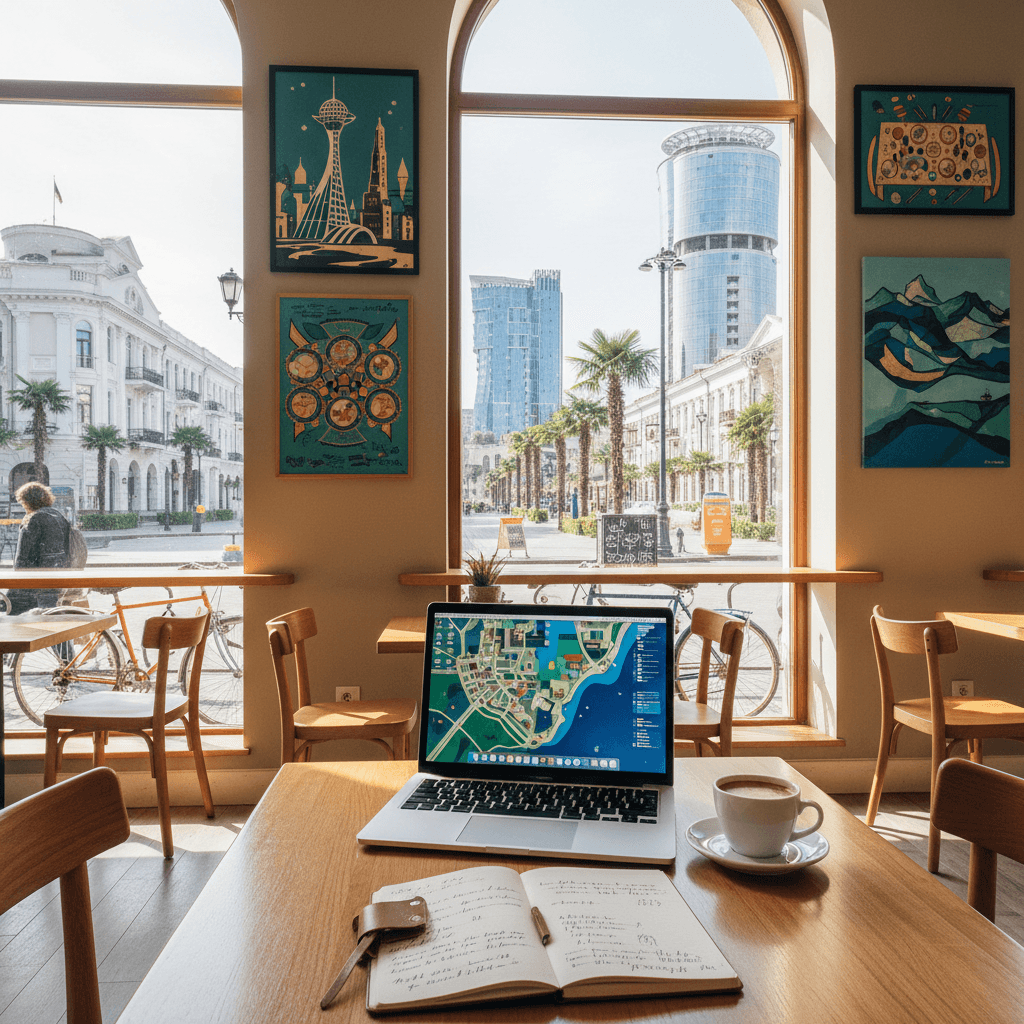
Batumi is a city of strange, beautiful contradictions. It feels like someone dropped a miniature Las Vegas into the middle of a historic European port, then surrounded it with lush, subtropical mountains. You'll walk past 19th-century brickwork in the Old Town one minute and find yourself staring at a skyscraper with a literal ferris wheel built into its side the next. It is chaotic, colorful, and smells faintly of salt air and strong coffee.
For nomads, the appeal lies in this high-contrast lifestyle. You can spend your morning working from a high-tech cafe with 40 Mbps fiber, then spend your afternoon swimming in the Black Sea or hiking into the green hills of Adjara. It lacks the self-importance of larger capitals, leaning instead into a laid-back coastal energy that stays active even when the sun goes down. Most people find the city moves at its own pace; it’s energetic enough to keep you inspired but slow enough to actually let you enjoy your lunch.
The Nomad Experience
What sets Batumi apart from the typical nomad trail is the grit and the hospitality. This isn't a sanitized resort town. It’s a place where laundry hangs from balconies next to five-star hotels. The community here is growing fast, largely because Georgia's friendly visa policies make it a breeze to stay long-term. You'll find a mix of Eastern European tech workers, Western freelancers, and local entrepreneurs gathered at seaside coworking spots.
The social life revolves around the Boulevard, a massive 7-kilometer park and promenade that hugs the coast. It’s the city’s living room. Expats recommend heading there around sunset when the whole town comes out to walk, cycle, or grab a drink. While English is common in the central tourist bubble, having a translation app ready for the local markets or smaller shops is a smart move.
Cost of Living Breakdown
Batumi remains one of the most affordable coastal hubs in the region. While prices have ticked up recently, your dollar still goes incredibly far compared to Western Europe or Southeast Asian hotspots.
- The Lean Budget: $400 to $600 per month. This covers a modest apartment further from the shore and cooking most meals at home with fresh market produce.
- The Mid-Range Lifestyle: $600 to $1,000 per month. This is the sweet spot for most nomads, allowing for a modern 1BR apartment in a central area and frequent dining out.
- The Premium Experience: $1,000+ per month. This gets you into the luxury high-rises with sea views, daily restaurant meals, and plenty of weekend trips.
Logistics and Getting Around
The city center is surprisingly walkable, especially the area between the Old Town and the 6 May Park. If you need to go further, the Bolt app is the gold standard here. Taxis are incredibly cheap, usually costing just a few dollars to get across town. Public buses are reliable, though the lack of dedicated bike lanes makes cycling a bit of an adventure that only the brave usually attempt.
Connectivity is rarely an issue. Most apartments come with reliable WiFi, and mobile data is famously cheap. You can pick up a local SIM card for a few dollars and enjoy solid coverage even when you're working from a beach chair. It’s this ease of "just showing up and working" that keeps Batumi on the map for the remote work crowd.
Why It Sticks With You
There is a specific feeling of sitting at a cafe in the Old Town, watching the light hit the Alphabetic Tower, and realizing you're living in a place that defies easy categorization. It’s the mix of the ancient Georgian script, the smell of fresh Khachapuri, and the neon skyline. It’s a city that invites you to work hard during the day so you can disappear into its quirky, hospitable soul by night.
The Price of Paradise on the Black Sea
Batumi remains one of the most wallet friendly hubs for remote workers in Europe. While prices have ticked up slightly as the city gains traction, it still offers a lifestyle that would cost triple in Mediterranean hotspots. Most nomads find they can live quite well on a monthly budget of $600 to $1,000, depending on how often they indulge in the city’s burgeoning wine bar scene.
For those on a strict grind, it is possible to scrape by on $400 to $600 if you stick to local markets and stay just outside the primary tourist zones. On the flip side, a monthly spend of $1,200 buys a high end lifestyle, including a modern apartment with sea views and daily dinners out.
Monthly Budget Breakdown
- Budget Tier: $400 to $600 per month. This covers a basic studio and a diet heavy on local khachapuri and produce from the markets.
- Mid Range: $600 to $1,000 per month. This is the sweet spot for most expats, allowing for a central apartment and regular coworking memberships.
- Comfortable: $1,000+ per month. At this level, you are looking at luxury high rise living and frequent weekend trips into the Adjara mountains.
Housing and Accommodation
Rent is your biggest variable. In the renovated Old Town or the central districts, a solid one bedroom apartment usually runs between $500 and $700. If you are willing to look a few blocks back from the beach or settle for a smaller studio, you can find gems for as low as $300.
Expats recommend using local platforms or Facebook groups to avoid the "tourist tax" found on international booking sites. Keep in mind that many modern towers near the New Boulevard offer sleek interiors but can feel a bit empty during the off season. Most apartments already have WiFi included in the rent, typically clocking in around 40 Mbps.
Dining and Groceries
Eating out is arguably the best part of the Batumi experience. You can grab a filling street food meal for $5 to $10. A mid range dinner at a sit down restaurant usually lands between $15 and $25, including a glass of local wine. If you want to go all out at an upscale seaside establishment, expect to pay $30 or more.
Grocery shopping is equally affordable. Local markets are packed with cheap, high quality produce. If you prefer supermarkets, card payments are widely accepted almost everywhere from the pharmacy to the corner store.
Connectivity and Workspace
Staying connected won't break the bank. Mobile data is famously cheap in Georgia, and you can easily set up a local SIM or eSIM for a few dollars. Coworking spaces are popping up across the city to meet the demand of the growing nomad community. A dedicated desk will generally cost you between $100 and $150 a month, while hot desking can be found for around $50 to $100.
Getting Around
Batumi is highly walkable in the center, so you might spend nothing on transport most days. When you need to go further, the Bolt app is the gold standard for ride hailing. It is reliable and very affordable, with most cross city trips costing just a few dollars. Public transport is also an option for those on a budget, though most nomads stick to walking the scenic promenade or catching a quick Bolt. Monthly transport costs for most people rarely exceed $30 to $50.
Digital Nomads: Old Batumi and the Waterfront
If you want to be where the action is, Old Batumi is the place to plant your flag. This neighborhood is the heart of the city, filled with 19th-century architecture and cobblestone streets that make your morning coffee run feel like a scene from a movie. Most nomads gravitate here because the central areas are highly walkable, and you're never more than a few minutes from a cafe with reliable WiFi.
For work, you'll find a growing number of coworking spaces that take advantage of the coastline. Many of these spots feature sea views that make a long Tuesday much more bearable. Internet speeds in the area typically hover around 40 Mbps, which is plenty for Zoom calls or uploading content. Expect to pay between $500 and $700 for a mid-range one-bedroom apartment in this central hub.
- Vibe: Historic, social, and very walkable.
- Rent: $500 to $800+ for central apartments.
- Connectivity: Excellent WiFi in cafes; mobile data is incredibly cheap.
Expats: The New Boulevard and Residential High-Rises
Long-term expats often move south toward the New Boulevard area. This part of town is defined by modern high-rises and a bit more breathing room than the dense Old Town. It's a great choice if you prefer a sleek, new apartment with a balcony overlooking the Black Sea. You'll find that card payments are accepted almost everywhere here, from the grocery stores to the local pharmacies.
While the bikeability in Batumi is still catching up, the New Boulevard offers the best stretch of flat pavement for a morning run or a stroll. When you need to get back to the center, just hop on the Bolt app. It's the go-to ride-hailing service for expats and usually costs just a few dollars to get across town. Living here is slightly more affordable if you look a few blocks back from the water, with total monthly budgets often landing between $600 and $1,000.
- Vibe: Modern, quiet, and residential.
- Rent: $400 to $600 for modern builds.
- Transport: Heavily reliant on Bolt and public buses.
Solo Travelers: Near Europe Square
If you're traveling solo and want to meet people, stay near Europe Square. It's the city's focal point and puts you within walking distance of the Alphabetic Tower and the main beach promenade. The social scene here is lively, with plenty of wine bars and cafes where it's easy to strike up a conversation with other travelers or locals.
The dining scene around the square is a major draw. You can find budget meals and street food for $5 to $10, while a nice sit-down dinner with Georgian wine will usually run you about $15 to $25. It's a safe area with a moderate level of English proficiency, so you won't feel stranded if your Georgian is non-existent. Solo travelers typically find that a monthly budget of $1,200 allows for a very comfortable lifestyle with plenty of dining out.
- Vibe: Energetic, tourist-friendly, and safe.
- Daily Food Cost: $15 to $30 depending on your taste for upscale spots.
- Top Landmark: The Alphabetic Tower and its seaside observation deck.
Families: The Park District
Families usually prefer the areas surrounding 6 May Park. It's a lush, green escape in the middle of the city that offers a break from the coastal wind and the noise of the nightlife districts. The park itself is a massive draw for kids, and the surrounding streets feel more like a traditional neighborhood than a tourist zone. You're still close to the hospitals and healthcare facilities, which provide a peace of mind for parents.
The air quality here is generally good, and the streets are a bit wider and easier to manage with a stroller than the narrow lanes of the Old Town. Rent for larger multi-bedroom apartments in this district starts around $800, but the proximity to green space and the lake makes it the best family-friendly investment in the city.
- Vibe: Green, calm, and community-oriented.
- Rent: $800+ for family-sized units.
- Proximity: Easy access to the Botanical Garden for weekend day trips.
Connectivity and Speed
You won't have to hunt for a signal in Batumi. The city is surprisingly well-wired, with fiber optic internet reaching most modern apartment buildings. You can expect average speeds of around 40 Mbps in standard rentals, which is plenty for Zoom calls and streaming. If you need more juice, some of the newer developments near the New Boulevard offer much higher bandwidth.
Public WiFi is everywhere, from the beach kiosks to the small bakeries in the Old Town. It's generally reliable, though it can get sluggish during the peak summer tourist rush when everyone is uploading sunset photos at the same time. Most nomads rely on their home setups or dedicated workspaces for heavy lifting.
Mobile Data and SIM Cards
Mobile data in Georgia is incredibly cheap, making it easy to use your phone as a hotspot if the power flickers. You can pick up a physical SIM or an eSIM from providers like Magti, Silknet, or Beeline. Magti is the local favorite for nomads because it has the best coverage if you decide to head into the Adjarian mountains for a weekend. You can get a decent data package for less than $10, and topping up via their apps is seamless.
The Coworking Scene
The coworking culture here is growing fast. While it isn't as saturated as Tbilisi, the spaces available are high quality and often come with views of the Black Sea. These hubs are where you'll find the community, as they host regular meetups and social hours for the expat crowd.
- Pricing: Expect to pay between $100 and $150 for a monthly hot desk. Daily rates usually hover around $10 to $15.
- Atmosphere: Most spaces lean into the coastal vibe. They are bright, airy, and much more relaxed than the corporate offices you might find in Western Europe.
- Perks: High-speed backup lines are standard in dedicated offices, and many offer 24/7 access, which is vital if you are working for clients in North American time zones.
Working from Cafes
If you prefer the hum of a coffee machine to a quiet office, Batumi's cafe culture has you covered. Most shop owners are used to seeing laptops and won't mind if you stay for a few hours, provided you keep the coffee and khachapuri orders coming. The Old Town is packed with small, atmospheric spots with solid WiFi.
- The Vibe: Mornings are quiet, but cafes get lively in the late afternoon. If you have a sensitive meeting, stick to a dedicated coworking space.
- Power Outlets: Newer cafes are built with nomads in mind and have plenty of plugs, but in the older, more traditional spots, you might have to scout for a seat near a wall.
- Connectivity: Cafe WiFi is generally fast enough for standard tasks, often hitting 20-30 Mbps.
Practical Tips for Remote Workers
While the infrastructure is solid, it helps to be prepared. Power outages aren't common, but they do happen occasionally during heavy storms. Having a charged power bank and a Magti SIM card for backup data will save you from any mid-meeting disasters. Most nomads find that the combination of cheap mobile data and stable home internet makes Batumi one of the easiest places in the region to stay productive.
Staying Safe in the Pearl of the Black Sea
Batumi generally feels like a very safe place to live and work. Most nomads find the city quite relaxed, even late at night when the promenade is full of families and walkers. While it doesn't have the high-pressure vibe of some European capitals, you should still use common sense. Petty theft is rare but can happen in crowded tourist spots during the peak summer months. If you stay in central, well-lit areas, you'll likely feel perfectly comfortable walking home after a late dinner.
One thing to watch out for isn't crime, but the traffic. Drivers in Batumi can be aggressive, and pedestrian crossings aren't always respected as much as you might expect. When you're walking around the Old Town or crossing the main coastal road, keep your head on a swivel. The city is walkable in the center, but the lack of dedicated bike lanes means you're often sharing space with cars that move fast.
- Emergency Number: Dial 112 for police, fire, or medical emergencies. Operators usually speak some English.
- App Safety: Use Bolt for getting around. It's safer than hailing random cars on the street because your trip is tracked and the price is fixed in the app.
- Solo Travelers: Most expats say they feel secure here, but it's always smart to keep an eye on your drink at the busier seaside clubs.
Healthcare Facilities and Standards
If you need a doctor, Batumi has several modern private hospitals that are well-equipped for most routine issues and minor emergencies. The quality of care in these private facilities is generally high, and many doctors speak English, especially the younger staff. For anything extremely complex, some nomads still prefer to head to Tbilisi, but for day-to-day healthcare, Batumi has you covered.
Medical costs are very affordable compared to the US or Western Europe. A standard consultation might cost you between $20 and $40. Even so, you should definitely have a solid international health insurance policy or a nomad-specific plan. Most local clinics expect payment upfront, and they'll provide the paperwork you need to get reimbursed by your provider later.
- Pharmacies: Look for PSP, Aversi, or GPC. These chains are everywhere, and they're often open 24/7. Many pharmacists speak enough English to help with basic ailments.
- Prescriptions: You can buy many medications over the counter that would require a script elsewhere, but always bring your original prescriptions just in case.
- Dental Care: Batumi is a popular spot for affordable dental work. Quality is high, and prices are a fraction of what you'd pay in London or New York.
Environmental Wellness
The air quality in Batumi is generally good, thanks to the constant breeze coming off the Black Sea. It's a massive upgrade if you're coming from a more polluted industrial hub. When it comes to food safety, you can eat at local spots with confidence. The standards are high, and the produce is usually incredibly fresh and local.
While the tap water is technically drinkable in many parts of Georgia, most nomads in Batumi stick to bottled or filtered water for the taste and to avoid any potential stomach upsets from older pipes in some buildings. A large 5-liter bottle of water at the supermarket will only set you back about $1, so it's an easy precaution to take.
The Walkability Factor
Batumi is a tale of two cities when it comes to getting around. In the Old Town and the central areas near the waterfront, your own two feet are your best asset. The historic district is compact and flat, making it easy to hop between cafes and coworking spots without ever needing a ride. Most nomads find they can handle 90 percent of their daily life just by walking the Promenade or the cobblestone streets of the center.
The Batumi Boulevard is the city's crown jewel for pedestrians. It stretches for about 7 kilometers along the coast, offering a wide, paved path that stays busy well into the night. It's the primary artery connecting the high rise hotels in the New Boulevard area to the Ferris wheel and Alphabet Tower at the northern tip.
Ride-Hailing and Taxis
When you need to go further, skip the street hails. While you can find taxis on almost every corner, drivers often quote inflated "tourist prices" to foreigners. Instead, download Bolt. It is the gold standard here and works seamlessly. Rides within the city usually cost between 3 to 7 GEL ($1.15 to $2.65), making it incredibly affordable for daily use.
If you are heading to the airport or the Botanical Garden, a Bolt will likely set you back about 12 to 15 GEL ($4.50 to $5.60). The app removes the language barrier and ensures you aren't overcharged, which is a common headache for newcomers. Most expats recommend keeping the app ready for rainy days, as Batumi is one of the wettest cities in the region.
Public Buses and Marshrutkas
For those on a tighter budget, the municipal bus system is surprisingly efficient. You'll need a Batumi Card to ride, which you can pick up at Orange Batumi terminals or various kiosks around town. A single trip is a mere 0.30 GEL (about $0.11). The buses are generally modern, air conditioned, and follow predictable routes along the main avenues like Chavchavadze Street.
- Yellow Buses: These are the standard city buses. Look for routes 1, 1a, and 10 to get almost anywhere along the coast and main transit lines.
- Marshrutkas: These yellow minivans are a staple of Georgian life. They don't have fixed stops; you just wave them down. They are great for reaching the outskirts, but they can be cramped and the driving style is often "adventurous."
- Intercity Travel: If you're heading to Tbilisi, the modern Stadler train is the way to go. It leaves from the Batumi Central Station and takes about 5 hours, with tickets starting around 35 GEL ($13).
Biking and Scooters
Despite the flat terrain, Batumi isn't exactly a cyclist's paradise once you leave the waterfront. There is a dedicated red bike lane that runs the entire length of the Boulevard, which is perfect for exercise or a scenic commute. However, once you move a few blocks inland, the infrastructure disappears. Traffic can be chaotic, and drivers aren't always looking out for two wheeled travelers.
You can use the BatumVelo shared bike system for casual rides. You'll need to register for a card at the tourist information center near the pier. It's a fun way to get from one end of the beach to the other, but most nomads find it's more of a leisure activity than a reliable way to commute to work.
Getting to the City Center
Batumi International Airport is only about 20 minutes from the city center. While there is a public bus (Route 10) that runs from the airport, most travelers prefer a Bolt for the convenience. It's a short, cheap ride that drops you right at your doorstep, avoiding the hassle of dragging luggage through the sometimes uneven sidewalks of the Old Town.
The Linguistic Landscape
In Batumi, you will find a fascinating mix of ancient tradition and modern necessity. The primary language is Georgian, a unique tongue with its own beautiful, swirling script that looks more like art than an alphabet. While it is one of the oldest living languages in the world, you do not need to be a linguist to get by here. In the central districts and the Old Town, English is increasingly common, especially among the younger generation and those working in the hospitality sector.
Most nomads find that moderate English proficiency is the norm. You will have no trouble ordering a Khachapuri or booking a workspace in English. However, once you step away from the tourist hubs or head into the local markets, the language barrier becomes more noticeable. It is here where a few words of Georgian, or even a basic grasp of Russian, can go a long way. Because of the city's history and location, many older residents are fluent in Russian, which often serves as a secondary bridge for communication if English fails.
Practical Tools for Staying Connected
Technology bridges the gap where vocabulary falls short. Expats recommend keeping a few apps on your home screen to make daily life seamless. Google Translate is your best friend for signs and menus, and its camera feature works surprisingly well with the Georgian script. For getting around, the Bolt app is the gold standard; it eliminates the need to negotiate fares in a language you might not speak yet.
Communication is not just about talking; it is about staying online. Mobile data in Georgia is incredibly cheap and reliable. You can pick up a local SIM card from providers like Magti or Silknet for just a few dollars. Most nomads opt for Magti due to its superior coverage when exploring the mountains outside the city. If you prefer to hit the ground running, eSIMs are widely available and can be set up before you even land at the airport.
Essential Phrases to Know
While you can survive on English alone, Georgians are famously hospitable and deeply appreciate it when visitors make an effort. Learning these five basics will change the way locals interact with you:
- Gamarjoba (Ga-mar-jo-ba): Hello. This literally translates to "victory," a nod to the country's resilient history.
- Madloba (Mad-lo-ba): Thank you. This is the most important word in your arsenal.
- Ki / Ara: Yes / No. Simple, but effective for quick interactions.
- Tu sheidzleba (Tu she-id-zle-ba): Please. Use this to soften any request.
- Nakhvamdis (Na-khvam-dis): Goodbye.
The Digital Nomad Social Scene
Because English is the lingua franca of the remote work world, you will find that the growing nomad community in Batumi is very accessible. Coworking spaces often serve as the primary social hubs where English is the default. These spaces frequently host meetups and networking events, making it easy to build a social circle without speaking a word of Georgian. Outside of work, travelers often gather in the cafes along the Batumi Boulevard or in the 19th century corridors of the Old Town, where the vibe is international and the menus are almost always bilingual.
If you plan on staying for the full one year visa free period that Georgia offers, consider taking a few basic Georgian lessons. Not only will it make your life easier at the grocery store, but it opens doors to a side of Batumi that tourists rarely see. The locals are incredibly proud of their language, and a little effort goes a long way toward turning a business transaction into a genuine connection.
The Seasonal Rhythm
Batumi is a subtropical city that lives and breathes with the humidity of the Black Sea. Most nomads find that the city has two distinct personalities. There is the high energy, sun drenched summer resort and the quiet, moody, and often rain soaked winter retreat. If you are planning a stint here, your experience will depend entirely on which version of the city you choose to inhabit.
Summer: The High Season (June to August)
This is when Batumi truly wakes up. The temperatures hover between 25°C and 30°C (77°F to 86°F), but the humidity can make it feel much stickier. Travelers often say the city feels like a Georgian version of Miami during these months. The Boulevard is packed, the beach clubs are loud, and the prices for short term rentals usually double or triple.
- The Vibe: Energetic, crowded, and festive.
- Best for: Social butterflies, swimmers, and those who want to experience the legendary nightlife.
- The Downside: It is the wettest "sunny" destination you will visit. Flash thunderstorms are common even in July.
Autumn: The Nomad Sweet Spot (September to October)
Expats and long term residents generally agree that September is the best time to be in town. The "Velvet Season" brings milder temperatures around 20°C to 24°C (68°F to 75°F). The sea remains warm enough for a swim well into October, but the massive tourist crowds head home, leaving the cafes and coworking spaces much quieter.
This is also harvest season in the nearby Adjarian highlands. It is the perfect window to take weekend trips to the mountains for wine tastings without the sweltering heat of August or the biting winds of November.
Winter: The Quiet Retreat (November to March)
Winter in Batumi is an acquired taste. While it rarely drops below freezing at sea level, the humidity creates a damp chill that gets into your bones. Temperatures usually sit around 7°C to 12°C (45°F to 54°F). Many of the seasonal seaside cafes shut down, and the city takes on a poetic, melancholic atmosphere.
- Rent Prices: This is when you can snag luxury apartments for $400 to $500 that would cost three times that in the summer.
- Activities: While you won't be sunbathing, you are only a two hour drive from Goderdzi, a ski resort known for having some of the best powder in the region.
- The Reality: It rains. A lot. You will need a high quality raincoat and a sturdy umbrella if you plan to stay through January.
Spring: The Awakening (April to May)
By April, the city starts turning green again. The Batumi Botanical Garden is spectacular during this window. Temperatures are comfortable, usually around 16°C (61°F), though the Black Sea is still far too cold for swimming. It is a great time for hikers to explore the Mtirala National Park before the summer bugs and humidity arrive in full force.
Practical Packing Tips
Regardless of when you arrive, you need to prepare for rain. Batumi is the wettest city in Georgia. Even in the height of summer, a sudden downpour can soak you in seconds. Most nomads recommend bringing a light, breathable waterproof shell. If you are coming in winter, prioritize an apartment with good heating, many older buildings rely on gas heaters that can struggle with the coastal dampness.
Connectivity and Communication
Staying online in Batumi is surprisingly easy and cheap. Most nomads pick up a local SIM card from providers like Magti or Silknet immediately upon arrival. You can find their kiosks at the airport, but you might get a better deal at their offices in the city center. Expect to pay around $10 to $15 for a month of nearly unlimited data.
If you prefer the convenience of an eSIM, apps like Airalo work well here, though they're pricier than local physical cards. Most apartments come with fiber internet as standard, typically hitting speeds around 40 Mbps. If you're planning on taking heavy Zoom calls, it's a good idea to ask your host for a speed test screenshot before booking, as some older buildings in the Old Town have thicker walls that can mess with WiFi signals.
Money and Banking
Georgia is very card-friendly. You can tap your phone or card for everything from a coffee at a seaside cafe to your groceries at Goodwill or Carrefour. That said, it's smart to keep a few GEL (Lari) in your pocket for small vegetable stalls or the occasional public bus ride. ATMs are everywhere, but look for TBC Bank or Bank of Georgia for the most reliable service and English menus.
For a comfortable month, most expats suggest budgeting between $600 and $1,000. This covers a nice one-bedroom apartment, plenty of dining out, and a coworking membership. If you're on a tighter budget, you can definitely get by on $400 to $600 by eating more local produce and sticking to the many free public parks and beaches for entertainment.
Getting Around the City
Batumi is a tale of two transit styles. The central areas and the Boulevard are incredibly walkable. You can cross most of the historic center on foot in 20 minutes. For anything further, download the Bolt app. It's the gold standard for ride-hailing here. A cross-town trip rarely costs more than $3 to $5.
- Walking: Best for the Old Town and the 7km waterfront promenade.
- Ride-Hailing: Use Bolt for fixed pricing and avoiding the "tourist tax" from street taxis.
- Public Buses: Cheap and reliable, though you'll need a Metromoney card or a contactless bank card to pay.
- Biking: While the promenade has a dedicated lane, the rest of the city lacks bike infrastructure, so stay alert if you're cycling on main roads.
Healthcare and Safety
The city is generally safe for solo travelers and nomads. You'll see people out late at night in the main squares and along the beach without much worry. For healthcare, there are several modern private hospitals that cater to expats. Most doctors in these facilities speak decent English, and a standard consultation will usually set you back about $30 to $50.
Pharmacies like PSP or Aversi are on almost every corner. They're well-stocked, and you can often get basic advice from the pharmacists for minor ailments. It's always a good move to have travel insurance like SafetyWing or World Nomads, especially if you plan on heading into the nearby mountains for hiking or skiing over the weekends.
Language and Social Life
Georgian is the primary language, and it's notoriously difficult to learn. In Batumi, you'll find that younger people and those in the tourism industry speak English well. However, learning a few phrases like "Gamarjoba" (Hello) and "Madloba" (Thank you) goes a long way with the locals.
To meet people, head to the coworking spaces or join the various "Expats in Batumi" groups on Facebook. The community is tight-knit and active, often organizing weekend trips to the Batumi Botanical Garden or nearby mountain retreats. Since the city is a seasonal resort, the vibe changes significantly between the summer peak and the quieter winter months, so your social calendar will likely follow the weather.
Need visa and immigration info for Georgia?
🇬🇪 View Georgia Country GuideNomad Haven
Your home away from home
Monthly Budget Estimates
More cities in Georgia
Mestia
🇬🇪 Georgia
Telavi
🇬🇪 Georgia
Kutaisi
🇬🇪 Georgia