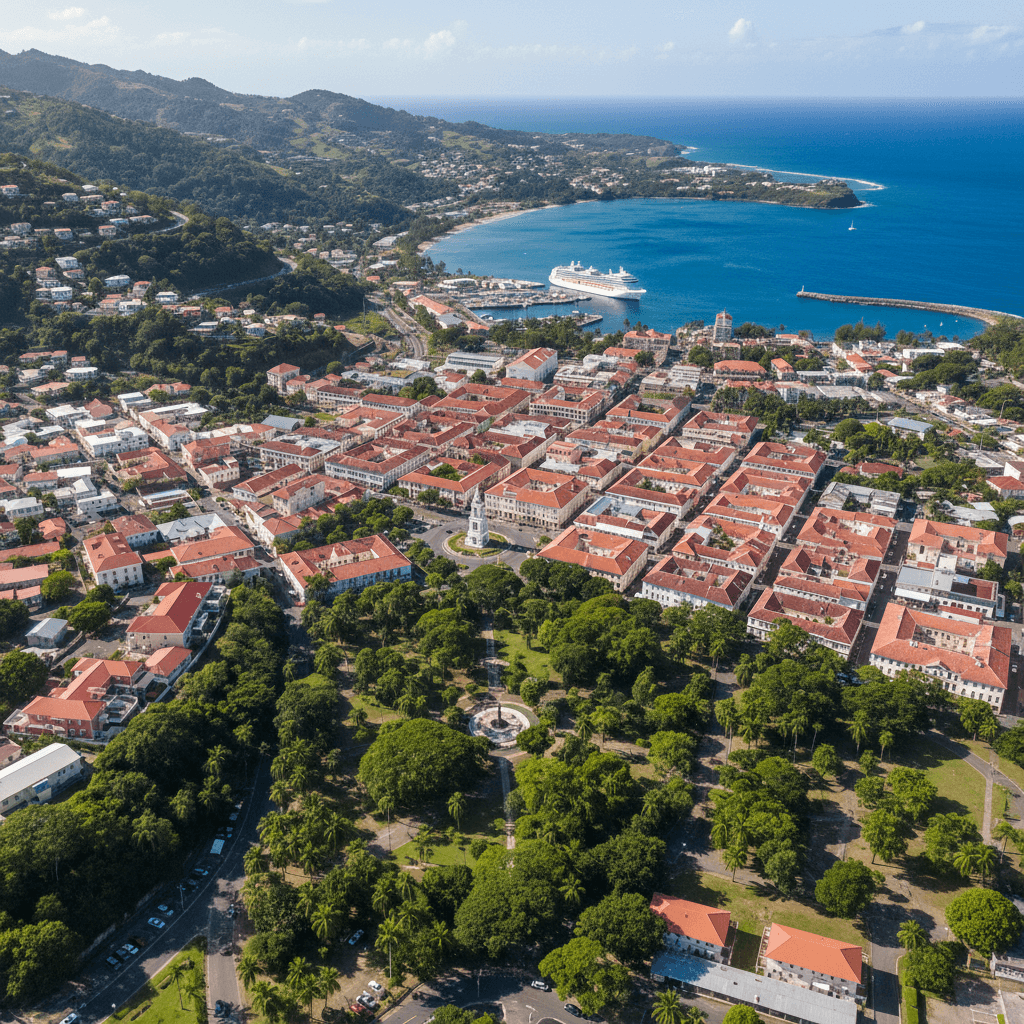
Basseterre
🇰🇳 Saint Kitts and Nevis
Basseterre isn't trying to impress you. That's honestly the whole point. While other Caribbean capitals lean hard into cruise ship tourism and Instagram backdrops, this place just gets on with itself and you either fall into that rhythm or you don't.
The city is small enough that you'll learn its streets in a week, smell the saltwater from almost anywhere in the center and hear minibuses honking their way down Bay Road before you've had your first coffee. It's a working town, not a resort, which means the bakeries and rum shops are for locals first, tourists second.
What pulls nomads here, turns out, isn't the beaches alone. It's the combination of English as the official language, no income tax, genuinely low violent crime and a cost of living that's reasonable by Caribbean standards. One person can get by on around $1,330 a month including rent, though that assumes you're cooking local and taking minibuses rather than taxis everywhere.
The pace is slow and frankly that cuts both ways. If you're burnt out and need six months to decompress, Basseterre delivers, the kind of quiet where you actually hear rain hitting a tin roof at 3am. If you need a packed social calendar and back-to-back coworking events, you'll feel the walls closing in by week three.
Coworking is, weirdly, the city's biggest gap. Options are thin, shared office space runs about $18 to $37 a day and most nomads end up working from Frigate Bay cafes or their apartment. Internet is decent though, broadband averages 76 Mbps and mobile coverage is solid across the island.
The weather is warm year-round, 27 to 31°C, though September and October bring heavy rain and the kind of humidity that doesn't quit. February through April is the sweet spot, dry and breezy without peak-season crowds.
Basseterre suits a specific type of traveler: someone who wants authentic island life over manufactured paradise, doesn't need a rooftop bar scene and can handle the occasional frustration of limited options and higher import prices. It's not for everyone, it doesn't pretend to be.
Saint Kitts isn't cheap. Most nomads are surprised to find that a comfortable solo month runs closer to $2,000 than the $1,200 budget-tier figures suggest, once you factor in the import markups on groceries, the occasional taxi because buses don't reliably reach Frigate Bay and the reality that you'll want to eat somewhere nicer than a roadside stall more than twice a week.
Rent is, honestly, the biggest variable. A studio in Basseterre proper runs $500 to $1,000 a month and puts you walking distance from markets, the ferry terminal and the minibus stops where you'll flag down a ride for $2.22 a ticket. Move out to Frigate Bay for the beach access and the better WiFi infrastructure and you're looking at $800 to $1,500, it's worth it for most nomads but the tourist-resort energy gets old fast.
Monthly Budget Tiers (Solo Nomad)
- Budget (~$1,200): Basseterre studio around $500, local street food and market cooking at $300, minibuses for transport at $100
- Mid-range (~$2,000): Frigate Bay 1BR at $1,000, mixed dining at $400, taxis and DROP SKN rides at $200
- Comfortable (~$3,500): Southeast Peninsula condo at $2,000 or more, upscale dining at Marshalls or The View at $600, car rental around $300 a month
Food costs are, turns out, where you feel the import economy most. Street food like stewed chicken or a roti runs about $12.50, a sit-down lunch at a mid-range spot is around $15 and dinner for two somewhere upscale like Serendipity near the harbor will hit $42 or more before drinks. Cooking at home helps, but imported goods at the supermarket are weirdly expensive, think European prices for basic pantry staples.
Utilities and internet average around $113 a month combined, which sounds fine until you realize coworking is basically nonexistent. Shared office space in Basseterre runs 50 to 100 Eastern Caribbean dollars a day (roughly $18 to $37), most nomads just work from their apartment or a cafe in Frigate Bay. Broadband can hit 76 Mbps on a good connection through Flow or Digicel, mobile data is solid enough as backup.
The no-income-tax policy is genuinely appealing for longer stays. It doesn't offset the high cost of imported goods entirely, but for remote workers earning in dollars or euros, the math still works out reasonably well.
Basseterre isn't big. Four neighborhoods cover most of what you'd actually consider living in and each one attracts a pretty distinct crowd. Here's how to think about it.
For Digital Nomads: Frigate Bay
Frigate Bay is, honestly, where most nomads end up and it's easy to see why. You've got beach access on both the Atlantic and Caribbean sides, a strip of bars and restaurants that actually have decent WiFi and enough foot traffic that it doesn't feel isolating. Rent runs $800 to $1,500 for a one-bedroom, which is the steepest on the island, but you're paying for walkability and vibe in equal measure.
The coworking scene is thin island-wide, so most people work from cafes or hotel business centers. It's manageable, just don't arrive expecting a full coworking infrastructure.
For Budget Travelers and Solo Nomads: Basseterre Center
Downtown Basseterre is loud, fragrant with street food and genuinely affordable. Studios go for $500 to $1,000 a month, minibuses run everywhere for about $2.22 a ride and you're walking distance from the JNF Hospital, markets and the ferry terminal. It's the most practical base on the island, turns out, especially if you're here to actually save money rather than spend it.
The tradeoff is urban noise and limited beach access. You're not strolling to the sand from here, you're catching a bus or a DROP SKN ride.
For Expats and Families: Bird Rock
Bird Rock sits between the capital and Frigate Bay, quiet and residential without being remote. Rent is mid-range at $700 to $1,200 and expats with families tend to like the calm streets and the short commute into town. Fewer restaurants nearby, fewer amenities generally, but that's the point for a lot of people.
For Long-Stay Comfort: Southeast Peninsula
The Southeast Peninsula is, frankly, in a different category. Ocean views, serious privacy and rents starting around $2,000 a month for luxury condos. It's isolated in a way that's either perfect or maddening depending on your temperament and you'll need a rental car because public transport doesn't reach here reliably. Families who want space and quiet without leaving the island tend to gravitate this way.
Let's be honest: the internet situation in Basseterre is workable, not impressive. Download speeds average around 76 Mbps on broadband (Flow can hit 146 Mbps on a good day), but mobile data sits closer to 23 Mbps and the consistency, frankly, depends heavily on where you're staying and which provider you're using.
Most cafes and hotels push 25 to 50 Mbps over WiFi, which is fine for calls and async work, though you'll feel the lag during peak hours when half the guesthouse is streaming. Frigate Bay properties tend to have more reliable connections than older buildings in central Basseterre, where the infrastructure is patchier.
For a SIM, go with Digicel or Flow, both sold at the airport and in stores around town. Starter SIMs run around 23 XCD (roughly $8.50) and data bundles top out at 130 XCD for a decent chunk of data, 4G coverage is solid across the main populated areas, weirdly good for an island this size.
Dedicated coworking is thin on the ground. There are a handful of shared office setups in Basseterre that charge 50 to 100 XCD per day (about $18 to $37), but don't expect polished hot-desk environments with standing desks and cold brew on tap. Most nomads end up working from their apartment, a hotel business center or a cafe with reliable WiFi.
The best cafe options for getting work done are concentrated around Frigate Bay, where the atmosphere is calmer and the WiFi more consistent than the spots near the ferry terminal in town. That said, nobody's going to kick you out after an hour, the pace here is slow, so you won't feel rushed.
- Broadband speed: Avg. 76 Mbps download; Flow up to 146 Mbps
- Mobile data: ~23 Mbps, solid 4G coverage
- SIM cards: Digicel or Flow; from 23 XCD at airport or local stores
- Data bundles: Up to 130 XCD for larger packages
- Coworking: Limited shared offices, 50 to 100 XCD per day
- Best cafe WiFi: Frigate Bay area beats central Basseterre
If your work demands rock-solid, high-speed internet every single day, turns out Basseterre will test your patience. It's good enough for most remote work, just not the kind of setup you'd brag about.
St. Kitts is, honestly, one of the safer spots in the Caribbean right now. Homicides dropped 75% in 2025, down to 7 from 28 the prior year, which is a dramatic shift for a small island that had been struggling with gang-related violence. Violent crime against tourists and nomads is rare, the streets in central Basseterre feel calm during the day and most expats here will tell you they've never felt threatened.
That said, don't be naive about it. Isolated areas after dark deserve the same caution you'd apply anywhere and some quieter pockets near the port can feel uneasy late at night. Stick to Frigate Bay and central Basseterre after hours, you'll be fine.
For healthcare, Joseph N. France (JNF) General Hospital in Basseterre is the island's main facility and handles emergencies, trauma and general care. It's a public hospital, so the experience can be inconsistent, wait times stretch long on busy days and the equipment isn't always what you'd find in a major city. Construction on a new smart hospital facility started in 2025, which should eventually change things, but for now, expats with serious or complex conditions typically fly to Barbados, Puerto Rico or the US for treatment.
Pharmacies are easy to find around Basseterre and they're generally well-stocked for common medications. For emergencies, dial 999.
Travel insurance isn't optional here, it's the thing that separates a manageable health situation from a financial disaster. Make sure your policy covers medical evacuation, because that's the real exposure on a small island with limited specialist care. Policies that include evacuation coverage typically run $50 to $100 a month depending on your age and coverage level, that's a small price for serious peace of mind.
- Emergency number: 999
- Main hospital: JNF General Hospital, Basseterre (emergencies, trauma, general care)
- Serious/specialist care: Expect to fly out, Barbados and Puerto Rico are common destinations
- Pharmacies: Widespread in central Basseterre, well-stocked for basics
- Travel insurance: Get it and confirm it includes medical evacuation
Getting around Basseterre is, honestly, pretty simple once you accept that this isn't a city built for speed. The island runs on its own rhythm and fighting that will just frustrate you.
The main option for budget travel is the minibus network. Flag one down anywhere along the route, pay around $2.22 EC per ride and call out "bus stop" when you want off. They cover routes north and east toward Sandy Point, Capesterre and St. Peter's well enough, but don't count on them for Frigate Bay or anything south of Basseterre. That stretch, you're on your own.
For those gaps, the DROP SKN Ride app fills in nicely. It runs 24/7, it's pet-friendly and most expats use it as their default once they're settled. Taxis from the airport run $20 to $30 depending on where you're headed, drivers are upfront about pricing, arguing about the fare will get you nowhere.
If you're staying more than a few weeks and plan to explore the southeast peninsula or get out to the beaches regularly, a rental car makes a real difference. Avis and Hertz both operate here, starting around $50 a day. Scooters are another option, Sunny Blue on Pond Road in Basseterre is the go-to rental spot and weirdly it's one of the better deals on the island for getting around on your own schedule.
Basseterre's center is walkable. The port, Independence Square, the market, most of it sits within a short walk and the streets are calm enough that you won't feel like you're dodging traffic. That said, the humidity clings from mid-morning onward, so early errands make sense.
- Minibus: ~$2.22 per ride, routes north/east only, no reliable service to Frigate Bay
- DROP SKN Ride app: 24/7 ride-hailing, covers the whole island
- Car rental: Avis/Hertz from ~$50/day, turns out it's worth it for longer stays
- Scooter rental: Sunny Blue, Pond Road, Basseterre
- Airport taxi: $20 to $30 to most destinations
Monthly transport costs land around $79 for a typical solo nomad mixing buses and occasional rides. Budget travelers can do it on $100 sticking to minibuses, mid-range nomads using rides and taxis regularly should expect closer to $200.
English is the official language and everyone speaks it fluently. You won't need a phrasebook or translation app to get through daily life, which honestly makes settling in far easier than most Caribbean islands.
That said, locals speak a Kittitian Creole that can, turns out, catch you off guard at first. The accent is warm and musical, somewhere between British Caribbean and its own thing entirely and when two locals are talking fast over the sound of a minibus engine or rain hammering a corrugated roof, you might catch maybe half of it. Don't panic. Slow down, smile and ask them to repeat. Nobody minds.
A few things are worth knowing before you open your mouth. Greetings matter here, skipping a "good morning" before launching into a question reads as rude, locals call it being "outta place," and that label sticks. Take the five seconds. Say good morning, good afternoon, good evening. It changes every interaction.
On the minibus, say "bus stop" clearly when you want to get off. That's it, that's the phrase, don't overthink it. Drivers expect it and they'll pull over. Mumbling or waving won't always cut it.
Creole vocabulary pops up in casual conversation, weirdly more so once people get comfortable with you. You'll start picking it up organically after a few weeks, especially if you're spending time in Basseterre's markets or hanging around Frigate Bay's beach bars in the evening. Google Translate handles standard Caribbean English fine but struggles with thick Creole phrasing, so your best tool is honestly just listening and asking.
Most expats and nomads report zero communication barriers for work calls, coworking conversations or dealing with landlords and government offices. English proficiency is genuinely high across all age groups, not just in tourist areas.
- Official language: English, spoken universally
- Local dialect: Kittitian Creole, thicker in casual and fast-paced settings
- Key phrase: "Bus stop" to exit a minibus
- Social rule: Always greet before asking anything; skipping it's considered disrespectful
- Translation tools: Google Translate works for standard English; less reliable for Creole
Communication here isn't a barrier. It's a warmth test and passing it's just a matter of slowing down and being polite.
Basseterre sits in the tropics, so the temperature honestly doesn't change much. Year-round you're looking at 27 to 31°C (81 to 88°F), with humidity that clings to your skin the moment you step outside. The real variable is rain and that's what determines whether your stay is pleasant or genuinely miserable.
The dry season runs January through April, with monthly rainfall dropping below 70mm. February and March are, turns out, the sweet spot: low humidity, steady trade winds that actually make the heat bearable and almost no chance of a storm ruining a beach day. December is solid too, cooler evenings, clear skies and the island has a low-key festive energy without the shoulder-season crowds you'd get elsewhere in the Caribbean.
Then the wet season arrives. July through November brings daily downpours and September is the worst of it, averaging around 125mm of rain across roughly 21 wet days. That's not a light drizzle either, it's the kind of rain that hammers corrugated rooftops so loud you can't hear yourself think, then stops just as suddenly. September and October also sit inside peak hurricane season, the risk is real, it's not just a travel insurance footnote.
Most nomads who've spent time here say the wet season is workable if you're disciplined about your schedule, mornings tend to stay dry, afternoons go sideways fast. Still, if you have flexibility, there's no good reason to book those months.
Best times to visit:
- February to March: Driest, most comfortable, ideal for outdoor work and exploring
- December: Festive atmosphere, low rain, slightly cooler nights
- January: Dry season is kicking in, good value before peak crowds arrive
Months to avoid:
- September to October: Peak hurricane risk, highest rainfall, weirdly oppressive humidity even by Caribbean standards
- July to August: Wet season in full swing, manageable but not ideal
If you're coming for a short trip, February or March. Full stop. If you're staying longer, plan your outdoor time around mornings and don't fight the afternoon rain, just work through it.
Saint Kitts runs on Eastern Caribbean dollars (XCD), but USD is accepted almost everywhere, the exchange rate is fixed at roughly 2.7 XCD to $1 so you won't get burned on conversions. ATMs are 24/7 in Basseterre and Frigate Bay, most take Visa and Mastercard without drama. Wise works well here for transfers, honestly better than trying to wire money through a local account.
For a SIM, grab a Digicel or Flow card at the airport or any town center store. Starter packs run about 23 XCD, data bundles scale from there. Flow's 4G is, turns out, the stronger network for most of the island, though Digicel holds up fine in Basseterre itself.
Coworking is limited. Full stop. There are shared office options in Basseterre at around $18 to $37 per day, but most nomads just end up working from their apartment, a hotel business center or a cafe in Frigate Bay where WiFi typically hits 25 to 50 Mbps. It's workable, it's not inspiring.
Getting around without a car is doable but patchwork. Minibuses cover routes from Basseterre to Sandy Point, Capesterre and St. Peter's for about $2.22 a ride, you flag them down and shout "bus stop" when you want off. There's no reliable public transit south to Frigate Bay, so most nomads use the DROP SKN Ride app for that leg, it runs 24/7 and is, weirdly, pet-friendly.
For longer stays, apartments are listed on Facebook groups and sknih.com. Expect to pay $500 to $1,000 monthly for a studio in Basseterre, $800 to $1,500 in Frigate Bay. Landlords here don't typically negotiate much, that's the standard expectation not a haggling exercise, pushing back hard will just sour the relationship before it starts.
A few cultural notes that'll save you some awkward moments:
- Greetings matter: Starting any interaction without a "good morning" or "good afternoon" reads as rude. Don't skip it.
- Shoes off indoors: Standard in most local homes, follow the host's lead.
- Tipping: 10 to 15% is expected at restaurants, not optional.
- Hurricane season: July through November brings real rain, September is the worst of it with roughly 21 wet days and 5 inches of rainfall. Plan longer trips around the dry window of January through April.
Need visa and immigration info for Saint Kitts and Nevis?
🇰🇳 View Saint Kitts and Nevis Country GuideHidden Gem
Worth the effort