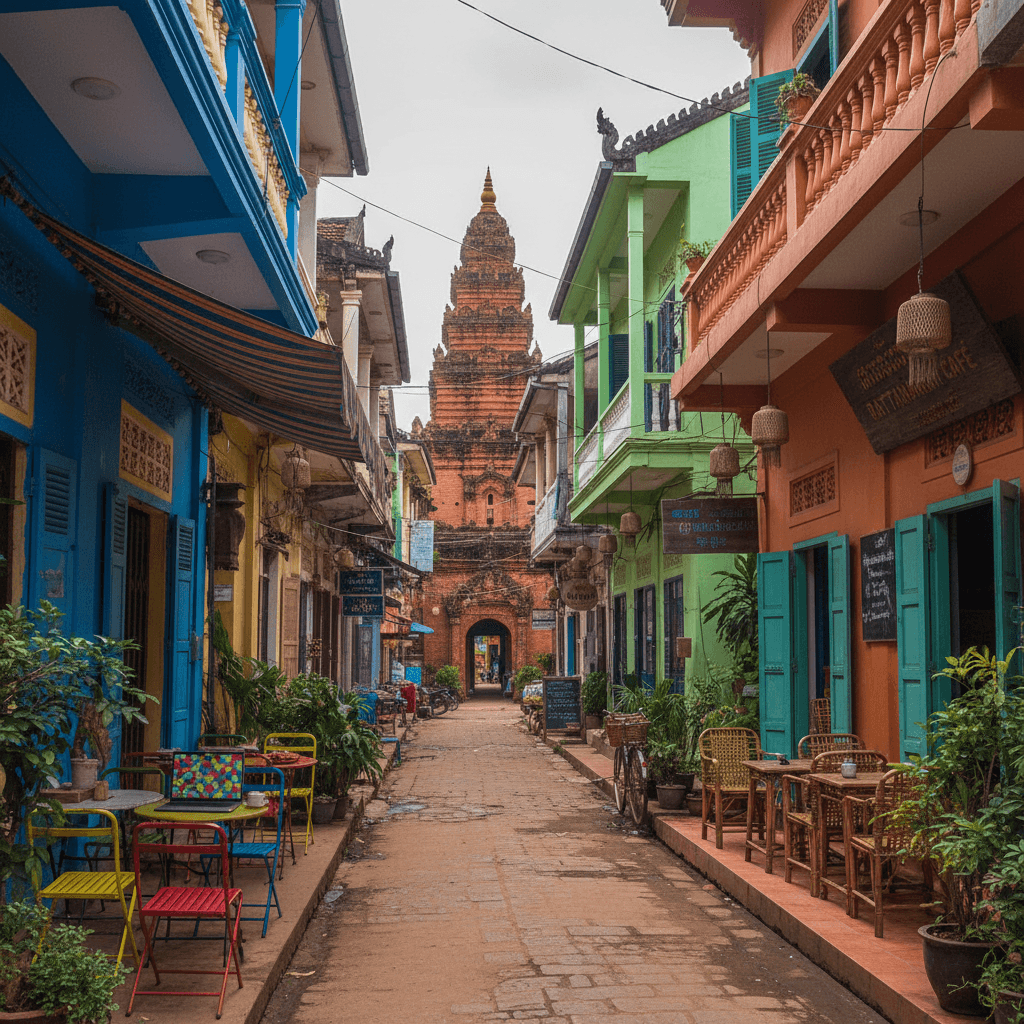
Banlung
🇰🇭 Cambodia
The Highland Frontier
Banlung is where Cambodia’s red dust meets the deep green of the jungle. It’s the capital of Ratanakiri Province, but calling it a city feels like a stretch; it’s more of a sprawling, highland outpost that serves as the gateway to the country’s wild northeast. For nomads who find Phnom Penh too frantic or Siem Reap too polished, Banlung is the antidote. It’s a place defined by volcanic crater lakes, manual gem mines, and a slow, rhythmic pace that feels decades removed from the modern world.
The vibe here is rugged and unpretentious. Most of the action centers around the central market, where you’ll see ethnic Kreung villagers trading goods next to travelers planning treks. It’s not a place for high-end cocktails or flashy coworking spaces. Instead, the emotional payoff comes from the "golden hour" at Yeak Laom Lake or the eerie, quiet beauty of the surrounding stilt-house villages. You’re here to disconnect from the noise and reconnect with a more analog way of life, even if you’re still tethered to your laptop.
The Nomad Experience
Living in Banlung is incredibly cheap, even by Cambodian standards. Most nomads find they can live comfortably on $700 to $1,000 a month, while those on a true budget can easily scrape by on $400 to $600. While the town is remote, it’s surprisingly functional for remote work. Reliable WiFi has become more common, and places like Happy Homestay have built reputations for having "fab internet" that handles video calls without a hitch.
The trade-off for the low cost of living is the isolation. You won’t find a massive expat community here. The social scene is small and intimate, revolving around guesthouse porches and sunset drinks by the water. You’ll need a bit of an adventurous spirit to handle the occasional power flicker or the dusty roads, but the reward is a level of authenticity that’s getting harder to find in Southeast Asia.
Where to Plant Your Roots
Since Banlung is compact, you don’t have to worry about long commutes, but the neighborhood you choose dictates your daily rhythm.
- Central Market Area: This is the heart of the action. It’s the best spot for solo nomads who want to be within walking distance of street food stalls and moto rentals. It’s dusty and basic, but you’ll never be far from a $1 bowl of noodles.
- Yeak Laom Lake Vicinity: Located about 3 to 4 kilometers east of the center, this area is preferred by expats and families. It’s much quieter, surrounded by forest trails and traditional stilt huts. It’s more scenic and peaceful, though you’ll definitely need a scooter to get into town for supplies.
- The Outskirts: As you move toward the gem mines, the terrain gets rougher. It’s great for a day trip to see the manual "rovey" pulleys in action, but it’s too remote for most long-term stays.
Practical Living Costs
- Budget Living ($400-$600): A basic studio near the center for $150-$250, eating $1 grilled bananas and market food, and skipping the private transport for a $50 monthly moto rental.
- Mid-Range Comfort ($700-$1,000): A nicer one-bedroom for $250-$400, frequenting cafes with free WiFi, and using the Grab app for occasional $1-$2 rides.
- High-End ($1,200+): Staying in the best available guesthouses for $500+, eating at the few "upscale" spots where meals hit $10, and renting a newer scooter for $100 a month.
Getting around is straightforward. The core is walkable, but to see the waterfalls or the lake, you’ll want a scooter. The Grab app is your best friend for quick trips around town, usually costing between $1 and $3. For everything else, a Cellcard SIM with 20GB of data for about $5 to $10 will keep you connected when the guesthouse WiFi takes a breather.
The Cost of Living in Banlung
Banlung is one of the most affordable corners of Cambodia, perfect if you want your budget to stretch while you disappear into the highlands. The local economy is still very much rooted in agriculture and small-scale trade, so you won't find the inflated prices of Siem Reap or Phnom Penh here. Most nomads find they can live comfortably on a fraction of what they would spend in more developed Southeast Asian hubs.
Monthly Budget Tiers
- The Budget Nomad: $400 to $600. This covers a basic studio or a room in a local guesthouse for $150 to $250, meals at the central market, and a monthly moto rental. You'll be eating like a local and skipping the pricey excursions.
- The Mid-Range Resident: $700 to $1,000. At this level, you can afford a more modern 1-bedroom apartment or a high-end homestay for $250 to $400. You'll have enough left over for daily cafe visits, occasional Grab rides, and weekend trips to the waterfalls.
- The High-End Experience: $1,200+. Even on a generous budget, it's hard to spend more than this in Banlung. This tier includes an upscale guesthouse for $500 or more, frequent dining at the few international-style restaurants, and a private scooter for the month.
Daily Expenses and Lifestyle Costs
Food is the biggest win for your wallet. If you head to the central market, you can grab grilled bananas or a bowl of noodles for about $1 to $2. Mid-range meals at places like the Lotus Cafe usually run between $3 and $5. While upscale dining is rare, a "splurge" meal with drinks rarely crosses the $10 mark.
Transportation is straightforward. Since there isn't a massive public transit system, most expats rent a scooter for $50 to $100 a month. If you aren't comfortable driving, the Grab app is surprisingly active for such a remote town. A quick trip across the center usually costs between $1 and $2.
Neighborhood Price Points
Central Market Area
- Best for: Solo nomads and short-term stays.
- Typical Rent: $150 to $300.
- Vibe: You're in the heart of the action with easy access to street food and the main transport hub. It's dusty and basic, but incredibly cheap.
Yeak Laom Lake Vicinity
- Best for: Expats and nature lovers.
- Typical Rent: $250 to $500.
- Vibe: Located about 4km east of town, this area offers traditional stilt huts and peaceful homestays. You pay a bit more for the scenery and the quiet, but you'll need your own wheels to get into town for supplies.
Connectivity and Utilities
Digital nomads often worry about the cost of staying online in rural Ratanakiri. A Cellcard SIM with 20GB of data will only set you back about $5 to $10. While there aren't dedicated coworking spaces, guesthouses like Happy Homestay offer reliable WiFi for free to their guests. Electricity can be a bit finicky during the rainy season, so it's smart to factor in a small backup power bank for your phone, though major outages are becoming less frequent.
Banking is one area where you need to be prepared. ATMs are sparse and don't always like foreign cards. Most locals and expats use the Bakong or ABA apps for QR payments, but you'll want to keep a stash of USD cash for smaller vendors who haven't gone digital yet.
For Solo Travelers and Digital Nomads: Central Market Area
If you want to be where the action is, the Central Market area is your best bet. It is the heart of Banlung, a compact grid of red dirt roads and guesthouses. This is where you will find the most reliable infrastructure, including the best mobile signal for your Cellcard SIM. Most nomads gravitate toward Happy Homestay, which has earned a reputation for having some of the fastest WiFi in the province, often hitting 20 to 50Mbps.
Living here means you are steps away from the street food stalls. You can grab grilled bananas or a bowl of noodles for about $1. It is dusty and can get a bit noisy during the day, but the convenience is unbeatable. You can rent a moto for around $5 to $10 a day right on the main strip to explore the surrounding waterfalls. Expect to pay between $150 and $250 a month for a basic studio or guesthouse room in this zone.
- Rent: $150 to $400 per month depending on amenities.
- Vibe: Local, convenient, and slightly gritty.
- Best for: Networking with other travelers and staying connected for work.
For Expats and Nature Lovers: Yeak Laom Lake Vicinity
Located about 3 to 4 kilometers east of the town center, the area surrounding Yeak Laom Lake is where long term residents usually settle. It is a massive volcanic crater lake surrounded by lush forest. Living here feels less like a city and more like a retreat. The air is cooler, and the scenery is spectacular, especially during the golden hour when the water turns a deep turquoise.
Expats typically rent traditional stilt huts or small houses tucked away on the trails leading to the water. While it is incredibly peaceful, you will need your own transportation. There are fewer shops here, so you will be using the Grab app or your own scooter to get into town for supplies. It is the perfect spot if your priority is hiking and swimming rather than being near the nightlife, which is minimal in Banlung anyway.
- Rent: $250 to $500 for a private house or upscale guesthouse.
- Vibe: Tranquil, scenic, and isolated.
- Best for: Those who want a backyard full of jungle trails and swimming spots.
For Families and Slow Travelers: The Eastern Outskirts
Families often prefer the quieter residential pockets between the market and the lake. These areas offer a bit more space and less dust than the town center. You will find larger homestays that cater to groups and families, often featuring gardens and communal kitchen areas. It is a safe, low crime environment where kids can see the local Kreung minority culture up close.
The cost of living remains very low here. A mid range lifestyle for a family, including a decent house and eating out at places like Lotus Cafe, usually stays under $1,000 a month. Most families recommend hiring a local guide for the first few days to help navigate the rougher roads leading to the gem mines and minority villages, as signage is often non existent.
- Rent: $300 to $600 for larger accommodations.
- Food: $3 to $5 for mid range meals; $10 for the rare "upscale" dinner.
- Best for: A balanced pace with access to both nature and basic town services.
For Adventurous Souls: Gem Mine Districts
While not a traditional neighborhood for living, the outskirts near the gem mines attract those who want a truly raw experience. These areas are rugged and the roads are often difficult to navigate, especially during the rainy season from May to October. You won't find many modern amenities here, but you will see the manual "rovey" pulleys used by miners and get a glimpse of the province's primary industry.
Living this far out is only recommended for short stays or for those who are comfortable with occasional power inconsistencies. It is the most authentic version of Ratanakiri you can find, but you will be sacrificing the "digital" part of the nomad lifestyle for a few days of pure exploration.
- Transport: Scooter rentals are a must, roughly $50 to $100 per month.
- Vibe: Wild, industrial, and deeply rural.
- Best for: Photography enthusiasts and off the beaten path explorers.
Connectivity in the Highlands
Banlung is surprisingly capable when it comes to remote work, provided you set your expectations for a rural highland town rather than a tech hub like Phnom Penh. You won't find sleek, glass-walled coworking spaces here. Instead, the nomad community relies on a handful of reliable guesthouses and chilled-out cafes that have embraced the remote work lifestyle.
Most digital nomads gravitate toward Happy Homestay. It has earned a reputation for having some of the most consistent internet in the province. Travelers frequently report speeds that handle video calls and heavy uploads without a hitch, which is a relief when you're surrounded by jungle and red dust roads. You can expect speeds ranging from 20Mbps to 50Mbps, though these can dip during the occasional heavy tropical downpour.
Best Places to Power Up
Since dedicated coworking offices don't exist in Banlung yet, your best bet is to scout for "work-friendly" cafes. These spots usually offer free WiFi for the price of a coffee, though it's good form to order a meal if you're staying for a few hours.
- Happy Homestay: The unofficial headquarters for nomads. It's quiet, the staff understands the need for reliable signals, and the atmosphere is conducive to deep focus.
- Cafe-Style Guesthouses: Many of the lodges near the central market or on the way to Yeak Laom Lake have open-air common areas. These are great for morning emails, though they can get a bit noisy during the midday heat.
Mobile Data and SIM Cards
Never rely solely on guesthouse WiFi in northeastern Cambodia. Power outages are rare but they do happen every few weeks, and a solid data backup is your safety net. Cellcard is the gold standard in this region. It offers the most reliable coverage across Ratanakiri Province, even when you're heading out toward the gem mines or waterfalls.
You can pick up a SIM card at the central market or a local phone shop for about $5. Data packages are incredibly cheap; $10 will usually get you 30GB+, which is more than enough for a month of hotspotting. Make sure to bring your passport for registration. If you're coming from the airport, try to get sorted there, but the local shops in town are just as efficient.
Digital Nomad Infrastructure
- Typical Speeds: 20-50 Mbps on fiber; 10-15 Mbps on 4G LTE.
- Daily Tech Cost: Around $1 to $5 for cafe drinks or a small daily fee if a guesthouse offers a dedicated workspace.
- Power Stability: Generally good, but keep your laptop charged. Sudden rainstorms can occasionally knock out the grid for an hour or two.
- Fintech: Download the Bakong or ABA apps if you have a local bank account. Most vendors in town now use QR codes for payments, which is much easier than carrying stacks of riel.
Expats in the area suggest keeping a "work kit" ready. This should include a power bank and a local SIM with a pre-loaded data plan. If the WiFi at your guesthouse flickers, you can switch to your hotspot in seconds without dropping your Zoom call. It's this blend of rustic living and modern 4G that makes Banlung a functional, if unconventional, base for a few weeks of deep work.
Personal Safety and General Security
Banlung is a breath of fresh air if you are coming from the high energy chaos of Phnom Penh. It is a low crime, rural town where the local community is tight knit and generally welcoming to outsiders. Petty theft like bag snatching is rare here, though you should still use common sense. Don't leave your phone or wallet sitting on a cafe table while you walk away, and keep your valuables tucked away when you are riding on the back of a moto.
The biggest safety concerns in Ratanakiri aren't people; they are the terrain and the wildlife. If you are heading out to the gem mines or the waterfalls, the roads can be treacherous, especially during the rainy season from May to October. Red clay turns into a slick, muddy mess that can wipe out even experienced riders. If you aren't confident on a scooter, hire a local driver through the Grab app or ask your guesthouse to arrange a remorque. Most travelers find that sticking to the main paths around Yeak Laom Lake after dark is fine, but avoid wandering into deep jungle areas without a guide due to the risk of getting lost or encountering snakes.
Healthcare Facilities and Pharmacies
Medical care in Banlung is basic. There are small clinics and pharmacies clustered around the central market that can handle minor issues like stomach bugs, skin infections, or light scrapes from trekking. For anything more serious than a flu or a small cut, you'll want to head to the provincial hospital in town. While the staff is dedicated, the facility lacks advanced diagnostic equipment and specialized trauma care.
Expats and long term nomads usually follow a simple rule: if it's an emergency, get to Phnom Penh or even Bangkok. Medical evacuation can be incredibly expensive, so having travel insurance that covers emergency transport is a must. For daily needs, look for pharmacies near the market area. They usually stock common antibiotics and painkillers, but always check the expiration dates on the packaging before you buy.
Staying Healthy in the Highlands
Because Banlung is a nature focused destination, you need to be proactive about your health. Mosquitoes are a reality here, and while malaria isn't as common as it once was, dengue fever is still a risk. Use high quality repellent, especially at dawn and dusk. Most guesthouses like Happy Homestay provide mosquito nets; use them.
Hydration is your other main priority. The highland sun is deceptively strong even when it feels cool. Only drink bottled or filtered water, which you can buy for about $0.50 a bottle at any stall. If you are adventurous with street food at the central market, stick to vendors where you see high turnover and high heat. Those $1 grilled bananas and noodle bowls are usually safe, but maybe skip the raw herbs if your stomach is sensitive.
Emergency Contacts
- Police: Dial 117 (though English speakers may be limited).
- Medical Emergency: Contact your guesthouse immediately to arrange a fast moto or car to the town hospital.
- Phnom Penh Evacuation: Expect a 6 to 8 hour drive or a regional flight if you need high level care.
Most nomads find that as long as they respect the rugged landscape and keep a basic first aid kit on hand, Banlung is a peaceful and secure place to settle for a few weeks of deep work and exploration.
Banlung is small enough that you can cross the central core on foot in about 15 minutes, but you'll need wheels the moment you want to see the crater lakes or waterfalls. The town doesn't have a formal public transport system; instead, it relies on a mix of local drivers and old school grit.
The Digital Nomad’s Choice: Scooters and Bikes
Most expats and long term travelers rent a semi automatic or automatic scooter to get around. It's the only way to have true freedom when exploring the red dirt roads leading to the gem mines or ethnic villages. Expect to pay between $5 and $10 per day for a short term rental, though you can negotiate monthly rates down to $50 or $100 if you're staying through the dry season.
- Road Conditions: The main roads are paved, but the "Red Road" routes to the outskirts are notorious for dust in the dry season and thick, sticky mud during the rains from May to October.
- Safety: Always wear a helmet. Local police occasionally check for licenses near the central market, and while fines are low, it's better to avoid the hassle.
- Bicycles: Many guesthouses like Happy Homestay offer basic bicycles for $1 to $2 a day. These are fine for reaching the market, but the 4km uphill trek to Yeak Laom Lake will be a workout.
Ride Hailing and Taxis
While Banlung feels remote, Cambodia's digital infrastructure has arrived, though ride hailing apps have limited availability; negotiate with remorque or moto-taxi drivers around Central Market. Most rides within the center cost between $1 and $3.
You'll find "remorques" (the Cambodian version of a tuk-tuk) and moto-taxis congregating around the Central Market. These drivers know every guesthouse and trail in the province. Always agree on the price before you hop on the back of a bike or into a trailer, especially for longer trips to the waterfalls which might run you $10 to $15 for a half day excursion.
Arrival and Regional Connections
The Banlung Airport (LRQ) is mostly used for regional charters and sporadic flights. Most nomads arrive via bus or private van from Phnom Penh or Kratie. Once you land at the bus station or the airstrip, a moto-taxi transfer to your guesthouse should cost roughly $2 to $5 depending on your luggage. For a more comfortable private car transfer from regional hubs, you're looking at $10 to $20.
Navigation Tips
Google Maps is generally accurate for the town center, but it often struggles with the smaller jungle paths. Locals and seasoned expats recommend using Maps.me for offline navigation when you're heading out to the more remote minority villages. If you get lost, look for the Independence Monument in the center of town; all main roads eventually lead back to this roundabout.
For those planning to stay near Yeak Laom Lake, keep in mind that the turnoffs are specifically located 3.5km and 4.5km east of the town center. If you miss these, you'll find yourself heading toward the Vietnamese border on a very long, very dusty road.
The Linguistic Landscape
In Banlung, your primary tool for connection is Khmer. Unlike the polished tourist hubs of Siem Reap or Phnom Penh, English proficiency here drops off significantly once you step away from the guesthouses and tour operators. You'll find that younger staff at places like Happy Homestay speak enough English to handle remote work requests and logistics, but the local market vendors and moto drivers often speak only Khmer.
Ratanakiri is also culturally distinct because of its indigenous populations. In the villages surrounding the town, you might hear Kreung, Tampuan, or Jarai dialects. While you aren't expected to learn these, showing an interest in a few words while visiting the stilt huts or gem mines earns immense respect from the locals. Most residents are bilingual in their native dialect and Khmer.
Communication Tools and Apps
Since English is limited, Google Translate is a non-negotiable part of your digital toolkit. The camera translation feature is particularly helpful for deciphering menus at smaller stalls near the Central Market. For daily interactions, nomads recommend downloading the Khmer offline language pack so you aren't stranded if you lose signal in the jungle.
For getting around and ordering food, Grab is the gold standard. It bypasses the language barrier for directions and pricing, though in a town this small, you'll still find yourself negotiating with independent remorque (tuk-tuk) drivers. Having a few basic Khmer phrases in your back pocket will usually get you a better "local" price.
- Susaday: Hello (Informal)
- Aw koon: Thank you
- Chon: Specialized term for the moto-taxis (remorques)
- Bo man?: How much?
Connectivity and Remote Work
Staying connected is surprisingly easy for such a remote outpost. Most expats and long-term travelers suggest picking up a Cellcard SIM card immediately. You can find them at the market for about $5 to $20, which can net 30GB+ depending on plan. The 4G signal is remarkably stable within the town limits and even around Yeak Laom Lake, though it flickers out once you head deep into the trekking trails.
WiFi in guesthouses is generally reliable enough for video calls, often hitting speeds between 20Mbps and 50Mbps. Outages aren't a daily occurrence, but they do happen every few weeks, especially during the peak of the rainy season from June to October. If you're planning a heavy work week, have your mobile hotspot ready as a backup. There aren't any formal coworking spaces yet, so the local cafe scene serves as the de facto office for the nomad community.
Digital Finance and Payments
Cambodia has moved rapidly toward a cashless society via the Bakong system and KHQR codes. Even in rural Banlung, you'll see these QR codes at many stalls and shops. While having USD cash is still necessary for larger transactions or emergencies, setting up a local banking app like ABA or using a digital wallet that supports regional QR payments can save you a lot of hassle. Just keep in mind that ATMs are sparse outside the town center, so fill your wallet before heading out to the waterfalls or gem mines.
The Highland Rhythm
Banlung operates on a different clock than the rest of Cambodia. Sitting in the northeastern highlands, the weather here is generally cooler and more temperate than the sweltering plains of Phnom Penh. You can expect temperatures to hover between 22°C and 32°C (72°F to 90°F) throughout the year. Because of the elevation, the air feels crisper, though the humidity remains a constant companion for anyone trekking through the surrounding jungles.
The Golden Window: November to February
Most expats and long term travelers agree that the dry season, specifically from November to February, is the sweet spot for living here. The skies stay a brilliant blue, the dust hasn't quite reached its peak yet, and the temperatures are at their most manageable. It is the perfect time for those morning circuits around Yeak Laom Lake before the midday sun hits. During these months, you won't have to worry about afternoon downpours interrupting your WiFi connection at spots like Happy Homestay.
While this is the peak time for tourism, Banlung is so far off the radar for most travelers that it never truly feels crowded. You will find the waterfalls are still flowing beautifully from the recent rains, but the roads are dry enough to navigate on a rented scooter without sliding through red clay mud.
The Heat and the Dust: March to May
As March rolls in, the mercury begins to climb, often peaking around 32°C or higher. This is the "shoulder" period where the landscape starts to look a bit parched. If you are sensitive to dust, this might be a challenging time to stay in the Central Market Area, as the unpaved roads can kick up quite a bit of red grit. However, the crater lakes remain refreshing, and since this is the hottest time of year, you will likely have the swimming holes almost entirely to yourself during the week.
The Monsoon Shift: June to October
The rainy season arrives in May or June and lingers through October. This isn't just a light drizzle; we are talking about heavy, tropical deluges that can turn the rural roads into impassable sludge. July and August are typically the wettest months. For nomads, this season brings a few specific challenges:
- Road Access: Reaching remote gem mines or ethnic minority villages becomes much harder, even with a sturdy moto.
- Power Stability: While the internet is generally reliable, heavy storms can occasionally lead to brief power outages in more remote homestays.
- Nature at its Peak: On the plus side, the waterfalls are thunderous and the jungle is incredibly lush. The "green season" is arguably the most beautiful time to see Ratanakiri if you don't mind getting wet.
Quick Season Breakdown
- Best for Trekking: November to January (Cool and dry).
- Best for Swimming: March to May (Hot weather makes the lake essential).
- Best for Photography: June to September (Lush green landscapes and dramatic clouds).
- Avoid if Possible: September (Peak rainfall can make getting around a headache).
Most nomads find that a stay starting in late October is ideal. You catch the end of the rains when the dust is low and the waterfalls are full, but you get the stable weather of the dry season for your actual work days. Just remember to pack a light sweater for the December evenings; the highland breeze can actually get surprisingly chilly once the sun goes down.
Connectivity and Digital Setup
Working remotely from the highlands is surprisingly smooth if you plan ahead. Most nomads swear by Cellcard for their mobile data. You can pick up a SIM at the central market or upon arrival for about $5 to $10, which usually nets you 20GB of data. It serves as a reliable backup when the occasional rural power flicker hits.
While Banlung lacks dedicated coworking hubs, the WiFi at spots like Happy Homestay is legendary among the remote work crowd. You can expect speeds between 20 and 50Mbps, which is plenty for video calls. If you need a change of scenery, Lotus Cafe is a solid regional go-to for a morning of deep work with a decent connection.
Money and Local Logistics
Cash is still king in Ratanakiri. While the Bakong app and QR payments are sweeping through Cambodia, Banlung is a place where you want a stack of USD or Cambodian Riel in your pocket. ATMs are sparse and sometimes finicky with international cards, so withdraw what you need before leaving a major hub like Phnom Penh.
For getting around, download Grab before you arrive. It is the easiest way to hail a remorque or taxi without haggling over every cent. Short trips around the center usually cost between $1 and $3. If you are staying longer, renting a scooter for $50 to $100 a month is the true nomad move. Just be ready for the red dust; the roads to the gem mines and waterfalls are unpaved and turn into a clay slick during the rains.
Safety and Health Essentials
This is a low-crime town where the biggest risk is usually a flat tire on a remote jungle track. Locals are generally welcoming, though English proficiency drops off quickly outside of the main guesthouses. Keep Google Translate downloaded for offline use to help with Khmer basics or the occasional Kreung dialect in the villages.
Healthcare is basic at best. There are pharmacies near the central market for bandages or cold medicine, but for anything serious, expats recommend heading straight back to Phnom Penh. Make sure your travel insurance covers medical evacuation. For minor issues, the local clinics handle the basics, but they aren't equipped for emergencies.
Social Life and Etiquette
Socializing in Banlung happens over sunset drinks by Yeak Laom Lake or at the market stalls. There is no real "expat quarter," so you will meet people by joining jungle treks or hanging out in guesthouse common areas. It is a small, tight-knit community where a polite "Susaday" (hello) goes a long way.
Respect local customs by dressing modestly when visiting ethnic minority villages or Buddhist temples. Always remove your shoes before entering a home or a pagoda. When bargaining at the market for textiles or gemstones, keep it friendly and lighthearted; a smile usually gets you a better price than an argument.
Seasonal Planning
Timing your stay is everything. The dry season from November to April is the sweet spot for trekking and motorcycling, with temperatures hovering around 25 to 30°C. If you visit during the monsoon from May to October, the landscape turns a brilliant emerald, but the roads become a challenge. Travelers often find that July and August are the toughest months for getting around, though the waterfalls are at their most spectacular then.
- Best for Work: November to February (cool and dry).
- Best for Nature: June to September (lush but muddy).
- Peak Heat: March and April (can hit 32°C+).
Need visa and immigration info for Cambodia?
🇰🇭 View Cambodia Country GuideHidden Gem
Worth the effort