Bangkok
🇹🇭 Thailand
Overview & Vibe
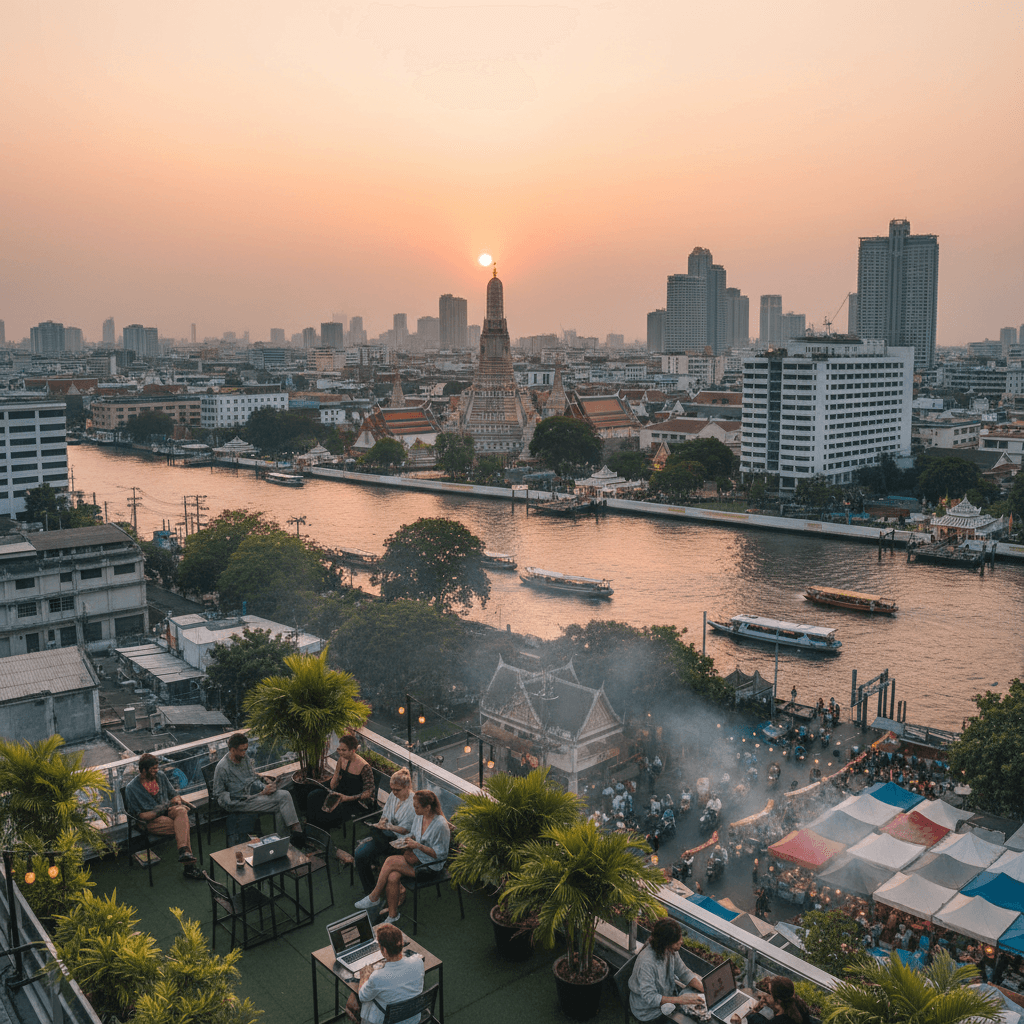
Bangkok is a sensory overload that somehow works. It’s a city where centuries-old temples sit in the literal shadow of neon-lit skyscrapers, and where you can grab a $2 bowl of noodles right outside a luxury mall. For digital nomads, the draw is a specific kind of "organized chaos" that manages to be both high-energy and incredibly convenient.
The city moves at a fast urban pace, but the legendary Thai hospitality keeps it from feeling cold. You’ll find world-class infrastructure, like the BTS Skytrain and ultra-fast fiber internet, paired with a street-level grit that gives the city its soul. It’s the kind of place where you can spend your morning in a high-tech coworking space and your evening at a plastic table on a sidewalk, drinking cold beer with locals and travelers from every corner of the globe.
Many nomads find that Bangkok offers a level of comfort that’s hard to beat for the price. While you’ll have to navigate heavy traffic congestion and intense tropical heat, the trade-off is a city that never sleeps and always has something new to discover. Experienced expats often note that while the air pollution can be a drawback during the dry season, the sheer variety of food, social life, and reliable 200-300 Mbps Wi-Fi makes it a top-tier global hub.
Cost of Living
Bangkok is famously flexible when it comes to your budget. A minimalist nomad living in neighborhoods like On Nut can get by on roughly $741 (26,700 THB) per month by sticking to local markets and street food. If you prefer a more comfortable expat lifestyle in Sukhumvit with frequent Western dining and a modern condo, expect to spend closer to $1,430 (51,500 THB).
- Rent: You can find modern studios in Ari or On Nut for 12,000-16,000 THB ($333-$444). In upscale hubs like Thonglor or Asoke, prices jump to 18,000-25,000 THB ($500-$695) for a one-bedroom apartment.
- Food: Street food is the city's heartbeat, costing just 40-70 THB ($1-2) per meal. Mid-range food courts or Western cafes typically run 80-300 THB ($2-8), while high-end dining starts at 500+ THB ($14+).
- Transportation: A monthly BTS/MRT pass costs around 1,300-1,500 THB ($36-42). For door-to-door service, Grab or Bolt rides usually range from 120-160 THB ($3-4).
Where to Stay
Each neighborhood has a distinct personality. Ari has become the darling of the nomad community because of its leafy streets, artisanal cafes, and local feel. It’s quieter than the city center but still has great BTS access. If you’re looking for high-end bars and a more polished expat scene, Thonglor is the place to be, though travelers note it is 50-70% pricier than other areas.
For those who want to be in the thick of the action, Sukhumvit (Asoke and Phra Khanong) offers endless nightlife and food options. Solo travelers often prefer these areas for the ease of meeting people. If you’re staying longer or moving with a family, Phrom Phong or Bangna provide more green space and international schools while remaining connected to the city core.
Work & Connectivity
Bangkok is an internet powerhouse. Most apartments come standard with 200-500 Mbps fiber, and cafes rarely have "dead zones." For a dedicated work environment, True Digital Park is a massive favorite with hot desks around 300 THB per day. Global chains like WeWork and JustCo are also available for 4,800-7,200 THB per month.
If you prefer the cafe-office lifestyle, spots like Yellow Lane and Dip Ari are very laptop-friendly. To stay connected on the move, grab a SIM card from AIS, DTAC, or TrueMove. Tourist plans with unlimited data typically cost between 299-599 THB and can be picked up right at the airport or any 7-Eleven.
Getting Around & Staying Safe
The BTS Skytrain and MRT Subway are your best friends for beating the legendary gridlock, with fares ranging from 16-59 THB. For short hops, travelers recommend the Muuvmi app for affordable electric tuk-tuks. While the city is generally very safe, experienced nomads suggest avoiding the late-night crowds of Khao San Road or the alleys of Patpong to steer clear of common tourist scams.
Healthcare is world-class if you know where to go. Hospitals like Bumrungrad and Samitivej offer English-speaking staff and high-quality care, with a standard GP visit costing between 1,000-1,800 THB. For quick needs, OpenHouse Clinic Silom is a reliable choice for walk-ins.
Culture & Etiquette
The "Land of Smiles" earns its name, but a little local knowledge goes a long way. Always use the Wai greeting (palms together) when meeting locals and remember to remove your shoes before entering homes or certain shops. It’s also important to never point your feet at people or Buddha statues, as the feet are considered the lowliest part of the body. While English is common in nomad hubs, learning a few phrases like Sawasdee (hello) and Khob khun (thank you) will earn you plenty of respect.
The Price of Paradise
Bangkok remains one of the most accessible hubs for remote workers, offering a lifestyle that feels premium without the Western price tag. Many nomads find they can live comfortably on a monthly budget of $1,430 (51,500 THB) in areas like Sukhumvit, which covers a modern condo, frequent Western dining, and plenty of Grab rides. If you're looking to keep things lean, a minimalist lifestyle in On Nut or Ari can drop your costs to around $741 (26,700 THB) per month by sticking to local markets and street food.
For those who want to splurge, a luxury lifestyle featuring high-end penthouses and fine dining typically sits around $3,670 (132,000 THB). Experienced expats recommend keeping a mix of local and international habits to get the most value out of the city's unique economy.
Breaking Down the Monthly Rent
Your biggest expense will be housing, but the quality of amenities usually exceeds expectations. Most modern condos include a gym and a rooftop pool as standard features. Here is what you can expect to pay for a studio or 1-bedroom apartment:
- Ari and On Nut: These neighborhoods offer a great balance of local life and modern convenience, with rents ranging from 12,000 to 16,000 THB ($333, $444).
- Thonglor and Asoke: As the upscale heart of the city, expect to pay between 18,000 and 25,000 THB ($500, $695) for a central location near the best nightlife.
- Phra Khanong and Ekkamai: Popular with young professionals, these areas offer authentic charm and slightly lower prices than the core Sukhumvit strip.
Eating Your Way Through Bangkok
Food is where Bangkok is a great fit for those on a budget. You can find a world-class meal on a street corner for 40, 70 THB ($1, $2), such as the famous tom yum at Jeh O Chula. If you prefer air-conditioned comfort, mid-range food courts and Western-style cafes usually charge between 80 and 300 THB ($2, $8).
For a night out at upscale spots like Appia or Indus, expect to pay 500 THB ($14) or more per person. Travelers often note that while Western food is available everywhere, the local Thai options are where you'll find the best quality-to-price ratio.
Connectivity and Coworking
Reliable internet is a non-negotiable for nomads, and Bangkok delivers with some of the fastest speeds in Southeast Asia. Apartment fiber connections often reach 200, 500 Mbps, while cafes usually average 90, 370 Mbps. To stay connected on the move, grab a SIM card from AIS, DTAC, or TrueMove; tourist plans with unlimited data typically cost between 299 and 599 THB.
If you need a dedicated workspace, the city is packed with high-quality options:
- True Digital Park: A massive tech hub where a hot desk costs 300 THB per day or 6,000 THB per month.
- WeWork and JustCo: Premium international spaces with monthly memberships between 4,800 and 7,200 THB.
- Laptop-friendly Cafes: Places like The Commons and Dip Ari are favorites for those who prefer a relaxed atmosphere over a formal office.
Transport and Practicalities
Traffic congestion is the city's biggest downside, so smart travelers rely on the BTS Skytrain and MRT Subway. Clarify transit pass options and pricing as noted above. For short hops, the Muuvmi app offers cheap electric tuk-tuk rides, while Grab and Bolt are the go-to apps for cars and motorbikes.
Healthcare is another area where Bangkok excels. High-end facilities like Bumrungrad or Samitivej provide English-speaking care that is significantly cheaper than in the US or Europe. A standard GP visit usually costs between 1,000 and 1,800 THB, and walk-in clinics like OpenHouse Clinic Silom make it easy to handle minor issues quickly.
For Digital Nomads: Ari
Ari is the undisputed favorite for the remote work crowd. It trades the intense neon of the city center for a leafy, residential feel that still manages to house some of the city's best specialty coffee shops and quiet workspaces. Many nomads find the community here more tight-knit than in the busier Sukhumvit corridors.
You'll find reliable 200-500 Mbps fiber internet in most modern condos, and the cafe scene is built for laptop work. Yellow Lane and Dip Ari are popular spots where you can put in a full day's work alongside other professionals. If you need a dedicated office environment, the Co-working Space at True Digital Park is a top-tier choice, with hot desks starting around 300 THB ($8) per day or 6,000 THB ($167) per month.
- Rent: Expect to pay between 12,000 and 16,000 THB ($333-$444) for a modern 1-bedroom condo.
- Pros: Excellent BTS Skytrain access, a massive variety of affordable cafes, and a local neighborhood feel.
- Cons: The nightlife is much quieter here than in other districts; don't expect many late-night clubs.
For Upscale Expats: Thonglor
If your budget allows for a bit more luxury, Thonglor is where you'll find the city's trendiest wine bars, high-end Japanese cuisine, and sleek skyscrapers. Experienced expats recommend this area if you want to be in the heart of the action and don't mind paying a premium for it. It's safe, walkable at night, and feels distinctly cosmopolitan.
Living here puts you near Appia for incredible Italian or Indus for high-end Indian dining. While it's one of the most expensive areas in the city, often 50% to 70% pricier than neighboring districts, the convenience and social prestige are major draws for those working in corporate sectors or high-level freelance roles.
- Rent: Upscale studios and 1-bedroom apartments typically range from 18,000 to 25,000 THB ($500-$695).
- Pros: The best dining and nightlife in the city, very safe, and a high concentration of English-speaking services.
- Cons: Heavy traffic congestion on the main "Soi" and a much higher cost of living.
For Solo Travelers: Sukhumvit (Asoke & Phra Khanong)
For those arriving solo and looking to meet people quickly, the central Sukhumvit stretch near Asoke or Phra Khanong is ideal. Travelers often note that being near the intersection of the BTS (Skytrain) and MRT (Subway) lines makes navigating the city significantly easier. You’re never more than a few stops away from the major social hubs.
Socializing is easy here with weekly meetups like the Bangkok Digital Nomads gatherings at the Robin Hood pub in Phrom Phong. For food, you can jump between 40 THB ($1) street food stalls and mid-range food courts where meals average 80 to 300 THB ($2-$8). It’s an area that caters to every budget level simultaneously.
- Rent: Highly variable, but you can find solid options for 15,000 to 20,000 THB ($415-$555).
- Pros: Unbeatable transport links, endless food options, and a very active social scene.
- Cons: Can feel overly touristy and crowded, especially during peak commute hours.
For Families & Long-Term Pros: Phrom Phong & Bangna
Families often gravitate toward Phrom Phong because of its proximity to international schools and the rare green space of Benjasiri Park. It offers a balance of high-end malls like EmQuartier and quieter side streets that feel removed from the city's frantic pace. Further out in Bangna, you'll find much larger homes and a more suburban lifestyle for a fraction of the central city price.
For healthcare, families have easy access to world-class facilities like Bumrungrad or Samitivej hospitals, where English-speaking staff are the standard. A routine GP visit usually costs between 1,000 and 1,800 THB ($28-$50). To get around locally, many residents use the Muuvmi app to hail affordable electric tuk-tuks for short hops between the BTS and their front door.
- Pros: Access to parks, international hospitals, and a more "settled" expat community.
- Cons: Phrom Phong can be very expensive; Bangna requires a much longer commute to the city center.
Connectivity and Speed
Bangkok is a global heavyweight when it comes to digital infrastructure. You'll find that the internet isn't just reliable; it's often significantly faster than what you'd experience in many Western capitals. Most modern apartments and condos come equipped with fiber optic connections reaching 200-500 Mbps, while cafes and coworking spaces typically offer speeds between 90-370 Mbps.
Latency is impressively low, usually hovering between 8-21 ms, which is great news if your work involves frequent video calls or heavy data uploads. Experienced expats recommend checking the router placement when touring apartments in neighborhoods like On Nut or Ari, as concrete walls in older buildings can sometimes interfere with the signal.
Top Coworking Spaces
The coworking scene here is diverse, ranging from corporate hubs to community-focused hangouts. Many nomads find that True Digital Park offers the best value for money, with hot desks starting around 300 THB ($8) per day or 6,000 THB ($167) per month. It's a massive ecosystem that feels more like a campus than an office.
If you prefer a more familiar global brand, WeWork and JustCo have multiple locations across the city, particularly in the Sukhumvit and Sathorn districts. Monthly memberships at these premium spots usually range from 4,800 to 7,200 THB ($133-$200). These spaces are ideal if you need a professional backdrop for meetings or access to private phone booths.
- True Digital Park: Best for a high-tech environment and networking with local startups.
- Yellow Lane (Ari): A favorite for those who prefer an airy, garden-style setting with a strong community feel.
- The Hive (Thonglor): Popular with creative professionals and located in one of the city's trendiest districts.
- The Company (Asoke): Centrally located near the BTS and MRT exchange, making it easy to reach from anywhere in the city.
Work-Friendly Cafes
If you don't need a dedicated office, Bangkok’s cafe culture is incredibly accommodating to laptop users. In the Ari neighborhood, travelers often head to Yellow Lane or Dip Ari, both of which offer stable WiFi and plenty of power outlets. If you're near the historic center, Café Velodome is a reliable spot to get a few hours of work done between sightseeing stops.
Most cafes expect you to purchase a drink or meal every few hours if you're staying to work. While many places offer free WiFi, some may provide a voucher code on your receipt that is valid for 2-3 hours. It's always a good idea to have a backup data plan just in case the cafe's network gets crowded during the lunch rush.
Mobile Data and SIM Cards
Staying connected on the move is easy and affordable. You can pick up a local SIM card immediately upon arrival at Suvarnabhumi Airport, though you'll often find better long-term deals at official stores in malls like Siam Paragon or EmQuartier. The three main providers are AIS, DTAC, and TrueMove.
- Tourist Plans: Typically cost between 299-599 THB ($8-$17) for 15 to 30 days of unlimited data.
- eSIMs: To get connected immediately, many nomads use Airalo or similar digital providers before they even land.
- Coverage: 5G is widespread throughout the city, and you'll even maintain a strong signal while riding the BTS Skytrain or MRT Subway.
Practical Tips for Remote Workers
While the internet is top-tier, the environment can be a challenge. Travelers often note that the extreme heat and humidity make walking between cafes difficult during the day. It's best to use apps like Grab or Bolt to move between air-conditioned spots, or stick to neighborhoods like Ari where the density of work-friendly spaces is higher.
If you're planning a long-term stay, look into the AIS Super WiFi network. It’s a city-wide mesh of hotspots that you can often access for a small monthly fee, providing a "safety net" of connectivity in malls, train stations, and public buildings when your mobile data is running low.
Staying Safe in the Big Mango
Bangkok is generally a very safe destination for digital nomads and solo travelers. Most visitors find the city welcoming, though like any massive urban center, it requires a bit of street smarts. Violent crime against foreigners is rare, and you'll likely feel comfortable walking through neighborhoods like Ari or Thonglor even after the sun goes down.
The most common issues nomads face are petty scams and opportunistic theft. Experienced expats recommend staying alert in high-traffic areas like Khao San Road late at night, where large crowds can attract pickpockets. Travelers often note that it's best to avoid the dark alleys of Patpong or Soi Cowboy, where "ping pong show" invitations frequently lead to bill padding and aggressive solicitation.
When getting around, many nomads prefer using apps like Grab or Bolt rather than hailing random taxis to ensure transparent pricing. If you do take a street taxi, always insist on using the meter. For quick hops, the Muuvmi app for electric tuk-tuks is a local favorite that keeps costs low and removes the need for price haggling.
World-Class Healthcare
One of the biggest perks of living in Bangkok is the quality of healthcare. The city is a global hub for medical tourism, offering facilities that often surpass what you’ll find in Western countries. Bumrungrad International Hospital and Samitivej Hospital are the top choices for expats, featuring English-speaking staff and high-end amenities.
The cost of care is surprisingly accessible for those used to US or European prices. A standard consultation with a General Practitioner typically costs between 1,000 and 1,800 THB ($28-$50). For minor issues or sexual health screenings, many nomads recommend the OpenHouse Clinic in Silom, which is known for its professional, walk-in friendly service.
- Emergency Numbers: Dial 191 for the police or 1669 for an ambulance.
- Pharmacies: You'll find pharmacies on almost every corner, often inside Watsons or Boots stores, where pharmacists speak good English.
- Water Safety: Never drink the tap water. Stick to bottled water or the filtered water dispensers found in modern condo buildings.
Environmental Health & Wellness
While the city is medically advanced, the environment presents its own challenges. Travelers often find the extreme heat and humidity exhausting, especially during the peak months of March to May. It's essential to stay hydrated and plan your outdoor activities for the early morning or after sunset.
Air pollution can also be an issue during the dry season. Many long-term residents use apps like AirVisual to monitor AQI levels and invest in a high-quality air purifier for their apartments. If you have respiratory sensitivities, you might want to spend more time in coworking spaces like True Digital Park or Yellow Lane, which offer climate-controlled environments with filtered air.
Finally, don't overlook the importance of travel insurance. While local costs are lower than at home, a serious accident or emergency evacuation can still be expensive. Most nomads find that a reliable policy provides peace of mind while dealing with the city's heavy traffic and tropical climate.
Mastering the Transit Maze
Navigating Bangkok is an exercise in strategy. While the city is famous for its gridlock, savvy nomads quickly learn that staying near the BTS Skytrain or MRT Subway lines is the ultimate life hack. These elevated and underground trains are efficient, air-conditioned, and remarkably affordable, with BTS fares ranging from 17 to 65 THB ($0.47 - $1.80) per trip.
If you're planning to stay for a month or more, most expats recommend picking up a stored-value card to skip the ticket machine queues. A 30-day MRT pass costs around 1,400 THB ($39). For frequent travel on the Skytrain, consider a Rabbit Card, which costs 200 THB and comes with 100 THB of initial value, allowing you to commute easily from neighborhoods like On Nut or Ari to central hubs like Asoke.
Ride-Hailing and Apps
When the train lines don't reach your destination, digital nomads rely heavily on apps like Grab and Bolt. These platforms offer transparent pricing and eliminate the need to haggle with drivers. A typical cross-town trip in a car usually costs between 120 and 160 THB ($3 - $4), though prices can surge during the evening downpours.
For those in a hurry, GrabBike (motorcycle taxis) is the local secret for bypassing stationary traffic. You'll see locals weaving through rows of cars; it’s the fastest way to get around, though it’s not for the faint of heart. For short hops within a neighborhood, look for the Muuvmi app, which allows you to summon affordable electric tuk-tuks on demand.
Arrival and Airport Transfers
Landing at Suvarnabhumi Airport (BKK) gives you several entry points into the city. The Airport Rail Link is a favorite for budget-conscious travelers, costing just 45 THB ($1.25) and taking about 30 minutes to reach the city center. It connects directly to the MRT at Makkasan and the BTS at Phaya Thai.
If you have heavy luggage or prefer door-to-door service, a private ride via Grab or a registered airport taxi will typically set you back 350 to 550 THB ($10 - $15), including the mandatory airport surcharge and highway tolls. Always ensure the driver turns on the meter if you aren't using a ride-hailing app.
Walking and Micromobility
Bangkok isn't a traditionally walkable city due to the extreme heat and uneven sidewalks. However, certain pockets like Ari and Thonglor are much friendlier for pedestrians, with plenty of cafes and coworking spaces clustered together. Many nomads find that anything more than a 10-minute walk during the day is a recipe for a sweat-soaked shirt.
For those short distances, you'll notice GCOO electric scooters available in specific districts. They're a fun way to navigate the sois (side streets), but experienced expats suggest sticking to the quieter residential lanes rather than attempting to tackle the chaotic main thoroughfares like Sukhumvit Road.
River and Canal Boats
For a more scenic and traditional commute, don't overlook the river taxis on the Chao Phraya River or the Khlong Saen Saep canal boats. These are incredibly cheap, often under 20 THB, and offer a unique perspective of the city. The canal boats are particularly useful for getting from the Siam area over to the Old City or Thonglor while completely bypassing the street-level traffic.
Breaking the Language Barrier
In the heart of the city, especially in nomad hubs like Ari and Sukhumvit, you'll find that English is widely spoken in cafes, coworking spaces, and modern shopping malls. Most staff at places like True Digital Park or Yellow Lane are comfortable communicating in English, making your workday relatively seamless.
However, travelers often note that English proficiency drops significantly once you step away from the BTS Skytrain lines or visit local markets. While you can navigate the Airport Rail Link or buy a 1,500 THB monthly transit pass with English, ordering specific dishes at street stalls often requires a bit of non-verbal communication.
Experienced expats recommend downloading the Google Translate app immediately. The camera feature is a lifesaver for reading menus at local spots in On Nut or Phra Khanong where English translations might be missing or confusing.
Essential Thai Phrases
Learning a few basics goes a long way with the locals. It’s polite to end your sentences with the particle "khrup" if you're male or "ka" if you're female. Many nomads find that even a small effort is met with a much warmer reception at the neighborhood soi (alley) food stalls.
- Sawasdee (khrup/ka): Hello / Goodbye
- Khob khun (khrup/ka): Thank you
- Mai kao jai: I don't understand
- Chai / Mai chai: Yes / No
- Tao rai?: How much?
- Mai phet: Not spicy (essential for your first few 40-70 THB street meals)
Staying Connected
Communication isn't just about what you say; it's about staying online. You shouldn't rely on roaming from home. Travelers usually head straight to an AIS, DTAC, or TrueMove kiosk at the airport or in malls like EmQuartier.
You can pick up a tourist SIM with unlimited data for 299 to 599 THB. For long-term stays, many nomads prefer AIS for its superior coverage and speeds that often hit 200-300 Mbps in the city center. If you're looking for a digital-first option, BitJoy eSIMs are a popular choice for avoiding physical SIM cards altogether.
Social Etiquette & Non-Verbal Cues
In Bangkok, how you communicate is just as important as what you say. The Wai, placing your palms together in a prayer-like gesture, is the standard greeting. You don't need to do it for every interaction, but a small bow of the head when receiving service is a respectful touch.
Expats will tell you to be mindful of your body language. Never point your feet at people or religious icons, as the feet are considered the lowest part of the body. Conversely, the head is sacred, so avoid touching anyone on the head, even in a friendly way. Keeping your cool, or "jai yen", is the golden rule; raising your voice or showing frustration rarely gets things done faster in Thailand.
Meeting the Community
If you're looking to practice your Thai or just meet English speakers, the social scene is incredibly active. Many nomads join the Bangkok Expat, Digital Nomads and Thai People Meetup at Robin Hood Pub (near Phrom Phong BTS station). For a more structured way to meet people, Dinner with Strangers in Surawong is a frequent recommendation for solo travelers looking to expand their circle beyond their coworking space.
The Three Seasons of Bangkok
Bangkok operates on a tropical monsoon cycle that dictates the pace of life for everyone from street food vendors to office workers. You'll experience three distinct phases: the cool season, the hot season, and the rainy season. Each comes with its own set of perks and challenges for your workflow.
The cool season (November to February) is widely considered the prime time to be here. Temperatures hover between 24°C and 30°C (75-86°F), making it the only time of year when walking between meetings in Ari or Thonglor doesn't result in immediate sweat. This is peak tourist season, so expect higher prices for short-term rentals and busier coworking spaces like The Hive or True Digital Park.
The hot season (March to May) is no joke, with temperatures frequently soaring above 35°C (95°F) and humidity levels that make it feel even hotter. Many nomads find themselves "mall-hopping" or staying strictly within air-conditioned cafes like Yellow Lane to stay productive. April is the peak of this heat, famously punctuated by the Songkran water festival, which provides a much-needed week of city-wide cooling down.
The rainy season (June to October) brings heavy downpours, usually in short, intense bursts during the late afternoon. While the rain cools things down, it also triggers Bangkok’s notorious traffic congestion and occasional localized flooding, particularly in October. Experienced expats recommend using the BTS Skytrain or MRT during these months, as Grab rides can take three times longer than usual when the clouds open up.
When to Visit: The Nomad Perspective
- Best for Comfort: November to January. The air is bearable, and the city feels alive. It’s the best time for rooftop networking events in Sukhumvit, though you'll pay a premium for accommodation.
- Best for Budget: May to September. High-end condos in areas like On Nut or Phra Khanong often see price drops. You'll deal with rain and heat, but the cafes are quieter and your THB goes further.
- The "Avoid" List: April and October. April’s extreme heat can be draining for those not used to the tropics, while October’s peak rainfall can make getting around town a logistical headache.
Air Quality and Planning
One factor travelers often overlook is the air quality, which typically dips between December and February. During these months, PM2.5 levels can spike, leading many long-term nomads to wear masks outdoors or retreat to islands in the south. If you’re sensitive to respiratory issues, keep an eye on the IQAir app before planning a long-term stint during the first quarter of the year.
Despite the humidity and the occasional monsoon, Bangkok’s infrastructure is built for the weather. You’re never more than a few meters from a 7-Eleven with cold drinks or a modern mall with powerful AC. Whether it’s 35°C or a tropical downpour, the city’s 200-500 Mbps fiber internet stays reliable, ensuring your Zoom calls go off without a hitch.
Cost of Living
Bangkok remains one of the most accessible hubs for remote work. Many nomads find they can live a minimalist lifestyle in neighborhoods like On Nut for around $741 (26,700 THB) per month, while a more comfortable expat life in Sukhumvit typically runs closer to $1,430 (51,500 THB).
- Housing: You'll generally pay 12,000, 16,000 THB ($333, $444) for a modern studio in Ari or On Nut. If you want to be in the heart of the action like Thonglor or Asoke, expect to budget 18,000, 25,000 THB ($500, $695).
- Food: Street food is the backbone of the city, costing just 40, 70 THB ($1, 2) per meal. Mid-range cafes and Western spots usually range from 80, 300 THB ($2, $8).
- Transportation: Clarify transit pass options and pricing as noted above, while a typical Grab ride across town averages 120, 160 THB ($3, $4).
Best Neighborhoods for Nomads
Choosing the right base changes your entire experience. Experienced expats recommend Ari for its community feel; it's packed with specialty coffee shops and coworking spaces without the heavy tourist foot traffic found elsewhere.
- Ari: Best for a local feel and a strong nomad community. It's affordable and has great BTS access, though the nightlife is quieter.
- Thonglor: This is the upscale choice. It's safe and walkable at night with high-end bars, but you'll pay a 50-70% premium on rent and dining.
- Sukhumvit (Asoke/Phra Khanong): Ideal for solo travelers who want to be near the nightlife and central transit hubs. It's convenient but can feel crowded.
- On Nut: A favorite for budget-conscious remote workers. It offers modern condos and authentic food at a fraction of the price of central Sukhumvit.
Internet & Coworking
The internet infrastructure is world-class. You'll often find download speeds between 90, 370 Mbps in cafes, while most modern apartments come equipped with 200, 500 Mbps fiber connections.
For a dedicated office environment, the Co-working Space at True Digital Park is a top pick with hot desks starting at 300 THB ($8) per day. Global chains like WeWork and JustCo are also available for 4,800, 7,200 THB per month. If you prefer working from cafes, Yellow Lane and Dip Ari are famous for being laptop-friendly.
Getting Around
Traffic congestion is the city's biggest downside, so travelers often note that the BTS Skytrain and MRT Subway are the most reliable way for keeping your sanity. Rides cost between 16, 59 THB and allow you to bypass the gridlock entirely.
For shorter hops, the Muuvmi app lets you hail affordable electric tuk-tuks. When arriving from the airport, the Airport Rail Link is a steal at 45 THB, taking you to the city center in 30 minutes. For door-to-door service, stick to the Grab or Bolt apps to ensure fair pricing.
Health & Safety
It's a safe city, but it's wise to stay alert in high-traffic nightlife zones like Khao San Road or the alleys of Patpong. If you need medical care, Bumrungrad and Samitivej are world-renowned hospitals with fluent English-speaking staff. A standard GP visit usually costs between 1,000, 1,800 THB.
Local Basics
- Connectivity: Grab a 5G SIM card from AIS, DTAC, or TrueMove at the airport. Unlimited monthly plans range from 299, 599 THB.
- Language: English is common in malls and BTS stations, but it's helpful to know Sawasdee (hello) and Khob khun (thank you). Use Google Translate for local markets.
- Weather: The best window to visit is November to February when it's dry and relatively cool. Avoid April if you can't handle extreme heat, and be prepared for heavy rain in September and October.
- Etiquette: Always remove your shoes when entering a home or temple. Never point your feet at people or images of the Buddha, as it's considered highly disrespectful.
Need visa and immigration info for Thailand?
🇹🇭 View Thailand Country GuideEasy Landing
Settle in, no stress
Monthly Budget Estimates
More cities in Thailand
Pattaya
🇹🇭 Thailand
Chanthaburi
🇹🇭 Thailand
Phuket City
🇹🇭 Thailand