Balneário Camboriú
🇧🇷 Brazil
The Dubai of South America
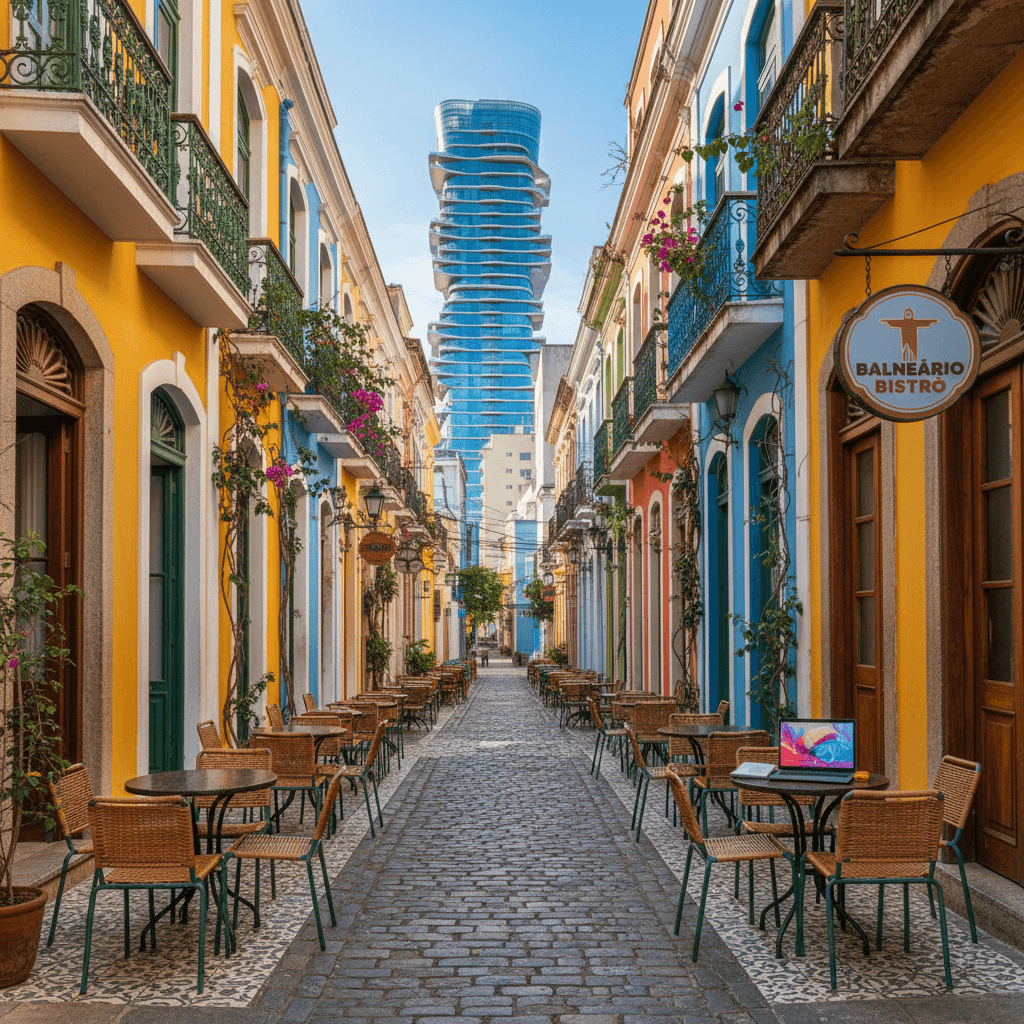
Stepping onto the sand in Balneário Camboriú feels different from any other Brazilian beach town. You'll look up and see a skyline that defies gravity, with some of the tallest residential skyscrapers in Latin America hugging the coastline. It's earned the nickname Dubai of Brazil, and the comparison fits. The vibe is unapologetically upscale, polished, and energetic. While other coastal spots focus on rustic charm, this city leans into a high tech, high luxury lifestyle that draws a crowd of entrepreneurs and remote workers who want the beach without sacrificing urban comforts.
The emotional payoff here is the sense of security. It's widely regarded as one of the safest cities in the country, which changes how you interact with your surroundings. You'll see nomads working on laptops in open air cafes along Avenida Atlântica or jogging late at night without the hyper vigilance required in larger metros. It’s a place where you can switch from a deep work sprint in a modern high rise to a kitesurfing session in under ten minutes.
The Nomad Cost of Living
Living here isn't the cheapest way to experience Brazil, but it provides incredible value for the infrastructure you get. Costs fluctuate based on how close you are to the water, particularly in the Centro district. Most nomads find that a comfortable lifestyle requires a budget of R$10,000 or more per month, though you can get by on less if you move a few blocks back from the beachfront.
- Budget Tier: R$3,000 to R$5,000 per month. This usually involves a modest studio further from the beach and eating at local "por quilo" restaurants.
- Mid Range Tier: R$6,000 to R$8,000 per month. This covers a modern apartment with amenities and frequent dining out.
- Luxury Tier: R$10,000+ per month. This is the "full Balneário" experience: a high floor ocean view, premium gym memberships, and high end seafood dinners.
Work, Connectivity, and Neighborhoods
The city is built for productivity. Internet speeds are generally excellent, and the coworking scene is growing rapidly to accommodate the influx of remote talent. You'll find reliable WiFi in most coffee shops, though the local "work from a cafe" culture is more about quick tasks than all day sessions. For serious deep work, nomads head to dedicated spaces that offer the stability needed for video calls.
When choosing a base, Centro is the heart of the action. It's where the tallest towers are and where you'll be within walking distance of everything. If you prefer something slightly more residential but still upscale, Bela Vista is a top choice for expats. The city is remarkably compact; you can get around easily using Uber or 99, and the beachfront is highly walkable. For arrivals, you'll likely fly into Navegantes (NVT), which is only about 10km away and easily accessible via ride hailing apps.
The Lifestyle Trade off
The social scene is vibrant, centered around fresh seafood, beach clubs, and an active outdoor community. It’s easy to meet people through hiking groups or at the beach, but keep in mind that Portuguese is the primary language. While the tourism industry handles English, your daily life will be much smoother if you learn the basics. Most locals are incredibly welcoming to those who make an effort with the language.
The main drawback for some is the "concrete jungle" feel. The shadows from the massive towers hit the beach earlier in the afternoon than you might expect, and the cost of real estate is booming. If you’re looking for a quiet, bohemian surf shack, this isn't it. But if you want a safe, flashy, and highly functional base with fast internet and a Digital Nomad Visa that's relatively straightforward to obtain with proof of income and insurance, Balneário Camboriú is hard to beat.
Practical Essentials
- Best Weather: Aim for April to June or September to October to avoid the heavy summer rains and the massive crowds of January.
- Getting Started: You’ll need a CPF (tax ID) for almost everything, from buying a Claro or Vivo SIM card to signing a rental agreement.
- Fintech: Once you have your CPF, apps like Nubank make managing local currency much easier than traditional banks.
Often dubbed the Dubai of Brazil, Balneário Camboriú is the country's capital of high-end living. While much of Brazil offers a bargain, this stretch of the Santa Catarina coast is where luxury real estate prices can rival major global hubs. That said, the cost of living remains surprisingly manageable for nomads earning in USD or Euros, especially compared to the price of a similar beachfront lifestyle in North America or Europe.
You'll find that your budget here is almost entirely dictated by how close you want to be to the water. The skyline is dominated by some of the tallest residential buildings in South America, and living in one of those glass giants comes with a premium price tag. Most nomads stick to the Centro area for the best balance of walkability and amenities, though nearby Bela Vista offers a slightly more residential feel while staying close to the action.
Monthly Budget Estimates
- Budget Nomad: R$3,000 to R$5,000. This covers a modest studio further back from the beach, cooking most meals at home, and sticking to local buses or walking.
- Mid-Range: R$6,000 to R$8,000. This is the sweet spot for most. You can afford a modern 1-bedroom apartment with a gym, frequent Uber rides, and dining out several times a week.
- Comfortable/Luxury: R$10,000+. This gets you a high-floor apartment with Atlantic views, daily upscale dining, and full access to the city's premium social clubs and coworking hubs.
Housing and Accommodation
Rent is your biggest expense. A modern one-bedroom apartment in a building with fast internet and a pool usually starts around R$3,500 if you're booking a mid-term stay. If you want to be right on the Avenida Atlântica, expect those prices to double quickly. Many nomads use Airbnb for the first month and then look for local deals on QuintoAndar or OLX once they have their CPF (Brazilian tax ID) sorted out, which is necessary for most formal rental contracts.
Food and Dining
Eating out is a highlight here. You can find a "Prato Feito" (a standard Brazilian plate of meat, beans, and rice) for R$25 to R$40 at local spots. If you're heading to the trendy beachfront bistros, a high-end dinner with drinks will likely run you R$120 to R$200 per person. Groceries are affordable; a weekly haul of fresh produce, meat, and local coffee at a supermarket like Angeloni usually costs around R$250 to R$350 for one person.
Connectivity and Transport
The city is compact and highly walkable, especially along the beach promenade. For longer trips or rainy days, Uber and 99 are the go-to apps. A cross-town ride rarely exceeds R$15 to R$25. If you're heading to the nearby Navegantes (NVT) airport, expect to pay around R$60 to R$80 for a transfer.
For work, the infrastructure is top-tier. Fiber optic internet is standard in most modern buildings. While specific coworking prices vary, a hot desk in a professional space typically costs between R$600 and R$900 per month. To stay connected on the go, a prepaid SIM card from Claro or Vivo with a generous data package will cost about R$50 to R$70 a month, though you'll need that CPF to register the card.
Lifestyle and Extras
Health and fitness are part of the local DNA. A membership at a high-end gym costs about R$150 to R$250 monthly, but the outdoor "beach gyms" and running paths are free. For peace of mind, private international health insurance is recommended, though local pharmacies are well-stocked and affordable for everyday needs. Most nomads find the trade-off of higher rent is worth it for the high safety ratings and the polished, modern environment that you won't find in many other Brazilian coastal towns.
For Luxury-Seeking Nomads: Centro
If you want to be in the heart of the Dubai of Brazil, Centro is where you'll land. This is the neighborhood defined by the iconic skyline and the newly widened Praia Central. It is the most practical choice for remote workers because everything is walkable. You can finish a Zoom call and be on the sand in three minutes.
The infrastructure here is the best in the city. You will find high-speed fiber internet in almost every modern apartment tower. For a professional workspace, nomads head to some of the local hubs near Avenida Brasil, where the coffee is strong and the air conditioning is stronger. Expect to pay a premium for the convenience. A modern studio or one bedroom apartment in this area typically runs between R$4,000 and R$6,000 per month, depending on how high up you are in the clouds.
- Rent: R$4,000 to R$7,000+
- Vibe: High-energy, urban, and ultra-modern.
- Top Perk: Total walkability and proximity to the best gyms and supermarkets like Angeloni.
For Long-Term Expats: Barra Sul
Expats who plan on staying for the full duration of a digital nomad visa often gravitate toward the southern end of the beach, known as Barra Sul. It is slightly more sophisticated and less frantic than the dead center of town. This area hosts the famous Parque Unipraias cable cars and the luxury yacht marina, giving it a very upscale, nautical feel.
Living here feels a bit more like a residential community and less like a tourist resort. The dining scene is excellent, with high-end seafood spots lining the waterfront. While the rents remain high, the quality of life is arguably the best in the state. You are far enough from the main tourist piers to avoid the loudest crowds, but close enough to bike to a meeting in ten minutes.
- Rent: R$5,000 to R$9,000
- Vibe: Sophisticated, quiet luxury, and scenic.
- Top Perk: Quick access to the Molhe da Barra Sul for sunset walks and better air quality.
For Families: Praia dos Amores and Brava
Technically sitting on the border with neighboring Itajaí, Praia Brava and the adjacent Praia dos Amores are the top choices for nomad families. The skyscrapers disappear here, replaced by low-rise luxury condos and plenty of green space. It is much safer for kids to run around, and the beach has a more natural, wilder feel compared to the manicured Centro.
Families appreciate the cleaner air and the surf culture that dominates this area. There are several international schools within a short drive, and the local plazas are filled with parents and strollers in the late afternoon. It feels like a coastal village that happens to have world-class amenities and fast 5G coverage.
- Rent: R$6,000 to R$10,000 for larger family units.
- Vibe: Active, outdoorsy, and family-oriented.
- Top Perk: Better surfing conditions and a more relaxed, "feet in the sand" lifestyle.
For Solo Travelers: Nações and Bairro dos Estados
If the beachfront prices make your eyes water, look just a few blocks inland to neighborhoods like Nações or Bairro dos Estados. These areas are where the locals live. They are perfectly safe and offer a much more authentic Brazilian experience. You won't have a view of the ocean, but you'll be much closer to the Balneário Shopping mall and the main bus terminal.
Solo travelers on a mid-range budget can find great value here. You can easily find a comfortable apartment for R$2,500 to R$3,500, leaving you with more cash to spend on weekend trips to Florianópolis or the Beto Carrero World theme park. Use apps like Uber or 99 to get to the beach; it usually costs less than R$15 and takes five minutes.
- Rent: R$2,500 to R$4,000
- Vibe: Local, residential, and budget-friendly.
- Top Perk: Massive savings on rent and cheaper "Prato Feito" (daily special) lunch spots.
Connectivity and Infrastructure
Balneário Camboriú is often called the Dubai of Brazil, and that architectural ambition extends to its fiber optic infrastructure. You aren't going to struggle with video calls here. Most high rise apartments in the Centro district come standard with high speed internet, often reaching speeds of 300 Mbps to 600 Mbps. It is one of the most modern cities in the country, so the reliability is significantly higher than what you might find in more bohemian beach towns further north.
To stay connected while you are out at a beach club or navigating the city, you will need a local SIM card. The big three providers are Vivo, Claro, and TIM. Most nomads prefer Vivo for its consistent coverage, though Claro often has better 5G speeds in the city center. You will need a CPF (Brazilian tax ID) to register a permanent SIM, but many travelers manage to get a prepaid "chip" at a pharmacy or official store by showing their passport. Expect to pay around R$50 to R$70 per month for a generous data package.
Top Coworking Spaces
The coworking scene is growing quickly as more remote workers flee the chaos of São Paulo for the safety of Santa Catarina. While many nomads work from their luxury balconies, the local spaces provide a much needed social anchor. Prices are generally higher than the Brazilian average but remain affordable compared to US or European hubs.
- Mude Coworking: Located near the heart of the action, this is a favorite for its professional vibe and ergonomic setups. It is great for deep work sessions when the beach distractions get too loud.
- XYZ Coworking: If you are looking for a community focused environment, this is a go to spot. It blends a modern professional atmosphere with dedicated work areas, making it easy to meet other nomads.
- Local Cafes: For a more casual afternoon, the cafes along Avenida Atlântica provide decent WiFi and stunning views of the Atlantic. Just check the signal before you order your pão de queijo.
Costs and Membership Fees
Budgeting for your workspace depends on how much time you spend in the office versus your apartment. Most spaces offer flexible plans. A hot desk typically costs between R$600 and R$900 per month. If you only need a spot for a day, expect to pay around R$50 to R$80. Many nomads find that the mid range lifestyle here, including a desk and a nice apartment, lands somewhere between R$6,000 and R$8,000 total per month.
Practical Work Tips
Public WiFi is available in some parks and shopping malls, but it is rarely stable enough for a Zoom call. Always have a backup hotspot. If you are planning a long term stay, getting your CPF early is the best move. It unlocks better internet contracts and makes everything from banking with Nubank to ordering on iFood much smoother. The city is compact and walkable, so choosing a spot in Centro or near Bela Vista means you can likely walk to your coworking space and the beach in under ten minutes.
The work culture in Balneário Camboriú is a mix of high energy business and coastal relaxation. People take their morning workouts and beach time seriously, but they are incredibly productive during the day. You will find the fastest connections and the most networking opportunities in the sleek glass towers that define the skyline.
Safety in the "Dubai of Brazil"
Balneário Camboriú has earned a reputation as one of the safest urban environments in South America. While many nomads approach Brazil with a high degree of caution, this coastal hub feels different. Its massive skyline and luxury infrastructure create a secure bubble that more closely resembles a high end European resort than the gritty urban centers of Rio or São Paulo. You'll frequently see locals walking with iPhones out or exercising on the Avenida Atlântica boardwalk well after dark.
The city's safety is largely attributed to its wealth and heavy investment in private and municipal security. Unlike other Brazilian cities where specific "no go" zones are a constant concern, Balneário is relatively uniform in its security. Most nomads stick to Centro or the northern end of the beach, where the presence of the Guarda Municipal is constant. Even so, don't let the relaxed vibe make you careless. Petty theft can happen in crowded tourist spots during the peak summer months of December to February.
If you're coming from a place like Florianópolis, you'll find the security levels comparable, though Balneário feels more compact and monitored. Experienced expats suggest keeping your primary credit cards at home and using digital banks like Nubank or PicPay on your phone for daily transactions. It's a common way to limit risk while enjoying the nightlife.
Healthcare Infrastructure
The healthcare here is excellent, provided you have the right coverage. The city is home to modern private clinics and hospitals that cater to a wealthy local population. If you're on the Digital Nomad Visa, having international health insurance is a mandatory requirement for your stay, and it's your ticket to skipping the wait times of the public system.
- Hospital Unimed: A top choice for expats, known for modern equipment and specialists who are more likely to speak some English.
- Hospital Municipal Ruth Cardoso: The primary facility for emergency services, though it can get crowded.
- Pharmacies: You'll find a Droasil or Panvel on almost every corner in Centro. They are well stocked and many are open 24/7.
For minor issues, pharmacies are your best friend. Pharmacists in Brazil have more autonomy than in the US or UK and can often recommend treatments for basic ailments without a doctor's visit. If you need an ambulance, the number is 192 (SAMU), while the police can be reached at 190.
Practical Health Tips for Nomads
Most travelers find the tap water in Balneário Camboriú fine for showering and brushing teeth, but it's best to stick to filtered or bottled water for drinking. Most modern apartments come equipped with a built in "filtro" on the kitchen tap. If yours doesn't, a 20 liter water jug delivery is cheap and easy to arrange through local apps.
Since the sun here is intense, especially between 10:00 AM and 4:00 PM, locals recommend high SPF sunscreen which can be surprisingly expensive in Brazil. Many nomads suggest packing a few bottles from home to save R$70 to R$100 per bottle. Also, while the city is modern, don't forget to stay updated on routine vaccinations like Hepatitis A and Typhoid, which are standard recommendations for any extended stay in South America.
Emergency Contacts and Registration
Once you arrive on your nomad visa, you'll need to register with the Polícia Federal within 90 days. This process grants you your CRNM (National Migration Registration Card), which is vital for accessing long term healthcare services and opening local bank accounts. Keep a digital copy of your passport and visa on your phone at all times, but leave the physical documents in a secure spot at your apartment.
- Police: 190
- Ambulance (SAMU): 192
- Fire Department: 193
- Federal Police (Itajaí Office): The closest branch for visa registration, located just a short 15 minute drive away.
Getting Around the Dubai of Brazil
Balneário Camboriú is surprisingly compact for a city with such a massive skyline. Most of your daily life will revolve around the Avenida Atlântica, the main coastal strip. Because the city is tucked between the mountains and the sea, it's laid out in a long, narrow grid that makes navigation pretty intuitive even if your Portuguese is still a work in progress.
Walking and Biking
If you're staying in the Centro or near the Barra Sul, your own two feet are your best asset. The city recently underwent a massive beach widening project, which expanded the boardwalk and created plenty of space for pedestrians. It's safe to walk here day or night, which is a rare luxury in many Brazilian coastal hubs.
- The Boardwalk: Perfect for morning runs or walking to a beachside cafe with your laptop.
- Biking: You'll see locals and nomads alike on bicycles or electric scooters. The flat terrain along the coast is ideal for this. You can find rental shops scattered along the side streets near the beach for daily or weekly rates.
- Safety: This is one of the safest cities in the country, so you don't need to be constantly looking over your shoulder while using your phone for directions.
Ride-Hailing and Taxis
When you need to head further out, perhaps to the Praia dos Amores or Praia Brava for a surf session, apps are the way to go. They are incredibly affordable compared to US or European prices. Most nomads find that they don't need to own a car here because the infrastructure for apps is so reliable.
- Uber and 99: These are the two dominant apps. 99 often has slightly better rates or more available drivers during peak times.
- Pricing: A typical cross-town trip usually costs between R$15 and R$30, depending on traffic.
- Traffic: Be warned that during the peak summer months of December and January, the streets become a parking lot. A ten-minute drive can easily turn into forty minutes. During these times, walking is often faster.
Public Transit
The local bus system is decent for getting to the outskirts or neighboring towns like Itajaí. The buses are generally clean and used by locals for commuting. However, most expats stick to ride-hailing because the price difference is negligible for the added comfort and speed. If you do take the bus, look for the "Bondindinho," a tourist-friendly bus that runs a loop along the main beachfront and the parallel Avenida Brasil.
Arriving and Departing
Getting into the city is straightforward. You'll likely fly into Navegantes Airport (NVT), which is approximately 32-35 km away. It's a small, efficient airport that handles most domestic connections. Florianópolis (FLN) is the other option, but it's about 90km south and can take two hours to reach depending on the heavy traffic on the BR-101 highway.
- Navegantes Transfer: An Uber from NVT to central Balneário usually costs around R$50 to R$80. There is also a ferry crossing involved if you take the most direct route through Itajaí, which adds a bit of local flavor to your arrival.
- Intercity Buses: The Terminal Rodoviário is located slightly inland. From here, you can catch high-quality, comfortable "leito" (sleeper) buses to São Paulo or Curitiba if you want to explore more of Brazil without flying.
Practical Mobility Tip
Download the Moovit app if you plan on using public transit; it's much more accurate for local bus schedules than Google Maps. Also, keep in mind that while the city is walkable, the sun is intense. If you're heading out between 11:00 AM and 3:00 PM, even a fifteen-minute walk can be draining, so many nomads opt for a quick Uber just to stay in the air conditioning.
While Balneário Camboriú is often dubbed the Dubai of Brazil, don't expect the same level of English proficiency you'd find in the Middle East. Portuguese is the absolute law of the land here. Even in the high end skyscrapers of Centro or the chic beach clubs along the coast, you'll encounter plenty of staff who speak only the local tongue.
The Language Gap
In the luxury hotels and high end real estate offices, you might find bilingual staff, but the day to day reality is different. Most nomads find that grocery store clerks, Uber drivers, and even servers at trendy spots near Atlantico rely almost entirely on Portuguese. If you're coming from a place like Lisbon or even Rio, the linguistic barrier here feels a bit more pronounced because the city caters heavily to wealthy South American tourists rather than a global English speaking crowd.
Expats recommend downloading Google Translate for offline use immediately. The camera feature is a lifesaver for reading menus or service bills. You'll also want to get comfortable with WhatsApp; it's the primary way everyone communicates, from booking a haircut to negotiating a short term rental. Using a translation app to send text messages is a common and accepted way to bridge the gap.
Survival Phrases for Nomads
Learning even a few words goes a long way with the locals, who are generally patient and friendly if they see you're trying. Start with these basics:
- Olá / Oi: Hello / Hi.
- Tudo bem?: How's it going? (The universal Brazilian greeting).
- Obrigado (m) / Obrigada (f): Thank you.
- Quanto custa?: How much does it cost?
- A conta, por favor: The bill, please.
- Você fala inglês?: Do you speak English?
Digital Communication and Connectivity
To stay connected, you'll need a local SIM card. The big players are Claro, Vivo, and TIM. Most nomads suggest heading to a physical store in the Balneário Shopping mall to get set up. A major hurdle for long term stays is the CPF (Cadastro de Pessoas Físicas). This tax ID number is required for almost everything, including registering a prepaid SIM card or signing up for local delivery apps like iFood.
If you don't have a CPF yet, you can sometimes find "traveler" SIMs at the Navegantes (NVT) airport, though they usually cost more. For those staying more than a month, it's worth the effort to apply for a CPF at a local Receita Federal office or even online before you arrive. It unlocks the city's digital infrastructure, letting you use apps like 99 (a popular Uber alternative) and manage your data plans without a headache.
The Social Vibe
Communication isn't just about words; it's about the "jeitinho," the Brazilian way of being flexible and social. In the coworking spaces and beach hubs, you'll find that people are very open to networking. While the language might be a hurdle at first, the outdoor lifestyle and the growing nomad community make it easy to find your tribe. Just remember that "Brazilian time" is real; if someone tells you they'll meet you at 8:00 PM, don't be surprised if they roll in at 8:30 PM with a smile.
The Seasonal Rhythm
Balneário Camboriú follows a distinct seasonal cycle that dictates everything from your rent prices to how much space you'll have on the sand. Because it's in the south of Brazil, you get actual seasons here, unlike the eternal summer of the northeast. Most nomads find the sweet spot is the shoulder season, specifically April to June or September to October. During these windows, the humidity drops, the "Dubai of Brazil" skyline isn't choked by clouds, and the massive summer crowds have headed home.
If you arrive in the dead of summer, prepare for chaos. From December to February, the city swells with millions of tourists. Temperatures sit between 25°C and 30°C (77°F to 86°F), but the humidity makes it feel much heavier. This is also the rainy season. You'll likely experience heavy afternoon downpours that clear the air but can turn the streets into a bit of a scramble. It's the most expensive time to book an Airbnb, and the beach clubs are at their loudest.
Winter in the South
Winter runs from June to August, and it might surprise you. It’s mild, with averages between 15°C and 22°C (59°F to 72°F), but southern Brazil can get occasional cold snaps where it dips lower. You won't be swimming much, but it's the most productive time for remote work. The city feels like a quiet, high end residential hub rather than a tourist resort. Expats recommend this time for deep focus work, as the cafes are quiet and the fast fiber internet isn't being stressed by a million vacationers.
Best Times for Specific Activities
- Surfing and Kitesurfing: The shoulder months of September and October bring more consistent winds and swells, making it the peak time for nomads who spend their mornings on the water before logging on.
- Hiking and Outdoor Fitness: April and May are ideal for tackling the trails in the nearby natural parks. The air is crisp, and you won't be drenched in sweat five minutes into a climb.
- Socializing and Events: If you want the full luxury nightlife experience, January is the peak, though you'll pay a premium for it.
What to Pack
Since the weather shifts, your wardrobe needs to be more versatile than just flip-flops and board shorts. For the summer, breathable linens are your best friend. For the winter months, you'll actually need a decent jacket and long pants. Many apartments in Balneário Camboriú are built for the heat and don't have central heating, so travelers often say a warm hoodie for indoor work sessions in July is a lifesaver. Don't forget a sturdy umbrella or a high quality raincoat; when it rains in Santa Catarina, it really pours.
The "Crowd" Factor
Timing your visit isn't just about the thermometer; it's about the infrastructure. In peak summer, traffic along the beachfront can grind to a halt. If you're planning to move around the city or take day trips to places like Florianópolis, the shoulder seasons offer much better mobility. Most long term nomads prefer arriving in March, just as the summer madness fades but the water is still warm enough for a post-work dip.
Logistics and Connectivity
Staying connected in Balneário Camboriú is relatively seamless compared to other Brazilian coastal hubs. Most nomads head straight to a Claro or Vivo shop to grab a local SIM card. You will need your passport, but keep in mind that many systems require a CPF (Brazilian tax ID) for registration. It is worth getting your CPF online before you arrive; it makes everything from booking bus tickets to ordering on iFood significantly easier.
The city has a growing infrastructure for remote work. While many high rise apartments come with fiber optic internet, you will find a solid community at local coworking spots. Prices for a hot desk usually hover around R$80 to R$120 per day. If you prefer the café scene, the beachfront Avenida Atlântica is lined with spots that have reliable WiFi, though they can get noisy during the peak summer months of December through February.
Budgeting for the Dubai of Brazil
This is one of Brazil's more expensive markets due to the luxury real estate boom. However, your lifestyle determines your burn rate. For a comfortable nomad life, expect to spend at least R$10,000 per month. If you are on a tighter budget, staying a few blocks back from the water in neighborhoods like Bela Vista can bring your total costs down to the R$5,000 to R$7,000 range.
- Studio Apartment (Centro): R$3,500 to R$5,500 per month
- Local Meal (Prato Feito): R$25 to R$40
- Upscale Dinner: R$120+ per person
- Monthly Gym Membership: R$150 to R$300
Getting Around
The city is surprisingly compact and walkable, especially if you stay in the Centro district. For longer trips or rainy days, Uber and 99 are the go to apps. They are affordable and much safer than hailing random cabs. If you are flying in, you will likely land at Navegantes (NVT), which is approximately 32-35 km away. A ride share from the airport usually costs around R$50 to R$70 depending on the time of day.
The city also features great bike paths along the coast. Many expats rent electric scooters or bicycles for their daily commute to avoid the gridlock that happens on the narrow streets during tourist season.
Safety and Health
Safety is a major selling point here. It consistently ranks as one of the safest urban areas in the country. You can generally walk with your phone out in well lit areas, though you should still stay aware of your surroundings. For healthcare, pharmacies are on almost every corner and stay open late. If you need a doctor, most nomads use private clinics and pay out of pocket or use international insurance. In a pinch, the emergency number for the police is 190 and the ambulance (SAMU) is 192.
Language and Culture
Do not expect much English outside of high end hotels. Brazilians are incredibly patient and friendly, but having Google Translate downloaded for offline use is a lifesaver. Learning basic phrases like "Quanto custa?" (How much?) and "Onde fica...?" (Where is...?) will go a long way in building rapport with locals.
Social life often revolves around the beach or the massive nightlife venues. To meet people, look for local beach volleyball games or join digital nomad groups on social media. People here value a relaxed pace, often referred to as "Brazilian time," so do not be surprised if a social gathering starts thirty minutes later than planned.
Visa Requirements
The Brazil Digital Nomad Visa is a fantastic option for stays of 1 to 2 years. You will need to prove a monthly income of at least $1,500 USD or have $18,000 USD in savings. The application usually goes through a Brazilian consulate in your home country or can be handled via the Federal Police if you are already in the country on a tourist visa.
Need visa and immigration info for Brazil?
🇧🇷 View Brazil Country GuideNomad Haven
Your home away from home