Ayutthaya
🇹🇭 Thailand
The Vibe: Ancient Silence Meets Modern Slow-Living
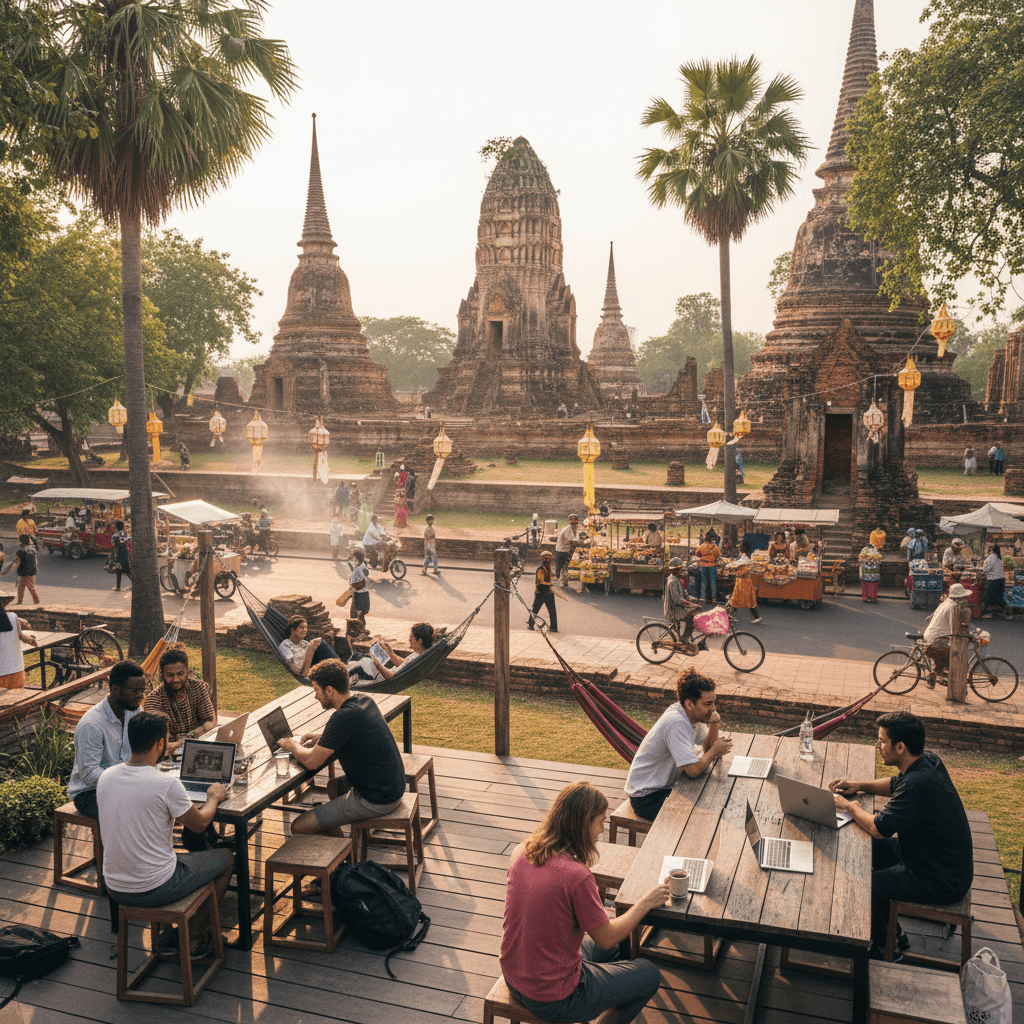
Stepping into Ayutthaya feels like hitting the "pause" button on the frenetic energy of Bangkok. Just 80km north of the capital, this UNESCO-listed island city offers a lifestyle defined by crumbling red-brick ruins, serene river views, and a pace of life that respects the heat. It’s not a high-octane tech hub; instead, it’s a place for nomads who want to trade neon lights for orange-robed monks and bicycle-friendly streets.
Many nomads find the city’s personality deeply grounding. You’ll spend your mornings working from a riverside cafe and your sunsets cycling past Wat Mahathat. Experienced expats recommend it for those who value focus and history over a crowded social calendar. It’s a "deep work" destination where the loudest noise is often the evening prayer or the hum of a passing longtail boat.
Living Costs & Neighborhoods
Ayutthaya is exceptionally affordable, even by Thai standards. A single nomad can live comfortably on 20,000 to 40,000 THB ($600, $1,200 USD) per month, excluding rent. While there aren't massive expat enclaves like Sukhumvit, different pockets of the city offer distinct experiences.
- Riverside (Pa Ton): This is the scenic heart of the city. You’ll find boutique stays like SALA Ayutthaya and guesthouses like Baan Lotus. It’s walkable and beautiful, though prices are slightly higher and it can be prone to flooding during the peak rainy season.
- Bang Lan Road: Ideal for foodies and solo travelers. It’s home to the famous Bang Lan Night Market where you can grab a bowl of noodles for 40, 80 THB. Stays here, like Grandparent’s Home, are budget-friendly but can get noisy at night.
- Historical Park Outskirts: For long-term stays, the outskirts offer quiet apartments for as low as 5,000 THB per month. You’ll need a scooter to get around, but it’s the best spot for total peace and quiet.
The Digital Nomad Setup
If you require a dedicated coworking office with ergonomic chairs and networking events, Ayutthaya might feel a bit sparse. There are no major coworking brands here yet. Instead, the "office" of choice is the laptop-friendly cafe. Spots near U Thong Road are popular, with day passes or "coffee-and-wifi" setups costing around 100, 200 THB.
Internet reliability is surprisingly high. You can expect speeds between 50, 200 Mbps in most cafes and hotels. For mobile data, travelers often grab an AIS Tourist SIM (around 349 THB for 10 days) or a dtac plan from any 7-Eleven. If you’re coming from abroad, Airalo eSIMs work well here too.
Getting Around & Staying Safe
The city core is walkable, but the tropical heat makes that a challenge. Most nomads rent a bicycle or a scooter for 200, 300 THB per day to navigate the ruins. For longer trips, the Grab app is your best friend, it’s reliable and much cheaper than negotiating with local tuk-tuk drivers, who often charge 1,000, 2,000 THB for half-day tours.
Safety is rarely a concern here. It’s a peaceful city with low violent crime, though travelers often note that it's wise to avoid isolated ruins after dark. For healthcare, Phra Nakhon Si Ayutthaya Hospital handles basics, but for anything serious, expats usually head back to Bangkok’s world-class facilities like Bumrungrad.
Food, Social Life, & Weather
Socializing in Ayutthaya revolves around food and sunsets. The night market is the nightly meeting point, but for a more upscale vibe, SALA Ayutthaya Eatery serves famous river prawns and cocktails for 400+ THB. For a low-key drink, head to riverside spots like Baan Kun Pra or the local Jazz Bar.
The weather is a major factor in your planning. November to February is the "cool" season (24, 33°C) and the absolute best time to visit. March to May is punishingly hot, often hitting 36°C, while September and October bring heavy rains that can turn some streets into streams. If you’re here in the heat, do what the locals do: work indoors during the midday sun and save your exploration for the golden hours.
Affordability in the Ancient Capital
Ayutthaya is one of the most budget-friendly destinations in Thailand, especially when compared to the rising prices in Bangkok or Chiang Mai. For a single nomad, monthly expenses typically range between 20,000 and 40,000 THB ($600, $1,200 USD), excluding rent. It’s the kind of place where your money stretches far without sacrificing the essentials.
Experienced expats recommend budgeting based on your lifestyle tier. A budget-conscious traveler can get by on 20,000, 30,000 THB by sticking to street food and shared housing. If you prefer a mid-range lifestyle with a private apartment and frequent cafe visits, expect to spend 30,000, 50,000 THB. Those seeking a comfortable stay in riverside condos with upscale dining should plan for 50,000 THB or more.
Housing and Neighborhoods
Rent is remarkably low here. A studio or one-bedroom apartment near the center usually costs between 6,000 and 10,000 THB per month. If you’re willing to stay on the outskirts of the Historical Park, you can find local housing for as little as 5,000 THB, though you'll definitely need a scooter to get around.
The Riverside and Pa Ton areas are popular with nomads for their scenic views and proximity to cafes like Baan Lotus. It’s walkable and charming, though it can get touristy. For a more local feel, many nomads suggest the Bang Lan Road area. It’s right by the night market and offers affordable stays like Grandparent’s Home, though it can be a bit noisy in the evenings.
Eating and Drinking
Food is where you’ll save the most. A filling meal at the Bang Lan Night Market, like a bowl of noodles or fresh prawns, will only set you back 40, 80 THB. It’s the go-to spot for most locals and long-term visitors for a cheap, authentic dinner.
For a "work-from-anywhere" lunch, mid-range spots like Coffee Old City Thai Bistro or Kaffa Bistro charge between 150 and 300 THB. If you want to splurge, the riverside dining at SALA Ayutthaya is a favorite for its views, with meals starting around 400 THB and cocktails priced between 180 and 250 THB.
Connectivity and Workspace
While Ayutthaya lacks dedicated coworking spaces, the "cafe office" culture is alive and well. You can expect reliable WiFi speeds of 50, 200 Mbps in most modern cafes. Digital nomads often frequent laptop-friendly spots near Khlong Suan Plu, where a day pass (usually just the price of a coffee) costs 100, 200 THB.
For mobile data, travelers often note that AIS and True provide the best coverage. An AIS Tourist SIM with unlimited data for 10 days costs about 349 THB, while a 30-day dtac Happy Tourist plan is around 1,199 THB. You can easily pick these up at any 7-Eleven or use Airalo for an eSIM before you arrive.
Transportation and Logistics
Getting around is simple but requires some planning. Within the central island, many nomads find that renting a bicycle or scooter is the most efficient move. A scooter rental typically costs 200, 300 THB per day. If you prefer ride-hailing, the Grab app works well here and is much cheaper than negotiating with local tuk-tuks.
- Monthly Transport Budget: Plan for 1,000, 2,000 THB if using a mix of Grab and rentals.
- Bangkok Connection: The train from Bangkok is a steal at roughly 50 THB.
- Airport Transfers: A private van from Suvarnabhumi or Don Mueang usually costs between 1,500 and 3,000 THB.
Healthcare and Safety
Ayutthaya is generally very safe, though nomads suggest keeping an eye on your belongings in crowded markets. For medical needs, Phra Nakhon Si Ayutthaya Hospital handles emergencies and basic care, though English can be limited. For specialized treatment, most expats take the short trip back to Bangkok to visit international facilities like Bumrungrad.
Riverside & Pa Ton: Best for Solo Nomads and Couples
If you're looking for that iconic Ayutthaya view, the Riverside area (specifically around Pa Ton) is where you'll want to base yourself. Many nomads find this the most inspiring part of the city because you're right across from the historical ruins, with several cafes overlooking the water. It’s the most walkable part of town, making it easy to hop between your guesthouse and a scenic workspace.
Experienced expats recommend looking for stays near Baan Lotus or the high-end SALA Ayutthaya. While this area is the most scenic, travelers often note that it's prone to minor flooding during the peak rainy season in September and October. Expect to pay a bit more here, with upscale riverside meals starting around 400 THB, though the atmosphere is worth the premium.
Bang Lan Road: Best for Foodies and Budget Travelers
For those who prioritize convenience and a social food scene, the area around Bang Lan Road is the place to be. It’s home to the famous Bang Lan Night Market, where you can grab a bowl of noodles or fresh prawns for just 40 to 80 THB. It’s perfect for solo travelers who don't want to overthink their evening meal and enjoy a bit of local energy.
You’ll find plenty of affordable guesthouses like Grandparent’s Home in this vicinity. While it’s the most lively part of town, nomads mention that the evenings can get a bit noisy due to the market traffic. It’s a great trade-off if you want to keep your monthly budget between 20,000 and 30,000 THB while staying within walking distance of the central ruins.
Historical Park Outskirts: Best for Long-Term Stays and Peace
If you're planning to stay for a month or more and need a quiet environment to focus, look toward the outskirts of the Historical Park. This area is much more residential and offers the best value for long-term housing. You can find studio apartments or small houses for as low as 5,000 THB per month, which is a steal compared to Bangkok or Chiang Mai.
The downside is that you’ll be farther from the main cluster of cafes and restaurants. Experienced nomads say a scooter is necessary here, usually costing 200 to 300 THB per day for a rental. It’s the best choice for those who prefer a "slow life" pace and don't mind a short commute to the center for social interaction.
Khlong Suan Plu: Best for "Work From Cafe" Enthusiasts
Since Ayutthaya lacks dedicated coworking spaces, the neighborhood around Khlong Suan Plu has become a de facto hub for digital nomads. This area features several laptop-friendly cafes where you can settle in for a few hours. Most spots offer reliable WiFi speeds between 50 and 200 Mbps, which is plenty for video calls and heavy uploads.
Travelers often spend their afternoons at local bistros like Kaffa or Sukunya. A day spent working from a cafe typically costs between 100 and 200 THB, which usually covers a couple of coffees. Because there isn't a massive expat enclave, these cafes are often the best places to bump into other remote workers and travelers.
Practical Tips for Choosing Your Base
- Use Grab: The Grab app works well here and is often cheaper and more transparent than negotiating with local tuk-tuks.
- Check Facebook: Expats recommend joining local Facebook groups to find monthly rentals, as many of the best deals aren't listed on major booking sites.
- Connectivity: Pick up an AIS Tourist SIM (around 349 THB) or a dtac plan at 7-Eleven to ensure you have a 5G backup for your phone.
- Seasonality: If you're sensitive to heat, aim to stay between November and February when temperatures are a more manageable 24-33°C.
Connectivity & Speeds
In Ayutthaya, you'll find that the internet is surprisingly reliable for a city that feels so historical. Most guesthouses and cafes offer fiber optic connections with speeds ranging between 50 and 200 Mbps. This is more than enough for video calls and heavy uploads, though many nomads find that speeds can fluctuate during heavy tropical rainstorms.
For mobile data, the coverage is excellent across the island and the surrounding ruins. You can expect average 4G/5G speeds of 50-100 Mbps. Experienced expats recommend sticking with AIS or True for the most consistent signal, especially if you plan on working from the more remote temple sites or riverside spots.
Coworking & Laptop-Friendly Cafes
If you're looking for a dedicated, high-tech coworking hub like those in Chiang Mai, you won't find one here. Ayutthaya doesn't have major coworking chains, which is why travelers often note that it's better suited for short-term stays or "deep work" retreats rather than long-term community building. Instead, the local work culture revolves around laptop-friendly cafes.
Most nomads head to the Khlong Suan Plu area or the cafes near the Historical Park. These spots are generally relaxed about patrons staying for a few hours, provided you order a coffee or a meal. You can expect to spend about 100 to 200 THB for a session, which usually includes a drink and access to power outlets. Popular spots often open around 10:00 AM and close by 9:00 PM.
- Coffee Old City: A favorite for its proximity to the ruins and reliable WiFi. It's a great spot to knock out a few hours of work with a view of the temples.
- Kaffa Bistro: Known for a quieter atmosphere that's conducive to focused tasks.
- SALA Ayutthaya: While more of a high-end eatery, it’s a stunning riverside choice for an afternoon of light admin work, though it’s less "office-like" than other spots.
Data Plans & SIM Cards
Getting connected is straightforward and can be handled as soon as you arrive. You'll find 7-Eleven stores on almost every corner where you can pick up a local SIM card if you didn't grab one at the airport. You'll need your passport for registration.
- AIS Tourist SIM: A popular choice for shorter stays, offering unlimited 5G data for 10 days at approximately 349 THB.
- dtac Happy Tourist: Better for those staying a full month, offering 30-day unlimited plans for around 1,199 THB.
- Airalo: Many digital nomads now prefer using an eSIM via the Airalo app to skip the physical card hassle entirely, though it can sometimes be slightly more expensive than local rates.
The Remote Work Experience
Working from Ayutthaya requires a bit more self-reliance than in Thailand's bigger hubs. Travelers often note that because there isn't a central "nomad scene," it can feel a bit isolating if you're used to daily networking events. However, the trade-off is a peaceful environment with very few distractions.
If you need a change of pace or a more robust professional setup, Bangkok is only about 80km south. You can hop on a train for 50 THB and be in the capital within 90 minutes. Many nomads use Ayutthaya as a quiet "home base" during the week and head to Bangkok on weekends for social events and more modern amenities.
One practical tip from those who live here: always check the WiFi strength before sitting down at a cafe. While the infrastructure is good, some older buildings have thick walls that can block signals. Using a VPN is also highly recommended for security, especially when hopping between different public cafe networks.
Staying Safe in the Ancient Capital
Ayutthaya is generally considered very safe by Thai standards, maintaining a much slower and more relaxed pace than nearby Bangkok. Violent crime is extremely rare, and most nomads feel comfortable wandering between ruins and riverside cafes at any time of day.
That said, experienced travelers recommend keeping an eye on your belongings in high-traffic areas like the Ayutthaya Historical Park or the Bang Lan Night Market. Petty theft isn't common, but it's smart to use a secure bag or money belt when you're distracted by the sights.
While the city is peaceful, many nomads suggest avoiding isolated, unlit ruins after dark. Stray dogs (sois dogs) can be more territorial at night, and the uneven terrain of the ancient temples can be a tripping hazard when visibility is low. If you're heading home late, it's better to call a Grab than to walk through unlit outskirts.
Healthcare and Medical Services
For routine issues or minor emergencies, Phra Nakhon Si Ayutthaya Hospital is the primary facility in the city. Travelers often note that while the care is solid and reliable, English proficiency among the staff can be limited compared to the international hospitals in the capital.
For anything serious or specialized, most expats recommend making the 80km trip to Bangkok. World-class facilities like Bumrungrad International Hospital are easily accessible via a private transfer or a fast train, offering Western-standard care and fluent English-speaking specialists.
Pharmacies are ubiquitous throughout the city and are a great first stop for minor ailments. You'll find them near most 7-Elevens and markets; they're well-stocked with over-the-counter medications for common issues like heat exhaustion or stomach upsets. Just look for the green "Pharmacy" signs.
Staying Healthy in the Heat
The most common health hurdle for nomads in Ayutthaya isn't illness, but the intense tropical heat. Temperatures regularly hit 35-36°C (95-97°F), especially between March and May. Many nomads find that the combination of high humidity and temple trekking can lead to quick dehydration.
Experienced expats recommend carrying a reusable water bottle and ducking into air-conditioned cafes like Coffee Old City or Kaffa Bistro during the peak afternoon sun. If you're exploring the ruins on a bicycle, start your day as early as possible, ideally around 8:00 AM, to beat the midday swelter.
Emergency Contacts and Essentials
Save keep a few key numbers saved in your phone just in case. For general police assistance, dial 191. If you require medical transport, the national ambulance emergency number is 1669.
To stay connected and ensure you can use translation apps or maps in an emergency, nomads recommend picking up an AIS or dtac SIM card. An unlimited 30-day plan usually costs around 1,199 THB. If your phone supports it, an Airalo eSIM is a convenient way to get data the moment you arrive without hunting for a physical shop.
Navigating the Ancient Capital
Ayutthaya’s layout is unique because the historical core is helpfully an island surrounded by three rivers. While the central area is relatively compact, the heat and humidity make walking a challenge for anything beyond short distances. Most nomads find that a mix of pedal power and ride-hailing apps is the most efficient way to maintain a productive schedule.
Bicycles and Scooters
For exploring the ruins or commuting between a riverside cafe and your guesthouse, bicycles are the local favorite. You can rent a basic bike for around 50 to 100 THB per day. The terrain is flat, making it easy to navigate, though you’ll want to stick to the early morning or late afternoon to avoid the midday sun.
If you’re staying for more than a few days or living in the Historical Park outskirts, renting a scooter is a smarter move. Expect to pay between 200 and 300 THB per day, with lower rates available for monthly rentals. Experienced expats recommend this option for the freedom to reach quieter, cheaper housing areas that aren't well-served by public transport.
Tuk-Tuks and Ride-Hailing
The local tuk-tuks in Ayutthaya have a distinct "front-heavy" look compared to the ones in Bangkok. They don't use meters, so you’ll need to negotiate the fare before you hop in. For a structured tour of the major temples like Wat Mahathat, travelers often book a driver for a 4-hour block, which typically costs between 1,000 and 2,000 THB.
For daily errands or getting to a specific bistro, Grab is the go-to app. It works reliably throughout the city and is generally cheaper and more transparent than negotiating with street-side taxis. It’s a lifesaver when you need an air-conditioned ride after a long session working on your laptop.
Regional Connections
Getting to and from Ayutthaya is remarkably simple, especially if you’re making "visa runs" or supply trips to Bangkok. The train is the most authentic and affordable method; a third-class ticket from Bangkok’s Krung Thep Aphiwat Central Terminal costs roughly 50 THB and takes about 90 minutes. It’s a scenic ride that many nomads use as a "mobile office" to catch up on emails.
If you’re arriving from the airport with heavy gear, private transfers are the most comfortable choice. A van from Suvarnabhumi or Don Mueang directly to your accommodation in Ayutthaya usually ranges from 1,500 to 3,000 THB. While there aren't robust internal public bus systems within the city, the combination of Grab and private rentals fills the gap perfectly.
Practical Transit Tips
- Watch the weather: During the rainy season (June to October), some riverside paths in the riverside can become difficult to navigate. Always check the forecast before heading out on a bike.
- Stay hydrated: Travelers often note that the combination of cycling and the 35°C heat can lead to exhaustion. Keep water handy and plan your "commute" to cafes during cooler hours.
- Safety first: While the city is safe, avoid cycling near isolated ruins late at night. Stick to well-lit areas like Bang Lan Road if you're out after dark.
- Connectivity: Ensure your AIS or dtac SIM is active so you can use Grab; having a live map is essential since street signs in the outskirts are often only in Thai.
The Language Landscape
In Ayutthaya, Central Thai is the primary language spoken by almost everyone you'll encounter. While it's a major historical destination, it doesn't have the same level of English fluency you might find in Bangkok or Chiang Mai.
You'll find that staff at upscale spots like SALA Ayutthaya or popular nomad-friendly cafes usually speak functional English. However, when you're ordering noodles at the Bang Lan Night Market or negotiating a scooter rental, communication often relies on smiles, gestures, and translation apps.
Experienced expats recommend learning the basics to make daily life smoother. Simple phrases like Sawasdee (hello), Khob khun (thank you), and Mai pen rai (it’s okay/no problem) go a long way in building rapport with locals.
Staying Connected
If you're planning to work from the riverside or a local guesthouse, you'll find the internet surprisingly reliable. Average WiFi speeds in the city range from 50 to 200 Mbps, which is plenty for video calls and heavy uploads.
For mobile data, travelers often note that AIS and True provide the best coverage around the historical ruins and outskirts. You can pick up an AIS Tourist SIM with 8 days of unlimited data for about 449 THB at any 7-Eleven or the airport.
If you prefer to stay longer, the dtac Happy Tourist plan offers 30 days of unlimited data for around 1,199 THB. Many digital nomads now opt for Airalo eSIMs before landing to avoid the hassle of physical cards, as 5G signals are quite strong throughout the central district.
Where to Work
Ayutthaya lacks dedicated corporate coworking spaces, so the "office" for most nomads is a laptop-friendly cafe. Many find the best environment in the Riverside or Naresuan Road areas, where the atmosphere is quiet and the views are inspiring.
- Cafe Working Culture: Most local cafes are relaxed about nomads staying for a few hours. It's polite to order a drink or meal every couple of hours; a day's "rent" in coffee usually costs between 100 and 200 THB.
- Power & Ports: Look for cafes near Khlong Suan Plu, which are known for having accessible power outlets and steady connections. Most are open from 10:00 am to 9:00 pm.
- Backup Options: Since residential WiFi can occasionally be inconsistent outside the city center, many nomads recommend having a mobile hotspot as a backup for important meetings.
Communication Tools & Local Etiquette
Navigating the city is much easier with the right digital toolkit. Google Translate is a lifesaver, be sure to download the Thai offline pack so you can translate menus and signs without using data.
For getting around, Grab is the go-to app for ride-hailing. It eliminates the language barrier since you can input your destination in English and see the price upfront, which is usually cheaper than flagging down a random tuk-tuk.
Communication in Ayutthaya is as much about body language as it is about words. Travelers often note that the Wai (placing your palms together in a prayer-like gesture) is the standard way to show respect. Always remember to remove your shoes before entering a home or certain shops, and never point your feet toward a Buddha image or another person, as it's considered very disrespectful in Thai culture.
Socializing and Networking
Because Ayutthaya doesn't have a massive expat enclave, finding a social circle takes a bit more effort. Most nomads connect through Facebook groups dedicated to Ayutthaya travelers or expats in Thailand.
If you're looking for a more "social" work environment, you might find yourself heading to Bangkok for the weekend. The train is only 50 THB, making it easy to join larger networking events like the Welcome Club Meetup before retreating back to the quiet of the ancient capital.
The Three Seasons of Ayutthaya
Timing your stay in Ayutthaya is all about balancing the heat with the crowds. Like most of Central Thailand, the city experiences three distinct seasons: the cool and dry season, the hot season, and the monsoon season. Temperatures remain high throughout the year, rarely dipping below 24°C (75°F), so you'll want to prioritize accommodation with strong air conditioning.
Experienced nomads generally recommend the cool season from November to February as the prime window for a visit. During these months, daytime highs hover around 32°C to 33°C, and the humidity is at its most manageable levels. It’s the perfect time for exploring the Ayutthaya Historical Park by bicycle without the risk of heatstroke.
Travelers often note that while the weather is pleasant in the winter, this is also the peak tourist period. You’ll find higher prices for short-term rentals and more foot traffic at popular sites like Wat Mahathat. If you value a quiet work environment in local cafes, you might need to head further away from the Riverside area during this time.
Braving the Heat and the Rain
From March to May, the heat intensifies significantly. Highs often reach 35°C to 36°C, and the sun can be punishing during mid-day. Many nomads find this the most challenging time to stay productive if they rely on outdoor transport like scooters or bicycles. If you’re here during the hot season, plan your "deep work" sessions for the afternoon in air-conditioned spots like Kaffa Bistro and save your sightseeing for sunrise.
The rainy season arrives in June and lasts through October. While the landscape turns a lush, brilliant green, the rainfall can be intense, particularly in September and October. During these peak months, the city sees around 20-25 rainy days on average. Travelers should be aware that the Riverside/U Thong neighborhood is prone to flooding during heavy monsoon cycles, which can disrupt local transport and riverside dining.
Best Times for Your Budget and Lifestyle
If you’re looking to maximize your budget, the shoulder months of June and July offer a great compromise. You'll deal with occasional afternoon downpours, but accommodation prices are lower and the ruins are far less crowded. Digital nomads on a budget can often find better deals on monthly stays in the Historical Park outskirts during this time, with rents falling toward the 5,000 THB mark.
- November to February: The best weather for outdoor exploration. Expect highs of 32°C and very little rain. This is the busiest season for tourism.
- March to May: The hottest period. Temperatures frequently climb above 35°C. It's dry, but the heat can be draining for those not used to the tropical climate.
- June to October: The monsoon season. Expect heavy humidity and frequent rain, especially in September. The city is much quieter, and the greenery makes for beautiful photography.
Regardless of when you visit, local expats suggest keeping a close eye on weather apps like AccuWeather or Thai Meteorological Department updates. Because Ayutthaya is a flat river basin, even a few days of heavy rain can change how you get around the ruins. Always carry a high-quality poncho and stay hydrated with electrolytes, which you can pick up for a few THB at any 7-Eleven.
Getting Connected & Staying Productive
While Ayutthaya lacks large-scale dedicated coworking spaces, the city is filled with laptop-friendly cafes. Many nomads find that spots near Khlong Suan Plu or riverside bistros offer reliable WiFi (50-200 Mbps) and a relaxed atmosphere for a few hours of work. It's common practice to order a coffee and settle in; a day's "office" rent usually costs between 100-200 THB in drink orders.
For mobile data, experienced expats recommend grabbing an AIS Tourist SIM (around 349 THB for 10 days) or a dtac Happy Tourist card (1,199 THB for 30 days) at 7-Eleven or the airport. If you prefer a digital-first approach, Airalo eSIMs work seamlessly here. For banking, Wise and Revolut are widely accepted, while the TrueMoney app is handy for local digital payments.
Navigating the City
The city core is walkable, but the heat often makes scooter rentals (200-300 THB/day) the most practical choice for long-term stays. For shorter trips or temple hopping, travelers often note that Grab is the most reliable and transparent way to get around without haggling. If you want the classic experience, a 4-hour tuk-tuk tour typically runs between 1,000-2,000 THB.
Getting here from Bangkok is easy and affordable. Most nomads prefer the train, which costs roughly 50 THB and offers a scenic ride. For those arriving with heavy luggage, a private van from Suvarnabhumi or Don Mueang airports will cost between 1,500-3,000 THB.
Budgeting for the Nomad Life
Ayutthaya is significantly more affordable than Bangkok or Chiang Mai. A budget-conscious nomad can live comfortably on 20,000-30,000 THB per month by eating at night markets and sharing housing. For a mid-range lifestyle including a private 1-bedroom apartment and frequent cafe visits, expect to spend 30,000-50,000 THB.
- Rent: A central studio or 1BR apartment near the historical park usually runs 6,000-10,000 THB per month.
- Street Food: A bowl of noodles at the Bang Lan Night Market costs 40-80 THB.
- Mid-range Dining: Expect to pay 150-300 THB at places like Coffee Old City Thai Bistro.
- Upscale Meals: Dinner at a riverside spot like SALA Ayutthaya starts around 400 THB.
Choosing Your Neighborhood
Most nomads gravitate toward the Riverside (Pa Ton) area. It's scenic and walkable to major temples, though it can get busy with tourists. If you're looking for the best food scene, the Bang Lan Road area puts you right next to the night market, though it can be a bit noisy in the evenings.
For those seeking peace and lower prices, the Historical Park outskirts offer quiet housing for as low as 5,000 THB per month. However, you'll definitely need a scooter if you stay out here, as it's less walkable and farther from the main dining hubs.
Safety, Health & Etiquette
Ayutthaya is exceptionally safe, but travelers often note that the heat and humidity are the biggest challenges. Always carry water and avoid exploring the unshaded ruins during the peak sun hours of 12:00 PM to 3:00 PM. For medical needs, Phra Nakhon Si Ayutthaya Hospital handles emergencies, though English can be limited; for major procedures, many expats take the short trip back to Bumrungrad in Bangkok.
Respecting local customs is vital. Always remove your shoes before entering a home or temple, and ensure your shoulders and knees are covered when visiting sacred sites. Never point your feet at a Buddha image or another person, as the feet are considered the lowest part of the body in Thai culture.
When to Visit
The "cool" season from November to February is the sweet spot for nomads, with temperatures staying between 24-33°C. March through May is intensely hot, often hitting 36°C, while the rainy season from June to October brings lush green landscapes but also the risk of localized flooding near the river.
Need visa and immigration info for Thailand?
🇹🇭 View Thailand Country GuideHidden Gem
Worth the effort
Monthly Budget Estimates
More cities in Thailand
Pattaya
🇹🇭 Thailand
Chanthaburi
🇹🇭 Thailand
Phuket City
🇹🇭 Thailand