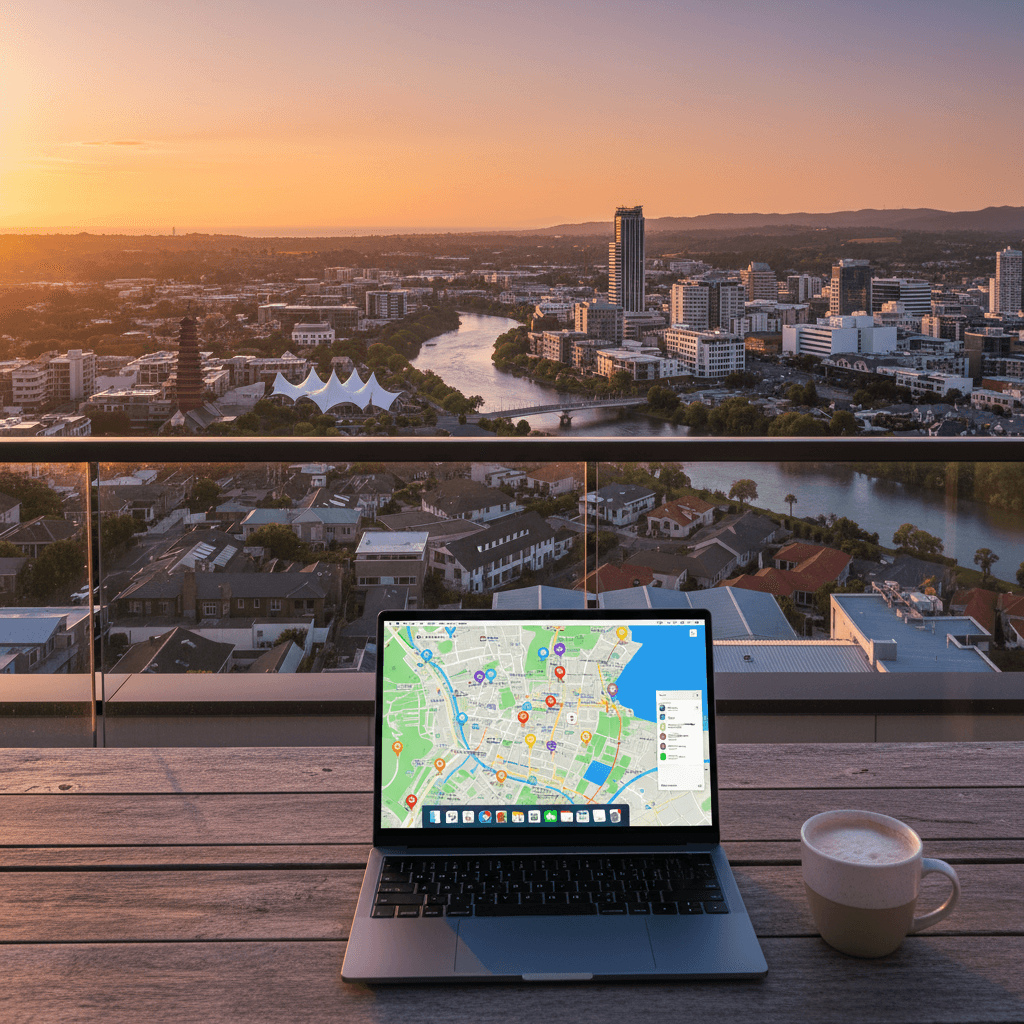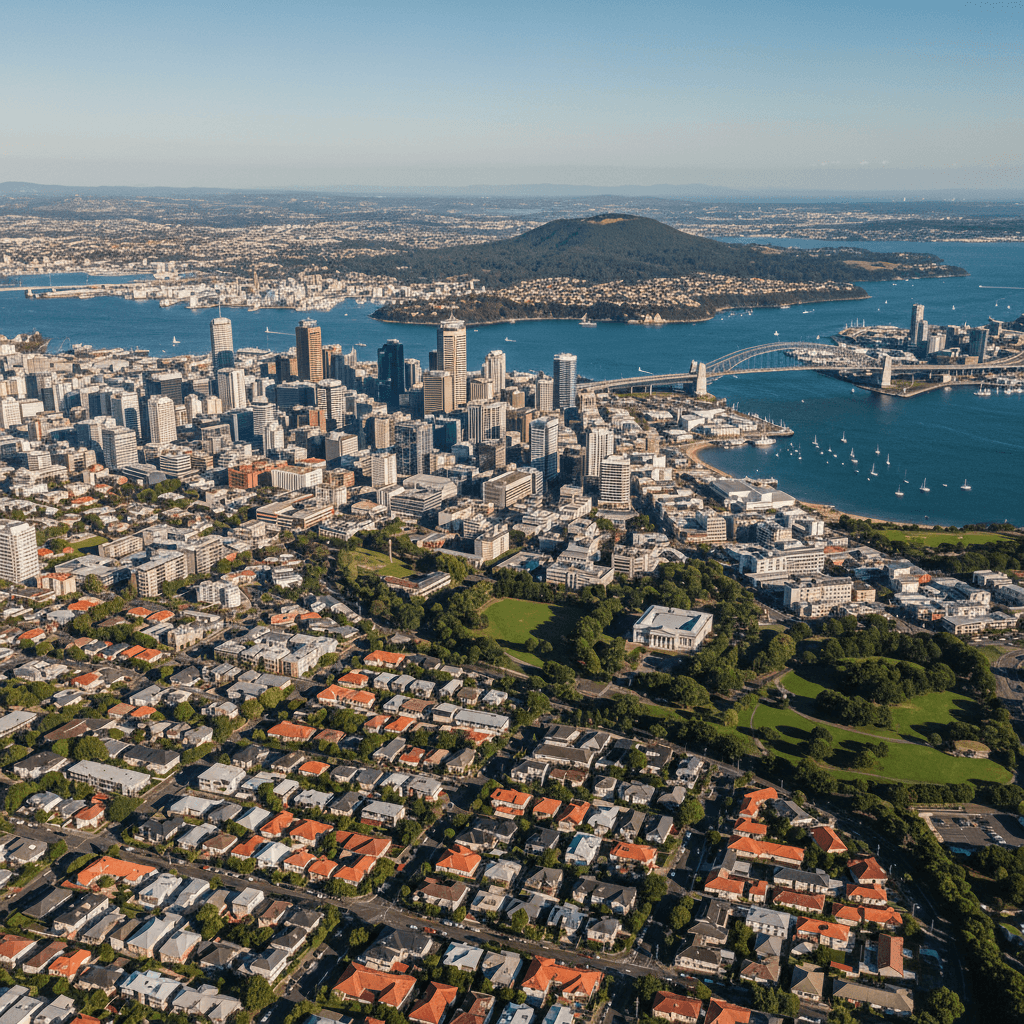
Auckland
🇳🇿 New Zealand
Auckland feels like a city that can’t quite decide if it wants to be a harbor town, a business hub or a beach escape and honestly, that’s the appeal. You get glass towers, ferry horns, gulls, volcanic cones and a salty breeze all in the same afternoon, then a quiet walk on the water ten minutes later. It’s relaxed, but not sleepy.
For digital nomads, it’s a strong base if you want good internet, safety and actual life outside your laptop. The city is multicultural, with Māori, Pacific Islander and Asian influences showing up in food, language and everyday manners and the pace is slower than Sydney or London, which, surprisingly, makes a difference when you’re here for months. The catch is the price tag and it bites hard, with rent, groceries and coffee all sitting well above what most nomads expect.
Not cheap. Not even close.
Monthly life for one person can land around $4,261 if you’re doing coliving and coworking, while a more stripped-back setup sits closer to $1,790 and that’s before you start treating yourself to Ponsonby dinners or too many Uber rides after a wet night. A studio in the CBD can run $1,171 to $1,680, Ponsonby gets even steeper and outer suburbs are cheaper but often mean longer commutes and less fun when the rain starts hammering the windows.
Where nomads usually settle
- Ponsonby: Best for cafes, nightlife and walkability, though weekends get busy and rents are brutal.
- Britomart/CBD: Best for central living, coworking and transport, though it can feel noisy and a bit touristy.
- Grey Lynn: Best for a more local feel, brunch spots and leafy streets, though parking is a pain.
- Takapuna: Best for beach access and a calmer pace, though the commute into town can drag.
The city works because it’s easy to get things done, internet is solid, coworking spaces like The Workshop and Generator are well set up and cafés will happily swallow a laptop crowd for hours. Traffic, though, is maddening and the weather can flip fast, so you’ll hear rain rattling on awnings one minute and smell sunscreen and sea spray the next.
Safety is generally good in the central areas and healthcare is decent, so most nomads feel comfortable day and night in places like Ponsonby, the CBD and Takapuna. Skip the rougher parts of South Auckland late at night, keep an eye on your bag around busy bars and you’ll probably settle into Auckland’s weirdly pleasant rhythm fast.
Auckland isn’t cheap. If you come in expecting Southeast Asia prices, you’ll burn through cash fast and the bill usually gets nastier once you add rent, transport and the occasional dinner out when the rain’s hammering the windows. A single nomad can live here for about $1,790 a month if you’re careful, but the more realistic comfortable range is closer to $4,000, honestly, especially if you want your own place and a decent coworking setup.
Rent bites hardest. A studio or 1BR in the CBD typically runs $1,171 to $1,680, Ponsonby climbs to about $1,600 to $2,500 and outer suburbs can drop to around $689, though you’ll trade that saving for longer commutes, more bus noise and less of that easy walk-everywhere feeling.
What you’ll actually pay
- Food: Cheap meals start around $12, mid-range restaurants are $20 to $30 a head and a nicer dinner for two can jump past $50 pretty quickly.
- Coffee and basics: A cappuccino is about $5-6, a Big Mac sits near $4.88 and supermarket prices add up if you’re buying imported stuff.
- Transport: Budget about $178 a month, with AT HOP fares capped at $20 a day, which helps if you’re moving around a lot.
- Utilities: Expect roughly $131 monthly and winter can feel damp and cold enough that you’ll notice every extra kilowatt.
- Entertainment: Around $296 a month goes quickly on drinks, events and the odd ferry trip out to Waiheke.
Neighborhood choice changes everything. Ponsonby is the pricey, cafe-heavy pick, Britomart and the CBD are convenient but noisy, Grey Lynn feels more local and slightly less punishing on rent and Takapuna gives you beach access with a slower North Shore rhythm, though the commute can test your patience when traffic jams up.
For working, the city does deliver. WiFi averages 118 Mbps download and 56 Mbps upload, which is genuinely good and coworking spots like The Workshop in Ponsonby, Generator in Britomart and WOTSO or GridAKL give you proper desks instead of the sticky-table chaos you get in some cities, weirdly enough. SIMs from Spark, One NZ or 2degrees usually cost around $30 a month for prepaid unlimited data, so staying connected isn’t the expensive part here.
Still, Auckland punishes sloppy budgeting. Groceries, rent hikes and a few Uber rides can quietly chew through your month and traffic has a nasty way of turning a short trip into a crawling slog with honking, exhaust and a windshield full of grey drizzle.
Auckland’s best neighborhoods depend on how much noise you can tolerate and how much you want to spend. The center is handy, the outer bits feel calmer and the commute can get annoying fast when traffic snarls around the motorways.
For nomads
Ponsonby is the easy pick, with cafe laptops, brunch traffic and coworking at places like The Workshop. It’s walkable, social and full of good coffee, but it’s not cheap and weekend crowds can turn the footpaths into a slow shuffle of strollers, dogs and takeaway cups.
- Best for: Solo work, nightlife, cafe hopping
- Rent: High, often $1,600 to $2,500 for a 1BR nearby
- Vibe: Busy, polished, a bit smug honestly
Britomart and the CBD suit nomads who want Generator, ferries, trains and meetings without crossing half the city. The tradeoff is noise, late-night foot traffic and a slightly sterile feel, though, frankly, it’s hard to beat if you live on calls and deadlines.
For expats
Grey Lynn works well if you want a local feel without giving up easy access to Ponsonby and the city. You get leafy streets, good brunch spots and a calmer pace, but parking can be a headache and nightlife thins out early, which some people love and others hate.
- Best for: Long stays, home life, local routines
- Rent: Mid-to-high, usually below Ponsonby
- Pros: Trees, cafes, less fuss
Expats often end up here because it feels lived-in, not staged. You’ll hear kids yelling in backyards, scooters buzzing past and the odd dog barking at 7 a.m., which, surprisingly, makes it feel more like a neighborhood than a postcode.
For families
Takapuna is the family-friendly choice if beach access matters and you want a safer, more relaxed base on the North Shore. It’s still connected to the CBD by ferry or bus, but the commute can drag, so don’t pick it if you hate planning your life around timetables.
- Best for: Families, expats, beach lovers
- Rent: Often more reasonable than central Auckland
- Daily life: Supermarkets, coastal walks, cafes, easy afternoons
The water’s close, the air smells saltier and the pace feels softer than downtown, though shopping streets can get windy and a bit grim on wet days. Skip South Auckland suburbs like Manurewa, Māngere and Ōtāhuhu if you want a lower-stress base, because the safety tradeoffs aren’t worth the savings.
For solo travelers
Stick to Ponsonby, Britomart, CBD or Takapuna. They’re the easiest places to meet people, catch an Uber home and avoid the sketchier late-night stretches and you won’t spend half your evening listening for the next honking car or wondering if the street is getting empty too fast.
If you want the simplest rule, here it's, choose Ponsonby for social life, Britomart for convenience, Grey Lynn for balance and Takapuna for beachy calm. Anything farther out needs a strong reason or a very patient bike leg.
Auckland’s internet is genuinely good, which is a relief when you’re trying to work and the wind outside is rattling the windows. Average WiFi sits around over 300 Mbps down (fibre typical), so video calls, cloud work and big uploads usually behave themselves, though a flaky apartment router can still ruin your afternoon. Not cheap.
The coworking scene, turns out, is one of the city’s better assets. The Workshop in Ponsonby feels polished without being stiff, Generator in Britomart is the move if you want a central desk and meeting rooms and WOTSO or GridAKL make sense if you need a dedicated setup and don’t mind paying for it. Monthly memberships commonly land around $445 at The Workshop and roughly $500 to $800 for dedicated desks elsewhere, so Auckland doesn’t pretend to be budget-friendly.
If you’d rather work in a cafe, Ponsonby is where people actually settle in with a laptop and one long black, not just take a photo and leave. The smell of espresso, bacon and warm pastry hangs in the air and the room noise is usually a mix of grinder clatter, low talk and the occasional tray crash, so pick a spot with decent power access if you’re staying past lunch. Weirdly, that works better than it sounds.
Best areas for digital nomads
- Ponsonby: Best for cafe work, walkability and coworking, but rents are steep and weekends get busy.
- Britomart and CBD: Best for transport, central meetings and Generator, though it can feel noisy and a bit touristy.
- Grey Lynn: Quieter, more local and usually easier on the wallet than Ponsonby, though nightlife is thinner.
- Takapuna: Good if you want beach access and a safer, more laid-back base, but the commute across the harbour can be annoying.
For mobile data, Spark, One NZ and 2degrees all sell prepaid plans around $30 a month with unlimited data and that’s the simplest backup if your apartment internet acts up. Honestly, that backup matters more than people admit, because traffic, weather and building quirks can all throw your day off in Auckland. The city feels safe in the centre, but I’d skip late-night wandering in poorly lit spots.
If you’re working remotely here for a while, get an AT HOP card, then stop thinking about it, because buses, trains and ferries are easier that way and there’s a daily cap of NZ$20. SkyBus from the airport is about $20, Uber to central areas can run $50 to $70 and taxis are usually a bad deal. The internet’s good, the coffee’s strong and the city’s got enough edge to keep it real.
Safety
Auckland feels safe in the center, especially in Ponsonby, Britomart, the CBD and Takapuna, where people are out late, cafés stay lit and the street noise is more scooters and laughter than anything threatening. South Auckland is a different story. Areas like Otara, Mangere and parts of Manurewa have a rougher reputation, so most nomads skip them unless they’ve got a reason to be there.
Daytime’s easy. Nighttime is different, honestly, because poorly lit side streets, empty car parks and the odd drunken argument near the bars can get annoying fast, so stick to the main roads and use a ride-hail if you’re tired. The city’s overall safety score is strong, but Auckland still has the usual urban stuff, smashed glass, car break-ins and the occasional bit of petty theft.
- Best for safety: Ponsonby, CBD, Britomart, Takapuna
- Be cautious: Quiet streets late at night, especially after the bars empty out
- Skip: South Auckland spots with higher burglary and violent crime rates
The vibe changes with the hour, weirdly and locals will tell you the same thing, don’t get lazy just because the city feels calm. If you’re out late, keep your phone tucked away, stay near other people and don’t leave bags visible in the car, because car windows here get smashed for far less than you’d expect.
Healthcare
Healthcare in Auckland is solid, modern and easy to use if you’re used to English-speaking systems. Auckland City Hospital handles serious cases, pharmacies are everywhere and urgent care clinics are common enough that you’re rarely stuck, though waiting times can still drag when the place is packed and the chairs start squeaking under stressed-out parents.
If something goes wrong, call 111. That’s the emergency number, no drama. For less serious stuff, most nomads head to a local GP or an after-hours clinic and you’ll usually get straightforward care without the weird admin headaches you find in some cities, though private visits can add up if you don’t have insurance.
- Emergency: 111
- Main hospital: Auckland City Hospital
- Pharmacies: Easy to find in central neighborhoods and malls
- Urgent care: Available across the city, including extended services in South Auckland
Bring travel insurance if you’re here more than a short stay, because even a simple clinic visit can sting the budget. Frankly, the system works well, but it isn’t cheap if you’re paying out of pocket and nobody enjoys sitting under bright fluorescent lights at 9 p.m. while the waiting room smells like antiseptic and rain-soaked jackets.
Auckland’s transport is decent, but it can test your patience. The city spreads out over hills and harbors, so a short trip on a map can turn into a slow crawl in traffic, with buses rumbling, ferry horns echoing and the odd smell of exhaust near the CBD.
The easiest setup is the AT HOP card. Load it once, tap on buses, trains and ferries and you’ll benefit from the $50 weekly cap for AT HOP cards (or $20 daily for contactless payments), which, surprisingly, makes a day of hopping around town feel less painful than you’d expect. Honestly, that cap matters, because taxis add up fast and parking in central neighborhoods can be a headache you don’t need.
Public transport
- AT HOP: Best for regular trips, simple tap in and out.
- Caps: $50 weekly cap for AT HOP cards (or $20 daily for contactless payments), useful if you’re moving around a lot.
- Catch: Traffic delays are real, especially at peak hours.
Most nomads end up mixing buses with walking and that’s usually the sweet spot. Ponsonby and the CBD are the easiest places to do that, with cafés, coworking spaces and grocery runs all close enough that you can skip the car drama.
Ride-hailing and taxis
- Uber, Ola, YourRide: Usually cheaper than taxis.
- Typical 5 km ride: About NZ$10 to NZ$15.
- Best use: Late nights, rain or awkward cross-town trips.
For quick door-to-door rides, ride-hailing wins. Taxis in Auckland aren’t outrageously priced by global standards, but they’re still annoying when a 10-minute trip turns into a fare that makes you stare at the meter, franky and wonder why you didn’t just take the bus.
Bike, scooter and walking
- Lime: Handy for short hops.
- Walkability: Best in Ponsonby and central Auckland.
- Warning: Some streets are steep, so your legs will know it.
Walking works better than people expect, though the hills bite back. You’ll feel the wind off the harbor, hear gulls overhead and hit the occasional brutal incline that makes a scooter look like a brilliant idea.
Getting in from the airport is straightforward. SkyBus is the budget choice at about NZ$20, while Uber usually lands around NZ$50 to NZ$70 and if you’ve got heavy bags, the pricier option starts looking less silly very fast.
Auckland speaks English everywhere, but it’s the New Zealand version, so the rhythm is a little softer, the slang is casual and people often keep things brief. You’ll hear “sweet as” for fine, “no worries” for okay and “chur” for thanks, honestly the last one still catches some newcomers off guard.
Most daily life is easy if your English is solid. Signage, banking, clinics, coworking spaces and rental chats all run in English, though Māori and Pacific languages show up in schools, community events and public life, which, surprisingly, gives the city more texture than you’d expect from a place this practical.
Useful phrases:
- Sweet as: all good, sorted, fine.
- No worries: no problem, sure.
- Chur: thanks, cheers.
Communication here is direct but not blunt. People usually don’t love big sales pitches and if you push too hard in a housing or service conversation, they’ll notice, then quietly disengage, which can be more frustrating than an outright no. Keep it polite, keep it short and don’t over-explain.
For digital nomads, the practical upside is that you won’t spend time fighting language barriers at AT HOP kiosks, in cafés around Ponsonby or when asking for help at The Workshop or Generator. Restaurant staff, Uber drivers and pharmacists are used to visitors, so day-to-day tasks stay smooth, even if the accent takes a day or two to tune in to.
Texting is common, phone calls less so. People often prefer a quick message over a long conversation and that makes rental agents, meetup hosts and repair people easier to pin down, frankly, than in a lot of bigger cities.
Language tips:
- Listen for: fast local slang, clipped replies and dry humor.
- Do: answer simply, stay friendly and use “thanks” often.
- Don’t: force formality or act confused by casual phrasing.
- Use: Google Translate for menus, labels or the odd Māori term.
The only real friction comes when someone talks too fast in a noisy bar, with espresso machines hissing and traffic honking outside or when a local joke goes straight past you. That’s normal. Give it a week, maybe two and Auckland’s way of speaking starts to feel pretty natural.
Auckland’s weather is mild, but it’s also a bit moody. You get warm, bright summers, damp winters and a lot of days where a light jacket ends up coming out at lunch, then going back on again by sunset.
The sweet spot is January and February. Days sit around 22.6°C, the sea feels swimmable at roughly 21.3°C and the city finally relaxes into that easy, outdoor rhythm, with Waiheke ferries full, beach towels over shoulders and barbecues drifting smoke through the suburbs.
Best time? Summer. Worst? Midwinter.
June through August is the part that wears people down. It’s colder, rainier and the sky can sit low and grey for days, with 18.9 rainy days in August and that damp, chilly air clinging to your clothes, your laptop bag and the concrete outside your apartment. Honestly, this is when Auckland can feel expensive and slightly tedious at the same time.
- Warmest month: February, with highs around 22.6°C
- Coldest month: July, with highs near 13.8°C
- Driest month: January, around 58 mm of rain
- Wettest stretch: June to August
Season-by-season
Summer, December to February, is the easiest time to like Auckland. Cafes spill onto the pavement, the harbour looks properly blue and evenings stay comfortable enough for late ferry rides or a drink in Ponsonby without feeling bundled up.
Autumn and spring are decent too, weirdly better than many visitors expect, because you dodge the worst heat and still get usable weather for walks, markets and day trips. Just pack layers, because the forecast can change after breakfast and by afternoon you’ll hear rain tapping hard on bus shelters.
Winter works if you’ve got a good indoor setup and don’t mind grey skies, but it’s not the season for dreamy beach life. If you’re remote-working full-time, the lower tourist churn helps, though the cold floors, traffic and drizzle can get old fast.
My take
- Visit for sunshine: January to March
- Visit for lower crowds: April, May, September, October
- Skip if you hate rain: June to August
If you want Auckland at its best, come in late summer. You’ll still pay Auckland prices, that part doesn’t soften, but at least you’ll get beaches, ferries, long light evenings and the kind of weather that makes the city feel worth the bill.
Auckland is easy to live in, if you can stomach the price tag. Rent bites hard, traffic crawls and a rainy week can feel endless, but the internet is strong, the city feels safe in the center and you can be on a beach or a ferry to Waiheke, before lunch.
SIMs are simple. Pick up Spark, One NZ or 2degrees at the airport, expect to pay about $30 a month for prepaid unlimited data and you’ll be online fast, which, surprisingly, is one less thing to fuss over when you land with a laptop and a dead phone battery.
- Banking: Wise and Revolut are popular with nomads, ATMs are easy to find and card payments work almost everywhere, so you won’t be stuck hunting for cash at 8 p.m.
- Tipping: Don’t stress about it, tipping isn’t expected in most places and awkward over-tipping at the counter just makes you look like you’ve come from somewhere else.
- Apartments: Trade Me Property is where most locals search and Flatio can be handy for shorter stays, though good places go fast and rents in Ponsonby or the CBD get ugly quickly.
If you want day-to-day comfort, stay central or just over the bridge. Ponsonby is walkable and full of cafes with the smell of espresso and toasted sourdough drifting onto the footpath, Britomart and the CBD are practical for transport and Takapuna works well if you’d rather hear waves than horns.
Locals also give each other space and honestly, that’s nice. A proper greeting goes a long way, a hongi is meaningful if you’re invited into it, shoes often come off indoors and people are pretty eco-aware, so don’t turn up with a pile of single-use plastics and expect smiles.
- Day trips: Waiheke Island is the easy win, ferries run regularly and the vineyards, beaches and salt air make it feel like a reset button.
- Another easy escape: Piha is raw and windy, with black sand under your feet and surf that sounds mean even when it looks calm.
- Getting around: Use an AT HOP card for buses, trains and ferries, because traffic can be maddening and a five-kilometre Uber, weirdly, can still cost more than you want to pay.
My blunt advice, skip the bad-value short lets in the CBD if you can. Get your SIM sorted, choose a neighborhood with decent cafes and a reliable bus line and remember that Auckland works best when you accept the weather, the cost and the long pauses at traffic lights.
Need visa and immigration info for New Zealand?
🇳🇿 View New Zealand Country GuideEasy Landing
Settle in, no stress
Monthly Budget Estimates
More cities in New Zealand
Wanaka
🇳🇿 New Zealand
Tauranga
🇳🇿 New Zealand
Christchurch
🇳🇿 New Zealand