Atlanta
🇺🇸 United States
The Southern Tech Frontier
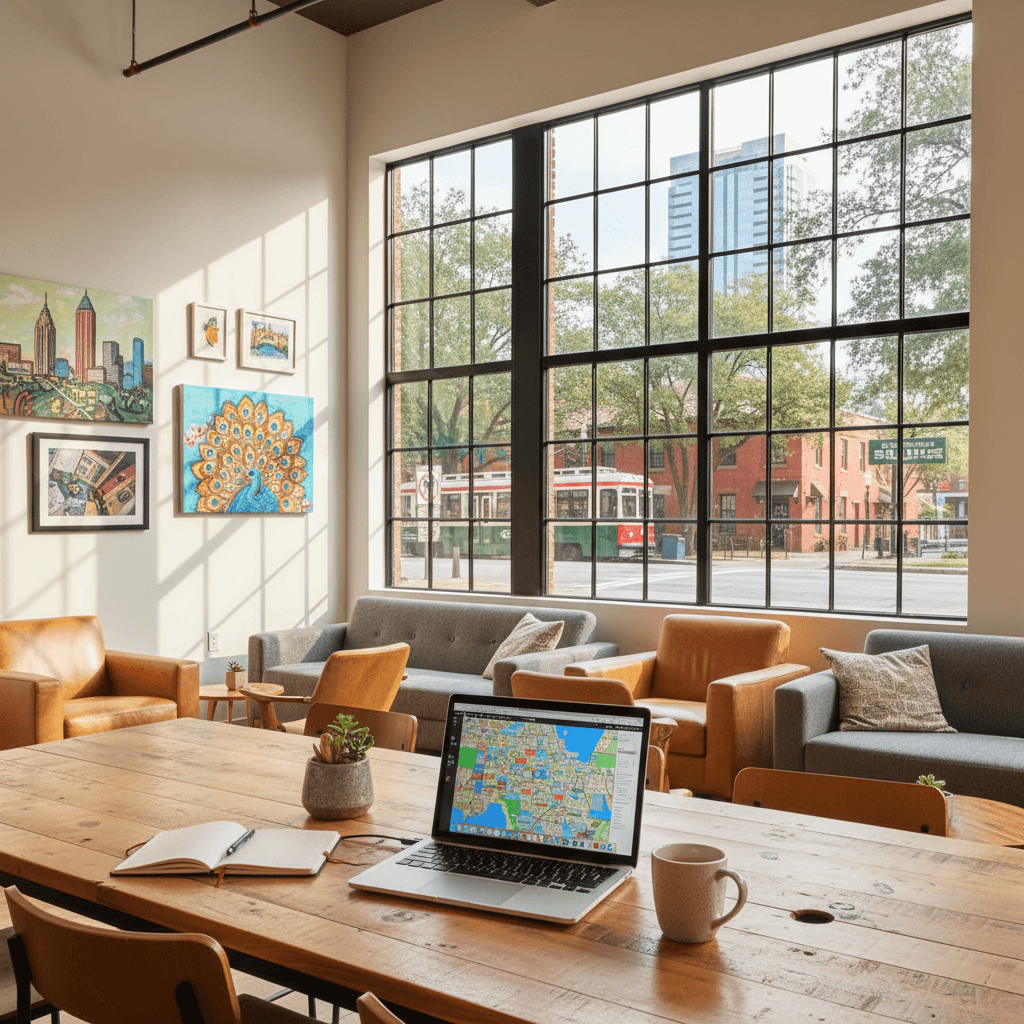
Atlanta is a city that refuses to be just one thing. Often called the "City in a Forest," it manages to feel like a high energy tech hub and a slow paced Southern town at the same time. For nomads, it offers a distinct alternative to the frantic pace of New York or the sky high costs of San Francisco. You'll find a massive creative energy here, fueled by a booming film industry and a startup scene that's rapidly maturing.
The vibe is defined by a specific kind of hospitality that isn't just for show. People actually talk to each other in coffee shops. You'll hear "y'all" used without irony, and the pace of life, while urban, has a certain rhythmic drag to it. It’s a place where you can spend your morning on a fast fiber connection and your afternoon walking the BeltLine, a massive loop of repurposed rail tracks that has become the city's social circulatory system.
The Nomad Experience
Living here feels like being part of an ambitious experiment. Most nomads gravitate toward the Eastside neighborhoods because that’s where the "walkable Atlanta" myth actually becomes reality. If you stay near the BeltLine, your quality of life skyrockets. You can bike to your coworking space, hit a brewery for happy hour, and grab some of the best tacos in the country without ever touching a steering wheel.
However, the city has its frustrations. Outside of a few core hubs, Atlanta is notoriously car dependent. The traffic is legendary for all the wrong reasons, and if you find yourself commuting across town during rush hour, you'll understand why locals complain about it constantly. Then there’s the "Hotlanta" factor. From June to August, the humidity is thick enough to wear, and the 90°F heat can make stepping outside feel like walking into a sauna. Most nomads find that March to May or October to November are the sweet spots when the city is truly at its best.
Cost of Living Breakdown
While cheaper than the coastal giants, Atlanta isn't a "budget" destination in the international sense. You're paying for American infrastructure and a very high standard of living. Expect a monthly burn rate of around $4,000 to $4,200 for a mid-range lifestyle.
- Budget Tier ($3,000/mo): You'll likely be in a shared house or a studio in up and coming spots like Reynoldstown. You'll eat at local spots like Muchacho and rely on the MARTA pass for $95 a month.
- Mid-Range Tier ($3,700/mo): This covers a nice 1BR in Inman Park or Virginia-Highland for around $1,530. You'll mix in plenty of rideshares and eat out at mid range Southern spots where meals hit $30 to $50.
- Comfortable Tier ($5,000+/mo): High rise living in Midtown or Buckhead with rents topping $2,000. You're likely using premium coworking spaces like Roam and dining at upscale steakhouses.
Where Nomads Actually Hang Out
The neighborhood you pick defines your entire Atlanta experience. It’s less about the "city" and more about which "village" you call home.
- Virginia-Highland: The gold standard for expats. It’s full of bungalows, sidewalk cafes, and great WiFi. It’s pricey, but the networking opportunities here are top tier.
- Inman Park: This is where the cool kids live. It’s incredibly leafy and sits right on the BeltLine. It’s perfect for solo travelers who want to be near the action but still want a quiet street to come home to.
- Reynoldstown: The up and comer. It’s gritty but charming, offering Google Fiber speeds and slightly more affordable rents. Check out Muchacho for a workspace with great tacos.
- Midtown: The heart of the city's nightlife and corporate tech. It’s dense, walkable, and home to the Dancing Goats coffee bar, a favorite for outdoor working.
Ultimately, Atlanta wins people over with its authenticity. It doesn't feel like a curated tourist trap; it feels like a real, messy, thriving city that’s currently finding its voice. You come for the lower rent and the fast internet, but you stay for the community and the fried chicken.
Budgeting for the A-Town Life
Atlanta sits in a sweet spot for nomads who want American big-city amenities without the eye-watering price tags of New York or San Francisco. While it's definitely more expensive than a hub in Southeast Asia or Latin America, your dollar goes surprisingly far here if you're smart about where you plant your flag. Most nomads find that a monthly budget of $3,700 to $4,000 allows for a comfortable lifestyle, including a nice apartment in a walkable area and plenty of nights out at the city's famous eateries.
If you're looking to keep things lean, you can get by on roughly $3,000 by sharing a house in up-and-coming spots like Reynoldstown or Cabbagetown. On the flip side, if you're eyeing a high-rise in Midtown with floor-to-ceiling windows and daily steakhouse dinners, expect to shell out $5,000 or more. Keep in mind that prices are creeping up as the tech scene grows, so locking in a mid-term rental early is a pro move.
Housing and Neighborhood Costs
Rent will be your biggest overhead. The "BeltLine effect" is real; living near this massive urban trail adds a premium to your rent, but most expats say the walkability is worth every penny. If you're looking for a studio or a one-bedroom, here is what to expect across the different hubs:
Reynoldstown (Budget-Friendly & Techy)
- Monthly Rent: $1,700 to $2,000. This is a favorite for nomads because of the Google Fiber speeds and slightly lower entry price.
- Vibe: Quirky, industrial, and very close to the BeltLine.
Inman Park & Virginia-Highland (Mid-Range)
- Monthly Rent: $1,530 to $1,800. These are the gold standard for Southern charm and cafe culture.
- Vibe: Tree-lined streets, historic bungalows, and high walkability to spots like Muchacho.
Midtown & Buckhead (Upscale)
- Monthly Rent: $2,000+. You're paying for the skyline views and proximity to major corporate offices.
- Vibe: High-energy, polished, and a bit more "corporate nomad."
Food, Drink, and Socializing
Atlanta's food scene is a massive draw. You can grab incredible street tacos or Southern soul food for $10 to $15, while a mid-range dinner in Poncey-Highland usually runs between $30 and $50 per person. If you're heading out for fine dining in Buckhead, prepare for the bill to hit $80 or more easily.
Groceries are fairly standard for the U.S. south. Shopping at Publix or Kroger is affordable, but if you're a Whole Foods devotee, your weekly grocery bill will jump by 30 percent. A local craft beer at a bar will set you back about $7 or $8, while a specialty latte at Dancing Goats is around $5 to $6.
Connectivity and Workspace
Since Atlanta is a sprawl, your "office" choice impacts your wallet. Many nomads stick to coffee shops with strong WiFi, but the city's coworking culture is top-tier. Switchyards is a popular choice for the startup crowd at about $400 a month, while Roam offers more corporate flex plans for around $300. If you're on a strict budget, the Atlanta-Fulton Public Library system offers free high-speed internet and quiet study rooms.
Transport and Hidden Extras
This is where Atlanta can get tricky. The city is notoriously car-dependent. A MARTA monthly pass is $95, which is great if you live and work near the rail lines. However, most travelers end up relying on Uber or Lyft for cross-town trips, which can cost $15 to $30 per ride depending on traffic. If you plan to drive, factor in $300 a month for a rental, insurance, and the inevitable parking fees. For those staying near the BeltLine, renting an electric scooter or bike via Lime or Bird is a common way to zip around for a few dollars per trip.
For Digital Nomads: Virginia-Highland and Reynoldstown
If your priority is a mix of high speed fiber and Southern charm, Virginia-Highland is the gold standard. Nomads flock here for the walkable streets and the abundance of cafes with reliable WiFi. It feels like a village within the city, where you can grab a coffee at a local spot and spend the afternoon working among historic bungalows. It is a bit pricier than other areas, but the convenience and networking opportunities make it worth the $1,530 average rent.
For those on a tighter budget who still need elite internet, Reynoldstown is the move. This up and coming neighborhood is a hotspot for Google Fiber, offering enterprise level speeds that are perfect for heavy data users or video editors. You will find a younger, creative crowd here, often congregating at Muchacho for tacos and laptop sessions. It provides direct access to the BeltLine, making it easy to ditch the car and explore the city on foot or by scooter.
- Virginia-Highland Rent: $1,600 to $1,900 for a 1BR
- Reynoldstown Rent: $1,200 to $1,500 for a studio
- Top Work Spot: Muchacho (Reynoldstown) or Dancing Goats (Midtown)
For Expats: Buckhead and Cabbagetown
Expats looking for a polished, high end lifestyle usually head straight for Buckhead. It is the city's financial and luxury hub, offering a very safe, suburban feel without leaving the city limits. While it is more car dependent than the east side, it hosts premium coworking spaces like Roam, which is ideal for professionals who need a quiet, corporate environment for meetings. Expect to pay a premium here, with rents often exceeding $2,000.
If you prefer character over glass towers, Cabbagetown offers a tight knit community feel that expats often find welcoming. It is famous for its narrow streets and mill worker cottages covered in street art. It is quieter than the surrounding nightlife districts, making it a great place to settle in for a few months. The vibe is decidedly local, so you will get to know your neighbors quickly at the local pubs.
- Buckhead Vibe: Upscale, safe, and professional
- Cabbagetown Vibe: Artistic, quiet, and community focused
- Coworking: Roam (Buckhead) is the go to for flex plans around $300 a month
For Solo Travelers: Midtown and Inman Park
Solo travelers who want to be in the thick of the action should look at Midtown. This is the heart of Atlanta's nightlife and arts scene. You are steps away from Piedmont Park and the High Museum of Art, and the area is packed with bars and restaurants that stay lively late into the night. It is one of the few areas where you can truly live without a car, though you should stay alert in some of the more tourist heavy pockets after dark.
Inman Park is the alternative for those who want a cooler, more bohemian energy. It is widely considered one of the most beautiful neighborhoods in the city, known for its Victorian homes and the Krog Street Market food hall. Solo travelers love it because it is incredibly social; the proximity to the BeltLine means there is always a steady stream of people walking, biking, and hanging out at patio bars.
- Midtown Rent: $1,800 to $2,200
- Inman Park Rent: $1,500 to $1,800
- Social Hubs: Krog Street Market and the BeltLine Eastside Trail
For Families: Buckhead and Virginia-Highland
Families often prioritize safety and green space, which makes the northern part of Buckhead very attractive. It has some of the best private schools and public parks in the region. The residential streets are leafy and quiet, providing a buffer from the city's notorious traffic and noise. It feels more like a traditional American suburb but keeps you within a 15 to 20 minute drive of downtown attractions.
Virginia-Highland is also a top choice for families who want to stay in a walkable, urban environment. The neighborhood is very kid friendly, with several parks and family owned shops. Parents often appreciate the lower crime rates compared to the city center and the ability to walk the kids to brunch or the library without needing to load up the SUV for every trip.
- Safety: Both areas rank among the highest for peace of mind
- Parks: Piedmont Park (Midtown/Virginia-Highland border) and Chastain Park (Buckhead)
- Transport: Car ownership is highly recommended for families in these areas
Connectivity and Speed
Atlanta is a heavy hitter when it comes to infrastructure. With citywide averages exceeding 100 Mbps, you won't struggle with video calls or large uploads. If you're a data-hungry power user, head straight to Reynoldstown. This neighborhood is wired with Google Fiber, offering enterprise-level speeds that make it a favorite for developers and creative professionals.
Most local cafes and public libraries offer reliable connections between 85 and 100 Mbps. You'll find that even the smaller neighborhood spots expect people to linger with laptops, so the "WiFi anxiety" common in other cities is largely absent here. Just keep in mind that the city's sprawl means your connection is only as good as your location; stick to the central and BeltLine-adjacent neighborhoods for the best results.
Top Coworking Spaces
The coworking scene in Atlanta is less about sterile cubicles and more about community and networking. There's a strong emphasis on the startup culture, particularly in the tech and entertainment sectors.
- Roam: With locations in Buckhead, Dunwoody, and Alpharetta, this is the go-to for a professional, polished environment. Flex plans usually start around $139 to $299 per month depending on plan. It's ideal if you need access to high-end meeting rooms to impress clients.
- Switchyards Downtown Club: This is the heart of the city's startup hub. For about $129 per month, you get a high-energy environment filled with founders and creators. It's less "corporate" and more "hustle."
- Atlanta-Fulton Public Libraries: If you're on a budget, don't overlook the public system. They offer free WiFi and quiet study rooms that are surprisingly well-maintained.
Laptop-Friendly Cafes
If you prefer the hum of a espresso machine over a dedicated office, Atlanta has plenty of "third spaces" where nomads congregate. The vibe is generally welcoming, though it's polite to buy a fresh drink every few hours.
- Muchacho (Reynoldstown): A nomad favorite for its strong WiFi and actual kitchen. You can transition from morning tacos to afternoon emails without moving your charger.
- Dancing Goats (Midtown): Known for its massive, laid-back outdoor seating area. It's one of the best spots to work when the weather is mild in the spring or fall.
- Ponce City Market: While it can get loud, the communal seating areas are great for quick tasks between meetings, especially if you're already walking the BeltLine.
Mobile Data and SIM Cards
Don't rely solely on public WiFi. The major U.S. carriers like Verizon, AT&T, and T-Mobile all have excellent 5G coverage throughout the metro area. You can pick up a physical SIM at Hartsfield-Jackson Airport upon arrival, but most expats now opt for the convenience of an eSIM.
- Airalo: A popular choice for short-term stays, offering 10GB data packages for roughly $20.
- Unlimited Monthly Plans: If you're staying for a month or more, local prepaid plans from T-Mobile or AT&T will run you between $40 and $70.
- Public Hotspots: Xfinity and AT&T have hotspots scattered across the city, though these are often restricted to existing customers.
Most nomads find that a combination of a mid-range coworking membership and a solid 5G backup plan provides the perfect safety net for working in the city. While the traffic might be a headache, the digital infrastructure rarely is.
Staying Safe in the A-Town
Atlanta is a city of sharp contrasts, where one block feels like a leafy suburban paradise and the next feels decidedly gritty. Most nomads find the city perfectly manageable if they keep their wits about them. The general rule here is simple: situational awareness is your best friend. Stick to well lit, populated areas after dark, especially if you are solo.
Neighborhoods like Virginia-Highland, Inman Park, and Buckhead are broadly considered the safest bets for expats and remote workers. These areas have high foot traffic and a community feel that keeps things secure. On the flip side, nomads often suggest being extra cautious in parts of Downtown or East Atlanta Village once the bars start closing. While these spots are great for nightlife, they can get unpredictable late at night.
Property crime, specifically car break-ins, is the most common headache for locals. If you are renting a car or buying a "beater" to get around, never leave anything visible on the seats. Even an empty gym bag or a charging cable can be enough to tempt a "smash and grab." If you are walking, keep your phone tucked away rather than buried in a map while standing on a street corner.
- Emergency Services: Dial 911 for immediate police, fire, or medical help.
- Non-Emergency: Use the ATL PD Citizen app to report minor issues or stay updated on local alerts.
- Solo Travel: Stick to the BeltLine during daylight hours; it is well patrolled and usually packed with joggers and cyclists.
Healthcare and Medical Facilities
If you get sick in Atlanta, you are actually in one of the best places in the country for medical care. The city is a major healthcare hub. Emory University Hospital is world renowned, and Grady Memorial is the go-to for high level trauma and emergencies. You will find that the quality of care is exceptional, though the price tag reflects that if you don't have solid insurance.
For minor ailments like a sinus infection or a stubborn cough, skip the emergency room. It is expensive and the wait times are legendary. Instead, look for "Urgent Care" centers like Peachtree Immediate Care or Piedmont Urgent Care. These are scattered throughout the city and usually take walk-ins for a flat fee or a standard insurance co-pay.
Pharmacies are everywhere. CVS and Walgreens are the big players, and you will find 24 hour locations in Midtown and Buckhead. If you just need over the counter meds or basic supplies, Publix and Kroger grocery stores also have full service pharmacy counters that are often faster than the standalone drugstores.
- Top Rated Hospital: Emory University Hospital (Midtown and Druid Hills locations).
- Emergency Care: Grady Memorial Hospital for 24/7 trauma services.
- Prescriptions: Most pharmacies allow you to transfer prescriptions via their mobile apps.
- Costs: A standard urgent care visit without insurance typically runs between $150 and $250.
Digital nomads from outside the U.S. should never arrive without a robust travel insurance policy like SafetyWing or World Nomads. American healthcare costs can be astronomical for the uninsured, and even a simple set of X-rays can set you back hundreds of dollars. Having your policy details and a digital copy of your insurance card on your phone is a standard move for most expats living here.
The Car Culture Reality
Atlanta is a city built for cars. While you'll hear locals complain about the legendary traffic on the I-85 or the Downtown Connector, most residents still view a vehicle as a necessity. If you're staying in the suburbs or North Atlanta, expect to spend a lot of time behind the wheel. For nomads, the goal is usually to bypass this entirely by sticking to the "Intown" neighborhoods where the infrastructure is finally catching up to modern urban needs.
Most expats recommend using Uber or Lyft for mid-range trips across town. A typical ride between Midtown and Inman Park will set you back $15 to $30 depending on the time of day. During rush hour, these prices can spike significantly, so it's often smarter to wait it out at a coffee shop until the surge pricing drops.
MARTA: The Rail and Bus System
The Metropolitan Atlanta Rapid Transit Authority (MARTA) is the city's backbone for public transit. It's affordable and surprisingly efficient if your life revolves around the north-south or east-west rail lines. A single trip costs $2.50, and a monthly unlimited pass is $95. You'll need to purchase a Breeze Card at any station kiosk to load your fares.
- The Airport Connection: This is MARTA's biggest win. You can hop on a train at Hartsfield-Jackson (ATL) and be in Downtown or Midtown in about 20 minutes for just $2.50. It beats a $30 rideshare stuck in airport traffic every time.
- The Gold and Red Lines: These run north to south, connecting the airport to the business hubs of Buckhead and Dunwoody.
- The Blue and Green Lines: These run east to west, though they are less frequently used by nomads unless heading to specific events at the stadium.
The BeltLine and Micromobility
If you want to experience the best version of Atlanta, get on the BeltLine. This former railway corridor has been transformed into a massive paved loop connecting various neighborhoods. The Eastside Trail is the most developed stretch, linking Reynoldstown, Inman Park, and Virginia-Highland. It's the one place in the city where you can truly live a car-free life.
Electric scooters and bikes from Lime and Bird are everywhere along these paths. Expect to pay $1 to unlock and roughly $0.39 per minute. Travelers often say that biking the BeltLine is the fastest way to get between coworking spots like Switchyards and social hubs like Ponce City Market without ever seeing a red light.
Walking and Biking
Outside of the BeltLine and specific pockets like Midtown or Virginia-Highland, Atlanta isn't particularly pedestrian-friendly. Sidewalks can disappear unexpectedly, and the hills are more taxing than they look on a map. However, if you're a cyclist, the city has been adding more protected bike lanes in the core. Just stay alert; Atlanta drivers aren't always used to sharing the road with two-wheeled commuters.
Practical Transport Tips
- ATL Plus: If you do decide to rent a car, download the ATL Plus or ParkMobile apps. Street parking is strictly enforced, and these apps make it easy to top up your meter from your phone while you're in a meeting.
- Avoid the 5:00 PM Rush: If you have to cross the city by car, do it before 3:30 PM or after 7:00 PM. The congestion during these windows is no joke and can turn a 15-minute trip into an hour-long ordeal.
The Local Tongue
English is the universal language in Atlanta. You won't need a translator to get by, but you'll definitely notice the local flavor. While the city is a global tech hub, it's still the heart of the South. You'll hear "y'all" used by everyone from baristas to CEOs. It's the standard plural for "you," and using it is the quickest way to sound like a local rather than a tourist.
The city's diversity means you'll hear plenty of other languages in specific pockets. Spanish is common in service industries and throughout the Buford Highway corridor. Because of the massive film industry and tech scene, the city is a melting pot where international accents are the norm rather than the exception.
Communication Style and Southern Politeness
Atlanta operates on a blend of big city efficiency and "Southern Hospitality." People are generally friendlier here than in New York or San Francisco. It's common for strangers to strike up a conversation while waiting for a latte at Dancing Goats or walking the BeltLine. Most nomads find the social atmosphere welcoming, though the pace can feel a bit slower than other major US hubs.
Politeness is a big deal here. Using "sir" and "ma'am" isn't seen as old fashioned; it's often just the default way to show respect. If you're networking at a startup hub like Switchyards, expect a mix of professional directness and casual warmth. People like to build a rapport before diving straight into business talk.
Staying Connected: SIMs and Data
The US isn't known for the cheapest mobile data, but coverage in Atlanta is excellent. You'll get 5G almost everywhere within the perimeter. If you're arriving at Hartsfield-Jackson (ATL), don't buy the overpriced SIMs at the airport kiosks. Wait until you get into the city and visit a T-Mobile or Verizon store for better rates.
- eSIM Options: Most expats recommend Airalo or Ubigi for immediate data. You can get 10GB for around $26 to bridge the gap until you get a local plan.
- Local Carriers: A prepaid monthly plan from AT&T or Verizon usually runs between $40 and $70 for unlimited data.
- Budget Alternatives: Look into Mint Mobile or Google Fi if you plan on staying for more than a month; they offer much better value than the "Big Three" carriers.
Digital Communication and Apps
Like the rest of the US, iMessage and SMS are the primary ways people text. While WhatsApp is used by the international community and some nomad circles, don't be surprised if a local asks for your number to send a standard text. For professional networking, LinkedIn is the gold standard here.
To keep your life running smoothly, you'll want a few specific apps on your phone:
- MARTA On the Go: For tracking trains and buses in real time.
- Uber and Lyft: Essential for getting around when you aren't near the rail lines. Expect to pay $15 to $30 for most cross city trips.
- ATL Plus: If you're brave enough to rent a car, this is how you'll pay for street parking.
- Citizen: Many travelers use this to stay informed about local safety alerts in real time.
If you find yourself struggling with a language barrier in specific international neighborhoods, Google Translate with an offline English and Spanish pack is usually all you need. In most of the nomad heavy areas like Inman Park or Midtown, you'll never have a reason to use it.
Surviving the "Hotlanta" Humidity
There is a reason locals call this place Hotlanta. From June through August, the city turns into a literal sauna. Temperatures regularly climb to 90°F (32°C), but it is the thick, Southern humidity that really gets you. Most nomads find the summer months tough for outdoor productivity; you will be hopping from one air-conditioned cafe to the next just to keep your laptop from overheating and your shirt from sticking to your back.
July is the peak of the rainy season, often bringing sudden, heavy afternoon thunderstorms. These downpours are intense but usually short, clearing out the air for an hour before the steam rises back up from the pavement. If you are visiting during this window, plan your deep-work blocks for the mid-afternoon and save your BeltLine walks for after sunset.
The Sweet Spots: Spring and Fall
If you have the flexibility to choose your window, aim for March through May or October through November. These shoulder seasons are when Atlanta actually earns its reputation as a city in a forest. During the spring, the dogwoods and azaleas bloom everywhere, and temperatures hover between a perfect 60°F and 75°F (15°C to 24°C).
Expats and long-term travelers swear by the autumn months. By October, the sweltering heat breaks, and the humidity drops to comfortable levels. It is the best time to utilize outdoor coworking spots like the patio at Dancing Goats in Midtown or the terrace at Muchacho in Reynoldstown. You will get crisp air, clear skies, and significantly less sweat on your commute.
Winter and Off-Peak Travel
Winters in Atlanta are generally mild but unpredictable. January is the coldest month with average highs around 52°F (11°C). You won't see much snow, maybe once a year if you are lucky, but the city famously grinds to a halt if even a dusting appears on the radar. It is a quiet time for the nomad scene, though it is also when you can snag the best deals on mid-term rentals through platforms like Minty Living or Zillow.
Monthly Weather Breakdown
- January: Highs of 52°F. Coldest month with about 10 days of rain. Bring a solid coat.
- March to May: Highs of 65°F to 79°F. Peak season. Perfect for walking the Inman Park and Virginia-Highland neighborhoods.
- July: Highs of 89°F+. High humidity and 12 days of rain on average. Essential to have a place with reliable AC.
- October to November: Highs of 62°F to 73°F. Ideal for outdoor festivals and networking events on the BeltLine.
The Best Time to Visit
For the best balance of weather and social activity, book your stay for April or October. You will avoid the $300+ monthly "cooling tax" on your electric bill and find the city at its most walkable. If you must come in the summer, make sure your housing is near a MARTA station or a walkable hub like Poncey-Highland so you aren't stuck waiting for an Uber in the sweltering sun.
Connectivity and Tech Setup
Staying connected in Atlanta is a breeze. The city boasts some of the fastest internet in the country, with average speeds hitting 252 Mbps. If you settle in Reynoldstown, look for spots with Google Fiber for enterprise grade speeds. For a quick setup, grab an eSIM through Airalo or Ubigi for about $20 for 10GB. If you prefer a physical SIM, head to an AT&T or Verizon store at Hartsfield-Jackson airport or any major shopping center. Unlimited plans usually run between $40 and $70 a month.
When you need to get out of the house, the coworking scene is top notch. Roam is a favorite for expats, with locations in Buckhead and Dunwoody offering flex plans for around $300 a month. If you are in the tech or startup world, Switchyards Downtown Club is the place to be for networking at $129 monthly. For a more casual vibe, Dancing Goats in Midtown has great outdoor seating and reliable WiFi. Budget conscious nomads often head to the Atlanta-Fulton Public Libraries, which offer free high speed internet and quiet study rooms.
Money and Housing
Banking is straightforward with plenty of Chase and Wells Fargo branches around. Most international travelers use Wise or Revolut to avoid high exchange fees. A pro tip from locals: use the ATMs at Publix grocery stores, as they often have lower or no fees compared to standalone bank machines.
Finding a place to stay can be competitive. While Airbnb is the standard, many nomads use Zillow or Minty Living. Minty Living is particularly popular because they offer a 15% discount for nomads and provide personalized consultations to help you find the right neighborhood. Expect to pay around $1,530 for a decent studio in a walkable area like Inman Park, while luxury spots in Buckhead easily clear $2,000.
Getting Around the Sprawl
Atlanta is notoriously car dependent, but you can hack the system by living near the BeltLine. This loop of trails connects major neighborhoods like Virginia-Highland and Inman Park, making them perfectly walkable or bikeable. For short trips, Lime or Bird scooters cost $1 to unlock and about $0.39 per minute. They are perfect for zipping between coffee shops.
- MARTA: The train and bus system costs $2.50 per ride. A monthly pass is $95. It is great for getting to the airport but limited for cross town travel.
- Rideshares: Uber and Lyft are the lifeblood of the city. Expect to pay $15 to $30 for most trips between neighborhoods.
- Airport Transit: Skip the $30 Uber from the airport. The MARTA Gold or Red lines will get you to Downtown in 20 minutes for just $2.50.
Safety and Health
The city is generally safe, but it has its quirks. Most nomads recommend staying vigilant at night, especially in Downtown or parts of East Atlanta Village. Stick to well lit areas and use the ATL PD Citizen app to stay updated on local happenings. If you need medical care, you are in good hands. Emory University Hospital is world class, and Grady Memorial is the go to for any major emergencies. You will find a CVS or Walgreens on almost every major corner for prescriptions and basic health needs.
When to Visit
Timing is everything in "Hotlanta." The summer months of June through August are sweltering, with highs reaching 90°F and intense humidity. Most expats prefer the shoulder seasons. March to May and October to November offer beautiful weather, with temperatures hovering between 60°F and 75°F. July is the rainiest month, so keep an umbrella handy for those sudden afternoon thunderstorms.
Local Customs
Southern hospitality is real here. You will hear "y'all" constantly, and people are generally much more conversational than in New York or London. Politeness goes a long way. When you need a break from the screen, nomads recommend day trips to Stone Mountain for a hike or a four hour drive down to Savannah for a weekend of coastal history.
Need visa and immigration info for United States?
🇺🇸 View United States Country GuideEasy Landing
Settle in, no stress