Asunción
🇵🇾 Paraguay
The Lowdown on South America’s Underdog
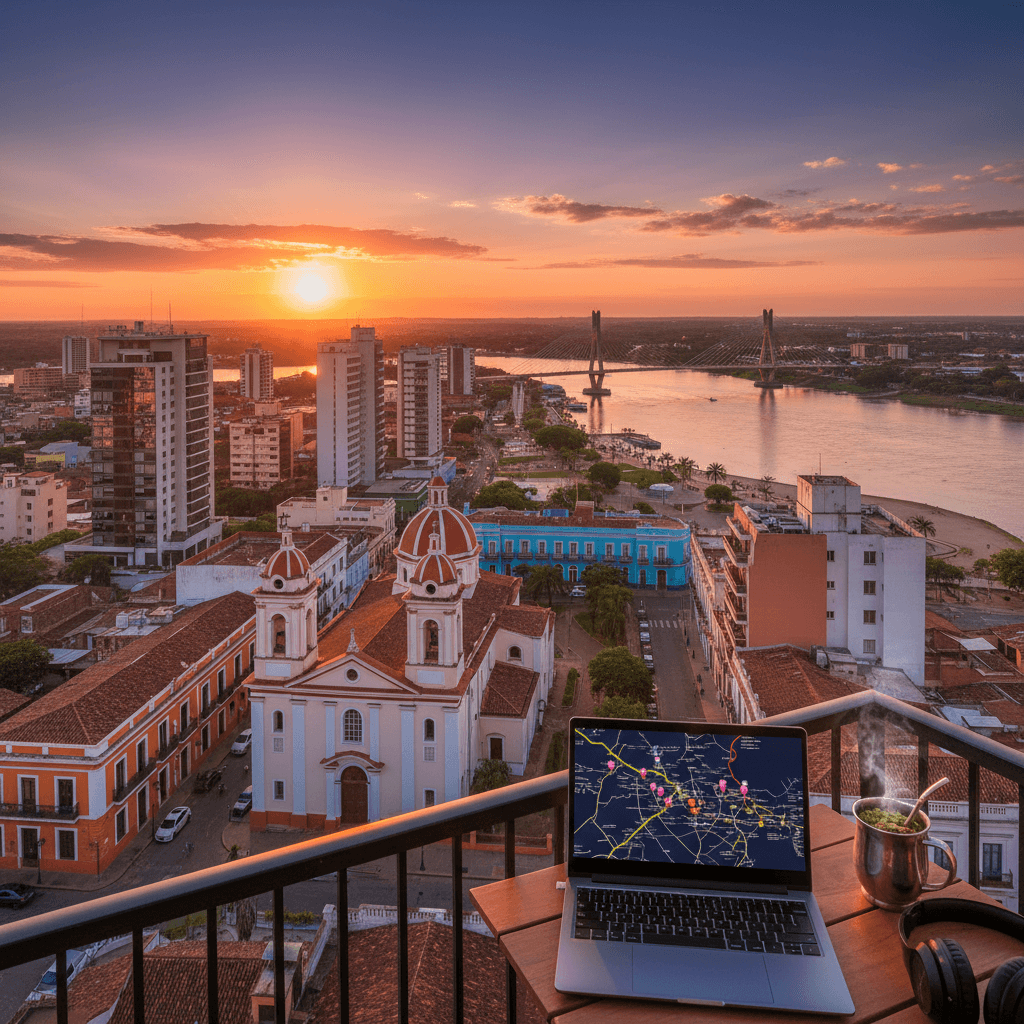
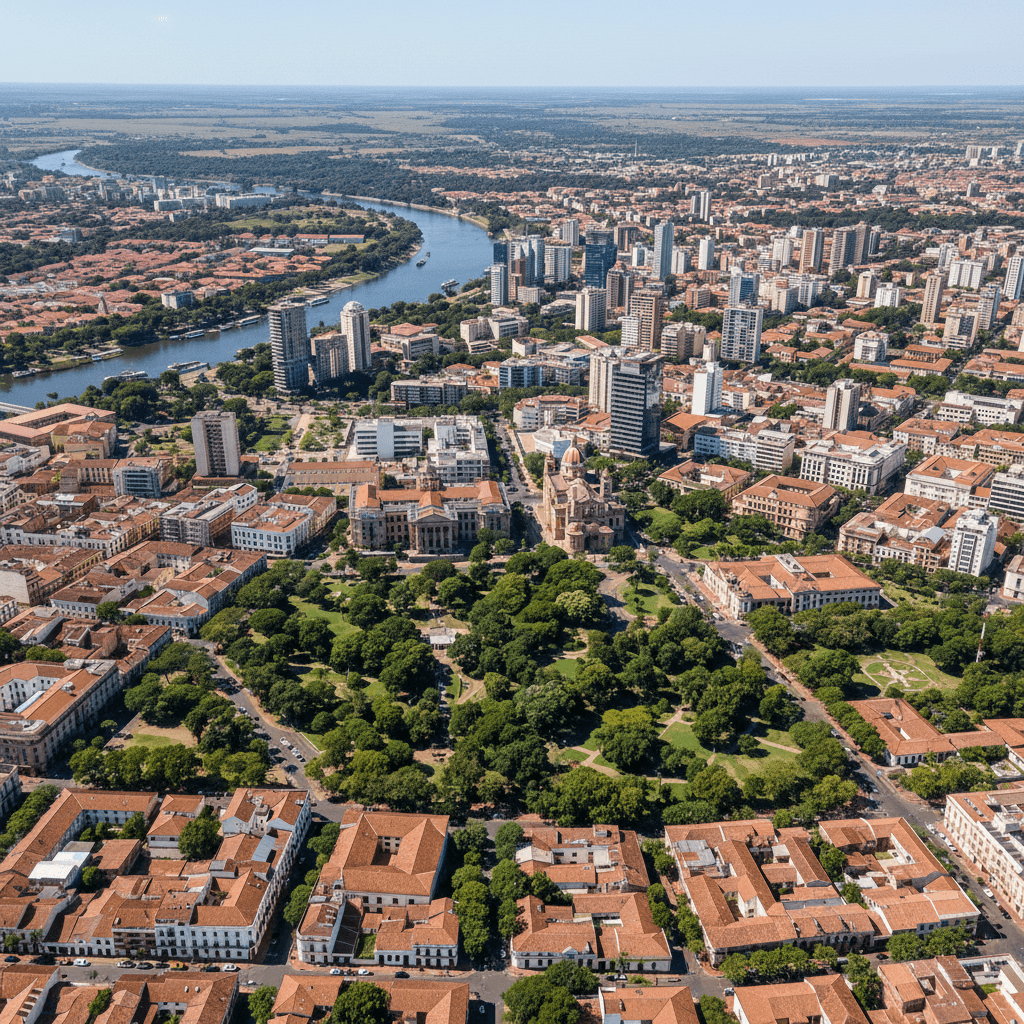
Asunción is a city that doesn't try too hard to impress you, and that’s exactly why it wins people over. While nomads flock to Medellin or Buenos Aires for the hype, those who land in Paraguay’s capital often feel like they’ve stumbled onto a well kept secret. It’s a place where 19th-century colonial mansions sit right next to gleaming glass skyscrapers, and where high end Mercedes SUVs share the road with vendors selling chilled tereré from giant thermals.
The vibe here is slower than most Latin American capitals. It’s humid, green, and surprisingly quiet in the residential pockets. You aren't going to find a massive "nomad scene" with organized meetups every night. Instead, you get a genuine local experience and a city that feels like it’s on the verge of something big. It’s the kind of place where the barista remembers your order by day three and the tax laws are some of the friendliest in the world for remote workers.
Life in the Green City
One thing you'll notice immediately is the heat. Asunción is tropical, and the locals have built their lifestyle around it. Most of the "action" for nomads happens in the newer, upscale hubs like Villa Morra and Santa Teresa. This is where the city feels most modern, packed with air conditioned malls, specialty coffee shops, and sleek apartment blocks with rooftop pools. If you’re looking for that polished, urban lifestyle, this is your base.
Conversely, the Centro Histórico offers a more gritty, soulful atmosphere. It’s beautiful but a bit neglected, and while it’s great for a weekend photo walk, most expats prefer to live and work in the safer, more developed eastern neighborhoods. The city isn't built for walking; the sidewalks can be uneven and the sun is relentless. You’ll find yourself relying on Bolt or Uber to get everywhere, but since a cross town ride rarely costs more than $3 to $5 USD, it’s a minor inconvenience.
The Nomad Reality
What makes Asunción stand out from the digital nomad circuit is the incredible value for money and the ease of residency. You can live a high quality life here for a fraction of what you’d pay in Europe or North America. A luxury one bedroom in a building with a gym and 24 hour security usually runs between $600 and $900 USD. If you’re willing to go slightly further out, prices drop even more.
The internet is surprisingly snappy. Most modern apartments come with fiber optic connections hitting 100 to 300 Mbps, which is more than enough for video calls and heavy uploads. While the "laptop cafe" culture is still growing, you’ll find plenty of reliable spots in Villa Morra where nobody will mind if you camp out for a few hours. The city feels safe compared to many of its neighbors, provided you use common sense and stick to the recommended areas at night.
- The Social Factor: It’s a "slow burn" city. You’ll need to put in a little effort to join expat Facebook groups or WhatsApp chats to find your tribe.
- The Tax Perk: Many nomads move here specifically for the territorial tax system: 0% on foreign-sourced income (e.g., work performed abroad), but work done in Paraguay is taxable at 10%, making it a top tier destination for those looking to optimize their finances.
- The Language: You’ll hear a mix of Spanish and Guaraní. While English is spoken in high end hotels and tech circles, having basic Spanish will make your life significantly easier and more enjoyable.
Ultimately, Asunción is for the nomad who is tired of the "tourist bubble." It’s for the person who wants a comfortable, affordable base with fast internet and a community that feels authentic rather than curated for Instagram. It’s a city that rewards the patient traveler with a high standard of living and a very warm, Paraguayan welcome.
The Bottom Line on Budgets
Asunción is one of the most affordable capitals in South America, especially considering the quality of life you get in return. While it isn't as dirt cheap as it was five years ago, your dollars or euros will still go a long way here. Most digital nomads find they can live a very comfortable, upper middle class lifestyle for anywhere between $1,200 and $1,800 USD per month. If you're looking to splash out on a luxury high-rise in the best part of town, you might push toward $2,500 USD, but even then, you're getting a level of service and modern amenities that would cost triple that in Miami or Madrid.
Housing and Neighborhoods
Your biggest expense will be rent, and prices vary significantly depending on whether you want to live in a historic building downtown or a glass tower in the new financial district. Most expats gravitate toward Villa Morra, Recoleta, or Carmelitas because they're safe and have the highest density of cafes and shops.
- Modern One-Bedroom Apartment (Villa Morra/Santa Maria): $500 to $900 USD per month. These usually come with 24 hour security, a rooftop pool, and a gym.
- Studio or Older Apartment: $350 to $500 USD per month. You can find these in areas like Barrio Jara or closer to the city center.
- Utilities (Electricity, Water, Trash): $60 to $120 USD. Keep in mind that electricity costs spike in the summer because you'll want the AC running constantly.
Eating and Drinking
Paraguay is a meat eater's paradise, and the cost of dining out reflects the country's massive agricultural output. You can find a "menu del dia" at a local spot for about $5 USD, while a high end dinner at a steakhouse like Pobre Juan or Patagonia Ramos Generales will run you $25 to $40 USD including wine.
- Local Beer (0.5L): $1.50 to $2.50 USD.
- Cappuccino in a Nomad-friendly Cafe: $2.50 to $3.50 USD.
- Monthly Groceries: $200 to $300 USD for one person if you shop at supermarkets like Superseis or Delimarket.
- Quick Street Food (Chipa or Empanada): $1.00 USD or less.
Connectivity and Getting Around
Since Asunción isn't a city where you'll want to walk long distances, you need to budget for transport. Most nomads exclusively use Bolt or Uber. They're incredibly cheap and much safer than trying to figure out the local bus system. A 15 minute cross-town ride rarely costs more than $4 USD.
- Fiber Internet (100 to 500 Mbps): $30 to $80 USD per month. Providers like Tigo and Personal are the standard.
- Mobile Data (50GB Plan): $15 to $25 USD per month.
- Gym Membership: $30 to $60 USD for a high end club like Smart Fit or specialized CrossFit boxes.
- Coworking Hot Desk: $100 to $150 USD per month, though many nomads just work from the various Juan Valdez or Juan de Salazar cafes for the price of a coffee.
The Tax Advantage
It's impossible to talk about the cost of living in Paraguay without mentioning the tax situation. For many digital nomads, the real "savings" come from the territorial tax system. Paraguay generally applies a territorial tax: 0% on truly foreign-sourced income, but services rendered in Paraguay are taxed at 10%. If you're working for clients in the US or Europe while living here, you keep significantly more of your paycheck than you would in almost any other South American country. This makes the effective cost of living even lower when you factor in your net take home pay.
The Social Butterfly: Villa Morra
If you want to be where the action is, Villa Morra is the undisputed heavyweight champion. It is the closest thing Asunción has to a walkable district, though you should still keep your Bolt app ready for longer hauls. This is the city's commercial heart, packed with the best restaurants, trendy coffee shops, and high end shopping malls like Shopping Mariscal.
- The Vibe: Upscale, energetic, and convenient. You can walk to a grocery store, a gym, and a cocktail bar within ten minutes.
- Monthly Rent: Expect to pay between $600 and $900 for a modern one bedroom apartment with a pool and 24 hour security.
- Best for: Digital nomads who prioritize being near coworking spaces and nightlife.
The Long Termer: Recoleta
Bordering Villa Morra, Recoleta offers a slightly more residential feel without sacrificing the amenities. It is a favorite for expats who want a bit more peace and quiet but still need to be a five minute drive from the center. The streets are leafier here, and you will find plenty of charming local bakeries tucked away between apartment blocks.
- The Vibe: Established, safe, and balanced. It feels like a real neighborhood rather than a commercial zone.
- Monthly Rent: You can find solid options ranging from $500 to $750.
- Best for: Expats and slow travelers looking for a "homey" atmosphere and better value for money.
The High Life: Carmelitas and Manorá
These are the prestigious zip codes. Located near the Paseo La Galería and Shopping del Sol, these neighborhoods are where you will find the city's most impressive skyline and luxury high rises. It is the corporate hub of the city, making it perfect if you have business meetings or just prefer living in a brand new glass tower with a panoramic view of the Chaco.
- The Vibe: Modern, polished, and affluent. It is very car dependent, but everything you need is clustered around the major malls.
- Monthly Rent: Prices here lean higher, often $800 to $1,200 for premium units.
- Best for: Solo travelers with a higher budget and professionals who want to be near the financial district.
The Quiet Professional: Las Lomas
Families and those who work from home often gravitate toward Las Lomas. It sits right behind the big shopping centers but consists mostly of large houses and low rise luxury apartments. It is incredibly quiet at night, which is a rarity in a city that loves its loud music and late night social gatherings.
- The Vibe: Serene and private. It is very green, with lots of mature trees shading the cobblestone streets.
- Monthly Rent: Apartments hover around $700, while larger houses can go for $1,500 or more.
- Best for: Families or nomads who need a silent environment to stay productive.
The Practical Perspective
Most nomads find that staying in Villa Morra for the first month is the smartest move. It allows you to get your bearings without needing a car immediately. While the Centro Histórico has beautiful old architecture, it tends to empty out at night and lacks the modern infrastructure found in the eastern neighborhoods. Stick to the "New Center" around Villa Morra and Carmelitas for the most reliable fiber optic internet and the highest density of English speakers.
The Connectivity Reality
Asunción is a bit of a dark horse when it comes to infrastructure. While the rest of Paraguay might feel disconnected, the capital is wired with reliable fiber optic lines. Most modern apartments in Villa Morra or Carmelitas come standard with 100 Mbps to 500 Mbps connections. You can expect to pay between $30 and $80 per month for a home setup, which is a steal compared to US or European prices.
Public Wi-Fi is hit or miss, so don't rely on it for your deep work sessions. You'll find decent speeds in high end malls like Shopping del Sol or Paseo La Galería, but for anything involving video calls, you'll want a dedicated space or a strong mobile hotspot.
Top Coworking Spots
The coworking scene in Asunción has matured quickly. It's no longer just a few desks in a shared office; these are community hubs where you'll actually meet local entrepreneurs and other nomads. Most spaces offer daily, weekly, or monthly passes.
- Loffice: This is the big name in town with multiple locations. Their Villa Morra spot is the favorite for nomads because it's surrounded by the city's best cafes. A monthly hot desk usually runs around $120 to $150.
Laptop Friendly Cafes
If you prefer the hum of a coffee shop, Asunción has a thriving cafe culture. Unlike some cities where owners eye your laptop with suspicion, many spots here are welcoming as long as you keep the caffeine flowing.
- Café Consulado: Located in the historic center, this place has a cool, artsy vibe and solid Wi-Fi. It's a great change of pace from the modern suburbs.
- Juan Valdez Café: You'll find these all over, specifically in the malls and Villa Morra. They are the reliable fallback with consistent speeds and plenty of power outlets.
- Karu: Known for great food and a relaxed atmosphere, it's a favorite for expats who want to get a few hours of work in over a long lunch.
Mobile Data and SIM Cards
Don't even think about roaming here. Grab a local SIM card as soon as you land. The three main players are Tigo, Claro, and Personal. Tigo generally has the best overall coverage, while Personal often wins on raw speed in the city center.
Getting set up is straightforward. Take your passport to an official store in any mall. You can get a prepaid SIM for a couple of dollars and load it with a data package. A 20 GB to 40 GB plan will typically cost you between $10 and $25. 4G LTE is the standard across the city, and it's fast enough to use as a backup hotspot if your apartment Wi-Fi ever flickers.
The Nomad Workflow
Most nomads here tend to work from their apartments in the morning and head to a coworking space or cafe in the afternoon. Since the city isn't very walkable, you'll be using Bolt or Uber to bounce between these spots. A ride across the main business district rarely costs more than $3 to $5, making it easy to treat the whole city as your office.
Keeping Your Gear and Yourself Secure
Asunción is generally a safe place to base yourself, but it operates on a different set of rules than what you might be used to in Lisbon or Mexico City. Most expats and nomads feel perfectly comfortable here as long as they stick to the right neighborhoods. Areas like Villa Morra, Carmelitas, and Recoleta are the primary hubs for foreigners. These spots are well lit and have a heavy security presence, but even here, you need to keep your wits about you.
Street crime is the main concern. Petty theft, like phone snatching, happens if you're walking around with your device out. The local rule of thumb is simple: don't show off your wealth. Keep your phone in your pocket when you're on the sidewalk and avoid wearing flashy jewelry. If you need to check a map, step inside a shop or a cafe to do it. Most modern apartment buildings in the nicer districts come with 24 hour security guards or "porteros," which is a feature most nomads consider a non-negotiable when signing a lease.
When the sun goes down, your behavior should shift. While the main strips of Villa Morra are fine for walking between bars, you shouldn't wander into unknown side streets or the downtown Microcentro area after dark. The downtown district is beautiful for a history walk during the day, but it empties out at night and can feel sketchy. Always use apps like Uber or Bolt to get from point A to point B once it's dark. It's cheap, tracked, and much safer than trying to flag down a random taxi on the street.
Navigating the Healthcare System
If you get sick in Asunción, you'll find that the private healthcare system is surprisingly high quality and very affordable compared to North American or European standards. Public hospitals exist, but most nomads and expats avoid them due to long wait times and aging infrastructure. Instead, you'll want to head to one of the top tier private clinics.
- Sanatorio Migone: Often cited as the top choice for foreigners, located near the city center with modern equipment and many English speaking specialists.
- Sanatorio La Costa: A high end facility with excellent emergency services and specialized care.
- Centro Médico La Costa: Great for routine checkups and lab work, with a very streamlined process for international patients.
Most doctors in these private hospitals have studied abroad and speak at least some English, though having a basic grasp of Spanish medical terms or a translation app will make your life easier. For a standard consultation with a specialist, expect to pay between $30 and $50 USD out of pocket if you don't have insurance. If you're staying for more than a few months, many nomads look into local private insurance providers like Asismed or Santa Clara, which can cost anywhere from $40 to $100 USD per month depending on your age and coverage needs.
Pharmacies and First Aid
Pharmacies, or "farmacias," are everywhere in Asunción. Chains like Punto Farma and Farmaoliva are often open 24 hours and can be found on almost every major corner in Villa Morra and Carmelitas. You can buy most basic medications over the counter without a prescription, including some that would require a doctor's note in the US.
One local health tip: stay hydrated. The heat in Asunción can be brutal, often topping 40 degrees Celsius (104 Fahrenheit) in the summer months. Heatstroke is a real risk for newcomers who try to walk too much during the midday sun. Stick to bottled water, which is cheap and available at every "despensa" or convenience store, as the tap water is generally not recommended for drinking unless your building has a high end filtration system.
Emergency Contacts
It is smart to keep these numbers saved in your phone as soon as you land. While you'll hopefully never need them, the response time for private services is usually much faster than the public ones.
- Police: 911
- Fire Department: 132
- Private Ambulance (SEME): 141
- Tourist Police: +595 21 446 608 (specifically for assistance with lost documents or crimes involving foreigners)
The Reality of Getting Around
Asunción is a city of distinct pockets rather than a cohesive, walkable grid. While you might enjoy a stroll within the leafy confines of Villa Morra or Recoleta, trying to walk between neighborhoods is a recipe for frustration. The sidewalks are notoriously uneven, and the humidity can turn a ten minute walk into a sweat soaked ordeal. Most nomads quickly learn that local life revolves around wheels, not feet.
Ride-Sharing is King
If you take one piece of advice, let it be this: download Bolt the moment you land. While Uber operates in the city and is reliable, Bolt is the undisputed heavyweight in Paraguay. It usually has more drivers on the road and slightly lower fares. Most rides within the central business district or between popular nomad hubs like Carmelitas and the Shopping Del Sol area will cost you between $2 and $5 USD.
- Bolt: The most popular app with the fastest pickup times. You can pay via cash or card, though cash is often preferred by drivers.
- Uber: A solid backup, especially if you prefer having your credit card on file and want a more familiar interface.
- MUV: This is the local Paraguayan ride-sharing app. It is worth having as a third option during peak hours or heavy rain when other apps hit surge pricing.
Public Buses (Colectivos)
The local bus system is an experience, to say the least. It is incredibly cheap, usually costing around $0.50 USD per ride, but it is not for the faint of heart or those on a tight schedule. The buses range from modern, air conditioned units to older, colorful relics that look like they belong in a museum. If you want to try it, you will need a Jaha or Más smart card, which you can buy and top up at most Aquí Pago or Pago Express points found in pharmacies and supermarkets.
Driving and Traffic
Traffic in Asunción has a mind of its own. Rush hour is particularly brutal on major arteries like Avenida España and Mariscal López. If you have a meeting across town at 5:00 PM, give yourself at least double the time you think you need. Expats generally advise against renting a car for daily use because parking is a headache and local driving habits are aggressive. However, having your own wheels is great for weekend escapes to San Bernardino or Areguá.
Safety While Moving
Safety is generally high compared to other South American capitals, but common sense still applies. Avoid hailing yellow taxis off the street, especially at night. Stick to the apps so your ride is tracked and the price is set. When you are stopped in traffic or walking in the Microcentro, keep your phone tucked away. Most modern apartment buildings in Villa Morra offer 24 hour security and gated parking, which is a standard feature you should look for if you do decide to keep a vehicle.
Airport Transfers
Silvio Pettirossi International Airport is about 20 to 30 minutes from the main nomad hubs. A Bolt or Uber from the airport to Villa Morra typically costs around $10 to $15 USD. There are official taxi stands at the arrivals hall, but they will almost always charge a premium compared to the apps. If you are arriving late at night, the apps remain active and are perfectly safe to use from the designated pickup zones.
The Bilingual Reality
In Asunción, you aren't just dealing with Spanish. Paraguay is uniquely bilingual, and Guaraní is just as prevalent as Spanish in daily life. While Spanish is the language of business, government, and the digital nomad world, Guaraní is the language of the heart. You'll hear locals fluidly switching between the two, a mix often called Jopará. As a nomad, you don't need to master Guaraní, but learning a few words like Aguyjé (thank you) goes a long way in building rapport with the locals.
The Spanish spoken here is distinct. It uses voseo, meaning people use "vos" instead of "tú," similar to what you find in Argentina or Uruguay. The accent is generally softer and slower than what you'll find in the Caribbean, making it a relatively easy place for intermediate learners to practice. Most expats find that while they can get by with basic Spanish, the "bubble" of English speakers is smaller here than in hubs like Medellín or Buenos Aires.
English Proficiency and Staying Connected
Don't expect English to be the default anywhere outside of high end hotels or international corporate offices. In trendy neighborhoods like Villa Morra and Carmelitas, staff at specialty coffee shops or upscale restaurants will likely have some English proficiency. However, for daily tasks like talking to a delivery driver on PedidosYa or explaining a destination to a Bolt driver, you'll need at least survival level Spanish. Most nomads recommend keeping a translation app handy for the first few weeks.
Communication is almost entirely handled through WhatsApp. Whether you're booking a hair appointment, asking a landlord about an apartment in Recoleta, or ordering water delivery, it happens over text. If you try to call a business or send an email, you might not get a response for days. Voice notes are also incredibly popular here, so get used to recording quick snippets rather than typing out long paragraphs.
Getting Online
Staying connected is straightforward and affordable. You can pick up a SIM card at the Silvio Pettirossi International Airport or at any branded kiosk in Shopping Del Sol or Paseo La Galería. You'll need your physical passport to register the line. The three main players are Tigo, Claro, and Personal. Most expats lean toward Tigo for its superior coverage, though Personal often wins on raw speed in urban pockets.
- Mobile Data: A prepaid plan with 20 GB to 50 GB of data typically costs between $10 and $25 per month.
- Home Fiber: If you're setting up a home office, fiber optic (FTTH) is the standard in modern buildings. Expect to pay $30 to $80 for speeds ranging from 100 Mbps to 500 Mbps.
- Public Wi-Fi: It's reliable in malls and coworking spaces, but many smaller cafes still have spotty connections or passwords that change daily.
Key Phrases for Your First Week
While you'll likely use a lot of hand gestures initially, these specific local terms will help you navigate Asunción more smoothly:
- ¿Todo tranqui?: A very common, relaxed way to say "Everything good?" or "How's it going?"
- Dale: Used constantly to mean "okay," "let's do it," or "agreed."
- Boliche: This refers to a nightclub or a place to go dancing at night.
- Guaireño: Someone from the interior, but often used in jokes about things being done "backwards."
Most travelers find that even a small effort to speak the language opens doors. Paraguayans are generally patient and genuinely surprised when a foreigner tries to use a bit of Guaraní. If you're looking to take classes, there are several private tutors available through local Facebook expat groups who charge around $10 to $15 per hour for one on one sessions.
The Heat is Real
If you aren't a fan of the sun, Asuncion will test your limits. The city is subtropical and stays warm most of the year, but the summer months from December through February are intense. Temperatures frequently climb above 95°F (35°C), and with the high humidity, it can feel more like 105°F (40°C). During this window, the city slows down. Locals often retreat to the countryside or stay indoors under heavy air conditioning during the afternoon peak.
Most nomads find that the sweet spot for visiting is during the shoulder seasons. April to June and September to November offer the most comfortable balance. You'll get plenty of sunny days with temperatures hovering between 70°F and 85°F (21°C to 29°C). This is the best time to explore the street art in Loma San Jeronimo or walk between cafes in Villa Morra without needing a shower the moment you arrive.
Winter in the Subtropics
Winter in Paraguay, which runs from June to August, is surprisingly mild but unpredictable. You might have a week of beautiful 75°F (24°C) weather followed by a sudden cold front that drops temperatures down to 45°F (7°C) overnight. Since many older buildings in Asuncion aren't equipped with central heating, these cold snaps can feel much chillier than the numbers suggest. If you're visiting during these months, bring a versatile jacket and layers.
Rainy Patterns and Storms
Rain is a year round factor in Asuncion, so don't expect a traditional dry season. The heaviest rainfall usually occurs between October and April. These aren't typically all day drizzles; instead, you'll experience massive, theatrical tropical thunderstorms that dump a huge amount of water in an hour and then clear up.
One thing expats will tell you is to watch the streets when it pours. Asuncion's drainage system struggles with heavy rain, and certain roads can turn into small rivers quickly. It is usually best to stay put in a cafe for an hour until the storm passes and the water recedes.
When to Book Your Stay
If you want the best overall experience, aim for a May arrival. The scorching summer heat has faded, the parks are green, and the city's social calendar is in full swing. If you prefer a quieter vibe, January is very calm as many residents head to San Bernardino or the coast of Uruguay for vacation, but you'll have to be okay with the relentless humidity.
- Peak Summer (Dec to Feb): Highs of 95°F+, very humid, quiet city vibe.
- Best Weather (Apr to June): Highs of 75°F to 82°F, perfect for walking and outdoor dining.
- Variable Winter (July to Aug): Mostly mild but expect occasional drops to 45°F.
- Spring (Sept to Nov): Highs of 80°F to 88°F, beautiful flowering trees, frequent afternoon storms.
For those planning a long term stay, ensure your apartment hunt specifically checks the quality of the air conditioning units. In Asuncion, a high performing AC isn't a luxury; it's a requirement for staying productive during the workday.
Connectivity and Data
Staying connected in Asunción is surprisingly easy and affordable. You can pick up a SIM card from Tigo or Claro at most shopping malls like Paseo La Galeria or Shopping del Sol. You just need your passport and about $15 to $25 USD to get a monthly plan with 20 GB to 50 GB of data. Tigo generally has the best coverage if you plan on taking weekend trips outside the city.
For your home setup, fiber optic is the standard in neighborhoods like Villa Morra and Carmelitas. Most modern apartments include a 100 Mbps connection, but if you're setting up your own, expect to pay between $30 and $80 USD per month for speeds up to 500 Mbps. The reliability is high, though it's always smart to have your mobile hotspot ready during the occasional summer thunderstorm.
Money and Taxes
The local currency is the Guaraní (PYG), and the exchange rate often involves a lot of zeros. Most nomads use Western Union or Xoom to send themselves cash, as ATM fees can be steep. While major restaurants and supermarkets take credit cards, you'll want cash for smaller shops and street vendors.
One of the biggest draws for long term nomads is the tax system. Paraguay operates on a territorial tax basis. This means the territorial tax system taxes only Paraguayan-sourced income (10%); foreign-sourced income exempt, but confirm with advisor for remote work. This makes it one of the most tax friendly spots in South America if you decide to establish residency.
Getting Around
Asunción isn't a city built for walking. The sidewalks are often uneven or nonexistent, and the humidity can make a three block walk feel like a marathon. Most expats rely almost exclusively on Bolt or Uber. Bolt is usually the cheaper option and has more drivers available at all hours.
- Bolt/Uber rides: Most trips within the city center cost between $2 and $5 USD.
- Public Buses: They are very cheap, around $0.50 USD, but they don't have air conditioning and can be confusing for newcomers.
- Safety: Don't hail traditional taxis on the street at night; stick to the apps so your ride is tracked.
Safety and Local Etiquette
Asunción is generally safer than neighboring capitals like Buenos Aires or São Paulo, but you still need to be street smart. Keep your phone in your pocket while walking, and avoid the La Chacarita neighborhood and the port area after dark. Most digital nomads choose to live in buildings with 24 hour guards, which is standard for any modern apartment in the $600 to $900 USD price range.
Spanish is the main language, but you'll hear a lot of Guaraní mixed in. Locals are incredibly friendly and will appreciate it if you learn a few basic phrases. Unlike some other hubs in South America, the expat community here is small and tight knit. Joining local Facebook groups or WhatsApp chats is the fastest way to find out about social meetups or the best place to find imported goods.
Power and Plugs
Paraguay uses Type C and Type F plugs, the same as most of Europe, and the voltage is 220V. If you're coming from North America, you'll need a converter for your electronics. Power outages can happen during the peak of summer when everyone's air conditioning is blasting, so a small power bank for your phone is a lifesaver.
Need visa and immigration info for Paraguay?
🇵🇾 View Paraguay Country GuideHidden Gem
Worth the effort
Monthly Budget Estimates
More cities in Paraguay
Villarrica
🇵🇾 Paraguay
Ciudad del Este
🇵🇾 Paraguay
San Bernardino
🇵🇾 Paraguay