Astana
🇰🇿 Kazakhstan
The Steppe's Sci-Fi Capital
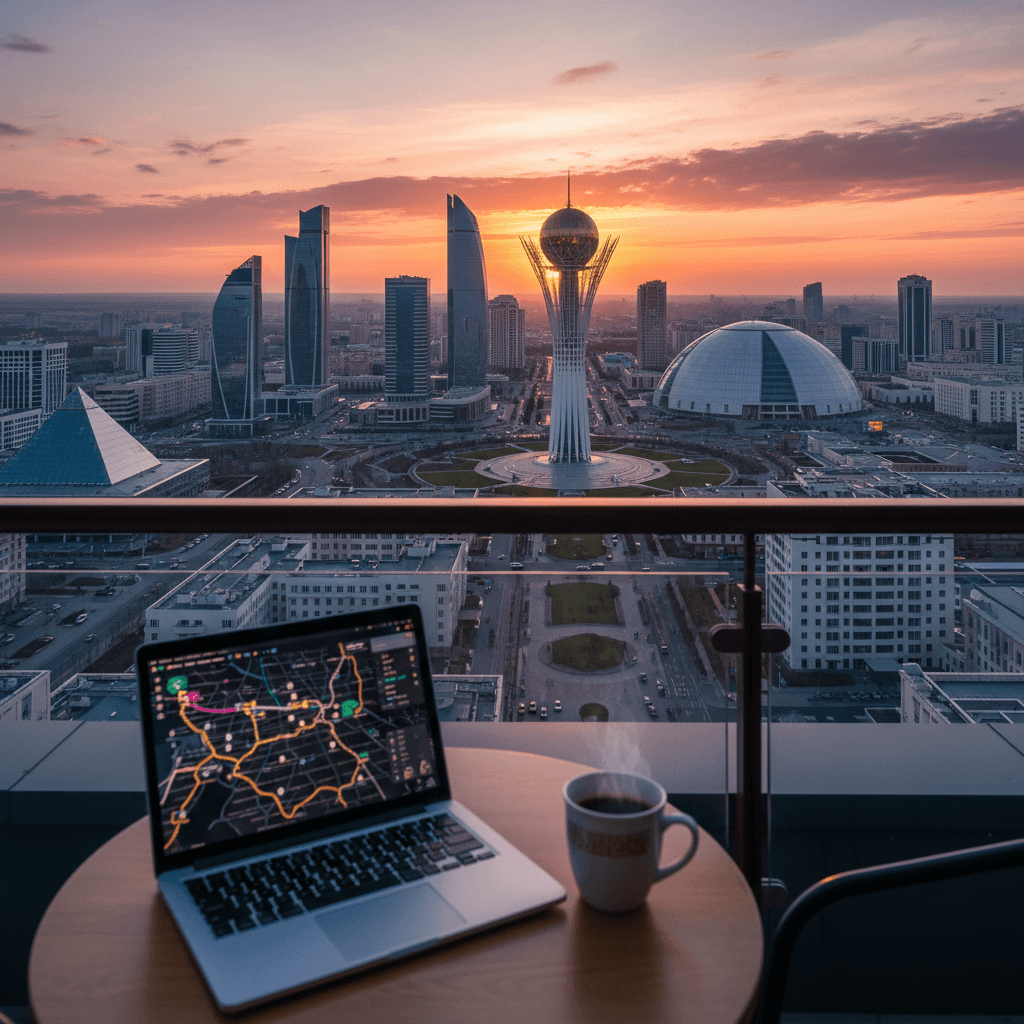
Landing in Astana feels like you have accidentally stepped into a Ridley Scott storyboard. Rising abruptly from the flat, windswept plains of the Kazakh steppe, this city is a surreal collection of glass towers, golden spheres, and neo-futuristic monuments. It is a city designed to impress, built from scratch to show the world what modern Kazakhstan is capable of. While Almaty to the south feels like a cozy, leafy European town, Astana is unapologetically bold, cold, and ambitious.
The vibe here is distinct from any other nomad hub. It lacks the laid-back chaos of Southeast Asia or the historical grit of the Balkans. Instead, you get wide, impeccably clean boulevards and a sense of quiet efficiency. It is a place for people who want to focus, get work done, and experience a culture that is pivoting rapidly toward the future. You will feel the contrast between the high-tech skyline and the deep, traditional roots of the Kazakh people every time you step out for a coffee.
Life in the Extreme
You cannot talk about Astana without mentioning the weather. It is the second coldest capital city in the world, and the winter wind is legendary. From November to March, the city transforms into an icy kingdom where life moves entirely indoors through glass skywalks and massive climate-controlled malls like the Khan Shatyr, which looks like a giant transparent tent. When the temperature hits -30 degrees Celsius, you will truly appreciate the value of a high-speed home internet connection.
In the summer, the city flips. The sun stays out late, the riverfront comes alive, and the parks fill with families and young professionals. Nomads often find that this extreme seasonality dictates the social life; winter is for deep work and cozy dinner parties, while summer is for exploring the vastness of the surrounding steppe. It is a polarizing environment, but for the right person, the intensity is part of the draw.
A Practical Tech Haven
The government is making a massive push to attract digital talent, and it shows. The AstanaHub has become the heartbeat of the local tech scene, offering a streamlined entry point for foreigners. The Neo Nomad Visa allows a one-year stay if you meet the minimum income requirement (around $3,000 annually). If you are an IT professional looking for something more permanent, the 10-year Digital Nomad Residency is one of the most generous schemes in the region.
The cost of living remains a major selling point. You can live a high-end lifestyle here for a fraction of what you would spend in Dubai or London. A modern one-bedroom apartment in a luxury high-rise generally runs between $500 and $800 per month. Eating out is equally affordable; a solid business lunch at a trendy spot will rarely set you back more than $10, and a high-quality coffee is usually around $2.50.
The Neighborhood Breakdown
Choosing where to plant your flag depends on whether you want the "old" city charm or the "new" city flash. The Ishim River divides these two worlds.
The Left Bank (New City)
- The Vibe: Futuristic, professional, and grand. This is where the famous Bayterek Tower and most government buildings are located.
- Rent: $600 to $1,000 for premium apartments.
- Best for: Nomads who want to be steps away from modern coworking spaces and high-end malls.
The Right Bank (Old City)
- The Vibe: More traditional, walkable, and lived-in. It has a bit more soul and feels less like a movie set.
- Rent: $400 to $600 for comfortable, renovated flats.
- Best for: Travelers looking for local markets, cheaper eats, and a sense of community history.
Most expats and nomads gravitate toward the Left Bank for convenience, especially since the internet speeds there are consistently hitting 52 Mbps and higher. Whether you are working from a sleek cafe in the Abu Dhabi Plaza or a dedicated desk at a local hub, the infrastructure is built to support a remote lifestyle. It is a city that demands you adapt to its pace, but once you do, the rewards are a unique blend of Central Asian hospitality and 21st-century ambition.
The Budget Reality
Living in Astana feels like a bit of a cheat code for your bank account. You get to live in a city that looks like a sci-fi movie set for a fraction of what you would pay in Western Europe or North America. Most nomads find they can live a very comfortable, upper-middle-class lifestyle here for around $1,200 to $1,500 per month. If you are being frugal, you could easily get that down to $900 without feeling like you are suffering.
The local currency is the Tenge (KZT), and while it fluctuates, your dollars or euros usually go a long way. You will find that the biggest savings come from services and transit. A cross-town ride on a bus costs about $0.20, and even a 20-minute Bolt or Yandex Go ride rarely breaks the $5 mark.
Housing and Neighborhoods
Rent is your biggest variable. The city is split by the Ishim River into the Right Bank (the old center) and the Left Bank (the shiny new administrative center). Most expats and digital nomads gravitate toward the Left Bank because that is where the modern infrastructure and coworking hubs are located.
- The Left Bank (Near Bayterek): This is the heart of the new city. Expect to pay between $600 and $900 for a high-end, one-bedroom apartment in a modern complex. You are paying for the views and the proximity to the big malls.
- The Right Bank (Saryarka District): This area has a more established, lived-in feel. It is cheaper and often more walkable. You can snag a decent apartment here for $400 to $550.
- Expo District: A bit further out but very modern. Prices are similar to the Left Bank center, around $600, but you get much newer buildings and better access to Astana Hub.
Eating and Drinking
If you stick to local spots and the food courts in malls like Khan Shatyr, you can eat a solid meal for $5 to $7. A business lunch, which is a common concept here, usually gets you a three-course meal for about $6 between noon and 3 PM.
Dining at mid-range restaurants will run you about $15 to $20 per person including a drink. Grocery shopping is also affordable if you buy local produce. A liter of milk is roughly $1.10 and a dozen eggs will cost you about $1.50. Imported goods like specific cheeses or Western brands will carry a heavy premium, so it pays to shop like a local.
Coworking and Connectivity
Internet is surprisingly fast and reliable. You can expect speeds around 52 Mbps on average. Most nomads head to Astana Hub, which is the massive tech park in the city. It is the center of the local startup scene and offers a very professional environment.
- Astana Hub: The premier spot for tech workers. It is often free or very low cost if you are involved in the ecosystem, but check their current daily rates as they change based on events.
- Multi-space: A popular, stylish choice for those who need a consistent desk and good coffee. Monthly memberships usually hover around $100 to $130.
- Mobile Data: Grab a SIM card from Kcell or Beeline. You can get a massive data package (20GB to 30GB) for less than $10 a month.
The Neo Nomad Visa
Kazakhstan recently introduced the Neo Nomad Visa, which is a game changer. It allows you to stay for one year provided you can prove an income of at least $3,000 per month. For IT specialists, there is even a 10-year residency option through the Astana Hub. The application process is handled online, making it one of the more accessible nomad visas in Central Asia.
For Digital Nomads: The Left Bank (Yesil District)
If you want to be in the heart of the futuristic skyline you see on postcards, the Left Bank is where you'll land. This area is the administrative and business core of the city. It feels like a mix between Dubai and a sci-fi movie set. Most nomads prefer staying near the Abu Dhabi Plaza or the Khan Shatyr entertainment center because everything is walkable, even when the wind picks up.
- Rent: expect to pay between $600 and $900 for a high end studio in a modern complex like Highvill.
- Coworking: Astana Hub is the place to be. It is the largest technology park in Central Asia and offers a professional environment for about $80 a month.
- Vibe: fast paced, modern, and very safe. You are minutes away from the best specialty coffee shops like Brewsel or Social Coffee.
For Expats and Long Termers: The Right Bank (Saryarka District)
The Right Bank is the old soul of Astana. It is far more established and has a "lived in" feel that the shiny new districts lack. Expats often choose this area because of the mature trees, public parks, and the Ishim River embankment. It feels more like a traditional European city than a planned capital. You will find more local markets here and slightly lower prices for everyday services.
- Rent: 1-bedroom apartments usually go for $400 to $550. Prices drop significantly once you move away from the riverfront.
- Groceries: shopping at the Artem Market will save you roughly 30% compared to the high end supermarkets on the Left Bank.
- Vibe: cozy and authentic. It is the best place to find traditional Kazakh food at spots like Saksaul without the "tourist tax" found in the business district.
For Families: Akbulak and the Diplomatic Quarter
Families usually gravitate toward the quieter pockets of the Almaty District, specifically the Akbulak area. It is tucked away from the heavy traffic of the main avenues but remains close enough to international schools and premium fitness clubs. There is a lot of green space here, and the residential complexes are often gated with private playgrounds.
- Rent: larger 3-bedroom apartments average around $1,200 to $1,500 in premium buildings.
- Amenities: close to the Triathlon Park, which is the best spot in the city for morning runs or bike rides with kids.
- Vibe: quiet, upscale, and residential. It is the kind of place where you can actually hear the birds instead of the construction cranes.
For Solo Travelers and Budget Seekers: Near the Expo Site
The area around the Expo 2017 grounds is a great middle ground for solo travelers. It is technically on the Left Bank but feels more open and less corporate. Since it was built for a global event, the infrastructure is top notch. Many of the apartments here were originally built for delegates, so they are modern and well insulated against the brutal Kazakh winters.
- Rent: you can find modern 1-bedroom apartments for about $450 to $600.
- Transport: the area is well connected by the city bus system. Use the CityBus or 2GIS app to track arrivals in real time; a single ride is only about $0.20.
- Vibe: youthful and energetic. The Mega Silk Way mall is right there, providing endless food court options and a large cinema for those days when it is too cold to explore outside.
Connectivity and Speed
You won't have to hunt for a signal in Astana. The city is built on modern infrastructure, and the internet speeds reflect that. Most apartments and cafes clock in around 52 Mbps, which is plenty for video calls or uploading large files. If you're staying in the newer parts of the city on the Left Bank, fiber optic connections are the standard.
For mobile data, grab a SIM card from Kcell or Beeline as soon as you land. You can find kiosks at the airport or in malls like Khan Shatyr. A monthly plan with 20GB to 30GB of data usually costs less than $15. Coverage is excellent across the city center, though it can get spotty if you head far out into the steppe for a weekend trip.
Top Coworking Spots
The remote work scene here revolves around Astana Hub. It is more than just a desk; it is the heart of the country's tech ecosystem. Located within the Expo grounds, it has a sleek, futuristic vibe and attracts a mix of local startups and international developers. It is also the main point of contact for anyone applying for the Neo Nomad Visa.
If you prefer a more traditional office environment, Multispace is a popular choice among expats. It is huge, professional, and offers flexible memberships. They have high speed backups, so you won't lose your work if there is a rare local outage.
For a more relaxed atmosphere, Seedspace is another solid option. It tends to be a bit quieter and is great for deep work sessions. Many nomads also find themselves working from high end coffee shops like 旅客 (Traveler’s Coffee) or Coffee Boom. These spots are used to people staying for a few hours with a laptop, provided you keep the lattes and snacks coming.
Visa Logistics for Nomads
Kazakhstan recently stepped up its game with the Neo Nomad Visa. This is designed specifically for people earning at least $3,000 per month from sources outside the country. It allows you to stay for one year, and the application process is handled through the AstanaHub portal. It is a straightforward online system that cuts out much of the old school bureaucracy.
If you are an IT professional looking for something more permanent, there is a 10 year Digital Nomad Residency. This is a massive draw for those who want to use Astana as a long term base for exploring Central Asia. Most travelers find the process surprisingly efficient compared to neighboring countries.
Work Life Balance and Logistics
Living here is incredibly affordable by Western standards. You can find a modern one bedroom apartment on the Left Bank for $500 to $700 a month. Meals at mid range restaurants rarely top $20, and a quick lunch at a canteen will only set you back about $5. This low overhead means you can work fewer hours and spend more time exploring the wild architecture of the capital.
- Average WiFi Speed: 52 Mbps
- Local SIM Card: $10 to $15 per month
- Neo Nomad Visa Duration: 1 year
- IT Residency Duration: 10 years
Public transport is reliable, but most nomads use the Yandex Go app for getting around. It is the local equivalent of Uber and is extremely cheap. A cross town ride usually costs under $4. Between the fast internet, the new visa options, and the low cost of living, Astana is quickly becoming a top tier stop on the nomad circuit.
General Safety and Street Smarts
Astana is remarkably safe for a capital city of its size. Most expats feel comfortable walking around the Left Bank or the Water-Green Boulevard late at night because the city is heavily monitored by CCTV and well lit. You won't find much of a "rough" neighborhood in the modern center, though the Right Bank has a grittier, older feel that requires the same common sense you would use in any major metro area.
The biggest threat to your safety isn't crime; it's the climate. During winter, temperatures regularly drop to -30°C (-22°F). Frostbite is a genuine risk if you aren't dressed in proper thermal layers and windproof gear. Always check the wind chill before heading out, as the steppe winds can make a short walk feel like an Arctic expedition. In the summer, keep an eye out for ticks if you head to nearby spots like Burabay National Park.
Petty theft like pickpocketing happens occasionally in crowded markets like Artem Market or on packed buses. Keep your phone and wallet in your front pockets or a zipped bag. If you need a ride, avoid flagging down unofficial "gypsy cabs" on the street. Instead, use the Yandex Go app. It's the local equivalent of Uber, it's very cheap, and it provides a digital trail of your journey and the driver's identity.
Healthcare Facilities and Quality
The healthcare system in Astana is split between public clinics and private centers. Most nomads avoid the public system due to long wait times and a significant language barrier. For English speaking doctors and Western standards of care, National Medical Holding and Interteach are the top choices. These facilities are modern and used to dealing with international insurance providers.
If you have a minor ailment, SOS International has a presence in the city and offers high quality, albeit more expensive, consultations. For a standard GP visit at a private clinic, expect to pay between $30 and $50. Most specialists will require an appointment, but you can usually get in within a day or two.
Pharmacies, marked by a green cross and the word Daruphana, are everywhere. Many are open 24/7. You can buy most basic medications over the counter, but it helps to have the generic name of the drug written down in Russian or Kazakh, as brand names often differ from those in the West.
Emergency Numbers and Insurance
It is worth memorizing the local emergency digits. You can dial 103 for an ambulance and 102 for the police. While some dispatchers might speak basic English, it's a good idea to have a translation app ready or a local friend on speed dial to help explain your location and the situation.
Standard travel insurance is usually sufficient for short stays, but if you are applying for the Neo Nomad Visa, you will need a policy that covers the full duration of your stay. Make sure your plan includes medical evacuation, especially if you plan on trekking in more remote parts of the country. SafetyWing and World Nomads are popular among the digital nomad community here because they handle the paperwork digitally and are familiar to local private clinics.
Water and Food Safety
While the tap water in Astana is technically treated, most locals and expats don't drink it straight. The pipes in older buildings can be unreliable. It's better to use a filtration pitcher or buy large 5-liter or 10-liter jugs of bottled water from grocery stores like Galmart or Magnum Cash & Carry. These large jugs usually cost less than $2.
Food hygiene in restaurants is generally high. You can eat at local spots like Qazaq Gourmet or grab quick bites at the Khan Shatyr food court without much worry. Just be aware that the local diet is very meat heavy, particularly horse and mutton. If you have a sensitive stomach, introduce these rich, fatty meats into your diet slowly to avoid any digestive surprises.
Navigating the Steppe Metropolis
Moving around Astana is a tale of two cities. On one hand, you have the wide, hyper-modern boulevards of the Left Bank, and on the other, the more traditional, grid-like streets of the Right Bank. Since the city was built to be a showpiece, the distances are often much larger than they look on a map. You might think that futuristic skyscraper is a five-minute walk away, but twenty minutes later, you're still trekking toward it across a windy plaza.
Most nomads rely heavily on Yandex Go. It is the gold standard for ride-sharing here. It works exactly like Uber or Lyft but is incredibly cheap by Western standards. A ten-minute cross-town trip usually costs between $2 and $4. If you want to feel like a local, download 2GIS. It is the most accurate map app for the region, showing you exactly which building entrance to use and providing real-time bus tracking that is far more reliable than Google Maps.
The Public Transit System
The city's bus network is surprisingly efficient and modern. Most buses are clean, heated, and equipped with electronic displays. However, they don't take cash. You'll need to pick up a Transcard or use the Avtobys app to pay via QR code. A single ride is roughly 90 to 110 KZT, which is less than $0.25. It is a steal, though the buses can get packed during the 6:00 PM rush hour when the government workers head home.
Expect a lot of walking if you stay in the Nur-Zhol Boulevard area. This pedestrianized zone connects the Khan Shatyr entertainment center to the Ak Orda Presidential Palace. It is great in the summer, but during the winter, the wind chill can make a five-block walk feel like a polar expedition. If you're here between November and March, stick to the cars.
Practical Logistics for Nomads
Getting your phone set up is the first order of business. Head to a Kcell or Beeline kiosk in the Keruen Mall or Abu Dhabi Plaza. You can get a SIM card with 20GB to 50GB of data for around $10 to $15 per month. The speeds are impressive, often hitting 50 Mbps or higher in the city center. You will need your passport to register the SIM, so keep it handy.
Banking is another area where Kazakhstan punches above its weight. Most expats and long-term nomads try to open a Kaspi account. The Kaspi app is a lifestyle powerhouse; you can use it to pay for everything from groceries to your mobile bill via QR codes. Even the smallest kiosks in the suburbs accept Kaspi transfers. It makes carrying a physical wallet almost unnecessary.
Key Transport Costs
- Yandex Ride (City Center): $2.50 to $4.50
- Bus Fare (QR/Card): $0.20
- Monthly Bus Pass: $16.00
- Airport Taxi: $8.00 to $12.00
The Winter Factor
You cannot talk about getting around Astana without mentioning the cold. This is the second coldest capital city in the world. From December to February, temperatures frequently plunge below -30 degrees Celsius. During this time, walking more than a few minutes is genuinely dangerous for the unprepared. You will find yourself hopping from one heated indoor space to another. The city has built several underground passages and connected mall systems to help, but in the dead of winter, Yandex is your best friend. Always book the "Comfort" or "Business" class in the app during winter; the cars arrive faster and the heaters actually work.
Getting by in Astana requires a bit of a mental shift if you are used to English being the default. While the city looks like a sci-fi movie set, the linguistic reality is firmly rooted in the local context. You are going to hear a mix of Kazakh and Russian. Kazakh is the state language and a massive point of national pride, but Russian remains the lingua franca for business and daily life in the capital. If you have a few Russian phrases in your back pocket, your life will be significantly easier.
The English Situation
In the glitzy service sectors around the Ak Orda Presidential Palace or the high end hotels in the Esil District, English is common. Younger locals and professionals working in the AstanaHub tech ecosystem usually speak it well. However, once you step into a local grocery store or hop into a taxi, that English proficiency drops off quickly. Don't expect the average person on the street to be fluent. Most nomads find that a combination of translation apps and friendly gesturing covers the gaps.
Digital Communication and Apps
To stay connected, you need to get a local SIM card immediately. Don't rely on roaming; it is overpriced and often slow. The main players are Beeline and Kcell. You can pick up a SIM at the airport or any small mobile shop for about $5 to $10, which usually includes a generous data package. Most expats recommend Beeline for its consistent 4G and 5G coverage across the city.
Communication happens almost exclusively on WhatsApp. Whether you are booking a hair appointment, talking to a landlord, or joining a nomad meetup, that is where the conversations live. For getting around, Yandex Go is the non negotiable app for your phone. It works like Uber but is much more integrated into the local infrastructure. You can set it to English, and it eliminates the need to haggle over prices in a language you might not speak yet.
- Google Translate: Download the Russian and Kazakh packs for offline use. The camera feature is a lifesaver for reading menus and signs.
- Kaspi.kz: This is the "everything app" of Kazakhstan. While you need a local tax ID (IIN) to use the banking features, it is the primary way people pay for things. Most shops prefer a Kaspi transfer over cash.
- Telegram: Used heavily for community groups and tech news, especially within the AstanaHub circles.
Social Nuances
Kazakhstan is famous for its hospitality, and people are generally patient with foreigners. If you try to use a few Kazakh words like "Rahmet" (Thank you) or "Salem" (Hello), you will notice an immediate brightening in the local response. It shows respect for the culture in a city that is rapidly modernizing but still holds its traditions close.
If you are working out of coworking spaces like MultiSpace or Seedspace, you will find the environment very international. The internet speeds in these hubs are reliable, often hitting 50 Mbps or higher, which is plenty for video calls. Just keep in mind that the city is a government hub, so formal communication can sometimes feel a bit stiff compared to the laid back vibe of Almaty. Once you break the ice, though, you will find the community is incredibly welcoming to outsiders.
The Tale of Two Extremes
Living in Astana means embracing a climate of absolute extremes. It holds the title of the second coldest capital city in the world, and it doesn't let you forget it. You'll experience a temperature swing that can range from -40°C in the dead of winter to a sweltering 35°C in the peak of summer. It is a dry, continental climate, so while the cold is biting, you won't deal with much slush or humidity.
The wind is the defining characteristic of the local weather. Because the city was built on the flat, open steppe, there is nothing to block the gusts that howl between the futuristic skyscrapers. Locals often joke that Astana has two seasons: winter and the first of July. If you are planning a stint here, your wardrobe needs to be as versatile as your itinerary.
When to Touch Down
For most nomads, the sweet spot for a visit is between May and September. This is when the city truly wakes up. The fountains in the Nurzhol Boulevard area start running, the parks fill up with people, and the outdoor cafes become the place to be. June and July are the warmest months, perfect for exploring the Ishim River waterfront or taking a day trip to Burabay National Park.
If you prefer a crisp, autumn vibe, September is arguably the best month. The summer heat has faded, the wind is manageable, and the city takes on a golden hue. You'll find it much easier to walk between coworking spaces like Astana Hub without needing to duck into a mall every ten minutes to escape the elements.
Surviving the Great Freeze
If you decide to brave the winter from November to March, you are in for a unique experience. This isn't just "cold" weather; it is a lifestyle. The city is well prepared for it, though. Buildings are heavily insulated, and the heating is usually cranked up to the point where you'll be sitting in your apartment in a t-shirt while it is -30°C outside. The dry air means you'll need to invest in a good humidifier and plenty of moisturizer.
Winter nomads spend a lot of time in the city's massive indoor spaces. The Khan Shatyr entertainment center, a giant transparent tent, actually maintains its own internal microclimate, complete with a heated indoor beach. It is a surreal way to spend a Tuesday when the world outside is frozen solid. Travelers often say that the winter months are actually the most productive for deep work because there are fewer distractions pulling you outside.
Seasonal Packing List
- Winter (Nov-Mar): A high quality parka rated for at least -30°C, thermal base layers, and windproof gloves. Do not skip the scarf; you will need it to cover your face when the wind picks up.
- Summer (Jun-Aug): Light linens and breathable fabrics. The sun is intense on the steppe, so high SPF sunscreen is a daily requirement.
- Shoulder Seasons: A solid windbreaker is your best friend. Even on a sunny day in April, the breeze coming off the plains can be sharp.
The Budget Factor
Keep in mind that travel costs fluctuate slightly with the seasons. Flight prices to Astana International Airport tend to peak in mid summer and during the Nauryz celebrations in late March. However, because Astana isn't yet a massive tourist magnet, you won't see the dramatic price hikes for apartments or short term rentals that you might find in European capitals during the high season. You can usually find a solid one bedroom apartment for around $500 to $700 per month regardless of when you arrive.
Visas and the Neo Nomad Life
Kazakhstan recently stepped up its game with the Neo Nomad Visa, which lets you stay for up to one year. To qualify, you need to show a monthly income of at least $3,000 from sources outside the country. The application goes through the AstanaHub portal, which is surprisingly efficient for a government site. If you are a high level IT specialist, look into the Digital Nomad Residency; it is a 10 year commitment that treats you more like a local resident than a tourist.
Getting Connected
The internet here is punchy. You can expect average speeds around 52 Mbps, which is plenty for video calls and heavy uploads. Most nomads head straight to Astana Hub in the EXPO district. It is the heart of the tech scene and offers free or low cost desk space if you are working on a startup. For a more traditional coworking vibe, Seedspace and MultiSpace are the go-to spots. Monthly hot desk rates usually hover around $100 to $150.
Pick up a SIM card from Kcell or Beeline at the airport or any mall. You will get a massive data package for about $10 to $15 a month. Just remember you need your passport to register the number; it is a quick process but mandatory.
Money and Costs
Your dollars or euros will go a long way here. Astana is significantly more affordable than Almaty or Western European hubs. The local currency is the Tenge (KZT). While cards are accepted almost everywhere, keep some cash for smaller stalls or older taxis.
- One bedroom apartment (Left Bank): $500 to $800 per month
- Local meal (Business lunch): $5 to $8
- Cappuccino: $2.50
- Monthly gym membership: $40 to $60
Navigation and Apps
Do not bother trying to hail a cab on the street. Download Yandex Go immediately. It is the local version of Uber and it is incredibly cheap. A cross town trip rarely costs more than $3 or $4. For public transit, the buses are modern and reliable. Use the CityBus or 2GIS apps to map your routes; 2GIS is actually better than Google Maps for finding specific building entrances in the massive Soviet style blocks.
The Weather Reality
You cannot talk about Astana without mentioning the wind. It is the second coldest capital city in the world. If you visit between November and March, temperatures can plummet to -30°C (-22°F). Most nomads prefer the shoulder seasons or summer when the city parks come alive. If you are here in winter, you will spend most of your time in the malls like Khan Shatyr, which is basically an indoor city with its own artificial beach.
Language and Culture
Russian is the lingua franca for business and daily life, though Kazakh is the state language and pride of the country. English is common among the younger tech crowd at the Hub, but you will want a translation app for grocery shopping or talking to drivers. People might seem reserved at first, but once you strike up a conversation, the hospitality is genuine. It is a very safe city, even late at night, thanks to heavy lighting and a significant police presence in the central districts.
Need visa and immigration info for Kazakhstan?
🇰🇿 View Kazakhstan Country GuideEasy Landing
Settle in, no stress