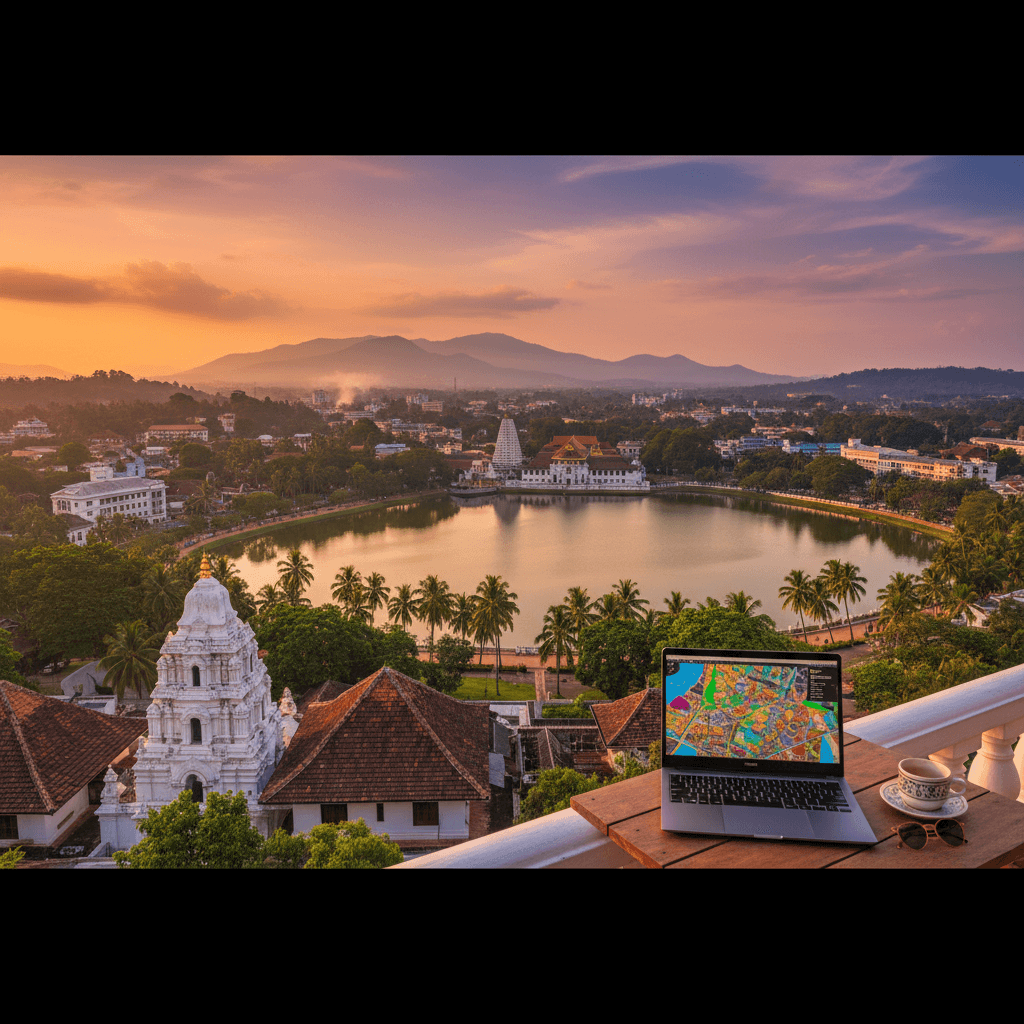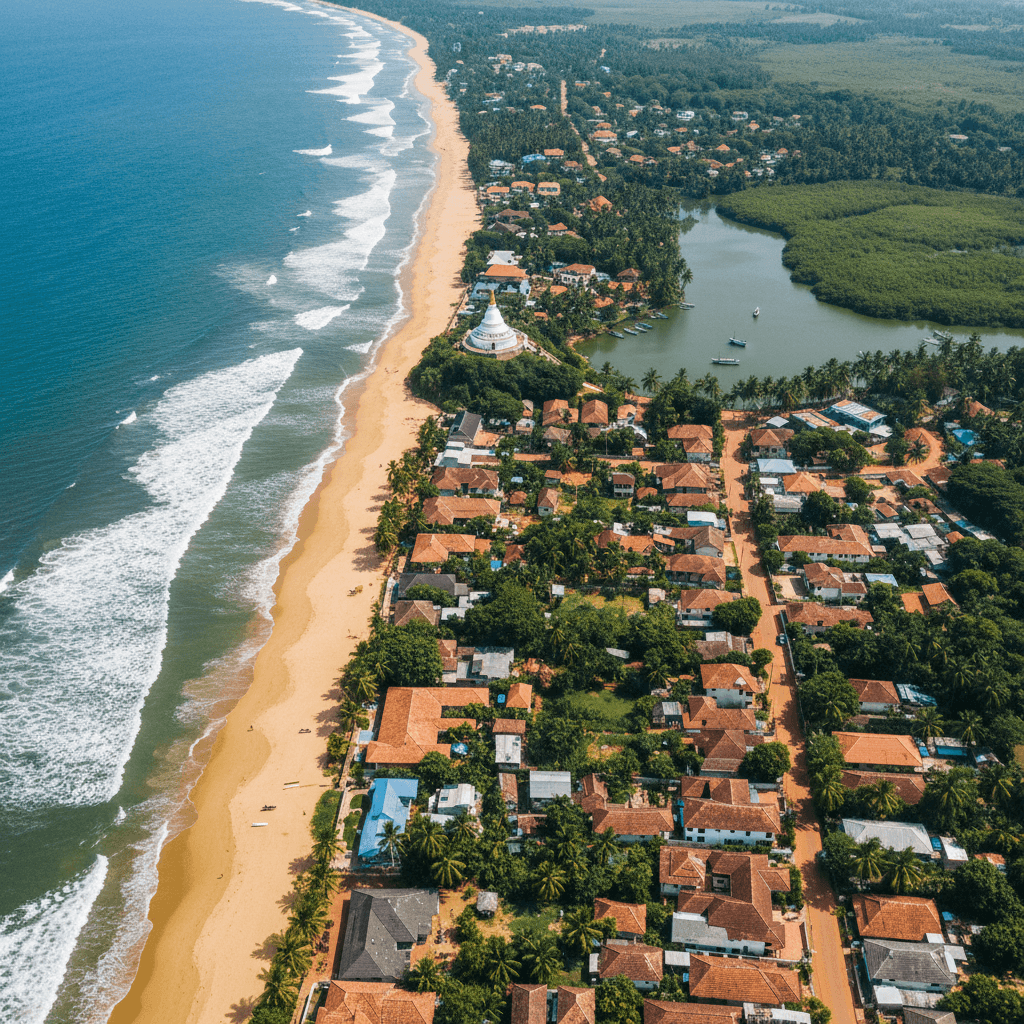
Arugam Bay
🇱🇰 Sri Lanka
Arugam Bay feels like a surf town that never quite learned how to hurry. Mornings start with tuk-tuks rattling past guesthouses, coconut smoke in the air and the sound of waves breaking a few hundred meters away, then the whole place settles into a sleepy rhythm that suits remote work better than it should. May to September is the real season here, when the south and west coasts are getting soaked and the right-hand point breaks are firing.
It’s laid-back, cheap and a little rough around the edges. The town strip is small, the beach is close and most nomads end up orbiting the same cafes, coworking spots and bars, so you’ll bump into the same faces over and over, which, surprisingly, helps if you’re staying a while. The downside is obvious too, humidity that sticks to your skin, patchy power, inconsistent English and hospitals that won’t make you feel relaxed.
Money-wise, it’s still one of the easier places to stretch a budget. A decent month for a nomad usually lands around $1,400 to $1,600, though you can keep it lower if you don’t mind a basic room and a lot of rice and curry. Cards barely matter, cash does and dinner can be laughably cheap if you stick to local spots, but the nicer beach grills add up fast.
- Budget stay: $300 to $455 for a simple studio or room
- Mid-range stay: $455 to $600 for an ensuite with AC
- Daily food: street curries around $2 to $3, mid-range meals $6 to $16
- Beer: about $4
- Coworking: around $79 a month at places like Nomads Coworking Space
The vibe splits neatly by area. Main Beach and the town strip are the social center, noisy at night and packed in peak surf season, while Pasarichenai is calmer and a bit less tourist-scrambled. Head north toward Peanut Farm or Whiskey Point if you’re here for waves and don’t mind rough roads, fewer services and a proper end-of-the-world feel.
- Main Beach: best for surfers, solo travelers and nightlife
- Pasarichenai: quieter, cheaper, better if you want space
- Peanut Farm, Whiskey Point: remote, scenic, wave-focused
Internet is decent enough for calls, honestly, but not glamorous, so a Hutch SIM is smart backup and Mobitel works as a second option. Safety is generally fine in the center, though solo women should be more selective at night and you shouldn’t wander isolated beaches after dark. The place can feel scruffy and sweaty, but if you like surf, cheap eats and a social scene that still feels local, Arugam Bay gets under your skin pretty quickly.
Arugam Bay looks cheap on paper, then the little costs start creeping in. A solo nomad usually lands around $1,400 to $1,600 a month and if you’re careful, you can push it lower. Not cheap. Still, it’s cheaper than most surf towns with this much name recognition.
Rent swings hard depending on how close you want to be to Main Beach and the strip. Town is noisy, with tuk-tuks buzzing past, music drifting from beach bars and scooters coughing up dust at sunset, but it’s where you’ll find the most practical long-stay setups. Pasarichenai runs quieter and a bit cheaper, while Peanut Farm and Whiskey Point feel more remote and less convenient.
Typical Monthly Costs
- Budget stay: $900 to $1,200, usually a basic studio or simple room, local food and cheap transport
- Mid-range stay: $1,400 to $1,600, often an ensuite with AC, more Western meals and the odd coworking pass
- Comfortable stay: $1,900+, if you want beachfront digs, regular restaurant dinners and private transfers
Food is one of the better deals here, though tourists still get charged more than locals. A curry and rice plate can run about LKR 800 to 1,000, dinner often lands near $2 and a decent meal at a beach cafe might be $6 to $16, depending on whether you’re ordering rice, seafood or imported pizza. Beer sits around $4, coffee is often free if you’re working from the right cafe and honestly, that little detail helps.
Daily Spending
- Street food: $2 to $3 for curry and rice
- Mid-range meal: $6 to $16 for a fuller dinner
- Beer: About $4
- SIM data: About $3.50 for a tourist pack with 22GB
- Tuk-tuk: $1 to $2 for a short ride
Transport stays manageable if you keep it local, but scooters are the real expense once you start moving around the bay and they’re worth it because walking in the humidity gets old fast. Scooter rental is around $10 a day, coworking hot desks hover near $79 a month and cash matters because cards are still patchy for foreigners, which, surprisingly, catches people off guard every season.
My take? Don’t come here expecting ultra-low-budget bliss, because it’s only cheap if you eat local, skip beachfront vanity pricing and accept that power cuts, wet laundry and a warm room with a whirring fan are part of the deal. That’s the tradeoff. For surf-town living with decent internet, laid-back social nights and enough infrastructure to work, Arugam Bay still feels fairly priced.
Arugam Bay is tiny, so “neighborhood” really means a few strips and pockets, each with a very different rhythm. Pick wrong and you’re hearing tuk-tuks, bass from beach bars and drunk surfers shouting at 1 a.m.; pick right and you get sea breeze, easier sleeps and a five-minute walk to coffee. Cash flow matters too.
Nomads
Most nomads should base themselves in Arugam Bay Town or Main Beach. You’ll get the strongest mix of coworking, cafes, surf checks and social energy, plus the best shot at decent WiFi, though the internet can still wobble when everyone’s online and the power flickers.
- Rent: About $455 to $600 for a decent ensuite with AC
- Food: Curry rice around $2.50 to $3, Western meals $6 to $16
- Vibe: Busy, social, noisy, good for meeting people
- Best spots: Nomads Coworking Space, Wave Hunters, the cafes near the main strip
Honestly, this is where the town feels most alive. You can hear scooters buzzing past, beach bars playing reggae, and, weirdly, someone always dragging a surfboard down the road at sunrise.
Expats
Pasarichenai Beach suits expats who want more breathing room and less of the backpacker churn. It’s quieter, cheaper and a bit more local in feel, but you’ll trade convenience for longer walks, fewer shops and a tuk-tuk ride whenever you need dinner or a SIM top-up.
- Rent: Roughly $300 to $455 for simpler long-term places
- Food: Street meals stay cheap, Western options are farther away
- Vibe: Calm, sandy, slower, better for longer stays
- Trade-off: Fewer services, less nightlife, more humidity and mosquitoes
It’s a good choice if you want mornings with birds, salty air and fewer loud nights, though the road access can be annoying after rain. The town center’s still close enough for supplies, just not close enough to be lazy about it.
Families
Families don’t really have a standout base here and that’s the honest truth. Arugam Bay Town is too loud, the beach road gets chaotic in high season and there’s not much kid-friendly infrastructure, so most parents end up compromising hard.
- Best bet: A quieter stay near Pasarichenai, away from bars
- Downside: Limited hospitals, uneven roads and little for kids to do
- Reality: You’ll need private transport more often than you’d like
If you’re coming with children, keep expectations low and choose a place with AC, backup power and a kitchen. The heat clings to you, the sand gets everywhere and hospital access isn’t comforting if anyone gets sick.
Solo Travelers
Solo travelers usually do best in the main town strip, especially if they want easy company, surf buddies and nightlife without planning every move. It’s the simplest base for meeting people, but keep your wits about you after dark, especially on quieter side roads and isolated stretches of beach.
- Best fit: Main Beach for social energy and walkability
- Safety: Stick to lit areas at night, especially if you’re alone
- Transport: Use PickMe or a tuk-tuk, then scooter only if you’re confident
The upside is obvious, you can step out for dinner, a beer or a surf check without thinking twice. The downside is that peace gets scarce, so if you’re a light sleeper, bring earplugs and don’t book right above the loudest bar.
Arugam Bay’s internet is decent, not dazzling. If you’re sending files, running calls or living inside Slack and Gmail, you’ll probably be fine, but don’t expect the kind of steady, fiber-fast setup you’d get in a bigger Asian nomad hub. Average speeds hover around 5 to 10 Mbps, with better pockets in a few coworking spots and beach cafes and honestly that’s the deal here, surf-town tradeoffs included.
Power cuts happen, routers get moody and peak-season crowds can make connections wobble. Keep a SIM on hand, because when the WiFi stutters, the fan’s whining and the humidity’s clinging to your shirt, you’ll want a backup fast. Most nomads run Hutch first, Mobitel second and that setup usually saves the day.
Coworking Spots
- Wave Hunters or Arugam Bay Coworking Center at Siam View Hotel: These are the primary spaces in town, with reliable WiFi reported up to 200+ Mbps in recent reviews, AC and a fridge, which, surprisingly, makes a huge difference when the air feels like soup.
- Wave Hunters: Cheap hourly or day rates, reliable WiFi and a built-in nomad crowd, though it doubles as a hostel, so expect a bit of foot traffic and sandy chatter.
- Cafes: Cafes like Kaffi Arugam Bay or Mellow Cafe offer free WiFi with coffee and the coworking-style hot desk scene runs around $79 a month if you want a more stable routine.
If you’re here for a month or more, a coworking membership makes sense, because hunting for a quiet table every day gets old fast. The beach is lovely, sure, but the salt air, scooter exhaust and reggae from nearby bars don’t exactly help you focus during a client call.
Getting Connected
- Best SIM: Hutch, with cheap unlimited-style data and the best overall coverage around town.
- Backup SIM: Mobitel, worth carrying when Hutch gets patchy.
- Tourist data pack: Around LKR 1200 (~$4) for 30-35GB tourist packs from Hutch.
Buy SIMs at local shops or supermarkets and bring cash, because cards are still hit-or-miss for foreigners. The good news is that Arugam Bay is compact, so if your connection drops at your guesthouse, you can usually walk ten minutes to somewhere better, then keep working with a cold coffee and a slightly damp notebook.
My take, skip the dreamy “work from anywhere” fantasy and plan for friction. Arugam Bay works best for nomads who don’t mind a little chaos, want surf before sunrise and can live with internet that’s good enough most days, then annoyingly average on the days that matter.
Safety & Healthcare
Arugam Bay feels pretty relaxed in the daytime and most people are looking for surf, breakfast or a scooter rental, not trouble. Still, keep your guard up after dark, especially on isolated stretches of beach, because that’s when petty scams, drunken nonsense and the odd bad decision show up. Not dangerous. Just careless.
Solo women tend to get a less easy ride here than couples or surf crews and LGBTQ+ travelers can feel the social limits too, honestly, especially once the beach bars get louder and the crowd gets looser. The town’s small, which helps, but it also means everyone notices everything and that can feel a bit sticky when you’re walking home past honking tuk-tuks and music thumping out of half-open bars.
- Night safety: Skip lonely beach walks after dark, stick to lit roads and busy stretches.
- Police: Emergency number is 119, keep it saved.
- Scams: Small overcharges happen and turn out, haggling politely usually works better than getting annoyed.
Healthcare is the weak point here. Local pharmacies are easy to find for basic meds, sunscreen and stomach stuff, but the town’s medical care is pretty basic, so for anything serious you’ll want Batticaloa, about an hour away, where the hospitals are better, though still far from flashy. That’s the trade-off. Cheap surf town, thin medical backup.
If you’re prone to stomach bugs, heat rash, cuts from reef breaks or the classic scooter scrape, deal with it fast, because heat and humidity make everything feel worse and a tiny wound can get angry quickly in this climate. The air hangs heavy, salt sticks to your skin and the pharmacy fan just pushes warm air around, which, surprisingly, feels more comforting than it should.
- Pharmacies: Common in town, good for basic medicine and first aid.
- Serious care: Head to Batticaloa for better treatment.
- Emergency: Use 119, then get transport lined up fast.
Pack a small medical kit before you arrive, because that stuff saves hassle in a place where power cuts happen and shops can be hit-or-miss. Bring antiseptic, rehydration salts, antihistamines and whatever prescription meds you need, then keep them in a dry bag so the humidity doesn’t turn your packing cubes into a damp mess.
Arugam Bay is tiny enough that you can cross the main strip on foot and most days that’s the smartest move. The beach, cafes, guesthouses and little shops sit close together, so you’ll hear scooters buzzing past, tuk-tuks honking for space, and, if you’re near a beach bar at dusk, music drifting over the salt air.
Walking works well in town and along Main Beach, but the heat hits hard, honestly and the sand can feel like a frying pan after midday. For anything beyond the center, especially if you’re heading to Peanut Farm, Whiskey Point or Pasarichenai, rent a scooter or grab a tuk-tuk, because the roads get rough fast and you’ll sweat through your shirt before you’re halfway there.
Scooters
- Best for: Surf runs, grocery trips and beach hopping
- Price: Around $10 a day
- Where: Baywheels Official or local scooter rentals
- Watch out for: Potholes, loose sand and the odd cow wandering into the road
Scooters are the move for most nomads, because they give you freedom and save you from waiting around for rides, though the roads can be sketchy after rain and the night riding feels a bit grim. Wear a helmet, keep your phone charged and don’t assume the short cut on the map is actually drivable.
Tuk-tuks and taxis
- Best for: Short hops, late nights, airport transfers
- Local rides: Usually $1 to $2
- Taxi app: PickMe, works for tuk-tuks, cars and vans
- Tip: Agree on the fare first if you’re hailing one off the street
Tuk-tuks are cheap and easy and they’re the right choice when you’re tired, carrying a board or don’t want to deal with the heat, which, surprisingly, can make even a 10-minute ride feel like a workout. PickMe is the least annoying option when it’s available, though in Arugam Bay you’ll still end up flagging someone down plenty of the time.
Getting in and out
- From Mattala Airport: Roughly 1.5 hours
- From Colombo: Long haul, usually pre-booked transfer or app-based taxi
- Budget reality: Around $50 to $100 for private transfers
For longer rides, book ahead if you can, because drivers around peak season get busy and the good ones fill up fast. Buses are the cheapest option, but they’re slow, crowded and full of baggage racks, plastic seats, diesel fumes and the occasional blast of Sri Lankan pop from the front.
Arugam Bay runs on a mix of Sinhala, Tamil and just enough English to get you by in the tourist strip. Outside the beach cafes and surf shops, people often switch fast, so don’t expect long conversations unless you’ve got a local friend or a patient host. English is patchy, honestly and that can make simple things like paying a tuk-tuk driver or asking for laundry feel more awkward than they should.
Most nomads keep Google Translate open and use it for prices, directions and basic questions. It works. Good enough, anyway. If you’re trying to bargain, the phrase “Podda Adu Karanna” helps and a smile does half the work, though you’ll still want to speak slowly because a lot gets lost in the noise of scooters, barking dogs and the sea hitting the sand.
Useful Local Phrases
- Podda Adu Karanna: Please reduce the price.
- Suba Gamnak: Safe journey.
- Budu Saranai: A respectful blessing, often used when parting.
Pronunciation matters more than perfect grammar, weirdly. People usually appreciate the effort and if you butcher a phrase, they’ll often laugh, correct you and move on without making a scene. Cashiers, tuk-tuk drivers and guesthouse staff tend to be the easiest to read, while some shop owners speak almost no English at all, so keep your sentences short and your hands ready to point.
For daily life, simple English plus gestures gets you far, but don’t be surprised when a request has to be repeated twice, then clarified with a number written on paper. The rhythm here is slow, the humidity clings to your skin and conversations often happen with fans whirring overhead, rain tapping on tin roofs and a kettle hissing in the background. That pace can be charming, but it can also be annoying if you’re in a rush.
One more thing, be polite when you ask for help. Politeness goes a long way. Locals respond better to calm, friendly English than to fast, pushy questions and that’s true in town, at the market and when you’re trying to book a scooter or work out a breakfast order at a beach cafe.
Weather & Best Time to Visit
Arugam Bay runs hot, sticky and slow. Most days sit around 30 to 34°C and the humidity clings to your skin the second you step outside, so even a short walk to the beach can leave you damp, salty and slightly annoyed.
The sweet spot is May through September, when the east coast stays dry and the surf breaks at Main Point, Peanut Farm and Whiskey Point come alive. That’s also when the town fills with surfers and remote workers, so expect more traffic, louder beach bars and higher room rates, especially around the main strip.
Best Time to Go
- May to September: Best weather, best waves and the most reliable stretch for nomads who want beach days and decent social energy.
- October to March: Rainy season, with heavier downpours, rougher water and plenty of grey skies, honestly it can feel sleepy and a bit trapped indoors.
- November: Usually the wettest month, so if you hate monsoon rain hammering tin roofs at 2 a.m., skip it.
Peak season has its tradeoffs. The cafes get packed, tuk-tuks honk nonstop and finding a quiet table near the beach can turn into a small battle, though places like Nomads Coworking Space or Wave Hunters still make workdays manageable if you want air-con and better WiFi.
If you’re after a calmer stay, late May or early September is the move. You’ll still get dry weather and surf, but with a little less chaos and weirdly, that makes the town feel more like itself, less like a loud backpacker relay race.
What the Weather Feels Like
- Heat: Warm year-round, with midday sun that can feel brutal on the sand and roads.
- Humidity: High enough that your clothes stay tacky and your laptop fan will probably whirr all afternoon.
- Rain: In the wet months, showers come hard and fast, then the place smells like wet earth, curry smoke and salt again.
For remote work, the dry season wins, because power cuts and sweaty rooms are easier to tolerate when the sea is calm and you can actually sit outside without getting drenched. Bring a backup SIM, a good hat and patience, because the weather here doesn’t really care about your schedule.
Arugam Bay runs on a slower rhythm than most beach towns, which sounds dreamy until you try to get work done through a sweaty afternoon blackout. The good news is that town is compact, prices stay fairly sane and most nomads settle into a simple routine of surf, work, eat, repeat. Not fancy. It works.
Money and cash: bring more cash than you think you’ll need. ATMs are around town, but they can be unreliable and cards still get awkward fast once you leave bigger restaurants or hotels; cash is king here, honestly and you’ll want small notes for tuk-tuks, curries and beachside beer.
- Monthly budget: around $900 to $1,200 if you keep it lean, $1,400 to $1,600 for a comfortable nomad setup.
- Rent: long-term rooms usually land around $300 to $600, with beachfront places climbing much higher.
- Food: street rice and curry can be $2 to $3, while dinner at a nicer spot often sits around $6 to $20.
- Transport: tuk-tuks are cheap, scooters run about $10 a day and PickMe is the app to install if you want less haggling.
Staying Connected
WiFi in Arugam Bay is, weirdly, good enough most days and annoying enough on others. Coworking spaces like Nomads Coworking Space and Wave Hunters are the safest bet for calls, while Hutch and Mobitel SIMs give you a decent backup, especially when the power flickers at the worst possible time.
- SIMs: buy them in town, tourist data packs are cheap and Hutch usually gets the nod for coverage.
- Power cuts: keep your laptop charged and don’t trust one source.
- Cafes: some offer free WiFi with coffee, which, surprisingly, can be enough for light work.
Getting Around
You can walk most of town, but if you want Peanut Farm, Whiskey Point or Kumana, rent a scooter. The roads get rough fast, the dust sticks to your skin and tuk-tuk drivers know it, so they’ll happily charge for the convenience.
- Scooters: rent from places like Baywheels Official or Arugam Bay Scooter Rental.
- Safety: avoid isolated beaches after dark and keep an eye on your stuff in peak season crowds.
- Health: local pharmacies are easy to find, but decent hospitals are far away, so serious issues mean a trip to Batticaloa.
Local Etiquette
Dress modestly when you’re off the beach, especially near temples or local neighborhoods and don’t haggle like a jerk. People are generally warm, but English can be patchy, so a little patience goes a long way and a few Sinhala phrases help more than you’d expect.
No drugs. Seriously. The beach bonfires, reggae and late-night drinks can make the place feel loose, but the rules are still the rules and the fines or trouble aren’t worth it.
Need visa and immigration info for Sri Lanka?
🇱🇰 View Sri Lanka Country GuideHidden Gem
Worth the effort
Monthly Budget Estimates
More cities in Sri Lanka
Negombo
🇱🇰 Sri Lanka
Hikkaduwa
🇱🇰 Sri Lanka
Galle
🇱🇰 Sri Lanka