Armenia
🇨🇴 Colombia
The Coffee Capital Reset
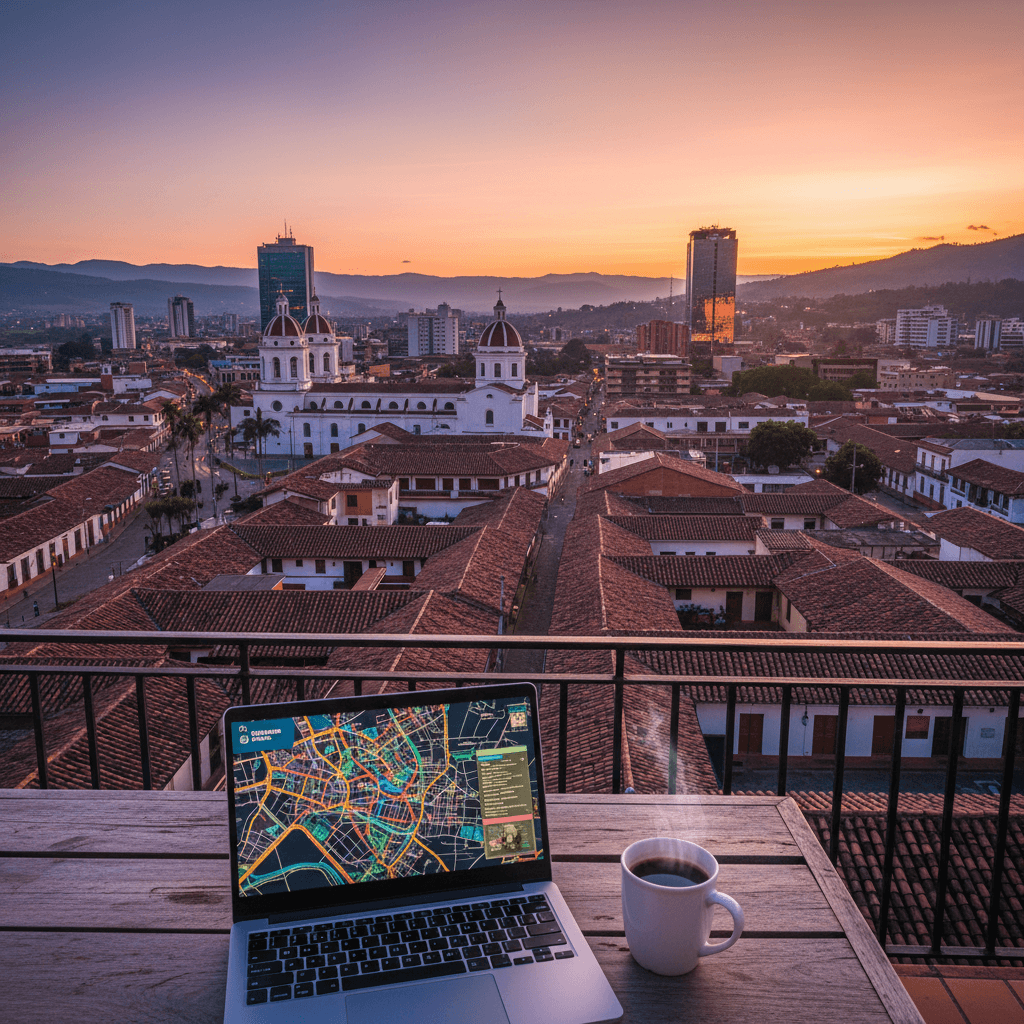
If you are looking for the high energy of Medellin or the coastal heat of Cartagena, Armenia will surprise you. Located in the heart of Colombia's Coffee Triangle, this city feels less like a tech hub and more like a gateway to a slower, greener way of life. It is a place where the air smells of roasted beans and the skyline is dominated by the green peaks of the Cordillera Central rather than skyscrapers.
Most nomads find Armenia is not a place to build a long term base, but rather a perfect spot for a one to four week reset. The vibe is family oriented and quiet, with a pace of life that forces you to unplug. You will trade the late night rooftop parties for morning hikes through wax palm forests and afternoon "tinto" sessions at local fincas. It is the kind of city where people still greet you on the street, and the "eternal spring" weather keeps things a comfortable 18 to 25 degrees Celsius year round.
Cost of Living Breakdown
Your dollar goes significantly further here than in Colombia's major metros. Expect costs to be 30 to 50 percent lower than Medellin. For a mid range nomad lifestyle, a budget of $1,200 to $1,800 USD monthly allows for a very comfortable life.
- Budget ($800 to $1,200): Focus on city center studios for $200 to $350. You will eat plenty of $3 street arepas and use the local bus system for $0.50 a ride.
- Mid Range ($1,200 to $1,800): This gets you a nice 1BR near the northern residential areas for $350 to $500. You can eat out at mid range spots for $10 and use Uber or DiDi for most trips.
- Comfortable ($1,800+): You will stay in furnished apartments with mountain views for $500+ and dine at the city's best steakhouses for $20 a plate.
Where to Plant Your Laptop
Armenia does not have established nomad enclaves, so choosing the right neighborhood is about balancing safety with access to amenities.
- Centro (Downtown): This is the walkable heart of the city. It is affordable, with studios around $250, but it gets noisy and you need to watch your pockets after dark.
- Barrio San Martin: A favorite for expats and families. It is residential, green, and quiet. Expect to pay $300 to $450 for a solid apartment.
- Judas Maccabeus: This is the upscale choice. It is near the Recinto del Pensamiento park and offers a peaceful, nature focused environment. Rents start around $400, though it is further from the main bus lines.
The Infrastructure Reality Check
Working from Armenia requires a bit of planning. While the city center offers speeds up to 100 Mbps via providers like Claro and Tigo, rural areas and coffee farms often dip to 10 or 20 Mbps. If you have high stakes Zoom calls, stay close to the city or use local cafes with reliable WiFi for about $10 a day.
For serious deep work sessions, some travelers take the 30 minute bus to nearby Pereira to use local coworking spaces. For mobile data, pick up a local SIM from WOM or use a Holafly eSIM for around $20 to ensure you stay connected during weekend trips to Salento or the Cocora Valley.
Safety and Social Life
Safety has improved, but Armenia still requires "no dar papaya" (don't make yourself a target). Petty theft is the main concern in Centro and the southern outskirts. Stick to ride hailing apps like Uber or DiDi at night, which usually cost between $3 and $7. Healthcare is reliable at Clinica de Armenia, though you will want a translation app handy as English proficiency is low outside of the main tourist hotels.
Socially, the city is tame. You won't find a massive digital nomad meetup scene here. Instead, you will meet people at Cafe Quindio or during weekend coffee tours. Most nomads join the "Digital Nomads Colombia" Facebook groups to find peers in the region. It is a Spanish dominant environment, so learning the basics is essential for anything beyond a simple transaction. The reward for that effort is an authentic Colombian experience that the more "gentrified" cities have started to lose.
The Price of Coffee Country Living
Living in Armenia is a massive bargain compared to the digital nomad magnets of Medellin or Bogota. You are looking at costs roughly 30% to 50% lower than what you would pay in El Poblado. Because Armenia is a local hub rather than a curated nomad bubble, your dollars stretch incredibly far, especially if you lean into the local lifestyle.
For a solo nomad, a monthly budget of $1,200 to $1,800 buys a very comfortable life. If you are on a shoestring, you can scrape by on $800 to $1,000, but you will be living in more modest local neighborhoods and sticking to $3 set lunches (almuerzos ejecutivos). Most remote workers find the sweet spot around $1,500, which covers a modern furnished apartment, plenty of dining out, and weekend trips to Salento or the Cocora Valley.
Monthly Cost Breakdown
- Budget Tier ($800 to $1,200): Expect to pay $200 to $350 for a studio in the city center. You will eat plenty of $2 street arepas and use the local bus system for $0.50 a ride.
- Mid-Range Tier ($1,200 to $1,800): This gets you a nice 1-bedroom near the north side for $350 to $500. You can afford frequent Uber rides (usually $3 to $7) and mid-range dinners that cost about $10 to $15.
- Comfortable Tier ($1,800+): You will be in the best buildings in areas like Judas Maccabeus with rents over $500. You can eat at upscale spots like Altomayo every night and still have plenty left for private coffee tours.
Housing and Neighborhoods
Armenia does not have a defined "nomad district" yet, so where you stay depends on your tolerance for noise and your need for green space. Most travelers stick to the north or the city center for convenience.
Centro (Downtown)
- Rent: $250 to $350 for a basic studio.
- Vibe: Busy, loud, and very walkable. It is great for being near markets and hostels, but petty theft is a concern after dark.
Barrio San Martin
- Rent: $300 to $450 for a 1-bedroom.
- Vibe: Residential and family friendly. It is much quieter than downtown and has a more authentic, local feel.
Judas Maccabeus
- Rent: $400 to $600+ for modern builds.
- Vibe: This is the upscale choice. It is near the Recinto del Pensamiento park and offers better air quality and views, though you will rely more on taxis to get around.
Connectivity and Work Spaces
Internet in Armenia is usable but not world class. In the city, you will get 20 to 100 Mbps via providers like Claro or Tigo. If you head into the rural coffee fincas, expect those speeds to drop to a sluggish 10 Mbps. It is enough for emails, but maybe not for 4K video editing.
Coworking options are thin on the ground. Selina Armenia is the go-to for about $10 a day or $100 a month. If you need a more corporate environment, many nomads take the 30-minute bus to Pereira to use the WeWork there for about $150 a month. For a casual afternoon, Cafe Quindio or Juan Valdez offer reliable free WiFi and excellent beans.
Visa Requirements
If you plan to stay long term, the Colombia Digital Nomad Visa (Type V) is your best bet for 2025 and 2026. You will need to prove a foreign income of roughly $900 to $1,000 USD per month. The process is relatively straightforward and allows you to stay for up to two years. Just remember that you cannot work for Colombian companies on this visa. Most nomads find the 90-day tourist stamp (extendable to 180 days) is plenty for a seasonal stay in the coffee region.
Practical Expenses
- Groceries: A weekly shop for one is about $30 to $50 at local markets like Galeria.
- Mobile Data: A 30GB SIM card from WOM or Claro costs about $15.
- Coffee: A world class pour-over at a specialty cafe is usually $2 to $4.
- Gym: A monthly pass at a local fitness center runs $25 to $40.
For Solo Nomads and Short-Term Remote Workers
If you're landing in Armenia for a few weeks to soak up the coffee culture, Centro (Downtown) is the most practical choice. It's the functional heart of the city where you can walk to local markets, find the most affordable hostels, and grab a $4 bandeja paisa for lunch. It feels like real Colombia; unpolished and busy. You'll find plenty of cafes with decent WiFi, like the local favorite Café Quindío, where a farm-fresh brew and a workspace will set you back about $5 to $10.
The trade-off here is the noise and a need for higher situational awareness. While it's great for keeping your monthly rent around $250 to $350 for a studio, solo travelers should stick to well-lit streets at night. For work, most nomads eventually migrate to Selina Armenia. It's one of the few spots with a dedicated coworking setup for about $10 a day or $100 a month. If you need serious, high-speed fiber for video calls, many people take the 30-minute bus to Pereira to use coworking spaces there.
- Monthly Rent: $250 to $400
- Vibe: High energy, walkable, local
- Top Perk: Cheapest living costs and proximity to regional bus transport
For Expats and Long-Term Residents
Barrio San Martín is the go-to for those planning to stay a few months or longer. It strikes a balance between being a residential neighborhood and having enough amenities to stay comfortable. It’s significantly greener than Centro and feels much more relaxed. You’ll find 1-bedroom apartments here for $350 to $500, often with better security and more modern finishes.
Expats recommend this area because it feels like a community. You aren't surrounded by tourists, but you're close enough to the action to not feel isolated. The nightlife is tame, but you're a short $4 Uber ride away from the bars in the center. It’s the kind of place where you get to know the person running the local bakery.
- Monthly Rent: $350 to $500
- Vibe: Quiet, residential, authentic
- Top Perk: A sense of safety and "normal" life away from the city chaos
For Families and Nature Lovers
If you have a higher budget and want peace, Judas Maccabeus is the premier choice. It’s located near the Recinto del Pensamiento park, offering a much cooler, leafier environment. It feels less like a city and more like a retreat. Families often choose this area for the air quality and the access to green spaces where kids can actually run around.
The downside is the "isolation." You won't find many local buses passing through here, so you'll rely on apps like Uber or DiDi for everything. Expect to pay $500 to $800 for a furnished place with great views. It’s the best spot for those who want to be 20 minutes away from a coffee farm tour or a hike in the Cocora Valley.
- Monthly Rent: $500 to $800+
- Vibe: Upscale, lush, secluded
- Top Perk: Best air quality and quietest nights in the city
Strategic Neighborhood Tips
While Armenia is generally safer than it was a decade ago, travelers often say it’s best to avoid the southern outskirts entirely, especially after dark. If you’re here on the Digital Nomad Visa, which requires proof of roughly $900 to $1,000 in monthly income, your dollar will go incredibly far here compared to Medellín.
Most people find that Armenia works best as a "reset" city. You stay in San Martín or Judas Maccabeus to enjoy the 18 to 25°C weather and the nature, but you keep your heavy data-uploading tasks for the days you visit Pereira. If you're looking for a furnished apartment, check Facebook Marketplace or local agencies like Century 21 rather than just sticking to Airbnb, as you can often negotiate a much better "local" rate for a three-month stay.
Connectivity Reality Check
Armenia isn't Medellin. While the city is the heart of the coffee trade, the digital infrastructure is still catching up. In the city center, you can expect fiber speeds between 50 and 100 Mbps through providers like Claro or Tigo. However, if you venture into the lush fincas on the outskirts, that speed often drops to a shaky 10 to 20 Mbps. It's enough for emails, but you'll want to keep your camera off during Zoom calls.
Most nomads treat Armenia as a short-term "deep work" retreat or a base for exploring Salento rather than a permanent hub. If your job requires heavy data lifting or 24/7 reliability, always have a backup. Local SIM cards are cheap and effective. Grab a Claro or WOM card at the airport or a local shop for about $15, which usually gets you around 30GB of data. If you prefer the convenience of an eSIM, Holafly is the go-to for travelers, though it's pricier at roughly $20 for a similar data cap.
Coworking Spaces
The coworking scene here is thin. You won't find a dozen options on every corner, so most remote workers end up nesting in cafes or high-end hotel lobbies. There is one reliable standout if you need a dedicated desk environment.
- Selina Armenia: This is the undisputed hub for the few nomads in town. It costs about $10 for a day pass or $100 for a monthly hot desk. The vibe is social, the coffee is excellent, and the WiFi is the most stable in the city.
Work-Friendly Cafes
Since dedicated offices are scarce, the local cafe culture picks up the slack. Armenia takes its coffee seriously, so the quality of your "office" beverage will be top-tier. Most spots are happy to let you linger for a few hours if you keep the lattes coming.
- Café Quindío: This is the local heavyweight. The locations in the north of the city are generally quieter and have reliable WiFi. Expect to pay $3 to $5 for a specialty brew and a snack.
- Juan Valdez (Portal del Quindío): It's a chain, but it's consistent. The connection is usually fast enough for basic tasks, and there are plenty of power outlets if you arrive early.
Visa Requirements for 2025-2026
If you're planning to stay longer than a standard tourist entry, Colombia's Digital Nomad Visa (Type V) is one of the most accessible in South America. It allows you to live and work remotely in Armenia for up to two years. To qualify, you'll need to prove a monthly income of roughly $900 to $1,000 USD from sources outside of Colombia. You also need to show proof of health insurance with maternity and repatriation coverage. The application process is mostly online, making it a favorite for expats looking for a low-cost, high-quality lifestyle in the Coffee Region.
Safety Essentials
Armenia is generally more laid back than the high energy streets of Medellín or Bogotá, but you still need to keep your wits about you. Petty crime, specifically phone snatching and pickpocketing, is the most common headache for travelers. Locals use the phrase "no dar papaya," which basically means don't give anyone an easy opportunity to take your stuff. Keep your phone in your pocket while walking and avoid wearing flashy jewelry in the city center.
The Centro area is perfectly fine during the day, but it gets dicey after dark. Most expats recommend sticking to the northern neighborhoods or residential spots like San Martín once the sun goes down. Petty theft remains a concern in the Quindío region, so stick to calling an Uber or DiDi instead of hailing a taxi on the street at night. Avoid the southern outskirts entirely, as these areas lack the police presence found in the tourist and business corridors.
- Emergency Number: Dial 123 for police, fire, or ambulance services.
- Personal Safety: Use ride-hailing apps rather than street hails to ensure your trip is GPS tracked.
- Walking: Stick to well lit, populated streets. If a street looks empty, it's empty for a reason.
Healthcare and Medical Services
If you get sick, you're in decent hands. Armenia has several reliable private clinics that handle everything from stomach bugs to more serious emergencies. Clínica de Armenia is the go to facility for most expats. While the medical care is high quality, don't expect the front desk or even all the doctors to speak fluent English. Having a translation app ready on your phone will save you a lot of stress during a consultation.
For minor issues, Farmatodo is the gold standard for pharmacies. They are often open 24 hours and stock everything from basic antibiotics to familiar over the counter brands. You can find these pharmacies scattered throughout the city, especially near the larger shopping centers.
Insurance and Costs
Digital nomads staying on the Type V Visa are required to have health insurance that covers them within Colombia. Even if you're just passing through for a few weeks, travelers often say that private travel insurance is a must. Out of pocket costs for a standard doctor's visit usually run between $30 and $50 USD, which is affordable, but specialized care or emergency surgeries can climb quickly.
- Public Healthcare (EPS): This is available to those with a residency visa, but the wait times are notoriously long. Most nomads stick to private care for speed.
- Pharmacies: Look for the "Droguería" sign. Many pharmacists can give basic medical advice and even administer injections if you have a prescription.
- Water Safety: While tap water in Armenia is technically treated and many locals drink it, most nomads prefer bottled water or a high quality filter to avoid any risk of "traveler's tummy."
Staying Healthy in the Coffee Region
The biggest health risk you'll likely face isn't a tropical disease, but the sun and the mosquitoes. Armenia sits at a high elevation, meaning the sun is much stronger than it feels. Wear SPF even on cloudy days. If you're heading out to the coffee fincas or hiking the Cocora Valley, bring plenty of repellent. While malaria isn't a major concern in the city, Zika and Dengue can occasionally pop up in the surrounding rural lowlands.
Expats recommend keeping a small "kit" with you: rehydration salts for the humidity, sunblock, and a copy of your insurance card. If you have a pre-existing condition, carry a note in Spanish explaining it, as it helps first responders in a pinch.
Getting Around Armenia
Armenia is a compact city where the rhythm of life is dictated by the coffee harvest rather than a frantic rush hour. While it lacks the massive metro systems of Medellin or Bogota, its manageable size makes it easy to navigate once you understand the local logic. It is a city where walking is often the best way to soak in the mountain air, provided you stay within the safer central corridors.
Public Buses (Colectivos)
The backbone of local transit is the fleet of small, colorful buses that crisscross the city. They are incredibly affordable, usually costing around $0.50 to $1.00 per ride. You do not need a special card; just hop on and pay the driver in cash. They are frequent and will get you to most residential areas like Barrio San Martin or the busier shopping districts. However, they can get cramped during peak hours, and routes aren't always clearly marked on digital maps, so asking the driver for your stop is standard practice.
Ride-Hailing and Taxis
For most nomads, Uber and DiDi are the go-to options for reliability and safety, especially after dark. A typical cross-town trip rarely exceeds $3 to $7. While technically operating in a legal gray area in Colombia, these apps are widely used and generally preferred over hailing yellow taxis on the street. If you do take a traditional taxi, ensure they use the meter or agree on a price before the wheels move. Most drivers are friendly but few speak English, so having your destination pulled up on Google Maps is a lifesaver.
Regional Travel and Intercity Buses
Since Armenia serves as the gateway to the Quindio department, you will likely spend time at the Terminal de Transportes de Armenia. This is where you catch the smaller vans (Willys) to Salento or the Cocora Valley for about $2 to $5. For longer hauls, companies like Flota Magdalena run comfortable, air-conditioned coaches to Medellin or Bogota. Expect to pay around $20 for a six-hour journey to Medellin. These buses are a great way to see the stunning, winding mountain passes of the Andes.
Walking and Micromobility
The city center is highly walkable, though the terrain is hilly. You will find that many expats and nomads prefer staying in the northern parts of the city or near Judas Maccabeus, where the streets feel wider and more pedestrian-friendly. Some hostels offer bike or scooter rentals for roughly $5 a day, which is a fun way to explore the outskirts, but stay alert as dedicated bike lanes are still a work in progress. Avoid walking alone in the southern outskirts or through the Centro district late at night, as petty theft can be an issue in poorly lit areas.
Airport Transfers
El Eden International Airport (AXM) is about 30 minutes from the city center. It is a small, stress-free terminal with domestic links to Bogota. A taxi or Uber from the airport to your accommodation will usually cost between $10 and $15. It is the most efficient way to arrive, especially if you are lugging work gear or heavy suitcases, as the local airport bus can be a bit of a squeeze with luggage.
Transportation Summary
- Local Bus: Best for budget travelers; $0.50 per ride; cash only.
- Uber/DiDi: Recommended for safety and convenience; $3 to $7 for most city trips.
- Regional Vans: Essential for day trips to Salento; departures every 20-30 minutes.
- Walking: Great for the north and Centro during the day; free and scenic.
The Spanish Reality
In Armenia, Spanish isn't just the primary language; it's the only one you'll hear in 95% of your daily interactions. Unlike the bilingual bubbles of Medellin or Bogota, this is the heart of the Coffee Region where local life moves at its own pace. You can get by with English at high end hotels or during a guided tour of a coffee finca, but once you step into a local fruver (fruit and veg shop) or hop on a bus to Salento, you'll need the basics.
Most nomads find that English proficiency among locals sits around 20%, mostly clustered in tourist heavy spots like Salento or Filandia. In Armenia proper, expect to use translation apps frequently. Expats recommend downloading the Spanish offline pack on Google Translate before you arrive, as cell signals can drop when you're exploring the more remote parts of Quindio.
Essential Phrases for Daily Life
Colombians are famously polite, and the local "Quindiano" culture is no exception. Using formal greetings will get you much further than jumping straight into a request. You'll hear "A la orden" constantly, which roughly translates to "At your service."
- ¿Cuánto cuesta?: How much does it cost? (Essential for market stalls in Centro).
- ¿Dónde está...?: Where is...? (Useful for finding hidden cafes or the right bus terminal).
- ¿Me regalas...?: Can I have...? (Literally "Will you gift me," but it's the standard, polite way to order a tinto or an arepa).
- Con gusto: With pleasure/You're welcome.
- ¿Tiene WiFi?: Do you have WiFi? (Always ask this before sitting down to work at a cafe).
Bridging the Gap
If your Spanish is rusty, don't panic. Locals are generally patient and appreciative of any effort you make. For longer stays, nomads often look for language exchanges, though they're rarer here than in larger hubs. Your best bet is to join the Digital Nomads Colombia Facebook group or head to hostels or cafes in Armenia where staff and travelers may speak English and can help translate more complex needs.
For official business, like setting up a long term rental or visiting Clínica de Armenia, having a translation app or a Spanish speaking friend is a lifesaver. Healthcare professionals in private clinics might have a basic grasp of English, but it's not guaranteed. If you're planning to apply for the Digital Nomad Visa (Type V) requiring ~$1,400 USD monthly income, enrolling in a local private tutor session is a smart move to navigate the bureaucracy.
Communication Tools & Apps
Staying connected is the only way to manage the language barrier effectively. Most travelers grab a local SIM from Claro or WOM for about $10 to $20. These plans usually include unlimited WhatsApp data, which is how everyone in Colombia communicates, from your landlord to your Uber driver.
- WhatsApp: The gold standard for all communication. Even local businesses prefer a text over a phone call.
- DeepL or Google Translate: Use the camera feature to read menus and official documents.
- Duolingo or Babbel: Great for picking up the "Paisa" accent nuances common in this region.
- Nequi or Daviplata: Local fintech apps that help you pay at shops without needing to explain complicated cash transactions.
The Eternal Spring Vibe
Armenia sits in the heart of the Coffee Axis, and its weather is one of its biggest draws. You'll find a consistent, mild climate that locals call "eternal spring." Temperatures usually hover between 18°C and 25°C (64-77°F) year-round. It never gets truly sweltering like Cartagena, nor does it have the biting mountain chill of Bogota. Most nomads find the air fresh and the humidity manageable, though the proximity to the Andes means the weather can shift from sunny to overcast in minutes.
Because the temperature is so stable, your "best time to visit" usually depends on how much you want to avoid the rain. Armenia is lush and green for a reason; it gets plenty of rainfall. If you're planning to spend your weekends hiking the Cocora Valley or touring coffee fincas in Salento, timing your stay around the dry windows is a smart move.
When to Book Your Stay
The peak season for clear skies and outdoor adventure runs from December through March. This is when you'll get the most sunshine and the best visibility for mountain views. Travelers often say this is the ideal time for photography and long-distance trekking. However, keep in mind that prices for short-term rentals and Airbnbs can spike during the Christmas and New Year period as local tourists flock to the Quindío department.
A second, shorter dry window usually appears between July and September. This is a favorite for digital nomads who want to avoid the year-end crowds but still want reliable weather for weekend trips to nearby Filandia or Pijao.
The Rainy Months
If you aren't a fan of afternoon downpours, try to avoid October and November. This is the height of the rainy season, and heavy storms are common. While the city infrastructure handles it well, rural roads in the coffee region can occasionally face mudslide risks, making those scenic bus rides to Pereira or Manizales a bit more unpredictable. April and May also see significant rainfall, though usually in shorter, intense bursts rather than all-day drizzles.
Seasonal Breakdown
- January to March (Dry Season): The gold standard for weather. Expect highs of 24°C and plenty of sun. It's the best time for outdoor work-from-anywhere setups in garden cafes.
- April to June (Transition): A mix of sunny mornings and rainy afternoons. Rent is often cheaper, and the landscape is incredibly vibrant.
- July to September (Secondary Dry): Great balance of weather and lower tourist numbers. Temperatures stay around 24/18°C.
- October to December (Wet Season): High rainfall, especially in October and November. Pack a solid rain jacket and expect some gray days, though the coffee farms look stunning in the mist.
What to Pack
Since the temperature drops when the sun goes down, layering is your best friend. You won't need a heavy winter coat, but a light fleece or a denim jacket is necessary for evenings out in Centro or San Martín. Most nomads recommend a high-quality waterproof shell for those sudden afternoon showers. If you're planning to visit the high-altitude wax palms in nearby Salento, bring a pair of sturdy boots; the trails get muddy fast once the rain kicks in.
For those looking to stay long-term on the Digital Nomad Visa (Type V), remember that you'll need to show proof of $900 to $1,000 USD in monthly income. Since Armenia is much more affordable than Medellin, that budget goes a long way here, especially if you arrive during the shoulder seasons when landlords are more open to negotiating monthly rates on furnished apartments.
Getting Settled in the Coffee Heart
Armenia isn't your typical digital nomad hub like Medellín or Bogotá. It's much quieter, smaller, and deeply rooted in the traditions of the Quindío department. While it serves as the gateway to the famous Cocora Valley and Salento, the city itself is more of a practical base for those who want lower costs and a slower pace. You won't find a massive expat community here, but you will find authentic Colombian life and some of the best coffee on the planet.
Visa Requirements
If you're planning to stay long-term, Colombia’s Digital Nomad Visa (Type V) is your best bet for 2025 and 2026. It allows you to stay for up to 2 years. You'll need to prove a remote income of roughly $900 to $1,000 USD per month from foreign sources, provide proof of health insurance, and confirm you won't be working for local Colombian companies. For shorter stints, many nationalities get a 90-day tourist stamp on arrival which can usually be extended for another 90 days.
Cost of Living
Your dollar goes significantly further here than in the bigger cities. Most nomads find they can live comfortably on a fraction of what they'd spend elsewhere.
- Budget ($800 to $1,200/month): This covers a basic studio in the city center for about $200 to $350. You'll be eating $3 street arepas or $5 bandeja paisas and using the local bus system.
- Mid-range ($1,200 to $1,800/month): You can snag a nice 1-bedroom apartment near the center for $350 to $500. This budget allows for more rideshares and frequent meals at mid-range spots where dinners run $10 to $15.
- Comfortable ($1,800+/month): This gets you a high-end furnished apartment with mountain views for $500+ and plenty of budget for private tours and upscale dining at places like Altomayo.
Where to Stay
Armenia doesn't have established nomad enclaves, so your choice depends on whether you value convenience or quiet.
Centro (Downtown)
- Best For: Solo travelers on a budget.
- Pros: Very walkable, close to markets, and the cheapest rents around $250.
- Cons: It gets noisy, and petty theft is a known issue after dark.
Barrio San Martín
- Best For: Families and long-term expats.
- Pros: A greener, residential feel with 1-bedroom apartments for $300 to $450.
- Cons: There isn't much in the way of nightlife or social hubs.
Judas Maccabeus
- Best For: Nomads who want peace.
- Pros: Upscale and quiet, located near the Recinto del Pensamiento park.
- Cons: Rents start at $400, and you'll rely more on Ubers since it's further from the main bus lines.
Internet and Productive Spaces
Connectivity is the biggest hurdle in Quindío. Most city apartments offer 20 to 100 Mbps through providers like Claro or Tigo, but rural fincas often drop to 10 Mbps. If you have high-stakes video calls, stay in the city. Dedicated coworking is scarce. Selina Armenia is the main spot for about $10 a day or $100 a month. Many nomads actually take a 30-minute bus to Pereira to use the WeWork there when they need serious bandwidth. For mobile data, grab a Claro or WOM SIM at the airport for about $15, or use a Holafly eSIM if you want to be connected the second you land.
Safety and Health
The city is generally safer than it was a decade ago, but keep your wits about you. Petty crime is common in the Centro area, and travelers recommend avoiding the southern outskirts entirely at night. For medical needs, Clínica de Armenia provides quality private care, though English-speaking staff are rare. Always have travel insurance. If you have a visa, you can access the public system, but it's notoriously slow for non-emergencies.
Getting Around
The city center is easy to navigate on foot. For everything else, use Uber or DiDi. A typical ride across town costs between $3 and $7. Local buses are cheap at under $1 and are great for reaching nearby towns like Salento or Filandia. If you're flying in, El Edén Airport (AXM) is about 30 minutes from town; a taxi or Uber to your rental should cost around $10 to $15.
Practical Realities
Spanish is the primary language here. Outside of major hotels and coffee tours, English proficiency is low, maybe 20% in local cafes. You'll want to have Google Translate downloaded for offline use. For money, Wise works well for transfers, and Bancolombia or Banco de Bogotá ATMs are reliable. Most restaurants expect a 10% tip, which is often added to the bill as "servicio." Finally, the weather is the big draw. Expect 18 to 25°C year-round, but pack a solid raincoat for the heavy showers between October and January.
Need visa and immigration info for Colombia?
🇨🇴 View Colombia Country GuideHidden Gem
Worth the effort