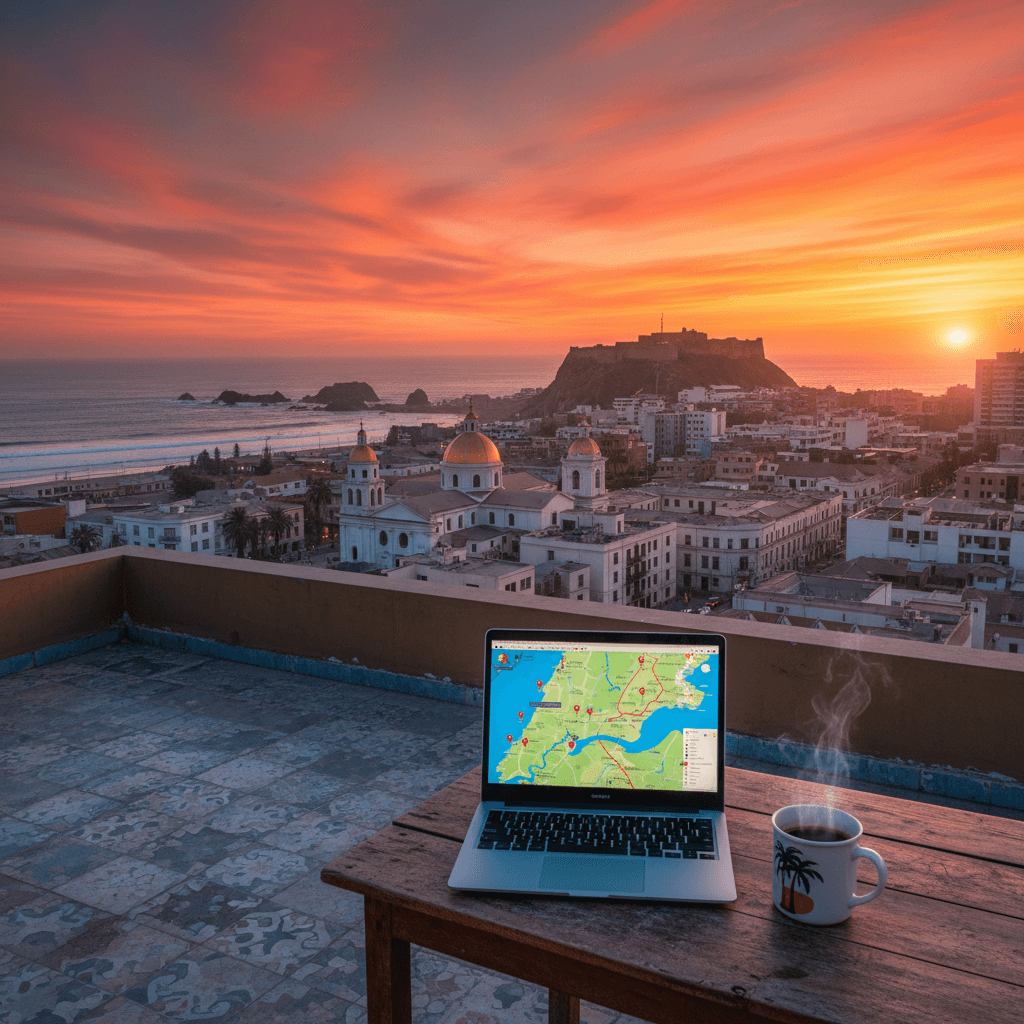
Arica
🇨🇱 Chile
The City of Eternal Spring
Arica feels like a secret the rest of the world hasn't quite stumbled upon yet. While the crowds flock to the expensive streets of Santiago or the dusty trails of San Pedro de Atacama, this northern outpost sits quietly on the Pacific edge, offering a mix of Peruvian influence, Aymara roots, and a laid back surf culture. It's known as the City of Eternal Spring because the weather stays in that sweet spot between 18°C and 25°C (64-77°F) almost year round. You won't find many rainy days here; instead, you get a dramatic backdrop where the world’s driest desert meets a cold, powerful ocean.
The vibe is noticeably slower than the rest of Chile. It’s a border town energy that’s less about frantic commerce and more about the afternoon sun. You’ll see locals sharing mate on the beach, digital nomads working from cafes overlooking the Morro de Arica, and a steady stream of surfers chasing the legendary "El Gringo" wave. It’s a place that rewards those who prefer a bike to a car and a sunset beer to a crowded nightclub.
The Nomad Experience
Living here means trading the high costs of the capital for a more manageable $1,200 to $1,800 per month mid range lifestyle. Most nomads find that while the city lacks the massive coworking hubs found in Santiago, the infrastructure is surprisingly robust. Chile has some of the fastest internet in the world, and even in this northern corner, you can expect 50-100 Mbps at most rentals and cafes. It’s the kind of place where you can spend your morning on a Zoom call and your afternoon exploring the world's oldest mummies at the Azapa Valley museum.
Expats often mention the warmth of the people, though you’ll want to have some Spanish in your back pocket. While English is common in the surf shops and upscale hotels near Chinchorro, the heart of the city speaks Spanish. There’s a grit to Arica that feels authentic; it’s not a polished tourist bubble, and that’s exactly why people stay for months instead of days.
Where to Plant Your Flag
Choosing a neighborhood in Arica depends on whether you want the sound of the waves or the convenience of the city center. Most remote workers gravitate toward these three areas:
- Chinchorro / Downtown: This is the sweet spot for most newcomers. It’s walkable, packed with cafes, and offers easy access to the beach. You’ll pay around $600 to $800 for a decent one bedroom apartment here. It’s central, but it can get a bit noisy when the weekend tourists arrive.
- Playa Brava and Corazones: If you’re here to surf or want a quieter, more scenic morning, head south. The vibes are incredibly relaxed, though you’ll have fewer grocery options and might need to rely on Uber or a bike to get into the city. Expect to pay $900+ for a place with a solid ocean view.
- Azapa Valley: For those planning a longer stay or traveling with family, the valley offers a lush, green escape from the desert landscape. It’s much quieter and feels like a different world, though the commute means you’re less connected to the nomad social scene.
Practical Daily Costs
Your budget will stretch further here than in the south, especially if you eat like a local. Travelers often recommend sticking to the "Menu del Día" for lunch to keep costs down.
- Street Food: $3 to $5 for a fresh empanada or a quick snack.
- Mid-range Dinner: $15 to $25 for a nice seafood meal with a pisco sour.
- Monthly Transport: Around $50 if you use the local "micros" (buses) or $100 if you mix in Ubers.
- Connectivity: A local SIM from Entel or WOM will run you about $15 a month for a solid data plan.
Arica isn't just a stopover on the way to Peru or the Altiplano. It’s a functional, sunny, and affordable base for anyone who wants a slice of Chilean life without the frantic pace of the big city. You come for the reliable WiFi and the low cost of living, but you stay for the sunsets over the Pacific and the easy, unpretentious rhythm of the desert coast.
The Bottom Line
Arica is one of Chile's best kept secrets for those who want a coastal lifestyle without the Santiago price tag. While Chile has a reputation for being the most expensive country in South America, this northern outpost feels much more approachable. Most nomads find they can live comfortably here on $1,200 to $1,800 per month, depending on how often they hit the seafood spots along the coast.
The local economy runs on a mix of port trade and tourism, but it lacks the extreme "tourist tax" found in places like San Pedro de Atacama. You'll find that your money goes significantly further here than in the capital, especially when it comes to fresh produce from the Azapa Valley and local transport.
Monthly Budget Tiers
- The Budget Nomad ($800 to $1,200): You're likely renting a room in a shared apartment or a studio on the outskirts, eating plenty of $3 street empanadas, and using the local micros to get around.
- Mid-Range Comfort ($1,200 to $1,800): This covers a private one bedroom apartment in the Chinchorro area, regular dinners out with a few $6 pisco sours, and a dedicated desk at a shared workspace.
- High-End Living ($2,000+): You'll be looking at beachfront properties with Pacific views, frequent car rentals for desert excursions, and dining at the city's top fusion restaurants.
Housing and Neighborhoods
Rent will be your biggest variable. Short term stays on platforms like Airbnb are always pricier, so expats recommend joining local Facebook groups or using "Busco Departamento" sites to find monthly leases. Prices usually spike during the high season from December to February.
Chinchorro (Downtown)
- Vibe: The heart of the nomad scene. Walkable, close to cafes, and right by the water.
- Rent: Expect to pay $600 to $800 for a decent central apartment.
- Pros: No car needed; reliable fiber internet is standard here.
Playa Brava and Corazones
- Vibe: Pure surf culture and rugged cliffs. It's quieter and feels more like a retreat.
- Rent: Beachfront units often start at $900.
- Cons: It gets windy, and you'll spend more on Ubers getting to the grocery store.
Day to Day Expenses
Dining out is a highlight here. A casual lunch "menú del día" usually runs about $8 to $10. If you're hitting the mid-range seafood spots for fresh ceviche, expect to pay closer to $15 to $25 per person. Groceries are comparable to US or European prices for imported goods, but local fruit, veg, and bread are very affordable.
Connectivity is surprisingly cheap for the quality you get. Chile has some of the fastest internet in the world. A local SIM card from Entel or WOM costs about $15 for a generous data starter pack. If you prefer the convenience of an eSIM, Holafly is a popular choice among travelers for instant 5G access upon landing at Chacalluta Airport.
Transport and Practicalities
The city is highly walkable, but when you need to cover distance, the "micros" (local buses) are a steal at roughly $1 per ride. Uber is active and reliable for late night trips. Most travelers suggest using a fintech card like Wise or Revolut to avoid the high FX fees at local ATMs, though card acceptance is high in almost all shops and cafes downtown.
One thing to watch out for is the cost of adventure. While daily life is cheap, excursions to Lauca National Park or the Putre highlands can bite into your budget. Expect to pay $150+ for a weekend car rental if you want to explore the Altiplano on your own terms.
For Digital Nomads: El Centro and Chinchorro
If you need to be within walking distance of a flat white and a reliable 100 Mbps connection, the area around Chinchorro Beach and the northern edge of El Centro is your best bet. This is where the city's energy concentrates. You'll find most of the modern apartment builds here, many of which offer ocean views without the astronomical price tags you'd see in Santiago.
Most nomads gravitate toward the cafes along Avenida Comandante San Martín. While there isn't a massive dedicated coworking scene yet, places like Café del Mar provide the right mix of sea breezes and stable Wi-Fi. It's a walkable pocket where you can grab a $3 empanada for lunch and hit the surf by 5:00 PM without needing a car.
- Rent: $600 to $800 for a modern one-bedroom.
- Vibe: Connected, active, and social.
- Best for: People who work on Pacific Time and want to be near the action.
For Solo Travelers: Playa Brava and Corazones
Solo travelers looking for a more rugged, "end of the world" feel usually head south toward Playa Brava or the area near Playa Corazones. The atmosphere here is decidedly more bohemian and focused on the outdoors. It's the primary hub for the local surf community and travelers passing through on their way to the Peruvian border.
The infrastructure is a bit leaner here, so don't expect a high density of supermarkets. However, the social scene in the local hostels and surf camps makes up for it. It's easy to find a crew for a weekend trip to Lauca National Park or a sunset beer at a beach shack. Just keep in mind that the wind can get intense in the afternoons, so it's better for those who prefer hiking and surfing over sitting outside with a laptop.
- Rent: $400 to $600 for simpler guesthouse setups or shared flats.
- Vibe: Laid-back, sporty, and slightly off the grid.
- Best for: Surfers, backpackers, and anyone looking to unplug.
For Families: Azapa Valley Outskirts
If you're bringing the kids and need more than a cramped coastal studio, look toward the Azapa Valley. This is the city's "green lung." As you move away from the coast, the landscape shifts from desert dunes to lush olive groves and tomato farms. It's significantly quieter and feels like a different world compared to the salty, humid air of the shoreline.
Expats with families often choose this area for the extra square footage and private gardens. You'll need a car or a reliable Uber account, as it's a 15 to 20 minute drive into the city center. The tradeoff is a peaceful environment and proximity to the San Miguel de Azapa Archaeological Museum, which is great for weekend outings. It's also generally warmer and less windy than the beach neighborhoods.
- Rent: $900 to $1,200 for larger houses or villas.
- Vibe: Suburban, quiet, and green.
- Best for: Long-term stays and those who value space over walkability.
For Expats: The Coastal Strip
Established expats often settle in the mid-range residential pockets between the port and Chinchorro. These neighborhoods offer a balance of security and convenience. You're close enough to the Dr. Juan Noé Hospital and the main shopping districts, but far enough from the late-night noise of the tourist bars.
Life here moves at a typical northern Chilean pace, which is to say, very slowly. You'll find plenty of local "picadas" (small, affordable restaurants) serving fresh ceviche for around $15. It's a great spot to practice your Spanish, as English isn't as prevalent here as it is in the high-end districts of Santiago. Most residents use Entel or WOM for their mobile data, which stays remarkably consistent throughout these central residential blocks.
- Rent: $700 to $900 for comfortable, multi-room apartments.
- Vibe: Authentic, safe, and steady.
- Best for: Those planning to stay for six months or more.
Connectivity in the City of Eternal Spring
Chile consistently punches above its weight when it comes to infrastructure, and Arica is no exception. While it feels worlds away from the glass skyscrapers of Santiago, you'll still find the same world-class fiber optic speeds that rank Chile among the top five fastest countries globally. For nomads who've struggled with the patchy, satellite-dependent wifi in the nearby Atacama Desert, Arica feels like a high-speed sanctuary.
Most apartments and short-term rentals in the Chinchorro or Playa Brava areas come equipped with fiber connections averaging between 50 and 100 Mbps. If you're staying in a more traditional guesthouse downtown, always ask for a speed test before booking, as older thick-walled buildings can sometimes eat the signal. Mobile data is equally impressive; 5G coverage is the standard throughout the urban core and along the main beaches.
Coworking and Finding Your Desk
Arica doesn't have the massive, corporate coworking franchises you might find in the capital. Instead, the scene here is more organic and community-focused. You'll find that many remote workers gravitate toward communal spaces in boutique hotels or shared offices that offer day passes for around $15 to $25.
- Shared Office Spaces: While dedicated hubs are still emerging, look for local business centers near Calle 21 de Mayo. These spots typically offer a desk, reliable backup power, and a quiet environment for around $100 to $180 per month.
- The Cafe Office: If you prefer a more social vibe, the beachfront cafes in Chinchorro are the go-to. They are accustomed to people opening laptops for an hour or two, provided you keep the coffee flowing.
- Public Libraries: For a zero-cost option, the municipal library spaces downtown offer decent free wifi, though they are better suited for deep work than video calls.
Mobile Data and SIM Cards
Don't rely on your home carrier's roaming unless you want a massive bill. Local SIM cards are cheap and easy to set up. Most expats recommend Entel for the best coverage if you plan on exploring the Azapa Valley or heading toward the Peruvian border. WOM is another popular choice for those staying strictly within city limits, often offering aggressive data promotions.
- Prepaid Plans: You can pick up a SIM at the airport or any "Sencillito" shop downtown for about $5. A monthly plan with 20GB to 50GB of data usually runs between $10 and $20.
- eSIM Options: If you want to be online the second you land at Chacalluta Airport, Holafly offers unlimited data packages. It's more expensive than a local SIM but saves you the hassle of finding a physical store.
- Dual Setup: Experienced nomads often keep a local Entel SIM for data and a backup eSIM. This ensures you stay connected even when trekking through the high-altitude landscapes of Lauca National Park.
Practical Tips for Remote Work
Power outages are rare in Arica, but the coastal salt air can be tough on electronics. If you're working from a balcony overlooking the Pacific, remember to wipe down your laptop regularly. Most cafes and public spaces use the Type C or Type L Italian-style three-pin plugs, so bring a universal adapter if your gear is from North America or the UK.
The work-life balance here leans heavily toward "life." Most local businesses take a relaxed pace during the mid-afternoon heat. If you need to take meetings with colleagues in North America or Europe, you'll find the CLT (Chile Standard Time) zone aligns well with the US East Coast for much of the year. This makes it easy to finish your tasks by 4 PM and hit the surf at Playa Corazones before the sun sets.
Staying Safe in the City of Eternal Spring
Arica is generally one of the more relaxed urban centers in Chile. It doesn't have the frantic energy of Santiago, which naturally keeps the stress levels lower for nomads. However, its position as a major port and a border hub near Peru and Bolivia means you need to stay sharp. Most travelers find the city perfectly safe during the day, especially around the Chinchorro beach front and the pedestrian malls like Paseo 21 de Mayo.
Petty theft is the most common headache. Pickpockets sometimes target distracted tourists at the Terminal Rodoviario or on crowded city buses. Expats recommend keeping your phone out of sight when walking near the port area at night. While the downtown core is well lit, the outskirts near the Chungará border route can feel isolated and aren't recommended for late night strolls. If you're heading out to the Azapa Valley, stick to daytime trips unless you're with a local who knows the area well.
- Emergency Numbers: Dial 133 for the Carabineros (Police) and 131 for an ambulance (SAMU).
- Beach Safety: Rip currents can be strong at Playa Brava. Stick to Playa Chinchorro or El Laucho for swimming, as they are much calmer and usually have lifeguards during the summer months.
- Nightlife: Stick to registered apps like Uber or Cabify when leaving bars after midnight. Walking home alone from the beach clubs isn't the best move.
Healthcare Infrastructure
If you get sick, you're in good hands. Chile has some of the best medical standards in South America, and Arica serves as the regional hub for the far north. For serious emergencies, the Hospital Regional Dr. Juan Noé Crevani is the primary public facility. It's centrally located and equipped for most trauma or acute illnesses, though wait times can be long for non-emergencies.
Most nomads prefer private clinics for faster service and better English speaking staff. Clínica San José is the go-to for expats; it's modern, clean, and handles everything from specialist consultations to diagnostic imaging. You'll likely pay out of pocket and then claim it back through your travel insurance. A typical consultation with a specialist will set you back about $40 to $70.
Pharmacies and Altitude
Pharmacies are everywhere in the city center. Look for the big three: Cruz Verde, Farmacias Ahumada, and Salcobrand. They are well stocked with international brands, though you'll need a Chilean prescription for most antibiotics and strong painkillers. Many are open 24/7 on a rotating basis, known as the "farmacia de turno."
One specific health risk in this region is Soroche (altitude sickness). While Arica is at sea level, most nomads eventually head up to Lauca National Park or Putre, which sit at over 3,500 meters. Locals swear by coca tea, but doctors recommend ascending slowly and staying hydrated. If you have heart or lung issues, consult a doctor at a private clinic before heading into the high Andes.
- Water Quality: The tap water in Arica is technically safe to drink but has a very high mineral content that tastes metallic. Most expats buy 5 liter jugs of Benedictino or Nestlé Pureza Vital for about $2.50.
- Sun Protection: The UV index here is consistently extreme. A high SPF sunscreen is a non-negotiable expense, usually costing around $15 for a quality bottle at the pharmacy.
- Insurance: Make sure your policy covers medical evacuation if you plan on trekking in the remote desert, as specialized rescue can be incredibly expensive.
Getting Around the City of Eternal Spring
Arica is one of those rare cities where you can actually get by without a car, provided you pick a base near the coast. Most nomads gravitate toward the Chinchorro or Playa Brava areas, where the ocean is your constant companion and the city center is just a short walk or quick ride away. The layout is straightforward, sandwiched between the Pacific and the towering Morro de Arica cliff.
Public Transit: Micros and Colectivos
The backbone of local transport is the "micro," those colorful buses that crisscross the city. They're cheap, usually around $1 per ride, and they run frequently during daylight hours. You don't need a special card; just carry some Chilean pesos in small denominations. While they aren't the most luxurious way to travel, they're efficient for getting from the northern beach districts to the central market area.
For a slightly more "local" experience, look for Colectivos. These are shared taxis that run on fixed routes, indicated by a sign on the roof. They're faster than the bus and only cost a little more. You'll share the ride with three other people, and it's a great way to see how Ariqueños actually move through their city. Just wave one down, confirm they're heading toward your destination, and hop in.
Ride-Hailing and Taxis
Uber is the go-to for most expats and nomads in Arica. It's reliable, safe, and saves you from the "tourist tax" sometimes applied by traditional street taxis. A ride from the downtown core to the Chinchorro beach strip typically costs between $4 and $7. If you decide to take a standard yellow-and-black taxi, make sure to agree on the price before the wheels start turning, as meters aren't always used or reliable.
Walking and Biking
If you're staying in the center or near the waterfront, walking is your best bet. The city is relatively flat, and the "City of Eternal Spring" weather means you'll rarely be dealing with rain or extreme heat. The Costanera (the coastal road) has decent paved sections that are perfect for a morning run or a bike ride. You can rent a bicycle or an electric scooter near the main beaches for about $10 to $15 a day, which is the best way to scout out surf breaks or find a quiet cafe with a view.
Arriving and Departing
When you first land, you'll be at Chacalluta International Airport (ARI), which is about 11 miles north of the city. Since it's very close to the Peruvian border, security is visible but the process is smooth. Here are your best ways into town:
- Uber: Expect to pay around $15 to $20 for a 20-minute trip to the city center.
- Airport Shuttles: Shared vans are common and will drop you directly at your Airbnb or hotel for about $6 to $8 per person.
- Car Rentals: If you plan on exploring the Azapa Valley or driving up to Lauca National Park, renting a car at the airport is smart. Expect to pay $45+ per day for a basic manual vehicle.
Pro Tips for the Border
Arica is a gateway city. Many nomads take advantage of the proximity to Tacna, Peru, for "visa runs" or cheaper dental and medical care. International colectivos leave from the International Bus Terminal (right next to the domestic one) and take about an hour to reach the border. It's a seamless process, but always keep your PDI paper (the small receipt given to you when entering Chile) safe, as you'll need it to exit and re-enter without a headache.
The Local Linguistic Flavor
In Arica, you'll encounter a specific brand of Spanish that's fast, melodic, and peppered with "Chilenismos." While the city feels more relaxed than Santiago, the local speech still involves dropping the "s" at the end of words and using the ubiquitous "cachai?" (you know?) to punctuate sentences. Because Arica sits right on the border with Peru and Bolivia, you'll also hear a blend of Andean influences and indigenous Aymara terms that you won't find further south.
Most nomads find that while English is common in tourist hubs like San Pedro de Atacama, it's a bit more hit or miss here. In the Chinchorro beach area and upscale hotels, you'll get by fine with English. However, once you head into the local markets or the Azapa Valley, having at least a survival level of Spanish is a game changer for your social life and your wallet.
Communication Essentials
- WhatsApp is King: From booking a surf lesson at Playa Brava to chatting with your landlord, everything happens on WhatsApp. If you aren't on it, you don't exist in the local economy.
- Google Translate: Download the Spanish offline dictionary. It's helpful for deciphering handwritten menus in small "picadas" (local eateries) where the daily special is scrawled on a chalkboard.
- Politeness Matters: Chileans are generally formal when starting a conversation. Start with a "Hola, buenas tardes" before diving into your request. It goes a long way in getting better service.
Connectivity and Data
Chile consistently ranks as one of the best countries in the world for internet speeds, and Arica holds its own. You'll regularly see home fiber speeds between 50 and 100 Mbps. If you're staying in a beachfront apartment, just confirm the router isn't tucked behind a concrete wall; those coastal builds are sturdy and can kill a signal quickly.
For mobile data, don't rely on roaming. It's expensive and often throttled. Expats recommend these options:
- Entel: Generally considered the gold standard for coverage if you plan on heading out to Lauca National Park or remote desert spots. A prepaid SIM costs around $5 to $10.
- WOM: Great for heavy data users staying within the city limits. Their packages are often cheaper, sometimes offering 20GB or more for under $15.
- Holafly: If you want to hit the ground running without swapping physical cards, their eSIMs provide unlimited data, though they're pricier than local options.
Social Integration
Making friends in Arica is easier if you lean into the outdoor culture. While there aren't massive dedicated coworking hubs yet, the cafe scene serves as the de facto office for the nomad community. You'll find people working from laptops at spots near the Morro de Arica or along the coastal boardwalks. Joining local Facebook groups for expats in Northern Chile or checking InterNations can help you find the weekly meetups that usually happen over pisco sours or craft beers.
One thing travelers often mention is the "Ariqueño" warmth. People here are used to travelers passing through on their way to Peru, but if you stay for a month or two, you'll find the locals are incredibly welcoming. They appreciate it when you try to speak the language, even if your conjugations are a mess. Just remember that "ahora" (now) rarely means "right this second." It's a coastal town; things move when they move.
The City of Eternal Spring
Arica earns its nickname for a reason. You won't find the bone chilling winters of Patagonia or the stifling humidity of the tropics here. Instead, the city sits in a sweet spot of the Atacama Desert where the weather stays remarkably consistent. It is technically one of the driest inhabited places on Earth, meaning rain is almost non existent. You can leave your umbrella at home; you likely won't see a single drop during your entire stay.
Temperatures generally hover between 18°C and 25°C (64°F to 77°F) throughout the year. Even in the height of summer, the Pacific breeze keeps things from getting uncomfortable. Most nomads find the climate perfect for outdoor work setups, provided you have a good pair of sunglasses and plenty of sunscreen. The sun here is intense, even when it looks hazy.
When to Touch Down
While Arica is a year round destination, the vibe shifts significantly depending on the month. Most expats and long term travelers recommend arriving during the shoulder seasons to get the best of the city without the crowds.
- The Sweet Spot (October to December): This is arguably the best time to arrive. The air is warming up, the coastal "Camanchaca" fog clears earlier in the day, and the city feels energetic but not overwhelmed. Prices for mid range rentals in the Chinchorro area are stable before the summer spike.
- The Peak Season (January to March): This is Chilean summer. Expect the beaches at Playa Brava to be packed with vacationing families from Santiago and Bolivia. Prices for short term accommodation can jump by 20% to 40%, and popular cafes will have a wait for a table. If you love a lively nightlife and surfing, this is your window.
- The Quiet Months (June to August): Winter in Arica is mild, with lows rarely dipping below 15°C (59°F). It can get a bit windy and grey by the water, which some nomads find depressing for long term stays. However, this is the cheapest time to negotiate monthly rates on apartments.
Seasonal Considerations for Nomads
If you're planning to use Arica as a base for high altitude adventures, timing is everything. Travelers often forget that while the coast is mild, the nearby Andean highlands follow different rules. If you want to trek through Lauca National Park or visit Lake Chungará, try to avoid the "Altiplanic Winter" between January and March. Despite the name, this is when the highlands experience heavy rains and occasional snow, which can wash out the roads leading to the border.
For surfers, the "best" time is subjective. The big swells usually hit between May and August, drawing pros to the famous El Gringo wave. If you're a beginner just looking to take lessons at Playa Las Machas, the smaller, more manageable waves of the summer months are much more forgiving.
The Verdict
If you want the perfect balance of reliable 100 Mbps internet, affordable $700 central apartments, and great weather, aim for a November arrival. You'll beat the holiday rush, enjoy the best Pacific sunsets, and have your pick of the best workspaces before the tourists descend. Just remember that even in the "warm" months, the desert air cools down fast once the sun sets. A light jacket is a staple for evening empanada runs or sunset beers at the beach bars.
Connectivity and Tech Setup
Chile punches way above its weight for internet speeds, often ranking in the top five globally. In Arica, you can expect home fiber connections to hit between 50 and 100 Mbps without breaking a sweat. For mobile data, skip the airport kiosks and head to an Entel or WOM storefront downtown. A local prepaid SIM will set you back about $15 for a solid monthly data plan.
If you prefer to hit the ground running, many nomads use a Holafly eSIM for immediate 5G access upon landing. While dedicated coworking hubs are still popping up, the cafe culture in the Chinchorro district is excellent for remote work. Most beachfront spots have stable Wi-Fi, though it's smart to carry a backup hotspot if you're planning to work from the more remote stretches of Playa Corazones.
Cost of Living Breakdown
Arica is significantly more affordable than Santiago, especially when it comes to housing and fresh produce. Expect to spend roughly $1,200 to $1,800 per month for a comfortable mid-range lifestyle. Prices do tick upward during the peak summer season from December to February, so booking your long-term stay in advance is a must.
- Housing: A central studio or one-bedroom apartment usually runs between $600 and $800. If you want to wake up to the sound of the Pacific in a beachfront condo, expect to pay $900 or more.
- Food and Drink: You can grab a street empanada for $3 or a fresh ceviche lunch for $15. A nice dinner for two with wine usually lands around $40 to $50.
- Transportation: Local "micros" (buses) are a steal at $1 per ride. Uber is active here and generally more reliable than flagging down street taxis for across-town trips.
Navigation and Safety
The city is remarkably walkable, particularly around the downtown core and the coastal paths. For longer distances, the local bus network is efficient and cheap. If you’re heading to the Azapa Valley or Lauca National Park, renting a car for about $45 a day is your best bet for flexibility.
Safety-wise, Arica feels like a relaxed mid-sized town. Petty theft can happen on crowded beaches like Chinchorro, so don't leave your laptop or phone unattended while you go for a swim. Expats generally suggest avoiding the remote border areas near Chungará after dark. For any medical needs, Dr. Juan Noé Hospital provides reliable care, though having private travel insurance makes the paperwork much smoother.
Money and Language
Cards are accepted at almost all supermarkets and restaurants, but you'll want cash for street markets and small kiosks. Use a fintech card like Wise or Revolut to dodge the hefty foreign transaction fees at local ATMs. While you'll find English speakers in the surf shops and upscale hotels, a basic grasp of Spanish is vital for daily life. Most locals are patient and appreciate it when you lead with a "Hola" and a "Gracias."
Visa Requirements
Most travelers enter on a 90-day tourist visa, which is easy to extend once for another 90 days for free (prórroga). A subsequent renewal costs $100. Chile also has a dedicated Digital Nomad Visa for those looking to stay longer, though the application process requires proof of steady remote income from outside the country. It's a great option if you want to make the "City of Eternal Spring" your semi-permanent base.
Need visa and immigration info for Chile?
🇨🇱 View Chile Country GuideHidden Gem
Worth the effort