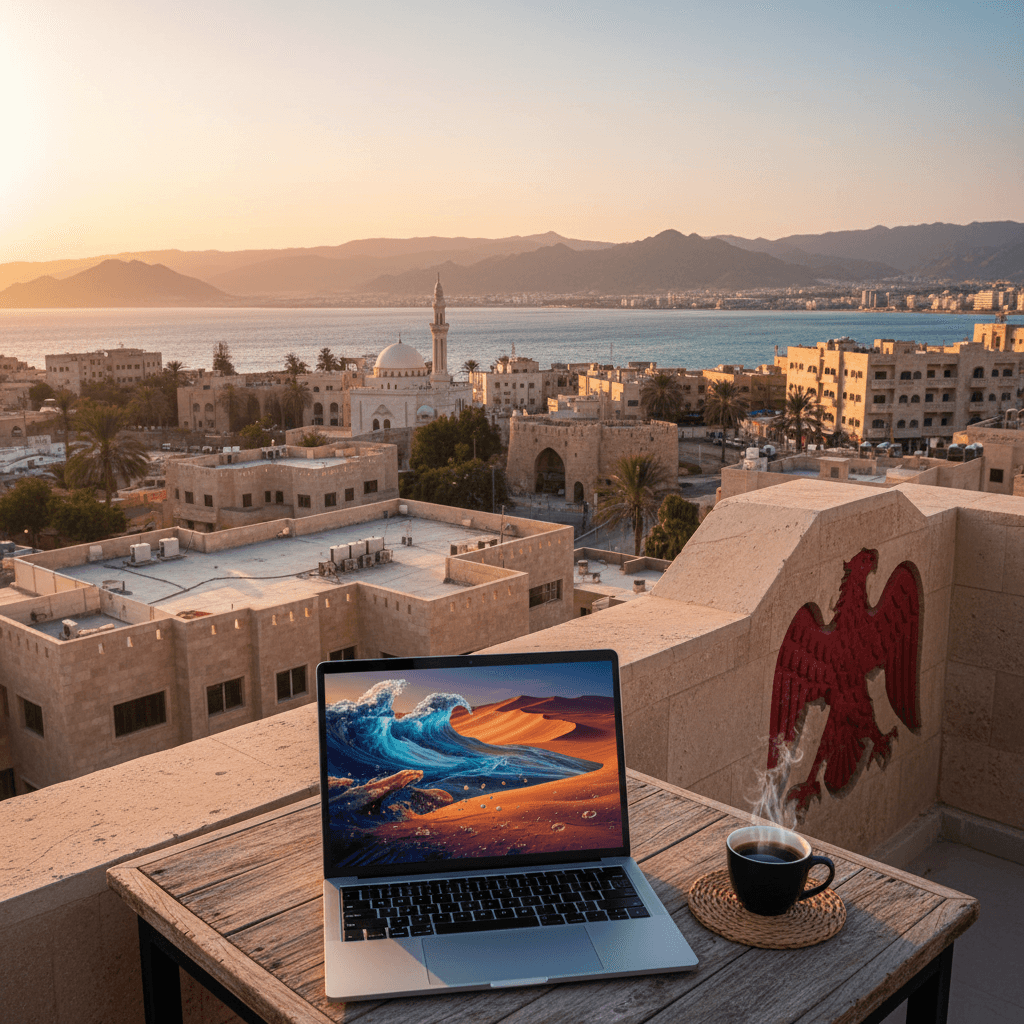
Aqaba
🇯🇴 Jordan
The Desert Kingdom’s Salty Side
Aqaba is where the rugged sandstone of the Jordanian desert finally meets the deep blue of the Red Sea. It’s a city that moves at its own pace, distinctly slower and more breathable than the frantic energy of Amman. For nomads, the draw isn’t just the year round sun or the world class diving; it’s the fact that this is a Special Economic Zone. You’ll feel the difference in your wallet immediately, as the city is tax free, making everything from a seaside dinner to a monthly apartment rental more affordable than you’d expect for a coastal resort town.
The vibe here is a unique blend of ancient port history and modern leisure. You’ll spend your mornings working from a cafe overlooking the Gulf of Aqaba, watching tankers and yachts glide past the borders of Israel, Egypt, and Saudi Arabia, all visible from the shore. By sunset, the city transforms. The air cools, and the smell of grilled shrimp and spiced kebabs wafts through the downtown souks. It’s a place that rewards those who prefer a neighborhood feel over a sprawling metropolis.
The Nomad Lifestyle
Living here feels like being in on a secret. While most travelers treat Aqaba as a quick two day pitstop after visiting Petra or Wadi Rum, expats and long term nomads use it as a strategic base. You have the stability of a safe, family friendly environment combined with an adventurous backyard. On your lunch break, you can literally walk into the water and snorkel over pristine coral reefs at the Japanese Garden or the Seven Sisters dive sites.
The social scene is centered around the water and the evening markets. Aqaba’s Souk by the Sea is the Friday night heartbeat of the community, where you’ll find local artisans, live music, and plenty of opportunities to chat with locals over a glass of sage tea. While there isn't a massive "tech hub" scene yet, the community of divers, archaeologists, and hospitality expats provides a grounded, interesting social circle.
Cost of Living Breakdown
Aqaba is mid range in terms of cost, but the lack of sales tax gives you more bang for your buck compared to the capital. A solo nomad can live quite well on $1,200 to $1,800 per month, depending on how many scuba excursions you book.
- Budget Tier ($800 to $1,200): You’ll likely stay on the edges of downtown in a studio for $300 to $500. You’ll eat mostly street food like falafel or kebabs for $3 to $5 a meal and rely on home WiFi.
- Mid Range Tier ($1,200 to $1,800): This covers a nice one bedroom apartment near the beach for $500 to $800. You can afford mid range cafe meals at $10 to $15 and regular trips to the beach clubs.
- Comfortable Tier ($1,800+): You’ll be looking at upscale apartments for $900 or more, frequenting high end seafood spots where dinner hits $30, and factoring in regular weekend trips to the desert.
Connectivity and Productivity
Don't expect a dedicated coworking space on every corner. Instead, Aqaba is a city of "laptop cafes." Most nomads find their rhythm in the hotel lounges or the modern cafes along the Red Sea Promenade. The internet is surprisingly reliable, with fiber optics common in residential buildings and 4G coverage reaching even the quieter beach stretches. Most people pull 120 Mbps on a good connection.
For mobile data, expats recommend grabbing a local SIM from Zain or Orange at the airport or downtown. You can usually get a monthly unlimited data plan for about $15 to $20. If you want something seamless, the ConnectPls eSIM is a frequent recommendation for staying connected while moving between the city and the desert camps of Wadi Rum.
Navigating the Neighborhoods
Aqaba is compact and largely walkable, especially if you stay central. Your choice of neighborhood will dictate your daily energy.
- Downtown: This is the place for those who want to be in the thick of it. It’s noisy, authentic, and smells like roasting coffee and spices. It’s the most affordable area and puts you steps away from the best street food and the local markets.
- The Waterfront Promenade: This is the more "polished" side of Aqaba. It’s where you’ll find the higher end hotels, diving centers, and cafes with the best views. It’s pricier, but the convenience of being able to walk to a dive boat in five minutes is a major perk.
- Al Ghandour: A more residential, quiet area on the edges of the center. It’s popular with families and those who want a bit of distance from the tourist pulse while still being a $2 to $5 Careem ride away from everything.
When to Go
The weather is the biggest factor in your productivity here. The sweet spots are April to June and October to December. During these months, the temperature sits between 20°C and 28°C, perfect for outdoor work. Avoid July and August if you can; the heat often climbs past 35°C, which tends to drain your energy and makes anything other than sitting in a pool feel like a chore.
The Aqaba Advantage: Tax-Free Living
Aqaba holds a unique status as a Special Economic Zone. For nomads, this translates to one major perk: no sales tax. While Amman can feel pricey and tourist-heavy, Aqaba offers a more manageable middle ground. You'll find that your money stretches further here, especially if you're dodging the high-end resorts and living like a local.
Most solo nomads find they can live comfortably on $1,100 to $1,500 per month. If you're traveling as a family of four, expect your monthly burn to sit between $2,900 and $4,200. It's a "choose your own adventure" style of spending; you can survive on street food and inland studios, or lean into the coastal lifestyle with upscale seafood and diving packages.
Monthly Budget Breakdown
Depending on your lifestyle, your monthly costs will likely fall into one of these three tiers:
- The Budget Tier ($800 to $1,200): This covers a studio on the outskirts of downtown for about $300 to $500, relying on street food like kebabs for $3 to $5 a meal, and using local buses.
- The Mid-Range Tier ($1,200 to $1,800): This is the sweet spot for most digital nomads. It includes a 1-bedroom apartment near the beach for $500 to $800, dining at mid-range cafes for $10 a plate, and a $100 budget for coworking setups or cafe hopping.
- The Comfortable Tier ($1,800+): For those who want the high life, this includes upscale 1-bedroom apartments for $900 or more, frequent dinners featuring grilled Red Sea fish for $25, and regular scuba diving excursions.
Housing and Neighborhoods
Rent is your biggest variable. If you're looking for an authentic vibe, stick to the Downtown area near Souk by the Sea. It's walkable and lively, though it can get a bit noisy at night. For those who need a quieter environment for deep work, the residential edges of the Al-Ghandour area offer lower costs and a more family-friendly atmosphere.
- Downtown Studio: $300 to $500 per month
- Beachfront 1-Bedroom: $500 to $900 per month
- Utilities (Electricity, Water, Trash): $60 to $100 per month
Food and Dining
Eating out is one of the joys of Aqaba, particularly if you enjoy fresh seafood. Street food is incredibly affordable, with shrimp wraps or kebabs costing between $3 and $7. If you're working from a cafe, a quality coffee usually runs between $2 and $4. Expats often recommend the promenade cafes for a sunset meal, where a full grilled fish dinner will set you back about $25.
Connectivity and Transport
Since dedicated coworking spaces are still rare in Aqaba, you'll likely be working from your rental or a local cafe. Fiber internet is standard in most modern apartments, and mobile data is cheap. You can grab a local SIM from Zain or Orange at the airport for about $10 to $20 for a month of unlimited data. Alternatively, many nomads use the ConnectPls unlimited eSIM for a more stable connection across Jordan.
Getting around is simple and won't break the bank. The downtown and beachfront areas are highly walkable. For longer trips, ride-hailing apps like Careem and Uber are your best bet, with most city rides costing around $5. If you're planning to head to the dive sites further south, expect to pay $5 to $10 for a daily bike or scooter rental.
- Monthly Transport Pass/Budget: $30 to $60
- Airport Taxi: $10 to $20
- Unlimited Mobile Data: $15 average
For Solo Nomads: Downtown and the Souk District
If you want to be where the action is, Downtown Aqaba is your best bet. It is the heart of the city's social life, centered around Aqaba’s Souk by the Sea. Most nomads gravitate here because everything is walkable, from the evening markets to the local kebab shops where you can grab a meal for $3 to $7.
The vibe is authentic and unpretentious. While the lodging can be basic, it is the most affordable part of town. You can find studio apartments on the edges of the city center for $300 to $500 per month. It is noisier than the outskirts, but you are steps away from the best coffee shops for working, like the local cafes where a latte costs about $3 and the WiFi is surprisingly stable.
- Rent: $300 to $600 for a studio or 1BR.
- Vibe: Energetic, traditional, and very social.
- Best for: Networking with locals and keeping costs low.
For Expats and Water Sports Enthusiasts: The Beachfront
The Red Sea Promenade and the surrounding beachfront areas are where the expat community tends to cluster. This is the place to be if your morning routine involves a dive or a swim. The atmosphere is significantly more relaxed and resort like compared to the city center, with easy access to the coral reefs that make Aqaba famous.
Living here feels like a permanent vacation, but you will pay a premium for the sea breeze. Mid range rentals typically run between $500 and $800, while upscale apartments can easily top $900. You are closer to the high end seafood restaurants where a grilled fish dinner might cost $25, but the proximity to dive shops and beach clubs makes it worth the splurge for many long term residents.
- Rent: $500 to $900+ depending on luxury level.
- Vibe: Laid back, coastal, and tourist friendly.
- Best for: Scuba divers and those who prioritize a view over a budget.
For Families: Al-Ghandour and Residential Edges
Families and expats looking for a quieter, more "local" life often move toward the residential pockets like Al-Ghandour. These neighborhoods sit just far enough away from the tourist crowds to feel peaceful, yet they are still a short $5 Careem ride from the beachfront. Travelers who stay here appreciate the safety and the sense of community.
The streets are wider, the buildings are newer, and you get more square footage for your money. It is a family friendly zone where kids can play outside and the noise of the souks doesn't reach your bedroom. While it is less walkable for daily errands, the lower cost of living and the quiet nights make it a top choice for those staying in Jordan for six months or more.
- Rent: $400 to $700 for larger multi bedroom apartments.
- Vibe: Quiet, secure, and residential.
- Best for: Slow travelers and those with children.
Quick Neighborhood Comparison
- Downtown: High walkability, best street food, noisier at night, $300+ rent.
- Beachfront: Best views, easy diving access, pricier cafes, $600+ rent.
- Al-Ghandour: Very quiet, requires ride hailing apps, spacious flats, $450+ rent.
Regardless of where you land, remember that Aqaba is a Special Economic Zone. This means you won't be paying sales tax on your shopping or dining, which helps your $1,100 to $1,500 monthly budget go much further than it would in Amman. Most nomads find that starting in a central hotel for a week allows them to scout the residential neighborhoods in person, which is often the best way to snag a deal on a long term rental.
Connectivity Overview
Aqaba isn't the high tech hub that Amman is, but it holds its own for remote work if you enjoy a Mediterranean pace. You'll find fiber optics throughout the urban center and reliable 4G coverage across the city. Average download speeds hover around 121 Mbps, which is more than enough for video calls or uploading large files between dive sessions.
Most nomads recommend skipping the hunt for public Wi-Fi and grabbing a local SIM card immediately. You can pick up a Zain, Orange, or Umniah card at the airport or at various shops downtown for about $10 to $20 a month with generous data packages. If you want to hit the ground running, ConnectPls offers an unlimited eSIM that travelers find particularly stable in the Red Sea region.
Coworking and Workspaces
Dedicated coworking spaces are currently non-existent in Aqaba. Most professionals here treat the city's cafes and hotel lobbies as their makeshift offices. If you need a formal desk and a community of nomads, you'll likely need to head north to Amman for a few days. However, for those who just need a quiet corner and a strong signal, the local "cafe culture" is very welcoming to laptop users.
- Hotel Lobbies: The upscale resorts along the Red Sea Promenade often have the most reliable backup power and air conditioning. They're perfect for high-stakes meetings, though a coffee will cost you more than it would downtown.
- Beachside Cafes: Many spots near Al-Ghandour offer free Wi-Fi. It's common to see expats working with a view of the water, though the glare from the sun can be a challenge during midday.
- Downtown Coffee Shops: Local spots near Aqaba’s Souk by the Sea are great for deep work. A coffee usually runs between $2 and $4, and as long as you keep ordering, the staff generally won't mind you staying for a few hours.
Practical Work Tips
The heat is your biggest productivity killer in Aqaba. During the peak summer months of July to September, temperatures often soar above 35°C (95°F). This can make working from outdoor cafes nearly impossible. Most nomads shift their schedules to work early in the morning or late in the evening when the sea breeze kicks in.
Power outages aren't frequent, but they do happen. Having a local SIM with a hotspot capability is a smart backup. If you're renting an apartment through Facebook groups or Airbnb, always ask the host for a screenshot of a speed test before booking, as some older buildings in the residential edges might not have been upgraded to fiber yet.
Digital Nomad Budget for Tech
- Local SIM (Monthly): $10 to $20 for high data limits.
- Unlimited eSIM (ConnectPls): Varies by plan, best for short-term stability.
- Daily Cafe "Rent": $5 to $10 (the price of two coffees and a snack).
- Portable Power Bank: Highly recommended for long days working near the beach.
While the infrastructure is solid, the social side of remote work is still grassroots. You won't find organized nomad meetups here like you would in Bali or Lisbon. Instead, you'll meet other remote workers organically at dive shops or popular breakfast spots. It’s a city for the self-motivated nomad who values a sunset swim over a networking event.
Staying Secure in the Red Sea Outpost
Aqaba maintains a reputation as one of the safest hubs in the Middle East for remote workers and families. While the region occasionally sees headlines, the vibe on the ground here is remarkably stable and welcoming. Most nomads find they can walk through the downtown souks or along the Red Sea Promenade late at night without a second thought. The city is compact and community oriented, meaning locals generally look out for visitors.
Expats recommend sticking to the well lit core zones after dark, specifically the Downtown area and the Beachfront. There aren't really any "no go" zones to worry about, though standard travel common sense applies in crowded markets to avoid the rare pickpocket. If you ever run into a bind, the emergency number for police or an ambulance is 911. Travelers often say the hospitality here is the best security feature; don't be surprised if a shopkeeper offers you tea while you're asking for directions.
Healthcare Standards and Access
The healthcare infrastructure in Aqaba is reliable, supported by a mix of modern private hospitals and specialized clinics. Since the city is a major diving destination, medical facilities are well equipped to handle everything from routine checkups to specialized decompression issues. You'll find that many doctors and specialists speak excellent English, having trained abroad, which makes explaining symptoms much easier for expats.
- Quality of Care: Private hospitals like Aqaba University Hospital are the go to for nomads. They offer shorter wait times and high standards of cleanliness compared to public facilities.
- Pharmacies: You'll find pharmacies on almost every major corner in the downtown district. They are well stocked with international brands, and pharmacists often act as a first point of contact for minor ailments.
- Costs: Out of pocket costs are reasonable compared to US or European standards. A standard consultation might run you $20 to $40, though having comprehensive travel insurance is still a must for any major emergencies.
Practical Wellness Tips
The biggest health risk you'll likely face isn't a virus, it's the sun. Between July and September, temperatures regularly climb above 35°C (95°F). Dehydration and heat exhaustion can sneak up on you, especially if you're working from a beach cafe. Most nomads shift their schedules to stay indoors during the peak afternoon heat and do their exploring or socializing in the cooler evenings.
While the tap water is technically treated, almost everyone sticks to bottled or filtered water for drinking to avoid "traveler's tummy." For long term stays, you can easily arrange for large 10 or 20 liter water jugs to be delivered to your apartment for a few dollars. If you're heading out for a dive or a trek in nearby Wadi Rum, always carry more water than you think you'll need.
Safety for Solo Travelers and Women
Solo female nomads generally report feeling respected and safe in Aqaba. While the city is a resort town and more relaxed than Amman, it is still a conservative society. Expats suggest dressing modestly when you're away from the private beach clubs; covering your shoulders and knees when walking through the Souk by the Sea or residential neighborhoods helps you blend in and shows respect for local customs. This simple adjustment usually eliminates any unwanted attention and makes for a smoother daily experience.
Getting Around on Foot
Aqaba is remarkably compact, especially compared to the sprawling hills of Amman. Most nomads find that if they’re staying in the Downtown core or near the Red Sea Promenade, their own two feet are the most reliable mode of transport. The walkability here is a major draw for those who want to grab a coffee, hit the souk, and check on their boat rental without ever touching a steering wheel.
The streets in the city center are safe and easy to navigate, though things can get a bit sweaty during the peak summer months of July and August. If you're heading to the Beachfront for a dive session, it's a pleasant stroll, but keep in mind that residential areas like Al-Ghandour are just far enough out that you might want a set of wheels for your daily commute.
Ride-Hailing and Taxis
When the desert heat kicks in or you're carrying groceries back to your apartment, ride-hailing apps are your best friend. Careem is the main ride-hailing app; Uber availability is limited. These apps take the guesswork out of pricing, which is a relief if you aren't in the mood to haggle.
- Short trips: Expect to pay around $2 to $4 for most rides within the city limits.
- Airport transfers: A ride from King Hussein International Airport (AQJ) typically costs between $10 and $20 and takes about 15 minutes.
- Local Taxis: You'll see yellow taxis everywhere. They use meters, but it's always smart to double check that the driver flips it on before you pull away from the curb.
Public Transit and Regional Links
Aqaba doesn't have a complex metro system, but the local bus network is functional for getting around the outskirts. However, most expats and nomads use the bus system primarily for leaving town. If you’re planning a work-from-anywhere weekend in the capital, the JETT bus is the gold standard. It’s a reliable, air-conditioned coach service that connects Aqaba to Amman in about 4 hours for roughly $20 to $30.
For those looking to explore the surrounding desert, you won't find many public buses heading deep into the dunes. Most travelers coordinate with local drivers or join organized tours to reach Wadi Rum or Petra, both of which are within a two hour radius. A private taxi to Wadi Rum can often be negotiated for around $35 to $50 depending on your bargaining skills.
Alternative Wheels
If you want more freedom than a taxi provides but don't want the hassle of a car rental, look into bikes and scooters. Near the beach clubs and diving centers, you can often find rentals for about $5 to $10 per day. It’s a popular way to hop between different dive sites or beach clubs along the coast without waiting for a ride-share.
For those planning a long term stay, car rentals are available but generally unnecessary unless you plan on frequent trips to the Dead Sea or northern Jordan. If you do rent, remember that Aqaba is a special economic zone, so while the city is tax-free, there are checkpoints when driving out of the region where you may need to show your passport and vehicle registration.
Practical Transport Tips
- Download Careem: It’s the primary ride-hailing option in Jordan and allows you to pay with a linked card, saving your cash for the markets.
- Walking Hours: Stick to early mornings or post-sunset for walking. The city really comes alive after dark when the temperature drops.
- Friday Schedule: Public transport and some taxi services may be more limited on Friday mornings during prayer times, so plan your airport runs accordingly.
Navigating the Linguistic Landscape
In Aqaba, your primary tool for communication is Arabic. However, because the city functions as Jordan's gateway to the Red Sea and a major hub for international divers, you'll find that English is widely spoken in professional and social settings. Unlike some of the more remote desert towns, Aqaba's workforce in the tourism, diving, and hospitality sectors is generally fluent enough to handle everything from lease negotiations to complex gear rentals.
Most nomads find they can get by comfortably with English in the downtown souks and beachfront cafes. That said, making an effort with the local dialect goes a long way. Jordanians are famously hospitable, and dropping a few Arabic phrases often results in an immediate invitation for tea or a better price on your market haul. The local accent is melodic and slightly different from the Cairene Arabic you might hear in movies, but it's very clear.
Essential Phrases for Your Toolkit
While you don't need to be fluent to live here, these daily staples will make your life significantly easier when you're away from the high end hotels or dive centers.
- Marhaba: Hello. This is the universal opener for any conversation.
- Shukran: Thank you. You'll use this dozens of times a day.
- Kam?: How much? Use this at the Souk by the Sea or when grabbing a taxi.
- Min fadlak (to a man) / fadlik (to a woman): Please.
- Wayn...?: Where is...? Helpful when looking for a specific cafe or the bus station.
- Inshallah: God willing. You'll hear this constantly; it functions as a "hopefully" or "we'll see."
Tech and Tools for Seamless Living
For deeper conversations or official documents, technology fills the gaps. Expats recommend keeping Google Translate pinned to your home screen. Be sure to download the Arabic language pack for offline use, as it's invaluable when you're exploring the more residential edges of the Al Ghandour area where English is less common.
The visual translation feature in the app is a lifesaver for reading menus at authentic seafood spots or understanding utility bills. If you're staying long term, consider using Duolingo or Mondly for basic Levantine Arabic basics. Many nomads also find that joining local Facebook groups for expats in Jordan helps clarify linguistic nuances or cultural etiquette that a translation app might miss.
Communication Etiquette
Communication in Aqaba is often more about the "how" than the "what." It's a high context culture where building a relationship comes before getting down to business. Don't be surprised if a simple question about a SIM card at a Zain or Orange shop turns into a ten minute chat about your travels. This isn't inefficiency; it's the local way of being welcoming.
In the workplace or at the few cafes that double as coworking spots, communication is generally polite and indirect. It's best to avoid sensitive political or religious topics until you've established a solid rapport with someone. If you're working remotely from a beachside cafe, a friendly nod to the staff and a "Sabah al-khayr" (good morning) usually ensures you'll have a reliable spot and steady coffee refills for the rest of the afternoon.
Signage and Navigation
You won't have much trouble finding your way around. Street signs, government buildings, and menus in the tourist zones are almost always bilingual. If you're taking a taxi or using Careem, it's helpful to have your destination written in Arabic script on your phone, though most drivers in the city center are accustomed to English speaking passengers. In the downtown markets, prices are sometimes written in Eastern Arabic numerals, so taking ten minutes to learn 0 through 9 will save you from overpaying for your groceries.
The Seasonal Sweet Spot
Timing your stay in Aqaba is all about balancing your productivity with your proximity to the Red Sea. Because the city sits in a desert basin, the heat isn't just a suggestion; it's the defining factor of your daily routine. Most nomads and expats find that April through June and October through December are the golden windows for a visit. During these months, daytime highs hover between 25°C and 28°C, making it comfortable enough to work from a beachside cafe without needing to blast the air conditioning 24/7.
The shoulder seasons offer the best of both worlds. You'll get the clear, calm waters required for world-class diving or snorkeling after your morning meetings, but you won't be sweating through your shirt during a walk to the downtown souks. It's the prime time for those who want to use Aqaba as a base for weekend trips to Petra or Wadi Rum, as the desert temperatures are much more forgiving during these months.
Surviving the Summer Scorch
If you're planning to stay through the summer, specifically July and August, prepare for a significant slowdown. Temperatures frequently spike to 35°C or higher. While the heat is dry, it can be draining for anyone trying to maintain a standard 9-to-5 grind. You'll notice the city's rhythm shifts during this time; locals stay indoors during the afternoon, and the streets only truly come alive after the sun goes down.
Expats living here year-round recommend shifting your schedule during the peak summer months. Start your work early, retreat to a cool apartment or a hotel lobby during the midday heat, and save your socializing for the evening markets. On the plus side, if you're a fan of warm water, the Red Sea is like a bathtub this time of year, though you'll want to stick to shore diving or boat trips with plenty of shade.
Winter: The Mild Escape
From January to March, Aqaba becomes a refuge for those fleeing the colder climates of Europe or North America. While Amman might be shivering or even seeing snow, Aqaba stays mild with highs around 20°C. It's rarely "cold" by international standards, but the evenings can get brisk, dropping to 12°C, so you'll want a light jacket for those sunset walks along the Red Sea Promenade.
Rain is a rarity here. You might see a few traces of winter showers, but they're usually brief and won't disrupt your plans. This is the quietest time for tourism, which means you can often find better deals on long-term rentals in areas like Al-Ghandour or the residential edges of downtown. It’s a great period for focused deep-work phases where you don't want the distraction of a crowded beach scene.
A Quick Look at the Numbers
- Peak Nomad Season: April to June; expect 28°C days and perfect water conditions.
- Budget Friendly Window: January to March; mild weather and lower demand for short-term housing.
- The Heat Zone: July to September; highs of 35°C+; best for those who love the heat and plan to spend every afternoon in the water.
- Autumn Revival: October to December; 25°C averages; ideal for exploring the nearby desert landscapes of Wadi Rum.
Ultimately, your "best" time depends on your heat tolerance. If you need a stable environment for high-focus projects, stick to the spring or autumn. If you're here primarily for the diving and don't mind staying indoors during the peak of the day, the summer months offer a slower, more authentic pace of life as the tourist crowds thin out.
Connectivity and Communication
Staying online in Aqaba is generally straightforward, though you'll find a different rhythm here than in Amman. Fiber internet is the standard for most modern apartments downtown and in the residential outskirts, often reaching speeds around 121 Mbps. If you're planning to work from your rental, always ask for a speed test before signing a lease.
For mobile data, grab a SIM card immediately upon arrival at King Hussein International Airport or at one of the branded shops downtown. Zain, Orange, and Umniah are the big three providers. You can usually get an unlimited data package for $10 to $20 per month. Many digital nomads now prefer using a ConnectPls unlimited eSIM to avoid the hassle of physical cards while maintaining a stable connection for video calls.
- Zain: Best overall coverage for trips into Wadi Rum.
- Orange: Reliable fiber speeds in the city center.
- Umniah: Often the most budget friendly option for short stays.
Banking and Currency
Jordan uses the Jordanian Dinar (JOD), and while Aqaba is a Special Economic Zone with no sales tax, you'll still find it's a cash heavy society. ATMs are everywhere in the downtown core and near the major hotels. Most expats recommend using Wise or Revolut to minimize conversion fees, but keep a stack of small bills for taxis and souk snacks.
Cards are accepted at upscale seafood restaurants and dive centers, but the guy selling you a falafel wrap for $3 will definitely want cash. If you're staying long term, local banks like Arab Bank are accessible, but most nomads find their international fintech apps sufficient for a few months of seaside living.
Logistics and Getting Around
Aqaba is a compact city, and if you're staying in the downtown area or near the Red Sea Promenade, your feet are your best asset. It's highly walkable, and the sea breeze makes even the warmer afternoons manageable for a quick stroll to a cafe. For longer distances, Careem is the preferred ride hailing app here; it's reliable and saves you from haggling over taxi fares. A typical cross town ride will cost you about $5.
If you're heading up to Amman for a weekend, the JETT bus is the gold standard. It's a 4 hour trip that costs between $10 and $15. For local exploration, you can rent a bike or scooter near the beaches for roughly $5 to $10 a day, which is perfect for hopping between different dive sites along the coast.
Health and Safety
This is one of the safest cities in the region. You'll likely feel comfortable walking through the Souk by the Sea late at night. The local culture is incredibly hospitable, and it's common for shopkeepers to offer you tea while you browse. There aren't really any "no go" zones, though it's respectful to dress a bit more modestly when you leave the beach resorts and head into the traditional markets.
Healthcare is high quality, with several modern hospitals and well stocked pharmacies. If you have an emergency, dial 911 for police or an ambulance. Most doctors in the private sector speak excellent English, so communication won't be an issue if you need a quick checkup or a prescription.
Seasonal Planning
Timing your stay is vital for your productivity. The peak summer months of July and August are scorching, with temperatures regularly hitting 35°C (95°F). Most nomads find this heat draining for work, leading to a "siesta" lifestyle where everything happens after sunset. The sweet spots are April to June and October to December. During these windows, the weather is a perfect 25°C (77°F), making it ideal for shore diving during your lunch break or working from an outdoor terrace.
- Best for Work: October to April (Cooler temps, less crowded).
- Best for Diving: September and October (Warmest water temperatures).
- Avoid: Mid-summer if you don't have high quality air conditioning.
Local Etiquette
While Aqaba is a resort town and more relaxed than other parts of Jordan, a little cultural awareness goes a long way. During Ramadan, many cafes will be closed during daylight hours, and it's polite to avoid eating or drinking in public. Learning a few basic phrases like "Shukran" (thank you) or "Marhaba" (hello) will earn you plenty of smiles and perhaps a few extra pieces of baklava at the market.
Need visa and immigration info for Jordan?
🇯🇴 View Jordan Country GuideHidden Gem
Worth the effort