Ao Nang
🇹🇭 Thailand
The Vibe: Where Limestone Meets Living
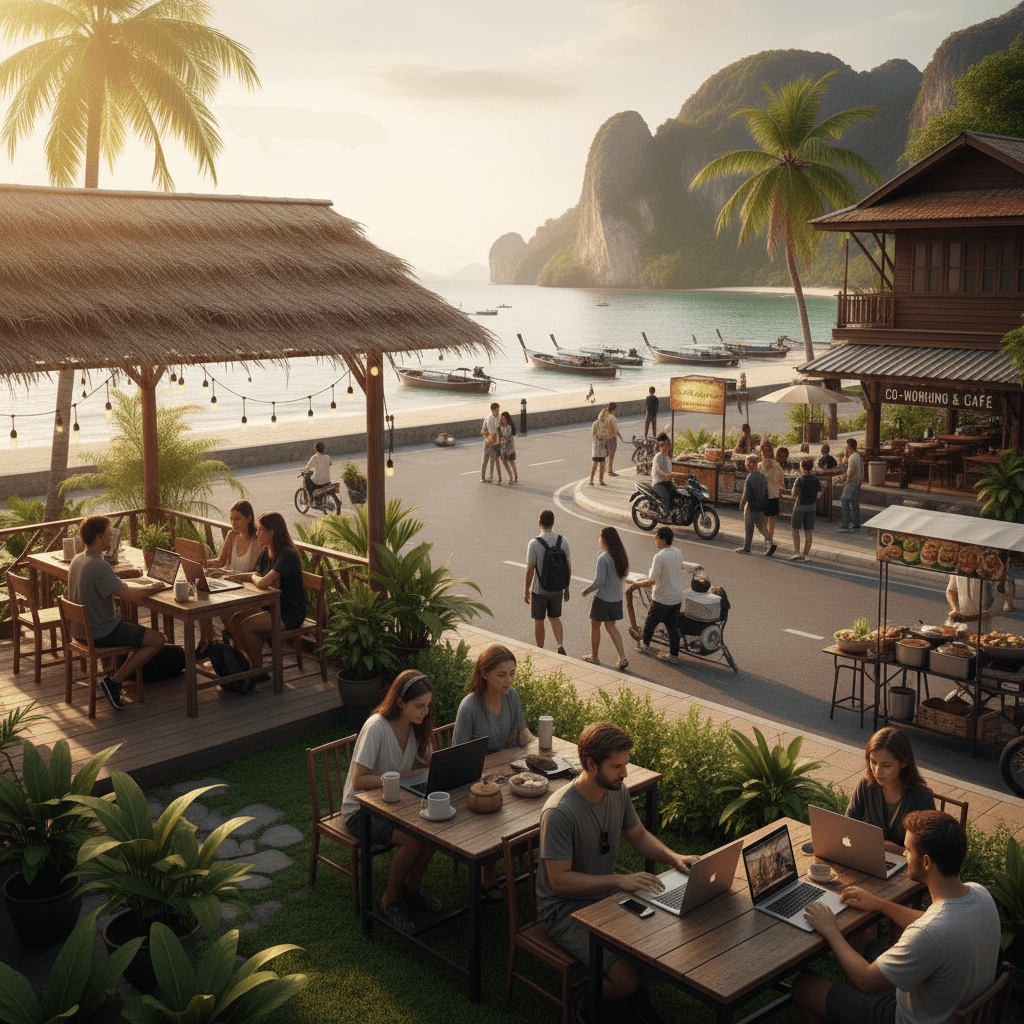
Ao Nang isn't your typical high-octane Thai party hub. It’s a place where the dramatic limestone cliffs of Krabi create a natural cathedral around a community that moves at a decidedly slower pace. You’ll find a unique blend of Southern Thai traditions and a modern nomad infrastructure that feels more intimate than Phuket but more connected than the remote islands.
Many nomads find the emotional "hook" of Ao Nang is the daily transition from work to nature. It’s the kind of place where you can spend your morning on a 50 Mbps fiber connection and your sunset on a longtail boat heading toward Railay. There’s a grounded, unpretentious energy here; it’s a town for people who want to be productive during the day and breathe sea air at night.
Living Costs & Nomad Budgets
One of the biggest draws for the remote work crowd is the attainable paradise price tag. On average, a single person can live comfortably here for about $773 to $1,200 per month, depending on how much you lean into the local lifestyle. Rent for a central 1BR studio usually falls between $360 and $610, though you can find cheaper gems if you’re willing to look further inland.
Experienced expats recommend a tiered approach to budgeting. A budget tier of $800 covers a basic studio and plenty of $2 street food lunches. Moving up to a mid-range budget of $1,200 allows for a nicer apartment and mixed dining. If you’re looking for the "comfortable" life with sea views and frequent upscale dinners at places like Lae Lay Grill, expect to spend $1,800+ per month.
Choosing Your Neighborhood
The Ao Nang Beach area is the heart of the action. It’s the most walkable spot for solo travelers and nomads who want quick access to cafes and the shore. Travelers often note that while it’s convenient, it can get noisy with the daytime tourist crowds.
For a more residential feel, many long-termers head 10 minutes north to Nopparat Thara. It’s quieter, more affordable, and sits right by the parks, though you’ll definitely need a scooter to get around. If you’re an adventurer at heart, Railay offers stunning cliffside living, but keep in mind it’s boat-access only and significantly pricier for daily essentials.
Work and Connectivity
Internet reliability is a pleasant surprise for most newcomers. WiFi speeds typically range from 19 to 50 Mbps in most cafes, and home fiber plans are a steal at around $15 per month. For a dedicated work environment, spaces like COSI Ao Nang offer great work vibes, and the local cafe culture is very welcoming to laptop users.
To stay connected on the move, pick up an AIS or DTAC SIM card. You can grab an unlimited data plan for about $10 to $20 per month at any 7-11. For getting around, Bolt is the go-to app for ride-hailing, usually running about 20% cheaper than Grab.
Safety, Health, and Logistics
Ao Nang is generally very safe, though nomads suggest avoiding solo walks on dark stretches of the beach late at night. For healthcare, Krabi Hospital is about 20km away and provides high-quality care, while local pharmacies are everywhere for minor needs. A standard doctor’s visit will cost you roughly $28.
The weather is your biggest variable. The dry season from November to April is prime time, with December to March offering the most sun. If you visit during the rainy peak in September or October, expect some disruptions, but you’ll also enjoy significantly lower prices and a much quieter town.
- Street food meals: $2 to $5
- Scooter rentals: $5 to $10 per day
- Airport shuttle: 200 to 350 THB
- Coworking hot desks: Around $140 per month
The Cost of Living in Ao Nang
Ao Nang is a favorite among digital nomads for its ability to offer a high quality of life without the steep price tag of more developed Thai hubs. On average, a single person can live comfortably here for $773 per month, including rent. This balance of affordability and coastal beauty makes it an easy place to settle into for a few months.
Experienced expats recommend budgeting based on your lifestyle tier. A budget-friendly lifestyle sits around $800 per month, focusing on basic studio apartments and delicious street food. If you prefer a mid-range experience with a central apartment and a mix of cafe dining, expect to spend closer to $1,200. For those seeking maximum comfort, including sea-view condos and frequent upscale dining, $1,800+ is a realistic target.
Housing and Neighborhoods
Rent is often the biggest variable in your monthly spend. A central 1-bedroom apartment typically runs between $360 and $610 per month (฿13,000-22,000), with Western-style units around $700+ (฿25,000), though you can find cheaper options if you look further inland. Many nomads choose the Ao Nang Beach area for its walkability to cafes and the shore, though it can get noisy during the peak tourist season.
If you're looking for better value and a quieter vibe, long-term travelers often head to Nopparat Thara. It's just 10 minutes north and offers more residential-style rentals that are easier on the wallet. For the true adventurer, Railay offers stunning cliffside living, but keep in mind it’s only accessible by boat and generally more expensive due to its isolated location.
Dining and Groceries
Food is where your budget can really shine. You'll find street food lunches like Som Tam or Pad Thai for as little as $2.31. A mid-range dinner for two at popular spots like Kodam Kitchen or Carnivore Steakhouse usually costs around $26.
For those who prefer a view with their meal, upscale spots like Lae Lay Grill will naturally cost more. Most nomads find that a monthly food budget of $332 allows for a great mix of local markets and the occasional Western meal.
Connectivity and Coworking
Staying connected is relatively cheap and reliable. Home internet plans average $15 per month for unlimited data, with speeds typically ranging from 19 to 50 Mbps. For mobile data, travelers recommend picking up an AIS, DTAC, or True 5G SIM card at any 7-11; unlimited monthly plans usually cost between $10 and $20.
If you need a dedicated workspace, a hot desk at a local coworking hub costs about $140 per month. Many nomads also work from laptop-friendly spots like COSI Ao Nang, which offers a great work-leisure atmosphere for the price of a coffee.
Transportation and Practicalities
While the core of Ao Nang is walkable, you'll likely want wheels to explore the surrounding hills. Scooter rentals are the standard choice, costing between $5 and $10 per day, or roughly $100 per month. If you aren't comfortable on a bike, the Grab and Bolt apps are the most reliable way to get around; Bolt is often 20% cheaper, with 8km rides costing around $3 to $5.
- Utilities and Internet: Expect to pay around $82 per month for electricity, water, and high-speed web.
- Healthcare: A standard doctor's visit is approximately $28. Local pharmacies are excellent for basics, with cold meds costing around $3.
- Gyms and Social: Many nomads meet up at Cuckoo’s Nest or join the Nomads Pub Crawl to stay social without breaking the bank.
Overall, Ao Nang remains one of the most accessible coastal spots in Thailand. It provides a reliable infrastructure for remote work while maintaining a price point that allows you to enjoy the Andaman Sea every single day.
For Digital Nomads: Ao Nang Beach (Central)
If you're looking to be in the heart of the action, the Ao Nang Beach area is the primary hub for nomads. It's the most walkable part of town, giving you immediate access to cafes, fitness centers, and the main beach strip. Many nomads find this the best spot to start because you don't necessarily need a scooter to get your morning coffee or reach a workspace.
For getting work done, travelers often head to COSI Ao Nang for its modern work-friendly vibes or seek out local hubs like the coworking-style setups. You can expect reliable internet speeds ranging from 19 to 50 Mbps, which is plenty for video calls. While the central area is convenient, experienced expats recommend staying a few streets back from the main road to avoid the noise of late-night bars and tuk-tuks.
The cost for a central 1BR studio typically runs between $360 and $610 per month. If you're on a "Comfort" budget of around $1,800 a month, you can snag a high-end apartment with a sea view and a dedicated coworking membership for about $140 a month. Just keep in mind that this area is the most tourist-heavy, so you'll be sharing the sidewalk with plenty of holidaymakers.
For Expats and Long-Termers: Nopparat Thara
Located just a 10-minute trip north of the main beach, Nopparat Thara is where the local expat community tends to settle. It offers a much quieter, more residential atmosphere compared to the main strip. You'll find wider streets, more green spaces, and a local park that’s perfect for sunset walks.
Expats recommend this neighborhood for its value, as long-term rentals here are often more spacious and affordable than those in the center. Because it's more spread out, renting a scooter is essential here. You can usually find rentals for $5 to $10 per day, or much lower rates if you book by the month. Use apps like Bolt or Grab for quick trips; Bolt is often 20% cheaper for getting around the neighborhood.
Living here gives you easy access to the Nopparat Thara Pier and local night markets where street food like som tam or grilled seafood costs between $2 and $5. It’s the ideal balance for those who want to be near the beach without the constant "vacation mode" energy of central Ao Nang.
For Adventurers and Solo Travelers: Railay
If your priority is world-class rock climbing and stunning limestone cliffs, Railay is the place to be. Keep in mind Railay is accessible only by boat, which creates a unique, isolated island feel even though it's part of the mainland. Travelers often note that while it's breathtaking, the "island tax" is real, prices for food and basic goods are higher here than in Ao Nang.
Solo travelers love the social atmosphere at the beach bars and climbing schools, but it can be a challenging place to work long-term. The isolation makes it harder to run errands, and the housing options are more limited. Most people choose to stay here for a few days of adventure before retreating back to the mainland for better infrastructure and $2.31 street food lunches.
For Families: Quiet Residential Pockets
Families generally gravitate toward the outskirts of Nopparat Thara or the inland roads leading toward Krabi Town. These areas offer larger villas with private pools and gated yards that provide a sense of security and peace. You'll be away from the nightlife of Boogie Bar but still within a short drive of international-standard healthcare at Krabi Hospital.
The quieter residential areas are also closer to local schools and larger supermarkets. For families, the monthly "Mid-range" budget of $1,200 is a good baseline, allowing for a nice 1BR or small house and a mix of home cooking and mid-range dining at spots like Khow Soy. It's a safe, laid-back environment where the biggest daily concern is usually whether the afternoon monsoon rain will affect your school run.
Connectivity and Speed
In Ao Nang, staying connected is surprisingly easy for a beach town. You'll find that most cafes and guesthouses offer reliable fiber optic connections with speeds typically ranging from 19 to 50 Mbps. While the occasional tropical storm might cause a brief flicker, the infrastructure is stable enough for video calls and heavy uploads.
For those setting up a home office, unlimited residential internet plans are incredibly affordable, often costing around $15 per month. Experienced nomads suggest testing the WiFi at your accommodation before committing to a long-term stay, as concrete walls in older buildings can sometimes dampen the signal.
Coworking Spaces and Work-Friendly Hubs
While Ao Nang doesn't have the massive coworking scene of Chiang Mai, it offers high-quality niche spots that cater to the remote work crowd. Many digital nomads gravitate toward COSI Ao Nang, which provides a modern "social hub" vibe perfect for getting through a focused afternoon of tasks.
If you're looking for a dedicated desk, hot desking rates in the area average about $140 per month. These spaces often serve as the primary social link for the community, where you'll find people trading tips on the best weekend island hops or local scooter rentals. Travelers often note that the smaller community makes it much easier to network than in larger, more anonymous cities.
Best Cafes for Remote Work
If you prefer the "laptop and a latte" lifestyle, Ao Nang has a growing cafe culture with strong free WiFi and plenty of power outlets. The Ao Nang Beach area is the most convenient for walkability, allowing you to transition from a morning meeting to a swim in minutes. However, it can get noisy during peak tourist hours.
For a quieter atmosphere, nomads often head slightly north to Nopparat Thara. The cafes here are generally less crowded and offer a more relaxed environment for deep work. Many of these spots don't mind if you stay for a few hours, provided you keep the coffee and snacks flowing.
Mobile Data and SIM Cards
Reliable mobile data is your best safety net in Ao Nang. You can pick up a SIM card at any 7-Eleven or Tops Daily immediately upon arrival. AIS is widely considered to have the best coverage in Southern Thailand, especially if you plan on taking your work to nearby islands like Railay.
Expect to pay around 299 THB ($8-9) for a 7-day tourist plan with 1.5GB of high-speed data. For longer stays, DTAC and True offer 5G unlimited monthly plans ranging from $10 to $20. These are powerful enough to use as a hotspot if your villa's WiFi decides to take a break during the rainy season.
Digital Nomad Essentials
- Average Hot Desk: $140 per month
- Home Internet: $15 per month for unlimited fiber
- Top Mobile Networks: AIS (best coverage), DTAC, and True
- Work-Friendly Apps: Use Grab or Indrive to get around; Bolt is often 20% cheaper.
- Estimated Monthly Tech Budget: Around $82 covers your utilities and high-speed internet.
Expats recommend carrying a small power bank and a universal adapter, though most modern cafes use the standard Thai two-prong outlets that accommodate US and European plugs. If you're working from Railay for the day, keep in mind that power can be more temperamental there, so charge your devices fully before catching the longtail boat.
Staying Safe in Ao Nang
Ao Nang is widely considered a secure place for digital nomads and solo travelers. The community is tight-knit, and the local vibe is much more relaxed than the frantic energy of Phuket or Bangkok. Most people find they can walk the main strips at night without any issues, provided they stick to well-lit areas.
While serious crime is rare, experienced expats recommend keeping a close eye on your belongings in crowded beach areas. Petty theft can occasionally happen, so it's best to secure your valuables and avoid leaving bags unattended while you're swimming. Many nomads find that using common sense, like not walking alone on dark, isolated stretches of beach late at night, is all the precaution they really need.
If you're renting a scooter, travelers often note that the biggest safety risk isn't crime, but the roads. Always wear a helmet and stay alert, especially during the rainy season when the limestone dust can make the asphalt slippery. For any urgent issues, you can reach the tourist police at 1155 or the general emergency services at 191.
Healthcare Services & Facilities
For minor ailments, you'll find an abundance of local pharmacies along the main road. These are great for picking up basics like cold medicine for around $3 or antiseptic creams. Pharmacists here are usually very knowledgeable and speak enough English to help you find what you need without a doctor's visit.
When you need to see a professional, a standard doctor's visit typically costs around $28. For more serious concerns or specialized care, Krabi Hospital is located about 15-18km away in Krabi Town. It offers high-quality medical services and is the primary choice for long-term residents in the area.
In the event of a medical emergency, the number for an ambulance is 1669. Many nomads choose to keep a local SIM card from AIS or DTAC active at all times just to ensure they can access maps and emergency contacts if they're exploring the more remote limestone cliffs or jungle paths.
Health Tips for the Tropics
The heat in Ao Nang is no joke, with temperatures averaging 28-29°C (82-84°F) year-round. Dehydration is a issue for newcomers, so travelers often recommend carrying a reusable water bottle and sticking to bottled or filtered water. Most cafes and coworking spaces like COSI Ao Nang provide clean water stations for their guests.
If you're visiting during the rainy season between May and October, be mindful of mosquitoes. While malaria isn't a major concern in the town itself, dengue fever can occasionally pop up in Southern Thailand. Using a good repellent and wearing long sleeves during "mossie hour" at dusk is a tip most long-term expats live by.
Practical Safety Checklist
- Emergency Contacts: Save 191 for police and 1669 for medical emergencies in your phone immediately.
- Ride-Hailing: Use the Grab or Bolt apps for late-night transport; it's safer and more transparent than haggling with street side transport.
- Insurance: Most nomads find that a basic international health plan covers visits to Krabi Hospital and provides peace of mind for scooter-related mishaps.
- Hospital Distance: Remember that the best facilities are a 30-40 minute drive away in Krabi Town, so plan accordingly for non-emergency appointments.
Getting Around Ao Nang
Getting around Ao Nang is straightforward once you understand the local rhythm. While the central beach strip is easy to navigate on foot, the town's hilly terrain and spread-out residential areas mean you'll likely need wheels for anything beyond a quick coffee run. Most nomads find that a mix of scooters and ride-hailing apps provides the best balance of freedom and comfort.
Scooter Rentals
For many expats, renting a scooter is the definitive way to experience Krabi. It’s the most cost-effective method for long-term stays, especially if you’re living in quieter areas like Nopparat Thara. You can typically find rentals at shops like KRABI AO NANG Scooter for $5 to $10 per day, though monthly rates often drop significantly to around $100.
Experienced travelers recommend checking the bike’s condition thoroughly before driving off. The roads around the limestone cliffs are stunning, but they can be slick during the rainy season. If you aren't comfortable on two wheels, bicycles are a cheaper, eco-friendly alternative for short distances within the flat coastal sections.
Ride-Hailing and Taxis
If you prefer to avoid the local traffic, ride-hailing apps are the most convenient way to get around. Grab and Bolt both operate reliably in the area. Many nomads prefer Bolt because it’s often 20% cheaper than Grab; a 8km trip usually costs between $3 and $5.
Traditional tuk-tuks and songthaews (shared trucks) also roam the main roads. These are great for quick hops along the beach front, but prices can fluctuate for tourists. It's always a good idea to agree on the fare before you hop in if there isn't a posted price list.
Airport Transfers
Getting from Krabi Airport (KBV) to your accommodation in Ao Nang takes about 40 to 60 minutes. You’ll have a few reliable options depending on your budget and how much luggage you're hauling:
- Airport Shuttles: These shared vans are the most popular choice for solo travelers, costing between 200 and 350 THB per person.
- Private Transfers: Booking a car via Bolt or Grab from the airport is convenient and costs roughly the same as a private taxi, usually around $15 to $20.
- Local Taxis: Fixed-rate taxi stands are available inside the terminal, though they are often the most expensive option.
Exploring the Water
Since Ao Nang is a gateway to the Andaman Sea, some of your "commuting" might happen on the water. To reach Railay Beach, which is inaccessible by road, you’ll need to use the iconic longtail boats. These depart from the main beach and Nopparat Thara throughout the day.
Travelers often note that while these boats are beautiful, they don't follow a strict schedule and usually wait until they have at least eight passengers before departing. If you're in a rush or working on a deadline, it's worth factoring in an extra 20 minutes of wait time at the pier.
Walking and Accessibility
The core "downtown" area of Ao Nang is highly walkable. You can easily stroll between the beach, popular coworking spots like COSI Ao Nang, and various cafes. However, the tropical heat and humidity can make long walks draining during the middle of the day.
Many digital nomads suggest choosing a central 1BR studio if you want to avoid transport costs entirely. If you opt for the more affordable, spacious villas further inland, a scooter or a Bolt account becomes essential for your daily routine.
Getting by with English
In Ao Nang, you'll find that communication is rarely a barrier if you stick to the main tourist and nomad hubs. Because the area is a major gateway to the Andaman islands, English is widely spoken by staff in hotels, cafes, and tour agencies.
Experienced expats recommend being patient and speaking clearly, as English proficiency can vary once you step away from the beachfront. In local markets or more residential areas like Nopparat Thara, a few Thai words and a smile go a long way in making a connection.
Many nomads find that while most menus and signs are bilingual, using a translation app like Google Translate or Simply Learn Thai is incredibly helpful for reading specific ingredients or communicating with local landlords. If you're staying long-term, travelers often note that learning 5,000 basic phrases through apps like FunEasyLearn can significantly enrich your experience with the community.
Essential Thai Phrases
While you can navigate daily life in English, locals truly appreciate it when you make an effort to speak Thai. It’s polite to add the particle khrap (if you are male) or ka (if you are female) to the end of every sentence to show respect.
- Sawasdee (khrap/ka): Hello / Goodbye
- Khop khun (khrap/ka): Thank you
- Tao rai?: How much?
- Chai / Mai chai: Yes / No
- Mai pen rai: No worries / It's okay (the unofficial national motto)
- Aroi: Delicious (great for street food stalls)
Digital Communication and Data
Staying connected is straightforward, and most nomads recommend setting up your mobile data immediately upon arrival. While free WiFi is standard in spots like COSI Ao Nang and local cafes, having a local SIM is necessary for using ride-hailing apps like Grab and Bolt.
You can pick up a tourist SIM at any 7-11 or Family Mart for around 299 THB ($8), which typically covers 7 days of data. For a more permanent setup, AIS, DTAC, and True offer 5G unlimited monthly plans for approximately $10 to $20.
Reliable internet is a major draw here, with home fiber plans offering speeds between 19-50 Mbps for about $15 per month. If you're working remotely, you'll find the local "work from cafe" culture is very welcoming, provided you're buying coffee or a meal.
Non-Verbal Etiquette
Communication in Thailand isn't just about what you say; it's about how you present yourself. Travelers often observe the Wai, a greeting where you press your palms together near your chest and bow slightly, as the standard way to show respect.
Experienced expats advise being mindful of your body language. It's important to remove your shoes before entering someone's home or certain small shops, and you should never point your feet at people or religious items, as the feet are considered the lowest part of the body. Keeping a calm, "cool heart" (jai yen) during misunderstandings will get you much further than raising your voice.
The Best Time to Visit Ao Nang
Finding the sweet spot for your trip to Ao Nang depends on whether you prioritize blue skies or budget-friendly rentals. Like most of Southern Thailand, the weather here is tropical and consistent, with averages hovering around 28-29°C (82-84°F) year-round. However, the humidity and rainfall shift dramatically between the seasons.
The peak window for visiting is from December to March. During these months, you'll experience the lowest rainfall and the most reliable sunshine, making it the perfect time for island hopping or working from a beachfront cafe. Many nomads find this the most productive time to be in town, as the clear weather means fewer power flickers and better conditions for outdoor networking.
If you're looking to avoid the heaviest crowds, November and April are excellent shoulder-month options. April is technically the hottest month, with highs reaching 32°C, but it's also when the Songkran water festival takes place, which many travelers note is a highlight of the year. In November, the rain begins to taper off, and you can often snag better deals on long-term accommodation before the holiday rush hits.
What to Expect During the Rainy Season
The rainy season typically spans from May to October. While it doesn't usually rain all day, you can expect heavy afternoon downpours and occasional storms that might disrupt boat trips to Railay or the nearby islands. September and October are historically the wettest months, often seeing 15 to 20 rainy days per month.
Experienced expats recommend this "green season" for those on a budget. You’ll find that rent for a central 1BR studio can drop significantly, sometimes falling below the usual $220-$280 range. Just be prepared for "rainy season disruptions" like choppy seas and the occasional humid afternoon where the AC in your coworking space becomes your best friend.
Seasonal Breakdown for Planning
- Dry Season (November - April): Expect highs of 29-32°C and very little rain (only 3-8 days per month). This is the best time for diving, rock climbing, and socializing, though prices for food and transport are at their highest.
- Rainy Season (May - October): Highs remain around 29-31°C, but rain is frequent. Digital nomads often use this time to focus on deep work, taking advantage of the quieter cafes and lower cost of living.
- The Heat Peak (April): Temperatures hit their maximum. It’s the best time for water-based activities, but you'll want a scooter to avoid long walks in the sun.
Practical Weather Tips for Nomads
No matter when you arrive, the humidity is a factor you'll need to account for. Travelers often note that "waterproof" is a relative term during a Thai monsoon. If you're carrying expensive gear like MacBooks or cameras, investing in a high-quality dry bag for your scooter trips is a smart move.
Reliable internet usually holds up well during the rain, but if you're staying in more remote parts of Nopparat Thara, it's smart to have a backup. Many nomads use an AIS or DTAC tourist SIM with unlimited data (around 300 THB per week) as a hotspot during heavy storms just in case the local Wi-Fi wavers. During the wet months, stick to the central Ao Nang Beach area, as it's more walkable and has a higher density of cafes with stable infrastructure.
Connectivity and Data
Staying connected is straightforward in Ao Nang. Most nomads recommend heading straight to a 7-Eleven or Family Mart to grab a local SIM card. AIS and DTAC offer the most reliable coverage, with unlimited data plans typically costing between $10 and $20 USD per month.
If you're only staying for a short stint, tourist plans like the 299 THB ($8) AIS 7-day package are convenient. For long-term stays, experienced expats suggest using Wise for banking and international transfers to avoid high local ATM fees, which usually sit around 220 THB ($6) per withdrawal.
Getting Around
The core of Ao Nang is walkable, but you'll likely want wheels to explore the surrounding cliffs and hidden beaches. Renting a scooter through local shops like KRABI AO NANG Scooter is the standard move, costing between $5 and $10 USD per day, with significant discounts for monthly rentals.
If you aren't comfortable on a bike, download the Bolt and Grab apps. Travelers often note that Bolt is about 20% cheaper than Grab, with an 8km ride averaging $3 to $5 USD. To get from Krabi Airport, you can take a shared shuttle for 200-350 THB, which takes about 40 to 60 minutes.
Coworking and Remote Work
Digital nomads find the internet speeds in Ao Nang surprisingly robust, with averages ranging from 19 to 50 Mbps. While many work from cafes, dedicated spaces provide a more stable environment. COSI Ao Nang is a popular choice for its modern work-friendly vibe and reliable WiFi.
For those needing a professional setup, hot desks in the area can cost around $140 USD per month. If you're staying long-term, home internet plans are affordable at roughly $15 USD per month for unlimited high-speed fiber.
Health and Safety
Ao Nang is generally very safe, though it's wise to avoid walking alone on unlit sections of the beach late at night. Petty theft is rare, but keeping an eye on your valuables in crowded tourist spots is recommended. For medical needs, Krabi Hospital is about 15-18km away (approximately 20-30 minutes by car) and provides quality care, with a standard doctor's visit costing around $28 USD.
Local pharmacies are everywhere and can handle minor ailments like "stomach issues" or cold symptoms for a few dollars. In an emergency, dial 1669 for an ambulance or 191 for the police.
Local Customs and Etiquette
Southern Thai culture is welcoming but modest. Many nomads remind newcomers to practice the Wai (placing palms together) when greeting locals and to always remove shoes before entering a home or certain small shops. Avoid pointing your feet at people or sacred objects, as it's considered disrespectful.
While English is widely spoken in the main tourist hub, learning a few phrases like Sawasdee (hello) and Khop khun (thank you) goes a long way. Use apps like Simply Learn Thai to get the tones right before you arrive.
Weather and Timing
The best time to visit is during the dry season from December to March, when rain is rare and the heat is manageable. If you're on a budget, the rainy season from May to October offers much lower accommodation prices, but be prepared for heavy downpours, especially in September and October.
- Dry Season (Nov-Apr): Ideal for island hopping; 3-8 rain days per month.
- Monsoon Season (May-Oct): Frequent storms; 15-20 rain days per month.
- Temperatures: Consistently tropical, averaging 28-29°C (82-84°F) year-round.
Need visa and immigration info for Thailand?
🇹🇭 View Thailand Country GuideHidden Gem
Worth the effort