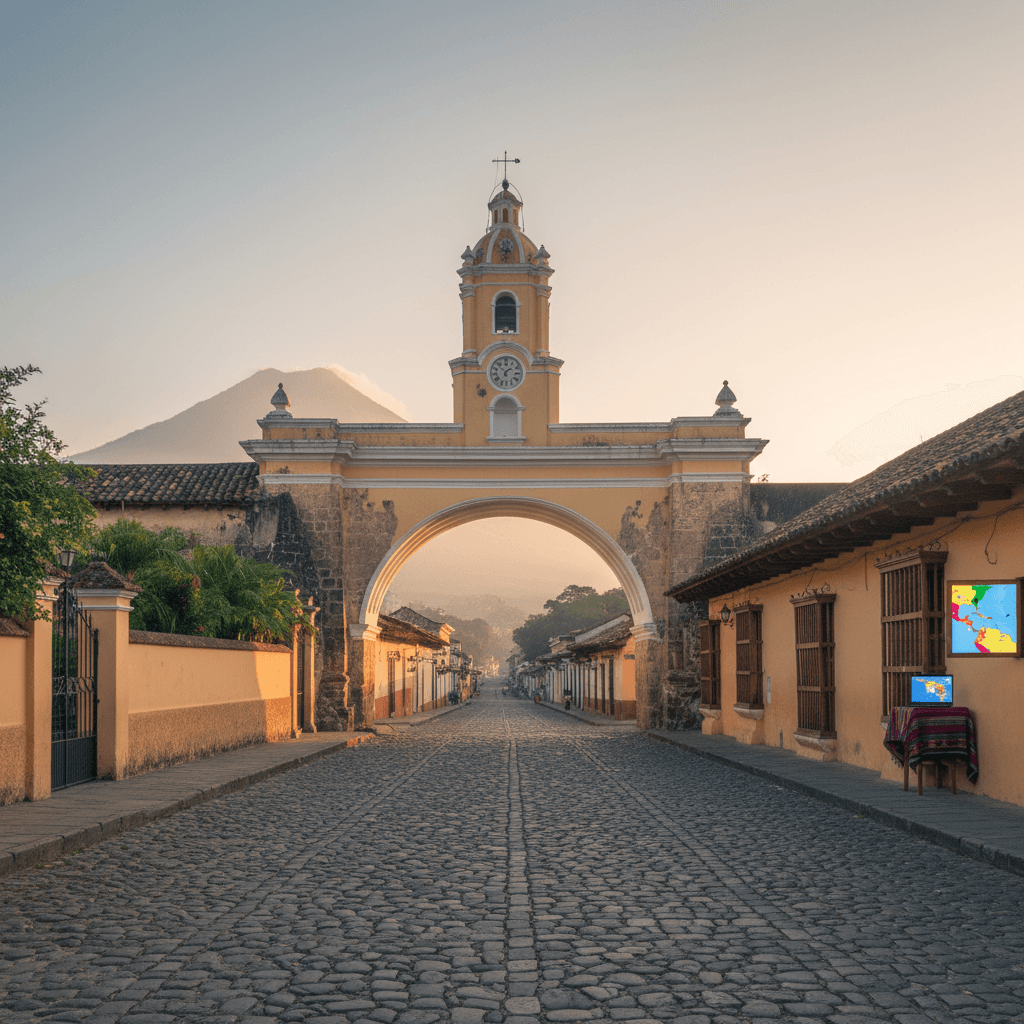
Antigua Guatemala
🇬🇹 Guatemala
The Vibe: Volcanoes, Cobblestones, and Eternal Spring
Antigua hits different. While Tulum feels like a curated Instagram set and Medellín pulses with high energy, Antigua is a slow burn. It is a place where you wake up to the smell of woodsmoke and roasting coffee, framed by the massive silhouettes of the Agua, Fuego, and Acatenango volcanoes. The city is a UNESCO World Heritage site, meaning those pastel Spanish Baroque facades and chunky cobblestone streets aren't going anywhere. It feels lived-in and authentic, blending Mayan traditions with a modern nomad infrastructure that doesn't feel like it’s trying too hard.
The pace of life here is dictated by the "Eternal Spring" weather. You will spend your mornings working in sun-drenched courtyards and your afternoons hiking or wandering through ruins. There is a grit to it, though; the sidewalks are narrow, the stones will wreck your ankles if you wear the wrong shoes, and the occasional rumble from Fuego reminds you that nature is very much in charge. It is a community where people actually know their neighbors, and the social scene revolves more around volcano treks and brewery hangouts than flashy nightclubs.
Cost of Living & Logistics
You can live well here for $1,500 a month, though that number is creeping up as more remote workers discover the valley. If you are on a tight budget, you can get by on $1,000 by living slightly outside the city center and sticking to Q10 to Q20 street food like pupusas and tamales. Mid-range life usually lands around $1,500 to $1,800, which covers a nice one-bedroom apartment and frequent meals at spots like Orgánica.
- Housing: Expect to pay Q5,000+ ($650+) for a central one-bedroom. Outskirts like El Cubo offer better value at Q3,000+.
- Food: A mid-range dinner costs about Q50 to Q80 ($6.50 to $10), while a high-end meal at a place like Caoba Farms will run Q100+ ($13+).
- Transport: Uber is reliable and cheap for short hops, usually Q20 to Q50 ($2.60 to $6.50). Chicken buses are an experience at Q10, but they aren't for the faint of heart.
Where to Plant Your Flag
Choosing a neighborhood depends on how much you value sleep versus proximity to the action. Most nomads gravitate toward the Centro Histórico for the first month to be near the cafes and coworking hubs, but long-termers often drift toward the edges for more space.
Centro Histórico (El Centro)
This is the heartbeat of Antigua. You are steps away from the markets and the best coffee shops. It is incredibly walkable, but the noise of tuk-tuks and tourists is constant. Rents here are the highest, often Q5,000+ per month.
El Carmen / La Merced
A favorite for expats and families. It is north of the main plaza, offering a slightly quieter atmosphere while still being a 10-minute walk from everything. The WiFi in these older colonial homes can be hit or miss, so check the router before signing a lease.
The Outskirts (toward El Cubo)
If you want peace and views of the valley, head south. Rents drop to Q3,000+, and you have easy access to the Carmona Trails for mountain biking. You will rely on Uber more often, but the extra space is usually worth the Q30 fare into town.
Connectivity and Coffee
Internet is the one thing that keeps Antigua from being a perfect nomad ten. It is property-dependent; some apartments have fiber reaching 100 Mbps, while others struggle at 5 Mbps. Most professionals head to Impact Hub, which is the gold standard for Q800 a month. It has reliable power backups, which are necessary during the rainy season's occasional outages.
- Impact Hub: Best community, great coffee, and solid Q80 day passes.
- Selina: Good for meeting people and coliving, though the work area can get crowded.
- El Cubo: A modern, airy space about 15 minutes away by Uber. It is the most "Silicon Valley" vibe in the city.
- Mobile Data: Buy a Tigo SIM. It has the best coverage in the highlands and usually costs about Q100 for 10GB.
The Reality Check
Safety is a common conversation topic. While violent crime is rare in the tourist areas, petty theft is a reality. Don't walk with your phone out in the markets and avoid unlit alleys after dark. For healthcare, Hospital Hermano Pedro handles the basics, but for anything major, you'll be heading an hour away to Guatemala City. Most nomads use SafetyWing for peace of mind. Lastly, the 90-day tourist visa is standard, but you can extend it once or do a quick border run to El Salvador or Mexico to reset the clock.
The Bottom Line
Antigua remains one of the most accessible hubs in Central America for those who want a high quality of life without a massive price tag. Most nomads find they can live comfortably on $1,500 a month, though you can definitely push that down to $1,000 if you're willing to live on the outskirts and cook at home. While prices in the historic center have climbed recently, the value for money still beats out spots like Tulum or Medellín.
Monthly Budget Breakdowns
- The Budget Tier (~$1,000): You'll be looking at studio apartments in neighborhoods like El Cubo or the quiet outskirts for Q2,500 to Q4,000 ($320 to $520). Stick to street food and local markets like the Mercado Central to keep costs low.
- The Mid-Range Tier (~$1,500): This is the sweet spot for most. It covers a 1-bedroom apartment in the center for Q4,000 to Q6,000 ($520 to $780), frequent dinners at spots like Orgánica, and a dedicated desk at Impact Hub.
- The Comfortable Tier ($2,000+): At this level, you're looking at luxury colonial homes with private courtyards for Q6,000+ ($780+), upscale dining at Caoba Farms, and private shuttles for weekend trips.
Housing by Neighborhood
Centro Histórico (El Centro)
This is the heart of the action. You're steps away from the best coffee shops and the famous yellow arch. Expect to pay a premium for the location, with rents often starting at Q5,000. It's walkable and social, but the cobblestones can get noisy with traffic and tourists.
El Carmen & La Merced
Expats and families often gravitate here. It’s slightly north of the main plaza, offering a quieter vibe while staying within a 10 minute walk of the center. Rents are comparable to El Centro, but you get more peace and quiet for your money.
The Outskirts (toward El Cubo)
If you want more space and nature, look toward the edges of town. Rents drop significantly here, starting around Q3,000. You'll need to factor in Q20 to Q30 for an Uber or a 15 minute ride into town, but the views of the volcanoes are often better.
Eating and Drinking
Food costs vary wildly depending on how "local" you want to go. A quick lunch of pupusas or tamales from a street stall will run you Q10 to Q20 ($1.30 to $2.60). A mid-range meal at a nice cafe like Artista de Café costs between Q50 and Q80 ($6.50 to $10). If you're heading out for a fancy dinner or craft beers at a local brewery, expect to pay Q100 ($13) or more per person.
Workspace and Connectivity
Budgeting for a workspace is a smart move since home internet can be hit or miss. Impact Hub is the gold standard here, charging Q80 ($10) for a day pass or Q800 ($104) for a month. Selina is another popular choice at Q60 ($8) per day. For mobile data, travelers recommend picking up a Tigo SIM card. A 10GB data package costs about Q100 ($13) and generally offers better coverage than Claro when you're out exploring.
Getting Around
Antigua is incredibly walkable, so your transport costs might actually be zero on most days. When you do need a lift, Uber is reliable and cheap, with most trips within the city costing Q20 to Q50 ($2.60 to $6.50). For longer hauls, like getting from the airport in Guatemala City, a private shuttle or Uber will cost around $25. The local "chicken buses" are an experience and only cost Q10, but they aren't the best for carrying expensive laptops or luggage.
For Nomads and Social Butterflies: Centro Histórico
If you want to be in the thick of it, El Centro is your home base. Most nomads settle here because it is where the action happens. You are steps away from the best cafes, the iconic yellow arch, and the central park. It is the most walkable part of town, meaning you will rarely need an Uber unless you are heading to the airport.
The social scene is centered around Impact Hub, which is the gold standard for remote work in the city. For Q800 a month, you get reliable speeds and a community of people who actually get work done. When you aren't working, you will likely be grabbing a coffee at Artista de Café or browsing the local markets. Keep in mind that convenience comes with a price tag. Rents here usually start around Q5,000 per month, and the cobblestone streets can get noisy with tourist traffic and late night bar crowds.
- Best for: Networking, cafe hopping, and short term stays.
- Rent: Expect to pay $650 to $800+ for a decent 1BR.
- Vibe: High energy, historic, and slightly touristy.
For Long Term Expats: El Carmen and La Merced
Just a ten minute walk north of the central plaza, these neighborhoods offer a more residential feel without sacrificing the colonial charm. Expats often prefer this area because the streets are wider and quieter. You still have easy access to Selina, which is great for a backup coworking space or a quick drink, but you can retreat to a much calmer house at the end of the day.
The WiFi in these older colonial homes can be hit or miss, so always ask for a speed test before signing a lease. You will find plenty of small grocery stores and local "tiendas" here, making it feel more like a community and less like a vacation spot. It is the perfect middle ground for someone staying six months or longer who wants to feel like a local.
- Best for: Slow travelers and those who value sleep.
- Rent: $520 to $750 for mid range apartments.
- Vibe: Authentic, leafy, and relaxed.
For Families and Nature Lovers: The Outskirts
If you have kids or just need more space for your money, look toward the edges of town, specifically heading out toward El Cubo or the areas near Carmona Trails. You will get much more square footage, often with a private garden or volcano views, for a fraction of the price of a Centro studio. Rents can drop as low as Q3,000 for a spacious home.
The tradeoff is the commute. You will rely on Uber, which costs about Q20 to Q30 per trip, or the local chicken buses for Q10. Families love being close to the hiking trails and the more modern amenities at El Cubo, which features a massive, airy coworking space and a great on site cafe. It is peaceful, safe, and far from the weekend crowds that descend on the city center.
- Best for: Peace and quiet, hikers, and those on a budget.
- Rent: $400 to $600 for larger properties.
- Vibe: Rural, green, and quiet.
For Solo Travelers and Party Seekers: El Cascada
This area is the heartbeat of Antigua's nightlife and backpacker culture. If you are traveling solo and want to meet people instantly, this is where you stay. The neighborhood is packed with bars, museums, and hostels that host nightly events. It is easy to find a group for an Acatenango volcano hike or a shuttle to Lake Atitlán from here.
Safety requires a bit more attention here after dark. Stick to the main well lit roads and avoid walking alone in quiet alleys late at night. The accommodations lean toward the basic side, but you are paying for the location and the social access. Most solo travelers find the tradeoff worth it for a few weeks while they find their footing in Guatemala.
- Best for: Meeting people and nightlife.
- Rent: $320 to $500 for basic studios or private rooms.
- Vibe: Lively, younger, and social.
Connectivity Realities
Internet in Antigua is a bit of a mixed bag; it's significantly more reliable than what you'll find at Lake Atitlán, but it still requires some vetting before you sign a lease. Most modern apartments and hotels offer speeds between 5 and 100 Mbps. However, thick colonial walls and aging infrastructure in the historic center can lead to dead zones. If you're hopping on Zoom calls, always ask for a speed test screenshot before booking an Airbnb.
For your mobile backup, Tigo is the undisputed king of coverage in Guatemala. It generally outperforms Claro, especially if you plan on taking your laptop to more remote spots or hiking nearby volcanoes. You can grab a SIM card at the airport or any local shop for about Q100 ($13), which usually nets you 10GB of data. If your phone supports it, an eSIM via Airalo works well for immediate data upon arrival, though local SIMs are cheaper for long-term stays.
Top Coworking Spaces
When the home WiFi fails or you just need a social atmosphere, Antigua has a few heavy hitters that cater specifically to the remote work crowd. These spots offer the most stable connections in the city, often paired with backup generators or secondary internet lines.
- Impact Hub: This is the gold standard for nomads in town. It features a beautiful mix of indoor and outdoor workspaces and a community that's actually active. A day pass runs about Q80, while a monthly membership is Q800. The free coffee is decent, and the networking events are the best way to meet other professionals.
- Selina: Located near the La Merced church, Selina is the go-to for the younger, social-heavy crowd. It's a coliving and coworking hybrid with a day pass priced at Q75-100. It’s perfect if you want to roll out of bed and straight into a meeting, though it can get a bit loud during peak hostel hours.
- El Cubo: If you need a serious, modern office environment and don't mind a commute, head here. It’s about a 15-minute Uber or a long walk from the center. It’s spacious, incredibly professional, and has an on-site cafe. It feels less like a traveler's hub and more like a high-end tech office.
Laptop-Friendly Cafes
If you prefer a more casual "cafe crawl" style of working, Antigua’s coffee scene is world-class. Most cafes expect you to buy a coffee or a meal every couple of hours if you're taking up a table with a laptop. Speeds in these spots usually hover around 10 to 15 Mbps.
- Artista de Café: This spot is a favorite for its minimalist aesthetic and excellent pour-overs. It’s usually quiet enough for focused work, though power outlets can be a hot commodity.
- Orgánica: A great choice if you want to pair your emails with a healthy lunch. The WiFi is consistent, and the atmosphere is relaxed.
- Fernando’s Kaffee: Famous for its chocolate and resident cat, this spot has a lovely courtyard that stays cool even when the afternoon sun hits.
Practical Workflow Tips
Power outages aren't a daily occurrence, but they happen often enough that you should keep your devices charged. Many seasoned nomads carry a portable power bank and use their Tigo hotspot as a failover. Since the city is small and walkable, you can easily pivot from a dark cafe to a coworking space with a backup generator in about ten minutes.
If you're planning a stay longer than a month, look into local Facebook groups for apartment rentals. Many landlords in the Centro Histórico are upgrading to fiber optic to attract digital nomads, so don't be afraid to negotiate for a speed upgrade if you're signing a three-month lease.
Staying Safe on the Cobblestones
Antigua is generally considered one of the safest hubs in Guatemala, but it isn't a bubble. Most nomads feel perfectly comfortable walking the Centro Histórico during the day. The biggest nuisance you'll face is petty theft. Pickpockets are active in crowded spots like the Mercado Central and near the Arco de Santa Catalina, so keep your phone zipped away and don't hang your bag on the back of your chair at cafes.
Once the sun goes down, the vibe shifts slightly. Stick to well lit main streets and avoid unlit alleys on the outskirts of town. If you've been out at a bar in El Cascada or attending a late meetup at Impact Hub, it's smarter to call an Uber than to walk home alone, even if it's only a ten minute trek. These rides usually cost between Q20 and Q50 ($2.60 to $6.50) and provide a lot of peace of mind.
If you're planning on hiking, never go alone. While trails like Acatenango are bucket list items, they require a guide for safety and navigation. For emergencies, keep these numbers saved: 110 for the police and 125 for an ambulance or fire services.
Healthcare and Medical Facilities
You'll find that basic medical care in Antigua is surprisingly accessible and affordable. For minor issues, local pharmacies like Farmacia Roca are everywhere. Pharmacists here can often give advice and sell medications over the counter that would require a prescription elsewhere.
For more serious concerns, the city has several private clinics. Hospital Hermano Pedro is a common choice for expats and can handle most routine medical needs. However, the local consensus is clear: for any major surgery or specialized emergency care, you'll want to head into Guatemala City, which is about an hour away. The facilities there are world class and much better equipped for complex cases.
- Travel Insurance: Most long term travelers use SafetyWing or a similar provider. It is a must have here because private hospital bills for foreigners can stack up quickly if you aren't covered.
- Water Safety: Do not drink the tap water. Most rentals provide five gallon jugs of purified water (ecofiltros), and restaurants use ice made from filtered water.
- Air Quality: Keep an eye on volcanic activity. While seeing Fuego erupt from your rooftop is cool, ash fall can occasionally irritate your lungs or eyes if you have sensitivities.
Practical Wellness Tips
The altitude and the cobblestones are the two things that catch nomads off guard. Antigua sits at about 5,000 feet, so you might feel winded during your first few days. Stay hydrated and take it easy on the Gallo beers until you've acclimated. Also, leave the heels and thin sandals at home. The streets are notoriously uneven, and twisted ankles are the most common "medical emergency" for newcomers.
If you need a mental health break or a quiet space to decompress, head to Caoba Farms on the edge of town. It is a favorite spot for the nomad community to grab organic food and touch grass when the bustle of the tourist center gets too loud.
Antigua is one of those rare places where your own two feet are usually the best way to get around. The city is laid out in a classic grid, making it incredibly easy to find your way. However, those famous cobblestone streets are no joke. They’re uneven, slippery when it rains, and will absolutely destroy a cheap pair of flip-flops. Most nomads quickly learn to invest in sturdy sneakers or boots for daily life here.
Walking and the Grid
The city's Centro Histórico is compact enough that you can walk from one end to the other in about 15 to 20 minutes. Everything is anchored by the Parque Central. If you're staying in popular nomad hubs like El Carmen or near La Merced, you'll rarely need a vehicle for your daily coffee run or commute to Impact Hub. Just keep your wits about you at night; while the center is generally safe, it's better to take a ride if you're heading back to the outskirts after dark.
Ride-Hailing and Taxis
When your legs give out or you're heading to a spot further out like El Cubo or Caoba Farms, Uber is the gold standard. It's reliable, affordable, and saves you the hassle of negotiating prices in Spanish. Most short trips within the city or to the immediate outskirts cost between Q20 and Q50 ($2.60 to $6.50).
- Uber: Best for late nights and grocery runs. Usually arrives within 5 to 10 minutes.
- Tuk-tuks: These three-wheeled taxis are everywhere. They're great for short hops, but always agree on the price before you hop in. Expect to pay Q10 to Q20 for most rides within town.
- Taxis: Traditional cabs exist but are generally pricier than Ubers. They're useful if your phone dies or you're in a spot with poor signal.
Public Transport: The Chicken Bus
For a truly local experience, you have to try the chicken bus (camioneta) at least once. These brightly painted, retired school buses from the US are the backbone of Guatemalan transport. They’re loud, crowded, and fast. You can catch them at the main terminal near the municipal market for about Q10 ($1.30). They’re perfect for a budget day trip to nearby villages, but keep a tight grip on your belongings as pickpockets occasionally target these routes.
Getting to and from the Airport
La Aurora International Airport (GUA) in Guatemala City is about an hour away, though traffic can easily double that time during rush hour. Most nomads avoid the stress of public buses with luggage and opt for a few specific alternatives:
- Private Shuttles: You can book these through services like GottoGo for around $25. It's a door-to-door service that’s much safer and more comfortable.
- Uber: You can take an Uber directly from the airport to Antigua for roughly Q200 to Q300 ($25 to $40). It’s often the most convenient option if you haven't pre-booked.
- Shared Shuttles: These run on a fixed schedule and are a middle-ground price point, usually around $15 per person.
Wheels and Day Trips
If you want more freedom, you can rent a bicycle or a scooter for around Q50 ($6.50) per day. It's a fun way to explore the valley, but be warned that the cobblestones make for a very bumpy ride. For longer weekend trips to Lake Atitlán or the Acatenango volcano, almost everyone uses tourist shuttles. You can book these at any travel agency in the Centro or through your hostel, like Selina. These shuttles are safer and more direct than trying to piece together local bus routes with heavy gear.
The Language Balance
In Antigua, Spanish is the undisputed king. You'll hear a melodic, relatively clear version of the language influenced by both Ladino and Quiché Mayan roots. Because the city is a world renowned hub for Spanish language schools, locals are incredibly patient with learners. They're used to foreigners stumbling through their conjugations over a morning coffee at Artista de Café.
While you can get by with English in high end hotels, tourist focused cafes, and coworking spaces like Impact Hub, that bubble pops the moment you step into a local market or hail a chicken bus. Most nomads find that having at least a basic grasp of Spanish makes life significantly easier and cheaper. Without it, you'll struggle to negotiate prices at the Mercado Municipal or explain a specific maintenance issue to a landlord.
Essential Communication Tools
Don't rely on finding consistent English speakers outside of the Centro Histórico. Download Google Translate with the Spanish offline dictionary before you arrive. It's a lifesaver when you're trying to decipher a menu or talk to a driver. For daily interactions, keep these basics in your back pocket:
- "Hola" (Hello) and "Buenas" (A shortened, common greeting for any time of day)
- "¿Cuánto cuesta?" (How much does it cost?)
- "La cuenta, por favor" (The bill, please)
- "¿Dónde está el baño?" (Where is the bathroom?)
- "Con permiso" (Excuse me, used when moving through a crowd)
Staying Connected
Communication isn't just about what you say, it's about staying online. Tigo is the gold standard for mobile coverage in Guatemala. It generally outperforms Claro, especially if you plan on hiking Acatenango or taking weekend trips to Lake Atitlán. You can pick up a SIM card at the airport or at various shops around town for about Q100, which usually nets you 25GB of data.
For those with newer phones, Airalo offers convenient eSIMs, but they're often pricier than buying a local physical SIM. WhatsApp is the universal language for business here. Whether you're booking a shuttle through GottoGo, ordering food, or messaging a new contact, you'll do it through WhatsApp. If a business has a phone number listed, assume they want you to text them there first.
Social Nuances
Guatemalan culture is polite and formal. It's common to greet people with a "Buenos días" or "Buenas tardes" when entering a small shop or a shared van. Skipping this can make you look a bit brusque. If you're staying long term, consider enrolling in one of the many local Spanish schools for a week or two. It's the fastest way to meet people and move beyond the "tourist" label. Most schools offer one on one lessons for very affordable rates, often around $120 to $150 per week for 20 hours of instruction.
Digital nomads often congregate at Selina or Impact Hub, where English is the primary language of business and socializing. If you're feeling isolated, these are your best bets for finding a community that speaks your native tongue. However, the real magic of Antigua happens when you can share a joke with the lady selling pupusas for Q10 on the street corner. A little Spanish goes a very long way here.
The Eternal Spring
Antigua is famous for its "eternal spring" climate, but that doesn't mean every month looks the same. Because it sits in a highland valley at 1,500 meters, you won't deal with the sweltering humidity of the coast. Instead, expect days between 18°C and 25°C (64°F to 77°F) throughout the year. While the temperature is consistent, the rainfall is what actually dictates the local rhythm.
The Dry Season: November to April
This is peak season for a reason. If you're coming for the world class volcano trekking, this is your window. From December to February, the sky is usually a crisp, cloudless blue, providing perfect visibility for watching Fuego erupt from the top of Acatenango. It's the most social time in town, with cafes like Artista de Café and coworking spots like Impact Hub at their liveliest.
- Pros: Perfect hiking conditions, vibrant festivals, and predictable sunny days for outdoor work sessions.
- Cons: Dust can kick up on the cobblestones, and accommodation prices in the Centro peak, especially around Semana Santa.
- Keep in mind: Nights get surprisingly chilly in January. You'll want a decent jacket if you're walking home from a bar in El Cascada after dark.
The Rainy Season: May to October
Don't let the "rainy" label scare you off. Usually, the mornings stay sunny and clear, allowing you to get your deep work done or run errands. The clouds typically roll in around 2:00 PM or 3:00 PM, followed by a heavy downpour that lasts a couple of hours. By dinner time, it often clears up again.
- Pros: The surrounding volcanoes turn a brilliant, lush green. Rents are more negotiable, and the tourist crowds at the Arch of Santa Catalina thin out significantly.
- Cons: September and October are the wettest months. Trails become muddy and slick, which can make the Acatenango climb much more grueling and dangerous.
- Nomad Tip: This is the best time to snag a long term deal on an apartment in quieter areas like El Carmen. Just make sure your rental has a solid roof and good drainage; those tropical storms are no joke.
When to Visit for Events
If you want to see Antigua at its most spectacular, aim for Lent and Holy Week (Semana Santa). The city transforms with elaborate processions and intricate carpets made of colored sawdust and flowers. It is a bucket list experience, but it requires planning. Prices for Airbnbs can triple, and the 90 day tourist visa goes quickly, so book your stay months in advance.
For those who prefer a quieter pace, November is a sweet spot. The rains are tapering off, the landscape is still green, and the Giant Kite Festival in nearby Sumpango on November 1st is a massive cultural highlight that most nomads absolutely love.
The Final Verdict
Most digital nomads find that November through March offers the best balance of weather and social activity. You'll get the best out of the outdoor lifestyle, from coffee farm tours at Caoba Farms to mountain biking the Carmona Trails, without having to check the radar every afternoon. If you're on a tighter budget and don't mind a daily afternoon thunderstorm, the "green season" between May and August offers plenty of value and a more authentic, local feel.
Getting Settled and Staying Connected
Living in Antigua feels like stepping back into a Spanish colonial dream, but the logistics are surprisingly modern if you know where to look. Most nomads land at La Aurora International Airport in Guatemala City and take a pre-booked shuttle or an Uber for about $25. Once you're in town, forget cars. The cobblestone streets are meant for walking, though you'll want sturdy shoes to handle the uneven stones. For longer trips or when your legs give out, Uber is reliable and cheap, usually costing between Q20 and Q50 ($2.60 to $6.50) for a cross-town ride.
Internet reliability is the biggest variable here. While some modern apartments offer speeds up to 100 Mbps, older colonial buildings might struggle to hit 5 Mbps. If your work depends on video calls, head to Impact Hub. It's the gold standard for the local community, offering indoor and outdoor workspaces for Q80 ($10) a day or Q800 ($104) a month. Selina is another solid bet near La Merced, especially if you want a social atmosphere. For a casual afternoon of emails, Artista de Café and Orgánica have decent WiFi and excellent local beans.
Pick up a Tigo SIM card as soon as you arrive. It has the best coverage for remote hikes and even works across borders in Mexico. You can expect to pay around Q100 ($13) for 10GB of data. For banking, stick to ATMs inside banks or secure vestibules to avoid card skimmers. Wise and Revolut work well here for withdrawing Quetzales without massive fees.
Cost of Living and Neighborhoods
Antigua remains incredibly affordable compared to digital nomad hubs in Mexico or Costa Rica. A comfortable lifestyle usually clocks in around $1,500 a month. If you're on a tighter budget, you can get by on $1,000 by living slightly further out and eating at local markets. Street food like pupusas or tamales will only set you back Q10 to Q20 ($1.30 to $2.60), while a nice meal at a mid-range spot costs about Q60 ($8).
Centro Histórico (El Centro)
- Best for: Being in the heart of the action and walking to cafes.
- Rent: Q5,000+ ($650+) for a decent 1BR.
- Pros: Everything is within a five minute walk; high social energy.
- Cons: Noisy at night and higher prices for everything.
El Carmen and La Merced
- Best for: Expats and those staying a few months.
- Rent: Q4,000 to Q6,000 ($520 to $780).
- Pros: Quieter streets but still very close to the best coffee shops.
- Cons: WiFi in older homes can be hit or miss.
The Outskirts (toward El Cubo)
- Best for: Long-term stays and peace.
- Rent: Q3,000+ ($390+).
- Pros: Much more space for your money and easy access to nature trails.
- Cons: Requires a 15 minute Uber to get into the center.
Safety, Health, and Visas
Guatemala grants most travelers a 90-day tourist visa on arrival. If you want to stay longer, you can apply for a one-time extension or do a "border run" to El Salvador or Mexico. Just keep in mind that the CA-4 agreement means time spent in El Salvador, Honduras, or Nicaragua counts toward your 90 days.
Safety is mostly about common sense. Antigua is generally safe during the day, but avoid walking alone in unlit alleys or on the outskirts after dark. Petty theft is the main concern, especially in crowded spots like the central market. Keep your phone tucked away and don't flash expensive camera gear. If you get sick, Hospital Hermano Pedro handles basic issues well, but for anything major, you'll want to head to Guatemala City. Most nomads carry SafetyWing or similar insurance for peace of mind.
Weather-wise, the "eternal spring" label is accurate. Expect temperatures between 18°C and 25°C (64-77°F) year-round. The dry season from November to April is prime time for the famous Acatenango volcano hike. If you're here during the rainy season from May to October, plan your outdoor adventures for the mornings, as the downpours usually hit in the late afternoon.
Need visa and immigration info for Guatemala?
🇬🇹 View Guatemala Country GuideHidden Gem
Worth the effort