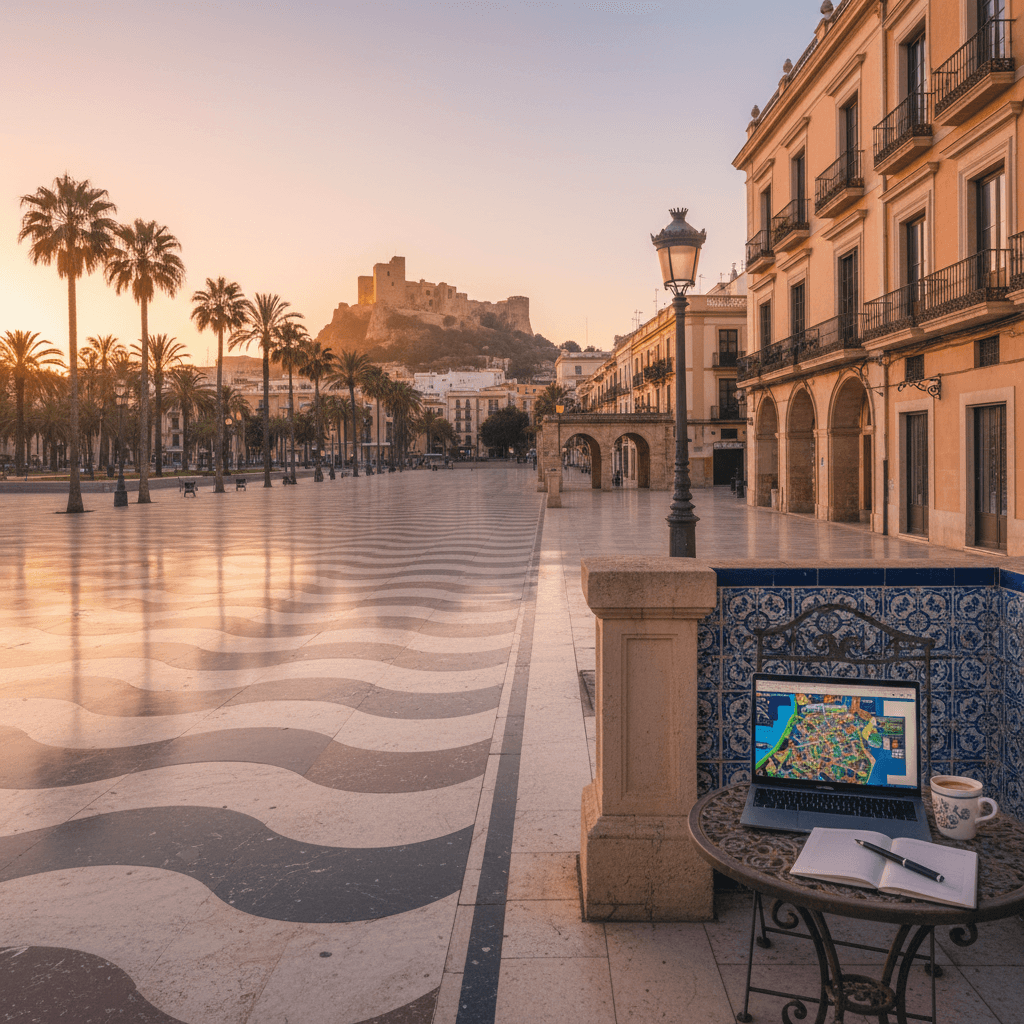
Alicante
🇪🇸 Spain
The Sweet Spot of the Costa Blanca
Alicante often gets overlooked in favor of its bigger cousins like Valencia or Barcelona, but that is exactly why it works so well for remote workers. It is a city that doesn't try too hard. You get the Mediterranean lifestyle without the frantic tourist energy of the Balearics or the high price tags of Madrid. It feels like a real Spanish town that happens to have a massive, golden beach attached to its front yard.
The vibe here is defined by the Postiguet Beach and the Castillo de Santa Bárbara, which looms over the city. You will find yourself living between the narrow, flower-filled streets of El Barrio (the old town) and the modern, palm-lined boulevards of the Centro. It is a walkable, sun-drenched playground where the afternoon siesta is still respected and the evenings start late with a cold caña and a plate of olives.
A Lifestyle Built on Sun and Salt
Life in Alicante revolves around the outdoors. With over 300 sunny days a year, you are rarely stuck inside. Nomads here tend to adopt a split schedule; working intensely in the morning, taking a long lunch or a dip in the sea at 2:00 PM, and finishing up as the sun starts to dip. It is a city that encourages you to slow down, even if your Slack notifications are blowing up.
The community is a mix of local students, Spanish families, and a growing international remote work crowd. Unlike the transient feel of some nomad hubs, Alicante feels lived-in. You will get to know your barkeep and the person selling you fruit at the Mercado Central. It is comfortable, safe, and surprisingly affordable for a coastal city in Western Europe.
The Practical Numbers
While Spain has seen prices rise recently, Alicante remains one of the best value-for-money spots on the coast. You can live a high-quality life here for significantly less than in northern Europe or North America.
- One-bedroom apartment (City Center): Expect to pay between €850 and €1,100 per month.
- Monthly groceries: A single person usually spends around €250 to €300.
- Daily Menu (Menú del Día): A full three-course lunch with wine typically costs €12 to €15.
- Coworking hot desk: Monthly rates in the city hover around €150 to €200.
Why Nomads are Moving Here
The introduction of the Spanish Digital Nomad Visa has been a game changer for non-EU citizens. If you can show a monthly income of at least €2,849, you can secure a residency that lasts up to five years. This has brought a fresh wave of professional energy to the city, leading to better infrastructure for remote work.
The internet is another major draw. Spain ranks 4th globally for tech innovation, and Alicante is no exception. Even in older apartments in the historic center, you will frequently find symmetrical fiber-optic connections reaching 600Mbps or 1Gbps. You can take a video call from a cafe on the Explanada de España without worrying about the connection dropping.
The Emotional Draw
There is a specific feeling when you walk down the Explanada at sunset. The marble tiles under your feet are polished smooth, the palm trees are swaying, and the smell of roasting salt and grilled seafood is everywhere. It is the feeling of having found a loophole in the system. You are working, you are productive, but you are doing it in a place that prioritizes joy over the grind. Alicante isn't just a place to check emails; it is a place to remember that life is meant to be enjoyed outside of a screen.
The Price of Mediterranean Living
Alicante hits that sweet spot between big city amenities and small town prices. It is significantly more affordable than Madrid or Barcelona, yet it provides the same high quality of life and infrastructure. For most digital nomads, a monthly budget of €1,800 to €2,400 covers a comfortable lifestyle, including a private apartment, eating out regularly, and a dedicated workspace.
The local economy caters to both locals and a steady stream of expats, which keeps prices competitive. You can still find a three course menu del dia for €12 to €15 in the city center. If you head just a few blocks away from the main tourist drag of Explanada de España, your euros will go even further.
Housing and Neighborhoods
Rent is your biggest variable here. While prices have ticked up recently, they remain manageable compared to other coastal hubs like Valencia or Málaga. Most nomads look for short term rentals on platforms like Idealista or Fotocasa, though local Facebook groups often have better deals for stays longer than three months.
- El Centro: Expect to pay €900 to €1,200 for a modern one bedroom apartment. This puts you within walking distance of everything, but it can get noisy on weekends.
- San Juan Playa: A bit further out but connected by the L3 tram, this area offers more spacious apartments with pools. Rent here typically ranges from €850 to €1,100.
- Carolinas Altas: This is the go to for budget conscious travelers. It is a traditional, gritty neighborhood where you can find older apartments for €650 to €800 while staying close to the action.
Daily Expenses and Lifestyle
Groceries in Alicante are a highlight, especially if you shop at the Mercado Central. The quality of produce, seafood, and local wine is incredible for the price. A weekly grocery run for one person usually averages around €50 to €70.
- Coffee: A cafe con leche at a local spot is about €1.80.
- Beer: A caña (small beer) is usually €2.00, often served with a small tapa.
- Coworking: A hot desk at spaces like ULab or Glub Center will cost you roughly €150 to €200 per month. Daily passes are usually around €20.
- Transport: The city is highly walkable, but a single tram or bus ride is €1.45. Most residents buy a rechargeable card to bring the per trip cost down to about €0.80.
Visa Financial Requirements
If you are planning to stay long term via the Digital Nomad Visa, the Spanish government has set specific income thresholds. You need to prove a monthly income of at least €2,763. This is pegged to the national minimum wage and ensures you can support yourself without relying on local social services. The benefit is a flat tax rate of 24% on your earnings for the first four years, which is a massive draw for high earners.
While the visa requires a higher income than the actual cost of living in Alicante, it opens doors to the entire Schengen Area. Most expats find that even with these requirements, the lower cost of services and leisure in Alicante allows for a much higher standard of living than they would have in Northern Europe or North America.
For Digital Nomads: El Barrio and Centro
If you want to be in the thick of things, the historic center and the adjoining El Barrio are your best bets. This is the heart of the city where the architecture is oldest and the streets are narrowest. You will find most of the coworking spaces here, like Ulab or Glokal, which are favorites for people who need reliable fiber optic internet and a community of other remote workers. It is predictably loud on weekends, but you can't beat the proximity to the harbor and the Postiguet beach.
- Rent: Expect to pay between €900 and €1,200 for a decent one bedroom apartment.
- Vibe: High energy, very walkable, and packed with tapas bars.
- Internet: Excellent; most apartments have high speed fiber.
Expats often recommend looking for apartments near the Central Market. It is slightly more residential than the tourist core but keeps you within a five minute walk of everything. You will find plenty of cafes like Madness Coffee where you can get some work done while enjoying a specialty roast.
For Long Term Expats: San Blas and Carolinas
Those staying for a year or more on a Digital Nomad Visa often migrate slightly inland to San Blas or Carolinas. These neighborhoods feel like "real" Spain. You won't see many menus with pictures of food here. Instead, you get local bakeries, hardware stores, and a much lower price tag on your monthly lease. It is a bit of a hike to the beach, usually 20 to 25 minutes on foot, but the savings make it worthwhile for many.
- Rent: You can find spacious two bedroom flats for €750 to €950.
- Vibe: Authentic, quiet at night, and very local.
- Pros: Close to the main train station for easy weekend trips to Madrid or Valencia.
For Families: Playa de San Juan
Families usually skip the city center entirely and head north to Playa de San Juan. It is technically a separate area but connected to the center by a 20 minute tram ride on the L3 line. The streets are wider, there are plenty of parks, and the schools are highly rated. Most housing here consists of "urbanizations," which are gated complexes with pools, tennis courts, and playgrounds.
- Rent: Larger three bedroom family apartments range from €1,200 to €1,600.
- Food: A mix of high end seafood restaurants and family friendly pizzerias.
- Lifestyle: Very active; people are always out running or cycling along the promenade.
The main draw here is the beach itself, which is massive and much cleaner than the city beach. It feels like a resort town in the summer, but it stays active enough in the winter that it doesn't feel like a ghost town.
For Solo Travelers: Santa Cruz
Solo travelers looking for that postcard version of Spain should look at Santa Cruz. It is the most picturesque part of the city, sitting right on the slopes leading up to the Santa Barbara Castle. The houses are white with blue trim and covered in flowers. It is mostly pedestrian, so it is very safe and quiet, though you will be climbing a lot of stairs to get home.
- Rent: Smaller studios often go for €800, though they are often booked as short term rentals.
- Vibe: Artistic, quiet, and incredibly scenic.
- Safety: Very high; the neighbors all know each other and keep an eye out.
Living here feels like being in a small village despite being a three minute walk from the main nightlife strip. It is perfect if you want a quiet sanctuary but want to be able to find a social scene the moment you step out of the neighborhood.
Connectivity and Speed
Spain has some of the best fiber optic coverage in Europe, and Alicante is no exception. You can expect reliable, high speed internet in almost every apartment rental or cafe in the city center. Most nomads find that even basic home setups easily reach 300 Mbps or 600 Mbps, which is plenty for heavy video calls or uploading large files. If you are staying in the Casco Antiguo, just be aware that the thick stone walls of older buildings can sometimes mess with your Wi Fi signal, so check if your host has a mesh system or boosters.
For mobile data, the coverage is excellent across the city and even down on Postiguet Beach. You can pick up a local SIM card from providers like Movistar, Vodafone, or Orange. A prepaid plan with a generous data allowance usually costs around €15 to €20 per month. If you are traveling through Europe, these plans typically include roaming, though you should double check the specific data caps for use outside of Spain.
Top Coworking Spaces
Alicante has a growing scene of dedicated workspaces that cater to both locals and international nomads. These spots are great for when you need a professional environment or just want to meet people who aren't on vacation.
- Ulab: Located near the city center, this is one of the most popular hubs. It has a modern, industrial feel with plenty of natural light. A daily pass usually runs around €15, while a monthly flexible desk is approximately €150. They often host events, which makes it easier to plug into the local tech community.
- TerretUp: If you find yourself closer to the port or the commercial district, this is a solid choice. It offers a mix of private offices and open plan seating. They focus heavily on networking and professional growth, so it is a good spot if you are looking to collaborate with local entrepreneurs.
Laptop Friendly Cafes
If you prefer the hum of a coffee shop over a formal office, Alicante has plenty of spots where you won't be glared at for opening a laptop. The general rule is to avoid the tourist traps directly on the Explanada during peak lunch hours.
- Madness Coffee: A favorite for many expats. It has a cool, roastery vibe and plenty of seating over two floors. The coffee is excellent, and the Wi Fi is usually stable enough for most tasks.
- Sip and Wonder: This place is famous for its brunch, but it is also a very welcoming environment for remote workers during the week. It gets busy on weekends, so aim for a Tuesday or Wednesday morning to snag a good table near a power outlet.
- Baker and Co: Located a bit further from the main tourist drag, this cafe offers a quieter environment and great healthy food options. It is a reliable spot for a few hours of focused work.
Digital Nomad Visa and Costs
For those looking to stay longer than a standard 90 day tourist stint, the Spanish Digital Nomad Visa is a game changer. You will need to prove a monthly income of at least €2,763 to qualify. One of the biggest draws is the tax benefit, which allows for a flat 24% tax rate on income for the first four years. This makes Alicante an incredibly attractive base for high earners who want to enjoy the Mediterranean lifestyle without the price tag of Barcelona or Madrid.
Living costs here are quite manageable compared to other coastal European cities. While a coworking desk might cost you €35 to €70 depending on the city size and facilities, your biggest expense will be rent. A one bedroom apartment in the center usually averages between €850 and €1,100. If you are willing to stay just outside the immediate center, you can find much better value while still being a short walk or tram ride from the action.
Keeping it Safe on the Costa Blanca
Alicante is one of those cities where you can actually relax. It feels more like a large seaside town than a frantic metro area. Most nomads find the city incredibly safe, even when walking home late after a few tapas in El Barrio. The general vibe is laid back, and violent crime is almost unheard of in the center. That said, you still need to keep your wits about you in heavy tourist zones.
Pickpocketing is the main thing to watch for, especially around the Postiguet Beach boardwalk and the Explanada de España. If you are working from a cafe, don't leave your MacBook unattended while you grab a napkin. Thieves here are opportunistic rather than aggressive. In neighborhoods like El Centro and San Blas, you will feel perfectly comfortable day or night. Some expats suggest being a bit more cautious in parts of Virgen del Remedio or Juan XXIII at night, but these aren't areas where nomads typically hang out or stay anyway.
If you run into trouble, the local police (Policía Local) are generally helpful. Many officers in the city center speak at least a little English because of the massive expat and tourist population. For emergencies, the standard 112 number works for everything from police to ambulance services.
Healthcare and Hospitals
Spain's healthcare system is world class, and Alicante is no exception. If you are here on the Digital Nomad Visa, you will likely have private health insurance as part of your application requirements. This is actually a win because it gives you access to the private hospitals where wait times are shorter and English speaking staff are more common.
For private care, Hospital Quirónsalud Alicante is a top choice for the international community. It is modern, efficient, and they are used to dealing with foreign insurance providers. Another excellent option is Vithas Hospital Internacional Medimar, which has a solid reputation for specialized care. If you are just looking for a quick checkup or have a minor ailment, look for a "Centro de Salud" (health center) in your neighborhood. Just keep in mind that public centers might require a bit more patience and a translation app if your Spanish is rusty.
Pharmacies (Farmacias) are easy to spot by their bright green glowing crosses. They are everywhere in Alicante. Pharmacists in Spain can actually give quite a bit of medical advice and provide certain medications without a doctor's visit, which is great for minor issues like allergies or a stubborn cough. There is always a "Farmacia de Guardia" open 24 hours a day in the city; you can find which one is on duty by looking at the list posted on the door of any pharmacy.
Practical Safety Tips
- Water Quality: The tap water in Alicante is safe to drink, but it doesn't taste great because of the high mineral content. Most locals and long term nomads buy large 5 liter jugs from Mercadona or use a high quality filter pitcher.
- Sun Protection: Don't underestimate the Mediterranean sun. With over 300 sunny days a year, heatstroke is a more common "safety" issue for nomads than crime is.
- Emergency Apps: Download the AlertCops app. It is a Spanish government app that allows you to send a geo-localized alert to the police if you are in trouble or witness a crime.
- Beach Safety: Always check the flag color before swimming at Postiguet or San Juan. Green is good, yellow means caution, and red means stay out of the water entirely due to currents.
Insurance Costs
- Private Health Insurance: Expect to pay between €50 and €80 per month for a comprehensive policy with no copayments, which is the standard for visa holders.
- Pharmacy Visit: Most basic over the counter meds for colds or pain relief will set you back €5 to €10.
- Private Consultation: If you pay out of pocket for a specialist without insurance, it usually costs around €80 to €120 per visit.
The Tram and Bus Network
Alicante is a city where you can largely ditch the car. The star of the show is the Alicante Tram (TRAM), a clean, reliable light rail system that connects the city center to the northern beaches and neighboring towns like Benidorm. Most nomads living in the center or near the Luceros station find it's the easiest way to get around. A single ticket for Zone A (the city center) costs €1.45, but you'll want to buy a Bono 10 card for €8.70, which brings the price per journey down significantly.
For areas the tram doesn't reach, the blue city buses (SuBús) fill the gaps. They run frequently, though traffic in the Casco Antiguo can make them slower than walking. You can use the same Bono 10 card on both the bus and the tram, making the transition seamless. If you are heading to the airport, the C-6 bus is the standard choice. It runs every 20 minutes and costs €3.85, dropping you right at the departures level.
Walking and Cycling
Alicante is incredibly walkable, especially if you stay in neighborhoods like El Centro or Ensanche Diputación. You can walk from the Central Market to the Postiguet Beach in about 15 minutes. The Explanada de España, the city's famous marble walkway, is the main artery for pedestrians and stays busy well into the night. It's flat, scenic, and entirely car-free.
Cycling is picking up steam, though the infrastructure isn't quite at the level of Valencia or Barcelona yet. The city has a bike-sharing program, but many expats prefer long-term rentals from local shops like Alicante Bike Rental. The ride along the coast toward San Juan Beach is beautiful, but be prepared for some narrow lanes once you move away from the waterfront. Expect to pay around €15 to €20 per day for a decent bike rental, or much less for monthly arrangements.
Taxis and Ridesharing
You won't find Uber or Lyft dominating the streets here. Instead, Cabify is the primary ridesharing app used by locals and nomads. It's often slightly cheaper and more professional than standard taxis. That said, Radio Taxi Alicante is very reliable. You can hail a white taxi on the street easily, and they all use meters. A typical 10 minute ride across the city center will usually set you back about €7 to €10. Late night surcharges apply, but they aren't exorbitant.
Exploring Further Afield
If you want to explore the mountains or the smaller villages in the Costa Blanca, renting a car is your best bet. You can find rentals near the train station for as low as €25 per day during the off-season, though prices spike in July and August. For longer trips to Madrid or Valencia, the AVE (high-speed train) leaves from the Alicante Terminal. You can reach Madrid in about 2.5 hours, with tickets starting around €30 if you book a few weeks in advance through the Renfe or Ouigo websites.
Quick Transport Costs
- Tram/Bus Single Ticket: €1.45
- Bono 10 (10 Journeys): €8.70
- Airport Bus (C-6): €3.85
- Average Taxi Ride (City): €8.00
- Monthly Transport Pass: €40.00
The Dual Language Reality
In Alicante, you are stepping into a bilingual world. While Spanish (Castellano) is the primary language for daily life, the region has its own co-official language called Valenciano. You will see it on street signs, official government buildings, and menus. Most locals switch between the two effortlessly, though in the city center, Spanish remains the dominant tongue for business and social interactions.
If you are coming from a major hub like London or New York, the level of English might surprise you. In tourist heavy areas like Postiguet Beach or the Barrio Santa Cruz, waiters and shopkeepers usually speak enough English to get by. However, once you wander into residential neighborhoods like San Blas or Carolinas Altas, that safety net disappears. Locals appreciate it when you lead with a "Hola" or "Buenos dias" before asking if they speak English.
Essential Phrases for Nomads
You don't need to be fluent to survive, but knowing the basics changes how locals treat you. Spanish culture is social and polite; walking into a cafe without a greeting is considered a bit cold. Here are a few phrases that go a long way:
- ¿Me cobras, por favor?: Use this to get the check. It is more natural than asking for "la cuenta."
- Menu del dia: The fixed-price lunch menu. It is the best way to eat well for €12 to €15.
- ¿Tienes Wi-Fi?: Most coworking spaces like Ulab or Glub Center have high-speed fiber, but smaller cafes might be hit or miss.
- Vale: You will hear this a hundred times a day. It means "okay" or "I understand."
Digital Communication and Apps
If you want to get anything done in Alicante, you need WhatsApp. It is not just for friends; it is how you book a hair appointment, talk to your landlord, or join local nomad padel tennis groups. Emails often go unanswered for days, but a quick WhatsApp message usually gets a reply within an hour.
For navigating the city, Google Maps is reliable for walking and the TRAM system, but the Moovit app is often better for real-time bus tracking. If you are trying to learn the local lingo while you are here, the SpanishDict app is far superior to Google Translate for catching regional nuances and verb conjugations.
Social Etiquette and the "No" Culture
Expats often find the directness of Spanish speakers a bit jarring at first. People don't use "please" and "thank you" as excessively as English speakers do. It is not rudeness; it is just a more direct way of communicating. When ordering a coffee, saying "Un café solo, por favor" is plenty. You don't need the flowery language.
One thing to watch out for is the local schedule. Communication often dies down between 2:00 PM and 5:00 PM for the siesta. Do not expect businesses to answer the phone or reply to messages during this window. On the flip side, do not be surprised if you get a social invite or a business follow-up at 10:00 PM. Life runs late here.
Language Exchange and Meetups
If you are serious about practicing, look for "Intercambios." These are informal language exchanges held at bars. Various pubs near Calle Castaños often host these events. It is a low-pressure way to meet locals who want to practice their English while you stumble through your Spanish. Most nomads find that after three months of these sessions, their confidence in navigating a grocery store or a doctor's visit skyrockets.
The Sweet Spot: Spring and Autumn
Alicante really shines when the rest of Europe is either shivering or sweating. Most nomads find that May, June, and September are the absolute peaks for a stay. During these months, you can expect daytime temperatures to hover around 24°C to 27°C (75°F to 80°F). It is warm enough to work from a terrace in El Barrio but not so hot that your laptop fan starts screaming.
The Mediterranean Sea is usually warm enough for a swim by late May, and it stays pleasant well into October. If you are looking to avoid the crowds while still wearing shorts, these shoulder seasons are your best bet. You will find the city feels more authentic, the cafes are less packed, and the air is crisp and clear.
Survival Guide for Summer
July and August in Alicante are intense. Temperatures regularly climb above 30°C (86°F), and the humidity can make it feel much heavier. This is when the city fills up with vacationers from Madrid and Northern Europe. If you are here during the height of summer, do what the locals do: stay inside during the siesta hours and don't even think about heading out for dinner before 9:00 PM or 10:00 PM.
The upside to the heat is the Hogueras de San Juan festival in late June. It is a week of massive bonfires, parades, and fireworks. It is loud, chaotic, and brilliant, but expect accommodation prices to double and your productivity to drop to near zero. If you need a quiet environment to hit a deadline, June might not be your month.
The Mild Winter Retreat
Alicante is one of the sunniest spots in Spain, boasting over 300 days of sunshine a year. Even in January, the coldest month, daytime highs usually hit 16°C or 17°C (61°F). You will see locals in coats, but expats from colder climates are often spotted in t-shirts at lunch. It rarely rains, and when it does, it's usually a quick burst that clears up within an hour.
The main thing to watch out for in winter is the housing. Spanish apartments are built to stay cool, which means they can feel like ice boxes in February. Most don't have central heating. If you are booking an Airbnb or a long term rental for the winter, always check if there is an AC unit with a heat pump or a portable radiator included in the price.
A Quick Seasonal Breakdown
- Spring (March to May): Perfect for hiking Mount Benacantil. Temperatures are 18°C to 23°C. Light jacket needed for evenings.
- Summer (June to August): Peak beach season. Highs of 31°C+. High humidity and very crowded.
- Autumn (September to November): The "Second Summer." Water is still warm, crowds are gone, and prices start to dip.
- Winter (December to February): Quiet and sunny. Highs of 17°C, lows of 6°C. Great for deep work and saving on rent.
If you are planning your move around the Digital Nomad Visa requirements, keep in mind that your €2,763 monthly income will go much further in the winter months when short term rental demand is lower. You can often negotiate better monthly rates for stays between November and March, leaving you more cash to spend on tapas and trips to the surrounding wine regions.
Getting Around and Staying Connected
Alicante is one of the most walkable coastal cities in Spain. If you stay in the center or near the beach, your own two feet will be your primary mode of transport. For longer trips, the TRAM Metropolitano is fantastic. It connects the city center to San Juan beach and even runs all the way up the coast to Benidorm and Denia. A single zone ticket costs about €1.45, but most nomads grab a multi-trip card to save a few Euros.
Fiber optic internet is standard here. You can expect speeds ranging from 300Mbps to 1Gbps in most apartments. If you need a professional desk, check out ULab near the city hall or Glub Center. A hot desk usually runs around €15 to €20 per day, while monthly memberships hover around €150. These spots are great for meeting other remote workers since the local nomad community is smaller and more tight-knit than the one in Valencia.
Budgeting for the Mediterranean Life
While prices have ticked up recently, Alicante remains more affordable than Madrid or Barcelona. You can live comfortably here on a budget that would be tight in other European hubs. Here is a breakdown of what to expect for monthly costs:
- One-bedroom apartment (City Center): €850 to €1,100
- One-bedroom apartment (Outside Center): €700 to €900
- Monthly groceries: €250 to €350
- Menu del Día (Three-course lunch): €12 to €18
- Large beer (Caña): €2.50 to €4
Expats often recommend shopping at the Mercado Central for fresh produce and seafood. Not only is the quality better than the supermarkets, but it is also a great way to practice your Spanish with the vendors.
The Digital Nomad Visa
If you are planning to stay longer than 90 days and you are from outside the EU, the Digital Nomad Visa is your best bet. It was launched in 2023 and has quickly become a favorite for its tax perks. You will need to prove a monthly income of at least €2,763. The biggest draw is the Beckham Law tax regime, which lets you pay a flat 24% tax rate on your income for the first few years.
Make sure you have a clean criminal record from the last five years and private health insurance that offers full coverage in Spain without copays. The application process can be slow, so most people start the paperwork at least three months before they plan to move.
Safety and Healthcare
Alicante is generally very safe, even late at night. Like any tourist destination, keep an eye on your bag at Postiguet Beach or in the crowded narrow streets of El Barrio. Pickpockets look for easy targets, but violent crime is extremely rare.
For healthcare, the public system is excellent but can have long wait times for non-emergencies. If you have the Digital Nomad Visa, you will likely have private insurance already. Hospital Quirónsalud and Vithas Alicante are the go-to spots for expats because they usually have English-speaking staff on hand. A basic private policy for a healthy 30-year-old usually costs between €50 and €80 per month.
Local Etiquette and Timing
The siesta is real here, especially during the sweltering summer months. Many small shops close between 2:00 PM and 5:00 PM. Don't expect to eat dinner before 8:30 PM; if you show up to a restaurant at 7:00 PM, you will likely be the only person there. Adapting to the local rhythm makes life much easier. Use those quiet afternoon hours to head to the beach or catch up on deep work while the rest of the city naps.
Need visa and immigration info for Spain?
🇪🇸 View Spain Country GuideNomad Haven
Your home away from home