Alanya
🇹🇷 Turkey
The Bali of the Mediterranean
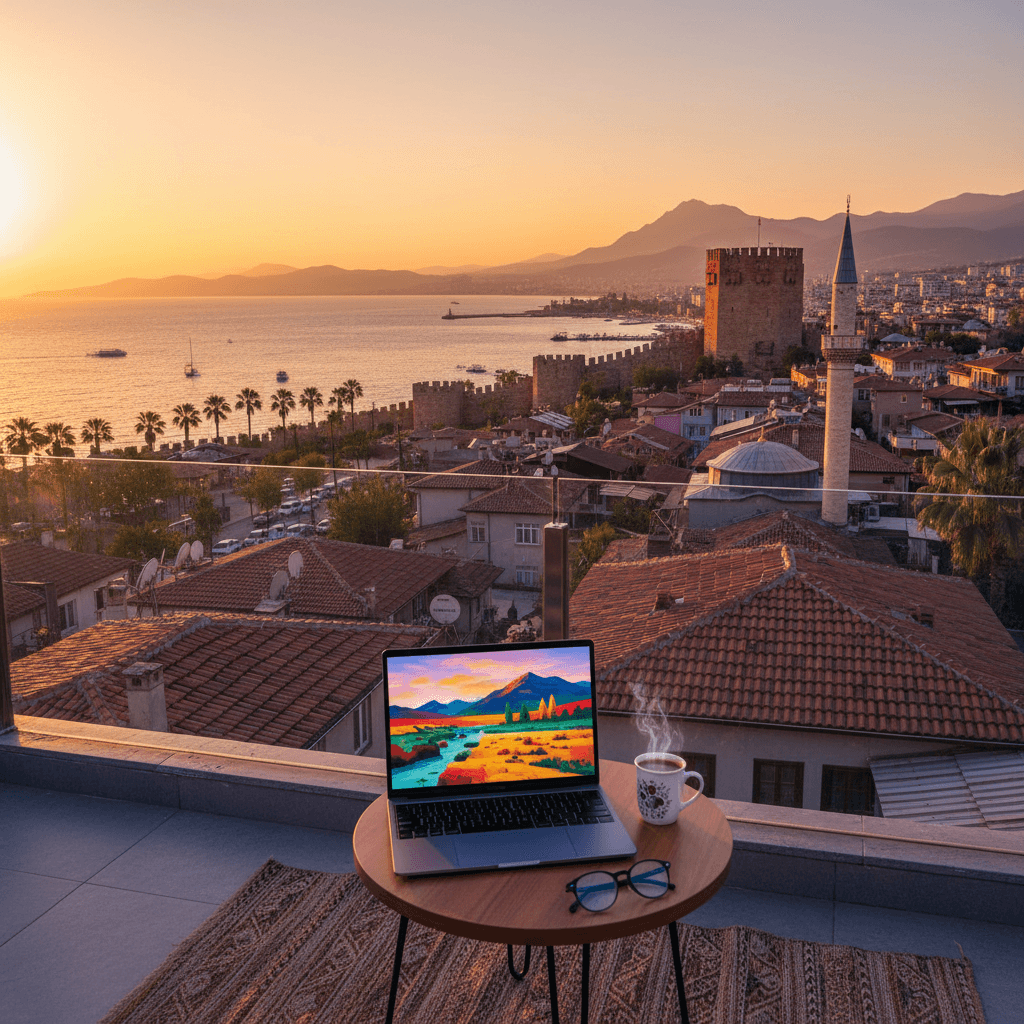
There is a specific feeling you get when you settle into a café in Alanya. You have a high-speed fiber connection and a third-wave espresso on your table, but when you look up from your laptop, you are staring at a 13th-century Seljuk castle perched on a rocky peninsula. It is this collision of high-tech modernism and ancient coastal grit that has earned the city its reputation as the Bali of the Mediterranean.
Alanya has successfully transitioned from a seasonal tourist hub into a year-round base for remote professionals. While nearby Antalya feels like a sprawling metropolis, Alanya retains a manageable, intimate scale. It is a city where you can finish a deep-work session at 3:00 PM and be swimming at Cleopatra Beach by 3:15 PM. The pace of life here is dictated by the sun, which shines for over 300 days a year, making it a primary escape for nomads fleeing the gloomy winters of Northern Europe.
A Culture of Nomadic Roots
The city does not just welcome nomads; it understands them. Long before the term digital nomad existed, this region was a crossroads for travelers and traders. That history is baked into the local hospitality. You will find the culture here is authentic and surprisingly accessible. Unlike the high-gloss, expensive vibes of Bodrum, Alanya feels lived-in and honest. Locals are accustomed to foreigners, and while a few Turkish phrases go a long way, the community is remarkably easy to integrate into.
The social scene recently leveled up with the launch of the Türkiye Digital Nomad Fest (annual event, e.g., October 2025). This event cemented Alanya as a serious player in the global remote work circuit, drawing in solopreneurs for AI workshops and business bootcamps. It is no longer just a place to sit on a beach; it is a place to build a company.
The Lifestyle Trade-Off
What nomads love most is the concept of affordable luxury. You can rent modern apartments that feature high ceilings, massive balconies, and access to private gyms or pools for a fraction of what you would pay in Western Europe. The infrastructure is robust, with 100 Mbps fiber-optic internet becoming the standard in most modern rentals and coworking hubs.
However, Alanya is not a carbon copy of a Western city. You will encounter a few bumps in the road. English proficiency is high in the service industry but drops off quickly once you head into the local markets or government offices. You might find the lack of certain Western conveniences, like specific global retail chains or niche health food brands, a little jarring at first. Most expats find that the trade-off, a high-quality Mediterranean lifestyle on a budget, is more than worth the occasional language barrier.
Why It Stands Out
Alanya occupies a sweet spot in Turkey. It is more affordable than Antalya, more historic than the purpose-built resorts further west, and more connected than the sleepy villages of the Turquoise Coast. It offers a sense of permanence and community that is often missing in more transient tourist towns. Whether you are walking through the historic district or attending a nomad meetup at a waterfront café, there is a palpable energy here. It is a city that encourages you to work hard so you can spend the rest of your day actually living.
The Price of Paradise
Alanya is often touted as the Bali of the Mediterranean, and for good reason. While inflation has impacted Turkey as a whole, this coastal city remains significantly more affordable than its neighbors, Antalya or Bodrum. You can enjoy a high standard of living here for a fraction of what you'd pay in Western Europe or North America. Most nomads find they can live a very comfortable, middle-class lifestyle on a budget that would barely cover rent in London or New York.
The general consensus among the local expat community is that Alanya offers affordable luxury. You aren't just getting by; you're often living in modern complexes with high ceilings, massive balconies, and shared amenities like swimming pools and gyms that would be considered premium elsewhere.
Monthly Housing Estimates
Housing is your biggest variable. Prices fluctuate based on how close you are to Cleopatra Beach and whether you're looking for a short-term holiday let or a long-term residency contract. For the best deals, nomads usually look toward the eastern districts like Mahmutlar, where modern high-rises are the norm.
- Modern 1-Bedroom Apartment: Expect to pay between $600 and $850 per month in popular areas. If you move further back from the coastline, prices drop quickly.
- Sea-View Luxury Units: If you want to wake up to the Mediterranean, budget closer to $1,100 or more. These units usually include access to "hotel-style" facilities like saunas and indoor pools.
- Utilities: Electricity, water, and building maintenance fees (known as "aidat") typically run between $80 and $120 depending on your AC usage during the hot summer months.
Eating and Drinking
One of the perks of Alanya is the access to fresh, local produce. The weekly neighborhood markets (pazars) are where you'll save the most money. You can walk away with a week's worth of organic fruits and vegetables for about $15 to $20.
- Local Lokanta Meal: A hearty plate of traditional Turkish stew, rice, and salad usually costs around $5 to $8.
- Third-Wave Coffee: A flat white or latte at a laptop-friendly cafe will set you back about $3 to $4.
- Dinner for Two: A nice meal at a mid-range restaurant with a view of the castle will typically range from $35 to $50, including appetizers.
Connectivity and Coworking
Infrastructure in Alanya has leveled up recently. High-speed fiber-optic internet is now standard in most new builds, reaching speeds of 100 Mbps. This has made the city a magnet for those who need to stay on Zoom calls without the dreaded lag. While dedicated coworking spaces are still growing in number, the city's coffee culture fills the gap. Most nomads treat the waterfront cafes as their office, as reliable Wi-Fi is available almost everywhere for the price of a coffee.
Transportation and Extras
The city is quite walkable, especially if you stay near the center. For longer trips, the local bus system is incredibly cheap, costing less than $1 per ride. Many expats prefer to rent a scooter to zip between the beach and the foothills. A monthly gym membership in a high-quality facility usually costs around $30 to $45, though many nomads just use the fitness centers built into their apartment complexes for free.
Overall, a solo digital nomad can live very well in Alanya on a monthly budget of $1,200 to $1,600. If you're pushing $2,000, you're likely living in a top-tier apartment, eating out daily, and taking regular weekend trips to explore the surrounding Taurus Mountains.
For Digital Nomads: Central Alanya (Şehir Merkezi)
If you want to be within walking distance of the best third-wave coffee shops and high-speed fiber internet, the city center is your base camp. This area sits right at the foot of the historic Alanya Castle and wraps around the harbor. It is the heart of the nomad scene, especially since the 2025 Turkey Digital Nomad Fest put the local community on the map.
- The Vibe: Energetic, social, and very walkable. You can spend your morning working from a café overlooking the Mediterranean and your afternoon exploring the 2,000 year old castle walls.
- Work Spaces: While dedicated coworking spaces are still growing, the "laptop-friendly" culture is massive here. Most nomads head to the modern cafés near the waterfront where 100 Mbps fiber connections are becoming the standard.
- Rent: Expect to pay a premium for sea views, but it remains significantly more affordable than nearby Antalya or Bodrum.
For Expats and Long-Termers: Mahmutlar
Located about 10 kilometers east of the center, Mahmutlar has evolved from a quiet village into a high-rise expat haven. It is arguably the most popular spot for those staying six months or longer because the infrastructure is built for modern living. Most apartment complexes here are relatively new and come with "hotel-style" amenities like gyms, indoor pools, and saunas.
- The Vibe: A mini-metropolis by the sea. It has a very international feel; you are just as likely to hear English or Russian as you are Turkish.
- Housing: This is where you get the most "affordable luxury" for your money. Modern 1-bedroom apartments often feature high ceilings and massive balconies, which locals use as secondary living rooms.
- Logistics: It is well-connected to the city center by local buses, though many expats eventually rent a scooter to get around.
For Families: Oba
Oba is the "prestige" neighborhood of Alanya. It is a low-rise area that feels much more residential and quiet than the city center. It is a favorite for families because of its proximity to the best private schools, hospitals, and the Alanyum shopping mall. The streets are wider, the parks are better maintained, and the beaches are slightly less crowded than Cleopatra Beach.
- The Vibe: Relaxed and upscale. It offers a balanced Mediterranean lifestyle without the tourist noise.
- Amenities: You will find the best selection of supermarkets and organic markets here. The neighborhood is very flat, making it one of the few areas where pushing a stroller or riding a bike is actually easy.
- Cost: Rents here are stable but can be higher than Mahmutlar because the demand from local professionals and settled expat families is high.
For Solo Travelers: Damlataş and Cleopatra Beach
If you are in town for a few weeks and want to be in the middle of the action, look for a place near Cleopatra Beach. Legend says the Egyptian queen herself swam here, and today it remains the most iconic stretch of sand in the city. This area is perfect for solo travelers because you don't need a car, and the social scene is built-in.
- The Vibe: Pure vacation energy. You have the beach on one side and a dense grid of restaurants, bars, and shops on the other.
- Social Scene: This is the easiest place to meet people. The waterfront cafés are filled with travelers and remote workers year-round, especially during the 300+ days of sunshine Alanya enjoys annually.
- Pro Tip: Look for "Apart-Hotels" in the backstreets. These often offer weekly rates that include cleaning and reliable Wi-Fi, which is a great middle ground between a hostel and a private rental.
The Connectivity Landscape
You won't have to hunt for a signal in Alanya. The city has undergone a massive infrastructure glow-up recently, and fiber-optic internet is now the standard in most modern apartment complexes and coworking spots. You can expect speeds hitting up to 100 Mbps, which is plenty for heavy video calls or uploading large files while the Mediterranean sun beats down outside.
Mobile data is just as reliable. Most nomads pick up a local SIM from providers like Turkcell or Vodafone, but eSIMs have become the go-to for short-term stays. 4G/LTE coverage is solid across the city center and even holds up well if you're working from a beach club on Cleopatra Beach. It serves as a perfect backup if your Airbnb’s router decides to take a siesta.
Coworking and Laptop-Friendly Cafés
While Alanya doesn't have the sheer volume of dedicated coworking offices you'll find in Istanbul, it makes up for it with a booming third-wave coffee culture. The city is designed for people who want to work with a view. You'll find plenty of remote workers tucked into corners of cafés overlooking the historic Alanya Castle or the harbor.
Most of these spots are used to the laptop crowd. As long as you're ordering a few flat whites or a Turkish breakfast, nobody is going to give you the side-eye for staying a few hours. The vibe is social but productive, especially during the shoulder seasons when the tourist crowds thin out and the nomads take over the best terrace seats.
- Digital Nomad Hubs: The city recently hosted the Türkiye Digital Nomad Fest in October 2025, which solidified Alanya's reputation as a tech-friendly base. This event brought in a wave of solopreneurs and AI workshops, leaving behind a more connected community.
- Atmosphere: Expect bright, airy spaces with high ceilings and large balconies. Many nomads actually prefer working from their own rentals because modern apartments here often come with dedicated office nooks and high-speed lines pre-installed.
- Reliability: Power outages are rare in the city center, but if you're worried about a deadline, the larger "third-wave" shops almost always have stable Wi-Fi and plenty of power outlets.
What to Expect for Your Setup
If you're planning a long-term stay, check with your landlord about the specific internet provider before signing a lease. While fiber is common, some older buildings near the harbor might still rely on slower ADSL connections. Most nomads find that a 100 Mbps fiber line combined with a local 50GB mobile data plan is the "sweet spot" for total peace of mind.
The social side of work is also growing. You'll find informal meetup groups through platforms like Nomad List or local Facebook groups. These often lead to "workation" days where a group of expats will rent a villa for a week or simply meet at a waterfront café to trade tips on the Digital Nomad Turkey Visa requirements and the best local tax accountants.
The cost of staying connected is remarkably low compared to Western Europe or North America. Between affordable monthly fiber bills and cheap mobile data, your "digital office" overhead will likely be one of your smallest monthly expenses here. This allows you to spend more on the "nomad" part of the lifestyle, like weekend trips to the Taurus Mountains or sunset boat tours.
Staying Safe in the Sun and the Streets
Alanya is widely considered one of the safest coastal hubs in Turkey. Because the city relies heavily on international tourism and a growing expat population, local authorities maintain a visible presence. Most nomads feel perfectly comfortable walking through the city center or along the Kleopatra Beach promenade late at night. Violent crime is extremely rare; your biggest concern will likely be the occasional pushy carpet salesman or a slightly inflated "tourist price" at a beachfront restaurant.
That said, keep your wits about you in crowded areas like the Alanya Harbor during peak nightlife hours. Pickpocketing isn't a major issue, but it's always smart to keep your bag zipped and your phone tucked away while you're navigating the late night crowds. If you're renting a scooter to head up the steep, winding roads toward Alanya Castle, be cautious. Local traffic can be unpredictable, and the limestone roads get incredibly slick when it rains.
Healthcare Standards and Facilities
The quality of medical care in Alanya is a pleasant surprise for most remote workers. The city has become a hub for medical tourism, meaning many private hospitals are modern, well-equipped, and staffed by English speaking doctors. If you have a minor ailment, your first stop should be a Eczane (pharmacy). Turkish pharmacists have more autonomy than those in the US or UK; they can often diagnose simple issues and provide over the counter treatments for things that would require a prescription elsewhere.
- Anadolu Hospital (Özel Alanya Anadolu Hastanesi): This is the go to for most expats and nomads. It's a private facility with a dedicated international patient department. They're used to dealing with foreign insurance and usually have translators on hand.
- Alanya Life Hospital (Özel Alanya Yaşam Hastanesi): Another high quality private option located centrally. It's known for quick service and modern diagnostic equipment.
- Alanya Training and Research Hospital (ALKÜ): This is the main public hospital. While the care is professional and significantly cheaper, it's often crowded, and English proficiency among the staff is much lower than in private clinics.
Emergency Services and Insurance
If you find yourself in a serious bind, 112 is the universal emergency number in Turkey for ambulance, police, and fire services. Operators can usually route you to an English speaker if you stay on the line. Most digital nomads here use SafetyWing or Genki, but if you're planning on applying for the Digital Nomad Visa or a residency permit (ikamet), you'll eventually need to look into local Turkish private insurance or the government SGK system.
For everyday health needs, Alanya's climate is your biggest hurdle. The Mediterranean sun is intense between June and September. Dehydration and heatstroke send more nomads to the clinic than any local viruses. Drink plenty of bottled water, as the tap water is generally used for cooking and showering rather than drinking. A 19 liter jug of water delivered to your apartment usually costs less than $3 USD and will save you a lot of trouble.
Quick Reference for Health and Safety
- Emergency Number: 112 (All services)
- Pharmacy Hours: Generally 08:30 to 19:00. Look for the "Nöbetçi Eczane" sign on pharmacy windows to find the rotating 24 hour location for that night.
- Private Consultation Fee: Expect to pay between $40 and $80 USD for a specialist visit at a private hospital without insurance.
- Safety Tip: Download the BiTaksi app. It tracks your ride and ensures you aren't overcharged by local drivers, adding an extra layer of security when heading home late.
The Layout of the Land
Alanya is surprisingly compact, stretching along the coast with the historic castle rock splitting the city into two main halves. Most nomads stick to the central areas or the western side near Cleopatra Beach. It is a very walkable city if you stay central, but the heat in the summer months might make you rethink a twenty minute stroll. The city is designed in a grid like fashion between the main coastal road and the highway further inland, so it is hard to actually get lost.
Public Transit: The Dolmuş System
The backbone of local transport is the Dolmuş, which are small white buses that run constant loops through the city. They don't really have a strict timetable, but they're so frequent that you rarely wait more than ten minutes. You'll see the number and destination on the front windshield.
- Bus Number 1: This is the most popular route for expats. It runs along the coastline, connecting the eastern neighborhoods like Mahmutlar to the city center and Cleopatra Beach.
- Bus Number 4: Use this one if you want to head up the steep hill to the Alanya Castle without breaking a sweat.
- Payment: You can use the Alanya Kentkart, a rechargeable smart card, or simply tap a contactless credit card. Most short rides cost around $1.20 to $1.40.
Taxis and Apps
You won't find Uber or Bolt operating here like they do in Istanbul. Instead, Alanya uses a traditional taxi system that is actually quite efficient. You'll notice yellow "taxi buttons" attached to trees and lamp posts every few blocks. Press one, and a cab usually appears within three minutes.
Make sure the driver turns on the meter, or "taksimetre." A typical cross town trip usually lands between $5 and $10. If you are heading to the airport, it is better to negotiate a flat rate or book a private shuttle in advance. For the Antalya Airport (AYT), which is about two hours away, expect to pay around $60 to $80 for a private car, or $25 to $30 for a shared 724Transfer shuttle.
Two Wheels and Walking
The promenade along the beach is flat and perfect for cycling or electric scooters. You will see BinBin or Marti electric scooters parked on corners. You just download the app, scan the QR code, and pay per minute. It is a fun way to get from a coworking session at a cafe to a sunset swim, but stay off the main highway as traffic can get aggressive.
If you prefer your own set of wheels, many long term nomads rent a 50cc scooter. You don't need a special motorcycle license for these in Turkey, and they cost about $150 to $200 per month to rent. Just be cautious with the local driving style, which tends to treat stop signs as suggestions rather than rules.
Getting to Gazipaşa (GZP)
While Antalya is the major international hub, Alanya has its own smaller airport, Gazipaşa-Alanya Airport, located just 40 minutes to the east. If you can find a flight here, take it. It saves you a two hour drive. The Havaş shuttle buses meet every domestic flight and will drop you at the central bus station (Otogar) for a few dollars. It is the smoothest arrival experience you can have in the region.
The Language Landscape
In Alanya, you'll find a linguistic environment that reflects its status as a global hub. While Turkish is the official language, the city's long history as a tourism magnet and its recent rise as the "Bali of the Mediterranean" means you won't be navigating in total silence. In the main tourist corridors and the historic center, English is widely spoken by shopkeepers, waiters, and real estate agents. However, once you step a few blocks away from the beach or into local government offices, the dynamic shifts quickly.
The local expat community is diverse, so don't be surprised to hear Russian, German, or Scandinavian languages filling the air in neighborhood cafés. Because Alanya attracts a large number of European retirees and remote workers, many businesses cater specifically to non-Turkish speakers. Still, the most successful nomads are those who learn the basics. Even a simple "Merhaba" (Hello) or "Teşekkür ederim" (Thank you) goes a long way in building rapport with the locals who keep the city running.
Communication Practicalities
Staying connected is rarely an issue here. Most modern apartments and third-wave coffee shops offer high-speed fiber-optic internet with speeds reaching up to 100 Mbps. This infrastructure is a major draw for the remote work crowd, making video calls and heavy uploads seamless. If you're working from a café with a view of the Alanya Castle, you can usually count on reliable Wi-Fi, though it's always smart to have a backup.
For mobile data, most nomads rely on local SIM cards or eSIMs. If you're staying long-term, getting a local physical SIM is the most cost-effective route, though you'll need your passport for the registration process. If you're just dropping in for a few weeks, an eSIM is the path of least resistance. 4G and LTE coverage is excellent throughout the city and even remains strong on many of the surrounding beaches.
Navigating the Barrier
While you can get by with English in the "nomad bubbles," certain situations require a bit more preparation. If you're dealing with residency paperwork, visiting a local hospital, or trying to negotiate a long-term lease in a less touristy neighborhood, a translation app is your best friend. Most expats recommend using apps with a "camera translation" feature for reading menus or utility bills.
- Google Translate: The gold standard for quick conversations. Download the Turkish language pack for offline use so you aren't stranded without a signal.
- BiP or WhatsApp: These are the primary ways locals communicate. Most businesses, from hair salons to water delivery services, prefer a quick text over a phone call.
- Sesli Sözlük: A popular dictionary app among Turkish learners that provides better context for specific phrases than generic translators.
Key Phrases for Your First Week
You don't need to be fluent to survive, but these few words will change how people treat you in the local markets:
- Kolay Gelsin: Literally "May it come easy to you." Use this when entering a shop or seeing someone working. It's the ultimate polite greeting.
- Hesap, lütfen: "The bill, please." Essential for those long work sessions in waterfront cafés.
- Ne kadar?: "How much?" Use this at the weekly markets when you're hunting for fresh produce.
- Çok güzel: "Very beautiful" or "Very good." Use it for the food, the view, or the service.
Most nomads find that while the language barrier exists, the Turkish culture of hospitality usually bridges the gap. If you're struggling to explain something, a local will often go out of their way to find someone who speaks a bit of English to help you out.
When to Pack Your Bags
Alanya is a sun-drenched powerhouse, even by Mediterranean standards. With over 300 days of sunshine every year, you are almost guaranteed a tan regardless of when you show up. The city operates on a seasonal rhythm that dictates everything from your rent prices to how much sweat you'll lose walking to the grocery store.
The Sweet Spot: Spring and Autumn
The absolute best times to plant your flag in Alanya are April to June and September to October. During these windows, the weather is perfect for outdoor productivity. You can sit on a terrace with your laptop and actually see your screen without a glare or a heatstroke.
- April and May: The city wakes up. Flowers are blooming, and the air is crisp but warm enough for a light jacket. Daytime temperatures hover around 20°C to 25°C (68°F to 77°F).
- September and October: This is the local favorite. The Mediterranean Sea has been baking all summer and feels like a warm bath, but the oppressive humidity of August has finally broken. It is the prime season for evening walks along the harbor.
The High Summer Sizzle
If you visit in July or August, be prepared for a reality check. Temperatures frequently climb above 35°C (95°F), and the humidity can make it feel significantly hotter. This is the peak of the tourist season, meaning the beaches are packed and the prices for short term rentals often double.
Most nomads in Alanya during the summer adopt a split schedule: work in air-conditioned cafes during the day, take a siesta in the afternoon, and don't even think about heading out for dinner until the sun goes down around 8:00 PM. If you aren't a fan of crowds or sweating through your shirt, give these months a miss.
Winter: The Quiet Season
Winter in Alanya, from December to February, is incredibly mild compared to Europe or North America. You won't see snow here, but you will see rain. This is the "low season," which is a golden opportunity for budget travelers. You can often snag luxury apartments with sea views for a fraction of the summer price.
While it is too cold for swimming, the daytime highs stay around 15°C (59°F). It is the perfect time for hiking the trails around the castle or catching up on deep work projects without the distraction of beach parties. Just make sure your apartment has a decent heating system or an AC unit with a heat mode, as stone floors get chilly at night.
Planning Around the Nomad Scene
If you want to sync your visit with the community, keep an eye on the calendar for events like, e.g., the annual Türkiye Digital Nomad Fest in mid-October, taking advantage of that perfect autumn weather. Timing your arrival for October allows you to network with hundreds of other remote workers while the city is at its most comfortable temperature.
Expats generally recommend arriving in late March if you plan on staying long term. This gives you a head start on finding a year round rental before the summer tourists drive the prices up and the inventory down.
Visa Logistics and the Digital Nomad Permit
Turkey has made things significantly easier for remote workers with the introduction of a dedicated Digital Nomad Visa. To qualify, you generally need to be between the ages of 21 to 55 (or check latest official requirements) and prove an annual income of at least $36,000 (which breaks down to $3,000 per month). It is a straightforward way to secure residency without the headache of constant border runs.
Most nomads start on a standard 90 day tourist visa to get a feel for the city. If you decide to stay long term, you'll apply through the official government portal. Keep in mind that while the process is digitized, having a local fixer or a Turkish speaking friend can save you hours of frustration at the migration office.
Finding Your Home Base
Alanya is much more affordable than Bodrum or even Antalya, but prices fluctuate based on the season. For a modern one bedroom apartment with a balcony and access to a pool, expect to pay between $600 and $900 per month. If you are looking for long term stays, skip the major booking platforms after your first week and check local sites like Sahibinden or join Facebook groups like "Alanya Expats Community."
- Cleopatra Beach: The heart of the action. It is walkable, packed with cafes, and perfect if you want the Mediterranean at your doorstep.
- Mahmutlar: Located about 10km east of the center, this is the expat stronghold. It is quieter, more affordable, and has a massive community of remote workers.
- Oba: A great middle ground with newer buildings, modern gyms, and a slightly more residential, upscale feel.
Connectivity and Workspace
You won't have to hunt for decent Wi-Fi here. Fiber optic internet is now the standard in most modern apartment complexes, often reaching speeds of 100 Mbps. For mobile backup, grab a SIM card from Turkcell or Vodafone. Turkcell generally has the best coverage if you plan on heading into the Taurus Mountains for weekend hikes.
While dedicated coworking spaces are still growing, the "third wave" coffee scene has stepped up. You'll see plenty of laptops at spots near the harbor or overlooking the Alanya Castle. The city even hosted the Turkey Digital Nomad Fest in October 2025, which solidified its reputation as a hub for solopreneurs and tech professionals.
Getting Around
The city is surprisingly walkable, especially if you stay near the center. For longer trips, the local bus system (the Dolmuş) is efficient and incredibly cheap. You just tap your credit card or a local transport card to pay. If you prefer more freedom, renting a scooter is a popular move for nomads living in Mahmutlar who want to zip into the city center without worrying about parking.
Health and Safety
Alanya is remarkably safe, even late at night. The biggest "danger" you'll face is likely a pushy carpet salesman or the midday summer heat. For healthcare, the city has several high quality private hospitals like Anadolu Hospital or Baskent University Hospital. Many doctors speak English, and out of pocket costs for basic consultations are usually under $50 to $80. Always keep the number 112 handy, as it is the universal emergency number for police, fire, and ambulance services in Turkey.
Money and Language
While many shop owners in the tourist areas speak English, German, or Russian, learning a few Turkish phrases goes a long way. Download Google Translate for offline use; it's a lifesaver at the local Pazar (weekly market) where you'll get the best prices on fresh produce. Cash is still king at these markets, but almost every cafe and pharmacy accepts contactless card payments.
Need visa and immigration info for Turkey?
🇹🇷 View Turkey Country GuideEasy Landing
Settle in, no stress