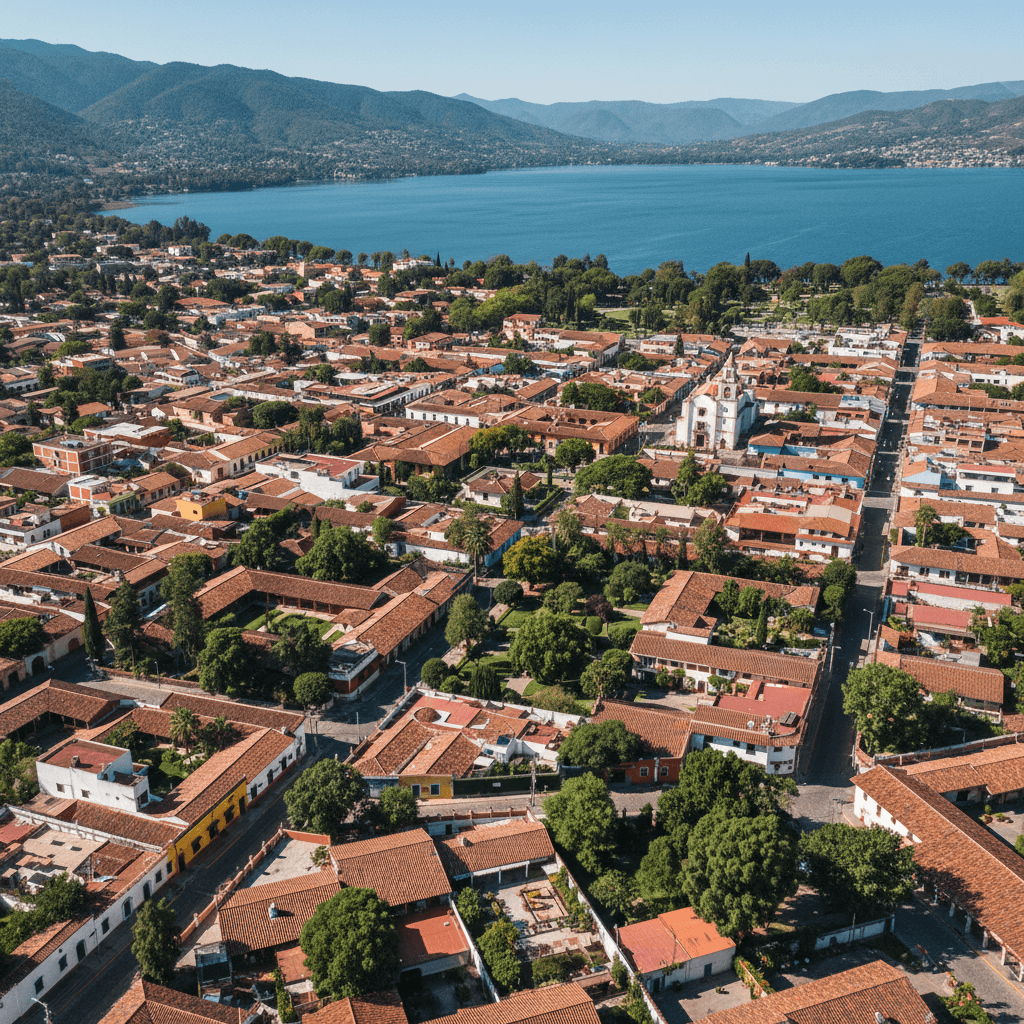
Ajijic
🇲🇽 Mexico
The Ajijic Experience
Ajijic isn't your typical digital nomad hub. While places like Tulum or Playa del Carmen feel like high energy playgrounds for the twenty-something crowd, Ajijic offers a slower, more intentional rhythm. Perched on the shores of Lake Chapala, this village is a maze of cobblestone streets and colorful murals where the scent of jasmine mixes with the smell of woodsmoke. It feels like a place where you come to finally finish that novel or design that passion project without the pressure of a frantic city pulse.
The vibe here is defined by its contradictions. It is one of the most organized and dense expat communities in the world, yet it remains stubbornly Mexican. You'll hear plenty of English in the cafes, but you'll also be woken up by the local cohetes (ceremonial fireworks) or the clip-clop of horses passing your window. It's a social hub where the average age tilts toward retirement, but a growing wave of remote workers in their 30s and 40s is starting to shift the energy. If you thrive on nightlife that ends at 4:00 AM, you'll be bored. If you want a community where people actually know your name by the second week, you'll love it.
Cost of Living Breakdown
While prices are rising slightly, Ajijic remains remarkably affordable compared to US or European standards. Most nomads find they can live a high-quality life on a budget of $1,200 to $2,000 per month.
- Housing: Expect to pay $900 to $1,100 for a furnished one-bedroom in the center. If you want those iconic lake views or a spot in the gated La Floresta area, prices start at $1,100 and go up quickly.
- Food and Drink: You can grab street tacos for $2 to $5 or enjoy a sit-down dinner with mezcal for $15 to $25 for two people. Upscale dining rarely exceeds $30 per person.
- Connectivity: A Telcel SIM card with plenty of data costs about $10 to $20 a month. Most rentals include fiber internet, which is surprisingly reliable here.
- Transport: Local buses and colectivos are just $0.50. An Uber or Didi across town usually runs $3 to $5.
Where to Plant Your Roots
Ajijic is compact, but your choice of neighborhood dictates your daily noise levels and social life. Most solo travelers and nomads head straight for Central Ajijic. It's the most walkable area, putting you steps away from the malecón (lakefront boardwalk) and the central plaza. It's the heart of the action, though the proximity to festivals means it can get loud.
If you need quiet to focus, look toward Upper Ajijic or La Floresta. These areas are leafier and more residential with stunning views, though you'll be dealing with more hills and might want a bike or a car. For those on a tighter budget, the neighboring town of Chapala offers lower rents and a more authentic, slightly edgier feel, though it lacks the high concentration of cafes found in Ajijic.
The Digital Setup
You won't find a massive selection of dedicated coworking spaces here, but the cafe culture is strong. Places around the central hub are used to people flipping open laptops for a few hours. Fiber internet is the standard now, with speeds between 50 and 200 Mbps common in most rentals. For the best mobile backup, nomads recommend picking up a Telcel chip at any OXXO store. It's the most reliable network when you're out and about.
Safety and Practicalities
Socially, the transition is easy. The Lake Chapala Society and various Facebook groups are massive resources for meeting people and finding apartments. Safety is rarely a major concern; the town is quite secure due to the tight-knit community, though it's always smart to stick to well-lit areas in the center after dark. If you need a break from the village pace, Guadalajara is only an hour away, offering big-city amenities and an international airport for about $50 via private shuttle or taxi.
The weather is arguably the biggest draw. With highs staying between 70 and 80°F most of the year, you'll rarely need AC or heavy heating. The best time to visit is the dry season from November to May. If you come during the summer, expect heavy afternoon rains that turn the mountains a brilliant, lush green.
The Cost of Living in Ajijic
Ajijic is a unique pocket of Mexico where you can live a high-quality lifestyle for significantly less than in the US or Canada, though it isn't the rock-bottom budget destination it once was. The town has professionalized alongside its massive expat community, meaning you'll find reliable services and modern comforts at a price point that usually lands between $1,200 and $2,000 per month for a mid-range lifestyle.
Monthly Budget Tiers
- Budget Tier ($800 to $1,200): This requires a long-term lease in the outer neighborhoods or nearby Chapala. You'll be eating mostly at local stalls and using the $0.50 local buses rather than Ubers.
- Mid-Range Tier ($1,200 to $2,000): Most digital nomads land here. This covers a furnished one-bedroom in the center, frequent dinners out with drinks, and a dedicated workspace or high-speed home internet.
- Comfortable Tier ($2,000+): This gets you a luxury villa in La Floresta or a home with a lake view, private transport, and high-end dining at the town's top-rated bistros.
Housing and Neighborhoods
Rent is your biggest variable. If you want to be in the heart of the action near the central plaza, expect to pay a premium for the convenience of walking everywhere. Prices have seen a slight uptick recently, but you still get plenty of bang for your buck compared to major coastal hubs.
- Central Ajijic: Best for those who want to be steps away from the malecón and social meetups. A furnished one-bedroom here typically runs $900 to $1,100. It can be noisy, but you won't need a car.
- La Floresta: A quieter, more upscale area with wider streets and larger homes. It's popular with families and retirees, with rents often starting at $1,100 for short-term stays.
- Chapala: Located just down the road, this town offers a grittier, more authentic feel for a lower price. You can often find studios or small apartments for $600 to $800 if you're willing to commute ten minutes into Ajijic.
Food and Dining
The food scene is one of Ajijic's biggest draws. You can grab street tacos for $2 to $5 near the plaza or sit down for a mid-range dinner for two with mezcal cocktails for about $20 to $25. Groceries are affordable if you stick to local markets like the Wednesday tianguis, though imported goods at shops like Superama will quickly inflate your bill.
Connectivity and Logistics
Remote work is easy here because the infrastructure is built to support a demanding expat population. Fiber optic internet is standard in most rentals, offering speeds between 50 and 200 Mbps. While there isn't a massive corporate coworking scene, coffee shops in the central hub are very work-friendly. Most nomads simply buy a Telcel SIM card at an OXXO for about $10 a month to handle their data needs.
Transport and Health
Getting around is cheap. Local rides on Uber or Didi usually cost between $3 and $5. If you need to head into Guadalajara or the airport, a private taxi or shuttle will run you about $40 to $50. Healthcare is another major savings category; local clinics are high quality, and pharmacies like Farmacia Guadalajara are everywhere. Most expats find that basic medical visits and prescriptions cost a fraction of what they do back home, with 911 services available for emergencies.
Practical Spending Tips
- Use Wise or Revolut for the best exchange rates, and stick to Banorte ATMs for lower fees.
- Join the Lake Chapala expat Facebook groups to find rentals before they hit the major booking platforms, as you can often negotiate better rates for 3 to 6 month stays.
- Plan your visit between November and May to enjoy the best weather, though keep in mind this is peak season when short-term rental prices are at their highest.
The Social Nomad: Central Ajijic
If you want to be in the thick of it, Central Ajijic is your home base. This is the heart of the village, stretching from the central plaza down to the malecón. It is incredibly walkable, meaning you can ditch the car and rely on your own two feet for everything from morning coffee to late night tacos. Most nomads gravitate here because the English-speaking networks are strongest in the center, making it easy to find a community even if your Spanish is still a work in progress.
- Rent: Expect to pay between $900 and $1,100 for a furnished one-bedroom apartment.
- Vibe: High energy, artistic, and social. You will find street performers, boutiques, and over a hundred restaurants within a ten minute walk.
- The Trade-off: It is noisy. Between the church bells, the occasional parade, and the lively street life, it is not the place for light sleepers.
The Long-Term Expat: La Floresta
Located just east of the village center, La Floresta is where you go when you want more space and a lot less noise. It is characterized by wide, tree lined streets and large, established homes. Many expats who settle here for the long haul appreciate the "old Mexico" feel combined with modern comforts. It is much quieter than the center, though the walk to the plaza can take 15 to 20 minutes depending on where your gate is located.
- Rent: Larger homes often start at $1,100 and go up quickly, especially for properties with lake views or private pools.
- Vibe: Peaceful, upscale, and residential. It feels more like a suburb than a village.
- The Trade-off: You will likely want a car or a bike. While it is walkable, the distance to the main grocery stores and social hubs can feel long in the midday heat.
Families and View-Seekers: Upper Ajijic
For those moving with a family or anyone who needs a home office with a view, the areas "above" the highway are the go-to. These neighborhoods are built into the hillside, offering sweeping vistas of Lake Chapala. Because many of these homes are in gated communities, they offer an extra layer of privacy and security that families often prioritize. You are away from the tourist crowds, but still only a five minute Uber or Didi ride from the lakefront.
- Rent: Similar to La Floresta, expect $1,100+ for larger layouts.
- Vibe: Quiet and secluded with some of the best air quality in the region.
- The Trade-off: The hills are steep. If you plan on walking, prepare for a serious leg workout. Most residents here rely on cars or $3 to $5 ride-hailing trips to get around.
The Budget Solo Traveler: Chapala
If Ajijic feels a bit too retiree-heavy or expensive, look ten minutes down the road to the town of Chapala. It has a more "authentic" Mexican feel and a younger demographic. Nomads on a tighter budget often find they can get a lot more for their money here while still being close enough to Ajijic to join the social clubs and events. You can hop on a local bus for $0.50 and be in the Ajijic plaza in no time.
- Rent: You can find studios or small apartments in the $600 to $800 range if you look on local Facebook groups.
- Vibe: Edgy, local, and bustling. The Chapala malecón is massive and serves as a major weekend destination for families from Guadalajara.
- The Trade-off: There are fewer high-end amenities and English is not as widely spoken as it is in the Ajijic bubble.
Working from Ajijic feels more like a creative retreat than a traditional digital nomad grind. While you won't find the massive, high tech coworking hubs of Mexico City or Guadalajara here, the infrastructure is surprisingly robust. Fiber optic internet has reached most of the village, making it easy to take video calls while looking out at the mountains or the lake.
The Internet Situation
Most rentals and cafes now offer fiber connections with speeds ranging from 50 to 200 Mbps. It is reliable enough for heavy lifting, though the occasional power flicker during the rainy season (June to October) can take your router offline for a minute. Most nomads find the local infrastructure more than capable for remote work, and it generally costs significantly less than similar setups in the US.
For mobile data, your best bet is to head to the nearest OXXO store and pick up a Telcel or AT&T SIM card. You can get a prepaid plan with plenty of data for around $10 to $20 USD per month. Telcel generally has the best coverage if you plan on exploring the smaller villages around Lake Chapala or heading up into the hills for a hike.
Where to Work
In Ajijic, the "office" is usually a sun-drenched patio with a strong cup of Chiapas coffee. Since there are no dedicated coworking spaces in the village center yet, the local cafe culture has stepped up to fill the void. You will find plenty of other remote workers tucked into corners around the central plaza and the social hub near the malecón.
- Central Ajijic Cafes: Most spots offer free WiFi with a purchase. It is common to see people on laptops for a few hours, provided you keep the coffee or snacks coming.
- Cultural Centers: The Lake Chapala Society is a massive resource for the expat community and often has areas where you can sit and catch up on emails in a garden setting.
- Home Offices: Because the village is so quiet compared to the big city, many nomads prefer to work from their own terrace. If you are booking a place in La Floresta or Upper Ajijic, just confirm with the host that they have Totalplay or Telmex fiber installed.
Connectivity Costs & Tips
Staying connected in Ajijic is affordable, but it helps to have a backup plan if you have a high stakes meeting. Travelers often recommend keeping a hot spot ready just in case of a local outage.
- Fiber Internet: Usually included in mid range rentals ($900 to $1,100), but standalone plans are roughly $25 to $40 per month.
- Mobile Data: $10 for a basic 30 day starter pack at OXXO.
- Coffee Shop "Rent": Expect to spend $3 to $6 on a latte and a pastry to secure a table for the morning.
While the demographic leans heavily toward retirees, the 30s and 40s remote worker crowd is growing. You will find that the local community is incredibly organized. If your internet goes down, someone in a local Facebook or WhatsApp group will likely have a solution or a recommendation for a nearby spot that is still online within minutes.
Safety in the Village
Ajijic is widely considered one of the safest destinations in Mexico, largely due to its tight knit community and the massive presence of international residents. The vibe here is more "sleepy lakeside village" than "edgy urban center." You won't find the high pressure environment of Mexico City or the party chaos of Tulum; instead, life revolves around morning walks on the malecón and social gatherings in the central plaza.
Most nomads find they can walk through the central hub at night without a second thought. That said, standard travel sense still applies. Stick to well lit areas after dark and avoid wandering alone into the quieter, unlit outskirts of town or the hills above Upper Ajijic late at night. Petty theft is rare but not non-existent, so don't leave your MacBook unattended at a cafe while you grab a refill.
If you're looking for a safety net, the local expat networks are your best resource. Facebook groups and community forums are incredibly active, and neighbors tend to look out for one another. If you ever feel uneasy, dialing 911 is the standard for emergencies, but you'll often find that a quick message to a local community group gets you help even faster.
Healthcare and Medical Services
One of the biggest draws for long term stays in the Lake Chapala area is the access to high quality, affordable healthcare. You aren't just relying on small village clinics; you have access to sophisticated medical infrastructure that rivals what you'd find in the US or Europe, often at a fraction of the cost.
- Local Clinics: For minor issues, Ajijic has several well equipped clinics. Cruz Roja (Red Cross) in Chapala is a reliable first stop for emergencies or quick consultations.
- Specialized Care: For serious procedures or specialists, most expats head to Guadalajara. It's only about an hour away and houses world class hospitals like Hospital San Javier and Real San José.
- Pharmacies: You'll see Farmacia Guadalajara everywhere. These are massive, 24 hour hubs that carry almost everything you could need. Many medications that require a strict prescription elsewhere can be bought over the counter here, though you should always consult a local doctor first.
- Costs: A standard doctor's visit might run you between $30 and $50, while many expats choose to pay out of pocket for routine care because the prices are so manageable.
Practical Wellness Tips
The biggest "danger" you're likely to face in Ajijic isn't crime, but the uneven cobblestone streets. They are charming but notoriously difficult to navigate. Wear sturdy shoes and watch your step, especially after a couple of mezcals at a plaza bar. If you have mobility issues, the central area is much easier to manage than the hilly terrain of La Floresta.
When it comes to water, don't drink from the tap. Most rentals provide large 20 liter jugs called garrafones, or you can buy them at any OXXO for a few dollars. Local restaurants are very experienced with international travelers and almost always use purified water for ice and washing produce, so you can generally eat those street tacos with confidence.
For peace of mind, many nomads recommend picking up a local Telcel SIM card immediately. Having a working data connection for $10 to $20 a month means you can always call an Uber or use Google Maps if you get turned around in the winding alleys of the village center.
The Walkable Heart of Lakeside
Ajijic is a place where your best pair of walking shoes will see more action than any car. The central village is remarkably compact, built around a grid of cobblestone streets that lead directly to the Plaza Principal and the malecón. If you settle in the center, you can easily reach nearly every coffee shop, gallery, and organic market on foot. Just keep in mind that those cobblestones are historic and uneven; they aren't kind to flip-flops or high heels.
Most nomads find that living in Central Ajijic eliminates the need for a vehicle entirely. You'll join the flow of locals and expats heading to the plaza for morning coffee or evening music. If you choose to stay in the hills of Upper Ajijic or the manicured streets of La Floresta, you might want a bicycle or a local driver for the trek back up the incline, but even then, the distances are short.
Buses and Colectivos
For trips beyond the village limits, the local bus system is incredibly efficient and easy on the wallet. Small buses, often called colectivos, run along the main carretera that hugs the lake. They connect Ajijic to neighboring Chapala and San Juan Cosalá for about $0.50 to $1.00 per ride. You don't need a schedule; just stand on the side of the main road and wave one down. They pass by every few minutes during daylight hours.
Ride-Hailing and Taxis
While Ajijic feels like a traditional village, it has modern conveniences. Uber and Didi both operate in the area, though availability can be hit or miss late at night. A typical trip within the village or to a nearby grocery store usually costs between $3 and $5. Local taxis are also plentiful near the plaza; just be sure to agree on the fare before you hop in, as they don't always use meters.
- Uber/Didi: Best for quick trips to the supermarket or neighboring towns.
- Local Taxis: Reliable for scheduled pickups or when your phone battery dies.
- Bicycles: Many long-term residents use bikes, though the cobblestones make for a bumpy ride. Local shops offer rentals for about $5 a day.
Getting to and from Guadalajara
The Guadalajara International Airport (GDL) is about an hour away, making Ajijic a convenient base for frequent flyers. Most travelers recommend booking a private shuttle or a taxi for this leg. Expect to pay between $40 and $50 for a one-way trip. If you're on a budget, you can take a bus from Ajijic to the Chapala bus station and transfer to a Guadalajara-bound coach, though this adds significant time to the journey.
Navigating the Logistics
If you're planning on staying for several months, you might see expats driving golf carts through the narrow streets. While they're popular for locals, nomads usually stick to walking and ride-hailing. For day trips to Tequila or the waterfalls in Tapalpa, renting a car in Guadalajara for the weekend is the most flexible move. Within Ajijic itself, the pace is slow, the distances are short, and the best way to see the colorful murals is to simply take it one block at a time.
The Linguistic Landscape
Ajijic is a unique linguistic bubble where you can comfortably go days without speaking a word of Spanish, though you probably shouldn't. Because it hosts the most organized expat community in the world, English is the lingua franca of the central village. You will find it on menus, at the local pharmacies like Farmacia Guadalajara, and in the chatter at the central plaza. Most shop owners and restaurant staff in the core tourist zones are bilingual, making the transition remarkably easy for English speaking nomads.
That said, once you step outside the expat social clubs or head into the neighboring town of Chapala, the local dialect takes over. The Spanish here is typical of the Jalisco region, generally clear and melodic, though locals often use Jalisciense slang. Learning a few basics will change how the community perceives you. Instead of being just another visitor, you become a neighbor. Most nomads find that a simple "Gracias" or "¿Cuánto cuesta?" goes a long way when browsing the street vendors near the malecón.
Staying Connected
Reliable internet used to be a challenge here, but fiber optic is now the standard in Central Ajijic and La Floresta. You can expect speeds between 50 and 200 Mbps, which is plenty for Zoom calls or uploading large design files. If your rental's WiFi is spotty, the local coffee shop culture is your best backup. Places around the central plaza are accustomed to remote workers staying for a few hours, provided you keep the coffee and pastries flowing.
For mobile data, don't rely on your international roaming plan, as it will likely be throttled. Instead, grab a local SIM card as soon as you arrive. Travelers recommend Telcel for the best coverage around Lake Chapala. You can pick up a starter kit at any OXXO store for about $10. Topped up with a $15 to $20 monthly plan, you will have more than enough data to navigate via Google Maps or use Google Translate's offline feature when you're exploring the hills of Upper Ajijic.
Communication Customs
Communication in Ajijic is as much about volume as it is about vocabulary. This is a lively culture where fireworks, street performers, and loud music are part of the daily soundtrack. Expats often mention that "quiet" is a relative term here. If you need total silence for a client call, invest in a pair of high quality noise cancelling headphones. It is also common for locals to be indirect or overly polite to avoid conflict, a trait often called simpatía. If someone says "manana," they might not mean tomorrow morning; they might just mean "not right now."
Language Learning Resources
Since the town is a hub for retirees and long term residents, there is a massive infrastructure for learning Spanish. If you want to move beyond the English speaking bubble, you will have plenty of options. Many nomads join local language exchanges or hire private tutors for around $15 to $20 an hour. It is a great way to meet people outside the 60+ demographic that dominates the social clubs. For those who prefer a classroom setting, there are several schools near the lakefront that offer intensive weekly programs.
- Key Phrase: "Con permiso" (Use this when passing someone on the narrow cobblestone sidewalks).
- Key Phrase: "La cuenta, por favor" (To ask for the bill at a restaurant).
- Key Phrase: "¿Me puede ayudar?" (Can you help me? Useful for navigating the local bus system).
Digital nomads often report that while you can survive on English alone, the real magic of Ajijic opens up when you bridge the gap. Whether it is joking with a taco vendor or understanding the lyrics of a mariachi band in the plaza, a little bit of effort goes a long way in this lakeside community.
The Eternal Spring Lifestyle
Ajijic is famous for its microclimate, often cited by residents as one of the best in the world. Sitting at an elevation of over 5,000 feet, the town avoids the sweltering humidity of the Mexican coast while staying much warmer than the high altitude peaks of the interior. Locals call it the land of eternal spring, where you rarely need more than a light sweater or a ceiling fan to stay comfortable.
Daily highs typically range from 70°F to 80°F (21°C to 27°C) most of the year, with May reaching into the high 80s to low 90s°F (27°C to 32°C). Evenings remain crisp and cool, usually dipping into the 50s or low 60s (10°C to 15°C). Because of this consistency, most homes in the village don't have central heating or air conditioning. You'll spend most of your time with the windows open, letting the lake breeze circulate through your workspace.
Dry Season: November to May
This is the peak window for digital nomads and the seasonal "snowbird" community. From November through May, you can expect wall to wall sunshine and almost zero rainfall. The air is dry, the skies are a deep blue, and the social calendar is packed. This is the best time for hiking the trails above La Floresta or spending long afternoons working from a lakeside cafe on the malecón.
- November to February: The coolest months. You will want a jacket for morning coffee runs, but it's usually t-shirt weather by noon.
- March to May: The warmest part of the year. Temperatures can occasionally hit the high 80s, and the landscape gets a bit dusty before the rains arrive.
Rainy Season: June to October
Don't let the term "rainy season" scare you off. In Ajijic, the rain follows a very predictable pattern that rarely disrupts your workday. Most storms happen late at night or in the early evening, often accompanied by dramatic lightning displays over Lake Chapala. The mornings remain sunny and clear, giving you plenty of time to get errands done or hit the gym.
The biggest perk of visiting during these months is the transformation of the landscape. The mountains surrounding the lake turn a brilliant, lush green, and the dust from the dry season completely disappears. It is the quietest time in town, meaning you can often snag better deals on short term rentals in Central Ajijic or Upper Ajijic.
When to Visit
If you want the quintessential Ajijic experience with the most social opportunities, aim for November through March. This is when the expat networks are most active and the village feels most alive. You will find plenty of meetups at local staples like Coffee Cup or the various social clubs around the plaza.
For those who prefer a slower pace and don't mind a midnight thunderstorm, July and August are fantastic. The town is less crowded, the air is fresh, and the surrounding nature is at its peak beauty. Just be prepared for the occasional "Mexican alarm clock," which is the sound of local festivities and fireworks that happen regardless of the season.
Seasonal Packing List
- Layers: A light down jacket or fleece for chilly mornings and evenings, especially in January.
- Walking Shoes: The cobblestone streets in the center are notoriously uneven; leave the flip flops for the beach and bring sturdy sneakers.
- Rain Shell: A lightweight, breathable waterproof jacket if you are visiting between June and October.
- Sun Protection: The sun is intense at this altitude, even when it feels cool.
Budgeting for the Lakeside Life
Ajijic is significantly more affordable than most US or European cities, but it carries a premium compared to other Mexican villages due to its high expat density. Most nomads find they can live comfortably on $1,500 to $2,000 per month, though you can certainly spend more if you demand a lake view and high-end finishes.
- Rent (Studio/1BR): Budget $900 to $1,100 for a furnished central apartment. If you look toward the outskirts or commit to a long-term lease, you might find spots for $600 to $800.
- Dining: A casual street taco meal costs $2 to $5, while a mid-range dinner for two with a couple of mezcals usually lands between $15 and $25.
- Transport: Local buses are a steal at $0.50 per ride. If you prefer door-to-door service, Uber and Didi are reliable, with most local trips costing between $3 and $5.
Connectivity and Remote Work
While Ajijic is a traditional village at heart, the infrastructure is surprisingly robust for remote workers. Fiber optic internet is widely available, with speeds often hitting 50 to 200 Mbps. You won't find many dedicated coworking spaces yet, but the coffee shop culture more than makes up for it.
Most digital nomads set up shop in the cafes around the central plaza. As long as you're buying coffee, the WiFi is generally free and stable. For your phone, grab a Telcel or AT&T SIM card at any OXXO store. A prepaid plan with ample data will cost you about $10 to $20 per month.
Where to Plant Your Flag
Choosing a neighborhood in Ajijic depends on how much you value peace versus proximity to the action. The town is compact and mostly walkable, but the cobblestone streets can be a workout.
- Central Ajijic: This is the social heart of the community. It's perfect for solo travelers who want to be steps away from the malecón, restaurants, and expat meetups. It can get noisy during festivals, but the convenience is hard to beat.
- La Floresta/Upper Ajijic: These areas are further up the hill or tucked away in gated communities. They offer incredible lake views and quiet nights, but you'll likely want a bike or an Uber account to get into town.
- Chapala: Located just down the road, this neighboring town is a great alternative for budget-conscious nomads. Rent is cheaper here, though it has a slightly edgier, less polished feel than Ajijic.
Health and Safety
Ajijic is widely considered one of the safest spots in Mexico. The tight-knit community and high expat presence mean people look out for one another. Standard common sense applies: keep an eye on your belongings in crowded markets and avoid walking alone in unlit areas late at night.
Healthcare is a major draw here. You'll find plenty of English-speaking doctors and well-stocked pharmacies like Farmacia Guadalajara. For anything serious, world-class hospitals in Guadalajara are only an hour away. In an emergency, dial 911.
Getting Around and Settling In
You don't need a car if you stay central. The town is highly walkable, though the uneven cobblestones mean you should leave the high heels at home. For day trips to the Tequila route or Guadalajara, you can hire a private shuttle or take the $50 taxi to the airport.
To find long-term housing, skip the major booking platforms and head to local Facebook groups or Lake Chapala expat forums. This is where the best deals are found. When you arrive, remember that tipping 10 to 15 percent is standard, and a little bit of Spanish goes a long way, even in this English-heavy hub.
Weather and Timing
The climate is one of the best in the world. Expect highs between 70 and 80°F year-round. The most popular time to visit is November through May when the days are dry and sunny. The rainy season hits from June to October, bringing dramatic afternoon thunderstorms that cool things down and turn the mountains a brilliant green.
Need visa and immigration info for Mexico?
🇲🇽 View Mexico Country GuideEasy Landing
Settle in, no stress