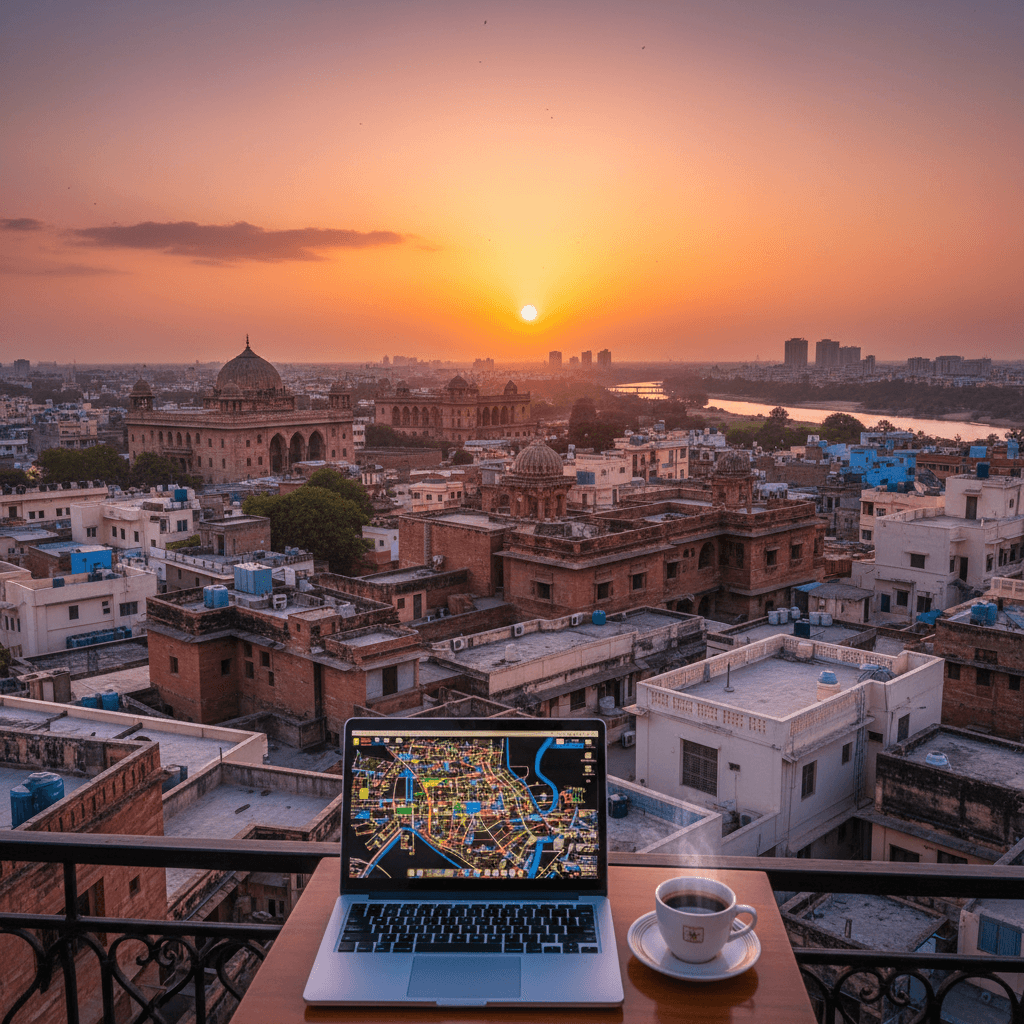
Ahmedabad
🇮🇳 India
The Industrial Heart with a Quiet Soul
Ahmedabad is a bit of a curveball for the typical nomad circuit. It doesn't have the beachy ease of Goa or the high tech polish of Bangalore. Instead, it’s a massive, industrious metropolis that feels surprisingly grounded. It’s the kind of place where centuries old stone mosques sit just a few miles away from sleek, modernist architecture designed by Le Corbusier. You’ll feel the energy of a city that’s constantly building and trading, yet it maintains a dry, conservative dignity that sets it apart from the more hedonistic parts of India.
The first thing you’ll notice is the pace. While the traffic is as chaotic as any Indian tier one city, the social vibe is more relaxed. People here take their food and their business seriously, but they aren't in a rush to impress anyone. It is a dry state, so the nightlife revolves around late night street food markets and long conversations over ginger tea rather than rooftop bars. This creates a focused, productive environment that suits nomads who are in a "deep work" phase of their journey.
The Lifestyle Trade Off
Living here requires a bit of an adjustment period. The internet speeds often hover around 12 Mbps in mid range rentals, which is enough for standard Zoom calls but might frustrate heavy video editors. You're looking at a monthly cost of around $1,230 to live comfortably, which is higher than some Southeast Asian hubs but offers a much more authentic, less "touristy" experience. Most nomads find that the lack of a massive expat bubble is actually a plus; you’re forced to engage with the local culture rather than just observing it from a Westernized cafe.
- The Heat: From April to June, the city is a furnace. Most expats stay indoors during the day and only venture out after the sun drops.
- The Food Scene: This is arguably the street food capital of India. The Manek Chowk night market transforms from a jewelry market by day into a massive outdoor food court by night.
- The "Dry" Factor: Alcohol is prohibited, though foreigners can obtain permits. Most travelers find it easier to just lean into the local lifestyle and swap the beer for a cold lassi.
Where the Work Happens
The city is split by the Sabarmati River. The old city on the east bank is a labyrinth of "pols" (traditional gated housing clusters) and heritage sites. It’s beautiful for a weekend wander, but you probably won’t want to work there. Most nomads and remote professionals gravitate toward the west side of the river, specifically areas like Satellite, Prahlad Nagar, and Bodakdev. These neighborhoods are where you'll find the modern apartments, air conditioned malls, and the few reliable coworking spaces popping up to serve the city's growing startup scene.
You won't find a nomad cafe on every corner like you would in Ubud or Canggu. You have to be more intentional here. You’ll likely spend your mornings working from your apartment and your afternoons at a local spot like Project OTU or seeking out a DevX or Uncubate location. These spots are frequented more by local entrepreneurs than international travelers, which gives you a great window into the Indian tech world. It’s a city that rewards those who are willing to dig a little deeper and don't need a pre packaged "nomad experience" to feel at home.
The Emotional Landscape
There is a specific kind of peace in Ahmedabad that comes from its Gandhian roots. The Sabarmati Ashram is the spiritual anchor of the city, and that philosophy of simple living and high thinking still permeates the local psyche. Travelers often say that while the noise and dust can be overwhelming at first, there is a genuine kindness in the people that isn't transactional. You aren't just a walking dollar sign here; you're a guest in a city that is very proud of its heritage and its future.
The Bottom Line
Ahmedabad falls into a unique bracket for India. It is significantly cheaper than Mumbai or Bangalore, but it lacks the ultra low budget backpacker infrastructure you might find in places like Rishikesh. Most digital nomads find they can live comfortably here for around $1,200 to $1,300 per month. This covers a private apartment in a decent area, eating out frequently, and a dedicated workspace.
The city is a dry state, which means your entertainment budget won't be eaten up by bar tabs. Instead, you'll likely spend that extra cash on the city's legendary street food scene or weekend trips to nearby Rajasthan. If you are sticking to a tight budget and living like a local, you could easily drop that monthly spend to under $900.
Housing and Neighborhoods
Rent is going to be your biggest variable. Most expats and remote workers gravitate toward the western side of the Sabarmati River. It is more modern and generally quieter than the chaotic old city.
- Prahlad Nagar: This is the upscale choice. It is corporate, clean, and has the best infrastructure. Expect to pay $450 to $600 for a modern, furnished one bedroom apartment here.
- Satellite and Bodakdev: These areas are popular with young professionals. You can find solid apartments for $350 to $500. It is close to plenty of cafes and shopping malls.
- Navrangpura: A bit more traditional but very central. Rents are lower here, often ranging from $250 to $400 for older but spacious units.
Eating and Drinking
Food is where Ahmedabad shines for your wallet. You can eat like a king for very little. A traditional Gujarati Thali at a local spot like Agashiye or Gopi Dining Hall will cost between $5 and $12 and leave you full for the rest of the day.
- Street Food: A quick dinner at Manek Chowk or a roadside maska bun and chai will rarely cost more than $2 or $3.
- Mid-range Cafes: Expect to pay $8 to $15 for a meal for two at trendy spots in Vastrapur or Prahlad Nagar.
- Groceries: If you prefer cooking at home, a weekly shop for one person at a local market or a store like Reliance Fresh usually totals around $25 to $35.
Connectivity and Workspace
Internet speeds can be hit or miss depending on your specific building. While some reports cite averages around 12 Mbps, most modern apartment complexes and coworking spaces offer fiber connections that reach 50 to 100 Mbps. You should definitely get a local SIM card immediately. Jio and Airtel are the reliable choices here. A monthly data plan with roughly 2GB of daily 4G or 5G data costs less than $10.
Coworking is still growing in the city. Dedicated desks at professional spaces usually run between $80 and $120 per month. Many nomads prefer working from cafes, though you will need to check for power outlets beforehand as they aren't always a given.
Transport and Utilities
Getting around is affordable if you use apps. Avoid haggling with rickshaw drivers on the street and use Uber or Ola instead. A 5km trip usually costs about $2 to $3. The Ahmedabad Metro is clean and efficient but still limited in its reach.
- Electricity: This is a major cost in the summer. If you run the AC all day in May or June, expect a monthly bill of $60 to $90. In winter, this drops to $20.
- Water and Gas: Usually included in rent or very cheap, rarely exceeding $10 a month.
- Gym Membership: A decent fitness center in West Ahmedabad costs about $30 to $50 per month.
For Digital Nomads: Bodakdev and Prahlad Nagar
If you need to be near the action and reliable Wi-Fi, head west of the Sabarmati River. Bodakdev is the unofficial tech hub of the city. It feels more modern than the old center, with wide roads and plenty of glass fronted office buildings. You'll find most of the coworking crowd hanging out at DevX or Uncubate, where a day pass usually runs around $6 to $8.
Prahlad Nagar is the neighboring alternative, popular for its high concentration of cafes. It is common to see people working from their laptops at Zen Cafe or The Project Cafe. Rent for a decent serviced apartment here sits around $450 to $600 per month. It is the most walkable part of a city that isn't particularly pedestrian friendly, so you can grab a cold brew and walk to your desk without needing an auto rickshaw every five minutes.
For Expats and Long Termers: Satellite and Vastrapur
Satellite is the go-to for those staying more than a month. It is a massive residential area that manages to feel established rather than chaotic. You are close to the Ahmedabad One Mall for international brands and high quality grocery stores. Expats often prefer this area because the housing stock is newer, featuring better plumbing and more reliable backup generators for those summer power cuts.
Vastrapur is right next door and centers around the lake. It is home to many faculty members and researchers from the Indian Institute of Management, giving it a more intellectual, quiet vibe. You can find a nice two bedroom apartment here for roughly $350 to $500. The food scene is great too; the local street food stalls near the lake serve some of the best maska bun and chai in the city for less than $1.50.
For Families: Navrangpura and Ambawadi
Navrangpura is one of the more prestigious older neighborhoods. It is leafy, green, and lacks the frantic energy of the newer developments. Families like it because it is close to the best schools and hospitals like Sterling Hospital. The streets are lined with independent bungalows and low rise apartments rather than towering blocks.
Ambawadi is another solid choice for those with kids. It is centrally located but stays surprisingly quiet. It is home to several parks and the Parimal Garden, which is a lifesaver when you need some green space. Expect to pay a premium for the quiet; a family sized flat here can easily reach $700 per month, but the safety and proximity to amenities make it a top choice for those relocating with a spouse or children.
For Solo Travelers: Ellis Bridge and Khanpur
If you are in town solo and want to soak up the history, Ellis Bridge puts you right between the old and new worlds. You are a short hop from the Sabarmati Ashram and the heritage walks of the old city. It is a bit noisier and more traditional, but you will never be bored. Solo travelers often find it easier to meet people here since there are more guesthouses and budget friendly hotels.
Khanpur is closer to the riverfront and offers a bit more grit and character. It is not as polished as the western suburbs, but it is much cheaper. You can find basic guesthouses for $15 to $20 a night. It is the best spot for those who want to spend their days exploring the pols, which are the traditional gated housing clusters of the old city, without spending a fortune on transport.
- Average 1BR Apartment (West): $300 - $450
- Coworking Monthly Desk: $90 - $130
- Local Meal: $2.50 - $5.00
- Monthly Gym Membership: $25 - $40
Connectivity Realities
Ahmedabad is a bit of a mixed bag when it comes to the digital nomad lifestyle. While it is the largest city in Gujarat and a major economic hub, it does not have the same tech-centric infrastructure you will find in places like Bangalore or Hyderabad. Most nomads find that the average home or hotel internet speeds hover around 12 Mbps, which is enough for basic work but might feel sluggish if you are uploading massive video files or doing heavy data processing.
To stay connected, you should grab a local SIM card immediately. Jio and Airtel are the two main players here. Both offer incredibly cheap data packages; you can usually get a few gigabytes per day for roughly $5 to $10 per month. Most travelers recommend Airtel for better indoor penetration in the older parts of the city, while Jio is often faster in the newer western suburbs. Use your phone as a hotspot if the hotel Wi-Fi fails you, as 4G coverage is generally reliable across the city.
Coworking Spaces in Ahmedabad
If you need a professional environment to escape the heat and the noise, the coworking scene is growing, primarily in the western areas like Bodakdev and Prahlad Nagar. These neighborhoods are where the modern side of the city lives and works. You will find air conditioning, ergonomic chairs, and better internet stability than you would at a local cafe.
- DevX: Popular managed office space in Ahmedabad, this is one of the most popular spots for startups and freelancers. It feels corporate but high-end. A day pass usually costs around $8 to $10, while a dedicated desk for a month goes for about $120.
- Uncubate: Community-focused coworking with multiple locations, this space has a more community-focused vibe. It is great for networking with local entrepreneurs. Monthly rates start around $80.
- Working Company: Situated near Mithakhali Six Roads, this is one of the older, more established spaces. It is known for its quiet atmosphere and decent coffee. Expect to pay roughly $7 for a day pass.
Cafe Culture and Remote Work
Working from cafes is a viable option if you only have a few hours of light tasks. The coffee culture is booming, though you should always check for power outlets before you get settled. Most staff won't mind you staying for a while as long as you keep ordering snacks or drinks.
- Zen Cafe: Located near the Ahmedabad University area, this spot is an architectural favorite. It is mostly outdoors, so it is best for morning sessions before the afternoon heat kicks in.
- The Project Cafe: A quirky, art-filled space in Ambawadi where you can get some creative inspiration. The Wi-Fi is generally decent for emails and browsing.
- Java+ at Courtyard by Marriott: If you need a high-end environment with reliable backup power and strong Wi-Fi, this is a solid choice in the Satellite area. A coffee will cost you more here, likely around $4 to $5, but the peace of mind is worth it for important calls.
Practical Tips for Staying Online
Power outages do happen, especially during the monsoon season. Most dedicated coworking spaces have power backups, but smaller cafes might not. Always keep your laptop and power bank fully charged. If you are staying in an Airbnb, ask specifically if they have a "power backup" or "inverter" for the Wi-Fi router. It is a small detail that saves a lot of frustration during a deadline.
While the monthly cost of living in Ahmedabad is estimated at $1,231 for a comfortable nomad lifestyle, your biggest hurdle will be the internet speed. If your work requires high-bandwidth connections, stick to the premium coworking spaces in Bodakdev rather than relying on residential Wi-Fi. The city is affordable and the food is world-class, but you have to be intentional about your tech setup to make it work.
Staying Safe on the Streets
Ahmedabad is widely regarded as one of the safest major cities in India. The local culture is generally conservative and family oriented, which translates to a low rate of violent crime. You can usually walk around neighborhoods like Navrangpura or Bodakdev late at night without feeling on edge. That said, the traffic is often more dangerous than the people. Crossing the road near Sarkhej Gandhinagar Highway requires a bit of bravery and a lot of eye contact with drivers.
Pickpocketing isn't a massive issue here, but it can happen in crowded spots like the Lal Darwaja market. Keep your phone in your front pocket and your bag zipped. If you are a woman traveling solo, you might get some curious stares, but most nomads find the locals to be incredibly respectful. If you ever feel uncomfortable, head into a nearby cafe or mall; people are usually quick to help out if you ask.
The city has a strict prohibition policy, meaning alcohol is mostly banned. You can get a liquor permit as a foreign tourist, but the lack of a "bar scene" means you won't deal with the late night rowdiness found in cities like Goa or Bangalore. It keeps the streets much calmer after dark.
Healthcare and Medical Facilities
If you get sick, you are in good hands. Ahmedabad is a major hub for medical tourism in Western India. The private hospitals here are world class and surprisingly affordable compared to Western standards. Most doctors speak excellent English and many have trained abroad. For anything serious, expats and long term travelers usually head to Apollo Hospitals or Zydus Hospital.
For minor issues, walk-in clinics are everywhere. You don't usually need an appointment for a GP visit; you just show up, pay a small fee, and wait your turn. A standard consultation will usually set you back between 500 and 1,000 INR (about $6 to $12). Pharmacies, or "chemists" as they are called here, are on almost every corner. You can get most medications over the counter, though you should always check the expiry date on the packaging.
Staying Healthy
The biggest health risk for most nomads is the "Delhi Belly," which is just as common in Gujarat. The street food at Manek Chowk is legendary, but take it slow. Stick to stalls that have a high turnover of local customers. Never drink the tap water. Most apartments and coworking spaces have RO (Reverse Osmosis) filters, but when in doubt, stick to bottled water from brands like Bisleri or Kinley.
The heat is the other factor to watch. In May and June, temperatures regularly soar above 40°C (104°F). Dehydration happens fast, so keep an electrolyte drink like Electral handy. It is available at any chemist for less than 20 INR a sachet.
- Emergency Number: Dial 108 for an ambulance. This is a reliable, free service in Gujarat.
- Top Hospital: Apollo Hospitals in Gandhinagar is the gold standard for specialized care.
- Pharmacy App: Use Tata 1mg or Apollo 24/7 for home delivery of medicines within a few hours.
- Water Safety: Always ask for "mineral water" when eating out, which usually costs about 20 to 30 INR per bottle.
The Logistics of Motion
Ahmedabad is a sprawling metropolis split in two by the Sabarmati River. On the eastern side, you have the narrow, winding alleys of the old city. On the west, you will find wider roads and the modern developments where most nomads base themselves. Getting between the two requires a bit of strategy, especially during the humid summer months or the peak rush hours of 9:00 AM and 6:00 PM.
The city has made massive strides in public transit recently, but the heat often makes door to door service the preferred choice. You will find that most expats and long term visitors rely on a mix of rickshaws and app based rides to keep their sanity in the Gujarat sun.
Rickshaws and Ride Hailing
The iconic three wheeled auto rickshaw is the lifeblood of Ahmedabad. They are everywhere and they are aggressive. While most drivers are honest, they rarely want to use the meter for foreigners. You will likely pay a "tourist tax" if you just hop in off the street without negotiating first.
- Uber and Ola: These are your best friends here. Both apps work reliably and offer "Auto" options which give you a fixed price for a rickshaw. It saves you the headache of haggling and ensures the driver knows exactly where you are going.
- Typical Costs: A short 3 to 5 kilometer trip usually costs between 50 and 80 INR. A longer cross town trek might run you 150 to 200 INR.
- Safety Tip: Always share your ride status through the app with a friend, though Ahmedabad is generally considered one of the safer cities in India for solo travelers.
The BRTS and Metro
If you want to avoid the notorious traffic jams on the Nehru Bridge or around Satellite, the Janmarg BRTS (Bus Rapid Transit System) is surprisingly efficient. It runs in dedicated lanes, meaning you zip past the gridlock while everyone else honks their horns in frustration. It is cheap, usually costing under 20 INR for most journeys.
The Ahmedabad Metro is the newest player in town. While the network is still expanding, the East West corridor is a game changer if you are staying near Thaltej and need to get toward the old city or the railway station. The trains are air conditioned, clean, and a welcome relief from the dust outside. Tickets start at just 5 INR.
Walking and Micromobility
Walking in Ahmedabad is an extreme sport. Sidewalks are often non existent or occupied by street vendors and sleeping cows. If you are in the historic Pols (housing clusters) of the old city, walking is your only real option because the lanes are too narrow for cars. Wear sturdy shoes and keep your eyes on the ground to avoid uneven pavement.
For those living near the Sabarmati Riverfront, you will find beautiful, paved paths that are actually designed for pedestrians and cyclists. It is one of the few places in the city where you can clear your head without dodging a motorbike. You can often find public bike sharing docks here, though the registration process for the apps can be finicky with international phone numbers.
Practical Transit Tips
- Get a Jio or Airtel SIM: You need a steady data connection to use Uber or Ola. Most nomads pick these up at the airport or in malls like Alpha One for about 300 to 500 INR per month.
- Avoid the Afternoon: Between 1:00 PM and 4:00 PM, the heat is brutal. If you have to move, take an "Uber Premier" for the air conditioning.
- The "Chalo" App: Download this to track bus timings and routes in real time. It makes using the public system much less intimidating for newcomers.
The Linguistic Landscape
While Hindi is the national bridge and English is the language of business, Gujarati is the heartbeat of Ahmedabad. You will hear it everywhere, from the frantic shouts of rickshaw drivers to the polite chatter in the upscale cafes of Bodakdev. Most locals are bilingual or trilingual, so you won't struggle to get your point across, especially in the western parts of the city where the digital nomad crowd tends to hang out.
In professional settings or coworking spaces like DevX or Uncubate, English is the standard. Most young professionals and students speak it fluently, so networking or collaborating on projects is rarely an issue. However, once you step into the Old City or smaller local markets, the English proficiency drops. It helps to have a few Gujarati phrases in your back pocket to break the ice and show you are trying to integrate.
Key Phrases to Know
Locals genuinely appreciate it when you attempt the local tongue. It often leads to better service and perhaps a slightly better price at the market. Here are a few basics to get you started:
- Kem cho? (How are you?) - Use this as a standard greeting.
- Maja ma. (I am fine.) - The most common response you will give and hear.
- Aabhar. (Thank you.) - While "Thank you" is understood, this is a nice touch.
- Ketla rupiya? (How many rupees?) - Vital for street food and rickshaws.
- Bahu saras! (Very good!) - Use this after a great meal at a place like Agashiye.
Communication Tools and Connectivity
You cannot rely on public Wi-Fi here. It is often spotty or requires an Indian phone number to receive an OTP (One Time Password) for access. Most nomads pick up a local SIM card immediately. Jio and Airtel are the two main players. You can grab a prepaid SIM at the airport or at various kiosks in neighborhoods like Vastrapur for around 300 to 500 INR, which usually includes a generous daily data allowance of 1.5GB to 2GB.
WhatsApp is the undisputed king of communication in Ahmedabad. Whether you are booking a spot at a yoga studio, ordering water delivery, or talking to a new friend, it happens on WhatsApp. If a business has a phone number listed, don't bother calling first; just send a message. It is the fastest way to get a response.
Navigating the Social Nuances
Communication in Ahmedabad is often indirect. People are generally very polite and might say "yes" or "we will see" when they actually mean "no" or "it is not possible." It is a cultural quirk aimed at saving face and avoiding confrontation. If you are hiring a local freelancer or working with a vendor, follow up frequently to ensure everyone is on the same page regarding deadlines.
Digital nomads often find that the best way to bridge the communication gap is through food. If you are invited for tea or snacks, accept it. These informal chats are where the real connections happen and where you will get the best tips on the city. If you ever feel stuck, Google Translate works reasonably well for Gujarati, though it sometimes struggles with specific local slang.
Practical Tech Tips
- Google Lens: Great for translating menus at smaller eateries that don't have English versions.
- Uber and Ola: Use these apps for transport to avoid the "foreigner tax" and the need to negotiate prices in broken Gujarati.
- Zomato and Swiggy: These are the go to apps for food delivery; the interfaces are entirely in English and very user friendly.
The Seasonal Cycle
Ahmedabad is a city of extremes. If you are coming from a temperate climate, the heat here will likely be your biggest adjustment. The year is basically split into three distinct phases: the scorching summer, the humid monsoon, and the brief, glorious winter. Most nomads find that timing their arrival is the difference between loving the city and hiding in an air-conditioned room all day.
The winter months from November to February are easily the best time to visit. During this window, daytime temperatures hover around 28°C to 30°C (82°F to 86°F), while nights can get surprisingly chilly, dropping down to 12°C (54°F). This is the only time of year when walking between cafes in neighborhoods like Navrangpura or Vastrapur is actually pleasant. It is also when the city comes alive with festivals like Uttarayan in January, where the sky fills with thousands of kites.
The Heat and the Monsoon
Avoid the summer if you can. From March to June, the mercury regularly climbs past 40°C (104°F), sometimes peaking at a brutal 45°C (113°F) in May. The air is dry and dusty, and the streets stay quiet until the sun goes down. If you end up here during these months, you will want to ensure your apartment or guesthouse has a high-quality AC unit, as "air cooling" fans won't cut it when the heat gets this intense.
The monsoon arrives in July and sticks around through September. While the rain brings a much-needed drop in temperature, it also brings high humidity and occasional localized flooding. It is a beautiful time to see the Sabarmati Riverfront, but the dampness can make the city feel a bit heavy. Travelers often find the transition months of October and March to be manageable, though still quite warm for those used to cooler climates.
Planning Your Budget by Season
Because winter is the peak tourist and wedding season, prices for short-term rentals and high-end hotels can spike. You might see a 20% to 30% increase in accommodation costs if you book last minute in December. Conversely, you can find some great deals on long-term stays during the summer months, though the trade-off is a significantly higher electricity bill from running the AC 24/7.
- Peak Season (November to February): Best weather, highest prices, lots of outdoor events.
- Shoulder Season (September to October): Humid but green, moderate prices, Navratri celebrations.
- Off-Peak (March to June): Extreme heat, lowest accommodation rates, very quiet streets during the day.
What to Pack
For most of the year, light cotton or linen clothing is your best friend. Ahmedabad is relatively conservative, so most expats recommend breathable fabrics that cover the shoulders and knees to stay cool while respecting local norms. If you are visiting during the winter, do not forget a medium-weight jacket or a thick sweater. The desert-like climate means temperatures plummet once the sun sets, and you will definitely feel the chill during late-night scooter rides or outdoor dinners.
Regardless of when you visit, always carry a high-SPF sunscreen and a reusable water bottle. Staying hydrated is a full-time job here, especially during the transition into summer when the sun feels particularly sharp. Most locals rely on filtered water or brands like Bisleri, which you can find at any corner shop for about 20 INR ($0.25) for a liter.
Getting Around the City
Ahmedabad is a sprawling metropolis, so you will need a strategy for transit. The most reliable way to get from A to B is by using Uber or Ola. These apps work well here and save you the headache of haggling over fares. If you want a more local experience, flag down an auto-rickshaw. Just make sure the driver agrees to use the meter or settle on a price before you hop in. Most short trips across town should cost you between 50 to 100 INR.
For longer hauls, the Janmarg BRTS (Bus Rapid Transit System) is surprisingly efficient. It has its own dedicated lanes, which means you can bypass the notorious traffic during rush hour. You can pick up a smart card at most major stations. Many nomads find that staying near the Sarkhej-Gandhinagar (SG) Highway or C.G. Road makes life easier because these areas are well connected to the rest of the city.
Staying Connected
Internet speeds in Ahmedabad can be hit or miss. While some sources suggest averages around 12 Mbps, you can get much faster fiber connections if you choose your accommodation wisely. Always ask for a speed test screenshot before booking an Airbnb for a long stay. Jio and Airtel are the dominant players for mobile data. You can grab a SIM card at the airport or at various kiosks in the city center for around 300 to 500 INR, which usually includes a healthy daily data limit for a month.
If you need a professional environment, head to coworking spaces like DevX or Uncubate. They offer reliable backup power and high speed internet, which are vital during the monsoon season when outages can happen. Expect to pay roughly 5,000 to 8,000 INR for a monthly hot desk.
Money and Budgeting
While some reports put the monthly cost of living at over $1,200, most budget conscious travelers find they can live comfortably on much less, often around $700 to $900. Your biggest expense will be housing if you want Western style amenities. ATMs are everywhere, but stick to those at major banks like HDFC or ICICI to avoid high fees or card skimming issues.
- Street food meal: 80 to 150 INR
- Mid range restaurant dinner: 500 to 800 INR
- Monthly gym membership: 1,500 to 3,000 INR
- Liter of bottled water: 20 INR
Health and Safety
Ahmedabad is generally considered one of the safer cities in India, especially for solo travelers. Since Gujarat is a dry state, you won't find a rowdy nightlife scene, which contributes to a lower crime rate in the evenings. However, the lack of alcohol doesn't mean there is nothing to do; the city stays alive late with people hanging out at tea stalls and night markets like Manek Chowk.
For healthcare, Apollo Hospitals and Sterling Hospital are the top choices for expats. They have English speaking staff and modern facilities. Always carry a bottle of water and stay hydrated, as temperatures can soar above 40 degrees Celsius in April and May. Stick to filtered or bottled water and be cautious with street food during your first week while your stomach adjusts.
Local Etiquette
People in Ahmedabad are friendly and often curious about foreigners. It is common for locals to ask where you are from or even request a selfie. While English is widely spoken in business circles and among the younger crowd, learning a few words of Gujarati or Hindi goes a long way. A simple "Namaste" or "Aavjo" (goodbye in Gujarati) will earn you plenty of smiles. Dress modestly, especially when visiting religious sites like the Sabarmati Ashram or local mosques; keeping your shoulders and knees covered is the standard rule of thumb.
Need visa and immigration info for India?
🇮🇳 View India Country GuideHidden Gem
Worth the effort