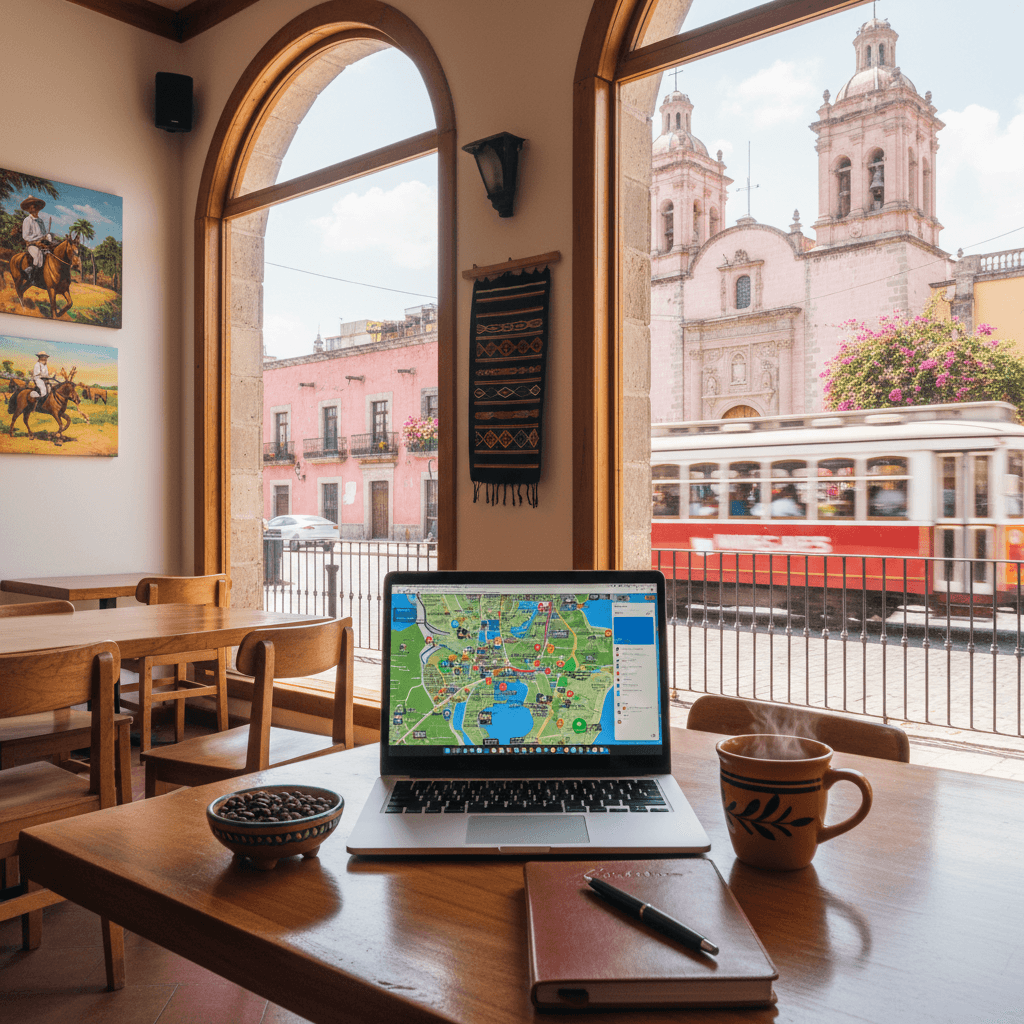
Aguascalientes
🇲🇽 Mexico
The Cleanest City in Mexico
If you're tired of the smog in Mexico City or the humid, tourist-packed streets of Playa del Carmen, Aguascalientes feels like a breath of fresh air. Literally. This city is famous across Mexico for its cleanliness, modern infrastructure, and a level of safety that makes it an outlier in the central highlands. It doesn't scream for your attention with flashy landmarks; instead, it wins you over with a quiet, functional charm and a pace of life that actually lets you get work done.
The vibe here is a mix of industrious business energy and traditional Mexican warmth. Because it isn't a major stop on the typical gringo trail, you won't find crowds of influencers at every cafe. What you will find are incredibly friendly locals who are genuinely curious about why you've chosen their city. It's a place where you can blend in, focus on your projects during the day, and spend your evenings eating $3 tacos in a plaza where the only language you hear is Spanish.
What Sets It Apart
Aguascalientes is one of the few places in Mexico where "modern" and "authentic" aren't at odds. The city is a major industrial hub, which means the internet is reliable and the roads are well-maintained. Yet, walk into the Centro Histórico and you're immediately grounded in history. It's the kind of city where you can spend your morning in a high-tech coworking space and your afternoon wandering through colonial courtyards or soaking in the thermal springs that gave the city its name.
The emotional experience of living here is one of relief. There's no "hustle" to keep up with. You aren't constantly being upsold or treated like a walking wallet. Most nomads who settle here for a few months mention a sense of calm. It's a "productive" city, but it never feels rushed. It's the perfect middle ground for someone who wants the amenities of a big city without the chaos that usually comes with them.
The Nomad Lifestyle
Living here is remarkably affordable, especially when you compare it to the skyrocketing prices in Roma Norte or Sayulita. You can live a very comfortable, mid-range lifestyle on roughly $1,200 to $1,600 USD per month. This isn't just "getting by" either; that budget covers a modern apartment, eating out frequently, and plenty of weekend trips.
- The Work Setup: Internet speeds average around 50-60 Mbps, and fiber is common in most newer builds. While there aren't dozens of coworking spaces yet, the cafe culture is laptop-friendly. You'll find plenty of spots to camp out for the price of a latte.
- The Social Scene: The expat community is small but tight-knit. You'll likely meet people through Facebook groups like "Digital Nomads Aguascalientes" or by frequenting the same three or four specialty coffee shops in the center.
- Language Barrier: You're going to need some Spanish. English proficiency is low outside of high-end hotels and business circles. It’s an immersive environment, so come prepared with a translation app and a willingness to practice your "Buenos días."
When to Go
The city enjoys a mild, high-altitude climate, but timing matters. The sweet spot is October through May, when the weather is dry and temperatures hover between 20°C and 30°C. If you're here in April, you'll experience the San Marcos National Fair, one of the biggest festivals in the country. It transforms the city into a massive party for three weeks. If you prefer quiet, avoid April entirely. The rainy season hits from June to September, which can bring some humidity and daily downpours that might dampen your exploration plans.
Ultimately, Aguascalientes is for the nomad who has already "done" the famous spots and is looking for a place that feels like a real home. It's safe, it's efficient, and it offers a slice of Mexican life that feels honest and unperformed.
The Bottom Line
Aguascalientes is one of those rare spots where your dollar travels significantly further than in the high-demand hubs like Mexico City or Playa del Carmen. Most nomads find they can live a very comfortable, middle-class lifestyle here for between $1,600 and $1,845 USD per month. It is a clean, modern city that hasn't been hit by the massive price hikes seen in coastal Mexico, making it a strategic choice if you're looking to save while maintaining a high standard of living.
Housing and Neighborhoods
Your biggest expense will be rent, but even then, the value is impressive. If you want to be in the heart of the action, look at the Centro Histórico. It is walkable and puts you right next to the major festivals, though it can get noisy during peak event seasons.
- Budget Tier: You can find studios or 1BR apartments on the edges of Centro for $400 to $600. These are usually basic but functional.
- Mid-Range: Modern apartments throughout the city typically run between $600 and $900. These often include better security and newer appliances.
- Comfortable: For $900+, you are looking at fully furnished, "move-in ready" units in the prime business districts or upscale modern outskirts.
Expats often recommend checking Facebook Marketplace or local agents rather than relying solely on Airbnb, as long-term rates are much more negotiable. Most modern builds in the newer zones offer reliable fiber optic internet as a standard feature.
Food and Dining
The food scene is a mix of traditional street flavors and surprisingly polished international dining. You can easily eat well on a modest budget if you lean into the local culture.
- Street Food: Expect to pay $2 to $4 for a quick, filling meal like tacos or gorditas.
- Casual Sit-down: A meal at a mid-range restaurant usually falls between $10 and $15.
- Upscale Dining: If you're heading out for a nice steak or international cuisine, you'll likely spend $25 or more per person.
Groceries are affordable, especially if you shop at local markets. If you prefer the convenience of big-box stores, prices are comparable to other major Mexican cities but still cheaper than US or European equivalents.
Transport and Connectivity
Getting around is cheap and efficient. The city core is highly walkable, which keeps daily costs down. For longer trips, ride-hailing apps like Uber and Didi are the gold standard for expats, with most cross-city trips costing between $3 and $5.
Public buses are an option at only $0.50 per ride, though they require a bit of a learning curve. For digital nomads, the cost of staying connected is also low. A local Telcel or Movistar SIM card with plenty of data will cost you about $10 to $20 a month. If you prefer coworking spaces over cafes, expect to budget $100 to $200 for a monthly hot desk.
Estimated Monthly Budget (USD)
- Housing: $600 to $900
- Groceries and Dining: $400 to $500
- Transport: $100 to $150
- Utilities and Internet: $80 to $120
- Entertainment and Coworking: $200 to $300
- Total: Approximately $1,380 to $1,970
Travelers often say that the lack of "gringo pricing" is the best part of living here. You'll pay what the locals pay, which allows your budget to stretch into a much more luxurious experience than you'd find in the more tourist-saturated parts of the country.
For the Culture-Focused Solo Traveler
If you want to be in the thick of it, Centro Histórico is your base. This is the city's walkable heart where the colonial architecture meets the daily buzz of local life. You'll find yourself steps away from the main plaza and the theater district, which makes it perfect if you value atmosphere over a quiet night's sleep.
- Rent: Expect to pay between $400 and $600 for older apartments on the edges of the district.
- Vibe: High energy, festival-heavy, and very social.
- Connectivity: Most cafes here have decent WiFi, though older buildings can sometimes have thick walls that mess with your signal.
Solo travelers love this area because you don't need a car. You can walk to the San Marcos Garden or grab street tacos for $2 to $4 without ever checking a map. Just keep in mind that the bus traffic and evening crowds can get loud, so bring some noise-canceling headphones if you plan to work from your rental.
For the Focused Digital Nomad
The Modern Business Zones and northern outskirts are where you'll find the serious remote work crowd. These areas feel more like a mini-San Jose or Austin, with wide boulevards, shopping malls, and brand-new apartment complexes. It lacks the historic charm of the center, but it makes up for it with infrastructure that actually works.
- Rent: Modern 1BR apartments usually run between $600 and $900.
- Internet: This is where you'll find the most reliable fiber optic connections, often hitting 44 Mbps or higher.
- Coworking: You'll likely pay $100 to $200 a month for a dedicated desk in these corporate hubs.
Nomads usually prefer these neighborhoods because the power is stable and the cafes are designed for laptop users. You'll probably want the Uber or Didi apps on your phone, as these areas aren't as walkable as the center. A quick ride into town usually costs about $3 to $5.
For Long-Term Expats
Expats looking for a balance between "authentic Mexico" and "modern convenience" often settle into the residential pockets just outside the main ring road. These areas offer a quieter pace of life while remaining close to the international schools and larger supermarkets. It's a clean, safe environment where people actually know their neighbors.
- Rent: Larger, furnished houses or high-end condos start around $900.
- Dining: You're close to mid-range restaurants where a solid meal costs $10 to $15.
- Transport: Most expats here eventually buy or lease a car, though ride-hailing services are still very cheap and frequent.
The social scene for expats is smaller than what you'd find in Mexico City, so most people connect through local Facebook groups or at the larger gyms and sports clubs. It's a great spot if you want to integrate into a local community rather than living in an expat bubble.
For Families
Aguascalientes is one of the cleanest and safest cities in the country, making almost any residential neighborhood a viable option for families. However, the gated communities (fraccionamientos) on the north and west sides are the top picks. These areas offer parks, 24/7 security, and proximity to private healthcare facilities.
- Safety: Extremely high; it's common to see families out in the parks until late in the evening.
- Amenities: Easy access to cinemas, parks, and American-style malls.
- Cost: A comfortable family lifestyle usually requires a budget of $2,500+ per month to cover a large home and private transport.
The city's relaxed pace is its biggest selling point for parents. You won't be fighting the soul-crushing traffic of a larger metropolis, and the abundance of green spaces like the Tres Centurias Park keeps the kids entertained on weekends. If you're moving here with children, look for rentals near the Colosio area for the best mix of dining and schools.
Connectivity in the City
Aguascalientes is a dream for deep work. Unlike the oversaturated hubs on the coast, the infrastructure here is modern and surprisingly stable. You can expect average download speeds of 50-60 Mbps, and fiber optic connections are becoming the standard in most mid-range and upscale rentals. Most nomads find the reliability here beats out many of the more famous "nomad hotspots" in Mexico.
For your mobile data, Telcel is the gold standard for coverage, though Movistar is a solid budget alternative. You can pick up a SIM card at any OXXO for about $10 to $20 a month and get plenty of data. If you want to hit the ground running, eSIM providers like Airalo or Holafly work well here, though they’re pricier than a local chip. It's smart to keep a hotspot ready as a backup, but you'll rarely need it given how consistent the local WiFi tends to be.
Coworking Spaces and Costs
The coworking scene in Aguascalientes is professional and leans toward the business traveler crowd rather than the "influencer" vibe. While it’s a smaller community, the spaces are high quality and rarely crowded. Prices are very reasonable compared to Mexico City or Guadalajara.
- Hot Desk: Expect to pay around $10 to $15 for a day pass.
- Monthly Membership: Most spaces range between $100 and $200 for a flexible desk.
- Dedicated Desk: If you need a permanent setup, budget $200 or more.
Most of the modern offices are located in the business districts on the city's outskirts or near the northern shopping hubs. These areas offer the best "corporate grade" internet if you have heavy video calls or large file uploads. If you're staying in the Centro Histórico, you'll find fewer dedicated coworking offices, but the area is packed with laptop friendly spots.
Cafe Culture for Remote Work
If you prefer the hum of a coffee shop over a quiet office, Aguascalientes has a growing cafe culture that welcomes the laptop crowd. While there aren't many "nomad specific" cafes yet, the local students and professionals frequent several spots that are perfect for a few hours of work.
- Centro Histórico: This is the place for character. You'll find plenty of high ceilinged cafes with decent WiFi. It’s perfect for morning emails, though it can get a bit loud during the afternoon festivals.
- Northern Districts: This is where you’ll find the more modern, air conditioned cafes. These are generally quieter and better suited for long stretches of focused work.
- The "Laptop Friendly" Vibe: Most local baristas won't mind you staying for a few hours as long as you keep the coffee and snacks coming. A mid range meal at these spots usually runs between $10 and $15.
The Digital Nomad Community
Don't expect a massive, pre packaged expat scene here. The community is small but growing, which means you’ll actually get to know the people you meet. Most nomads connect through local Facebook groups or by searching for "Digital Nomads Aguascalientes" on Meetup. It’s an "active" community, meaning you might have to be the one to suggest a coffee meetup or a weekend trip, but the locals and the few expats who are here are incredibly welcoming.
Because the city isn't overrun with tourists, you'll find that being a digital nomad here feels more like "living" in Mexico than just visiting. It’s a place for people who want to get their work done during the week and enjoy authentic culture on the weekends without the $2,500 price tag of the bigger cities.
Peace of Mind in the Land of Good Waters
One of the first things you'll notice about Aguascalientes is how orderly it feels compared to the chaotic energy of Mexico City or the gritty charm of Guadalajara. It's frequently cited as one of the cleanest and safest cities in the country. For nomads, this translates to a lower "mental load" when walking around with a laptop bag or exploring the city after dark. You won't find the heavy tourist police presence seen in coastal towns because, frankly, the city doesn't usually need it.
The local vibe is remarkably friendly and business oriented. Because the city hosts many international professionals working in the automotive sector, locals are used to seeing foreigners, but you aren't treated like a walking wallet. Most expats report feeling comfortable walking through the Centro Histórico and modern northern districts at night without the hyper-vigilance required in other major hubs.
Staying Safe on the Ground
While the city is generally secure, standard urban common sense still applies. Petty theft is rare but not non-existent. Most nomads recommend keeping your phone tucked away while walking and using ride-hailing apps like Uber or Didi for late-night trips rather than hailing a cab on the street. It's more about convenience and price transparency than fear.
- Emergency Number: Dial 911 for all police, fire, or medical emergencies.
- Walking: Stick to well-lit areas in the Centro and northern business zones after 11:00 PM.
- Digital Safety: Public Wi-Fi is common in cafes, but a VPN is a standard recommendation for anyone handling sensitive work data.
Healthcare and Medical Services
Aguascalientes is a regional hub for medical care, so you're in good hands if you catch a bug or need a specialist. The city is home to several high-quality private hospitals that feel more like modern hotels than clinics. Many doctors here have trained abroad and speak functional English, especially in the private sector. If you have a minor ailment, look for a Farmacia San Pablo or Farmacia del Ahorro. Many of these have adjacent "consultorios" where you can see a doctor for about $5 to $10 USD for a quick prescription.
For more serious issues, the private hospitals in the northern part of the city are the go-to for the expat community. Facilities like Hospital Star Médica are equipped with modern technology and offer specialized services at a fraction of U.S. or European prices. Expect to pay between $30 and $60 USD for a private consultation with a specialist.
Health Tips for New Arrivals
The biggest health hurdle for most nomads isn't crime or major illness; it's the altitude and the water. Aguascalientes sits at about 6,200 feet (1,880 meters). If you're coming from sea level, give yourself a few days to acclimate before hitting a heavy workout. You might feel a bit more tired or get a slight headache during your first 48 hours.
- Don't drink the tap water: Even locals don't do it. Stick to "garrafones" (20-liter jugs) delivered to your apartment or bottled water from any OXXO.
- Sun Protection: The sun is much stronger at this altitude. Even on mild 27°C (81°F) days, you'll burn faster than you expect.
- Insurance: Most nomads use SafetyWing or Genki for monthly coverage. Ensure your policy covers private hospital stays to avoid the crowded public IMSS system.
Overall, the healthcare infrastructure reflects the city's modern, middle-class status. It's reliable, affordable, and easy to navigate, even if your Spanish is still a work in progress. Between the low crime rates and the high standard of medical care, it's an easy place to settle into for a few months without worrying about the "what-ifs."
Getting Around Aguascalientes
Aguascalientes is one of those rare Mexican cities where you don't feel like you're constantly fighting for space on the sidewalk. It's exceptionally clean and organized, making it a breath of fresh air if you've recently spent time in the chaotic centers of Mexico City or Guadalajara. Most nomads find that the city structure is built for easy movement, whether you're walking to a cafe in the morning or catching a ride to a dinner spot across town.
On Your Own Two Feet
If you're staying in the Centro Histórico, walking is your best bet. The heart of the city is compact and highly pedestrian friendly. You can easily bounce between colonial plazas, local markets, and your workspace without ever needing a vehicle. Most expats recommend sticking to the central core if you want to keep your transport costs near zero, as the infrastructure here is well maintained and feels very safe even after the sun goes down.
Ride-Hailing and Taxis
For longer trips or when the midday sun gets a bit too intense, ride-hailing apps are the gold standard here. Uber and Didi both operate reliably throughout the city. You'll rarely wait more than five minutes for a car, and the pricing is incredibly nomad friendly. Expect to pay between $3 and $5 USD for most trips within the city limits. While traditional taxis are everywhere, the apps provide that extra layer of price transparency and GPS tracking that most travelers prefer.
Public Transit: The Bus System
The local bus system is extensive and serves as the backbone for the city's workforce. At roughly $0.50 USD per ride, it's the most economical way to get around, though it can be a bit intimidating if your Spanish is still in the "beginner" phase. The buses are generally clean and efficient, but they can get crowded during the morning and evening rush hours. If you're heading to the more modern outskirts or business zones, the bus is a solid way to save your pesos for better coffee.
Airport Transfers
The Lic. Jesús Terán Paredo International Airport (AGU) is located about 20 to 30 minutes south of the city center. When you land, you'll have a couple of options to get to your accommodation:
- Authorized Airport Taxis: These are available at the kiosks inside the terminal. It's a fixed rate system, usually costing around $15 USD to reach the center.
- Uber/Didi: You can often call a ride-hailing car, though you might need to walk slightly away from the main terminal doors to meet your driver. This usually drops the price to about $10 USD.
- Shuttles: Some of the larger hotels in the business districts offer complimentary pickups, so it's always worth checking with your host before you land.
Regional Travel
Aguascalientes is a fantastic base for exploring central Mexico. The main bus terminal (Central de Autobuses) is your gateway to the rest of the country. High quality bus lines like ETN or Primera Plus offer luxury seating with plenty of legroom and WiFi. You can reach Guadalajara in about two or three hours, making it an easy weekend trip. For those looking for a quick change of pace, the nearby "Pueblos Mágicos" are accessible via smaller regional buses for just a few dollars.
Micromobility
While not as saturated as the capital, you'll start seeing more bike and scooter options popping up in the modern northern districts. These areas are flatter and have newer pavement, making them ideal for short hops between your apartment and a coworking space. If you're planning a long term stay, some nomads look into buying a cheap second hand bike to navigate the neighborhood, as the city's layout is generally quite flat and manageable.
The Language Gap
If you are coming from Mexico City or Puerto Vallarta, the first thing you will notice in Aguascalientes is that the English safety net almost entirely disappears. This is a city built on industry and local commerce rather than international tourism. While you will find English speakers in high end hotels or among the business crowd in the northern districts, the vast majority of your daily interactions will happen in Spanish.
Most nomads find that their experience here scales directly with their language ability. If you arrive with zero Spanish, expect a bit of a steep learning curve at the local mercados or when dealing with landlords. However, the locals are famously patient. Unlike the hurried pace of the capital, people here will usually wait for you to pull up Google Translate or DeepL to bridge the gap. Travelers often say that a simple effort to start a conversation in Spanish earns you a lot of respect and better service.
Communication Tools and Connectivity
Staying connected is rarely an issue. The city is surprisingly modern, and you will find reliable fiber internet in most mid range apartments and cafes. For your mobile data, expats recommend skipping the international roaming plans and grabbing a local SIM card immediately. It is the most cost effective way to keep your maps and translation apps running while you are out exploring.
- Telcel: This is the gold standard for coverage. You can pick up a SIM at any OXXO convenience store for about $10 to $25 USD and load it with a "Paquete Amigo" for data.
- Movistar: A solid runner up, often slightly cheaper than Telcel but with slightly less reach once you head into the rural areas outside the city.
- eSIM Options: If your phone supports it, Airalo or Holafly are great for immediate connectivity the moment you land, though they are more expensive than local physical SIMs.
Cultural Nuances and Socializing
Communication in Aguascalientes is about more than just words. It is a polite city where formal greetings go a long way. You will hear "Buenos días" and "Buenas tardes" constantly. Dropping a "con permiso" when moving through a crowd or "provecho" when walking past someone eating is part of the local social fabric.
Since the expat scene is smaller here, you won't find many English language meetups. Most nomads connect through Facebook groups like Digital Nomads Aguascalientes or by hanging out at laptop friendly cafes in the Centro Histórico. If you are looking to practice your Spanish, look for language exchange events which occasionally pop up near the university areas. These are great spots to meet locals who are often eager to trade Spanish lessons for English conversation.
Survival Phrases for the Road
You don't need to be fluent to get by, but you should have a few phrases committed to memory. Beyond the standard hellos and thank yous, these will help you navigate the city like a pro:
- "¿Cuánto cuesta?" (How much does it cost?): Use this at the street stalls where prices aren't always posted.
- "La cuenta, por favor" (The bill, please): Essential for finishing up at a restaurant.
- "¿Aceptan tarjeta?" (Do you accept cards?): While modern spots do, many smaller shops and taco stands are strictly cash.
- "¿Tiene WiFi?" (Do you have WiFi?): Most cafes will have a small sign, but it never hurts to ask for the password.
If you plan on staying for more than a month, consider enrolling in a local Spanish school or hiring a private tutor. The cost is significantly lower than in the US or Europe, typically ranging from $10 to $20 USD per hour for one on one sessions. It is the single best investment you can make to turn a functional stay into a truly immersive experience.
The High Plateau Climate
Aguascalientes sits at a comfortable elevation in central Mexico, which means you can ditch the tropical humidity found on the coasts. The city enjoys a mild, semi-arid climate that stays remarkably consistent. Most days hover around 27°C (81°F), making it a dream for nomads who want to work from outdoor cafes without melting or freezing.
The air is dry and crisp for most of the year. You'll notice the mornings can be surprisingly cool, sometimes dipping low enough to require a light jacket, but the sun warms things up quickly by noon. It's the kind of weather where you'll want layers if you're heading out for a long day of co-working and exploring the Centro Histórico.
Best Time to Visit: October to May
If you're planning a stint here, aim for the window between October and May. This is the dry season, and it's easily the most pleasant time to be in the city. You'll get endless blue skies and temperatures that range between 20°C and 30°C. It's perfect for walking the city's clean streets or taking weekend trips to nearby pueblos without worrying about a sudden downpour.
April and May are the warmest months, often seeing the thermometer climb toward the low 30s. However, because the humidity is so low, it rarely feels oppressive. This period also coincides with the city's biggest cultural events, so expect a livelier atmosphere and more social opportunities with locals and the small but growing expat community.
The Rainy Season: June to September
The weather shifts in June, marking the start of the rainy season which lasts through September. Unlike the persistent drizzle you might find in northern Europe, rain here usually comes in heavy, late-afternoon bursts. It clears the air and cools the city down, but it can make commuting via Uber or the local bus system a bit more chaotic.
Summer humidity is higher during these months, though it still doesn't reach the levels of the Riviera Maya. If you're sensitive to dampness or don't want your afternoon walk interrupted by a thunderstorm, you might find this season a bit frustrating. Most nomads prefer to arrive once the rains taper off in early autumn.
Seasonal Planning Tips
- April/May Peak: This is the hottest time of year. If your apartment doesn't have great airflow, you might find yourself hunting for air-conditioned cafes or modern co-working spaces.
- Winter Mornings: In December and January, nighttime temperatures can drop significantly. Make sure your rental includes extra blankets or a small space heater, as central heating isn't standard in most Mexican homes.
- Sun Protection: The high altitude means the sun is stronger than it feels. Even on cooler days in November, you'll want to wear sunscreen if you're working from a patio.
- Festival Timing: Keep an eye on the calendar for major spring festivals. While the weather is great, prices for short-term rentals can spike and the city gets much louder.
Overall, Aguascalientes is a year-round destination, but the sweet spot for productivity and comfort is definitely the dry winter and spring. You'll avoid the summer humidity and get the best of the city's walkable layout and outdoor lifestyle.
Connectivity and Tech Setup
Staying connected in Aguascalientes is surprisingly easy for a city that flies under the radar. Fiber optic internet is the standard here, with average speeds hitting around 44 Mbps. Most modern apartments and cafes offer reliable connections, making it a solid base for those who need to jump on video calls without the lag you might find in more remote coastal towns.
For mobile data, grab a physical SIM from Telcel or Movistar at any OXXO convenience store. You can expect to pay between $10 and $20 USD for a monthly plan with plenty of data. If you prefer to hit the ground running, Airalo or Holafly eSIMs work well, though they usually cost a bit more than local options. Having a backup hotspot is smart, but you'll rarely need it in the city center.
Money and Budgeting
Your pesos go a lot further here than in Mexico City or Tulum. A comfortable solo lifestyle typically averages between $1,600 and $1,845 USD per month. Most expats find that $600 to $900 gets a high quality, modern one bedroom apartment in a good area. If you're on a tighter budget, looking toward the edges of the Centro Histórico can drop your rent to the $400 range.
- Street Food: $2 to $4 for a quick lunch.
- Mid-range Dinner: $10 to $15 at sit-down spots.
- Ride-hailing: $3 to $5 for most trips across town.
- Coworking: $100 to $200 for a monthly desk.
For banking, stick to Wise or Revolut to avoid high conversion fees. While credit cards are standard in malls and upscale restaurants, you'll want cash for the smaller markets and street stalls. ATMs are everywhere, but try to use the ones located inside bank branches for better security.
Getting Around
The city core is very walkable, especially around the Centro Histórico. It's clean, safe, and the sidewalks are generally in better shape than in other Mexican cities. For longer distances, Uber and Didi are the most reliable ways to get around. They’re affordable and save you the hassle of negotiating taxi fares.
Public buses are an option at roughly $0.50 per ride, though they can be a bit confusing if you don't speak much Spanish. If you're arriving at Lic. Jesús Terán Paredo Airport (AGU), a taxi or Uber into the center will set you back about $10 to $15. For weekend trips, the main bus station has excellent links to Guadalajara, which is only a two hour ride away.
Language and Local Etiquette
Don't expect much English once you step away from the business hotels. This is an authentic Mexican city, so knowing the basics is a must. A simple "Buenos días" or "Gracias" goes a long way with the locals, who are famously friendly and patient with learners. Use Google Translate or DeepL for the more complex interactions, especially when dealing with landlords or utility companies.
Tipping follows the standard Mexican rule of 10% to 15% at restaurants. When meeting people, a polite greeting is expected before diving into business or ordering food. The city has a relaxed, professional vibe, so being overly loud or demanding usually won't get you very far.
Health and Safety
Aguascalientes is one of the safest cities in the region. You won't find the same level of petty crime that plagues the bigger tourist hubs. Standard common sense applies, but most nomads feel perfectly comfortable walking around at night. The healthcare system is modern and efficient, with several high quality hospitals and 24 hour pharmacies. In any emergency, the national number to dial is 911.
When to Visit
The sweet spot for weather is between October and May. During these months, it's dry and comfortable, with temperatures hovering between 20°C and 30°C (68°F to 86°F). Try to avoid the peak of the rainy season from June to September, as the humidity can get a bit heavy and afternoon downpours might interrupt your plans. If you enjoy a party atmosphere, plan your stay around the local festivals, but book your accommodation well in advance as the city fills up quickly.
Need visa and immigration info for Mexico?
🇲🇽 View Mexico Country GuideHidden Gem
Worth the effort