Agadir
🇲🇦 Morocco
The Coastal Alternative
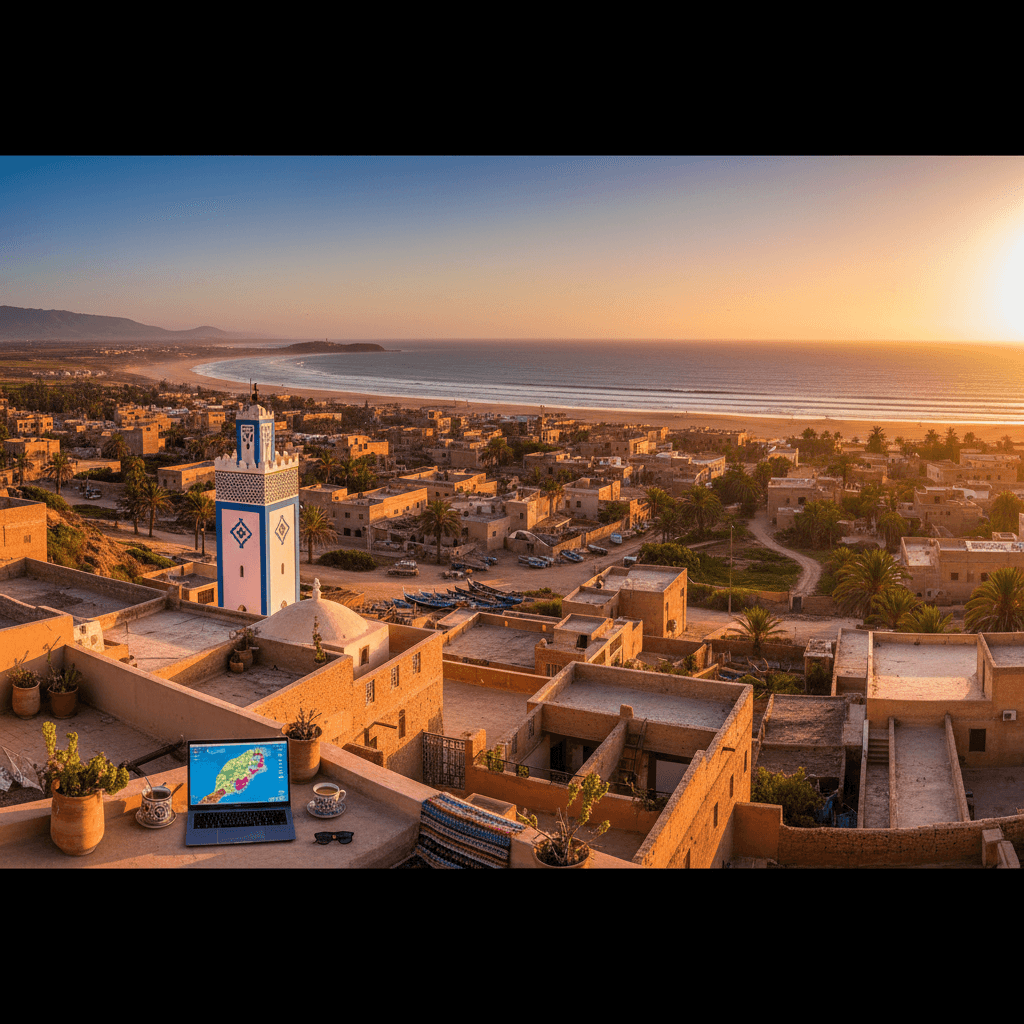
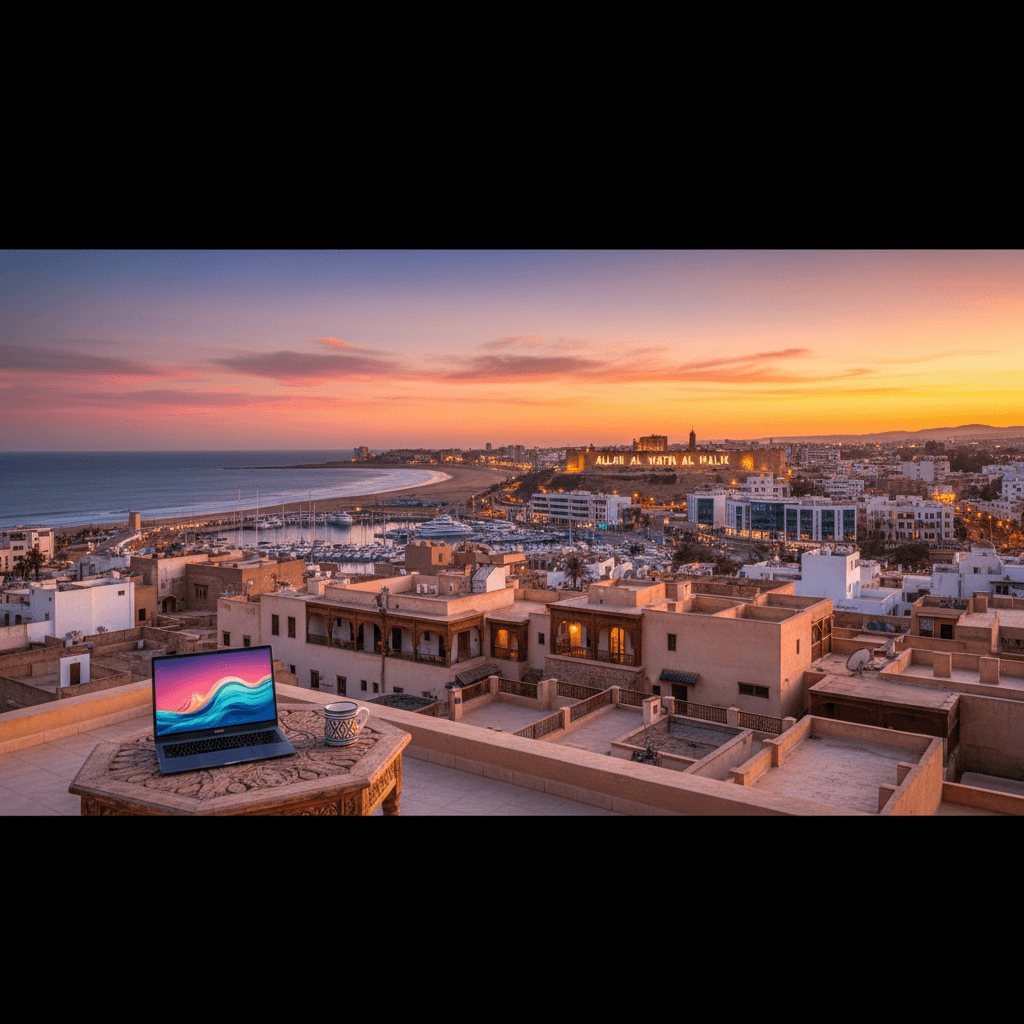
Agadir isn't your typical Moroccan experience. While cities like Marrakech or Fes pull you into a labyrinth of ancient history and sensory overload, Agadir breathes. After the 1960 earthquake, the city was rebuilt with wide boulevards, modern infrastructure, and a focus on the Atlantic horizon. It feels more like a relaxed Mediterranean resort town with a distinct Berber soul than a chaotic imperial capital. For nomads, this means less "hustle" and more headspace.
The vibe here is defined by the ocean. You'll wake up to the sound of the Atlantic, spend your mornings working from a beachside cafe in Founty, and likely spend your afternoons chasing swells. It’s a practical, liveable city where things actually work. The internet is reliable, the streets are walkable, and the 300-plus days of sunshine make it a premier winter escape for those fleeing the European chill.
Living the Nomad Life
Most remote workers gravitate toward the beachfront or the northern surf suburbs. It’s an affordable lifestyle; you can live comfortably on $1,500 to $2,000 a month without really trying to save. While the city lacks a massive "startup" scene, it makes up for it with a tight-knit community of surfers and slow-travelers who prioritize quality of life over networking events. If you need a serious deep-work day, you'll likely head to Cafe Clock or Kechmara, where the WiFi is stable and the staff won't mind if you linger over a second coffee.
The emotional draw of Agadir is the lack of pressure. There’s a certain freedom in being able to grab a $3 taxi to the massive Souk El Had for fresh groceries, then head back to a modern apartment with a view of the Oufella ruins. It’s a city that lets you be productive without demanding your constant attention.
Where to Plant Your Flag
- Founty & Anza: These are the nomad favorites. You’re right on the promenade, surrounded by modern cafes and hotels. Rent for a solid 1BR usually sits between $400 and $700. It’s safe, well-lit, and incredibly convenient for morning runs on the sand.
- Taghazout & Tamraght: Located 20 to 30 minutes north, these surf villages are where the real nomad energy lives. It’s more rustic and the internet can be finicky, but the community is unbeatable. Expats here swear by SunDesk for dedicated coworking.
- City Center: Best if you want to save money and live like a local. It’s busier and further from the surf, but you’re closer to the best street food and local markets where a tagine will only set you back about $4.
The Logistics of Staying
Getting around is simple. Use the Uber app for hassle-free rides or hop on a local bus for about $0.70. For your phone, grab a SIM card from Maroc Telecom or Orange at the airport; $20 will usually get you enough data to last a month of heavy usage. While French and Arabic are the primary languages, the surf culture has brought a lot of English into the beach zones, so you won't struggle to order your morning espresso or negotiate a surfboard rental.
Safety is rarely a concern here compared to other major hubs. The tourist zones are heavily patrolled and well-lit. Most travelers say the biggest "risk" is the petty theft in the crowded souks, so just keep your phone in your front pocket while haggling for spices. Healthcare is surprisingly modern too; the International Clinic Agadir is the go-to for expats and handles most emergencies with Western standards of care.
Why Agadir Wins
Agadir wins because it doesn't try too hard. It’s a functional, sunny, and affordable base that serves as the perfect gateway to the rest of Morocco. You get the reliability of a modern city with the soul of the Berber coast. You'll come for the $15 seafood dinners and the 20-degree winter days, but you'll stay because it's one of the few places where you can actually balance a full-time career with a professional-grade surf habit.
The Bottom Line
Agadir is arguably the most wallet-friendly beach destination for remote workers who want modern infrastructure without the price tag of Southern Europe. While Marrakech often drains budgets with its tourist premiums, Agadir remains a practical coastal hub where your money stretches significantly further. Most nomads find that a monthly budget of $1,200 to $1,800 allows for a very comfortable lifestyle, including a modern apartment and daily meals out.
Monthly Budget Estimates
- Budget Tier: $800 to $1,200. This covers a studio in a local neighborhood like the City Center, eating mostly at souks or small cafes, and using public buses.
- Mid-Range: $1,500 to $2,000. This is the sweet spot for most expats. It includes a nice 1BR near the Founty beachfront, frequent dinners at mid-range seafood spots, and regular taxi rides.
- High-End: $2,500+. At this level, you are looking at luxury serviced apartments, private surf lessons in Taghazout, and dining at the upscale spots along the promenade every night.
Housing and Neighborhoods
Rent is your biggest variable. If you want to be where the action is, look at Founty or Anza. These areas are modern and walkable, though you will pay a premium for the proximity to the sand. For a more authentic feel and lower prices, the City Center near the markets is a solid choice.
Founty and Anza (Beachfront)
- 1BR Apartment: $400 to $700. Expect modern amenities and decent WiFi.
- Vibe: Tourist-friendly, safe, and full of cafes.
- Pros: High walkability and reliable utilities.
City Center and Souk Area
- 1BR Apartment: $300 to $500. More local listings are available here than on Airbnb.
- Vibe: Busy and practical with great access to fresh produce.
- Pros: Cheapest grocery and street food options in the city.
Taghazout and Tamraght (30 mins North)
- 1BR/Studio: $500 to $800. Prices are driven up by the surf and nomad demand.
- Vibe: Relaxed, bohemian, and surf-centric.
- Pros: The best social scene for remote workers, though internet can be finicky.
Food and Dining
Eating out is a highlight of the Agadir experience. You can grab a filling tagine or a hearty sandwich at a local souk for $2 to $4. If you prefer sitting down at a beachside cafe in Founty, expect to pay between $8 and $15 for a meal and a drink. High-end seafood restaurants, particularly those near the marina, usually run between $25 and $40 per person.
For those cooking at home, the Souk El Had is a massive market where you can get a week's worth of fresh fruit, vegetables, and spices for under $20. It is open Tuesday through Sunday, though Friday is the busiest day for locals.
Transport and Connectivity
Getting around is cheap and efficient. Local buses cost about $0.70 per ride, while the small orange "petit taxis" rarely cost more than $3 for trips within the city limits. For longer hauls to the airport or Taghazout, expect to pay $10 to $15. Most nomads use Uber or similar ride-hailing apps to avoid haggling over fares.
Internet is generally reliable in the city, with speeds ranging from 25 to 70 Mbps. A local SIM card from Maroc Telecom or Orange is a must. You can pick one up at the airport or any small shop for about $15, which usually gets you around 20GB to 50GB of data. While dedicated coworking spaces are still popping up, many nomads work from Café Clock or Kechmara, where the cost of a coffee or a small meal serves as your "desk fee" for the afternoon.
The Modern Nomad: Founty and Anza
If you're landing in Agadir to work, you'll likely gravitate toward the coastline. Founty is the city's polished, upscale district where the beach is always a short walk away. It feels more European than most Moroccan cities because it was rebuilt with wide boulevards and modern infrastructure. You'll find reliable fiber optic internet here, making it the top choice for those who need to jump on Zoom calls without a hitch.
Anza, located just north of the main port, is the grittier, cooler sibling. It's become a hub for the creative crowd and surfers who want to be near the water but avoid the resort prices of the city center. While dedicated coworking spaces are still growing, most nomads set up shop at Café Clock or Kechmara. These spots offer decent WiFi and a relaxed atmosphere for the price of a coffee or a $10 lunch.
- Rent: Expect to pay between $400 and $700 for a modern one bedroom apartment.
- Vibe: Coastal, professional, and convenient.
- Internet: Urban speeds typically range from 25 to 70 Mbps.
The Long-Term Expat: Taghazout and Tamraght
Many expats who move to the region eventually migrate 20 minutes north to the surf villages. Taghazout was once a sleepy fishing village, but it's now the epicenter of the remote work scene in Morocco. It's less about "city life" and more about the community. You'll find people from all over the world meeting up at SunDesk for focused work sessions before hitting the waves at sunset.
Tamraght sits just next door and offers a slightly quieter, more residential feel. It’s often cheaper than Taghazout but keeps you close to the action. Expats here recommend using the Punta App to find local meetups and events. Just keep in mind that while the lifestyle is unbeatable, the internet can be finicky. Most residents rely on 4G backup SIMs from Maroc Telecom or Orange, which cost about $15 for 20GB of data.
- Rent: Local apartments go for $300 to $500, though beachfront spots command a premium.
- Community: High; easy to meet people through surf camps and yoga studios.
- Transport: A shared grand taxi into Agadir costs around $3.
Families: The City Center and Talborjt
For families, the area around the City Center and the New Talborjt district provides the best access to schools, supermarkets, and parks. This isn't the tourist side of town; it's where real life happens. You're closer to the Souk El Had, a massive market where you can buy everything from fresh organic produce to household goods at local prices. A bag of fresh vegetables here will rarely set you back more than $5.
The streets are wider and safer for walking with strollers compared to the cramped medinas of Marrakech. You're also near the International Clinic Agadir, which is the go to facility for high quality healthcare and emergencies. While it's further from the beach, the connectivity to the rest of the city via the #36 bus or Uber makes it a practical home base.
- Rent: Larger 2 or 3 bedroom apartments typically range from $500 to $800.
- Safety: Very high; well lit streets and a heavy family presence.
- Food: Abundant local cafes where a tagine dinner costs roughly $4.
Solo Travelers: The Promenade and Souk Area
If you're traveling alone and want to be in the thick of it, look for spots near the South Beach promenade or the streets leading to the Souk. This area is high energy and puts you within walking distance of the best street food and social hubs. Solo travelers often prefer this zone because it's easy to navigate on foot and there's always a petit taxi nearby for a $2 ride across town.
The social scene here revolves around the beach bars and the evening stroll known as the promenade walk. While the city is generally safe, solo travelers should stick to the well lit tourist paths after dark. For a social fix, head to the Friday market at the Souk between 9am and 9pm to experience the local hustle and grab a $2 sandwich from a street vendor.
- Rent: Budget studios can be found for $300 if you book locally.
- Social: Easy to meet others at beachside cafes and surf schools.
- Convenience: Best access to public transport and the $15 airport taxi.
Connectivity and Speed
Agadir offers some of the most consistent internet in Morocco, largely because it lacks the ancient, thick stone walls that plague signals in cities like Marrakech or Fes. In modern neighborhoods like Founty and Anza, you can expect fiber optic speeds ranging from 25 to 70 Mbps. It is plenty for video calls and heavy uploads, though you should always ask your Airbnb host for a speed test screenshot before booking.
For mobile backup, grab a SIM card immediately upon landing at Agadir Al Massira Airport (AGA). Maroc Telecom generally has the best nationwide coverage, but Orange and Inwi offer competitive data packages. You can get 20GB to 50GB of data for roughly $10 to $20. If you plan on heading into the desert or remote spots in the Anti-Atlas mountains, a local 4G setup is your best bet as public WiFi becomes hit or miss once you leave the city limits.
Coworking Spaces and Work-Friendly Cafes
The dedicated coworking scene in Agadir is still catching up to its surf-town neighbor, Taghazout. You won't find a dozen high-tech hubs here, but the city makes up for it with a strong cafe culture and hotel lobbies that are welcoming to laptop users. Most nomads treat the beachfront promenade as their de facto office.
- Café Clock: A staple for the remote work crowd. It has a relaxed, creative vibe, reliable WiFi, and plenty of power outlets. It is a great spot to meet other travelers over a camel burger or avocado toast.
- Kechmara: Located near the coast, this spot offers a more polished, modern environment. The WiFi is stable, and the atmosphere stays professional enough for afternoon deep-work sessions.
Digital Nomad Community and Networking
While Agadir is a functional, practical city, the social "hustle" is concentrated in the surf villages of Taghazout and Tamraght. Expats in Agadir tend to be more long-term residents or retirees, so younger nomads often split their time between the two. You can find local meetups and surf sessions through the Punta App, which is gaining traction for event listings in the region.
For those staying in the city center, Facebook groups like "Morocco Digital Nomads" are your best resource for finding housing leads or organizing weekend trips to Paradise Valley. The vibe is decidedly laid-back; people come here to balance a 40-hour work week with Atlantic sunsets and affordable living, rather than to attend high-pressure networking mixers.
Practical Work Setup Tips
- Power: Morocco uses Type C and E plugs (standard European). Power outages are rare in Agadir but can happen during heavy winter storms, so keep your devices charged.
- Starlink: While not officially widespread, some high-end villas and remote surf camps are starting to implement Starlink kits. If you are staying in a rural area outside the city, it is worth asking if this is an option.
- Noise: If you work from cafes, keep in mind that the beachfront gets lively in the late afternoon. Bring noise-canceling headphones to drown out the promenade crowds and music.
- Cost of Working: Expect to spend $5 to $10 a day if you are "renting" a seat at a cafe by ordering coffee and lunch. Dedicated desks in nearby Taghazout run closer to $15 to $20 for a day pass.
Staying Safe in Agadir
Agadir is arguably the most relaxed city in Morocco, and its safety profile reflects that. Unlike the high energy chaos of Marrakech or Fes, this coastal hub prioritizes tourist security. Most nomads find the city very safe for solo exploration, even after the sun goes down. The local authorities keep a close eye on the beachfront promenade and the main hotel zones like Founty to ensure visitors feel comfortable.
That said, common sense is your best friend here. Petty theft and pickpocketing can happen, particularly in the crowded alleys of Souk El Had. Keep your phone and wallet tucked away when you're browsing the stalls. While the beach promenade is well lit and populated at night, it's smarter to avoid unlit side streets or deserted stretches of sand after dark. If you're staying in Anza or Taghazout, the vibe is even more communal, but it's still wise to use a registered taxi rather than walking long distances alone late at night.
- Emergency Contacts: Dial 19 for the police and 15 for an ambulance.
- Solo Travelers: Women often find Agadir more comfortable than other Moroccan cities, though modest dress when away from the beach helps minimize unwanted attention.
- Scams: Be wary of "unofficial guides" offering to show you the best shops in the city center; usually, they're just looking for a commission or a tip.
Healthcare and Medical Services
If you get sick or injured, Agadir has some of the best medical facilities in southern Morocco. For anything beyond a minor cold, skip the public hospitals and head straight to a private clinic. Expats and long term travelers generally recommend the Chemin des Facultés Clinic in the city center. They have modern equipment and staff who often speak French or English, making it much easier to explain your symptoms.
For everyday issues like "Morocco belly" or minor infections, the local pharmacies are excellent. Look for the green glowing crosses. Pharmacists in Morocco are highly trained and can often provide over the counter medications for ailments that would require a prescription in the US or UK. Most pharmacies are open from 9am to 8pm, but there is always a "pharmacie de garde" (on call pharmacy) open 24/7 in each neighborhood; check the sign on the door of any closed pharmacy to find the nearest open one.
- Private Clinics: Expect to pay around $30 to $50 for a standard consultation.
- Insurance: Always keep your digital policy handy. Most private clinics expect payment upfront in cash or card, which you can later claim back from your provider.
- Water Safety: Do not drink the tap water. Stick to bottled brands like Sidi Ali or Ain Saiss, which cost about $0.60 for a large bottle.
Practical Wellness Tips
The Atlantic sun is deceptively strong because of the cool ocean breeze. Travelers often forget to hydrate or wear sunscreen until they're already sporting a painful burn. If you're heading north to Taghazout for a surf session, be aware that the water quality can fluctuate after heavy rains. Many nomads check local surf reports or ask at shops like Surf Berbere to see if the water is clean before paddling out. Taking a probiotic daily is a common strategy used by expats here to help their systems adjust to the local food and spices.
Getting Around Agadir
Agadir is a sprawling coastal city, but its modern grid layout makes it far more navigable than the labyrinthine medinas of Marrakech or Fes. The city was largely rebuilt after 1960, resulting in wide boulevards and a massive beachfront promenade that makes walking a viable and pleasant option for daily life, especially if you're staying in the tourist zones.
Public Buses and Shared Taxis
The local bus network is surprisingly efficient and incredibly cheap. ALSA buses serve the city and the surrounding coastal villages with high frequency. A one way ticket on a standard city route, like the #36 which takes you straight to the massive Souk El Had, costs roughly $0.70. It's the most authentic way to move around, though buses can get crowded during peak afternoon heat.
For longer distances or quicker trips, look for Grand Taxis. These are shared, long distance Mercedes sedans that follow set routes. You'll find them at designated ranks near the city center. A seat in a shared taxi to nearby surf hubs usually runs about $3. If you want the car to yourself, you can negotiate a private price, but most nomads find the shared experience part of the charm.
Ride-Hailing and Petit Taxis
Within the city limits, the bright red Petit Taxis are everywhere. They're metered, though you should always make sure the driver flips the meter on before you pull away. Most short hops across town will cost you between $2 and $5. If you prefer the comfort of an app, Uber operates in Agadir and is often the easiest way to avoid the "tourist tax" negotiations, especially when you're tired or carrying groceries.
Cycling and Scooters
The beachfront promenade is a dream for two wheels. You can find bike and scooter rental shops or use local apps to grab a ride for $5 to $10 per day. It’s the fastest way to get from the Founty residential area to the marina without breaking a sweat. Just be cautious once you leave the dedicated beach paths; Agadir traffic can be unpredictable, and drivers aren't always looking out for cyclists.
Travel to and from the Airport
Agadir Al Massira Airport (AGA) is about 15 miles from the city center. You have a few choices upon landing:
- Petit Taxis: These are the red cars you'll see lined up. Expect to pay between $10 and $15 for the 20 minute ride to the beach hotels.
- Grand Taxis: Better if you have a group or lots of surf gear. Prices are fixed but slightly higher than the petits.
- Airport Shuttle: There are local bus connections that are much cheaper, though they require a transfer and can take over an hour to reach the center.
The Trek to Taghazout
Most nomads living in Agadir eventually head north to Taghazout or Tamraght for the surf. It’s a 20 to 30 minute drive depending on traffic. While you can take a bus or a grand taxi, many long term residents end up renting a car for about $20 to $30 a day. Having your own wheels gives you the freedom to explore spots like Paradise Valley or find quieter breaks along the Atlantic coast that public transport doesn't reach.
Walkability Score
If you stick to the Founty, Anza, or the City Center, you can do 90% of your errands on foot. The promenade is a flat, scenic stretch perfect for morning runs or evening strolls to dinner. However, if you're living further inland near the industrial zones or the outskirts, you'll definitely need to rely on the bus or a scooter to get your beach fix.
The Linguistic Landscape
In Agadir, your ears will catch a rhythmic blend of Moroccan Arabic, known as Darija, and the local Tashelhit Berber language. While Darija is the street language of Morocco, Agadir's unique history as a rebuilt modern city and a major tourism hub means the linguistic barriers are lower here than in the old imperial cities. You'll find that most locals move between languages with impressive fluidity.
French remains the unofficial second language for business, administration, and higher education. If you have a decent grasp of French, you'll find it easy to handle apartment leases or chat with doctors at the International Clinic Agadir. However, the younger generation and those working in the beach districts of Founty and Anza are increasingly proficient in English. In the surf-centric villages of Taghazout and Tamraght just north of the city, English is often the primary language of the nomad community.
Getting Connected
Reliable internet is the backbone of the Agadir nomad experience. Urban speeds typically range between 25 and 70 Mbps, which is plenty for video calls and heavy uploads. While dedicated coworking spaces are still sparse within Agadir itself, the cafe culture is welcoming to remote workers. Many nomads head to Café de Paris, where the WiFi is stable and the atmosphere is relaxed enough to park your laptop for a few hours for the price of a coffee.
For mobile data, don't rely on international roaming. Pick up a local SIM card immediately upon arrival at Agadir Al Massira Airport (AGA) or at one of the many branded shops in the city center. The three main providers are:
- Maroc Telecom: Offers the widest coverage, especially if you plan on taking day trips into the Atlas Mountains or Paradise Valley.
- Orange: Known for competitive data packages and reliable performance in urban zones.
- Inwi: Often the most budget-friendly, with frequent promotions for high-volume data users.
Expect to pay between $10 and $20 for a generous data plan of 20GB to 50GB. To top up, just look for small "Teleboutiques" or grocery shops displaying the provider's logo; you can buy scratch cards for as little as $1.
Practical Communication Tips
While you can get by with English in the tourist zones, learning a few words of Darija goes a long way in building rapport at the Souk El Had or with your taxi driver. Use Shukran for thank you, and if you're asking for a price, Besh nu? is your go-to phrase. Most expats recommend downloading Google Translate with the French and Arabic offline files, as it's a lifesaver when reading menus or signs away from the beachfront.
If you're heading into the surf villages for a few days, be aware that while 4G is generally workable, the infrastructure is slightly more fragile than in the city. If your work requires 100% uptime, many long-termers in Taghazout use SunDesk or similar setups that prioritize redundant connections. For general coordination, the Punta App is a favorite among the local community for finding meetups and events without needing to navigate complex social media groups.
Navigating Daily Interactions
Communication in Agadir is as much about etiquette as it is about vocabulary. When haggling at the markets, keep the tone light and friendly. Tipping is customary but modest; 10% at restaurants is standard, and rounding up the fare for a petit taxi is always appreciated. If you're invited into a local home, remember the golden rule of communication: removing your shoes is a silent but powerful sign of respect that speaks louder than any phrasebook.
The Endless Summer
Agadir is famous for boasting over 300 days of sunshine every year. Thanks to its unique position on the Atlantic coast, the city avoids the blistering, dry heat that often bakes Marrakech or the Sahara. Instead, you get a mild, Mediterranean-style climate that stays comfortable almost year-round. It is the perfect escape for nomads looking to dodge the "big dark" of northern European winters.
The Atlantic breeze acts as a natural air conditioner. Even in the height of summer, between June and August, temperatures usually hover between 25°C and 30°C (77°F to 86°F). You might see the occasional heatwave if the desert winds blow in, but generally, you can work from a cafe terrace without breaking a sweat. If you are here for the surf, this is when the water is warmest, though the waves are smaller and better suited for beginners.
Winter Sun and Morning Mist
Winter, from December to February, is Agadir's peak season for "sun-seekers." Daytime highs rarely dip below 15°C to 20°C (59°F to 68°F). It is warm enough for a t-shirt during the day, though you will definitely need a jacket once the sun goes down. The ocean mist can make the mornings feel a bit damp, with humidity levels often reaching 77%, but it usually burns off by noon.
Rain is rare here. The official rainy season runs from November to March, but "season" is a generous term; showers are usually brief and infrequent. Most nomads find this the best time to visit because the surrounding surf breaks in Taghazout and Tamraght come alive with world-class swells. If you want to balance deep-focus work sessions with powerful afternoon surf, aim for a winter stay.
The Sweet Spot: Spring and Fall
If you want the absolute best balance of weather and price, aim for April to June or September to October. During these shoulder months, the weather is dry and reliably warm, but the peak winter tourist crowds haven't arrived or have already cleared out. You will find better deals on monthly rentals in neighborhoods like Founty or Anza, and the beach promenade is much quieter for morning runs.
A Practical Seasonal Guide
- Best for Surfing: November to March. This is when the North Atlantic swells are most consistent. Keep in mind that a 3/2mm wetsuit is usually necessary as the water stays around 17°C to 19°C.
- Best for Budget: May and June. You can often negotiate lower monthly rates on Airbnb or through local Facebook groups before the summer domestic tourism rush starts in July.
- Best for Digital Nomad Social Life: October to April. This is when the nomad community is most active in nearby Taghazout, making it easier to find meetups at spots like Café Clock or SunDesk.
- The "Foggy" Factor: Be aware of the coastal fog in early summer. It is common for the city to be draped in a thick marine layer until midday in June, which can be a bit of a mood killer if you were expecting 24/7 blue skies.
Overall, there isn't really a "bad" time to be in Agadir. Even in the depths of January, you'll be sitting in the sun with a $2 tagine while the rest of the world is shivering. Just pack a hoodie for the evenings and a light raincoat for those rare winter drizzles, and you are set for a productive coastal stint.
Agadir is where Morocco’s rugged Atlantic coast meets modern convenience. Unlike the narrow, chaotic alleys of Marrakech, this city was rebuilt with wide boulevards and a focus on beachside living. It is a practical, sunny base for anyone who needs reliable infrastructure without giving up the surf culture that makes this region famous.
Cost of Living
Your budget here goes significantly further than in Europe or North America. Most nomads find they can live comfortably on $1,500 to $2,000 per month, though budget travelers often manage on $1,000 by sticking to local markets and neighborhoods.
- Rent: A modern one bedroom apartment in areas like Founty or near the promenade typically runs between $400 and $700.
- Food: Street food like tagines or hearty sandwiches at the souk will cost $2 to $4. A mid range meal at a beach cafe sits around $10 to $15.
- Transport: Local buses are roughly $0.70, while short "petit taxi" rides within the city usually cost about $3.
Where to Base Yourself
Choosing the right neighborhood depends on whether you value high speed fiber or a surfboard within arm's reach.
- Founty and Anza: These beachfront zones are the go-to for remote workers. You get modern builds, reliable WiFi, and easy access to the promenade. It is more expensive and tourist heavy, but the convenience is hard to beat.
- City Center: Best for those on a budget who want to be near Souk El Had. It feels more "local," though you'll have to commute to the beach.
- Taghazout and Tamraght: Located 20 to 30 minutes north, these are the surf capitals. The nomad community is much stronger here, though internet can be hit or miss. Many workers use 4G backups or stay at dedicated spots like SunDesk to ensure they stay online.
Internet and Connectivity
Urban Agadir is quite reliable. You can expect speeds between 25 and 70 Mbps in most modern apartments and cafes. Dedicated coworking spaces are still sparse in the city center, so most nomads gravitate toward laptop friendly cafes like Café Clock or Kechmara.
For mobile data, grab a SIM card at the airport or a local shop immediately. Maroc Telecom and Orange are the top picks. You can get a solid 20GB to 50GB data plan for $10 to $20. If you plan on heading into the desert or more remote surf camps, some travelers are now bringing Starlink kits, though 4G is generally sufficient along the coast.
Getting Around
Agadir is surprisingly walkable if you stay near the coast. For longer distances, use the Uber app to avoid haggling over prices. If you are arriving at Agadir Al Massira Airport (AGA), expect to pay $10 to $15 for a taxi into the city. For a more local experience, the #36 bus is a cheap way to reach the main souk for less than a dollar.
Safety and Wellness
The city is generally very safe, and the local authorities place a high priority on protecting the tourism industry. Petty theft can happen in crowded markets like the souk, so keep your phone tucked away. Stick to well lit areas on the promenade at night. If you need medical care, the International Clinic Agadir offers modern facilities and is the standard choice for expats and travelers.
Local Etiquette
While Agadir is more relaxed than the interior of the country, it is still a Muslim city. Dress modestly when you are away from the sand; throwing a shirt over your swimwear when walking to a cafe is appreciated. When shopping at the souk, haggling is part of the culture, so never accept the first price offered. A 10% tip at restaurants is standard and goes a long way with the local staff.
Weather and Timing
With over 300 sunny days a year, there isn't a bad time to visit. April through October offers the best beach weather. Winters are mild, usually staying between 15°C and 20°C (59°F to 68°F), making it a perfect escape for those fleeing the European cold. Keep in mind that November through March can see occasional rain, though it rarely lasts long.
Need visa and immigration info for Morocco?
🇲🇦 View Morocco Country GuideHidden Gem
Worth the effort
Monthly Budget Estimates
More cities in Morocco
Imsouane
🇲🇦 Morocco
Ouarzazate
🇲🇦 Morocco
Essaouira
🇲🇦 Morocco