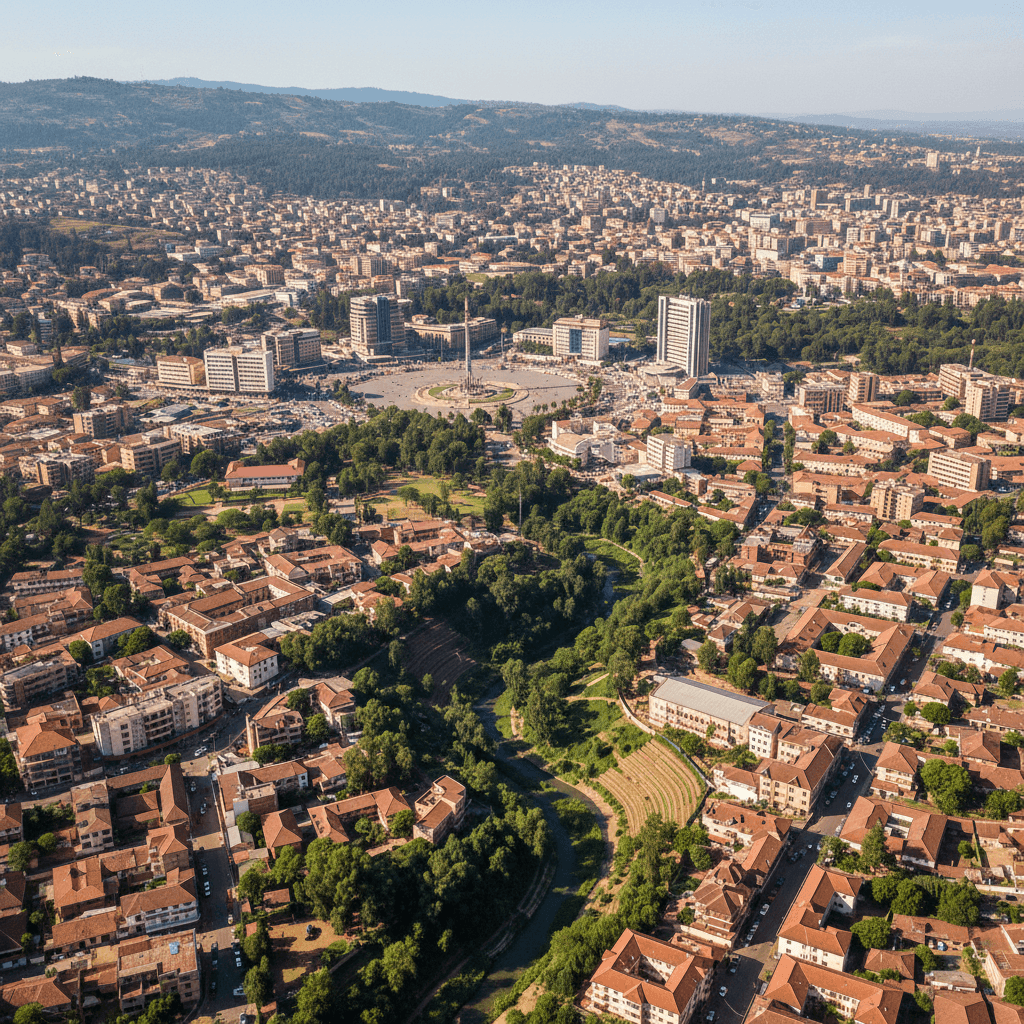
Addis Ababa
🇪🇹 Ethiopia
The High-Altitude Heart of Africa
Stepping off the plane in Addis Ababa, the first thing you notice is the thin, crisp air and the scent of eucalyptus. Situated at 2,355 meters above sea level, this isn't your typical tropical African capital. It is a city of sharp contrasts where gleaming African Union glass towers stand next to traditional mud-and-straw homes, and late-model Land Cruisers share the asphalt with donkey carts. For nomads, it feels less like a polished digital hub and more like a frontier for the culturally curious.
The energy here is grounded yet frantic. You will find yourself caught between the slow, meditative pace of a three-hour coffee ceremony and the chaotic, high-energy hustle of the Merkato. It is a place that demands patience. If you are looking for lightning-fast fiber and a predictable routine, you might struggle. But if you want a home base that feels soulful, historic, and deeply authentic, Addis delivers a lifestyle that most modern cities have long since traded away for convenience.
The Coffee Culture Reality
While other nomad hubs boast about their craft beer or avocado toast, Addis wins on coffee. This is the birthplace of the bean, and the culture reflects that. You don't just "grab a coffee" here; you experience it. Expats and locals alike spend hours in cafes like Tomoca or the more modern Garden of Coffee, which serve as the city's informal living rooms. It is common to see people working on laptops, though most seasoned nomads rely on Safaricom 4G dongles or local SIM cards rather than trusting public WiFi.
The city is becoming a magnet for "slow nomads" who are tired of the revolving door of Southeast Asia or Mexico City. There is a growing community of creative entrepreneurs and NGO workers, meaning your social circle will likely include people working on everything from tech startups to international diplomacy. It is an intellectual environment where conversations tend to go deeper than just "where are you headed next?"
What to Expect on the Ground
Living here requires a shift in mindset. You have to embrace the "Addis minute," which usually means things take a little longer than planned. Power outages happen, and the internet can be patchy, often hovering between 3 and 10 Mbps. Most serious remote workers choose their housing based on whether the building has a backup generator and a dedicated satellite connection. Spaces like Blue Nile Hub are popping up to bridge this gap, offering a more stable environment for those with strict Zoom schedules.
The cost of living is a major draw. While inflation has been a factor, a monthly budget of $1,000 to $1,600 allows for a very comfortable lifestyle, including a nice apartment in a secure area like Bole or Old Airport and frequent dining out. You can get a world-class meal for under $10, and the local transport via apps like Ride or Feres is incredibly affordable. It is a city that rewards those who are willing to trade a bit of technical reliability for a lot of cultural depth.
- The Vibe: Gritty, soulful, and intellectually stimulating.
- The Crowd: A mix of diplomats, NGO staffers, and adventurous creators.
- The X-Factor: The feeling of being in the diplomatic capital of a continent while drinking the best coffee of your life.
The Nomad Budget
Living in Addis Ababa feels like a breath of fresh air for your bank account, especially if you are earning in USD or Euros. While the local economy has seen some shifts lately, your money still goes incredibly far. Most digital nomads find they can live a very comfortable, upper middle class lifestyle on a budget between $1,000 and $1,600 per month. If you are more of a minimalist who sticks to local eateries and modest studios, you could easily scrape by on $700 to $900, though you might sacrifice some of the modern comforts like backup generators or consistent water pressure.
Housing and Neighborhoods
Rent is going to be your biggest expense, and prices vary wildly depending on how much "Western" infrastructure you need. Most expats and remote workers gravitate toward a few specific hubs where security and amenities are more reliable.
- Bole: This is the heart of the action. It is close to the airport and packed with malls and cafes. A modern one bedroom apartment here usually runs between $600 and $900. You are paying for the convenience of being able to walk to your favorite espresso bar.
- Old Airport and Sarbet: These areas are a bit more residential and leafy. They are popular with the embassy crowd. Expect to pay $700 to $1,100 for a nice place in a secure compound.
- Kazanchis: This is the business hub, home to the UN and high end hotels. It is great for networking, with mid range apartments starting around $500.
Eating and Socializing
The food scene is where you really save. If you eat like a local, you will be shocked at how little you spend. A massive platter of injera with various stews at a neighborhood spot will often cost less than $5. Even at higher end international restaurants in Bole, a three course dinner with drinks rarely tops $25.
Coffee is practically a human right here. You can grab a world class macchiato for about $0.50 to $1.00. If you are working from a cafe like Tomoca or Galani Coffee, you might spend $10 over the course of an entire day on multiple drinks and a light lunch. Beer is also cheap; a local St. George or Habesha beer at a bar usually costs around $1.50.
Connectivity and Coworking
Because the internet can be finicky, many nomads invest in a dedicated workspace rather than relying on home Wi-Fi. A day pass at a spot like blueSpace is generally affordable, and monthly memberships usually hover around $100 to $150. These spaces are worth the investment because they often have backup power and multiple internet providers to ensure you stay online during the frequent city wide outages.
For your phone, grab a Safaricom SIM card as soon as you land. Data packages are very cheap. You can get a generous monthly data bundle for less than $20, which is vital for tethering when your apartment Wi-Fi inevitably takes a nap.
Transportation
Walking is common in neighborhoods like Bole, but for longer trips, you will use ride hailing apps. Ride and Feres are the local versions of Uber. A ten minute trip across town usually costs between $3 and $5. It is much safer and more transparent than haggling with the blue and white taxi drivers on the street. If you are feeling adventurous, the light rail is incredibly cheap, costing only a few cents, but it can get very crowded during rush hour.
The Digital Nomad Hub: Bole
If you want to be where the action is, Bole is your default setting. It is the most modern slice of the city, located right by the airport and centered around the Bole Medhane Alem cathedral. This is the neighborhood where you can actually find a decent flat white and a workspace that does not lose power every twenty minutes. Most nomads gravitate here because it feels the most international, with paved sidewalks and a high concentration of malls and hotels.
While internet across the city is famously temperamental, Bole gives you the best fighting chance. You will find blueSpace here, which is the go to spot for anyone needing a desk and a semi reliable connection. For a more casual vibe, Tomoca Coffee in the 17 area is a classic for a quick caffeine hit, though nomads often prefer the spacious seating at Kaldis Coffee branches to get a few hours of work done.
- Rent: Expect to pay between $800 and $1,200 for a modern one-bedroom apartment.
- Vibe: High energy, walkable by Addis standards, and packed with nightlife.
- Best for: Short term stays and those who need proximity to the best cafes and coworking spots.
The Professional Base: Kazanchis
Expats working with the African Union or the various UN agencies usually end up in Kazanchis. It is the city's central business district but retains a gritty, authentic charm. It is a bit more compact than Bole, making it easier to navigate if you do not want to rely on ride hailing apps like Ride or Feres for every single movement. The area is home to high end hotels like the Hilton and Hyatt Regency, which are lifesavers when you need a stable, high speed internet connection for a Zoom call.
Living here means you are close to Jupiter International Hotel, which often hosts networking events and has reliable business facilities. The food scene here is great for business lunches or meeting other professionals. You will find a mix of luxury high rises and older, more characterful Ethiopian villas tucked away in the side streets.
- Rent: Prices range from $1,000 to $1,600 for well secured expat housing.
- Vibe: Corporate but lively, with a heavy international presence.
- Best for: Networking, diplomatic workers, and those who want a central location.
The Family Retreat: Old Airport and Sarbet
For families or long term expats who want a break from the constant noise, the Old Airport and Sarbet areas are the gold standard. These neighborhoods are much greener and quieter than the city center. This is where you will find the International Community School (ICS), which dictates the lifestyle of most families in the area. The streets are wider, and there is a sense of community that you do not always get in the high rise blocks of Bole.
Sarbet is particularly popular for its boutique shops and the Adams Pavilion mall. It feels less like a concrete jungle and more like a residential suburb. You will find plenty of expats jogging in the mornings or heading to Vibe for a workout. While it is further from the main coworking hubs, the peace and quiet make it much easier to set up a dedicated home office.
- Rent: Large villas or spacious three-bedroom apartments usually start at $1,500 and can go much higher.
- Vibe: Residential, leafy, and noticeably calmer.
- Best for: Families, dog owners, and anyone staying for six months or longer.
The Independent Explorer: CMC and Yeka
Solo travelers looking for a more local experience without sacrificing safety often look toward the CMC-Yeka corridor. It is further out from the center, connected by the Light Rail, though most expats still prefer using Safaricom 4G hotspots and private cars. This area has seen a massive boom in new housing developments, offering much better value for your money than the central districts.
Yeka offers some of the best views in the city, especially if you get a place on the hills. It is closer to the Gullele Botanical Garden and various hiking trails, which is a massive plus if you get claustrophobic in the city. You will need to be more self sufficient here, as there are fewer "nomad friendly" cafes, but the local markets and lower cost of living make it a rewarding choice for slow travelers.
- Rent: You can find decent apartments for $500 to $800, roughly half of what you would pay in Bole.
- Vibe: Emerging, local, and spacious.
- Best for: Budget conscious solo travelers and those who want an authentic local lifestyle.
The Reality of Staying Connected
Working from Addis Ababa requires a specific mindset. You aren't here for blazing fiber speeds or seamless Zoom marathons without a backup plan. The infrastructure is improving, but it remains one of the more challenging nomad hubs in East Africa. Most spots offer speeds between 3 and 10 Mbps, which is plenty for Slack, emails, and light browsing, but you'll feel the lag during heavy uploads.
The smartest move you can make upon arrival is picking up a Safaricom SIM card. While state owned Ethio Telecom is everywhere, Safaricom's 4G network is generally more stable for tethering when your cafe's Wi-Fi inevitably blips. Expect to pay around 1,000 to 2,000 ETB for a generous monthly data package. It is the cheapest insurance policy you can buy for your productivity.
Coworking Spaces and Reliable Hubs
The coworking scene is still finding its feet, but a few dedicated spots have become the de facto offices for the city's remote workers and creative class. These spaces are your best bet for avoiding the frequent power fluctuations that can plague residential neighborhoods.
- blueSpace: Located in the heart of the city, this is the most established spot for nomads. It has a professional atmosphere and, most importantly, backup power systems. You can usually grab a day pass for about $10 to $15 USD, though monthly memberships offer better value if you're staying for the full 90 day visa.
- Iceaddis: More of a tech incubator than a traditional coworking space, but it's the epicenter of the local startup scene. If you want to network with Ethiopian developers and entrepreneurs, this is the place to be.
- Coliving Projects: Keep an eye out for newer boutique coliving spaces in Bole and Old Airport. Several of these have recently started integrating Starlink terminals to bypass local infrastructure issues, providing the most reliable uptime in the city.
The Cafe Office Culture
If you don't need a formal desk, you'll likely spend most of your time in the city's incredible cafes. Addis is the birthplace of coffee, and the cafe culture is deeply ingrained in daily life. Unlike some European cities where laptops are frowned upon, many Addis cafes are quite welcoming to remote workers as long as you keep the coffee flowing.
Bole is the undisputed king of cafe working. You'll find dozens of modern spots near Bole Medhane Alem where the Wi-Fi is decent and the macchiatos are world class. Tomoca Coffee is the classic choice for a quick caffeine hit, but for longer sessions, nomads usually head to Garden of Coffee or the various upscale hotel lobbies in Kazanchis. These hotels often have the most reliable internet, though you'll pay a premium for your lattes.
Power and Connectivity Tips
Power outages are a fact of life here. They don't happen every day, but they happen often enough that you need to be prepared. Always keep your laptop and power banks fully charged. Most high end cafes and coworking spaces have generators, but there's often a two minute gap between the grid going down and the generator kicking in, which can kill a desktop connection.
If you're planning to stay in an Airbnb, specifically ask the host if they have a "UPS" (Uninterruptible Power Supply) for the router. In neighborhoods like Sarbet or CMC, having a host who understands the needs of a remote worker makes the difference between a productive month and a frustrating one. For those who absolutely cannot afford an hour of downtime, sticking to the major business hotels in the city center is the only way to guarantee 24/7 connectivity.
Staying Safe in the Highlands
Addis Ababa is generally one of the safer African capitals for foreigners, but it requires a specific kind of street smarts. Most nomads find the city welcoming, though petty crime like pickpocketing is common in crowded areas like the Mercato or around Meskel Square. Keep your phone out of sight when walking near the road, as phone snatching by passing motorcyclists has become more frequent lately.
Solo female travelers usually feel comfortable living here, provided they stick to well lit areas and secure neighborhoods. Expats recommend living in gated compounds or modern apartment buildings in Bole or Old Airport, where 24/7 security guards are the standard. Walking alone after dark isn't advisable; it is much better to rely on ride hailing apps which provide a digital trail of your journey.
To keep your belongings and yourself secure, follow these local norms:
- Use Ride Hailing: Stick to apps like Feres or Ride. They are affordable, safer than flagging down unmarked taxis, and help you avoid price negotiations.
- Avoid the Night Walk: Even in upscale areas like Kazanchis, sidewalks can be uneven and street lighting is spotty. Take a car if you are moving between bars or restaurants.
- Mind the Crowds: If you are visiting the Mercato, go with a local friend or a guide. It is easy to get disoriented, and the density of the crowd makes it a prime spot for opportunistic theft.
Healthcare and Medical Facilities
The healthcare system in Addis is improving, but it still feels tiered. For anything beyond a minor checkup, expats and nomads almost exclusively use private hospitals. These facilities offer a higher standard of care and usually have English speaking staff, though you should expect to pay upfront in cash or through local mobile money if your international insurance doesn't have a direct billing agreement with them.
For emergencies or specialized consultations, these are the most trusted names in the city:
- Nordic Medical Centre (NMC): Located near Lanncha, this is often the top choice for expats. It follows European standards and is well equipped for emergencies.
- Hayat Hospital: Situated in the Bole area, this is a reliable private facility for general surgery and inpatient care.
- Silk Road General Hospital: A modern, high tech facility that is popular for its diagnostic equipment and clean environment.
Pharmacies are everywhere, but stock can be inconsistent due to import fluctuations. If you rely on specific chronic medications, bring a three to six month supply with you. For common ailments, pharmacies in Bole or near Sarbet are generally better stocked with international brands. Always check the expiration dates on packaging before purchasing, as items can sometimes sit on shelves longer than intended.
Health Precautions for New Arrivals
The biggest health hurdle for most nomads isn't a tropical disease, it is the altitude. At over 2,300 meters, the thin air can cause headaches, fatigue, and shortness of breath during your first week. Drink twice as much water as you think you need and avoid heavy workouts until you have acclimated.
Tap water is not potable. You will need to rely on bottled water like Yes or Arki for drinking and even brushing your teeth if you have a sensitive stomach. While the food is delicious, stick to busy restaurants with high turnover to ensure freshness. Most travelers find that a standard kit of Ciprofloxacin or similar antibiotics is helpful to have on hand just in case of severe foodborne illness.
The Ride-Hailing Revolution
Forget trying to decipher the local bus routes or haggling with blue taxi drivers who will inevitably overcharge you because you look new. The way to move through Addis is via ride-hailing apps. Ride is the undisputed king here, followed closely by Feres. Both apps work similarly to Uber or Lyft, and they have effectively standardized pricing across the city. Most trips within the central hubs like Bole or Kazanchis will cost you between 250 to 450 Birr.
A pro tip for nomads: download both apps. Sometimes one has a shortage of drivers during the rainy season or peak rush hour, and having a backup is a lifesaver. You do not need a local credit card since most drivers prefer cash or a quick transfer via Telebirr if you have a local SIM set up. Always check the license plate in the app against the car before jumping in, though the community is generally very safe.
The Blue Minibus Experience
If you want to live like a local and save money, the blue and white minibuses are the city’s pulse. They are incredibly cheap, usually costing between 5 to 15 Birr depending on the distance. You will hear "callers" leaning out the doors shouting destinations like "Bole! Bole!" or "Arat Kilo!" at lightning speed. It is chaotic, cramped, and loud, but it is the fastest way to get across town during gridlock because these drivers are fearless.
To use them effectively, you will need to learn a few landmarks. Most routes originate from Meskel Square or Piazza. Do not expect much personal space, and keep your phone in your pocket rather than your hand, as opportunistic snatching can happen in these crowded spaces. It is a great way to soak in the local energy, but maybe not the best choice if you are carrying a laptop bag.
The Light Rail Transit (LRT)
Addis has a modern light rail system that cuts through the city’s North-South and East-West corridors. It is a fantastic way to bypass the legendary traffic on Bole Road. Tickets are incredibly cheap, often under 10 Birr. However, the trains are frequently packed to the brim. If you are traveling during off-peak hours, it is a scenic and efficient way to get from the industrial zones to the city center. During rush hour, it is a bit of a contact sport.
Walking and Walkability
Addis Ababa is a high-altitude city, so you will find yourself getting winded faster than usual if you are just arriving from sea level. Some areas, like Bole and Old Airport, are relatively flat and walkable with decent sidewalks and plenty of cafes to duck into. Other areas, like Gullele, involve steep hills that will give your calves a serious workout.
Walking is generally safe during the day, but the infrastructure is inconsistent. You will encounter missing sidewalk tiles, sudden construction pits, and wandering livestock even in the middle of the city. After dark, most nomads stick to ride-hailing services. If you do walk at night, stay in well-lit areas like Edna Mall or the main strips of Kazanchis where there is plenty of foot traffic and security outside the major hotels.
Transport Logistics and Costs
- Ride-Hailing App (Short Trip): 250 to 350 Birr
- Ride-Hailing App (Long Trip): 500 to 800 Birr
- Blue Minibus: 5 to 20 Birr
- Light Rail Ticket: 5 to 10 Birr
- Airport Transfer: Many hotels in Bole offer free shuttles, otherwise expect to pay about 400 Birr via an app.
Traffic is the biggest variable in your day. A trip that takes 15 minutes at 10:00 AM can easily take an hour at 5:30 PM. If you have a Zoom call or a meeting at a coworking space like blueSpace, always buffer your travel time by at least 30 minutes. The city’s rhythm is dictated by the road, so learning to embrace the slow crawl is part of the Addis experience.
The Linguistic Landscape
While Amharic is the official language of Ethiopia, Addis Ababa is a massive diplomatic and international hub. Since it houses the African Union and the UN Economic Commission for Africa, you can get by with English in most professional and nomad centric circles. In neighborhoods like Bole and Kazanchis, staff at cafes and hotels speak English fluently. However, once you step into local markets or hop into a blue taxi, the language barrier becomes part of the daily adventure.
Amharic uses its own unique script called Ge'ez. It is beautiful to look at but can be intimidating for short term visitors. Most street signs in central areas are bilingual, but having a translation app that works offline is a lifesaver when you are trying to find a specific address in a residential pocket like Old Airport.
Essential Amharic for Your Kit
Locals genuinely appreciate it when you make an effort. Even a few words will change the vibe of your interaction from a cold transaction to a warm welcome. Here are the basics that most nomads pick up within their first week:
- Selam: Hello (Literal meaning: Peace). It is the universal greeting.
- Ameseginalehu: Thank you. It is a bit of a mouthful, so many people shorten it to "am-se-ge-nal-lo."
- Ishi: Okay / Alright. You will hear this constantly. It is the verbal glue of the city.
- Sint-no?: How much? Use this at the Merkato or when dealing with vendors.
- Konjo: Beautiful or good. Use it for the food, the weather, or the view.
Digital Communication and Connectivity
Communication in Addis is as much about the tech as it is about the talk. The internet situation is notorious for being unpredictable. While the state owned Ethio Telecom used to be the only game in town, Safaricom has entered the market and generally offers more reliable 4G data speeds for nomads.
Most expats recommend carrying two SIM cards from different providers. If one network goes down, the other might still be kicking. You will need your passport to register a SIM card at a branded store; do not buy them from random street vendors as they often won't be activated properly. Telegram is the undisputed king of messaging here. While the rest of the world uses WhatsApp, Ethiopians use Telegram for everything from government updates to food delivery and nomad meetups.
Navigating Social Nuances
Communication in Ethiopia is deeply rooted in respect and "low pressure" social interaction. People often greet each other with multiple shoulder bumps or handshakes that last a little longer than you might be used to in the West. It is polite to ask about someone's health and family before diving into a business request or ordering your macchiato.
When you are out with new friends, keep in mind that "Ethiopian time" is a real thing. Beyond just being relaxed about punctuality, the country actually uses a 12 hour clock that starts at dawn. 7:00 AM Western time is 1:00 o'clock in the local system. If someone suggests meeting at 3:00 o'clock, always clarify if they mean 9:00 AM or the local afternoon. Most people dealing with foreigners will use the international system, but it pays to double check to avoid showing up six hours early for dinner.
The Language of Coffee
In Addis, some of the best communication happens over a jebena. The coffee ceremony is a slow, rhythmic process. If you are invited to one, it is a sign of hospitality and an opportunity for long form conversation. Even if you are in a rush to get back to your laptop, taking ten minutes to sit and chat is how you build real rapport in this city. It is less about the caffeine and more about the connection.
The High-Altitude Rhythm
Addis Ababa sits at an elevation of 2,355 meters, which dictates everything from how you breathe to how you pack. Most nomads are surprised to find that despite being close to the equator, the city feels more like a permanent spring than a tropical heatwave. You can leave the humidity gear behind; here, the air is crisp, thin, and remarkably consistent for much of the year.
The temperature usually hovers between 20°C and 25°C (68°F to 77°F) during the day. Once the sun dips behind the Entoto Hills, things cool down fast. You will definitely need a light jacket or a wool sweater for evening terrace drinks in Bole or Kazanchis, as night temperatures often drop to 10°C (50°F).
The Seasons of the Sun and Rain
Ethiopia follows a distinct weather pattern that divides the year into the dry season and the "big rains." Understanding these cycles is the difference between a productive stay and a soggy one.
- The Dry Season (October to May): This is the prime window for digital nomads. The skies are a deep, cloudless blue, and the sun is intense due to the altitude. It is the best time for exploring the city on foot or taking weekend trips to the Simien Mountains. January is particularly popular because of Timkat, the Epiphany festival, which brings massive colorful processions to the streets.
- The "Belg" Rains (March to May): You might see short, unpredictable bursts of rain during these months. They rarely ruin a whole day, but they can turn the dust into a bit of a muddy mess for an hour or two.
- The "Kiremt" Rains (June to September): This is the heavy rainy season. It does not just drizzle; it pours. Expect grey skies and persistent afternoon downpours. While the landscape turns a stunning emerald green, the rain often causes power outages and slows down already finicky internet connections. If your work relies on zero downtime, this is a challenging window to visit.
When to Book Your Stay
The absolute best time to arrive is late September or early October. This coincides with Meskel, a massive bonfire festival marking the end of the rains. The city is covered in yellow Meskel daisies, the air is fresh, and you have several months of perfect weather ahead. It is the ideal time to settle into a cafe in Sarbet and get through your backlog before the holiday crowds arrive.
If you prefer a quieter vibe, aim for November through February. The weather is bone-dry and reliable. Just keep in mind that peak season means higher demand for the best apartments in areas like Old Airport, so you should book your long-term stays at least a month in advance. Avoid July and August if you can, unless you find the sound of rain on a tin roof therapeutic for your workflow.
Packing Essentials for the Highlands
Because of the altitude, the sun is much stronger than it feels. High-SPF sunscreen is a must, even on cloudy days. You should also pack a reusable water bottle to stay hydrated while your body adjusts to the thin air. Most importantly, think in layers. A typical day involves a t-shirt at noon, a sweater at 6:00 PM, and a proper jacket by 9:00 PM. If you are coming during the rainy season, high-quality waterproof boots are better than an umbrella, as the streets can flood quickly.
Connectivity and Power
Internet is the biggest hurdle in Addis. You can't rely on hotel WiFi alone. Most nomads pick up a Safaricom SIM card immediately upon arrival at Bole International Airport. Safaricom generally offers more consistent 4G speeds than the state owned Ethio Telecom. Expect to pay about 1,000 to 2,000 Birr for a meaty data package that lasts the month.
Power outages happen. They aren't constant, but they're frequent enough to ruin a Zoom call. If you're booking an Airbnb in Bole or Old Airport, message the host to ask if the building has a "silent generator." This is a dealbreaker if you have fixed meeting times. For a guaranteed connection, blueSpace is the go to coworking spot, though many people prefer the social atmosphere at Iceaddis in the Kazanchis area.
Getting Around
Don't bother with the blue and white public minibuses unless you speak Amharic and enjoy being packed like a sardine. Download Ride or Feres. These are the local versions of Uber and they work brilliantly. Most trips within the city center cost between 300 and 600 Birr.
The city is high altitude and hilly, so walking long distances will wear you out faster than you expect. Stick to the apps after dark. While Addis is generally safe, petty snatch and grab theft is common in crowded areas like Piazza or Merkato. Keep your phone in your pocket and your bag in front of you.
Money and Banking
The currency situation is evolving. ATMs are everywhere, but they often run out of cash or reject international cards. Dashen Bank and Awash Bank machines are usually the most reliable for foreign Visa and Mastercard holders. Always carry a backup stash of US Dollars in crisp, new bills.
The official exchange rate and the "parallel market" rate can differ significantly. Most expats use the Telebirr app for daily transactions. It is a mobile money platform that lets you pay for everything from groceries to coffee with a QR code. It is much easier than carrying stacks of Birr notes.
Health and Wellness
Altitude sickness is real. Addis sits at 2,355 meters. Give yourself three days to acclimatize before hitting the gym or going on a heavy hike. Drink twice as much water as you think you need. For medical issues, Nordic Medical Centre is the gold standard for expats. They have international standards and English speaking staff. For prescriptions, Lion Pharmacy is a reliable chain with several branches across the city.
Finding a Home
Skip the major booking sites for long term stays. You will pay a massive premium. Check Telegram groups or Facebook groups like "Expats in Addis Ababa" to find sub-leases or shared apartments. If you want to be where the action is, look for apartments near Bole Medhane Alem. If you prefer a quieter, greener vibe with more villas, Sarbet is the better choice. Expect to pay $800 to $1,200 for a high end, modern one bedroom apartment in these prime zones.
Language and Etiquette
Amharic is the primary language. While many younger people in Bole speak great English, learning a few phrases goes a long way. "Selam" means hello, and "Ameseginalehu" means thank you. When you meet someone, it is common to do a light shoulder bump after shaking hands. It's a sign of friendship that will instantly make you feel like a local rather than just another tourist.
Need visa and immigration info for Ethiopia?
🇪🇹 View Ethiopia Country GuideOff the Radar
Pioneer territory